
Understanding Nistha: The Steady Heart in Bhakti Yoga
In the journey of Bhakti Yoga, the path of loving devotion to God, there comes a beautiful and important stage called nistha. This Sanskrit word is often translated as steadiness, firm faith, or spiritual determination.
Nistha is not a dry discipline or a rigid religious mood. It is the gentle strength that grows in the heart when a person begins to live with trust in God, even when life is uncertain. It is the ability to keep returning to prayer, chanting, service, and remembrance, not because everything is easy, but because love has become meaningful.
In Bhakti Yoga, we learn that spiritual life is not simply about belief. It is about relationship. We are souls, eternal children and servants of the Divine, and our hearts naturally long for loving connection. Nistha helps that relationship become stable.
For some, God may be known as Krishna, Rama, Vishnu, Radha, Narayana, or another sacred name. Others may approach the Divine in a more universal way. Bhakti welcomes sincere seekers from all backgrounds. Nistha is relevant to anyone who wants to grow beyond occasional inspiration and enter a life of deeper spiritual commitment.
It is the difference between visiting the path and beginning to walk it with trust.
Nistha in the Bhakti Tradition
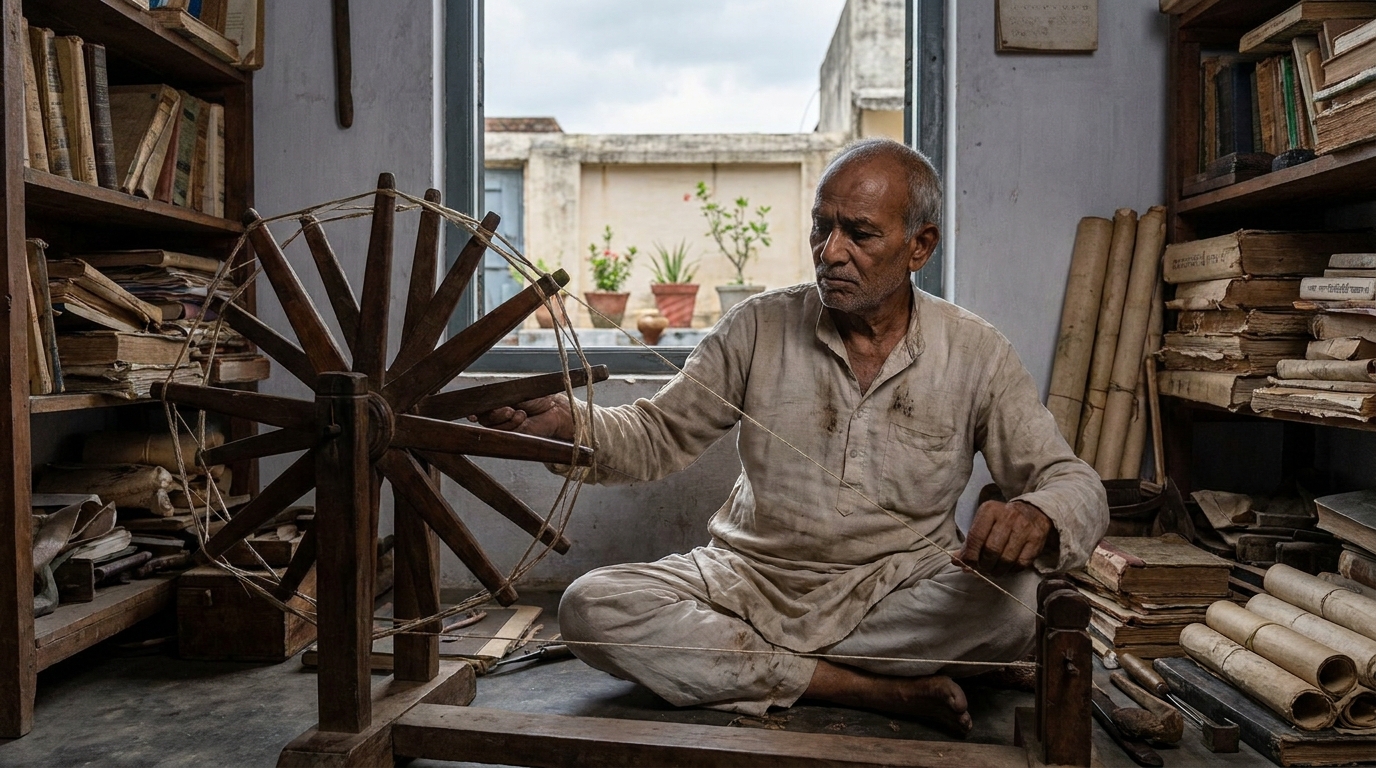
The Bhakti scriptures describe spiritual growth as a gradual unfolding of the heart. One of the most well-known explanations comes from Srila Rupa Goswami, a great teacher in the Bhakti tradition, in his classic text Bhakti-rasamrita-sindhu, “The Nectar of Devotion.”
He describes a progression in devotional life:
First comes sraddha, or initial faith. Then sadhu-sanga, association with spiritually minded people. Then bhajana-kriya, regular devotional practice. After that comes anartha-nivritti, the cleansing of unwanted habits and distractions. When the heart becomes more purified, nistha arises.
This means nistha is not usually the very first step. It develops through sincere practice. A person hears about God, chants, prays, serves, asks questions, meets devotees, and gradually experiences a change of heart. Their faith becomes less dependent on outer circumstances.
The Meaning of Nistha
The word nistha suggests being fixed, grounded, or established. In daily life, we might say someone is steady when they do not give up easily. Spiritually, nistha means we are becoming steady in our relationship with God.
A person with nistha may still face doubts, emotions, struggles, responsibilities, and mistakes. Nistha does not mean becoming perfect overnight. Rather, it means our direction becomes clear.
We may fall, but we do not leave the path.
We may feel weak, but we still pray.
We may be busy, but we still remember.
We may not understand everything, but we keep offering our heart to God.
This is the humble beauty of nistha.
Nistha and Faith
Faith in Bhakti is not blind sentiment. It is a living trust that grows through experience. When we chant the holy names, serve others, hear sacred wisdom, and offer our life to God, we begin to see that spiritual practice nourishes us.
In the Bhagavad-gita, Krishna says:
“Those who worship Me with devotion, meditating on My form, I carry what they lack and preserve what they have.”
Bhagavad-gita 9.22
This verse does not mean life will always go according to our plans. It means that when we sincerely turn toward God, we are not alone. Nistha grows when we begin to feel, even in small ways, “God is guiding me. I can trust this path.”
Why Nistha Matters in Spiritual Life

Many people begin spiritual life with inspiration. A sacred song touches the heart. A meditation class brings peace. A temple visit feels powerful. A book opens a new perspective. These moments are precious gifts.
But inspiration can rise and fall. One day we feel deeply connected, and the next day we feel distracted, tired, or uncertain. Nistha helps us continue beyond temporary feelings.
Spiritual growth requires both love and consistency. Just as a plant needs regular watering, the heart needs steady nourishment. Chanting once may bring peace, but chanting regularly transforms the inner life. Prayer once may comfort us, but daily prayer deepens relationship. Service once may inspire us, but a life of service purifies the heart.
Moving Beyond Mood-Based Practice
In early spiritual life, we may practice mostly when we feel inspired. If we feel peaceful, we chant. If we feel uplifted, we pray. If life is going well, we serve.
Nistha teaches us to practice even when our mood is not perfect.
This does not mean forcing ourselves harshly. Bhakti is not meant to be cruel or mechanical. It means gently honoring what truly nourishes the soul, even when the mind is restless.
For example, a person may say, “Today I do not feel like chanting, but I know chanting connects me to God. I will chant a little with sincerity.”
That simple choice is nistha in action.
Stability During Challenges
Life brings change. Relationships shift. Health changes. Finances fluctuate. The world can feel uncertain. Without spiritual steadiness, the mind may be carried away by every wave.
Nistha gives us an anchor.
A devotee with growing nistha learns to bring life’s difficulties into prayer. Instead of thinking, “Why is this happening to me?” they begin to ask, “How can I remember God in this? How can I grow in love? How can I respond with humility and wisdom?”
This is not denial of pain. Bhakti honors the full human experience. We can cry, grieve, ask for help, and still remain connected to God.
Freedom from Spiritual Consumerism
Modern culture often encourages us to sample many things without going deeply into any of them. We may jump from one practice to another, always searching for something new.
Nistha invites us to go deeper rather than constantly move sideways.
This does not mean disrespecting other paths. Bhakti Yoga honors all sincere spiritual efforts. But at some point, growth asks for commitment. Just as a well must be dug deeply in one place to reach water, the heart must stay with a genuine practice long enough to taste its depth.
Discover a wide range of insightful articles that delve into various spiritual topics. These articles provide guidance and inspiration for your personal growth journey. Stay informed and enlightened by exploring the latest articles available online.
The Signs of Developing Nistha
Nistha is not something we need to display proudly. It is not a badge of superiority. True steadiness is humble. It makes us softer, kinder, and more sincere.
Still, there are signs that nistha is beginning to appear in a person’s life.
Regular Devotional Practice
One clear sign of nistha is a growing commitment to daily spiritual practice. In Bhakti Yoga, this often includes japa, the personal chanting of sacred names on beads, and kirtan, congregational chanting with music and call-and-response singing.
The most widely practiced mantra in many Bhakti communities is the maha-mantra, the great mantra:
Hare Krishna Hare Krishna
Krishna Krishna Hare Hare
Hare Rama Hare Rama
Rama Rama Hare Hare
“Hare” calls upon the divine energy of love, often understood as Srimati Radharani, the feminine aspect of divine compassion. “Krishna” means the all-attractive Lord. “Rama” means the source of joy and spiritual pleasure.
Chanting is not just sound. It is prayer. It is calling out to God with the heart.
A person developing nistha may not chant perfectly, but they chant regularly. They begin to protect their time with God.
Reduced Dependence on Praise and Approval
In the beginning, we may feel encouraged when others notice our spiritual efforts. This is natural. Community support is helpful. But nistha gradually makes us less dependent on external approval.
We continue serving even when no one praises us.
We chant even when no one sees.
We pray even when our mind says, “What is the point?”
This quiet sincerity is very dear in Bhakti. God sees the heart.
Greater Patience with Inner Cleansing
Before nistha becomes firm, many people pass through anartha-nivritti. The word anartha means unwanted things, and nivritti means removal. These unwanted things may include pride, envy, unhealthy attachments, anger, laziness, resentment, or spiritual confusion.
This stage can feel uncomfortable because we begin to see our own conditioning more clearly. But this seeing is a mercy. When dirt rises in water, it may look messy, but it means the water is being stirred and purified.
Nistha helps us stay hopeful during this process. Instead of becoming discouraged by our imperfections, we keep practicing and trust that God’s grace is working.
Attraction to Hearing Spiritual Wisdom
Another sign of nistha is a growing taste for sacred teachings. The Bhagavad-gita, Srimad-Bhagavatam, and writings of saintly teachers become nourishment for the heart.
In the Srimad-Bhagavatam, it is said:
“By regularly hearing the Bhagavatam and serving the pure devotee, all that is troublesome to the heart is almost completely destroyed, and loving service to the Lord becomes established.”
Srimad-Bhagavatam 1.2.18
This verse shows the connection between hearing, service, purification, and steadiness. Nistha is strengthened when we regularly hear about God from authentic sources and apply that wisdom in daily life.
How to Cultivate Nistha in Daily Life
Nistha is a gift of grace, but we can prepare our hearts to receive it. Bhakti Yoga is practical. It does not ask us to abandon our humanity. It invites us to spiritualize our life, step by step.
Begin with a Realistic Daily Practice
A steady practice does not have to begin with something huge. In fact, it is often better to start with something simple and sustainable.
You might begin with:
- Chanting one round of the maha-mantra on beads each day
- Singing or listening to kirtan for ten minutes
- Reading one verse from the Bhagavad-gita
- Offering a short morning prayer
- Taking a few moments before meals to thank God
- Serving someone with conscious love
The key is regularity. A small daily offering can become more powerful than a large practice done only once in a while.
Bhakti grows through sincerity.
Create Sacred Time and Space
Nistha is supported by rhythm. Try to set aside a regular time for spiritual practice, even if it is brief. Morning is especially powerful because the mind is often quieter, but any consistent time is valuable.
A sacred space can also help. It may be a small altar, a clean corner with a picture of Krishna or a form of God dear to you, a candle, flowers, scripture, or your chanting beads. The point is not decoration. The point is remembrance.
When we repeatedly come to the same place for prayer, the heart begins to recognize, “This is where I meet God.”
Chant with Attention and Humility
Chanting is central to Bhakti Yoga because the holy names are understood to be non-different from the Divine. In simple language, this means God is fully present in His names.
When we chant, we are not merely repeating syllables. We are entering relationship.
To cultivate nistha in chanting:
- Sit with respect if possible
- Listen to each word of the mantra
- Bring the mind back gently when it wanders
- Avoid harsh self-judgment
- Pray for the desire to chant sincerely
- Remember that even imperfect chanting is valuable
Some days chanting may feel sweet. Other days it may feel dry. Nistha means continuing with faith that the holy name is purifying the heart, even when we cannot immediately feel it.
Keep Good Association
In Bhakti, sadhu-sanga means association with sincere spiritual people. A sadhu is not simply someone with robes or titles. A sadhu is one who is trying to live for God and help others do the same.
Good association strengthens nistha. When we spend time with people who value prayer, chanting, service, and humility, our own devotion becomes nourished.
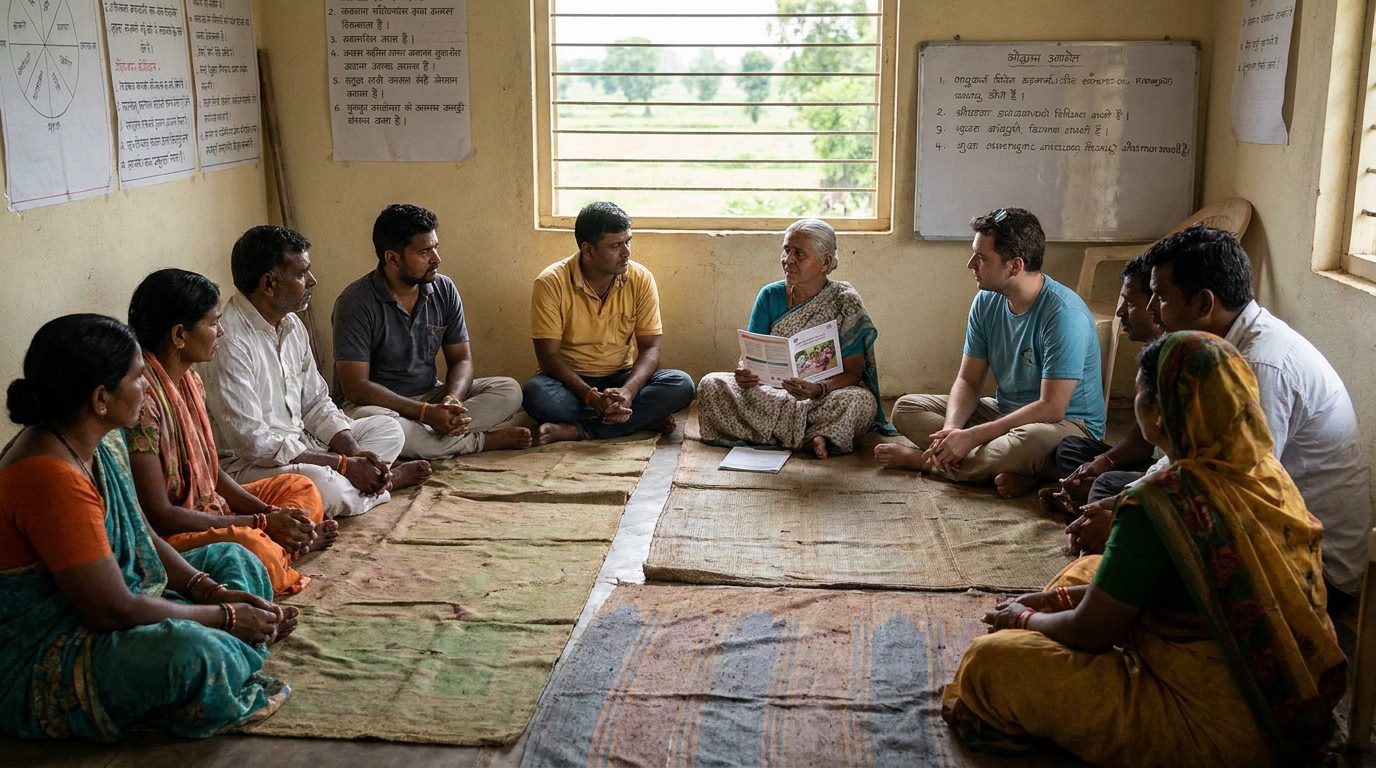
This can happen through temple gatherings, home programs, online classes, kirtan evenings, scripture study groups, or friendship with devotees. We need community because the path is not meant to be walked alone.
Even one sincere friend can help us remain steady.
Serve with Love
Bhakti is not only meditation. It is love expressed through action. Service is called seva. It means offering our energy for the pleasure of God and the welfare of others.
Seva can include cooking sacred food, cleaning a temple, helping at a spiritual gathering, supporting a community, caring for family with devotion, sharing wisdom, singing kirtan, or simply listening compassionately to someone in need.
When service is done with humility, it softens the heart. It helps us move from “What can I get?” to “How can I offer?”
Nistha becomes strong when our spiritual life includes service, not just personal peace.
Common Obstacles to Nistha and How to Work Through Them
Every sincere seeker faces obstacles. We should not be surprised by this. The mind has habits, the world has distractions, and the heart carries old patterns. Obstacles do not mean we are failing. They are part of the training ground of devotion.
Discouragement
Discouragement often comes when we expect quick results. We may think, “I have been chanting for weeks, but my mind is still restless.” Or, “I am trying to be spiritual, but I still get angry.”
Growth takes time. A tree does not bear fruit the day after it is planted. The roots must go deep first.
When discouraged, simplify your practice. Pray honestly: “Dear Lord, I am struggling, but I want to keep coming toward You.” This kind of prayer is powerful because it is real.
Mechanical Practice
Sometimes spiritual practice becomes routine. We chant, read, or pray, but the heart feels distant.
This can happen to anyone. The solution is not always to stop. Often, the solution is to bring meaning back into the practice.
Before chanting, pause and remember why you are chanting. You might say, “My Lord, please let me hear Your name. Please let me serve You. Please soften my heart.”
Even a few sincere moments can refresh the entire practice.
Doubt
Doubt can be painful, but it can also become a doorway to deeper understanding if approached humbly. In the Bhagavad-gita, Krishna encourages Arjuna to ask questions. Bhakti is not afraid of honest inquiry.
If doubts arise, seek guidance from qualified teachers, study scripture, and speak with sincere practitioners. Avoid isolating yourself. Doubt grows in silence but often softens in good association.
Nistha does not mean never having questions. It means not abandoning the path every time questions appear.
Overcommitment and Burnout
Sometimes enthusiasm leads us to take on too much too quickly. We may try to chant many rounds, attend every program, serve constantly, and change our whole lifestyle overnight. Then exhaustion comes.
Steadiness is different from intensity. Nistha is not a spiritual sprint. It is a lifelong offering.
Take guidance. Build gradually. Let your commitments be sincere, balanced, and sustainable.
Comparison with Others
Comparison weakens the heart. We may look at someone who chants more, knows more scripture, sings beautifully, or seems more advanced, and then feel inferior.
But Bhakti is personal. God is not asking you to become someone else. He is inviting you to offer your own heart.
The question is not, “Am I better than others?” The question is, “Am I taking one sincere step closer to God?”
Nistha in Relationships, Work, and Everyday Choices
Nistha is not meant to remain only on the meditation cushion or in the temple. It should gradually enter our relationships, work, habits, speech, and values.
Practicing Steadiness in Relationships
Relationships are one of the greatest places to practice Bhakti. It is easy to feel peaceful when alone, but our real conditioning often appears when dealing with others.
Nistha helps us ask:
- Can I speak more kindly?
- Can I forgive more deeply?
- Can I listen without needing to control?
- Can I serve without expecting something in return?
- Can I remember that every person is a soul?
This does not mean tolerating harm or ignoring healthy boundaries. Bhakti includes wisdom. But it does mean trying to bring God-consciousness into how we treat others.
Bringing Devotion into Work
Many people wonder how to practice spiritual life while working, studying, raising children, or carrying responsibilities. The good news is that Bhakti can enter every part of life.
In the Bhagavad-gita, Krishna teaches:
“Whatever you do, whatever you eat, whatever you offer or give away, and whatever austerities you perform—do that as an offering to Me.”
Bhagavad-gita 9.27
This is a very practical teaching. We can offer our work to God. We can begin the day with prayer: “May my actions today be useful. May I serve with integrity. May I remember You.”
When work becomes an offering, it can purify us.
Making Choices that Support the Soul
Nistha grows when our daily choices support our spiritual intention. What we eat, watch, read, discuss, and desire all affect the mind.
Bhakti does not ask us to become harsh or judgmental. It asks us to become conscious. We can gently notice: “Does this help me remember God, or does it pull me away from my higher self?”
Over time, we naturally begin choosing what supports peace, compassion, clarity, and devotion.
The Relationship Between Nistha and Grace
A beautiful truth of Bhakti Yoga is that our effort is important, but grace is essential. We do not purify ourselves by our own strength alone. We make sincere efforts, and God responds.
Nistha is both cultivated and received.
We show up for chanting, prayer, service, and study. We try to avoid harmful habits. We seek good association. We offer our heart. And gradually, often quietly, grace works within us.
Humility Protects Steadiness
When nistha begins to develop, there can be a subtle danger: pride. We may think, “I am steady. I am more serious than others.” This mood weakens devotion.
True nistha is protected by humility.
A steady devotee knows, “Whatever strength I have is a gift. Without grace, I can be distracted at any moment.” This humility does not create fear. It creates gratitude.
The more we depend on God, the safer our spiritual life becomes.
Prayer Opens the Heart
Prayer is one of the most powerful ways to receive grace. Prayer does not have to be formal or poetic. It can be simple and honest.
You might pray:
“Dear Krishna, please help me become steady in love.”
“Dear Lord, I do not have much devotion, but I want to serve You.”
“Please guide me. Please protect my heart from forgetfulness.”
“Please let me take one sincere step today.”
These prayers may seem small, but in Bhakti, sincerity is never small.
Practical Nistha Plan for Beginners and Practitioners
Whether you are new to Bhakti Yoga or have been practicing for years, a simple plan can help bring nistha into daily life.
A Gentle Morning Practice
Start the day by remembering God before checking your phone or entering the rush of responsibilities.
You can try:
- Offer a short prayer of gratitude.
- Chant the maha-mantra for five to fifteen minutes.
- Read one verse from the Bhagavad-gita or another Bhakti scripture.
- Set one devotional intention for the day.
For example: “Today I will try to speak with kindness,” or “Today I will remember Krishna before meals.”
A Midday Moment of Remembrance
In the middle of the day, pause for even one minute. Take a breath and repeat a holy name or prayer.
This small pause reminds the heart, “My spiritual life is not separate from my daily life.”
If possible, offer your food before eating. In Bhakti, food offered to God with love is called prasadam, meaning mercy. Taking prasadam helps us remember that everything comes from the Divine.
An Evening Reflection
Before sleeping, take a few moments to reflect without harshness.
Ask yourself:
- Where did I remember God today?
- Where did I forget?
- What can I offer with gratitude?
- What do I need to improve tomorrow?
Then pray. Offer both your successes and struggles to God.
This simple reflection helps cultivate honesty, humility, and steadiness.
Weekly Spiritual Nourishment
Try to include at least one weekly form of deeper nourishment:
- Attend a kirtan or satsang
- Visit a temple or Bhakti community
- Join a scripture discussion
- Serve in a practical way
- Spend time with devotees
- Cook and share prasadam
A weekly rhythm strengthens daily practice. Community helps keep the flame alive.
Nistha Is a Journey, Not a Performance
It is important to remember that nistha is not about appearing spiritual. It is not about impressing others or meeting an external standard. It is about becoming real before God.
Some days your practice will feel focused. Some days it will feel scattered. Some days your heart will feel open. Some days you may feel dry or distracted. Still, if you keep turning toward God, that is meaningful.
Bhakti Yoga is deeply compassionate because it honors the direction of the heart. Krishna says in the Bhagavad-gita:
“Even if one commits the most improper action, if he is engaged in devotion, he is to be considered saintly because he is rightly situated.”
Bhagavad-gita 9.30
This verse should not be misused to excuse harmful behavior. Rather, it offers hope. If a person sincerely turns toward God and continues the path of devotion, transformation is possible.
Nistha means we keep choosing that direction.
We keep choosing remembrance over forgetfulness.
We keep choosing humility over pride.
We keep choosing service over selfishness.
We keep choosing love, again and again.
The Sweet Fruit of Nistha
As nistha matures, spiritual life becomes less fragile. We no longer depend only on emotional highs. We begin to taste a deeper peace that comes from belonging to God.
This steadiness opens the door to further stages of Bhakti, such as ruci, or genuine taste for devotion, and asakti, deep attachment to God. Eventually, Bhakti matures into prema, pure love of God.
But we do not need to rush ahead. Each step is sacred.
Nistha itself is a wonderful blessing. It gives strength, clarity, and hope. It helps us live with purpose. It helps us meet life’s challenges with prayer. It helps us serve others with compassion. It helps us remember who we truly are: eternal souls meant for loving relationship with the Divine.
And this path is open to everyone.
You do not need to be born into a certain culture. You do not need to know Sanskrit. You do not need to have a perfect past. You do not need to feel advanced.
You only need a sincere heart and a willingness to take the next step.
Maybe your next step is chanting one mantra.
Maybe it is offering one prayer.
Maybe it is attending one kirtan.
Maybe it is reading one verse of the Bhagavad-gita.
Maybe it is serving one person with love.
Wherever you are, you are welcome. The path of Bhakti is a path of divine love, and God is closer than we may realize. With humility, patience, and steady practice, nistha can awaken in the heart and guide us toward a life of deeper devotion.
May we all be blessed with the courage to continue, the humility to receive grace, and the faith to take one sincere step toward God today.
FAQs
What is Nistha?
Nistha is a comprehensive training program initiated by the Government of India aimed at enhancing the quality of education in schools. It focuses on the professional development of teachers and aims to improve their teaching skills and methodologies.
Who is eligible to participate in the Nistha program?
The Nistha program is primarily designed for teachers working in government and government-aided schools across India. It is open to educators at various levels, including primary and secondary school teachers.
What are the key components of the Nistha training?
The key components of the Nistha training include modules on pedagogy, child development, inclusive education, and the use of technology in teaching. The program also emphasizes hands-on training and practical applications of teaching strategies.
How is the Nistha program delivered?
The Nistha program is delivered through a blend of online and offline modes. It includes interactive sessions, workshops, and self-paced online courses, allowing teachers to learn at their convenience while also participating in collaborative activities.
What are the expected outcomes of the Nistha program?
The expected outcomes of the Nistha program include improved teaching practices, enhanced student engagement, better learning outcomes for students, and the overall upliftment of the educational standards in participating schools.

