
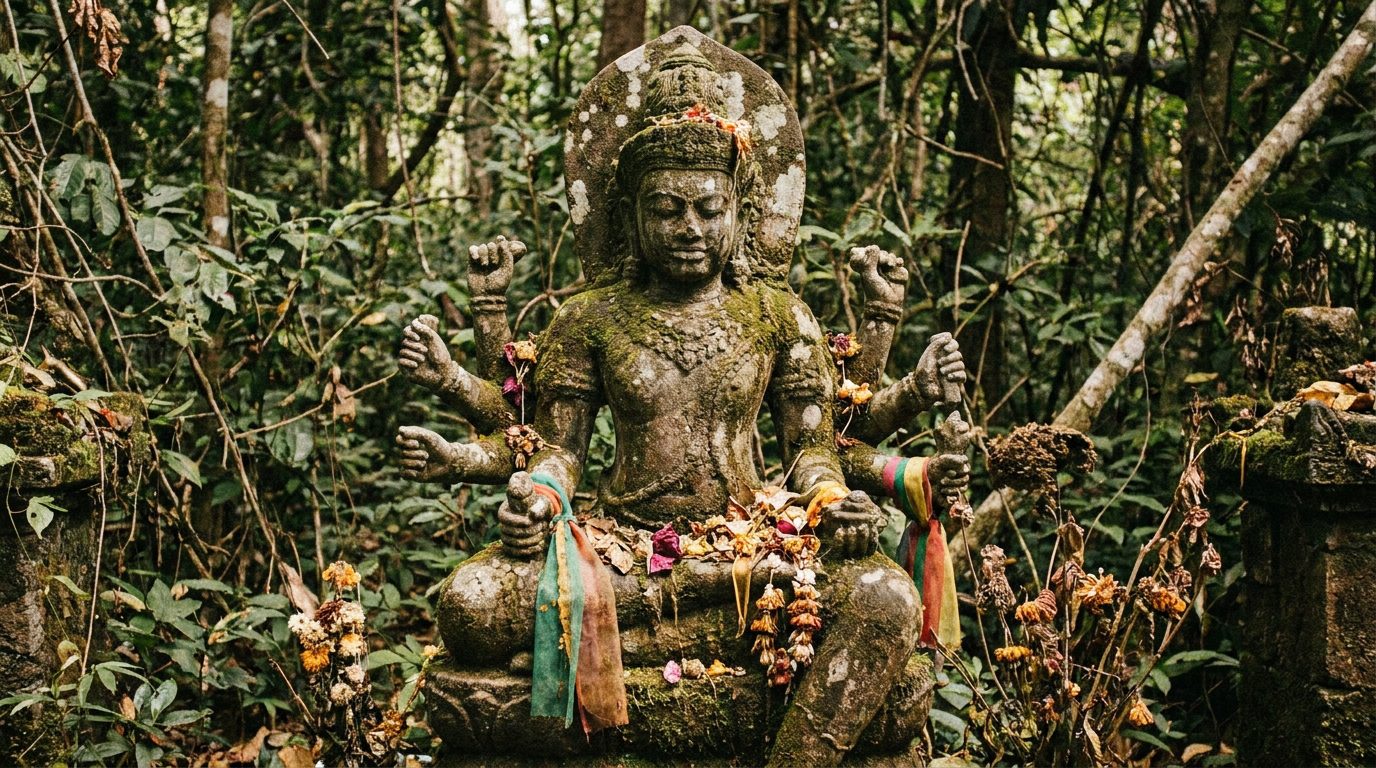
In Bhakti Yoga, Deities are sacred forms of God worshiped with love, attention, and devotion. The Sanskrit word often used is murti, meaning a form or embodiment. Another beautiful term is arca-vigraha, which means “the worshipable form of the Lord.” These words help us understand that a Deity is not considered an ordinary statue or decoration. For devotees, the Deity is a merciful way that God becomes approachable to us.
This may be new for some readers, and that is completely okay. Bhakti Yoga welcomes sincere questions. Many people first encounter Deities and wonder, “Is this idol worship?” In the Bhakti tradition, the answer is no. The Deity is not seen as stone, metal, wood, or paint alone. Rather, through prayer, scripture, and loving service, devotees relate to the Deity as a personal manifestation of the Divine.
Just as a photograph of someone we love can awaken real affection, sacred forms help focus the heart. Yet in Bhakti, the Deity is understood as far more than a symbol. God, being unlimited, can kindly appear in a form we can see, dress, serve, and love.
God Meets Us Where We Are
The human heart longs for relationship. We want to love and be loved. Bhakti Yoga teaches that this longing comes from our eternal relationship with God.
The Deity allows that relationship to become practical. We can offer flowers. We can bow. We can sing. We can bring food with gratitude. We can pray honestly. In this way, spiritual life becomes not just an idea, but a daily loving exchange.
The Bhagavad-gita explains that God accepts even simple offerings when they are given with devotion:
“Whoever offers Me with love and devotion a leaf, a flower, fruit, or water, I will accept it.”
— Bhagavad-gita 9.26
This verse is deeply encouraging. God is not asking for wealth, perfection, or status. He is asking for love.
A Personal Path for Every Seeker
You do not have to be born into a particular culture to appreciate Deity worship. You do not have to know Sanskrit perfectly. You do not need to understand every ritual before you begin.
Bhakti Yoga is a path of the heart. It is open to people of all backgrounds—spiritual seekers, lifelong practitioners, curious visitors, families, students, elders, and anyone longing for a deeper connection with the Divine.
The beginning is simple: approach with respect, curiosity, and sincerity.
Why Deities Matter in Spiritual Life
Deities matter because they help transform spiritual philosophy into lived devotion. Many people believe in God, but daily life can be distracting. We may become overwhelmed by work, family responsibilities, technology, and inner struggles. The Deity gently calls us back to what is sacred.
When we stand before the Deity, we remember: “I am not alone. I am loved. My life has spiritual purpose.”
From Abstract Belief to Loving Relationship
It is one thing to say, “God is everywhere.” That is true and beautiful. But because God is everywhere, God can also be present in a specific sacred form.
Bhakti Yoga does not limit God by worshiping a Deity. Rather, it honors God’s unlimited ability to become visible and accessible. The Deity helps us move from abstract belief to personal relationship.
In relationships, attention matters. Time matters. Service matters. The same is true in our relationship with God.
The Heart Learns Through the Senses
Bhakti Yoga engages the whole person. We do not only think about God; we see, hear, sing, touch, taste, and serve in sacred ways.
We see the Deity.
We hear kirtan, devotional chanting.
We smell incense and flowers.
We taste sanctified food called prasadam, meaning God’s mercy.
We use our hands to serve.
This is important because our senses often pull us into distraction. In Deity worship, the senses are gently redirected toward love and remembrance.
A Place to Bring Our Real Life
Before the Deity, we do not need to pretend. We can bring our gratitude, confusion, grief, longing, and hope.
Sometimes prayer is joyful. Sometimes prayer is tearful. Sometimes prayer is simply standing quietly and allowing the heart to soften.
The Deity gives us a sacred place to return again and again.
Understanding Key Sanskrit Terms
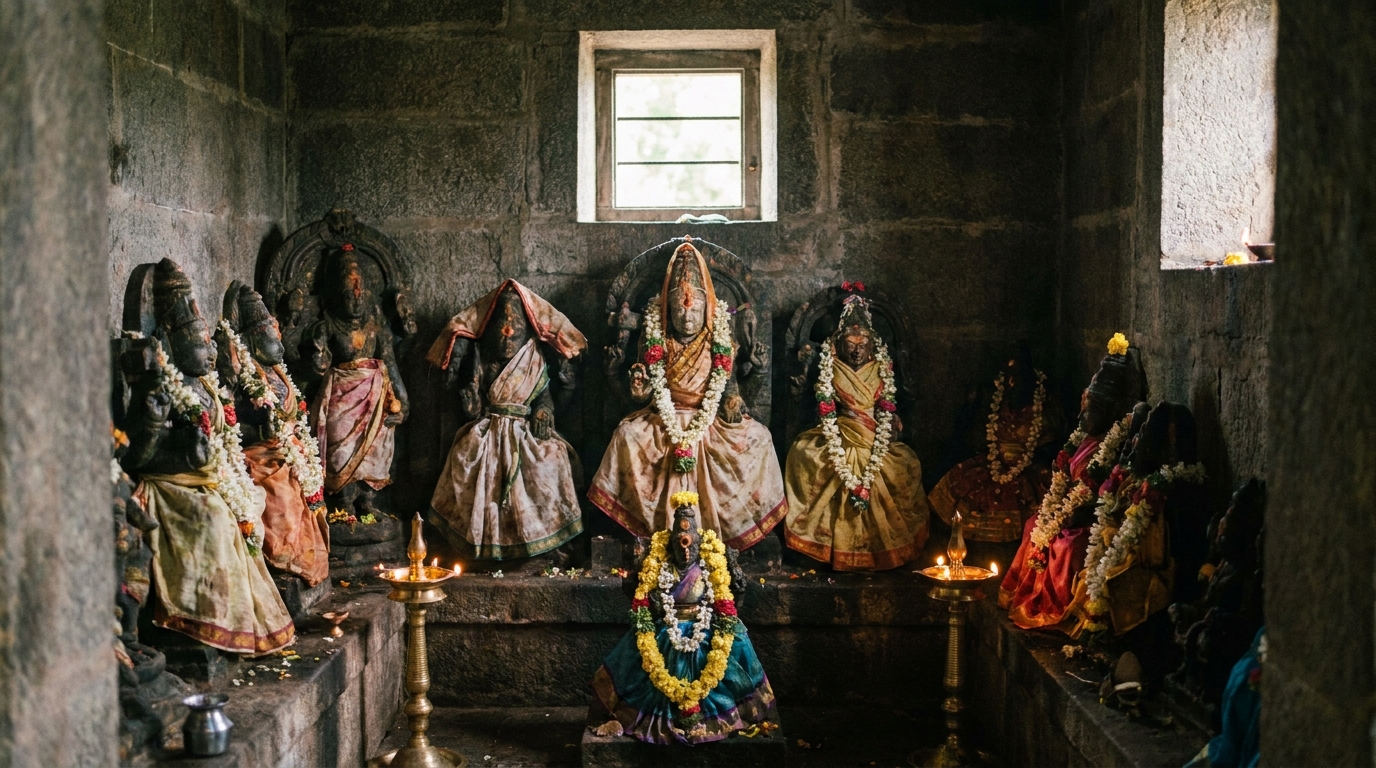
Sanskrit is an ancient sacred language used in many Bhakti scriptures and practices. You do not need to be a scholar to practice Bhakti Yoga, but learning a few simple terms can deepen your appreciation.
Murti: The Sacred Form
Murti means form. In the Bhakti context, it refers to the sacred form of God worshiped with devotion.
A murti may be made of stone, wood, metal, clay, or painted materials. But devotees do not worship the material substance itself. They worship the Lord who mercifully accepts that form to receive our love.
Darshan: Seeing and Being Seen
Darshan means “sacred seeing.” When we come before the Deity, we see the Lord, but we are also seen by the Lord.
This is a tender idea. In modern life, many people feel unseen. Darshan reminds us that God sees us completely—with compassion, patience, and love.
When you come for darshan, you do not need to “perform.” You can simply stand, breathe, look, pray, and receive.
Seva: Loving Service
Seva means service offered with devotion. In Bhakti Yoga, service is not forced labor or religious duty without heart. Seva is an expression of love.
Cleaning the temple can be seva. Cooking for God can be seva. Singing can be seva. Welcoming guests can be seva. Caring for children, helping the community, offering your skills, or even speaking kindly can become seva when done with devotion.
Puja: Worship with Offerings
Puja refers to worship, often involving offerings such as incense, lamps, water, flowers, food, and prayers.
The outer ritual is meant to awaken inner devotion. Without love, ritual can become mechanical. With love, even a simple offering becomes spiritually powerful.
Prasadam: Mercy You Can Taste
Prasadam means mercy or grace. In Bhakti communities, it often refers to vegetarian food that has been prepared and offered to God with devotion.
After the offering, the food is honored as sanctified. Eating prasadam is a joyful and practical way to spiritualize daily life. It reminds us that nourishment is not only physical; it is also spiritual.
Please visit our website for more information on our articles: articles.
The Scriptural Foundation for Deity Worship
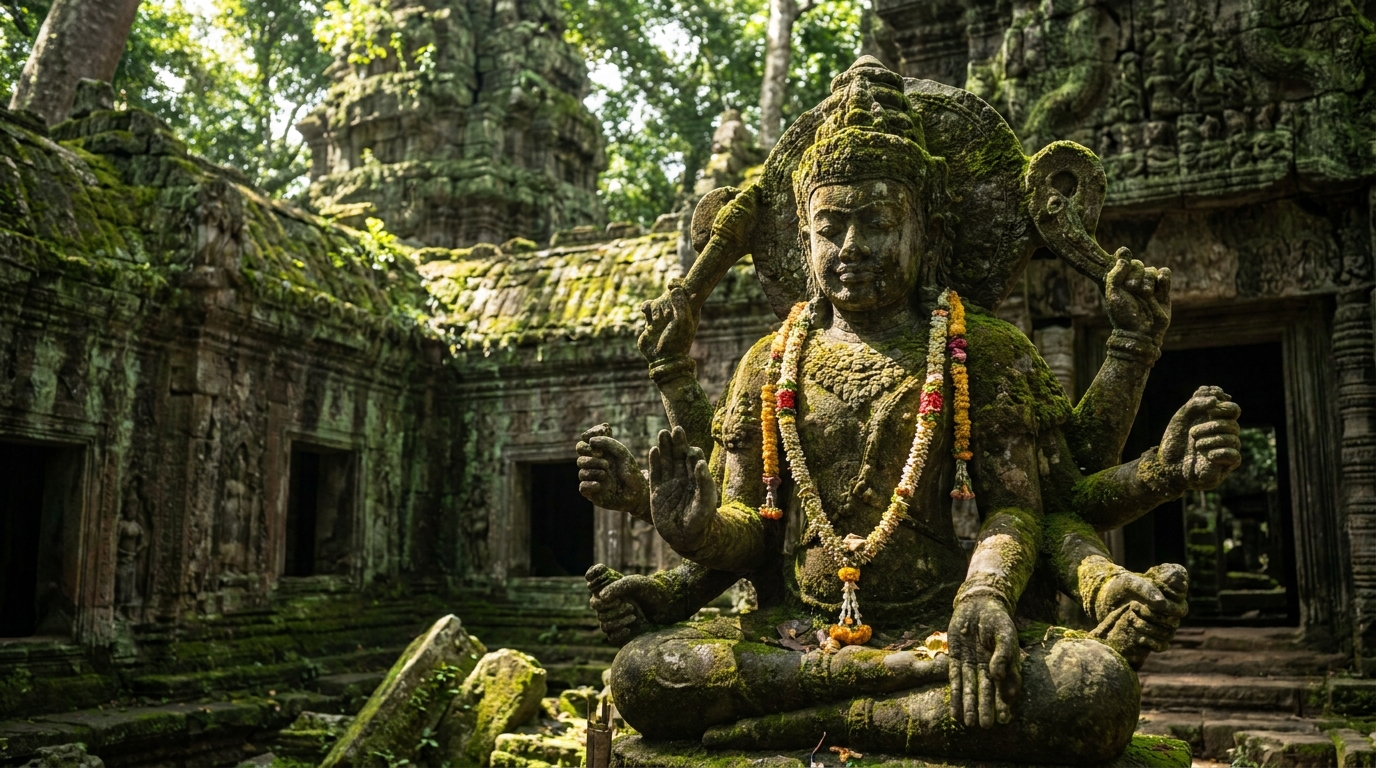
Deity worship is rooted in sacred Bhakti scriptures and has been practiced for thousands of years. It is not a modern invention, nor is it merely cultural decoration. It is a devotional practice meant to awaken love of God.
The Bhagavad-gita: God Accepts Loving Offerings
As mentioned earlier, the Bhagavad-gita gives one of the clearest teachings on devotional offerings:
“Whoever offers Me with love and devotion a leaf, a flower, fruit, or water, I will accept it.”
— Bhagavad-gita 9.26
This verse reveals the heart of Bhakti Yoga. The offering may be simple, but the love matters deeply.
The Lord does not say, “Offer Me gold.” He does not say, “Offer Me something rare.” He says leaf, flower, fruit, or water. These are accessible to almost everyone. Bhakti is not reserved for the wealthy, educated, or outwardly religious. It is available to the sincere.
Srimad-Bhagavatam: Hearing, Chanting, Remembering, Serving
The Srimad-Bhagavatam, one of the most beloved Bhakti scriptures, describes devotional practices such as hearing about God, chanting God’s names, remembering Him, serving His feet, worshiping Him, praying, becoming His servant, cultivating friendship with Him, and offering everything to Him.
These are known as the nine processes of bhakti. Deity worship is connected with many of them. When we come before the Deity, we may hear scripture, chant, remember, worship, pray, and serve.
This shows that Deity worship is not isolated from the rest of spiritual life. It is part of a complete path of loving connection.
The Padma Purana and Sacred Names
Bhakti scriptures also emphasize the power of chanting God’s names. In this age especially, chanting is considered a simple and powerful practice.
Many devotees chant the maha-mantra, the great mantra:
Hare Krishna, Hare Krishna, Krishna Krishna, Hare Hare
Hare Rama, Hare Rama, Rama Rama, Hare Hare
“Hare” calls upon the divine energy of the Lord. “Krishna” means the all-attractive Lord. “Rama” means the source of spiritual joy.
Chanting before the Deity can help the heart become calm, focused, and receptive.
Common Forms of Deities in Bhakti Traditions
Bhakti Yoga includes many sacred forms of the Divine. Different communities may worship different forms, but the mood is the same: loving service to God.
Sri Sri Radha Krishna
Radha and Krishna are central in many Bhakti traditions. Krishna is worshiped as the all-attractive Supreme Person, and Srimati Radharani is honored as the highest expression of pure love and devotion.
Together, Radha and Krishna reveal the deepest spiritual truth: divine love is the essence of reality.
When devotees worship Radha Krishna, they pray to develop selfless love, humility, sweetness, and devotion.
Sri Chaitanya Mahaprabhu
Sri Chaitanya Mahaprabhu is revered as Krishna appearing in the mood of a devotee, teaching the path of chanting God’s holy names.
He shared the practice of sankirtan, congregational chanting, as a joyful and accessible spiritual path. His life teaches compassion, humility, and ecstatic love for God.
A famous prayer connected with His teachings says:
“One should chant the holy name of the Lord in a humble state of mind, thinking oneself lower than a blade of grass, more tolerant than a tree, ready to offer respect to all, and not expecting honor in return.”
This humility is the doorway to deep spiritual life.
Lord Jagannath
Lord Jagannath, whose name means “Lord of the Universe,” is a beloved form of Krishna worshiped especially in Puri, India, and around the world.
Jagannath’s large eyes and open expression remind many devotees that God is watching over everyone with love. His form is especially welcoming. He does not appear distant or severe. He appears eager to receive all.
The famous Ratha-yatra festival, or chariot festival, celebrates Lord Jagannath coming out of the temple to bless everyone. This reflects a beautiful Bhakti principle: God does not belong only behind closed doors. God comes to the streets, to the people, to the world.
Sri Rama, Sita, Lakshmana, and Hanuman
Lord Rama is worshiped as the ideal king, son, husband, and embodiment of righteousness. Sita Devi represents purity, devotion, courage, and grace. Lakshmana represents loyal service, and Hanuman represents powerful devotion and humility.
For many devotees, worshiping Rama and His associates inspires faithfulness, integrity, service, and strength in difficult times.
Hanuman especially teaches us how to serve with our whole heart. Though incredibly powerful, he never becomes proud. His joy is in serving Rama.
Lord Narasimha
Lord Narasimha is the half-man, half-lion form of the Lord who protects His devotee Prahlada. Devotees often pray to Lord Narasimha for protection from fear, obstacles, and inner darkness.
The story of Prahlada reminds us that sincere devotion can flourish even in difficult circumstances. God protects the heart that turns toward Him with faith.
How to Approach Deities in a Temple
Visiting a temple for the first time can feel both beautiful and unfamiliar. Please know that you are welcome. You do not have to understand everything right away.
A temple is a spiritual home. It is a place for prayer, chanting, learning, service, and community.
Enter with Respect and Openness
When entering a temple room, it is customary to remove shoes. This is a sign of respect and cleanliness.
You may see people bowing down. In Sanskrit, bowing is called pranama, an offering of respect. If you feel comfortable, you may bow. If not, you can simply place your palms together or stand quietly with reverence.
Bhakti is not about external pressure. It is about sincere connection.
Receiving Darshan
When you come before the Deities, take a moment to pause. Let your breathing settle. Look gently. Offer a prayer in your own words.
You might pray:
“Dear Lord, please guide me.”
“Please help me remember You.”
“Please teach me how to love.”
“Thank You for bringing me here.”
There is no need for complicated language. Honest prayer is powerful.
Participating in Kirtan
Kirtan is devotional chanting, often done with music. It may include call-and-response singing of sacred names.
If you are new, you can listen first. When ready, you can softly chant along. The beauty of kirtan is that it meets us wherever we are. You do not need a trained voice. You only need a willing heart.
Chanting helps cleanse the mind and awaken devotion. Many people find that kirtan brings peace, joy, and a sense of belonging.
Honoring Prasadam
After worship or kirtan, temples often serve prasadam, sanctified vegetarian food.
Receiving prasadam is not just eating; it is honoring God’s mercy. You can take it with gratitude, remembering that spiritual life can enter even the most ordinary parts of the day, including a meal.
How to Begin Deity Worship at Home
Home worship can be simple and deeply meaningful. Not everyone has access to a temple, and not everyone can perform elaborate rituals. That is perfectly alright.
Bhakti begins with sincerity.
Create a Sacred Space
You may begin with a clean shelf, small table, or corner of a room. Place a picture of Krishna, Rama, Radha Krishna, Lord Chaitanya, Jagannath, or another form of God you feel drawn to worship.
Keep the space clean and peaceful. You may add flowers, a candle or ghee lamp, incense, or scriptures.
This sacred space becomes a gentle reminder: “My home is not separate from my spiritual life.”
Offer Simple Items with Love
You can offer water, fruit, flowers, or vegetarian food. Before eating, place the food before the Lord and pray:
“Dear Lord, this food is Yours. Please accept this offering made with love.”
You may chant the maha-mantra or another prayer. After a few minutes, honor the food as prasadam.
The most important ingredient is devotion.
Set a Daily Rhythm
Consistency helps love grow. Even five minutes a day can make a difference.
You might begin with:
- Lighting a candle or lamp
- Offering a flower or water
- Chanting one round or a few minutes of mantra
- Reading a verse from the Bhagavad-gita
- Saying a heartfelt prayer
- Offering your day in service
Over time, this simple practice can transform the atmosphere of your home and heart.
Keep It Personal, Not Mechanical
Ritual is meant to support relationship. If your worship becomes rushed or dry, pause and remember why you are doing it.
Speak to the Lord. Share your day. Ask for guidance. Express gratitude. Apologize when needed. Celebrate small spiritual victories.
Bhakti is alive.
Deity Worship as a Practical Path of Love
Deity worship is not separate from daily life. It teaches us how to live with more care, gratitude, and compassion.
Learning Attention
In a distracted world, giving attention is an act of love. When we dress the Deity, clean the altar, arrange flowers, or offer food, we practice mindful devotion.
This attention can spread into other relationships. We may become more present with family, more patient with coworkers, more gentle with ourselves, and more aware of God’s presence everywhere.
Learning Humility
Before the Deity, we remember that we are not the center of the universe. This is not meant to make us feel small in a negative way. Rather, it frees us.
Humility means living truthfully. I am dependent on grace. I need guidance. I am loved by God. I am here to serve.
This humility softens the heart and makes spiritual growth possible.
Learning Service
Seva, loving service, is one of the great gifts of Bhakti Yoga. In serving the Deity, we learn that love is active.
Love cooks.
Love cleans.
Love sings.
Love listens.
Love welcomes.
Love forgives.
Love offers.
The Deity helps us practice love in concrete ways.
Learning Sacred Vision
As devotion matures, we begin to see beyond the altar. We start recognizing every living being as connected to God.
The Bhagavad-gita teaches that the wise see with equal vision, honoring the spiritual nature within all. Deity worship should never make us proud or dismissive of others. True worship makes us kinder.
If we bow before God in the temple but ignore God’s children outside the temple, our devotion is incomplete. The Deity teaches us to honor life.
Common Questions About Deities
It is natural to have questions. Bhakti Yoga encourages thoughtful inquiry when it is joined with humility and sincerity.
Is Deity Worship Idol Worship?
In Bhakti understanding, Deity worship is not idol worship. An idol is often understood as something imagined or material worshiped as ultimate. A Deity, however, is a sacred form through which God agrees to receive our devotion.
The difference is relationship and revelation. The Deity is worshiped according to scripture, tradition, prayer, and devotion—not as a human invention, but as a merciful manifestation of the Lord.
Do I Have to Be Hindu to Worship Deities?
No. Bhakti Yoga is not limited by birth, nationality, ethnicity, or social background. While Deity worship has deep roots in the Vedic tradition, the essence is universal: the soul’s loving relationship with God.
Anyone can chant, pray, offer, serve, and grow spiritually.
What If I Make Mistakes?
Everyone makes mistakes. God sees the heart.
Of course, we try to learn proper etiquette and improve our service. But fear of imperfection should not stop us from beginning. A child learning to walk may stumble, but the loving parent is pleased by the effort.
Similarly, sincere effort in Bhakti is precious.
Can I Pray in My Own Language?
Yes. Sanskrit prayers are beautiful and powerful, but God understands every language. More than language, the Lord hears sincerity.
You can pray in English, Spanish, Hindi, Bengali, Arabic, Hebrew, or the quiet language of tears. God is not limited.
How Do I Know Which Deity to Worship?
Sometimes people feel naturally drawn to a particular form of God—Krishna, Rama, Jagannath, Narasimha, Radha Krishna, or another worshipable form. Sometimes the connection grows through community, scripture, or guidance from teachers.
You can begin by chanting God’s names and praying for direction. In time, the heart often becomes clear.
The Inner Meaning of Deity Worship
The outer form of worship is beautiful, but the inner purpose is transformation of the heart.
From Possessiveness to Offering
Much of material life is built around “mine.” My home, my body, my plans, my success, my struggles. Bhakti gently shifts this consciousness toward offering.
“This belongs to You.”
“My talents belong to You.”
“My food belongs to You.”
“My life belongs to You.”
This does not make life empty. It makes life sacred.
From Anxiety to Shelter
When we develop the habit of turning to God daily, we begin to experience shelter. Problems may not disappear immediately, but we no longer face them alone.
Standing before the Deity, we remember that divine love is steady even when life feels uncertain.
From Loneliness to Relationship
Many people carry a quiet loneliness, even when surrounded by others. Bhakti teaches that the soul’s deepest loneliness is separation from God.
Deity worship restores relationship. Every offering says, “I am here.” Every moment of darshan whispers, “God is here too.”
From Routine to Remembrance
Daily worship creates sacred rhythm. Morning prayer, evening chanting, offering meals, reading scripture—these practices help remembrance become natural.
And remembrance is powerful. When we remember God, the heart becomes purified. We begin to act from love rather than fear, service rather than ego, gratitude rather than entitlement.
Bringing Deity Consciousness into Daily Life
Not everyone can spend hours in temple worship. Most of us have responsibilities. Bhakti Yoga does not ask us to abandon life; it teaches us to spiritualize life.
Offer Your Work
Before starting work, pause and pray:
“May my work today be an offering. Please help me act with honesty, patience, and compassion.”
This simple prayer can turn ordinary duties into spiritual practice.
Chant During the Day
Chanting can be done softly while walking, cooking, driving, or resting. The holy names bring the mind back to God.
Even a few sincere repetitions of the maha-mantra can shift the atmosphere within:
Hare Krishna, Hare Krishna, Krishna Krishna, Hare Hare
Hare Rama, Hare Rama, Rama Rama, Hare Hare
Serve People as God’s Beloved
Deity worship should increase our compassion. Try to see each person as spiritually significant. Offer kindness. Listen well. Forgive when possible. Help where you can.
This is also worship.
Keep Returning
Some days your devotion may feel strong. Other days it may feel faint. Do not be discouraged. Spiritual growth is a journey.
Keep returning to prayer. Keep chanting. Keep serving. Keep seeking good association. Keep taking shelter.
God values sincerity more than dramatic display.
A Gentle Guide for Your First Visit to a Bhakti Temple
If you are planning to visit a Bhakti temple or community like The Bhakti House, here are a few simple suggestions.
What to Wear
Wear clean, modest, comfortable clothing. You do not need traditional clothing unless you want to wear it. The main idea is respect.
What to Do When You Arrive
Remove your shoes where indicated. Enter quietly. Observe what others are doing. If someone welcomes you, feel free to ask questions.
Most Bhakti communities are happy to help newcomers feel comfortable.
How to Join In
You can sit, listen, chant, clap during kirtan, or simply absorb the atmosphere. If prasadam is served, you are welcome to honor it.
You do not need to know everything. Just come with an open heart.
What to Ask
Good questions are welcome:
“What does this mantra mean?”
“Who are the Deities?”
“How can I begin chanting?”
“What is prasadam?”
“How can I serve?”
Bhakti grows through sincere inquiry and humble practice.
Growing in Relationship with the Deities
As time passes, Deity worship can become a deep and personal relationship. You may begin to feel that the Lord is guiding you, correcting you, comforting you, and inviting you closer.
Consistency Builds Connection
Just as friendships deepen through regular contact, devotion deepens through steady practice. A little every day is better than occasional intensity followed by long neglect.
Light the lamp. Offer water. Chant. Read. Pray. Serve.
These simple acts become a garland of love.
Association Strengthens Devotion
In Sanskrit, spiritual association is called sadhu-sanga—the company of sincere spiritual people. Being around devotees helps us learn, stay inspired, and remain accountable.
We are not meant to walk the path alone. Community is one of God’s gifts.
Scripture Gives Vision
Reading Bhakti scriptures helps us understand who God is, who we are, and how to live with devotion.
The Bhagavad-gita offers foundational wisdom. The Srimad-Bhagavatam nourishes the heart with stories of devotion. The lives of saints show us what love of God looks like in practice.
Even one verse a day can become a lamp for the heart.
Service Makes Love Real
Love grows when expressed. Ask, “How can I serve?” Maybe you can help cook, clean, greet guests, arrange flowers, support programs, share skills, or simply encourage others.
No service is too small when offered with devotion.
Everyone Is Welcome in the Journey of Bhakti
Discovering Deities is not only about learning temple culture or sacred terminology. It is about discovering that God is personal, loving, and willing to meet us in ways we can understand.
The Deity stands as an invitation. Come closer. Offer what you can. Begin where you are. Let your heart be softened. Let your life become an offering.
Whether you are new to Bhakti Yoga or returning after many years, whether you feel full of faith or full of questions, you are welcome. Bring your sincerity. Bring your longing. Bring your whole self.
Take one small step: chant one mantra, offer one prayer, visit one temple gathering, read one verse, serve one person, or offer one simple flower with love.
God sees the heart. And one sincere step toward God is never lost.
FAQs
What is the definition of a deity?
A deity is a supernatural being that is worshipped and revered in various religions and belief systems. Deities are often considered to have control over specific aspects of the natural world or human life.
How are deities worshipped?
Worship of deities varies widely across different cultures and religions. Some common forms of worship include prayer, offerings, rituals, and festivals dedicated to specific deities.
What are some examples of deities in different religions?
Examples of deities include the Greek gods and goddesses such as Zeus and Athena, the Hindu deities like Vishnu and Lakshmi, the Norse gods like Odin and Thor, and the Egyptian gods such as Ra and Isis.
Can deities be male and female?
Yes, deities can be male, female, or genderless, depending on the specific belief system. Many religions have both male and female deities, each associated with different aspects of life and the natural world.
Are there any common themes or characteristics among deities?
Common themes among deities include their association with specific domains such as love, war, wisdom, and fertility. Deities are often depicted with supernatural powers and are revered as symbols of divine authority and guidance.

