
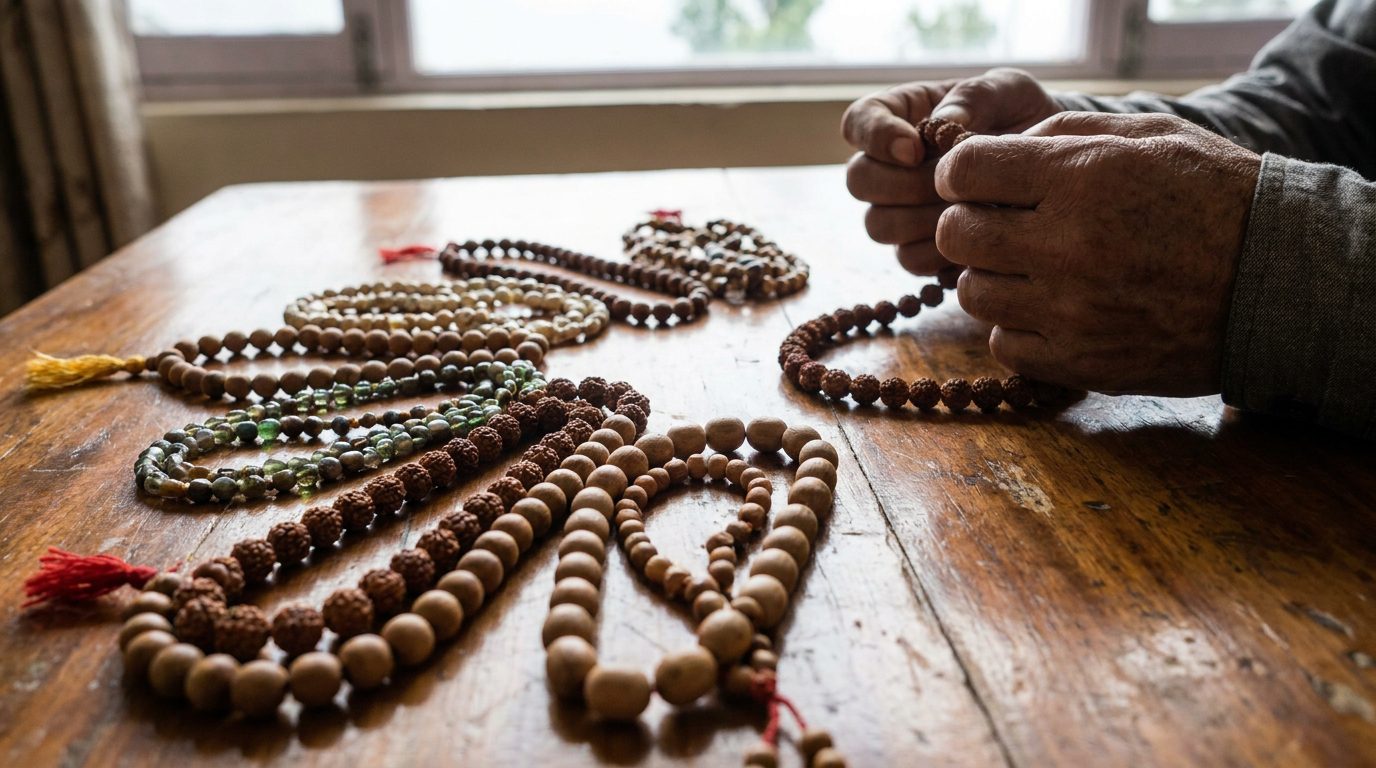
Sacred beads have been held in the hands of seekers for thousands of years. Across many spiritual traditions, beads help the heart become steady, the mind become peaceful, and prayer become personal. In Bhakti Yoga, the yoga of devotion, sacred beads are most often used for chanting the holy names of God. This practice is called japa, a Sanskrit word meaning “soft repetition” or “meditative chanting.”
At The Bhakti House, we honor the simple beauty of this practice. You do not need to be born in a particular culture, know Sanskrit perfectly, or have a long spiritual background to begin. Sacred beads are not a symbol of spiritual pride. They are a humble companion for the soul—a gentle invitation to return to love, one bead at a time.
Whether you are new to chanting, curious about mala beads, or already walking a devotional path, this guide will help you understand the meaning, use, care, and spiritual power of sacred beads in daily life.
Sacred beads are prayer beads used to support meditation, chanting, and remembrance of God. In the Bhakti tradition, they are commonly called japa mala. A mala is a string of beads, and japa means quiet repetition of a mantra, prayer, or divine name.
A traditional japa mala often has 108 beads, plus one larger bead called the guru bead or Krishna bead. The practitioner chants one mantra on each bead, moving bead by bead until completing a full round.
Why Beads Help the Mind and Heart
The mind can be restless. In the Bhagavad Gita, Arjuna honestly says to Krishna, “The mind is restless, turbulent, strong and obstinate.” Krishna does not reject him for this. Instead, He teaches that the mind can be trained by practice and detachment.
Sacred beads offer that practice in a gentle way. They give the hands something holy to do while the tongue chants and the ears listen. This brings body, speech, and mind into one prayerful activity.
When we chant on beads, we are not trying to force the mind into silence. We are giving the mind a higher place to rest.
Sacred Does Not Mean Complicated
Sometimes people feel intimidated by spiritual tools. They may wonder, “Am I allowed to use beads?” or “What if I do it wrong?”
Please know: sacred beads are meant to help us come closer to God, not make us anxious. The heart of Bhakti Yoga is sincerity. If you approach the beads with respect, humility, and a desire to grow spiritually, you are already beginning beautifully.
The Bhakti Meaning of Japa Mala
In Bhakti Yoga, sacred beads are not magical objects in themselves. Their power comes through loving connection—with God, with the holy name, with prayer, and with the sincere intention of the chanter.
Bhakti means devotion, or loving service to the Divine. Yoga means connection. So Bhakti Yoga is the path of reconnecting with God through love.
The Holy Name as Divine Presence
One of the central teachings of Bhakti scriptures is that God is present in His holy names. This means chanting is not only a symbol or reminder—it is a living encounter.
In the Bhakti tradition, many practitioners chant the maha-mantra:
Hare Krishna Hare Krishna
Krishna Krishna Hare Hare
Hare Rama Hare Rama
Rama Rama Hare Hare
Maha means “great,” and mantra means “a sacred sound that frees the mind.” The word Hare is a call to the divine spiritual energy of God. Krishna means “the all-attractive one.” Rama means “the source of joy and pleasure.”
A simple meaning of the mantra is: “O Lord, O divine energy of the Lord, please engage me in Your loving service.”
Beads as a Path of Relationship
When we chant on beads, we are not simply counting sounds. We are nurturing a relationship.
Each bead becomes a moment of turning toward God. Each mantra becomes a prayer: “Please help me remember You. Please help me love You. Please guide my life.”
Over time, the beads absorb our tears, our hopes, our gratitude, our confusion, and our longing. They become a witness to our spiritual journey.
Scriptural Encouragement for Chanting
The Srimad Bhagavatam, one of the treasured scriptures of Bhakti, repeatedly glorifies hearing and chanting about God. It teaches that when we hear and chant the names and qualities of the Lord, the heart becomes cleansed.
This is very practical. We all carry impressions from stress, disappointment, fear, and worldly pressure. Chanting is a spiritual cleansing of consciousness. It brings us back to who we truly are: eternal souls, beloved by God, meant for love and service.
How to Use Sacred Beads for Chanting
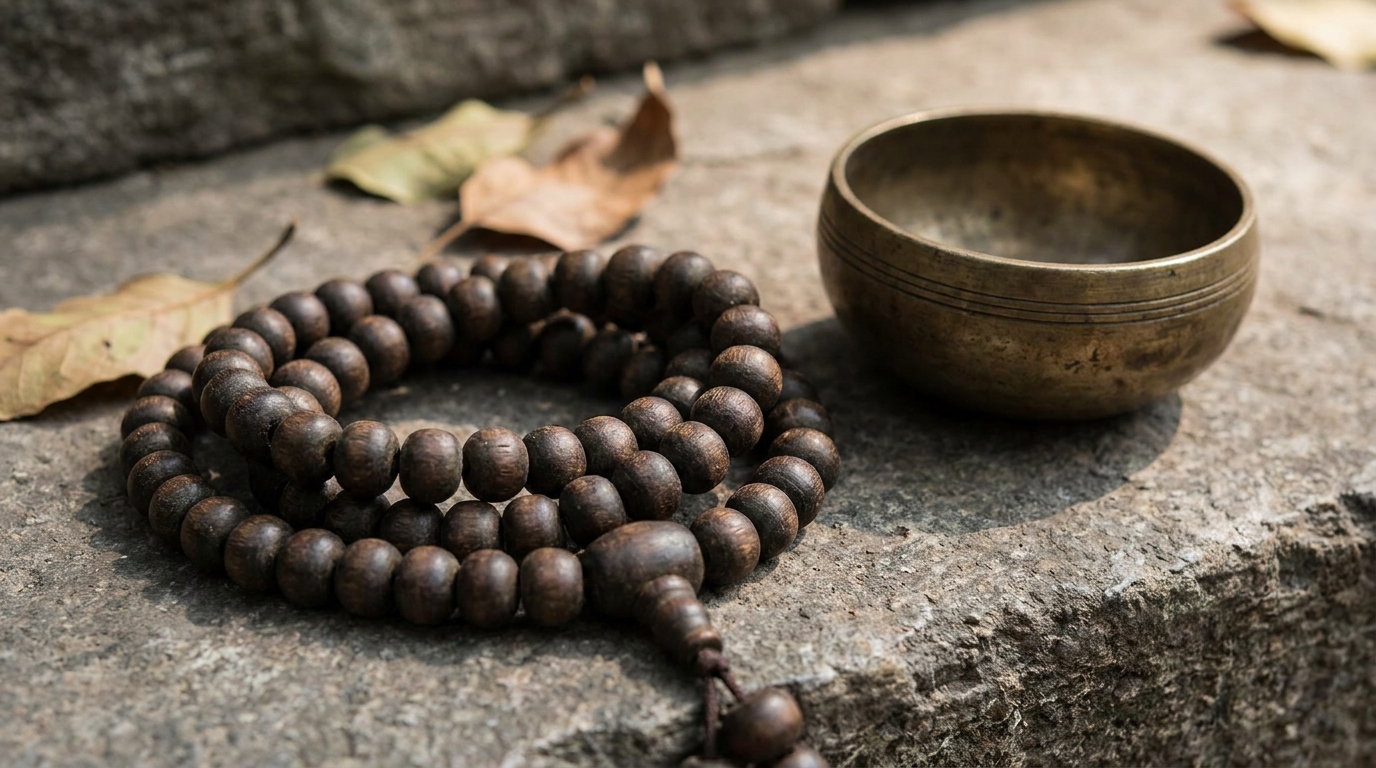
Using sacred beads is simple, but it becomes deeper with attention and care. You can begin with a few minutes a day and gradually build your practice.
Step 1: Choose a Peaceful Time
Early morning is especially recommended in Bhakti Yoga because the mind is generally clearer and the world is quieter. But if morning is difficult, choose a time you can realistically keep.
Consistency is more important than perfection. Five sincere minutes every day is more powerful than one long session followed by many days of forgetting.
You might chant:
- After waking up
- Before work or school
- During a quiet lunch break
- Before sleeping
- During a walk in nature
- In a sacred space at home
Step 2: Hold the Beads Respectfully
Traditionally, the beads are held in the right hand. Many practitioners use the thumb and middle finger to move from one bead to the next. The index finger is usually avoided because it represents ego or pointing outward in judgment.
If this feels unfamiliar, do not worry. The main point is respect and attention.
You begin on the bead next to the larger guru bead. Chant the full mantra on one bead, then gently move to the next. When you complete the circle and return to the guru bead, do not cross over it. Instead, turn the beads around and chant back in the opposite direction if you want to continue.
Step 3: Chant and Listen
The most important part of japa is hearing. Chant clearly enough that you can hear the mantra with your own ears.
The mind may wander. That is normal. When you notice it drifting, gently return to the sound. Do not become discouraged. Every return is part of the practice.
In devotional life, we are not trying to impress God with perfect concentration. We are offering our sincere effort.
Step 4: Set a Gentle Intention
Before you begin, pause for a moment. Offer a prayer in your own words.
You might say:
“Dear Lord, please help me chant with sincerity.”
“Please guide my heart toward love and service.”
“Please let this practice purify my mind and bring me closer to You.”
This small prayer can transform chanting from a routine into a relationship.
Step 5: Complete Your Practice with Gratitude
When you finish, take a moment to be thankful. Even if your mind was restless, you still spent time with sacred sound. That matters.
You can end with a simple prayer:
“Thank You for allowing me to chant. Please help me carry this remembrance into my day.”
Check out our latest articles at https://thebhaktihouse.org/blog.
Choosing the Right Sacred Beads
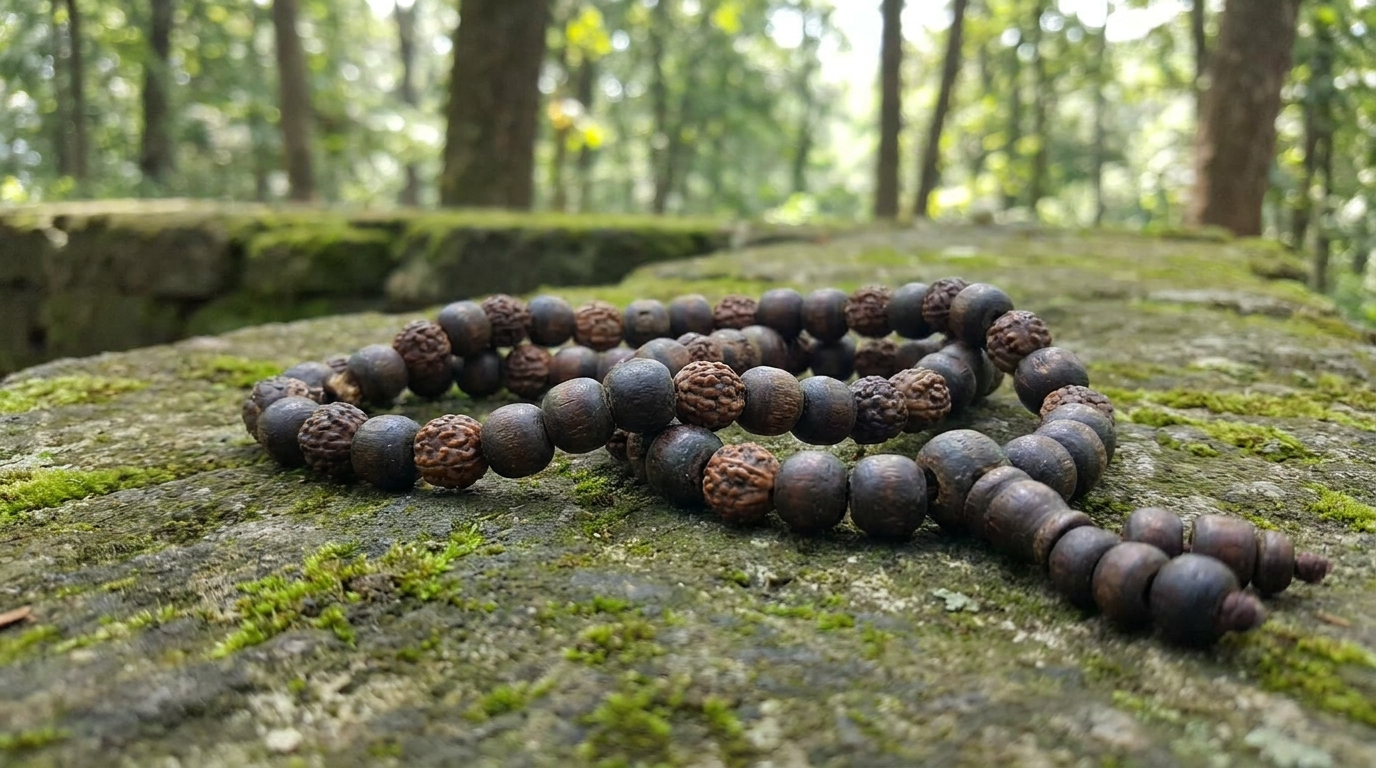
There are many kinds of prayer beads. In Bhakti Yoga, certain materials are especially cherished because of their connection to devotion.
Tulasi Beads
Tulasi, also spelled Tulsi, is a sacred plant deeply loved in the Vaishnava Bhakti tradition. Vaishnava means a devotee of Vishnu or Krishna. Tulasi is honored as a great devotee of the Lord, and beads made from Tulasi wood are traditionally used for chanting the Hare Krishna maha-mantra.
Tulasi beads are considered very sacred, so they are treated with care and respect. Many practitioners keep them in a bead bag to protect them while chanting.
Neem, Rudraksha, and Other Beads
Some seekers use neem beads, sandalwood beads, or rudraksha beads. Rudraksha beads are often associated with Lord Shiva and are common in certain yogic and devotional traditions.
If you are practicing Bhakti Yoga in the Krishna tradition, Tulasi beads are especially recommended. Still, if you are just beginning, you may start with whatever prayer beads help you chant sincerely and respectfully.
Do the Beads Need to Be Expensive?
No. Spiritual life is not measured by the cost of our beads.
Simple beads used with humility are more valuable than beautiful beads used with pride. The true ornament of japa is devotion.
If you cannot access a mala yet, you can still chant on your fingers, count with a simple counter, or chant without counting. The holy name is available to everyone.
Caring for Your Sacred Beads
Because sacred beads are used for prayer, caring for them helps cultivate reverence. This care is not superstition. It is a way of training the heart to honor sacred things.
Keep Them Clean and Protected
Many practitioners keep their japa mala in a bead bag. This helps prevent the beads from touching the floor or becoming damaged.
Try to keep your beads in a clean place, perhaps on an altar, shelf, or special cloth. Avoid bringing them into unclean situations when possible.
Avoid Casual Handling
It is good to avoid using your japa mala as a decoration, toy, or fashion accessory if it has been set aside for chanting. Sacred beads are a tool for prayer.
This does not mean we become harsh or judgmental. It simply means we cultivate mindfulness. When we treat the beads with respect, our chanting naturally becomes more respectful too.
What If the Beads Break?
If your beads break, do not panic. This can happen naturally over time. You can restring them if possible. Some devotees see it as a reminder to renew their commitment.
If beads are too damaged to use, they can be respectfully placed in a clean natural setting, such as near a sacred plant, or handled according to guidance from a trusted teacher or spiritual community.
The Inner Power of Chanting on Beads
The true power of sacred beads is not only in the hand—it is in the transformation of the heart. Over time, chanting can soften us, steady us, and awaken love for God and all beings.
Chanting Cleanses the Heart
Bhakti scriptures describe the heart as being covered by dust—selfish desires, fears, resentments, and forgetfulness of our spiritual identity. Chanting acts like a gentle cleansing.
This does not mean all struggles disappear overnight. Spiritual growth is usually gradual. But with steady practice, we may notice:
- More peace in stressful moments
- Greater patience with others
- A deeper attraction to prayer
- Less dependence on external approval
- More compassion
- A desire to serve
- A growing sense of God’s presence
Chanting Builds Spiritual Resilience
Life brings uncertainty. Sacred beads give us something steady to hold—not as an escape, but as a source of strength.
When the heart is anxious, chant.
When the mind is confused, chant.
When you are grateful, chant.
When you feel far from God, chant anyway.
The holy name meets us where we are.
Chanting Awakens Service
True chanting does not make us passive. It awakens seva, which means loving service.
As our heart becomes touched by divine sound, we naturally want to serve God’s creation. We become more aware of how we speak, how we eat, how we treat others, and how we use our time.
Bhakti Yoga is not only a meditation practice. It is a life of love in action.
Common Challenges in Japa Practice
Every sincere practitioner faces challenges. Please do not think difficulty means failure. Difficulty simply means you are human, and spiritual practice is doing its work.
“My Mind Wanders Constantly”
This is the most common challenge. The mind may jump to tasks, memories, worries, or random thoughts.
When this happens, gently return to the sound. Again and again. This returning is part of the offering.
You can also try chanting a little louder, sitting with better posture, or reading a verse from scripture before beginning.
“I Feel Dry or Mechanical”
Sometimes chanting feels sweet. Sometimes it feels dry. Both experiences can be useful.
When chanting feels dry, we learn to serve without demanding immediate emotional reward. This deepens sincerity.
You can pray: “Dear Lord, I do not have much devotion, but I want to want devotion. Please help me.”
That humble prayer is very beautiful.
“I Don’t Know If I’m Qualified”
In Bhakti, qualification begins with sincerity. You do not need to be pure before you chant. Chanting is what purifies us.
The Bhagavad Gita teaches that even if someone has flaws, if they are sincerely devoted and determined on the path, they should be seen as saintly because they are rightly situated. This is a compassionate teaching. God sees the direction of the heart.
“I Don’t Have Time”
Start small. One round on a traditional 108-bead mala may take around seven to ten minutes, depending on pace. If that feels too much, chant for three minutes. Or chant one mantra with full attention.
The door to devotion opens through sincerity, not performance.
Creating a Sacred Space for Your Beads
A sacred space helps remind us that our inner life matters. It does not need to be elaborate. Even a small corner can become a place of prayer.
A Simple Home Altar
You may create a small altar with:
- A clean cloth
- A picture of Krishna, Rama, Vishnu, Radha, or a form of God you feel drawn to
- A candle or lamp
- Fresh flowers
- Scripture, such as the Bhagavad Gita
- Your japa beads in a bead bag
The altar is not meant to impress anyone. It is a place where your heart can bow.
Begin with a Short Ritual
Before chanting, you might light a candle, offer incense, bow your head, or say a short prayer. These simple acts help the mind shift from worldly busyness to sacred presence.
Ritual in Bhakti is not empty formality when offered with love. It is a language of the heart.
Bring the Mood Into Daily Life
Your sacred space is a beginning, not an ending. The goal is to carry remembrance into everything:
- Cooking as an offering
- Speaking kindly
- Working honestly
- Caring for family with patience
- Serving guests and strangers
- Singing or hearing kirtan
- Remembering God during transitions in the day
Kirtan means congregational chanting, usually with music. Japa is personal chanting, often quiet and focused. Both nourish the soul.
Sacred Beads and the Practice of Mantra Meditation
Mantra meditation is one of the most accessible and powerful practices in Bhakti Yoga. It does not require difficult postures or complicated philosophy. It invites us to hear sacred sound with humility.
What Is a Mantra?
A mantra is a sacred sound vibration that protects and liberates the mind. The Sanskrit root man refers to the mind, and tra suggests deliverance or protection.
In Bhakti, mantras are not simply affirmations. They are prayers, names of God, and spiritual sound descending from sacred tradition.
The maha-mantra is especially recommended in many Bhakti lineages because it is simple, direct, and full of divine names.
Why Repetition Matters
Repetition is not meaningless when the object of repetition is sacred. We repeat what we love. We say the names of loved ones. We return to favorite songs. We breathe again and again.
In the same way, repeating the holy name allows love to deepen. Each repetition is another knock on the door of the heart.
Sound Before Perfection
You may not pronounce everything perfectly at first. That is okay. Learn respectfully, listen to experienced chanters, and keep improving. But do not let fear stop you from beginning.
A child calling for a parent may not pronounce every word perfectly, but the parent understands the love. In the same way, God receives the sincere call of the soul.
The 108 Beads: Meaning and Mystery
Many malas contain 108 beads. This number appears throughout yogic and spiritual traditions, and different explanations are given.
A Sacred Number in Spiritual Traditions
Some connect 108 to cosmology, astrology, sacred geometry, or the Upanishads. In Bhakti practice, the most important point is practical: 108 beads give us a complete round of focused chanting.
Rather than becoming lost in numerical mystery, we can receive the number as an invitation to steady devotion.
The Guru Bead
The larger bead represents the guru principle. Guru means spiritual teacher, or one who helps remove darkness by giving divine knowledge.
In Bhakti, the guru is honored as a guide who connects us to God, not as an object of ego worship. When we reach the guru bead, we pause with gratitude and do not cross over it. This reminds us that spiritual life is received through grace.
Counting Without Becoming Mechanical
Counting rounds can help build discipline, but the goal is not quantity alone. The goal is attentive, heartfelt chanting.
If you commit to a certain number of rounds daily, let that commitment be a garland of love, not a burden of guilt. Discipline and tenderness can live together.
Bringing Sacred Beads Into a Modern Life
Many of us live busy lives filled with screens, responsibilities, and constant noise. Sacred beads offer a simple way to return to the soul.
A Practice for Busy People
You can keep your beads in a clean bag and carry them with you. Chant before opening your phone in the morning. Chant in your parked car before entering work. Chant while walking slowly in a peaceful place.
Even one intentional round can change the atmosphere of your day.
Chanting During Emotional Seasons
Sacred beads can be especially helpful during grief, transition, loneliness, or uncertainty. When words are hard to find, the mantra gives us words. When prayer feels weak, the beads help us continue.
The holy name does not demand that we be emotionally polished. We can come as we are.
Family and Community Practice
If you have children, friends, or family members who are open, you can chant together. Keep it gentle and joyful. Bhakti is not forced. Love grows best in an atmosphere of welcome.
You might begin with a short kirtan, a simple meal offered with gratitude, or one round of japa together.
Sacred Beads, Humility, and Spiritual Growth
Sacred beads are powerful, but they also teach humility. They remind us that spiritual life is walked step by step, bead by bead.
Avoiding Spiritual Pride
It is possible to become proud of our practices: how many rounds we chant, how long we have been on the path, or how much we know. But Bhakti gently redirects us.
The purpose of chanting is not to become superior. It is to become softer, more surrendered, more loving, and more useful in God’s service.
A person truly touched by the holy name becomes kinder.
Seeing Others With Compassion
As chanting purifies the heart, we begin to see others not as labels, backgrounds, or opinions, but as souls. Everyone is on a journey. Everyone is loved by God.
This vision is deeply needed in our world.
Growing Through Guidance
While anyone can begin chanting, it is helpful to learn from sincere practitioners, teachers, and communities rooted in authentic Bhakti tradition. Spiritual association, called sadhu-sanga, means keeping company with those who inspire our devotion.
A loving community can help us stay steady, ask questions, and serve with joy.
A Simple Daily Sacred Bead Practice
If you are ready to begin, here is a gentle daily practice you can try.
Morning Practice
Sit in a clean, peaceful place. Take three slow breaths. Offer a short prayer. Chant one round on your beads, or chant for five to ten minutes.
Focus on hearing each mantra. When the mind wanders, return kindly.
Midday Remembrance
Pause for one minute during your day. Touch your beads if appropriate, or simply remember the mantra internally. Offer your work, relationships, and challenges to God.
This helps spiritual life move from the meditation seat into the heart of daily living.
Evening Gratitude
Before sleep, reflect: “Where did I remember God today? Where did I forget? How can I take one sincere step tomorrow?”
Chant a few mantras with gratitude. Let the holy name be the last sound that touches your heart before rest.
The Heart of the Practice
Sacred beads are not about escaping life. They help us enter life with more love, clarity, and devotion. They teach us to slow down, listen deeply, and remember that God is near.
In the Bhagavad Gita, Krishna says that whoever offers Him even a leaf, a flower, fruit, or water with love and devotion, He accepts it. This verse reveals the heart of Bhakti: God is looking for love.
Your chanting may feel small. Your offering may feel imperfect. But when it is offered sincerely, it is precious.
Sacred beads help us make that offering again and again.
One bead may carry a prayer for forgiveness.
One bead may carry gratitude.
One bead may carry tears.
One bead may carry hope.
One bead may carry the simple longing to love God more.
And slowly, by grace, the whole life becomes a mala—a garland of moments offered in devotion.
Wherever you are coming from, whatever your background, and however near or far you may feel from God, you are welcome on the path of Bhakti. Take one sincere step today. Pick up the beads, chant one holy name, offer one honest prayer, or do one act of loving service. God sees the heart, and every sincere step toward Him is met with grace.
FAQs
What are sacred beads?
Sacred beads are objects used in various religious and spiritual practices around the world. They are often used for prayer, meditation, and as a way to connect with the divine.
What materials are sacred beads made from?
Sacred beads can be made from a wide variety of materials, including wood, bone, metal, glass, and gemstones. Different cultures and traditions have their own preferred materials for creating sacred beads.
How are sacred beads used in different religious traditions?
Sacred beads are used in different ways across various religious traditions. For example, in Buddhism, beads are used for counting mantras during meditation, while in Christianity, rosary beads are used for reciting prayers.
What is the significance of sacred beads in spiritual practices?
The significance of sacred beads varies depending on the specific religious or spiritual tradition. In general, they are used as a tool for focusing the mind, cultivating mindfulness, and deepening one’s connection to the divine.
How can I use sacred beads in my own spiritual practice?
If you are interested in incorporating sacred beads into your spiritual practice, you can start by researching the traditions and practices associated with the specific type of beads you are drawn to. You can also use them as a tool for meditation, prayer, or simply as a reminder of your spiritual intentions.

