Nama sankirtana is the devotional practice of singing sacred names together, often through call-and-response chanting. In bhakti yoga, it is more than a musical performance or formal religious ritual. It offers an accessible way to turn the voice, breath, attention, and emotion toward the Divine.
The Sanskrit word nama means “name,” while sankirtana refers to collective glorification or chanting. As voices meet in shared rhythm, prayer becomes embodied and communal. You do not need musical training or prior experience; sincere participation is the essential offering.
Nama sankirtana differs from silent repetition, yet the two practices naturally support one another through nama smarana, or remembering the Divine through the name. Whether sung aloud or repeated inwardly, the sacred name can steady the mind and open the heart.
What Does Nama Sankirtana Mean in Bhakti Yoga?
In bhakti yoga, nama sankirtana means the communal, often musical chanting of divine names. Bhakti yoga is the path of loving devotion, where relationship, surrender, gratitude, and remembrance are central aims. Chanting gives these qualities a practical form by directing the heart and mind toward God.
Bhakti traditions regard the divine name as more than a sound or verbal label. It serves as an object of contemplation and a living point of relationship with the Divine. Practitioners may chant names such as Krishna, Rama, Shiva, or the Divine Mother, according to their lineage and devotional connection.
For many devotees, repeating or singing a sacred name expresses love, invites remembrance, and helps gather a distracted mind. It is not presented as a guaranteed technique or supernatural formula. Instead, its value develops through sincere attention, humility, and an open-hearted relationship with the name.
Nama sankirtana also welcomes beginners. Musical ability, Sanskrit fluency, and prior spiritual experience are not prerequisites. A simple, sincere voice can participate fully, because bhakti practice emphasizes intention over performance. In this spirit, chanting becomes an offering of attention, feeling, and remembrance.
How a Nama Sankirtana Gathering Unfolds
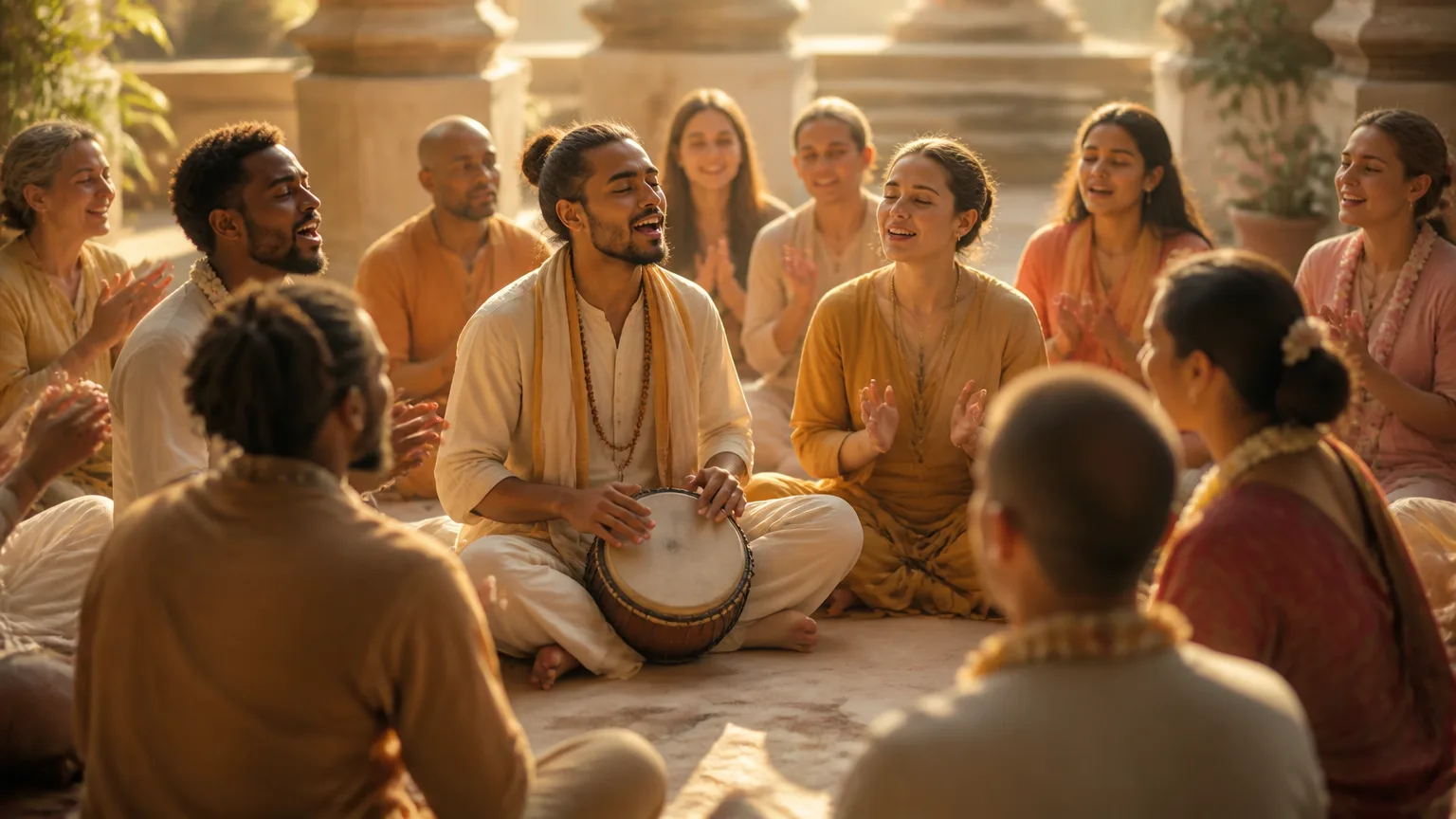
A typical nama sankirtana gathering begins with an invocation, a moment of quiet, or a brief prayer. Participants may sit in a circle or face a small altar, creating a shared focus. The lead singer then introduces a divine name or mantra in a clear, unhurried phrase.
The group answers by repeating the same phrase. This call-and-response structure allows newcomers to participate immediately, even without Sanskrit fluency or musical training. The leader guides the pace and melody, while participants listen closely and respond together.
A harmonium often supports the melody, while mridanga, drums, kartals, or hand clapping establish the rhythm. These instruments are not intended to showcase technical skill. They support remembrance, helping the group maintain attention on the sacred name rather than on performance.
As repetition continues, the atmosphere may change gradually. The chanting can begin gently and contemplatively, then gather energy through stronger rhythms, fuller voices, and joyful movement. At other times, it may remain intimate and restrained. Each spiritual community follows its own customs, so approach unfamiliar gatherings with curiosity, respect, and sensitivity. The session typically closes as instruments and voices soften, leaving several moments of shared silence.
Why Singing Divine Names Can Transform Attention and the Heart
Nama sankirtana gives a wandering mind a simple, meaningful point of return. Each repetition brings attention back to the Divine name, melody, and shared rhythm. For people who find silence difficult, vocal practice can make meditation more approachable. It offers a tangible way to engage breath, sound, and intention, much like other meditation practices for vitality.
The practice can also shape the heart through steady devotional attention. Repeated singing may nurture gratitude, humility, and longing for the Divine. It can gradually soften self-preoccupation by directing feeling toward something larger than the individual self. These effects are not instant or identical for everyone; chanting is an offering, not a guarantee of enlightenment.
Chanting may feel peaceful, joyful, powerful, or entirely ordinary. It may also bring emotions to the surface, including tenderness or grief. Practitioners can meet these responses with gentle awareness rather than judging the experience. Over time, the shared voice of a group may strengthen a sense of belonging and connection, while personal sincerity remains more important than musical ability.
Beginning Nama Sankirtana as a Spiritual Seeker
A respectful beginning can be simple. Consider attending an established kirtan, temple service, or devotional gathering, and observe its customs before joining fully. Notice when participants sing, respond, bow, or remain silent. This attentive approach supports one sincere step toward God without turning nama sankirtana into a performance.
You can also begin at home with a few quiet minutes of listening. Then repeat a simple divine name or mantra, allowing your voice to become natural rather than self-conscious. When possible, learn the pronunciation and consider the name’s meaning, but beginners do not need to master Sanskrit before participating.
Consistency matters more than elaborate preparation. A short, regular practice can gradually deepen attention and remembrance. End with several moments of quiet reflection, allowing the sound to settle into your awareness and influence how you speak, serve, and conduct yourself throughout the day.
Let the Sacred Name Become a Living Practice
Nama sankirtana is a shared, embodied act of remembering and loving the Divine. Within bhakti yoga, it transforms chanting into an offering of attention, humility, and devotion—not a test of vocal talent or dramatic spiritual experience.
Its influence extends beyond the gathering, encouraging remembrance, compassion, and service in daily life. Begin by joining a chant, listening deeply, or quietly repeating a divine name. With sincerity, the sacred name can become a steady presence in how you live.