
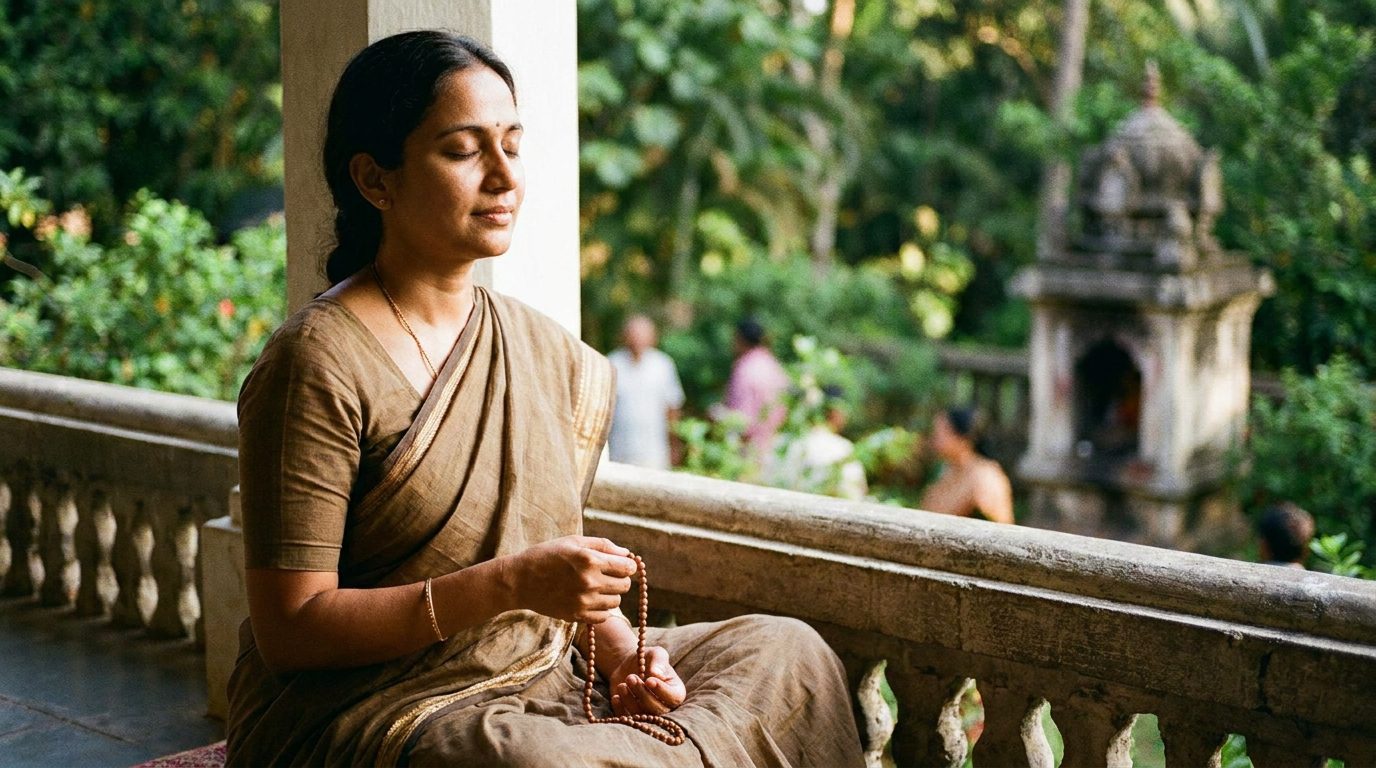
Anxiety is something many sincere people carry quietly. It may show up as racing thoughts, tightness in the chest, difficulty sleeping, fear of the future, or the feeling that we must hold everything together by our own strength. In today’s world, with constant information, pressure, comparison, and uncertainty, it is very understandable that the heart can feel overwhelmed.
Bhakti Yoga offers a gentle and deeply practical way to meet anxiety—not by denying it, not by pretending everything is fine, but by bringing the anxious heart into a loving relationship with God.
The word Bhakti means devotion, loving service, or heartfelt connection with the Divine. Yoga means union or connection. So Bhakti Yoga is the path of reconnecting the soul with God through love, chanting, prayer, service, remembrance, and a life of compassion.
This path does not ask us to be perfect before we begin. It welcomes us as we are—tired, hopeful, confused, faithful, skeptical, joyful, grieving, or anxious. In Bhakti, every honest emotion can become part of our spiritual journey when we offer it with sincerity.
Anxiety Is Not a Spiritual Failure
Many people feel guilty for having anxiety. They may think, “If I had more faith, I wouldn’t feel this way.” But anxiety is not a sign that we are spiritually unworthy. It is part of the human experience in a temporary and unpredictable world.
In the Bhagavad-gita, one of the most beloved Bhakti scriptures, Arjuna—the great warrior and dear friend of Krishna—experiences deep emotional distress. Before a great battle, his hands tremble, his mouth becomes dry, his mind reels, and he feels unable to stand. This is described in the opening chapter of the Gita.
Arjuna does not hide his anxiety. He brings it to Krishna.
This is a powerful lesson: the spiritual path begins not with pretending to be strong, but with turning toward God honestly.
The Heart Needs Shelter
Anxiety often comes from the feeling that we are alone, unsafe, or responsible for controlling everything. Bhakti gently reminds us: we are not alone. We are beloved souls, held by a Divine Person who knows our hearts.
Krishna says in the Bhagavad-gita, “Do not fear.” This is not a command to suppress emotion. It is an invitation to take shelter—to remember that beyond the changing waves of life, there is an eternal source of love, wisdom, and protection.
Bhakti practice reduces anxiety because it gives the mind a sacred focus, the heart a loving shelter, and daily life a meaningful direction.
Chanting: Calming the Mind Through Sacred Sound
One of the most accessible and powerful practices in Bhakti Yoga is chanting, especially the chanting of God’s names. In Sanskrit, this is called mantra meditation.
A mantra is a sacred sound vibration that helps free the mind from fear, confusion, and repetitive thinking. The word mantra can be understood as “that which protects or delivers the mind.”
In Bhakti traditions, one of the most widely practiced mantras is the Maha Mantra, meaning “great mantra”:
Hare Krishna Hare Krishna
Krishna Krishna Hare Hare
Hare Rama Hare Rama
Rama Rama Hare Hare
These names of God are not ordinary sounds. They are understood as spiritual sound vibrations that connect us directly with the Divine. “Krishna” means the all-attractive Lord. “Rama” refers to the source of spiritual joy. “Hare” calls upon the Divine energy of love and compassion.
How Chanting Helps Anxiety
An anxious mind tends to move quickly—jumping from one concern to another. Chanting gives the mind a peaceful place to rest.
When we chant, we gently bring our attention back to the sacred sound. We do not need to fight every thought. We simply return, again and again, to the mantra.
This repetition can calm the nervous system, slow the breath, and create inner steadiness. More importantly, chanting awakens a feeling of connection. The heart begins to remember, “I am not alone. I belong to God.”
Even a few minutes of sincere chanting can shift the atmosphere within us.
Japa: Personal Mantra Meditation
A traditional form of chanting is called japa, which means softly repeating a mantra, often using prayer beads. Each bead gives the fingers a simple anchor, helping the mind stay present.
You can begin in a very simple way:
Sit comfortably.
Take a few slow breaths.
Chant the Maha Mantra softly or inwardly.
Listen to each word as you chant.
When the mind wanders, gently return.
There is no need to judge yourself. The practice is not about forcing the mind to become silent. It is about repeatedly offering the mind back to God.
Kirtan: Healing Through Shared Devotion
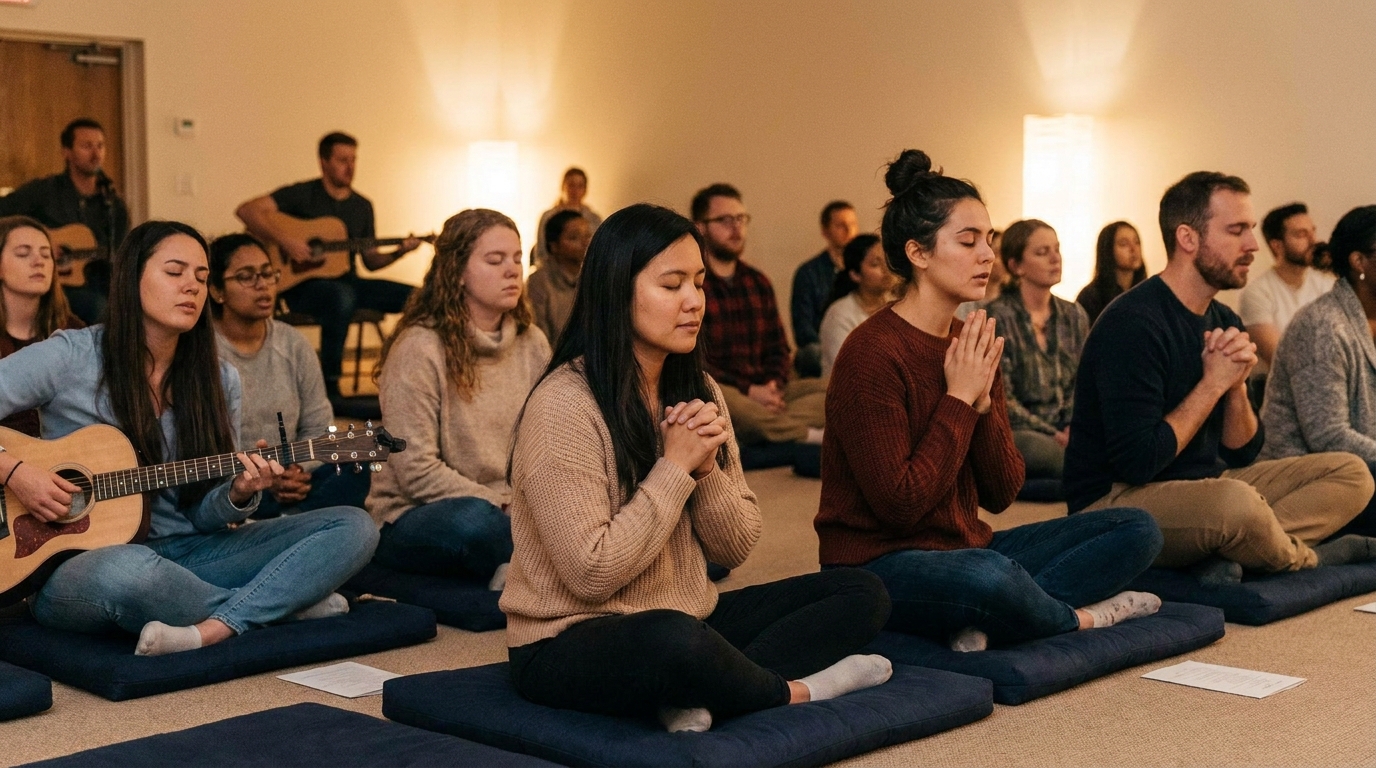
Another beautiful Bhakti practice is kirtan, the joyful singing of sacred mantras together. Kirtan usually includes call-and-response chanting, music, and a welcoming community atmosphere.
For those struggling with anxiety, kirtan can be especially healing. Instead of being alone with worries, we enter a shared space of devotion. We breathe together, sing together, and remember together.
Many people describe kirtan as feeling like the heart is being washed. Tears may come. Peace may come. Joy may come. Or simply a little relief may come. All of it is welcome.
Bhakti does not demand a certain emotional experience. It simply invites us to participate sincerely.
Prayer: Turning Worry Into Relationship
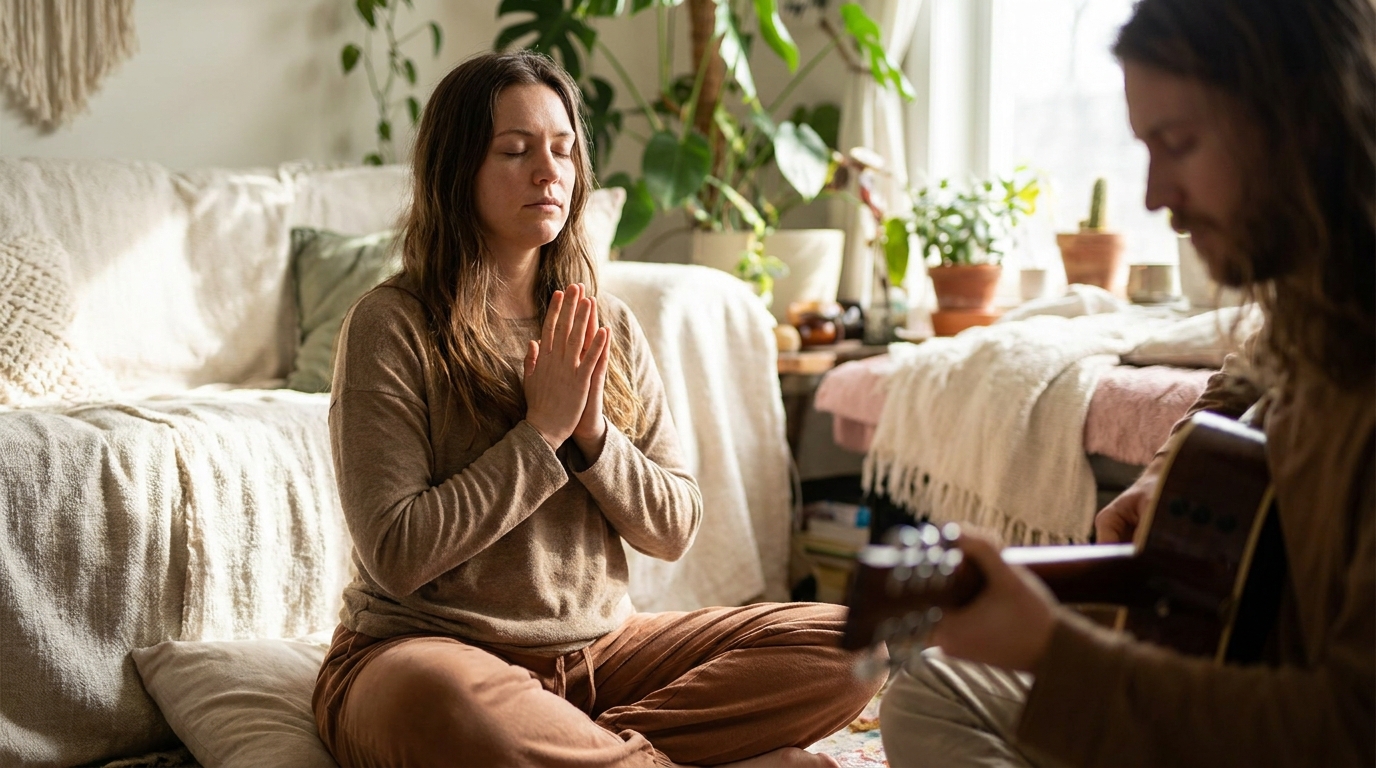
Prayer is one of the most natural expressions of the soul. It does not require special language. It does not require religious expertise. Prayer is simply speaking to God from the heart.
Anxiety often grows when thoughts circle endlessly inside the mind. Prayer gives those thoughts somewhere to go. Instead of carrying everything alone, we place our fears before the Divine.
In Bhakti, prayer is not only asking God to change our circumstances. It is also asking for the strength, wisdom, humility, and love to walk through life with grace.
Honest Prayer Is Powerful
Sometimes we may think prayer must be polished or formal. But some of the deepest prayers are very simple:
“Dear Lord, I am afraid. Please guide me.”
“Krishna, please help me remember You.”
“God, I don’t know what to do. Please hold my heart.”
“Please help me serve with love today.”
These prayers open the heart. They create a relationship.
In the Bhagavad-gita, Krishna invites us to offer even a leaf, a flower, fruit, or water with devotion. The essence is not the external size of the offering, but the love behind it. In the same way, a small prayer offered sincerely can be spiritually powerful.
Prayer Before Sleep
Many people experience anxiety most strongly at night. The day becomes quiet, and the mind becomes loud. A simple Bhakti evening prayer can help soften the heart before rest.
You might sit by your bed and say:
“Dear Lord, I offer You this day. I offer You what I did well and what I could not do. I offer You my fears, my family, my future, and my sleep. Please let my heart rest in Your care.”
Then chant softly for a few minutes.
This practice helps the mind release the illusion that everything must be solved before sleeping. We can rest because God is still present, even when we are not in control.
Gratitude as Prayer
Gratitude is also a form of prayer. Anxiety focuses on what might go wrong. Gratitude gently trains the heart to notice what is already being given.
Each day, you can write or speak three simple offerings of gratitude:
“Thank You for this breath.”
“Thank You for the food I received.”
“Thank You for one kind person in my life.”
“Thank You for giving me another chance to grow.”
Gratitude does not erase pain. But it helps us see that grace is present even in difficult seasons.
Please visit our website for more information on our articles: articles.
Service: Moving From Fear to Loving Action
In Bhakti Yoga, service is called seva. Seva means loving service offered for the pleasure of God and the benefit of others.
Anxiety often pulls the mind inward into loops of fear: “What will happen to me? What if I fail? What if things fall apart?” Seva gently turns the heart outward—not as avoidance, but as healing movement. When we serve, we remember that we are not just anxious minds; we are souls with the capacity to love.
Service gives spiritual purpose to daily life.
Everyday Acts of Seva
Seva does not have to be dramatic. It can be simple and close to home:
Preparing food with love.
Listening patiently to a friend.
Helping clean a sacred space.
Offering time to a community.
Sharing a kind word.
Supporting someone who is struggling.
Caring for the earth as God’s creation.
When these acts are offered with devotion, they become spiritual practice.
The Bhagavad-gita teaches that work can become yoga when offered to God. This means that even ordinary duties can become sacred when performed with love, humility, and remembrance.
Service Reduces Isolation
Anxiety often increases when we feel disconnected. Seva brings us into relationship—with God, with community, and with the needs of others.
When we serve in a Bhakti community, we may discover something beautiful: everyone is carrying something. Everyone is learning. Everyone needs grace.
This softens the loneliness of anxiety. We begin to feel, “I am part of something sacred. My life has meaning. My love can be useful.”
Serving Without Perfectionism
Some of us bring anxiety into service by trying to do everything perfectly. Bhakti gently reminds us that God receives the heart.
Of course, we try to be thoughtful and responsible. But the deepest offering is sincerity, not perfection.
If you can only offer a little, offer that little with love. If you feel tired, offer your tiredness. If you feel anxious, offer your anxiety and continue gently.
In Bhakti, nothing sincere is wasted.
Spiritual Knowledge: Reframing the Mind With Wisdom
Bhakti is a path of the heart, but it is also supported by spiritual wisdom. Sacred texts like the Bhagavad-gita, Srimad-Bhagavatam, and writings of great saints help us understand who we are, why we suffer, and how to live with deeper peace.
Anxiety often comes from identifying only with the temporary: the body, social status, success, failure, possessions, relationships, and future outcomes. Bhakti wisdom teaches that we are more than these changing things.
We are atma, the eternal soul.
You Are Not Your Anxiety
In the Bhagavad-gita, Krishna explains that the true self is eternal and cannot be destroyed. The body changes, the mind changes, emotions change, but the soul remains.
This teaching can bring great relief.
It does not mean our emotions are unimportant. Rather, it helps us relate to them differently. Instead of saying, “I am anxiety,” we may begin to say, “Anxiety is passing through my mind, but I am the soul. I am loved by God. I can take shelter.”
This shift is gentle but powerful.
The Temporary Nature of Life’s Waves
The Gita also teaches that happiness and distress come and go like seasonal changes. Some days are bright. Some days are heavy. Some seasons feel clear. Others feel uncertain.
An anxious mind may believe, “This feeling will last forever.” Spiritual wisdom reminds us, “This too is moving. I can remain steady by taking shelter in God.”
Steadiness does not mean we never cry or struggle. It means we learn where to place our trust.
Hearing Sacred Teachings
In Bhakti, listening to spiritual wisdom is called sravanam, or hearing. This may include reading scripture, listening to talks, attending satsang, or discussing spiritual topics with sincere practitioners.
Satsang means association with truth or gathering with spiritually minded people. It is a precious support for an anxious heart.
Hearing sacred teachings regularly gives the mind nourishing impressions. Instead of being constantly shaped by fear-based media, comparison, and worldly pressure, the mind receives words of truth, compassion, and devotion.
Even ten minutes of daily reading or listening can gradually transform our inner life.
Community: Finding Support on the Path of Love
Bhakti Yoga is deeply personal, but it is not meant to be walked alone. Community is an essential part of spiritual growth.
A loving spiritual community offers encouragement, accountability, friendship, and shared practice. It reminds us to keep going when our own mind feels weak.
The Sanskrit word sadhu-sanga means association with sincere spiritual people. “Sadhu” refers to a saintly or devoted person, and “sanga” means company or connection. In simple terms, sadhu-sanga means spending time with people who help us remember God and live with love.
Anxiety Softens in Safe Spiritual Spaces
Many people with anxiety feel they must hide their struggles. In a healthy Bhakti community, we are not asked to pretend. We are invited to grow.
A devotional space can become a place where the nervous system begins to relax. The sound of chanting, the smell of incense, the sharing of sanctified food, the warmth of kind people—all of these can help the heart feel safe.
Bhakti community is not about spiritual performance. It is about shared remembrance.
Prasadam: Receiving Grace Through Food
One beautiful practice in Bhakti is honoring prasadam. Prasadam means “mercy” or “grace.” It refers to vegetarian food that has been lovingly prepared and offered to God before being shared.
Eating prasadam is a simple but profound practice. It reminds us that nourishment is not merely physical. Food can carry love, prayer, and spiritual intention.
For someone dealing with anxiety, the act of sitting down, receiving sacred food, and eating gratefully can be deeply grounding. It turns a daily necessity into a moment of connection.
You Belong Before You Believe Perfectly
Some people hesitate to join spiritual community because they feel unsure about their beliefs. They may wonder, “Do I know enough? Do I belong here? What if I’m new to all of this?”
The Bhakti path welcomes sincere seekers. You do not have to have everything figured out. You can come with questions. You can come quietly. You can simply listen, chant, receive, and grow at your own pace.
The heart opens naturally in an atmosphere of kindness.
Daily Bhakti Practices to Reduce Anxiety
Bhakti becomes most powerful when it is lived daily in small, sincere ways. We do not need to change everything at once. A few steady practices can gradually reshape the mind and heart.
The key is consistency with compassion. If you miss a day, begin again. If your practice feels distracted, continue gently. God sees the effort.
A Simple Morning Practice
Morning is a sacred time to set the direction of the day. Before checking your phone or entering the rush of responsibilities, you can pause and turn toward God.
A simple morning Bhakti practice might include:
Lighting a candle or sitting in a peaceful place.
Taking three slow breaths.
Offering a short prayer.
Chanting the Maha Mantra for five to ten minutes.
Reading one verse or paragraph from the Bhagavad-gita.
Asking, “How can I serve with love today?”
This does not need to take long. Even fifteen minutes can change the quality of the day.
A Midday Reset
Anxiety can build throughout the day. A short devotional reset can help bring the mind back to center.
You might step away for two minutes and chant softly. You might close your eyes and repeat, “Krishna, please guide me.” You might offer your current task: “May this be done in a spirit of service.”
These small pauses interrupt the momentum of worry. They remind the heart that God is present not only in temples or sacred gatherings, but also in kitchens, offices, classrooms, cars, hospitals, and busy homes.
An Evening Reflection
At the end of the day, Bhakti invites us to reflect without harsh judgment.
You can ask:
Where did I remember God today?
Where did I forget?
What am I grateful for?
Who did I serve?
What do I need to offer and release?
Then chant or pray before sleeping.
This practice helps anxiety because it gives closure to the day. Instead of carrying everything into the night, we place it in God’s hands.
The Science and Spirituality of Devotional Practice
While Bhakti Yoga is ultimately a spiritual path, many of its practices also support emotional well-being in ways that modern psychology and wellness research can appreciate.
Chanting regulates breathing. Prayer gives expression to emotion. Community reduces loneliness. Service increases meaning. Gratitude shifts attention. Sacred study reframes thought patterns. Ritual creates stability. Music calms and uplifts the nervous system.
But Bhakti offers something even deeper: loving relationship with God.
From Self-Control to Surrender
Many anxiety tools focus on gaining control. Some of these tools can be very helpful. But Bhakti gently introduces another healing principle: surrender.
Surrender does not mean giving up in a hopeless way. It means offering our life, efforts, fears, and results to God. It means doing our part while remembering that we are not the ultimate controller.
In Sanskrit, surrender is often connected with the word saranagati, meaning taking shelter. Like a child resting in the arms of a loving parent, the soul gradually learns to rest in Divine care.
This can deeply reduce anxiety because so much anxiety comes from trying to control what is beyond our control.
Doing Our Best and Offering the Results
The Bhagavad-gita teaches us to act with dedication, but not be attached to the results. This is very practical for anxious people.
We still show up. We still work. We still care for our responsibilities. But we practice releasing the demand that everything must unfold exactly according to our plan.
A simple prayer for this is:
“Dear Lord, please help me do my best with love. I offer the results to You.”
This prayer can be used before a meeting, a difficult conversation, a medical appointment, an exam, or any situation that brings worry.
The Heart Learns Trust Over Time
Trust is not always immediate. If we have been hurt, disappointed, or frightened, trust may grow slowly. Bhakti honors that.
We do not force faith. We nourish it.
Every time we chant, faith is nourished.
Every time we pray honestly, faith is nourished.
Every time we serve, faith is nourished.
Every time we hear sacred wisdom, faith is nourished.
Every time we gather with loving devotees, faith is nourished.
Over time, the heart begins to feel: “God has been with me all along.”
When Anxiety Feels Overwhelming
Bhakti practice can be a profound support for anxiety, but it is important to say with care: if anxiety feels severe, persistent, or unmanageable, seeking help from a qualified mental health professional is not a lack of faith.
Therapy, medical support, spiritual practice, healthy relationships, movement, rest, and nourishing food can all work together. God’s compassion can reach us through many channels.
A humble Bhakti approach does not reject practical help. It sees all sincere support as part of grace.
Spiritual Practice Should Be Gentle
If you are anxious, do not turn Bhakti into another pressure. Do not think, “I must chant perfectly. I must pray perfectly. I must become peaceful immediately.”
Come gently.
Start with one mantra. One prayer. One act of service. One moment of gratitude.
The path of devotion is not a race. It is a relationship.
Creating a Supportive Environment
Small changes in your environment can support your Bhakti practice and reduce anxiety.
You might create a small sacred space with a picture of Krishna, a candle, flowers, or scripture. You might keep prayer beads nearby. You might play soft kirtan in the morning. You might place a verse from the Bhagavad-gita somewhere visible.
These reminders help the mind return to devotion throughout the day.
When the outer environment carries sacred impressions, the inner environment gradually becomes more peaceful.
Remembering God in the Body
Anxiety is often felt physically. Bhakti practice can include the body in simple ways.
You can bow your head in prayer. You can place your hand over your heart while chanting. You can dance gently in kirtan. You can cook as an offering. You can walk while repeating God’s names.
The body becomes part of worship. This helps anxiety because it brings devotion out of the abstract mind and into lived experience.
A Practical 7-Day Bhakti Anxiety Support Plan
If you are wondering how to begin, here is a simple seven-day plan. Let it be gentle, not rigid. Adjust it according to your life.
Day 1: Begin With One Prayer
Set aside five minutes. Speak honestly to God. Tell Him what you are carrying. Ask for guidance, peace, and remembrance.
End by saying, “Please help me take one sincere step today.”
Day 2: Chant for Five Minutes
Chant the Maha Mantra softly. Listen to the sound. When thoughts come, return to the mantra without frustration.
Let the chanting be an offering, not a performance.
Day 3: Read One Verse
Read one verse from the Bhagavad-gita with a simple explanation. Ask, “How can this wisdom help me live today?”
Write down one sentence that touches your heart.
Day 4: Offer Your Food
Before eating, pause and offer gratitude. If possible, prepare a simple vegetarian meal and offer it to God with love.
Say, “Please accept this offering.” Then receive it as prasadam, grace.
Day 5: Serve Someone
Do one act of kindness intentionally. Send an encouraging message. Help someone with a task. Listen with compassion.
Before serving, pray, “May this be pleasing to You.”
Day 6: Join Kirtan or Listen at Home
Attend a kirtan if possible, or listen to devotional chanting at home. Sing along gently, even if quietly.
Let the sound carry what your heart cannot put into words.
Day 7: Reflect and Offer
At the end of the week, reflect:
What helped my heart feel closer to God?
What practice felt natural?
Where did I notice even a small reduction in anxiety?
What one practice can I continue?
Offer the whole week—successes, struggles, and everything in between.
The Deeper Gift: Love Awakening in the Heart
The goal of Bhakti is not only to reduce anxiety, though it often helps. The deeper gift of Bhakti is the awakening of love for God.
As love awakens, fear gradually loses its throne in the heart.
We may still face uncertainty. We may still have responsibilities. We may still experience difficult emotions. But something changes within us. We begin to live with a sense of companionship, purpose, and sacred belonging.
The anxious mind says, “I must carry everything.”
The devotional heart learns to say, “I will do my best, and I will take shelter in God.”
This is not weakness. It is wisdom.
Krishna Meets Us With Compassion
In the Bhagavad-gita, Krishna does not shame Arjuna for his distress. He teaches him, guides him, encourages him, and remains with him. This is the mood of Bhakti: God is not far away, waiting for us to become worthy. He is near, inviting us into relationship.
Every sincere chant is heard.
Every honest prayer matters.
Every offering of love is received.
Every step toward God is meaningful.
Peace Grows Through Practice
Anxiety may not disappear overnight. But with steady Bhakti practice, many people find that their inner world begins to change.
The mind becomes less scattered.
The heart becomes softer.
The breath becomes steadier.
The day feels more purposeful.
The soul feels less alone.
This growth is a grace-filled process. Like watering a seed, we nourish devotion daily, and over time, spiritual strength grows.
You Are Welcome As You Are
Whether you are new to Bhakti Yoga, returning after time away, exploring spirituality for the first time, or simply looking for peace in a difficult season, you are welcome.
You do not need to know Sanskrit. You do not need to have perfect faith. You do not need to be free from anxiety before you begin.
Come as you are.
Chant one mantra. Say one prayer. Offer one act of service. Read one verse. Sit with kind spiritual company. Receive prasadam. Let your heart be held by the path of love.
Bhakti practice reduces anxiety not by making life completely predictable, but by helping us remember that we are loved, guided, and never truly alone.
May you feel encouraged to take one sincere step toward God today. However small it may seem, that step is precious. Everyone is welcome on the path of Bhakti, and every heart has a place in the shelter of divine love.
FAQs
What is Bhakti?
Bhakti is a spiritual practice in Hinduism that involves devotion and worship of a personal god or goddess. It is characterized by love, surrender, and selfless service to the divine.
How does Bhakti reduce anxiety?
Bhakti reduces anxiety by providing a sense of surrender and trust in a higher power, which can help individuals let go of worries and fears. The practice of devotion and chanting can also create a sense of peace and calmness in the mind.
What are some common Bhakti practices?
Common Bhakti practices include singing devotional songs (bhajans), chanting mantras, reading scriptures, performing rituals, and engaging in selfless service (seva) at temples or in the community.
Can anyone practice Bhakti?
Yes, anyone can practice Bhakti regardless of their background or beliefs. Bhakti is open to all individuals who seek a deeper connection with the divine and a path to spiritual growth.
Are there any scientific studies supporting the benefits of Bhakti for anxiety reduction?
While there is limited scientific research specifically on Bhakti and anxiety reduction, studies on meditation, mindfulness, and prayer have shown positive effects on reducing anxiety and improving mental well-being, which are also integral components of Bhakti practice.

