
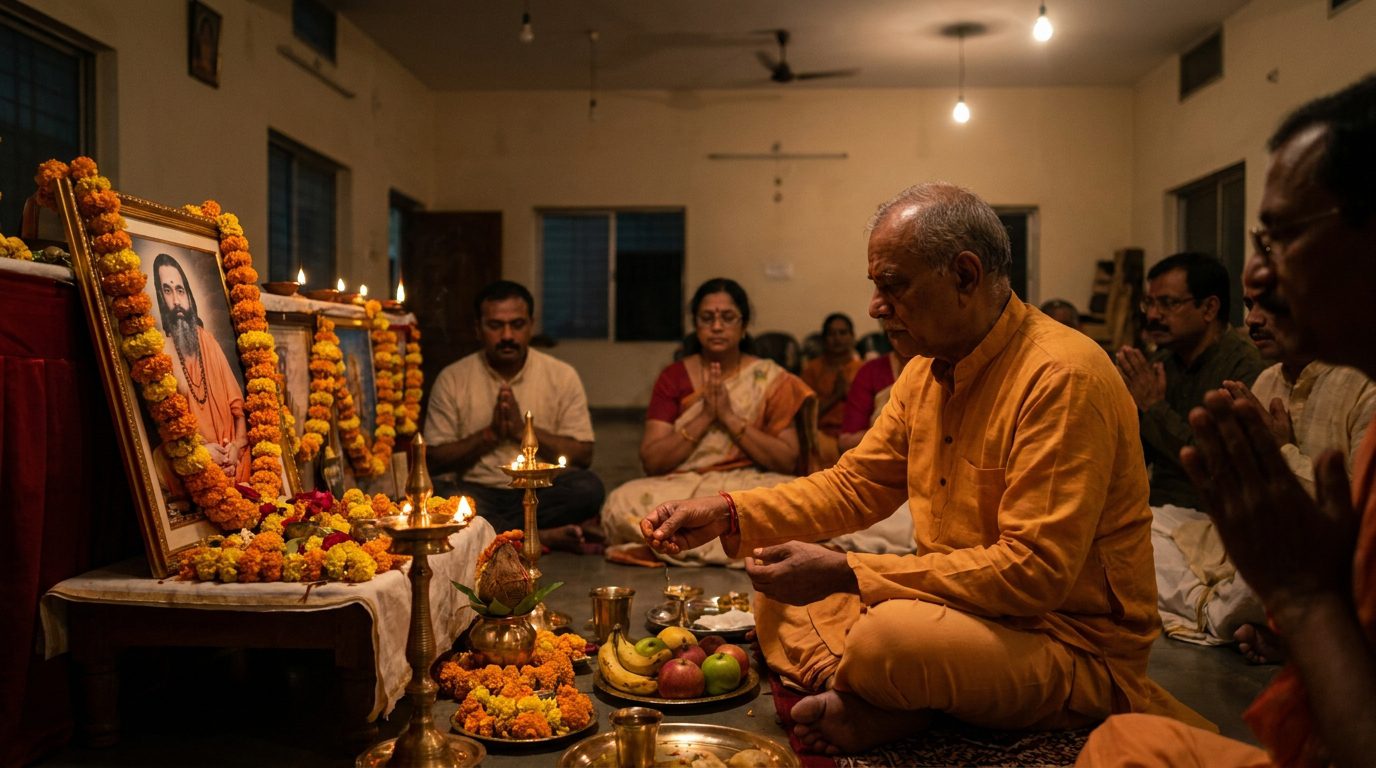
Guru Puja is a sacred offering of love, gratitude, and remembrance to the spiritual teacher, known in Sanskrit as the guru. The word guru means “one who removes darkness.” In Bhakti Yoga, the path of devotion, the guru is honored because they help guide the soul from confusion toward clarity, from forgetfulness toward remembrance of God, and from self-centered living toward loving service.
At The Bhakti House, we understand that people come from many backgrounds. Some grew up with spiritual teachers, some are just beginning to explore prayer and meditation, and some may feel unsure about the idea of honoring a guru. Wherever you are, you are welcome.
Guru Puja is not about worshiping a human being as a celebrity or giving up our intelligence. It is about honoring the grace of God that flows through a genuine spiritual guide. In the Bhakti tradition, we see the guru as a compassionate servant of the Divine, someone who points us back to Krishna, to God, to the eternal source of love.
The Sanskrit word puja means “worship” or “offering.” So Guru Puja means “offering worship to the guru.” This worship may include prayers, flowers, incense, singing, food offerings, and heartfelt gratitude. But at its deepest level, Guru Puja is the offering of our heart.
Why the Guru Is Honored in Bhakti Yoga
Bhakti Yoga is the yoga of love and devotion. It teaches that the soul’s natural joy comes from loving relationship with God. But because life can be confusing, and the heart can be distracted, we benefit from guidance.
A true guru helps us practice spiritual life in a grounded, practical way. The guru teaches us how to chant, how to pray, how to serve, how to study scripture, how to live with kindness, and how to grow through both joy and challenge.
The Guru as a Spiritual Guide
In the Bhagavad-gita, Krishna explains that sincere seekers should approach spiritual truth with humility, inquiry, and service:
“Just try to learn the truth by approaching a spiritual master. Inquire from them submissively and render service. The self-realized souls can impart knowledge unto you because they have seen the truth.”
— Bhagavad-gita 4.34
This verse gives us a balanced understanding of the guru-disciple relationship. It is not blind following. It includes three important qualities:
Humility: being open to learn.
Inquiry: asking sincere questions.
Service: learning through loving action.
A guru is honored not because they demand honor, but because they carry spiritual wisdom and help us awaken our relationship with God.
The Guru as a Representative of Divine Compassion
In Bhakti, we understand that God is not far away. Krishna reaches out to us in many ways: through scripture, through the holy name, through saints, through community, through the beauty of nature, and through the guidance of the guru.
The guru is often described as God’s mercy made visible. This does not mean the guru is God. Rather, the guru is loved because they represent God’s kindness and teach us how to love God.
Just as a window lets sunlight into a room, the guru lets divine wisdom and compassion shine into our lives.
The Guru Helps Us Practice, Not Just Believe
Bhakti Yoga is practical. It is not only philosophy or belief. It is a way of living.
The guru teaches spiritual practices such as:
Chanting sacred names, especially the Hare Krishna maha-mantra.
Offering food with love.
Reading sacred texts like the Bhagavad-gita and Srimad Bhagavatam.
Serving others with humility.
Remembering God throughout daily life.
Developing compassion, forgiveness, honesty, and patience.
Guru Puja reminds us that spiritual growth is not something we invent alone. We receive it through grace, tradition, and sincere practice.
What Happens During Guru Puja?
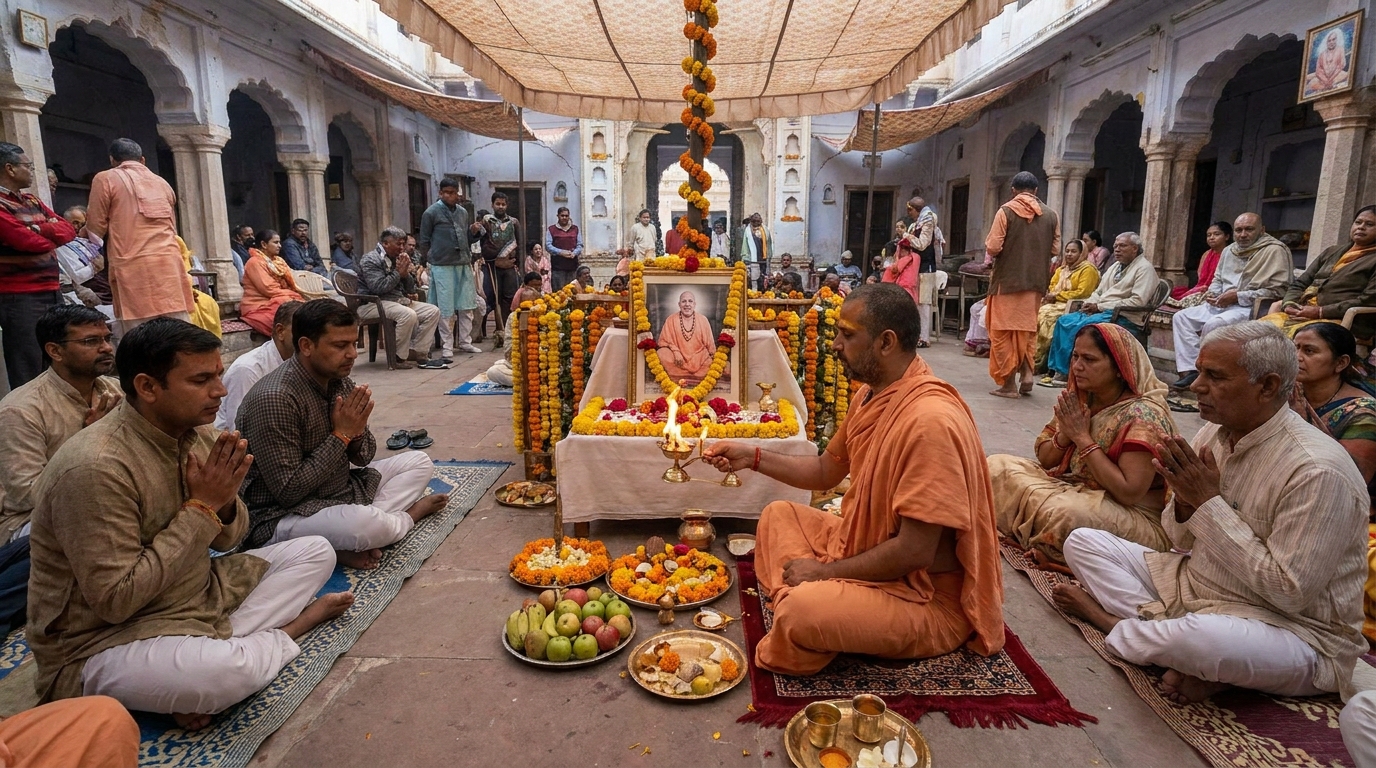
Guru Puja can be simple or elaborate. In temples, ashrams, and Bhakti communities, it may be performed with music, offerings, and group prayer. At home, it can be a quiet moment of gratitude before a picture of the guru or before an altar.
The outer form may vary, but the inner mood remains the same: thankfulness, humility, and loving service.
Offering Prayers
Guru Puja often begins with prayers. These prayers may be traditional Sanskrit verses or simple words from the heart.
One well-known prayer in the Bhakti tradition begins:
Om ajnana-timirandhasya jnananjana-shalakaya
Chakshur unmilitam yena tasmai shri-gurave namah
This means:
“I was born in the darkness of ignorance, and my spiritual teacher opened my eyes with the torchlight of knowledge. I offer my respectful obeisances unto that guru.”
This prayer beautifully expresses the heart of Guru Puja. We are not claiming to be perfect. We are acknowledging that we need help. We are thanking the one who helps us see more clearly.
Offering Flowers, Incense, and Light
In many Guru Puja ceremonies, offerings are made with devotion. These may include:
Flowers, representing beauty and the blossoming of the heart.
Incense, representing purification and a fragrant offering of love.
A lamp or candle, representing the light of divine knowledge.
Water, representing cleansing and life.
Food, representing nourishment offered back to God in gratitude.
In Bhakti Yoga, the value of an offering is not measured by its cost. Krishna says in the Bhagavad-gita:
“If one offers Me with love and devotion a leaf, a flower, fruit, or water, I will accept it.”
— Bhagavad-gita 9.26
This verse is central to Bhakti. God accepts the love behind the offering. In the same way, Guru Puja is not about impressing anyone. It is about offering sincerely.
Singing Kirtan
Kirtan means devotional singing, especially singing the names of God. In Guru Puja, devotees often sing prayers glorifying the guru and then chant the holy names.
The Hare Krishna maha-mantra is especially important in Bhakti Yoga:
Hare Krishna, Hare Krishna, Krishna Krishna, Hare Hare
Hare Rama, Hare Rama, Rama Rama, Hare Hare
The word mantra means a sacred sound that helps free the mind. “Hare” calls upon the divine energy of the Lord. “Krishna” means the all-attractive one. “Rama” means the source of spiritual joy.
Chanting is both prayer and meditation. It softens the heart and brings us into the presence of God.
Offering Food and Receiving Prasadam
Food offered with love to Krishna is called prasadam, meaning “mercy” or “grace.” In many Guru Puja gatherings, devotees prepare vegetarian food, offer it to Krishna, and then share it with everyone.
This simple act teaches a deep truth: our life is a gift, our food is a gift, and our service is a gift. When we receive prasadam, we are reminded that spiritual life is meant to nourish the whole person—body, mind, and soul.
Please visit our website for more information on our articles: articles.
How to Prepare for Guru Puja at Home
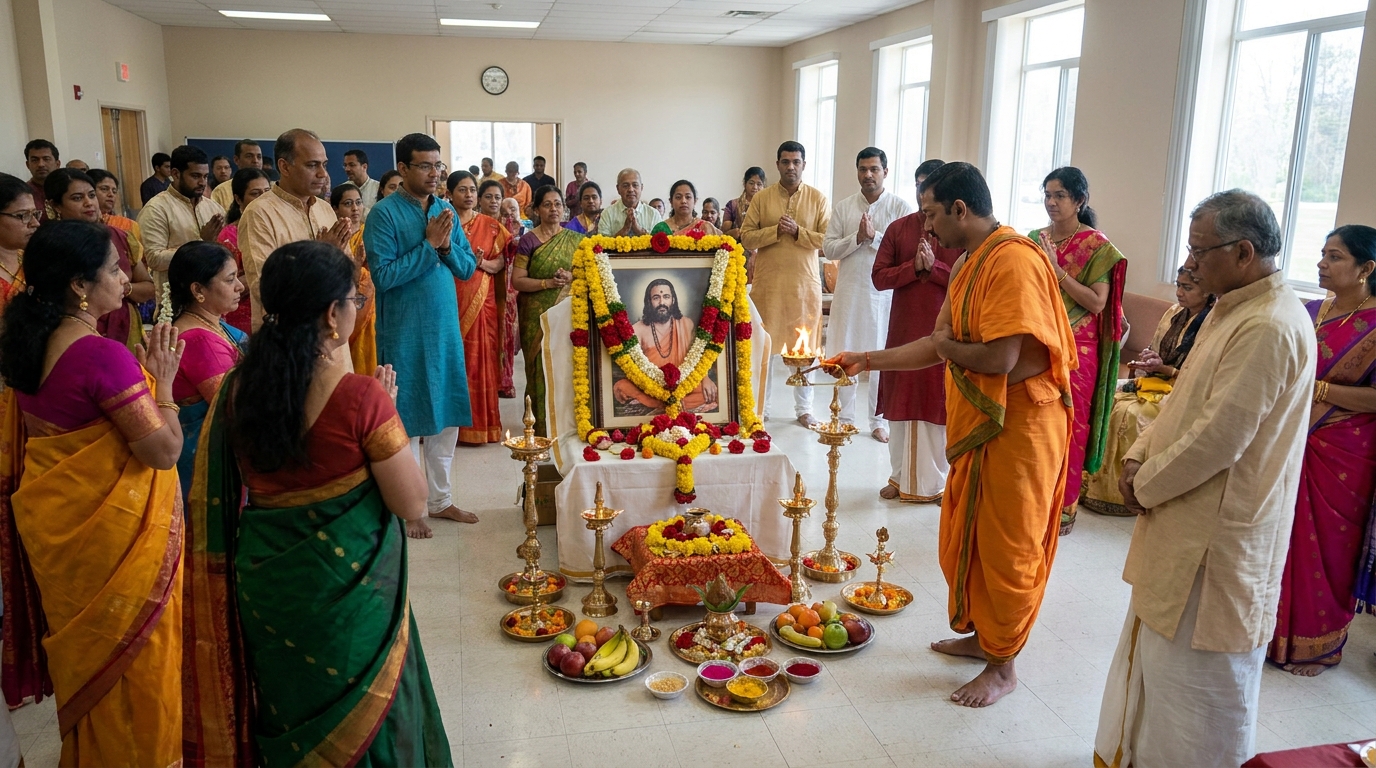
You do not need a large temple or elaborate ritual to honor the guru. Guru Puja can be practiced at home in a simple and heartfelt way. What matters most is sincerity.
Create a Clean and Peaceful Space
Choose a small area in your home where you can pray or meditate. This may be a shelf, table, or altar. You may place a picture of your guru, your spiritual teacher, saints in the Bhakti tradition, or a sacred image of Krishna.
Keep the space clean and uncluttered. Cleanliness helps the mind become peaceful. In Bhakti, even cleaning can become a devotional act when done with love.
You may include:
A cloth for the altar.
A picture or sacred image.
Fresh flowers.
A candle or lamp.
Incense, if appropriate.
A small bowl of water.
A plate for food offerings.
If you do not have these items, do not worry. You can simply sit, fold your hands, and offer a prayer.
Begin with a Moment of Humility
Before performing Guru Puja, pause. Take a few gentle breaths. Remember that you are approaching a sacred relationship.
You might pray:
“Dear Lord, dear spiritual teacher, please help me offer this with sincerity. Please guide my heart toward love, service, and truth.”
This simple prayer is powerful. It sets the intention that Guru Puja is not a performance. It is a meeting of the heart with grace.
Offer Something Simple
You may offer a flower, a candle flame, a little water, or a small plate of fruit or vegetarian food. If you are in the Krishna Bhakti tradition, offerings are ultimately made to Krishna through the guru and the line of teachers, known as the parampara.
Parampara means a spiritual lineage, a chain of teachers and students who pass down wisdom with care. In Bhakti, we do not create spiritual truth from our imagination. We receive it, practice it, and share it.
While making the offering, you can say:
“I offer this with gratitude. Please accept my small service and help me grow in devotion.”
Chant or Read a Prayer
After the offering, you may chant the Hare Krishna mantra, sing a Guru Puja song, or read a passage from scripture.
If you are new, begin with five minutes of chanting. Let the sound carry your prayer. You do not have to chant perfectly. You only have to chant sincerely.
You may also read a few verses from the Bhagavad-gita or a prayer from a saint. Spiritual reading helps steady the heart and gives direction to our devotion.
Conclude with Service
Guru Puja should inspire service. After your prayer, consider one practical action you can take that day.
Can you speak kindly to someone?
Can you forgive someone?
Can you serve your family with more patience?
Can you offer your work to God?
Can you chant one more round or one more sincere prayer?
The best offering to the guru is not only flowers or incense, but a life gradually shaped by love.
The Inner Mood of Guru Puja
The outer ceremony of Guru Puja is beautiful, but the inner mood is the real offering. Without humility and sincerity, ritual can become empty. With love, even the smallest gesture becomes sacred.
Gratitude
Guru Puja teaches us to remember what we have received. Spiritual life begins with gratitude.
We may reflect:
Who taught me to chant?
Who encouraged me when I was struggling?
Who showed me that God is loving?
Who gave me spiritual knowledge?
Who helped me become a better person?
Gratitude protects the heart from pride. It helps us see that we are supported by grace.
Humility
Humility does not mean thinking we are worthless. It means understanding that we are beloved souls who need guidance. It means being teachable.
In Bhakti Yoga, humility is strength. A humble heart can receive wisdom. A proud heart struggles to learn.
The great saint Chaitanya Mahaprabhu taught that one should chant the holy name with a humble mood, being more tolerant than a tree and ready to offer respect to others. This teaching is deeply connected to Guru Puja. By honoring the guru, we learn how to honor all living beings.
Surrender
Surrender can be a difficult word, especially for those who have experienced control or manipulation in the name of religion. In Bhakti, surrender does not mean losing ourselves. It means offering ourselves to divine love.
It is like a child trusting a loving parent, or a patient trusting a qualified doctor. Spiritual surrender is thoughtful, voluntary, and rooted in love.
When we honor the guru, we are really saying:
“I do not want to be guided only by ego, fear, or habit. I want to be guided by truth, love, and God’s will.”
Service
The Sanskrit word seva means devotional service. Service is love in action.
Guru Puja naturally leads to seva. If we truly honor the guru, we try to serve what the guru serves. A genuine guru serves God and all living beings. Therefore, our Guru Puja becomes complete when we also live with compassion.
Service may look like:
Helping at a temple or spiritual gathering.
Cooking prasadam.
Cleaning sacred spaces.
Supporting spiritual education.
Caring for those in need.
Sharing kirtan.
Listening deeply to someone who is hurting.
Doing our daily work with devotion.
In Bhakti, no service is too small when offered with love.
Understanding Guru Tattva: The Spiritual Principle of the Guru
The Sanskrit word tattva means truth or principle. Guru tattva refers to the spiritual truth of the guru. It helps us understand why the guru is honored so deeply in Bhakti Yoga.
The Guru Is Not an Ordinary Teacher
We may have many teachers in life: school teachers, music teachers, mentors, coaches, and elders. All can be valuable. But the spiritual guru has a special role. The guru guides us toward self-realization and love of God.
The guru teaches not only information, but transformation. They help us remember who we truly are: eternal souls, parts of God, meant for loving relationship with the Divine.
The Guru Points Beyond Themselves
A genuine guru does not say, “Worship me and forget God.” A genuine guru says, “Remember God. Serve God. Love God. Chant God’s names.”
This is an important sign of authenticity. In Bhakti Yoga, the guru is honored because they are transparent to Krishna. They do not block the light; they reveal it.
The Srimad Bhagavatam, one of the central Bhakti scriptures, repeatedly shows the importance of saintly guidance. Saints and gurus help the soul cross the ocean of material confusion by directing us toward devotion.
The Guru Is Connected to Parampara
In authentic Bhakti traditions, the guru is connected to a lineage. This lineage preserves teachings, practices, and spiritual mood. It protects the seeker from spiritual confusion and personal invention.
The Bhagavad-gita itself describes this principle. Krishna explains that spiritual knowledge was passed down through disciplic succession. When that chain was broken, He spoke the Gita again to Arjuna.
This reminds us that spiritual wisdom is received carefully and respectfully. Guru Puja honors not only one teacher, but the whole river of grace flowing through generations.
Common Questions About Guru Puja
Many sincere people have questions about Guru Puja. Questions are healthy. Bhakti Yoga welcomes thoughtful inquiry.
Is Guru Puja Idol Worship?
Guru Puja is not idol worship in the shallow sense of worshiping matter. In Bhakti, sacred images, photos, and offerings help focus the heart. Just as a photograph of a loved one can awaken affection, a picture of the guru can awaken gratitude and remembrance.
The devotion is not to paper, metal, or stone. The devotion is offered through the image to the living spiritual relationship and ultimately to God.
What If I Do Not Have a Guru Yet?
You can still honor the principle of the guru. You can pray for guidance. You can honor saintly teachers, scriptures, and sincere devotees who help you grow closer to God.
You might pray:
“Dear Lord, please guide me to authentic spiritual shelter. Please help me recognize truth and walk with sincerity.”
In Bhakti, it is wise not to rush. Seek guidance prayerfully. Observe the character of teachers. Study scripture. Spend time in spiritual community. A true guru inspires faith, humility, devotion, and moral integrity.
Can People of Any Background Participate?
Yes. Guru Puja can be appreciated by people of all backgrounds. You do not have to be born into a particular culture or tradition to offer gratitude, chant sacred names, or seek spiritual guidance.
Bhakti Yoga teaches that every soul belongs to God. The holy name is for everyone. Prayer is for everyone. Service is for everyone. Love is for everyone.
If you are new, you can participate respectfully, listen, chant as you feel comfortable, and observe the mood of devotion.
What If I Have Been Hurt by Spiritual Authority?
This is an important and tender question. Some people have experienced pain, disappointment, or abuse in spiritual settings. If this is part of your story, please know that your healing matters.
Bhakti Yoga never asks us to ignore harm or silence our conscience. A genuine spiritual path should deepen truthfulness, compassion, and responsibility. Honoring the guru should never be used to excuse unhealthy behavior.
If you feel cautious, that is understandable. Take your time. Pray. Seek safe community. Study authentic teachings. Remember that God is gentle, patient, and present with you. Real devotion heals the heart; it does not exploit it.
Guru Puja as a Daily Practice
Guru Puja is often performed on special days, such as the appearance day of the spiritual master, during morning temple programs, or on sacred festivals. But the essence of Guru Puja can be practiced daily.
Begin the Day with Remembrance
When you wake up, you can offer a simple prayer:
“May I remember God today. May I serve with love. May I honor the guidance I have received.”
This takes less than a minute, but it changes the direction of the day.
Chant with Attention
Chanting is one of the most accessible and powerful practices of Bhakti Yoga. Whether you chant on beads, sing in kirtan, or softly repeat the holy names while walking, chanting brings the heart closer to God.
The guru gives us the holy name and teaches us how to chant with sincerity. When we chant, we honor that gift.
Try setting aside a daily time for mantra meditation. Even one sincere round, or a few minutes of focused chanting, can become a beautiful offering.
Study Sacred Wisdom
Reading scripture is another form of honoring the guru. The guru’s teachings are rooted in sacred texts like the Bhagavad-gita, Srimad Bhagavatam, and writings of Bhakti saints.
Do not worry if you cannot read much. Read one verse. Sit with it. Ask, “How can I live this today?”
Spiritual study becomes powerful when it becomes practical.
Serve Someone
Each day, choose one act of service. It may be small and unnoticed. That is often the sweetest kind.
You might wash dishes with gratitude, encourage a friend, feed someone, volunteer, donate, forgive, or simply listen.
When service is offered to God, ordinary life becomes sacred.
The Offerings of Guru Puja and Their Meaning
Traditional Guru Puja includes various offerings. Understanding their meaning can help us participate with more heart.
Flowers: Offering the Heart
Flowers are soft, fragrant, and beautiful. They remind us that the heart can bloom through devotion.
When offering flowers, we may pray:
“May my heart become soft. May my life become fragrant with kindness. May my devotion blossom.”
Incense: Offering Purification
Incense fills the space with fragrance. It represents the desire to purify our thoughts, words, and actions.
As the smoke rises, we can remember that our prayers rise to God. We can ask to be freed from envy, anger, greed, and selfishness.
Lamp: Offering Light
The lamp represents knowledge, love, and divine presence. When we offer light, we pray for the darkness of ignorance to be removed.
We may ask:
“Please guide me. Please help me see clearly. Please help me walk in truth.”
Food: Offering Our Life
Food is life-giving. When we offer food, we acknowledge that everything comes from God. We also remember that our own body, energy, talents, and time can be offered.
The offering of food teaches us to live gratefully rather than possessively.
Celebrating Guru Puja in Community
Guru Puja becomes especially joyful when practiced in community. Sangha, or spiritual association, helps us stay inspired. We see others chanting, serving, learning, and growing. Their devotion strengthens our own.
The Power of Kirtan Together
Group kirtan can open the heart in a unique way. Voices join together, instruments support the chanting, and the holy name becomes the center.
In a world where many people feel isolated, kirtan reminds us that we are not alone. We are souls journeying together toward love.
Learning Through Shared Service
Community Guru Puja often includes many forms of service. Some cook, some clean, some sing, some decorate, some welcome guests, some care for children, some wash pots, some offer prayers.
Every service matters. The person sweeping the floor may be offering just as much love as the person leading the ceremony.
Welcoming Newcomers
A true Bhakti community should be welcoming. If someone is attending Guru Puja for the first time, they should feel respected, not pressured. Devotion grows naturally when the heart feels safe.
If you are new, you can simply come, listen, chant if you like, receive prasadam, and ask questions. There is no need to pretend. Bhakti begins with sincerity.
Living the Teachings After the Ceremony
Guru Puja does not end when the song ends or the lamp is placed down. The real test of Guru Puja is how we live afterward.
Carry Gratitude Into Daily Life
After honoring the guru, we can try to speak with more gratitude. We can complain less and appreciate more. We can notice the blessings that surround us.
Gratitude is a spiritual discipline. It helps the heart remain connected.
Practice Compassion
If the guru teaches love of God, then we must also learn to love God’s children. Compassion is not optional in Bhakti. It is the natural expression of devotion.
We can ask ourselves:
Am I becoming kinder?
Am I becoming more patient?
Am I becoming more honest?
Am I becoming more willing to serve?
These questions help us measure spiritual growth in a healthy way.
Return Again and Again to the Holy Name
The holy name is the shelter of the Bhakti path. When we are joyful, we can chant. When we are sad, we can chant. When we feel strong, we can chant. When we feel weak, we can chant.
Guru Puja reminds us of the gift of chanting. The guru gives us the path, and the holy name carries us forward.
A Simple Guru Puja Practice for Beginners
If you would like to begin, here is a simple practice you can try at home. Keep it gentle and sincere.
Step 1: Sit in a Clean Place
Choose a quiet space. If you have an altar, sit nearby. If not, simply sit comfortably.
Step 2: Offer a Prayer
Say in your own words:
“Dear God, dear spiritual guides, please help me remember You. Please guide me in love and truth.”
Step 3: Offer a Flower or Water
If you have a flower, fruit, or a small cup of water, offer it with gratitude. If you have nothing physical to offer, offer your heart.
Step 4: Chant
Chant the Hare Krishna maha-mantra slowly and sincerely:
Hare Krishna, Hare Krishna, Krishna Krishna, Hare Hare
Hare Rama, Hare Rama, Rama Rama, Hare Hare
You can chant for five minutes or longer.
Step 5: Choose One Act of Service
Before you finish, decide on one loving action for the day. Let your Guru Puja become practical.
The Blessing of Honoring the Guru
Guru Puja is a beautiful doorway into the heart of Bhakti Yoga. It teaches us to receive grace, honor guidance, chant with sincerity, serve with love, and grow spiritually one step at a time.
The guru is honored because the guru helps us remember God. And when we remember God, life begins to change. Our work can become worship. Our home can become a sacred space. Our relationships can become opportunities for compassion. Our struggles can become invitations to surrender. Our voice can become an instrument of prayer.
You do not need to be perfect to begin. You do not need to know every Sanskrit word or every ritual detail. You only need a sincere heart.
Whether you are new to Bhakti Yoga or have walked this path for many years, Guru Puja invites you into gratitude. It reminds us that divine love is received through relationship—relationship with God, with the guru, with scripture, with community, and with all living beings.
Everyone is welcome. Today, take one sincere step toward God. Offer a prayer. Chant one mantra. Serve one person. Bow your heart in gratitude. Krishna sees every offering made with love.
FAQs
What is Guru puja?
Guru puja is a Hindu ritual that involves showing reverence and gratitude to one’s spiritual teacher or guru. It is a way of honoring the guidance and wisdom provided by the guru in one’s spiritual journey.
How is Guru puja performed?
Guru puja is typically performed by offering various items such as flowers, incense, and food to the guru’s image or idol. The practitioner may also recite specific prayers, mantras, or hymns dedicated to the guru during the puja.
What is the significance of Guru puja?
Guru puja holds great significance in Hinduism as it emphasizes the importance of the guru-disciple relationship. It is believed that by showing reverence to the guru, one can receive blessings, guidance, and spiritual growth.
When is Guru puja usually performed?
Guru puja is often performed on auspicious occasions such as the guru’s birthday, the anniversary of the guru’s initiation, or during specific Hindu festivals dedicated to gurus, such as Guru Purnima.
Can anyone perform Guru puja?
While anyone can perform Guru puja, it is typically done by individuals who have a spiritual teacher or guru guiding them in their spiritual practice. It is a way for disciples to express their devotion and gratitude towards their guru.

