

There is a kind of strength the world rarely celebrates. It is not the strength of armies or empires. It is not measured in victories on a battlefield or the accumulation of wealth. It is the quiet, unshakable strength of a heart that refuses to let go of God — no matter what life brings.
Queen Kuntī, one of the most beloved figures in the ancient Bhakti tradition, embodies this strength perfectly. Her life was marked by extraordinary hardship, and yet through every trial, she turned toward the Supreme Lord, Śrī Kṛṣṇa, with prayers so deep and so honest that they continue to move hearts thousands of years later.
Whether you are new to Bhakti Yoga or have been walking this path for years, Kuntī’s story has something precious to offer. Her words remind us that devotion is not about having a perfect life — it is about having a perfect love, even when life is far from perfect.
Welcome, dear reader. Wherever you come from and whatever your background, this story is for you. Let’s explore the remarkable strength of Queen Kuntī together.
Queen Kuntī, also known as Pṛthā, was the mother of the five Pāṇḍava brothers — Yudhiṣṭhira, Bhīma, Arjuna, Nakula, and Sahadeva — who are central figures in the great epic known as the Mahābhārata. She was also the aunt of Lord Śrī Kṛṣṇa, the Supreme Personality of Godhead as understood in the Bhakti tradition.
A Life of Unimaginable Trials
From the outside, you might think a queen would live a life of comfort and ease. But Kuntī’s life tells a very different story. She was separated from her firstborn son at birth. She lost her husband, King Pāṇḍu, at a young age. She and her sons were exiled to the forest, poisoned, and nearly burned alive in a house of shellac — all through the scheming of jealous relatives.
Her sons were cheated out of their kingdom in a rigged gambling match. Her daughter-in-law, Draupadī, was publicly humiliated. The family endured thirteen years of painful exile. And finally, a devastating war took the lives of millions, including many of her own family members.
Through all of this — every single moment of it — Kuntī held on to Kṛṣṇa.
A Devotee First, a Queen Second
What makes Kuntī extraordinary in the Bhakti tradition is not her royal title. It is her devotion. She is honored as a great devotee (bhakta) whose prayers, recorded in the first canto of the Śrīmad-Bhāgavatam, are considered among the most beautiful and instructive prayers in all of Vedic literature.
In Bhakti Yoga — the path of loving devotion to God — Kuntī stands as a shining example of someone who used every experience in life, especially the painful ones, as fuel for deeper surrender and love.
Kuntī’s Prayers: A Window Into the Devoted Heart
After the great battle of Kurukṣetra, Lord Kṛṣṇa was preparing to leave the Pāṇḍavas and return to His own city of Dvārakā. At that moment, Queen Kuntī approached Him and offered a series of prayers that are breathtaking in their honesty, depth, and devotion.
These prayers are found in the Śrīmad-Bhāgavatam, Canto 1, Chapter 8, and they reveal the inner life of a soul completely absorbed in love for God.
Seeing God Beyond the Veil of Material Nature
Kuntī begins her prayers by acknowledging that the Supreme Lord is not easily understood by ordinary perception. She says:
> “I consider that all those calamities were by Your grace, for had they not occurred, we would never have beheld You, because those who are puffed up with material prosperity never look toward You.” — Śrīmad-Bhāgavatam 1.8.26 (vedabase.io)
This is a stunning statement. Kuntī is actually expressing gratitude for her suffering — not because she enjoys pain, but because she recognizes that her difficulties brought her closer to Kṛṣṇa. When everything was taken away, the only thing left was God. And she found that this was more than enough.
For those of us practicing Bhakti Yoga today, this is a powerful teaching. We are not asked to seek out suffering, but we are invited to see that even in our hardest moments, the Lord is present and drawing us closer to Him.
The Humility to Ask for More Difficulties
Perhaps the most astonishing of Kuntī’s prayers is this one:
> “I wish that all those calamities would happen again and again so that we could see You again and again, for seeing You means that we will no longer see repeated births and deaths.” — Śrīmad-Bhāgavatam 1.8.25 (vedabase.io)
Imagine the depth of love required to speak these words. Kuntī is saying, in essence: “If suffering is what it takes to remember You, then let it come. Your presence is worth more than any comfort this world can offer.”
This prayer challenges us gently. It asks: What do we truly value? Are we seeking a comfortable life, or are we seeking the Lord of our hearts? Kuntī shows us that real strength is not the absence of difficulty — it is the presence of devotion in the midst of difficulty.
The Spiritual Strength Behind Kuntī’s Surrender
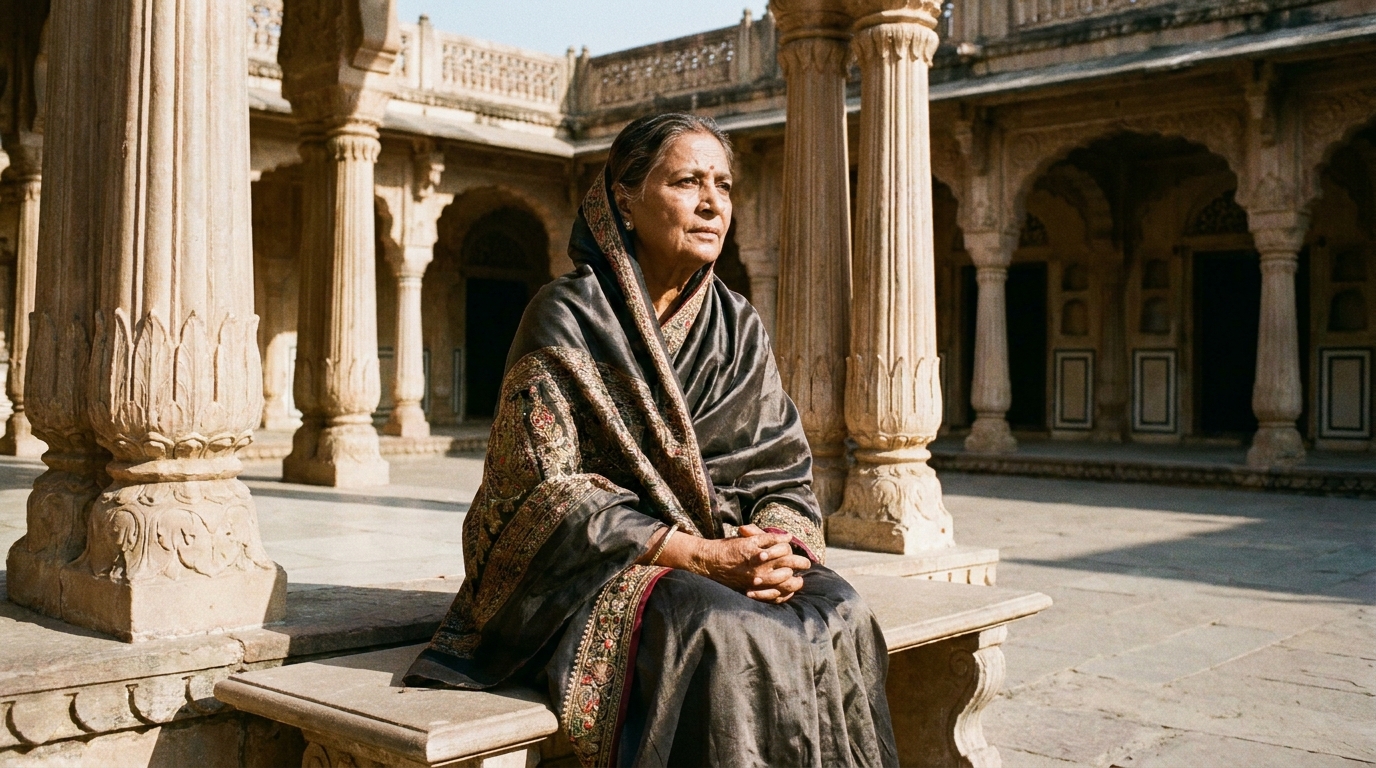
Surrender — or śaraṇāgati in Sanskrit — is at the very heart of Bhakti Yoga. It means entrusting ourselves fully to God’s care, not out of weakness, but out of deep trust and love. Kuntī’s life is one of the most vivid illustrations of this principle.
Trusting God When Nothing Makes Sense
There were countless moments in Kuntī’s life when things simply did not make sense from a worldly perspective. Why would God allow His own devotees to suffer so greatly? Why would the righteous Pāṇḍavas be exiled while the wicked Duryodhana sat on the throne?
Kuntī did not demand answers. Instead, she offered trust. She recognized that the Lord’s ways are beyond ordinary human understanding, and she chose to hold on to Him rather than hold on to her need for explanations.
This is a form of spiritual strength that many of us can relate to. Life often brings circumstances we cannot explain. Bhakti Yoga does not promise us that everything will be easy. It promises us that we will never be alone — and that love for God can carry us through anything.
Strength Through Holy Names and Prayer
In the Bhakti tradition, one of the most accessible and powerful practices is the chanting of God’s holy names. This practice, known as kīrtana (congregational chanting) or japa (personal meditative chanting), is considered the recommended spiritual practice for this age.
Kuntī’s prayers themselves are a form of this practice. By calling out to Kṛṣṇa with sincerity and love, she was engaging in the most essential activity of the soul. As the Śrīmad-Bhāgavatam teaches:
> “O my Lord, Your name, fame, and qualities are all unlimited. One who takes shelter of any one of them is certainly liberated, even if he is the lowest of mankind.” — Paraphrased teaching from Śrīmad-Bhāgavatam
For us today, this means that we do not need to be queens or scholars to access the strength that Kuntī found. We simply need to call out to the Lord with sincerity — through chanting, through prayer, through service, through any genuine expression of the heart.
Sure, here is the sentence with the clickable link:
Check out our website for more articles: more articles.
Lessons from Kuntī for Our Daily Lives
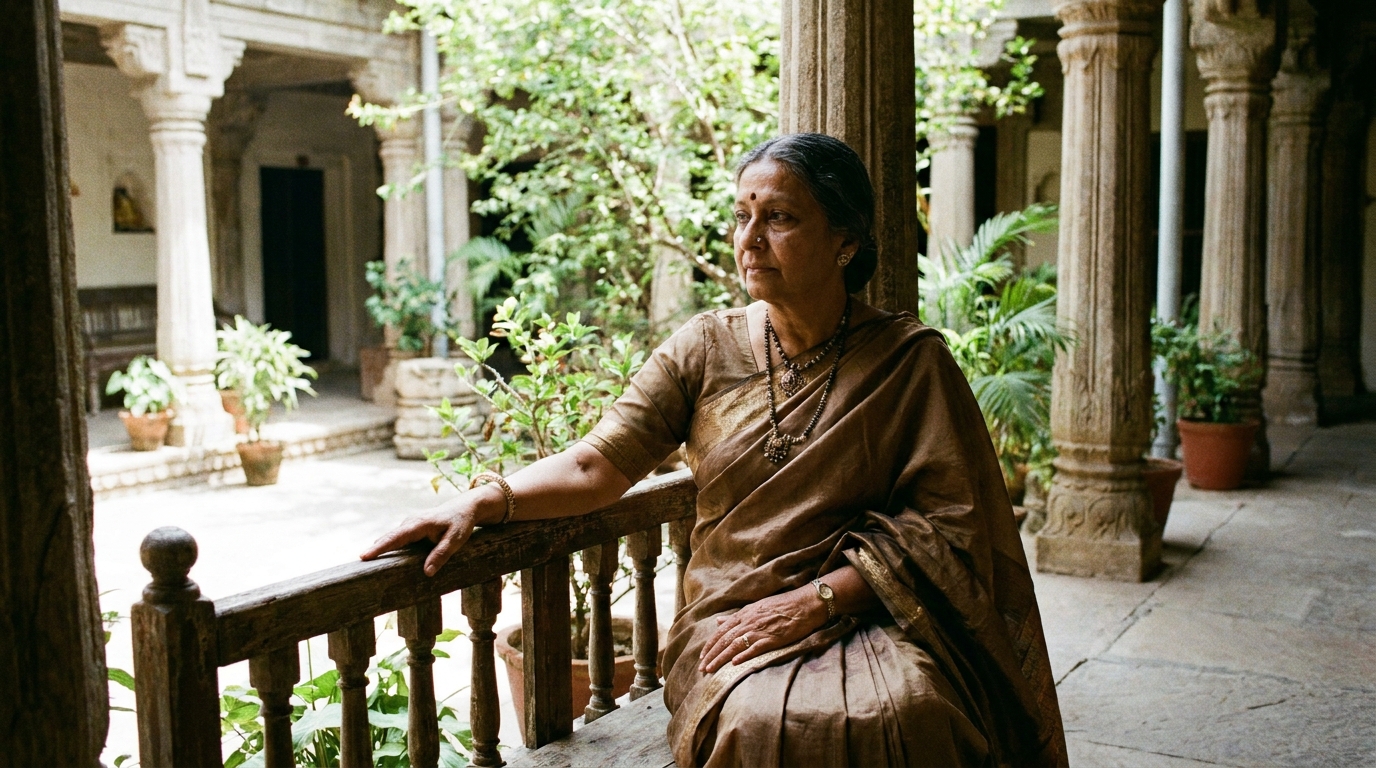
Queen Kuntī’s story is not just ancient history. It is a living teaching that speaks directly to the challenges we face in our own lives today.
Finding God in Hard Times
Most of us will face periods of real difficulty — loss, illness, heartbreak, uncertainty. Kuntī teaches us that these moments, while painful, can become doorways to deeper spiritual connection. When we have nothing else to hold on to, we discover that God has been holding on to us all along.
Letting Go of False Pride
Kuntī specifically mentions that material prosperity can make us forgetful of God. In our modern world, where success is often measured by wealth, status, and comfort, this is an especially important reminder. True strength is not about what we have. It is about who we love and how deeply we love.
The Power of Genuine Prayer
Kuntī’s prayers were not scripted performances. They came from the deepest place in her heart. They were raw, honest, and full of feeling. In Bhakti Yoga, this kind of prayer is the most powerful. You do not need fancy words. You simply need a sincere heart.
As Śrī Kṛṣṇa Himself says in the Bhagavad-gītā:
> “If one offers Me with love and devotion a leaf, a flower, a fruit or water, I will accept it.” — Bhagavad-gītā 9.26 (vedabase.io)
The Lord is not looking for grand gestures. He is looking for genuine love. And Kuntī gave Him exactly that.
Service as an Expression of Love
Throughout her life, Kuntī served her family, her community, and her Lord with tireless dedication. Service — or sevā — is a cornerstone of Bhakti Yoga. When we serve others with love, seeing the divine presence in every living being, we are walking the same path that Kuntī walked.
Why Kuntī’s Story Matters Today
In a world that often celebrates external power, material achievement, and self-sufficiency, Queen Kuntī’s story offers a beautiful counter-narrative. She shows us that the greatest strength lies in vulnerability before God. That true courage is found in the willingness to love, even when love is costly. That surrender is not giving up — it is giving everything to the One who gives us everything.
A Model for All Seekers
You do not need to be Hindu, or Indian, or a scholar of Sanskrit to be moved by Kuntī’s devotion. Her prayers speak a universal language — the language of a soul longing for its source, of a heart crying out for the Beloved. Whether you call that Beloved “Kṛṣṇa,” “God,” “the Divine,” or simply “Love,” the essence is the same.
An Invitation to Begin
Kuntī’s strength was not something she was born with. It was something she cultivated — through years of prayer, through chanting, through choosing God again and again in the face of unimaginable circumstances. And if she could do it in the midst of her extraordinary trials, then surely we can take one small, sincere step in our own lives.
Take One Sincere Step Toward God
If the story of Queen Kuntī has stirred something in your heart today, we invite you to honor that feeling. You might try sitting quietly for a few minutes and offering a simple, honest prayer. You might try chanting the Hare Kṛṣṇa mahā-mantra — Hare Kṛṣṇa, Hare Kṛṣṇa, Kṛṣṇa Kṛṣṇa, Hare Hare / Hare Rāma, Hare Rāma, Rāma Rāma, Hare Hare — even just once, with feeling. You might read one verse from the Śrīmad-Bhāgavatam and let it sink into your heart.
Whatever step you take, know that it matters. Know that it is seen. And know that you are deeply, unconditionally welcome on this path.
At The Bhakti House, we believe that everyone — regardless of background, experience, or belief — has a place in the family of devotion. Just as Kuntī found infinite strength in her love for Kṛṣṇa, that same strength is available to every one of us.
All it takes is one sincere step.
FAQs
What is the significance of Queen Kuntī in Hindu mythology?
Queen Kuntī is a prominent figure in the Hindu epic, Mahabharata. She is known for her unwavering devotion to Lord Krishna and her strength in facing numerous challenges throughout her life.
What are some key events in Queen Kuntī’ life?
Queen Kuntī’ life is marked by several significant events, including her marriage to King Pandu, her role in the upbringing of the Pandavas, her exile with the Pandavas, and her interactions with Lord Krishna.
What are some of Queen Kuntī’ notable qualities?
Queen Kuntī is admired for her resilience, wisdom, and devotion to Lord Krishna. She is also known for her selflessness and her ability to face adversity with grace and strength.
How is Queen Kuntī’ character relevant in modern times?
Queen Kuntī’ character serves as an inspiration for individuals facing challenges and adversity. Her unwavering faith and strength in the face of difficulties continue to resonate with people today.
What are some teachings derived from Queen Kuntī’ life?
Queen Kuntī’ life teaches important lessons about devotion, resilience, and the power of faith. Her experiences also highlight the importance of maintaining one’s composure and strength in the face of adversity.

