
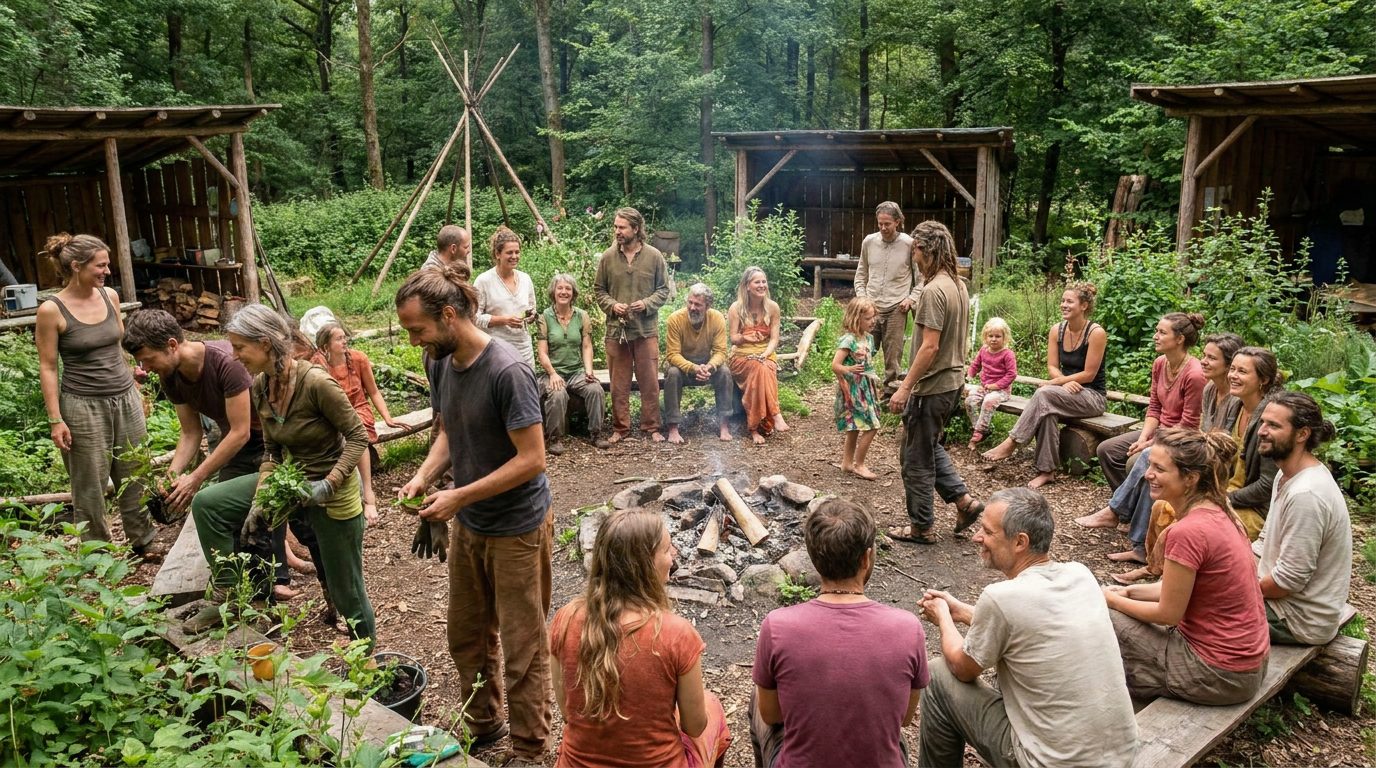
In every sincere spiritual journey, there comes a time when the heart longs for support.
We may begin with a private prayer, a quiet question, or a simple desire to know God more deeply. But as we walk forward, we often discover that spiritual life is not meant to be lived alone. We need encouragement. We need examples. We need reminders when our faith feels small and celebration when our hearts begin to open.
This is the power of spiritual community.
In the tradition of Bhakti Yoga, the path of loving devotion to God, spiritual community is called satsanga. This Sanskrit word means “association with truth” or “company of those who seek the Divine.” It is not about joining a club or belonging to a certain outer identity. It is about keeping company with people who help us remember who we truly are: eternal souls, beloved by God, capable of love, service, humility, and joy.
Spiritual community can take many forms. It may be a temple, a church, a yoga studio, a meditation circle, a home gathering, an online group, or a few sincere friends chanting together. What matters most is the shared intention: to grow closer to God and to support one another with kindness.
Spiritual life is deeply personal, but it is not meant to be isolated.
Each person has a unique relationship with God. Each heart has its own history, questions, struggles, and gifts. Yet when we come together in a sacred atmosphere, something beautiful happens. Our individual sparks of faith begin to strengthen one another.
In the Bhagavad-gita, one of the most loved scriptures of Bhakti Yoga, Lord Krishna says that those who are devoted to Him “enlighten one another and speak of Me with great joy” (Bhagavad-gita 10.9). This simple teaching reveals a powerful truth: when people gather to remember God, their hearts become nourished.
Spiritual community helps us remember what the world often makes us forget.
The world tells us we are our jobs, our bodies, our achievements, our failures, our bank accounts, or our social status. Bhakti wisdom gently reminds us: you are atman, a spiritual soul. You are not simply the changing body or the restless mind. You are an eternal person, created for loving relationship with the Divine.
Community helps this truth move from an idea into daily life.
We Grow Through Shared Inspiration
There are days when prayer feels natural and sweet. There are other days when we feel distracted, tired, doubtful, or far from God. In those moments, the presence of sincere spiritual friends can carry us.
A single conversation can renew our faith.
A song shared in devotion can soften our heart.
A meal offered with love can remind us that God is near.
In Bhakti Yoga, spiritual growth is not based on perfection. It is based on sincerity. When we see others making sincere efforts, even with their struggles, we feel encouraged to continue.
We Need Safe Spaces for the Soul
Many people carry wounds from life, family, religion, or society. Some have felt judged in spiritual settings. Some have been told they are not enough. Some have stepped away from faith because it felt harsh, confusing, or exclusive.
A true spiritual community should be a place of healing.
It should welcome people with humility, not superiority. It should create space for honest questions, not pressure. It should honor each person’s journey while gently inviting everyone toward love, service, and remembrance of God.
At The Bhakti House, this spirit is central: everyone is welcome. Whether you are new to spirituality, returning after many years, exploring Bhakti Yoga, or simply looking for peace, you are invited to come as you are.
The Meaning of Satsanga: Keeping Company With Truth
The word satsanga comes from two Sanskrit roots: sat, meaning truth, eternal reality, or goodness, and sanga, meaning association or company. Together, satsanga means being in the company of truth and those who help us move toward truth.
This does not mean everyone in spiritual community is perfect. Far from it. Spiritual community is made of real people learning how to love, forgive, listen, serve, and grow.
The beauty of satsanga is not perfection. The beauty is direction.
Are we turning toward God together? Are we trying to become more compassionate? Are we learning to chant, pray, serve, and live with purpose? Are we helping each other rise when we fall?
That is the heart of spiritual community.
Association Shapes the Heart
Bhakti scriptures often remind us that association is powerful. The people we spend time with influence our desires, our habits, our speech, and our values.
If we associate only with anger, gossip, materialism, and distraction, the mind naturally absorbs those impressions. But when we spend time with people who chant God’s names, speak with kindness, honor sacred wisdom, and serve others, our hearts gradually become purified.
This purification is not forced. It happens gently, like sunlight entering a room.
In the Srimad-Bhagavatam, a central scripture of the Bhakti tradition, we hear that hearing and chanting about the Divine in the company of sincere devotees cleanses the heart. This means that spiritual sound, sacred conversation, and loving association help remove the dust of fear, envy, and forgetfulness.
We Become What We Love
Human beings are shaped by love. We move toward what we admire. We imitate what we value.
When we spend time with people who love God, something awakens within us. We begin to think, “Maybe I can love like that too. Maybe I can pray with more sincerity. Maybe my life can become an offering.”
This is one of the greatest gifts of spiritual community: it gives us living examples.
A scripture can teach us. A teacher can guide us. But a community allows us to see devotion in action — someone cooking for God, someone singing with tears, someone forgiving with humility, someone showing up to serve even when tired, someone quietly caring for a newcomer.
These examples nourish faith.
Bhakti Yoga as a Shared Path of Love
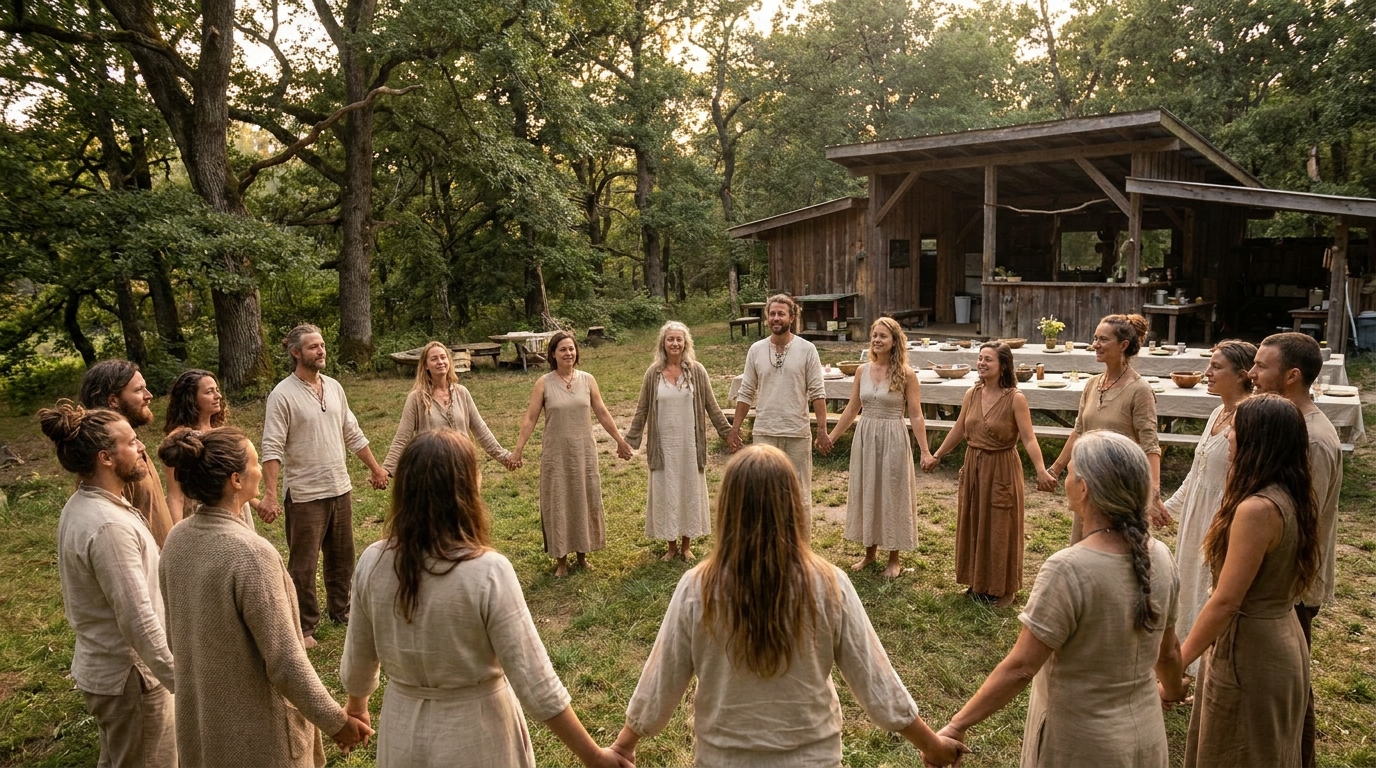
Bhakti Yoga means the yoga of devotion, or the path of connecting with God through love. The word bhakti can be simply understood as loving devotion, and yoga means connection. So Bhakti Yoga is the practice of reconnecting the heart with the Supreme Person through love.
In Bhakti, community is not separate from practice. Community is part of the practice.
We come together to chant. We come together to hear sacred teachings. We come together to serve. We come together to honor food offered to God. We come together to remember that life is sacred.
Chanting Together Opens the Heart
One of the most beautiful practices in Bhakti Yoga is kirtan, the singing or chanting of God’s names, often in a call-and-response style. In kirtan, no one needs to be a professional singer. The goal is not performance. The goal is offering.
When we chant together, we place sacred sound at the center.
The Maha Mantra is especially cherished in the Bhakti tradition:
Hare Krishna Hare Krishna
Krishna Krishna Hare Hare
Hare Rama Hare Rama
Rama Rama Hare Hare
“Hare” is a call to the Divine energy of love. “Krishna” means the all-attractive Lord. “Rama” means the source of joy and spiritual pleasure. The mantra is a prayer: “O Lord, O Divine energy of the Lord, please engage me in Your loving service.”
When a community chants this prayer together, the atmosphere changes. The mind becomes calmer. The heart becomes softer. People who may have arrived feeling heavy often leave feeling lighter.
This is not because of entertainment. It is because sacred sound carries spiritual power.
Prayer Becomes Stronger in Community
Private prayer is precious. A whispered prayer in the quiet of one’s room can be deeply transformative.
But shared prayer has its own strength.
When people gather and turn toward God together, their prayers become like many small streams joining into a river. One person prays for healing. Another prays for guidance. Another prays for forgiveness. Another prays simply to feel close to God again.
In spiritual community, we learn that prayer is not about fancy words. Prayer is honest conversation with the Divine. It may be gratitude, confession, longing, surrender, or simply, “Please help me.”
In Bhakti Yoga, this mood of sincere dependence is treasured. God is not distant from the humble heart.
Service Gives Love a Practical Form
Bhakti is not only something we feel. It is something we live.
The Sanskrit word seva means service. In Bhakti Yoga, seva means offering our time, energy, talents, and care for the pleasure of God and the welfare of others.
In spiritual community, service becomes natural. Someone sets up chairs. Someone cooks. Someone welcomes guests. Someone cleans. Someone teaches children. Someone sings. Someone listens to a person who is struggling.
No service is small when offered with love.
The Bhagavad-gita teaches that whatever we do can be offered to God: “Whatever you do, whatever you eat, whatever you offer or give away, do that as an offering to Me” (Bhagavad-gita 9.27). This means daily life can become sacred. Cooking, working, parenting, cleaning, speaking, and caring can all become part of our spiritual path.
Community gives us opportunities to practice this offering spirit.
Please visit our website for more information on our articles: articles.
Healing Loneliness Through Sacred Connection
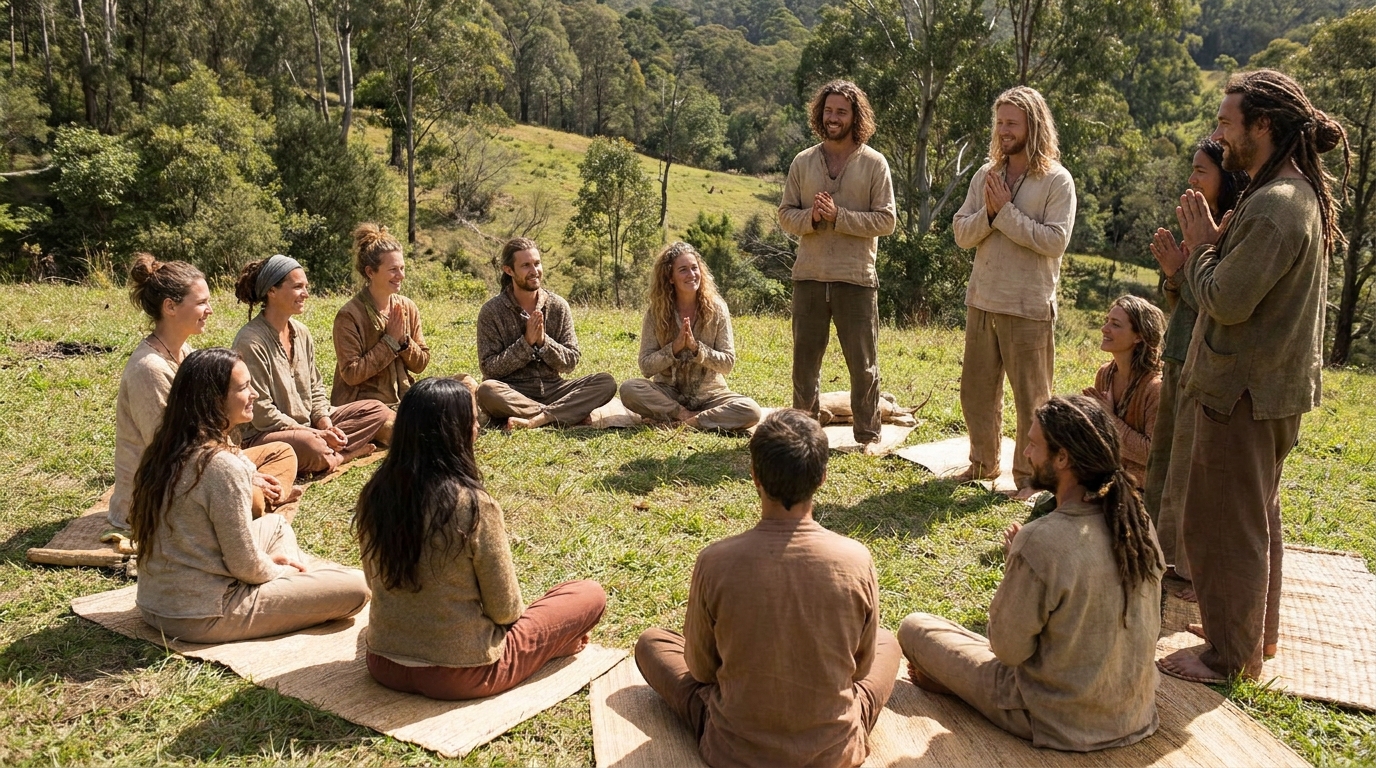
Many people today feel deeply lonely, even while surrounded by constant communication. We may have hundreds of online connections and still feel unseen. We may be busy every day and still feel spiritually empty.
Spiritual community offers something different from ordinary social life.
It offers connection based on the soul.
In a healthy spiritual community, people are not valued for what they can produce, how impressive they appear, or how much they know. They are valued because they are beloved children of God.
This is profoundly healing.
We Are Seen Beyond Our Masks
Most of us wear masks. We try to seem strong, successful, calm, or in control. But spiritual life invites honesty.
A compassionate community allows us to be human. We can admit that we are learning. We can say, “I am struggling.” We can ask questions without shame. We can receive support without feeling like a burden.
In Bhakti, humility is not self-hatred. Humility means seeing ourselves truthfully: small before the vastness of God, yet infinitely loved. It means we do not have to pretend to be the center of everything. We can rest in the care of the Divine.
Spiritual friendship helps us practice this humility.
We Learn to Give and Receive Love
Some people find it easier to give love than to receive it. Others long to receive love but feel unsure how to offer it. Spiritual community teaches both.
We learn to receive kindness without suspicion.
We learn to offer care without needing recognition.
We learn to forgive, apologize, listen, and begin again.
These are not always easy lessons. Community can sometimes bring discomfort because relationships reveal the parts of us that still need healing. But when guided by devotion, even challenges become opportunities for growth.
Bhakti Yoga is not an escape from relationship. It is the purification of relationship.
Spiritual Community Keeps Practice Steady
A beautiful spiritual insight can inspire us for a day. A retreat can uplift us for a weekend. A powerful kirtan can open the heart for an evening.
But spiritual growth becomes deep through steady practice.
This is where community becomes especially important.
When we practice alone, it is easy to drift. The mind says, “Maybe tomorrow.” Life becomes busy. Old habits return. But when we are connected to spiritual friends, we are gently reminded to keep going.
Rhythm Supports Transformation
Community gives rhythm to spiritual life.
A weekly gathering, morning meditation, Sunday feast, study circle, kirtan night, or seva opportunity becomes a sacred anchor. These regular practices help devotion become part of our lifestyle rather than a rare experience.
In Bhakti Yoga, daily practice may include chanting on beads, reading scripture, offering food to God, praying, and serving others. These practices are simple, but they become powerful when done regularly.
Spiritual community helps us stay consistent without becoming rigid. It reminds us that progress is not about rushing. It is about returning again and again with sincerity.
Encouragement Helps Us Continue
Everyone faces dry seasons in spiritual life.
There may be times when chanting feels mechanical, prayer feels distant, or scripture feels hard to understand. These seasons do not mean we have failed. They are part of the journey.
In those moments, community encourages us: “Keep chanting. Keep praying. Keep serving. Keep showing up. God sees your effort.”
Sometimes the faith of others becomes a bridge until our own faith feels strong again.
This is a sacred gift.
Learning Sacred Wisdom Together
Spiritual community is not only emotional support. It is also a place of learning.
Bhakti Yoga is rooted in deep wisdom preserved through scriptures such as the Bhagavad-gita, Srimad-Bhagavatam, and other devotional texts. These teachings help us understand the soul, God, karma, devotion, the mind, and the purpose of life.
But sacred wisdom is best understood with guidance, discussion, and practical application.
Scripture Becomes Practical in Community
Many people feel intimidated by spiritual texts, especially if they contain unfamiliar Sanskrit words or ancient settings. But when studied in community, scripture becomes alive.
For example, the Bhagavad-gita is spoken on a battlefield, where Arjuna, a warrior, feels overwhelmed and confused. Krishna guides him not by rejecting his struggle, but by helping him see his life through spiritual wisdom.
This is deeply practical.
We also face battlefields: difficult decisions, family pain, anxiety, grief, moral confusion, and inner conflict. The Gita teaches us that we can bring all of this to God. We do not need to wait until life is perfect to begin spiritual practice.
In community, we hear how others apply these teachings in real life. A parent shares how chanting helps with patience. A student shares how prayer helps with anxiety. A worker shares how offering their labor to God gives meaning to daily duties.
Scripture becomes a lamp for the path.
Questions Are Welcome
A loving spiritual community does not fear questions.
Questions are often signs of sincerity. In the Bhagavad-gita, Arjuna asks many questions. Krishna does not condemn him. He teaches him patiently.
In the same spirit, spiritual community should create room for honest inquiry:
Who is God?
Why do we suffer?
What is the soul?
How do I pray?
What if I have doubts?
Can I practice Bhakti Yoga if I come from another background?
How do I balance spiritual life with family and work?
These questions are welcome because every sincere question can become a doorway to deeper understanding.
Building a Community of Compassion and Service
The power of spiritual community is not meant to stay within the walls of a gathering place. True spiritual growth expresses itself as compassion.
As love for God grows, love for others naturally grows.
Bhakti Yoga teaches that every living being is connected to God. This vision softens the heart. We begin to see people not as strangers, competitors, or labels, but as souls.
Hospitality Is a Spiritual Practice
Welcoming others is sacred.
A smile at the door, a warm meal, a place to sit, a kind explanation, a patient answer — these simple acts can change someone’s life. Many people enter spiritual spaces feeling nervous or unsure. A gentle welcome can help them feel safe enough to open their heart.
In the Bhakti tradition, offering food is especially important. Food prepared with love and offered to God is called prasadam, meaning mercy or grace. When we share prasadam, we are not only feeding the body. We are sharing spiritual kindness.
A community that feeds people with love becomes a shelter.
Service Extends Beyond the Community
Spiritual community also inspires us to serve the wider world.
This may include feeding others, caring for the environment, supporting families, visiting the lonely, helping those in crisis, or simply bringing more kindness into our workplaces and homes.
Not everyone will serve in the same way. Each person has unique gifts. Some serve through music. Some through cooking. Some through teaching. Some through organizing. Some through listening. Some through quiet prayer.
Bhakti does not ask us to become someone else. It invites us to offer who we are.
The Challenges of Community and the Practice of Humility
It is important to speak honestly: spiritual community is powerful, but it is not always easy.
Where there are people, there will be differences. Misunderstandings may happen. Expectations may clash. Old wounds may surface. Sometimes we may feel overlooked, corrected, or uncomfortable.
These moments can be painful, but they can also become part of our spiritual growth when approached with humility and care.
Community Reveals the Heart
When we live or serve near others, we begin to see our own patterns. We may notice pride, impatience, insecurity, envy, or the desire to be appreciated. This can feel discouraging, but it is actually a mercy.
We cannot heal what we cannot see.
Bhakti Yoga gives us tools for this healing: chanting, prayer, scripture, service, forgiveness, and honest self-reflection. Spiritual community becomes like a mirror, helping us see where love still needs to grow.
Forgiveness Protects the Sacred Space
No community can thrive without forgiveness.
Forgiveness does not mean ignoring harm or avoiding healthy boundaries. It means we do not allow resentment to become our home. We seek truth with compassion. We learn to apologize sincerely. We try to understand before judging. We remember that everyone is growing.
A community rooted in devotion must protect people, honor accountability, and also cultivate mercy.
This balance is not always simple, but it is essential.
How to Begin Finding Spiritual Community
If you are longing for spiritual community, you can begin gently.
You do not need to know everything. You do not need to have a perfect practice. You do not need to belong to a certain culture or background. Bhakti Yoga is a path of the heart, and the heart begins with sincerity.
Visit With an Open Heart
Attend a kirtan, spiritual discussion, meditation gathering, or community meal. Notice how you feel. Is there kindness? Is there humility? Is God at the center? Are people welcomed with respect?
A healthy spiritual community should help you feel encouraged to grow, not pressured to perform.
Start With One Practice
You might begin by chanting one round of the Maha Mantra, offering one meal to God, reading one verse of the Bhagavad-gita, or saying one sincere prayer each morning.
Small steps matter.
In Bhakti, even a little sincere effort is spiritually powerful. Krishna says in the Bhagavad-gita that progress on this path is never lost, and even a small beginning can protect one from great fear (Bhagavad-gita 2.40). This is a comforting reminder: God receives every sincere step.
Serve in a Simple Way
Ask, “How can I help?”
Service connects us quickly to the heart of community. You may help clean, cook, greet, organize, sing, share, or support someone who is new.
Through service, we stop being spectators and become participants in love.
The Spiritual Community We All Need
At the deepest level, spiritual community reminds us that we belong to God and to one another.
We are not meant to walk through life disconnected, carrying everything alone. We are meant to gather, chant, pray, learn, serve, forgive, and grow. We are meant to help each other remember the Divine when the mind forgets. We are meant to become instruments of compassion in a world that needs tenderness.
The power of spiritual community is not only in the number of people gathered. It is in the sincerity of the hearts gathered.
Two people chanting with love can create a sacred space. A family offering dinner to God can become a temple. A small group reading scripture can become a place of transformation. A community serving prasadam with humility can become a doorway to grace.
Bhakti Yoga teaches that God is personal, loving, and accessible. We can approach Him through the simple practices of chanting, prayer, service, hearing sacred wisdom, and keeping the company of sincere seekers.
And we can begin today.
You are welcome exactly as you are. Whether your faith feels strong or fragile, whether you know Sanskrit or have never heard a mantra before, whether you come from a religious background or no background at all, there is a place for you on the path of love.
Take one sincere step toward God. Chant one holy name. Offer one prayer. Join one gathering. Serve one person. Open your heart just a little.
Grace can enter through even the smallest opening.
FAQs
What is a spiritual community?
A spiritual community is a group of individuals who come together to support each other in their spiritual growth and practice. This can take the form of a religious congregation, a meditation group, a yoga community, or any other gathering focused on spiritual development.
What are the benefits of being part of a spiritual community?
Being part of a spiritual community can provide a sense of belonging, support, and connection with like-minded individuals. It can also offer opportunities for learning, growth, and personal development. Additionally, spiritual communities often provide a space for individuals to practice and deepen their spiritual beliefs and practices.
How can a spiritual community support personal growth?
A spiritual community can support personal growth by providing a supportive and nurturing environment for individuals to explore and deepen their spiritual beliefs and practices. It can also offer opportunities for learning from others, receiving guidance from spiritual leaders, and engaging in meaningful rituals and ceremonies.
What are some common activities in a spiritual community?
Common activities in a spiritual community may include group meditation or prayer, spiritual study groups, religious or spiritual ceremonies and rituals, community service or volunteer work, and social gatherings focused on spiritual themes.
How can one find a spiritual community to join?
One can find a spiritual community to join by exploring local religious or spiritual organizations, attending open houses or events at different places of worship, asking for recommendations from friends or family members, or searching online for groups or communities that align with one’s spiritual beliefs and interests.

