
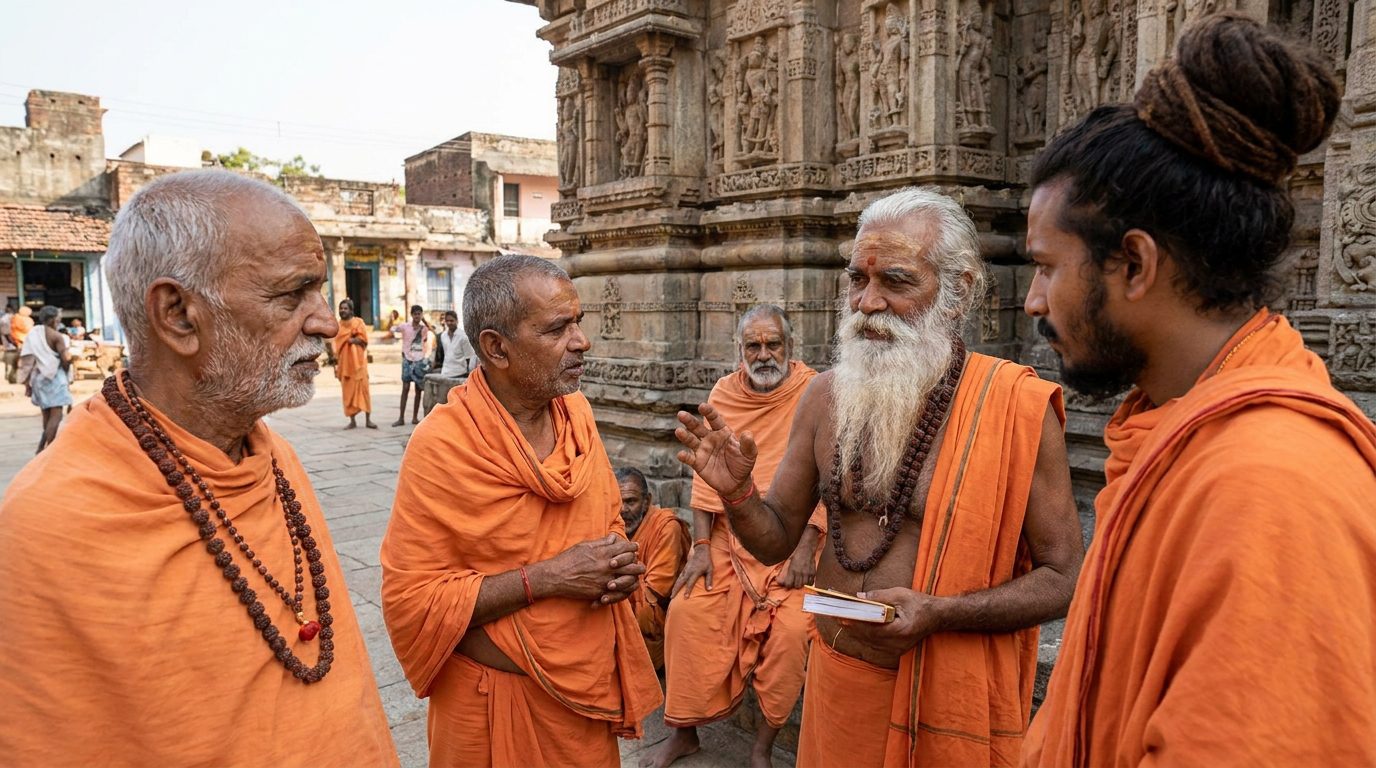
Have you ever wondered what it looks like to give up everything — wealth, comfort, status — for the sake of love? Not romantic love, but a love so deep and all-consuming that nothing else matters?
That’s exactly what the Six Goswāmīs of Vṛndāvana did over five hundred years ago. These extraordinary souls left behind lives of privilege, power, and prestige to dedicate every breath to the service of God, specifically to Śrī Kṛṣṇa, the Supreme Person in the Bhakti tradition. Their lives continue to inspire millions of seekers around the world, and their teachings remain a practical roadmap for anyone who wants to grow in devotion.
Whether you’re new to Bhakti Yoga or have been walking this path for years, the story of the Six Goswāmīs has something beautiful to offer you. Let’s explore their lives, their teachings, and how their example can touch our own hearts today.
The Six Goswāmīs were the principal disciples and followers of Śrī Caitanya Mahāprabhu, who is revered in the Bhakti tradition as an incarnation of Kṛṣṇa who appeared in Bengal, India, in 1486. Śrī Caitanya’s mission was to spread the practice of saṅkīrtana — the congregational chanting of God’s holy names — as the most accessible and joyful path to spiritual awakening.
The word “Goswāmī” (sometimes spelled Gosvāmī) comes from two Sanskrit words: “go,” meaning senses, and “swāmī,” meaning master. A Goswāmī is one who has become a master of the senses rather than a servant of them. This isn’t about suppression or denial — it’s about redirecting the heart’s deepest energy toward the Divine.
The Six Goswāmīs are:
- Śrīla Rūpa Goswāmī
- Śrīla Sanātana Goswāmī
- Śrīla Raghunātha Bhaṭṭa Goswāmī
- Śrīla Raghunātha dāsa Goswāmī
- Śrīla Jīva Goswāmī
- Śrīla Gopāla Bhaṭṭa Goswāmī
Together, these six saints systematized the theology, philosophy, and practice of Gauḍīya Vaiṣṇavism — the devotional tradition that flows from Śrī Caitanya Mahāprabhu. They wrote volumes of literature, rediscovered the lost holy places of Vṛndāvana, established temples, and lived as shining examples of what it means to be completely absorbed in love of God.
A Beautiful Prayer That Captures Their Spirit
Śrīnivāsa Ācārya, a dear follower of the Goswāmīs, composed a famous prayer that paints a vivid picture of their character:
“I offer my respectful obeisances unto the six Gosvāmīs, namely Śrī Rūpa Gosvāmī, Śrī Sanātana Gosvāmī, Śrī Raghunātha Bhaṭṭa Gosvāmī, Śrī Raghunātha dāsa Gosvāmī, Śrī Jīva Gosvāmī, and Śrī Gopāla Bhaṭṭa Gosvāmī, who were always engaged in chanting the holy name of Kṛṣṇa and bowing before the places where He had His pastimes. They gave up all kinds of worldly association and felt separation from Kṛṣṇa.”
This prayer reveals the essence of their lives: chanting, humility, sacred connection to holy places, deep renunciation, and an aching love for God that drove everything they did.
Śrīla Rūpa Goswāmī and Śrīla Sanātana Goswāmī: From Ministers to Mendicants
Lives of Worldly Power
Rūpa and Sanātana were brothers who served as high-ranking ministers in the government of Nawab Hussain Shah, the ruler of Bengal. They were wealthy, educated, and influential. By any worldly standard, they had everything a person could want.
But their hearts were restless. Despite their positions, they were deeply devoted to Kṛṣṇa and studied the scriptures in private. When they met Śrī Caitanya Mahāprabhu, everything changed. His love, His teachings, and His divine presence ignited a fire in their hearts that no amount of worldly success could satisfy.
The Great Renunciation
Both brothers eventually left their prestigious positions — Sanātana even endured imprisonment before escaping to join Śrī Caitanya. They traveled to Vṛndāvana, the sacred land of Kṛṣṇa’s pastimes, with virtually nothing. They slept under trees, ate simply, and devoted themselves entirely to writing, worshiping, and recovering the lost holy sites of Vṛndāvana.
Śrīla Rūpa Goswāmī became the foremost authority on the science of devotional love. His masterwork, Bhakti-rasāmṛta-sindhu (The Nectar of Devotion), is a breathtaking exploration of the different stages, moods, and expressions of love for God. In it, he defines the very essence of pure devotion:
As stated in Bhakti-rasāmṛta-sindhu (1.1.11):
“When first-class devotional service develops, one must be devoid of all material desires, knowledge obtained by monistic philosophy, and fruitive action. The devotee must constantly serve Kṛṣṇa favorably, as Kṛṣṇa desires.”
This definition is revolutionary in its simplicity. Pure Bhakti isn’t about what we get from God — it’s about offering our love to God simply because He is worthy of that love.
Śrīla Sanātana Goswāmī, meanwhile, wrote Bṛhad-bhāgavatāmṛta and Hari-bhakti-vilāsa, establishing the standards for Vaiṣṇava worship and daily spiritual practice. Together, these two brothers laid the philosophical and devotional foundation for the entire tradition.
Śrīla Raghunātha dāsa Goswāmī: The Embodiment of Holy Longing
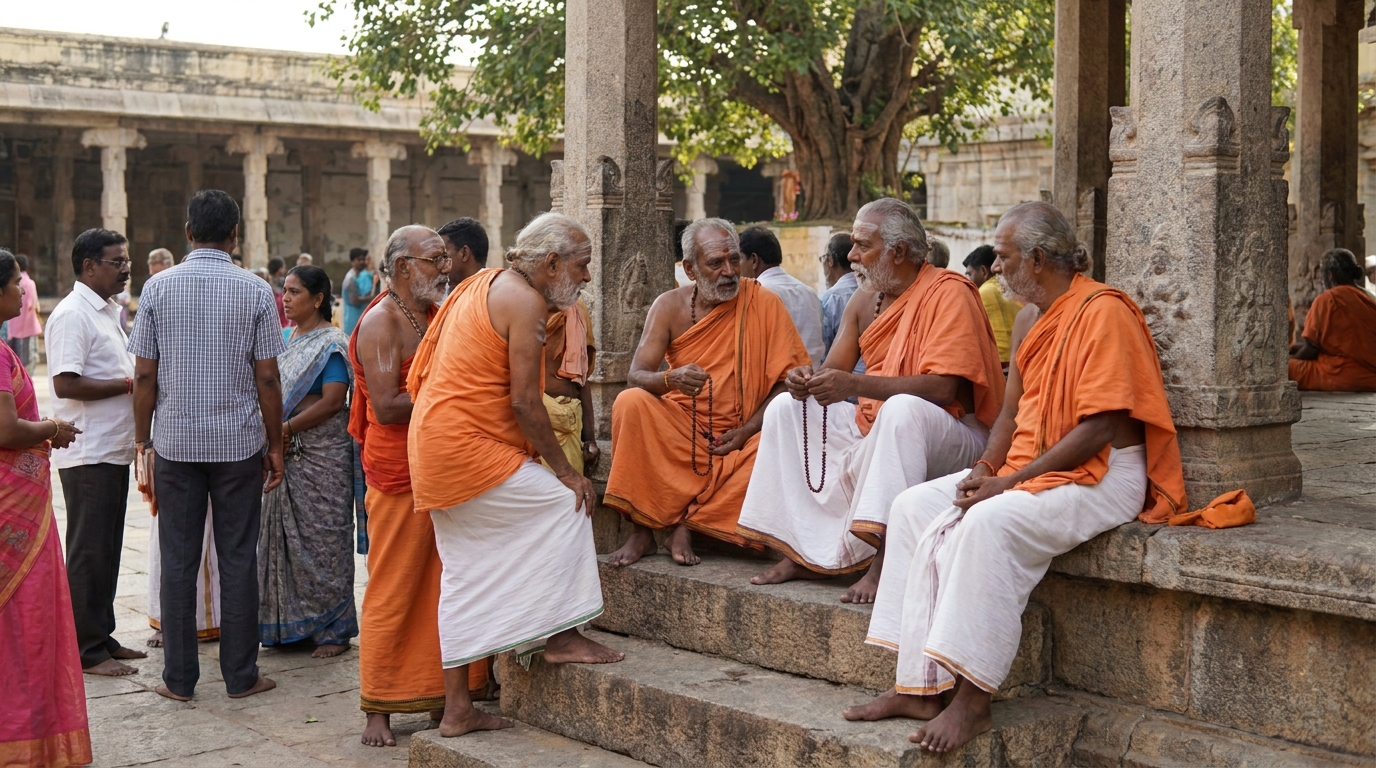
A Rich Man’s Son Who Craved Only God
Raghunātha dāsa Goswāmī was born into one of the wealthiest families in Bengal. His father and uncle were immensely prosperous landowners. Yet from childhood, Raghunātha dāsa had no interest in material comforts. His only desire was to serve Śrī Caitanya Mahāprabhu and live a life devoted entirely to Kṛṣṇa.
After multiple attempts, he finally escaped his family’s loving but binding embrace and made his way to Jagannātha Purī, where Śrī Caitanya resided. There, the Lord placed him under the care of Svarūpa Dāmodara Goswāmī, and Raghunātha dāsa began a life of astonishing renunciation.
Living on Almost Nothing
His austerity was remarkable. He gradually reduced his eating until he survived on just a small amount of buttermilk each day, and eventually even less. He chanted the holy names for many hours daily and spent his time in constant remembrance of Rādhā and Kṛṣṇa’s divine pastimes.
After Śrī Caitanya’s disappearance, Raghunātha dāsa traveled to Vṛndāvana, where he planned to end his life by jumping from Govardhana Hill, so deep was his feeling of separation. But Rūpa and Sanātana Goswāmī lovingly received him and encouraged him to continue serving through his writings and devotion.
His prayers, especially Vilāpa-kusumāñjali (A Bouquet of Sorrowful Prayers), are among the most heart-rending devotional poetry ever composed. They reveal a soul so immersed in love for God that every moment of separation felt like an eternity.
Check out our website for more articles: more articles.
Śrīla Jīva Goswāmī: The Brilliant Philosopher of Love
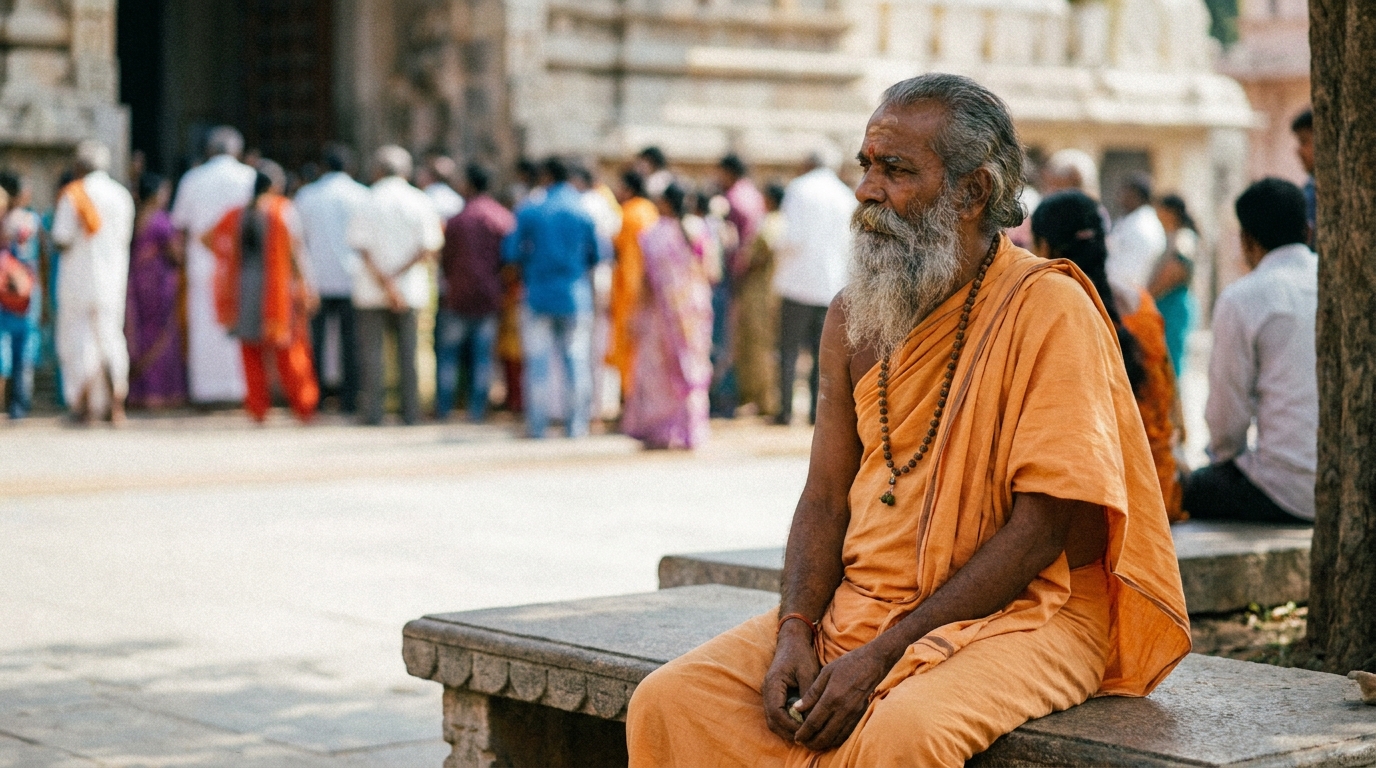
The Intellectual Giant
Jīva Goswāmī, the nephew of Rūpa and Sanātana, was perhaps the greatest philosopher-theologian the Bhakti tradition has ever produced. His magnum opus, the Ṣaṭ-sandarbha (Six Treatises), systematically establishes the philosophical foundations of Gauḍīya Vaiṣṇavism using evidence from scripture, logic, and spiritual experience.
Despite his extraordinary intellect, Jīva Goswāmī remained deeply humble. He served his uncles with great devotion and, after their passing, became the leader of the Vṛndāvana community, guiding the next generation of devotees with wisdom, compassion, and steady spiritual strength.
Making Philosophy Accessible
What makes Jīva Goswāmī’s work so remarkable is that it demonstrates how philosophy and love are not opposites. Deep thinking about God is itself an act of devotion. Understanding who Kṛṣṇa is, what the soul is, and how love connects them — this knowledge nourishes the heart and strengthens our spiritual practice.
In the Śrīmad-Bhāgavatam (1.2.6), which Jīva Goswāmī extensively commented upon, we find this foundational verse:
“The supreme occupation [dharma] for all humanity is that by which men can attain to loving devotional service unto the transcendent Lord. Such devotional service must be unmotivated and uninterrupted to completely satisfy the self.”
This verse captures the very goal that all Six Goswāmīs lived and breathed for — pure, unmotivated, uninterrupted love for God.
Śrīla Raghunātha Bhaṭṭa Goswāmī and Śrīla Gopāla Bhaṭṭa Goswāmī: Worship and Devotional Standards
Raghunātha Bhaṭṭa Goswāmī: The Voice of the Bhāgavatam
Raghunātha Bhaṭṭa Goswāmī was known for his extraordinary ability to recite the Śrīmad-Bhāgavatam with such sweetness that listeners would be moved to tears. He never engaged in criticism of others and spent his life absorbed in cooking for the Deity of Kṛṣṇa and reciting sacred scripture.
His example teaches us something profound: devotion doesn’t always look dramatic. Sometimes it looks like lovingly preparing a meal for God. Sometimes it looks like reading sacred words with such care and feeling that they come alive.
Gopāla Bhaṭṭa Goswāmī: Establishing Sacred Worship
Gopāla Bhaṭṭa Goswāmī, originally from South India, was blessed by Śrī Caitanya Mahāprabhu during the Lord’s pilgrimage to the south. He later came to Vṛndāvana and contributed significantly to establishing the standards of Deity worship, drawing from both the Northern and Southern Vaiṣṇava traditions.
He is also intimately connected with the beloved Deity of Śrī Rādhāramaṇa in Vṛndāvana — one of the most sacred and ancient Deities still worshiped today. The story of how this Deity manifested from a śālagrāma-śilā (a sacred stone) is one of the most miraculous accounts in Bhakti history.
What the Six Goswāmīs Teach Us Today
Renunciation Is About the Heart
You don’t need to leave your home, your job, or your family to follow the example of the Goswāmīs. True renunciation, as they taught it, is an inner shift — prioritizing God’s love above all else while engaging with the world in a spirit of service.
As Śrīla Rūpa Goswāmī taught, real renunciation (yukta-vairāgya) means using everything in the service of Kṛṣṇa rather than artificially rejecting the world. In the Bhakti-rasāmṛta-sindhu (1.2.255), he explains:
“When one is not attached to anything but at the same time accepts everything in relation to Kṛṣṇa, one is rightly situated above possessiveness.”
This is a liberating teaching. It means that whatever you have — your talents, your resources, your relationships — can become instruments of devotion when offered with love.
Chanting Is the Heart of the Practice
Every one of the Six Goswāmīs was deeply devoted to the chanting of the holy names. They chanted for hours each day, finding in the names of God — Hare Kṛṣṇa, Hare Rāma — an endless ocean of sweetness, solace, and connection.
Śrī Caitanya Mahāprabhu Himself taught in His Śikṣāṣṭaka (verse 2):
“O my Lord, Your holy name alone can render all benediction to living beings, and thus You have hundreds and millions of names, like Kṛṣṇa and Govinda. In these transcendental names You have invested all Your transcendental energies.”
The Goswāmīs took this teaching to heart and showed by their own lives that chanting is not merely a ritual — it is a living, breathing relationship with God.
Devotion Is for Everyone
Perhaps the most encouraging lesson from the Six Goswāmīs is that devotion is not reserved for a special few. They wrote extensively so that people of all backgrounds, capacities, and circumstances could access the path of Bhakti. Their books, their temples, their personal examples — all were offered freely, with the hope that every soul might taste the sweetness of divine love.
In the Bhagavad-gītā (9.32), Lord Kṛṣṇa Himself declares:
“O son of Pṛthā, those who take shelter in Me, though they be of lower birth — women, vaiśyas [merchants] and śūdras [workers] — can attain the supreme destination.”
God’s love knows no barriers. The Goswāmīs lived this truth and made it the cornerstone of everything they taught.
Your Invitation to Begin
The lives of the Six Goswāmīs may seem extraordinary — and they are. But their message is profoundly simple: Love God. Chant His names. Serve others. Let go of what doesn’t truly matter. Hold on to what does.
You don’t need to be a scholar. You don’t need to be perfect. You don’t need to have it all figured out. The Goswāmīs themselves were on a journey, always deepening, always growing, always reaching for more of God’s love.
At The Bhakti House, we believe that everyone is welcome — exactly as you are, right where you are. If the stories of these great souls have stirred something in your heart, honor that feeling. Take one sincere step toward God today. Chant one prayer. Read one verse. Offer one act of kindness as a gift to the Divine.
That one step is enough. God meets us where we are, and He never lets go of a sincere heart. 💙
FAQs
Who were the Six Goswāmīs?
The Six Goswāmīs were a group of influential spiritual leaders in the Gaudiya Vaishnavism tradition of Hinduism. They were disciples of the 16th-century saint and founder of the tradition, Chaitanya Mahaprabhu.
What were the contributions of the Six Goswāmīs?
The Six Goswāmīs are known for their extensive writings on theology, philosophy, and devotional practices within the Gaudiya Vaishnavism tradition. They also established important pilgrimage sites and temples in Vrindavan, India.
What are some of the key teachings of the Six Goswāmīs?
The Six Goswāmīs emphasized the importance of bhakti (devotion) as the primary means of attaining spiritual liberation. They also stressed the significance of chanting the Hare Krishna mantra and cultivating a deep love for the divine couple, Radha and Krishna.
How are the Six Goswāmīs revered in the Gaudiya Vaishnavism tradition?
The Six Goswāmīs are highly revered as spiritual authorities and exemplars of devotion within the Gaudiya Vaishnavism tradition. Their teachings and writings continue to be studied and followed by practitioners of the tradition around the world.
What is the significance of the Six Goswāmīs in the history of Hinduism?
The Six Goswāmīs played a crucial role in the revival and expansion of the Gaudiya Vaishnavism tradition, and their contributions have had a lasting impact on the development of Hindu theology, philosophy, and devotional practices.

