
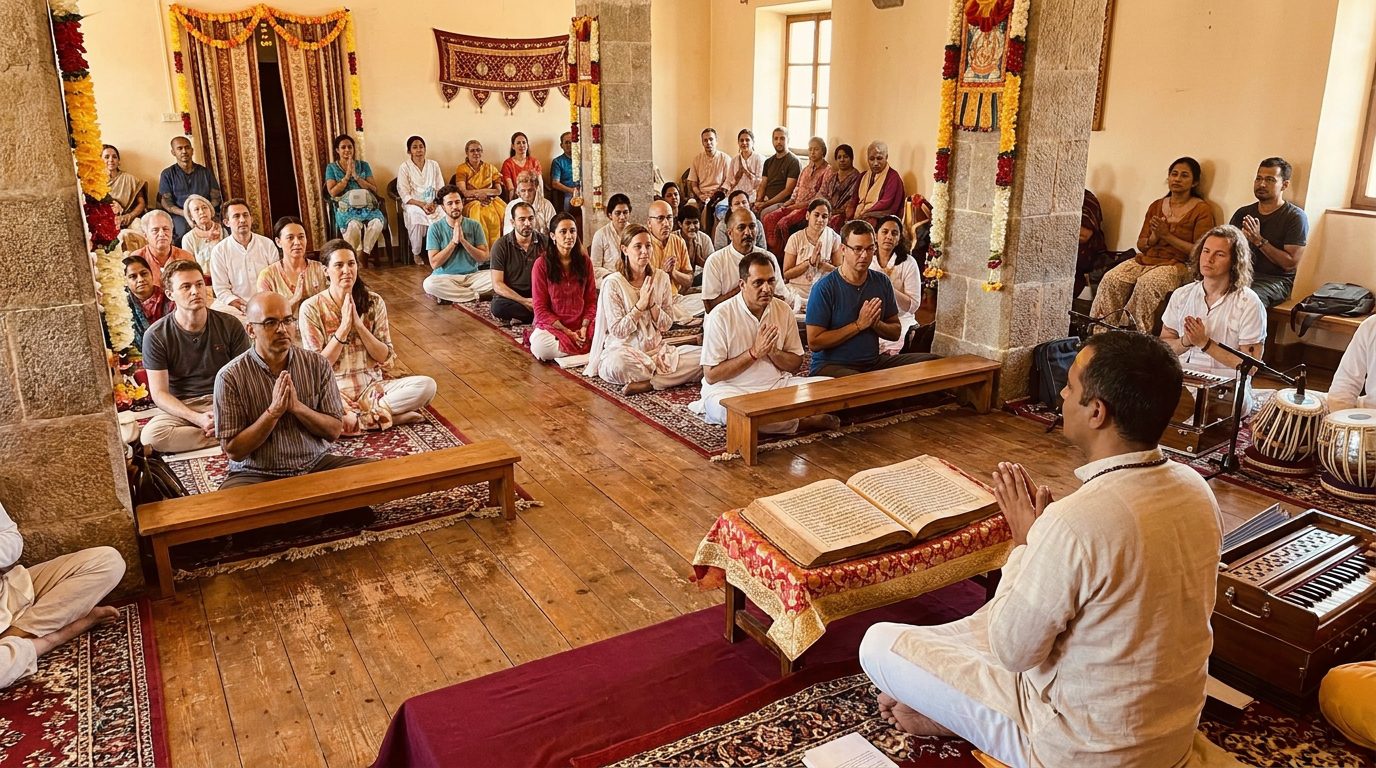
In every heart there is a quiet longing: to love more deeply, to live more meaningfully, and to feel connected to the Divine. The Bhagavata, also known as the Śrīmad-Bhāgavatam, speaks directly to that longing. It is one of the most beloved scriptures in the Bhakti tradition, offering stories, prayers, teachings, and practical wisdom that guide us toward a life of devotion, compassion, and spiritual joy.
A transformative Bhagavata class is not simply a lecture. It is a sacred gathering where hearts are softened, questions are welcomed, and the wisdom of the sages becomes relevant to our everyday lives. Whether you are new to Bhakti Yoga, returning after many years, or simply curious about the spiritual path, the Bhagavata invites you to come as you are.
At The Bhakti House, we approach this wisdom with humility, warmth, and openness. We do not need to be scholars to begin. We only need sincerity. The Bhagavata itself teaches that hearing spiritual truth with an open heart can awaken love for God, cleanse the mind, and bring deep inner transformation.
The word Bhagavata comes from Bhagavān, a Sanskrit word meaning “the Supreme Lord” or “the all-attractive Divine Person.” The Śrīmad-Bhāgavatam is a sacred text centered on loving devotion to God, especially in the form of Śrī Krishna, who is celebrated in Bhakti Yoga as the most intimate and loving expression of the Divine.
The Bhagavata is sometimes called the “ripened fruit” of Vedic wisdom. It brings philosophy, poetry, story, song, and devotion together in a way that nourishes the soul.
A Scripture of Love and Realization
The Bhagavata does not only tell us what to believe. It invites us to experience transformation through śravaṇam, which means “hearing.” In Bhakti Yoga, hearing sacred wisdom is a powerful spiritual practice. When we hear about God, the soul begins to remember its eternal relationship with the Divine.
One famous verse explains:
“By regularly hearing the Bhagavata and serving the pure-hearted devotees, all that is troublesome within the heart is almost completely destroyed, and loving devotion to the Lord becomes firmly established.”
This teaching reminds us that spiritual growth is not forced. It unfolds through steady, sincere practices: hearing, chanting, prayer, service, and loving association.
Not Just Ancient Stories
At first glance, the Bhagavata may seem like a collection of ancient stories from another time and culture. But with careful guidance, these stories become mirrors for our own lives.
We meet kings struggling with pride, sages seeking truth, children showing extraordinary faith, devotees facing hardship, and communities learning how to live in harmony with God. Their stories help us understand our own fears, attachments, hopes, and spiritual potential.
In a Bhagavata class, we learn to ask:
What is this story teaching me about love?
Where is my heart being invited to grow?
How can I serve more sincerely today?
Why a Bhagavata Class Can Be Transformative
A true Bhagavata class is not about collecting information. It is about inner change. The Sanskrit word parivartan means transformation or change. Through hearing sacred wisdom, we begin to shift from ego-centered living to God-centered living.
This transformation may be gentle and gradual. It may appear as more patience in our relationships, more gratitude in our daily routine, or more courage during difficulty. Over time, we begin to see life as a sacred opportunity to love and serve.
Wisdom That Touches the Heart
Many spiritual teachings speak to the mind. The Bhagavata speaks to the heart.
It does not reject philosophy, but it brings philosophy into relationship. It teaches that we are not merely bodies, roles, or temporary identities. We are ātman, eternal souls, each with a natural capacity to love God and all living beings.
This is deeply healing. In a world that often measures people by success, appearance, productivity, or status, the Bhagavata reminds us: you are already spiritually valuable. Your essence is eternal. Your heart is capable of divine love.
A Space for Honest Questions
A transformative class welcomes questions. In fact, the Bhagavata begins with sincere inquiry. Great sages gather and ask essential questions: What is the highest good for humanity? What should we hear, chant, and remember? How can the soul find true shelter?
These questions are still alive today.
What is my purpose?
How do I deal with suffering?
How can I forgive?
How do I find God in ordinary life?
How do I live with love in a divided world?
A Bhagavata class does not always give quick answers. Instead, it offers a sacred space where questions can deepen into prayer, reflection, and realization.
Transformation Through Hearing and Association
In Bhakti Yoga, sādhu-saṅga means “association with spiritually minded people.” This does not mean we have to be perfect to join a spiritual community. It means we grow by being around others who are also trying to remember God and live with love.
When we sit together, hear together, chant together, and reflect together, something beautiful happens. We feel supported. We remember that we are not alone. The path becomes joyful and practical.
The Heart of Bhakti Yoga in the Bhagavata
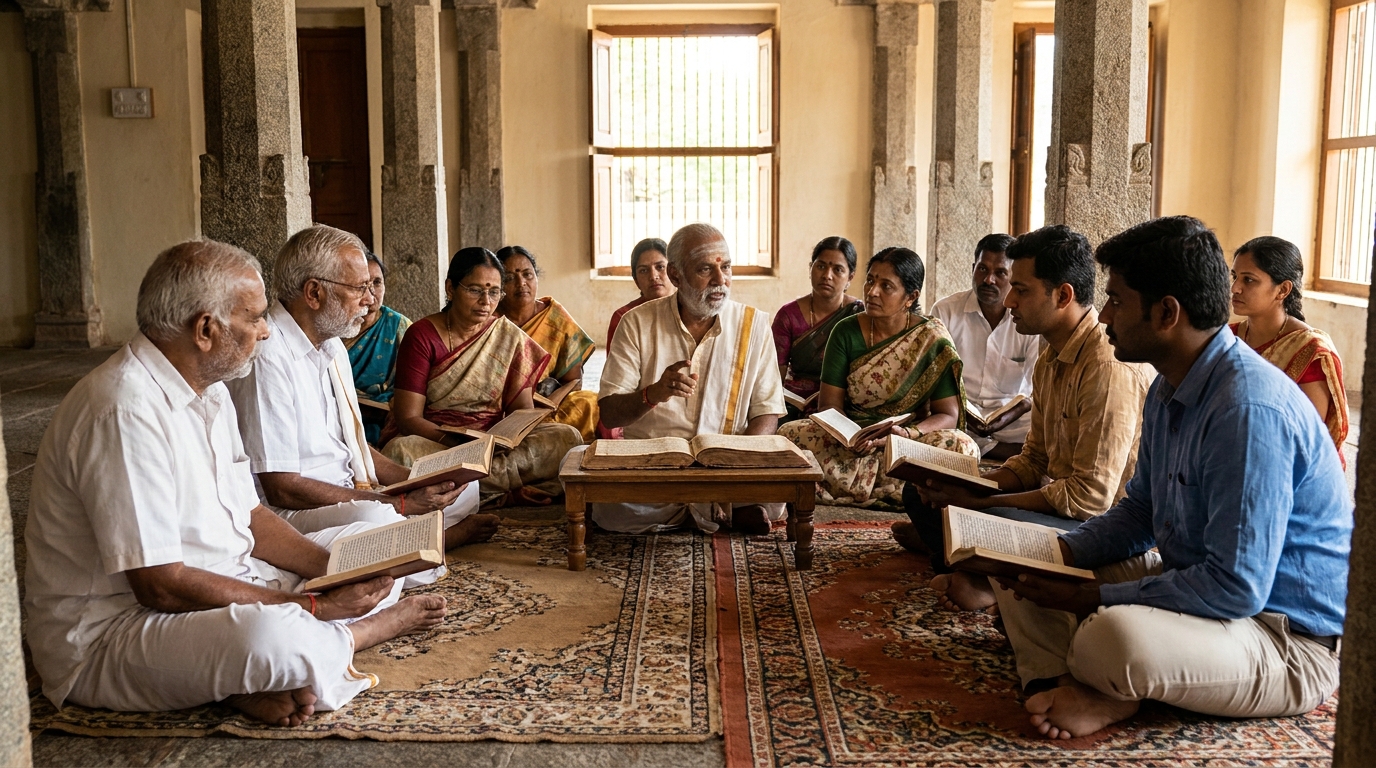
Bhakti Yoga is the path of devotion, or loving connection with God. The word bhakti means devotion, loving service, or heartfelt dedication. The word yoga means connection. So Bhakti Yoga means reconnecting with the Divine through love.
The Bhagavata is one of the great guiding lights of Bhakti Yoga. It teaches that devotion is not limited by birth, background, education, wealth, gender, nationality, or previous mistakes. Love of God is the birthright of every soul.
Chanting the Holy Names
One of the most accessible practices in Bhakti Yoga is kīrtan, the singing or chanting of God’s names. The Bhagavata repeatedly glorifies the power of sacred sound.
In Bhakti tradition, the names of God are not seen as ordinary sound. They carry divine presence. When we chant with sincerity, even softly or imperfectly, the heart begins to awaken.
A simple and widely practiced mantra is the mahā-mantra, meaning “great mantra”:
Hare Krishna Hare Krishna
Krishna Krishna Hare Hare
Hare Rama Hare Rama
Rama Rama Hare Hare
“Hare” calls upon the divine energy of the Lord. “Krishna” means the all-attractive one. “Rama” means the source of joy. This mantra is a prayer: “O Lord, O Divine Energy, please engage me in loving service.”
In a Bhagavata class, chanting may happen before or after the discussion, helping us move from the head into the heart.
Prayer as Relationship
The Bhagavata is filled with prayers. Some are spoken by great sages. Some by queens, kings, children, and humble devotees. These prayers show us that prayer is not performance. It is relationship.
We can pray with gratitude.
We can pray through tears.
We can pray when we are confused.
We can pray when we do not know what to say.
One of the most beautiful lessons of Bhakti is that God listens to sincerity, not eloquence. A simple prayer such as “Please guide me” can open the heart.
Service as Love in Action
The Sanskrit word seva means service. In Bhakti Yoga, service is love expressed through action. It may be cooking for others, cleaning a sacred space, helping organize a class, offering music, caring for a child, listening to a friend, or serving the wider community.
The Bhagavata teaches that devotion becomes real when it softens how we treat others. We learn to see every living being as connected to God. This vision naturally inspires compassion.
A transformative Bhagavata class does not end when the discussion closes. It continues in how we speak, work, forgive, share, and serve.
Check out our latest posts at https://thebhaktihouse.org/blog.
What Happens in a Transformative Bhagavata Class?
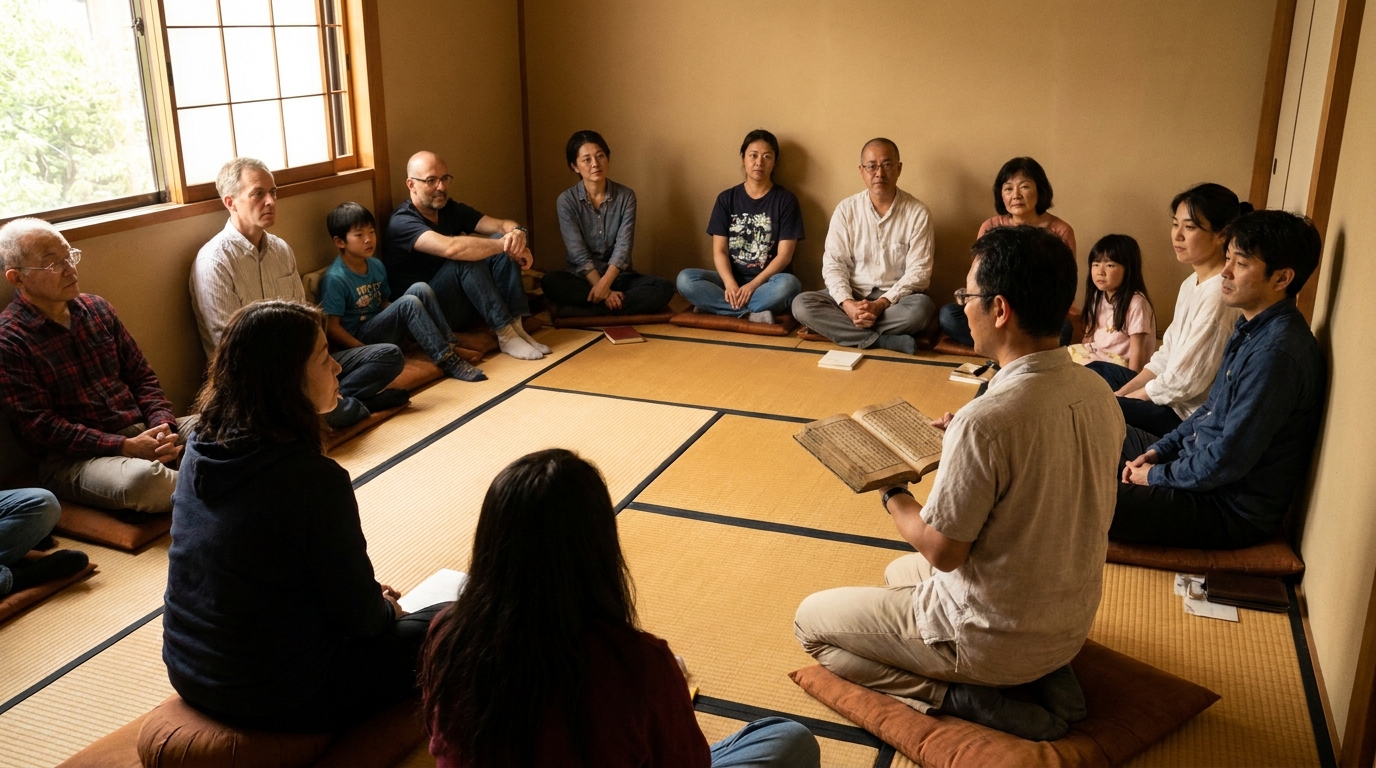
A Bhagavata class is both simple and profound. The format may vary, but the essence is sacred hearing and heartfelt reflection.
At The Bhakti House, the atmosphere is meant to be welcoming, thoughtful, and devotional. You do not need prior knowledge of Sanskrit or Indian philosophy. You do not need to identify with a particular culture or background. You are invited to come with an open heart.
Opening With Sacred Sound
Many classes begin with kīrtan or a simple mantra meditation. This helps settle the mind and create a shared sacred space.
Modern life often keeps us rushing from one task to another. Sacred sound gently brings us back to the present moment. It reminds us that spiritual life is not far away. It begins here, in this breath, in this heart.
Reading the Verse
A Bhagavata class usually centers around a verse from the Śrīmad-Bhāgavatam. The Sanskrit may be read, followed by a translation and explanation.
Sanskrit can feel unfamiliar at first, but it is not meant to exclude anyone. In class, terms are explained simply. For example:
Dharma means our sacred purpose or the way of living that supports spiritual truth.
Karma means action and the results that follow.
Jñāna means knowledge or wisdom.
Vairāgya means healthy detachment from what distracts us from love and truth.
Prema means pure love of God.
These words become helpful tools for understanding the soul’s journey.
Reflection and Practical Application
The heart of a transformative class is application. The Bhagavata is not meant to remain on a shelf or only in memory. It is meant to shape how we live.
After hearing a verse or story, we may reflect together:
How does this teaching apply to family life?
How does it help with anxiety or grief?
How can it guide our choices at work?
What does it teach about humility, forgiveness, or courage?
How can we remember God more throughout the day?
This practical approach makes Bhagavata wisdom accessible and deeply relevant.
Key Teachings From the Bhagavata for Daily Life
The Bhagavata is vast, with twelve cantos and thousands of verses. Yet certain teachings shine throughout the text and are especially helpful for spiritual growth today.
We Are Souls, Not Just Bodies
One foundational teaching is that we are eternal souls temporarily living in material bodies. This does not mean the body is bad. The body is sacred because it can be used in service. But we are more than the body.
When we remember this, we become less controlled by comparison, fear, and temporary labels. We begin to treat ourselves and others with greater dignity.
The Bhagavata invites us to see beyond external differences and recognize the spiritual essence in everyone.
The Heart Can Be Cleansed
The Bhagavata often speaks about the heart becoming cleansed through hearing and chanting. This means that envy, anger, greed, and fear can gradually lose their grip.
This is hopeful. Bhakti Yoga does not say, “You must be pure before you begin.” It says, “Begin sincerely, and the process will purify the heart.”
We may still struggle. We may still fall short. But every sincere step matters.
God Is Personal and Loving
The Bhagavata reveals God not only as a distant force or abstract energy, but as a loving person who desires relationship. Krishna’s pastimes, or sacred activities, show divine playfulness, compassion, beauty, and intimacy.
This personal understanding of God is central to Bhakti. It allows love to grow naturally. We can speak to God, sing to God, offer food to God, serve God, and remember God as our dear friend and eternal shelter.
Devotion Is Greater Than External Qualification
Again and again, the Bhagavata shows that sincere devotion is more important than social position, scholarship, or ritual perfection.
One beloved example is Prahlāda Mahārāja, a young boy who remained devoted to God even in the face of danger. His story teaches that devotion can blossom in any circumstance, even when the world around us feels hostile or confusing.
Another example is Dhruva Mahārāja, a child who began his spiritual journey with material desire but was transformed by divine encounter. His story shows that we may come to God with mixed motives, yet by grace our hearts can become purified.
This is encouraging for all of us. We do not need to wait until we feel spiritually advanced. We can begin now.
The Role of the Teacher and the Community
A transformative Bhagavata class is guided by humility. The teacher is not meant to be an entertainer or a person seeking followers. In the Bhakti tradition, a teacher serves as a caretaker of sacred wisdom, helping others connect with God.
The best teaching mood is service. The teacher sits at the feet of the scripture and the previous saints, offering what has been received with gratitude.
Learning Through Paramparā
The Sanskrit word paramparā means a chain of spiritual wisdom passed down from teacher to student. This does not mean blind acceptance. It means receiving wisdom through a living tradition that has been practiced, tested, and cherished over generations.
In a Bhagavata class, we honor this lineage by approaching the text respectfully. We listen not just to analyze, but to be transformed.
Growing Together, Not Performing Spirituality
Spiritual community should not be a place where people feel pressured to appear perfect. Real Bhakti community is where we practice honesty, kindness, accountability, and encouragement.
Some people may chant many rounds daily. Some may be learning their first mantra. Some may know many verses. Some may simply be trying to find peace. Everyone can be honored.
The Bhagavata teaches that devotion grows in the company of devotees. We help each other remember what matters most.
Hospitality as a Spiritual Practice
At The Bhakti House, welcoming others is part of the practice. Hospitality is not separate from spirituality. Offering a seat, a kind word, prasāda, or a listening ear can be a powerful expression of devotion.
Prasāda means “mercy” or “grace.” It often refers to vegetarian food offered to God with love and then shared. In Bhakti, eating can become sacred when food is prepared and offered with gratitude.
A class that ends with prasāda reminds us that spiritual wisdom nourishes the heart, and sacred food nourishes the body and soul.
How to Prepare Your Heart for a Bhagavata Class
You do not need special qualifications to attend. Still, a few simple attitudes can help you receive more deeply.
Come With Humility
Humility does not mean thinking badly of yourself. It means being open to learning. It means recognizing that divine wisdom is greater than our current understanding.
A humble heart can receive. Even if we hear one sentence that helps us love better, the class has been a blessing.
Bring Your Real Life
Bring your questions, joys, doubts, struggles, grief, and gratitude. The Bhagavata is not afraid of real life. It speaks to birth and death, love and loss, responsibility and renunciation, confusion and awakening.
God meets us where we are. The class becomes transformative when we allow the teachings to touch our actual lives, not an imagined perfect version of ourselves.
Listen With the Intention to Practice
Hearing becomes powerful when we listen with the intention to apply. You might leave class with one simple practice:
Chant one mantra each morning.
Offer your food with gratitude.
Read one verse daily.
Pray before making an important decision.
Serve someone without expecting recognition.
Pause before speaking harshly.
Remember that every person is a soul.
Small practices, repeated sincerely, can reshape the heart.
Bhagavata Wisdom in a Modern World
We live in a time of distraction, loneliness, and uncertainty. Many people are spiritually hungry but unsure where to turn. The Bhagavata offers a deep and practical response.
It does not promise that life will become free from challenge. Instead, it teaches how to find shelter in God through all circumstances.
Finding Peace Beyond Constant Noise
Our minds are often crowded with notifications, responsibilities, opinions, and worries. The Bhagavata invites us into sacred remembrance.
Even a few minutes of chanting or hearing can create inner space. It can help us respond rather than react. It can remind us that we are held by a reality greater than our immediate problems.
Healing Relationships Through Devotion
Bhakti Yoga is relational. As our relationship with God deepens, our relationships with others can also become more compassionate.
The Bhagavata teaches qualities such as mercy, truthfulness, cleanliness, self-control, patience, and gratitude. These are not abstract virtues. They become practical tools for family life, friendship, community, and service.
When we see others as souls, we become less eager to exploit or dismiss them. We become more willing to listen, forgive, and serve.
Living With Purpose
Many people ask, “What is my purpose?” The Bhagavata offers a simple yet profound answer: our deepest purpose is to awaken love for God and express that love through service.
This purpose can be lived in many roles. A parent can practice Bhakti. A student can practice Bhakti. An artist, worker, elder, activist, caregiver, or seeker can practice Bhakti.
The path is not limited to a monastery or temple. The heart can become a temple when filled with remembrance and love.
The Transformative Power of Sacred Stories
The Bhagavata’s stories are not ordinary entertainment. They are spiritual medicine. When heard with faith and guidance, they can heal confusion and awaken devotion.
The Story of Prahlāda: Faith in Difficulty
Prahlāda Mahārāja was born into a family where devotion to God was not welcomed. Still, he remained steady in remembering Lord Vishnu, a name of God meaning “the all-pervading Lord.”
His story teaches that spiritual strength does not depend on external comfort. Even in hardship, the soul can find shelter in God. Prahlāda’s devotion was not harsh or proud. It was gentle, fearless, and compassionate.
For us, Prahlāda’s example can help when we feel misunderstood, pressured, or afraid. We can pray: “Please help me remember You in all situations.”
The Story of Dhruva: Desire Transformed
Dhruva began his journey with a wounded heart. He wanted recognition and a kingdom greater than anyone else’s. But through meditation, guidance, and the grace of God, his desire changed.
When he finally saw the Lord, he felt that what he had wanted before was small compared to the treasure of divine love.
Dhruva’s story is deeply relatable. Many of us approach spirituality wanting relief, success, healing, or answers. Bhakti does not reject us for that. It welcomes us and gradually transforms our desires into devotion.
The Story of King Parīkṣit: Hearing at the End of Life
King Parīkṣit learned that he had only seven days to live. Instead of panicking, he turned fully toward spiritual hearing. He sat by the Ganges and listened to the Bhagavata from the sage Śukadeva Gosvāmī.
This sacred conversation became the Śrīmad-Bhāgavatam.
Parīkṣit’s example reminds us that hearing about God is one of the most important things we can do with our time. We may not know how long we have, but we can choose to use this day for awakening.
Making Bhagavata Study a Personal Practice
A class can inspire us, but personal practice helps the inspiration grow roots. You do not need to do everything at once. Begin gently and sincerely.
Read a Little Each Day
Even one verse or paragraph can nourish the heart. Read slowly. Pause. Ask, “What is Krishna teaching me here? How can I live this today?”
If you are new, it can help to read with guidance from trusted Bhakti teachers or in a study group.
Chant With Attention
Set aside a few minutes daily for mantra meditation. You can chant aloud, softly, or in your mind. The important thing is sincerity.
If the mind wanders, gently bring it back. This returning is part of the practice. Every return is an offering.
Offer Your Day
In the morning, you might pray:
“Dear Lord, please guide my thoughts, words, and actions today. May I remember You. May I serve with kindness.”
This simple offering can transform ordinary activities into spiritual practice.
Serve in Community
Look for one way to serve. Help with a class, cook, clean, welcome guests, share resources, support someone who is struggling, or offer your skills.
Service opens the heart because it moves us from “What can I get?” to “How can I love?”
Everyone Is Welcome on the Path of Bhakti
The wisdom of the Bhagavata is profound, but the doorway is simple: sincere hearing, chanting, prayer, and service.
You do not have to understand everything before you begin. You do not have to have a perfect spiritual routine. You do not have to come from a particular background. The Bhakti path is for the heart.
A transformative Bhagavata class offers a sacred pause in the week—a chance to remember who we are, who God is, and how love can guide our lives. Through the stories of saints and seekers, the sound of mantra, the kindness of community, and the grace of scripture, we are invited into a deeper way of living.
May the Bhagavata’s wisdom help us become more humble, more compassionate, more prayerful, and more devoted. May it teach us to see God’s presence in every moment and every living being.
Wherever you are on your journey, you are welcome. Take one sincere step toward God today: hear a verse, chant one mantra, offer one prayer, or serve one person with love. That step matters. And by grace, one sincere step can open the door to a lifetime of spiritual growth.
FAQs
What is Bhagavata class?
Bhagavata class refers to a traditional study of the Bhagavata Purana, a sacred Hindu scripture that consists of 12 books and over 18,000 verses. The class typically involves a teacher or guru leading a group of students in the study and discussion of the text.
What is the purpose of attending Bhagavata class?
The purpose of attending Bhagavata class is to gain a deeper understanding of the Bhagavata Purana and its teachings. It is also an opportunity for spiritual growth, as the text is considered to be a guide for living a righteous and fulfilling life.
Who can attend Bhagavata class?
Bhagavata class is open to anyone who is interested in learning about the Bhagavata Purana and its teachings. There are no specific requirements or restrictions based on age, gender, or background.
Where are Bhagavata classes typically held?
Bhagavata classes are often held in temples, ashrams, or community centers with a focus on Hindu spirituality. In some cases, they may also be conducted in private homes or online through virtual platforms.
What can one expect to learn in Bhagavata class?
In Bhagavata class, students can expect to learn about the stories, philosophy, and spiritual lessons found within the Bhagavata Purana. The class may also include discussions on the cultural and historical significance of the text.

