
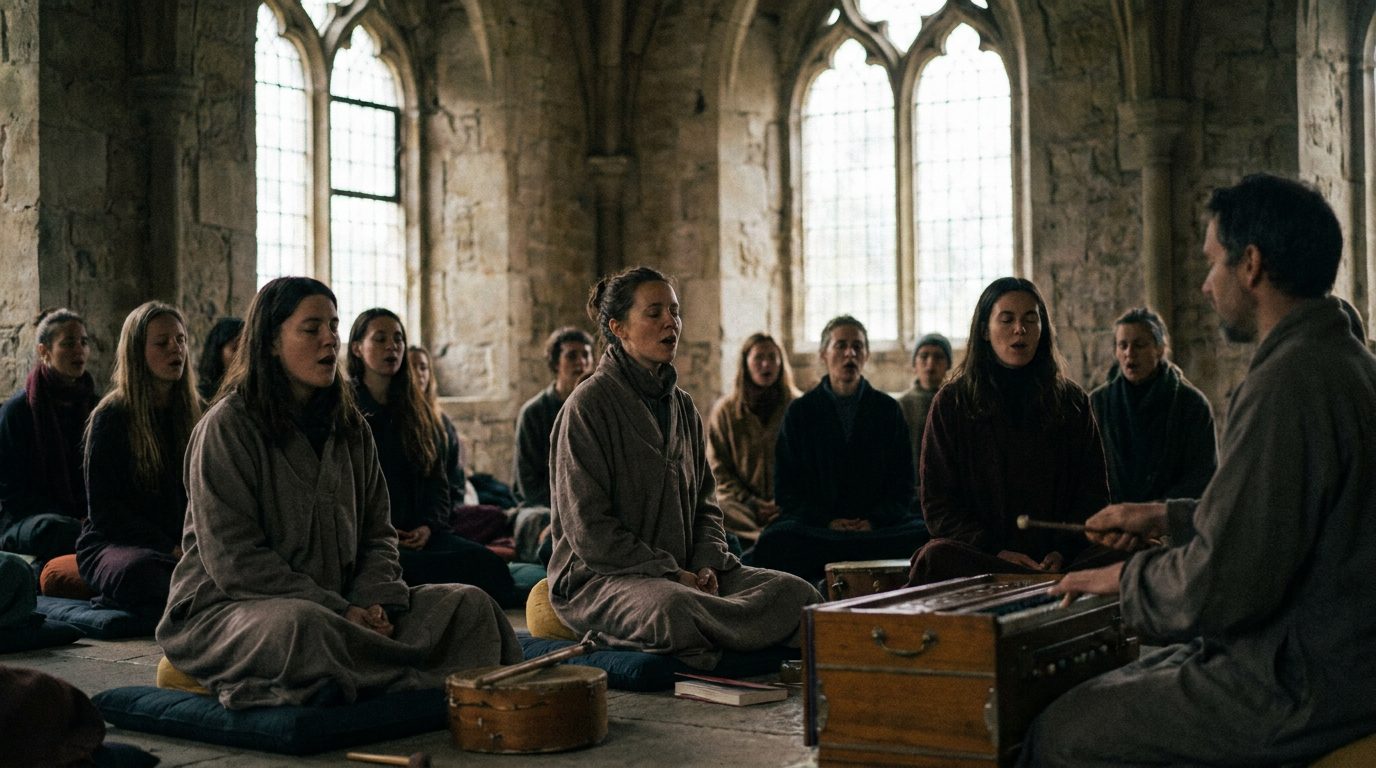
Every heart is searching for connection. Some of us may call that connection peace, meaning, healing, truth, or God. In the Bhakti Yoga tradition, we understand this longing as the soul’s natural desire to love and be loved by the Divine.
One of the most beautiful and practical ways to awaken that love is through chanting.
Chanting is the spiritual practice of repeating sacred sounds, names of God, or prayers with devotion. In Sanskrit, this is often called kirtan when sung together, or japa when repeated softly or quietly on meditation beads. These sounds are not ordinary. They are understood as living spiritual vibrations that can touch the heart, calm the mind, and gently reconnect us with our eternal nature.
You do not need to be from any particular background to begin. You do not need to know Sanskrit perfectly. You do not need to have a “good” singing voice. Bhakti Yoga welcomes everyone.
The simple invitation is this: bring your attention, your breath, and your heart to sacred sound.
When we chant with mindful attention, the practice becomes more than music or repetition. It becomes prayer. It becomes meditation. It becomes a way to remember God in the middle of ordinary life.
What Is Chanting in Bhakti Yoga?
Bhakti Yoga is the path of devotion, or the path of loving service to God. The word bhakti means devotion, loving connection, or spiritual love. Yoga means union or connection. So Bhakti Yoga is the practice of reconnecting with the Divine through love.
Chanting is one of the central practices of Bhakti Yoga because love naturally expresses itself through sound. We speak to those we love. We sing for those we love. We call out when we need help. In the same way, chanting is the soul calling to God.
The Meaning of Mantra
A mantra is a sacred sound, word, or phrase used for meditation and prayer. The Sanskrit word is often explained as coming from two roots: man, meaning mind, and tra, meaning to free or protect. A mantra helps free the mind from anxiety, distraction, and forgetfulness of our spiritual identity.
One of the most well-known mantras in the Bhakti tradition is the Maha Mantra:
Hare Krishna Hare Krishna
Krishna Krishna Hare Hare
Hare Rama Hare Rama
Rama Rama Hare Hare
Maha means great, so the Maha Mantra means “the great mantra.” It is a prayer asking to be engaged in loving service to God. The names Krishna and Rama are names of the Divine, meaning the all-attractive and the source of spiritual joy. Hare addresses the Divine energy, the compassionate power of God who helps us return to love.
Chanting this mantra is not about joining a group or adopting a label. It is a universal prayer of the heart: “Please, Lord, please engage me in Your love.”
Kirtan and Japa
In Bhakti Yoga, chanting often takes two main forms.
Kirtan is call-and-response chanting, usually sung with others. One person leads, and the group responds. It may include instruments like harmonium, kartals, mridanga drum, guitar, or simply clapping hands. Kirtan can be joyful, contemplative, soft, or ecstatic. It brings people together in shared spiritual sound.
Japa is personal mantra meditation, often practiced with beads called japa mala. A mala traditionally has 108 beads. The practitioner chants the mantra once on each bead, moving bead by bead with gentle attention. Japa is quiet, intimate, and deeply personal.
Both practices help us cultivate mindful attention. Both help us bring the wandering mind back to sacred sound.
Why Mindful Attention Matters

It is possible to chant while the mouth moves but the mind travels somewhere else. This happens to all of us. The mind is active by nature. It remembers, plans, worries, compares, judges, and wanders.
Bhakti Yoga does not shame us for this. Instead, it gives us a loving practice: notice the mind has wandered, and gently return to the sound.
Mindful attention means being present with what we are chanting. It means listening, not only producing sound. It means allowing the mantra to enter the heart.
Hearing Is the Heart of Chanting
In many Bhakti teachings, hearing is considered essential. The practice is not only to say the mantra, but to hear it carefully.
When we chant, we can ask ourselves:
Am I listening to the sound?
Am I present with this sacred name?
Am I offering this moment with sincerity?
This kind of hearing softens the heart. We may begin chanting with many thoughts, but gradually the sound becomes an anchor. The mantra gives the mind a holy place to rest.
In the Bhagavad-gita, Krishna explains that the mind can be restless and difficult to control, but it can be trained through practice and detachment. This is very practical. We do not control the mind by force. We guide it again and again toward something sacred.
Chanting gives the mind a beautiful focus: the names of God.
From Mechanical Repetition to Loving Prayer
Sometimes people worry, “If I repeat the same mantra again and again, will it become mechanical?”
It can, if we chant without attention. But repetition itself is not the problem. We repeat many things in life that deepen through repetition. We say “I love you” more than once. We breathe all day. The sun rises every morning. Repetition can become sacred when the heart is present.
Each repetition of the mantra is a fresh opportunity.
Not every chant will feel emotional. Not every session will feel peaceful. But sincerity is more important than dramatic experience. Even a distracted chant can become a meaningful offering when we humbly return our attention to the sound.
Check out our latest posts at https://thebhaktihouse.org/blog.
The Power of Sacred Sound
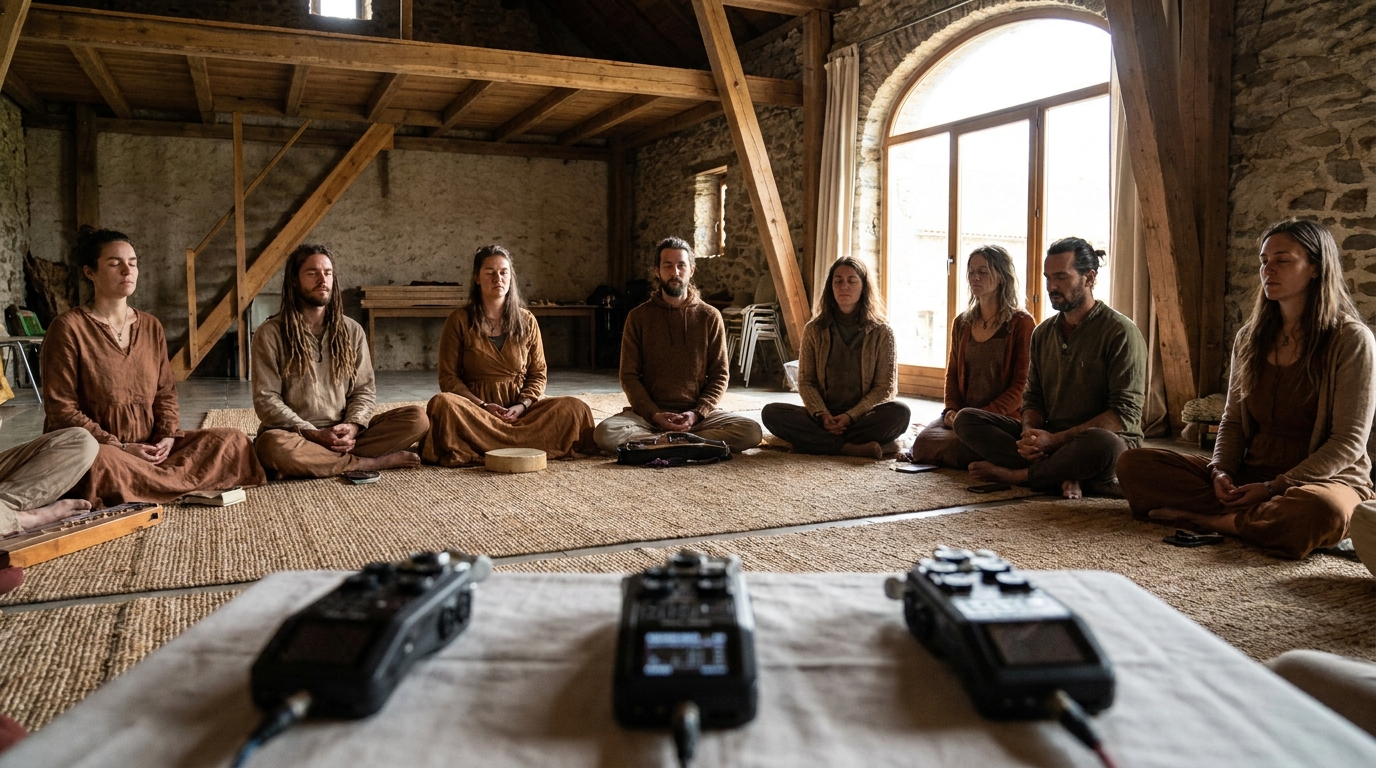
Bhakti scriptures describe sacred sound as spiritually powerful because God is present in His names. This is a profound teaching. In ordinary experience, a name and a person are different. If we say “water,” our thirst is not quenched. But in spiritual sound, the Divine name is understood to carry the presence and mercy of the Divine.
This is why chanting can be transformative.
Sound Shapes Consciousness
We already know that sound affects us. Harsh words can disturb us. Kind words can heal us. Music can change our mood. A child’s voice can melt the heart. A prayer can bring courage in difficult times.
If ordinary sound has such influence, sacred sound can influence us even more deeply.
The Srimad-Bhagavatam, one of the treasured scriptures of the Bhakti tradition, teaches that hearing and chanting about God purifies the heart. This purification is not about becoming “better than” others. It means the heart becomes clearer, softer, and more loving. The dust of fear, envy, resentment, and forgetfulness gradually begins to lift.
Through chanting, we remember who we are: not merely the body, not merely the mind, not merely our worries or achievements, but a spiritual being meant for loving relationship with God and all living beings.
Mantra as Shelter
Life can be uncertain. We face grief, pressure, loneliness, and change. Chanting gives us a shelter we can carry anywhere.
You can chant in a temple, at home, in a park, in the car, while walking, before sleep, or in a hospital waiting room. Sacred sound does not require perfect external circumstances.
The mantra meets us where we are.
When the mind feels heavy, chant softly. When the heart feels grateful, chant joyfully. When you feel numb, chant honestly. When you do not know what to pray, let the mantra pray through you.
In Bhakti Yoga, we are not trying to perform spirituality. We are learning to turn toward God with sincerity.
How to Chant with Mindful Attention
Chanting is simple, but simple does not mean shallow. Like any meaningful relationship, it deepens with care.
Here are practical ways to chant with more attention and devotion.
Begin with a Small Prayer
Before chanting, pause for a moment. Offer a simple prayer in your own words.
You might say:
“Dear Lord, please help me hear Your name.”
“Please guide my mind back to You.”
“Please let this chanting be an offering of love.”
“Please help me serve with a humble heart.”
This prayer prepares the inner space. It reminds us that chanting is not only a technique. It is a relationship.
Sit or Stand with Intention
You do not need a complicated posture. Sit comfortably with your back gently upright, or stand if you are singing kirtan. Let the body be relaxed but alert.
If you are chanting japa, hold the beads respectfully. Move one bead for each mantra. Try to avoid rushing. The beads can help keep the body and mind engaged in the practice.
If you are chanting in kirtan, allow yourself to listen to the leader and respond. You may close your eyes, look at a sacred image, or simply rest your gaze. Let the sound lead you inward.
Listen to Each Word
Mindful chanting begins with hearing. Try to hear each syllable clearly.
For example, when chanting the Maha Mantra, gently notice:
Hare Krishna Hare Krishna
Krishna Krishna Hare Hare
Hare Rama Hare Rama
Rama Rama Hare Hare
Do not worry if the mind wanders. When you notice it, that noticing is a gift. Simply return to the sound without self-criticism.
The goal is not to become a perfect meditator. The goal is to keep returning to love.
Chant at a Pace You Can Hear
Sometimes we chant too fast because we want to finish a certain number of rounds or keep up with others. But mindful attention grows when we chant at a pace that allows us to hear.
If you are practicing japa, slow down enough to pronounce the mantra clearly. If you are in kirtan, let the rhythm support attention rather than overwhelm it.
There is room for energetic chanting and soft chanting. The key is presence.
Bring the Mind Back Gently
The mind may wander to breakfast, emails, family concerns, memories, plans, or old hurts. This is normal.
A helpful approach is:
Notice.
Do not judge.
Return to the mantra.
Listen again.
Every return is a small act of devotion.
In this way, chanting becomes training in love. We learn patience with ourselves, patience with the mind, and reliance on divine grace.
Chanting as Prayer, Meditation, and Service
Chanting is wonderfully complete. It can be prayer because we call out to God. It can be meditation because we focus the mind. It can be service because we offer our voice, time, and attention for divine pleasure.
In Bhakti Yoga, the highest purpose of spiritual practice is not just personal calm, though calm may come. The deeper purpose is to awaken loving service.
Prayer: Calling from the Heart
True prayer does not need fancy language. It is honest turning.
The saints of the Bhakti tradition often prayed with deep humility. They did not approach God with pride, but with longing. They understood that divine love is a gift.
When we chant, we can bring our whole self—our joy, our confusion, our gratitude, our pain, our hope. Nothing needs to be hidden.
God is not distant from the sincere heart.
Meditation: Resting the Mind in Sacred Sound
Many people are drawn to meditation because the mind feels too busy. Chanting is a very accessible form of meditation because it gives the mind something positive and sacred to hold.
Rather than trying to empty the mind completely, we fill the mind with divine sound. This is especially helpful in our noisy modern world.
The ears hear the mantra.
The tongue speaks the mantra.
The mind follows the mantra.
The heart receives the mantra.
Over time, the sound begins to accompany us throughout the day. We may find ourselves remembering it while cooking, walking, working, or facing stress. This remembrance is a blessing.
Service: Offering the Voice
In Bhakti, service is called seva. Seva means loving service offered for the pleasure of God and the upliftment of others.
Chanting can be seva. When we chant in kirtan, we help create a sacred atmosphere where others can remember God. When we chant privately, we purify our own consciousness, which naturally affects how we treat others.
A peaceful heart becomes more capable of kindness. A prayerful mind becomes more patient. A person who chants sincerely may become more willing to forgive, serve, and live with compassion.
This is the practical beauty of Bhakti Yoga. It is not only what happens during meditation. It is how meditation changes the way we live.
What the Bhakti Scriptures Say About Chanting
The Bhakti tradition is rich with scriptural wisdom on the power of hearing and chanting sacred names.
These teachings are not meant to remain abstract. They are meant to be lived.
The Bhagavad-gita: Remembering God in Daily Life
In the Bhagavad-gita, Krishna encourages us to remember Him and offer our actions to Him. This is the essence of Bhakti Yoga: not escaping life, but spiritualizing life through loving remembrance.
Chanting helps us remember.
When we chant in the morning, we begin the day with spiritual focus. When we chant during difficulty, we invite divine guidance. When we chant before making decisions, we become less controlled by impulse and more open to wisdom.
The Gita also teaches that whatever we do can be offered to God. Chanting trains the heart in this offering mood.
The Srimad-Bhagavatam: Hearing and Chanting Purify the Heart
The Srimad-Bhagavatam describes hearing and chanting about God as a powerful process for cleansing the heart. This cleansing is gentle but deep.
Imagine a mirror covered with dust. The mirror has not lost its nature, but it cannot reflect clearly. Similarly, the soul is pure by nature, but our awareness may be covered by material desires, fears, and distractions.
Sacred sound wipes the mirror of the heart.
This does not mean we become perfect overnight. Spiritual growth is organic. Like watering a seed, chanting nourishes devotion day by day.
The Teachings of Sri Chaitanya
Sri Chaitanya Mahaprabhu, a great saint and teacher in the Bhakti tradition, emphasized the chanting of God’s names as the most accessible spiritual practice for this age.
He taught that the holy name can awaken divine love in every heart, regardless of birth, education, social status, or past mistakes.
This is very important. Bhakti is not reserved for a spiritual elite. It is a path for everyone.
Sri Chaitanya’s mood was full of compassion. He shared kirtan widely, inviting people to chant, dance, pray, and remember God together. That same spirit continues today in communities around the world.
Overcoming Common Challenges in Chanting
Everyone faces challenges in spiritual practice. This is not a sign of failure. It is part of the journey.
The key is to continue with humility and hope.
“My Mind Is Too Distracted”
A distracted mind is not a disqualification. It is the very reason we practice.
If the mind wanders a hundred times and you bring it back a hundred times, that is a hundred offerings. Do not measure your chanting only by how peaceful you feel. Measure it by your sincerity to return.
Try shortening your session if needed. Chant one round attentively. Chant for five minutes with care. Quality matters.
“I Don’t Feel Anything”
Sometimes chanting feels sweet. Sometimes it feels dry. Both are part of the path.
Feelings come and go, but devotion grows through steady practice. A farmer waters seeds even before seeing fruit. In the same way, we continue chanting, trusting that sacred sound is working within the heart.
You may not notice change immediately, but over time you may see more patience, more clarity, more gratitude, or more desire to serve. These are signs of inner growth.
“I’m Not Sure I’m Doing It Right”
Start simply. Chant and listen. Offer your heart.
If you are chanting Sanskrit mantras, pronunciation can improve with practice, but sincerity is most important. You can learn from experienced practitioners, recordings, or local kirtan gatherings.
God hears the intention behind the sound.
A child may not pronounce a parent’s name perfectly, but the parent is moved by the child’s love. In the same way, our sincere chanting is received with compassion.
“I Feel Self-Conscious Singing”
Many people feel shy in kirtan at first. That is natural.
You do not need to perform. Kirtan is not a concert in the ordinary sense. It is shared prayer. You can begin by listening. Then softly respond. Let the sound carry you.
Over time, the heart becomes less concerned with being judged and more absorbed in offering.
Building a Daily Chanting Practice
A daily chanting practice does not have to be complicated. The most sustainable practice is one you can actually keep.
Begin where you are.
Create a Sacred Time
Morning is often recommended because the mind is quieter and the day has not yet become busy. Even ten minutes in the morning can shape the whole day.
If morning is difficult, choose another consistent time. Before bed can be beautiful. A lunch break walk can become japa time. A commute can become prayer time if it is safe and appropriate.
Consistency helps the heart trust the practice.
Create a Sacred Space
You may set aside a small place for chanting. It could include a candle, sacred image, scripture, flowers, or simply a clean quiet corner.
The space does not need to be elaborate. It just needs to invite remembrance.
When you return to the same place each day, the body and mind begin to associate it with prayer.
Start with a Realistic Commitment
If you are new, begin with five to ten minutes of chanting. Or chant one mala round. Or attend one kirtan per week.
Let your practice grow naturally.
It is better to chant a little every day with attention than to make a huge promise and become discouraged. Bhakti grows through sincerity, not pressure.
Keep Company with Devotees
In Sanskrit, spiritual association is called sadhu-sanga. Sadhu means a saintly or sincere spiritual person, and sanga means association. Being around people who value chanting helps us stay inspired.
Join a kirtan. Visit a Bhakti community. Read scripture with others. Ask questions. Share meals. Serve together.
Spiritual life becomes joyful when we walk with others.
Chanting in Community: The Gift of Kirtan
Kirtan has a special power because voices come together in devotion. People from different backgrounds, cultures, ages, and life stories sit in one space and chant the same sacred names.
There is something deeply healing about that.
Call and Response as Spiritual Conversation
In kirtan, the leader sings a mantra, and everyone responds. This call-and-response pattern teaches humility and receptivity.
We listen.
We receive.
We respond.
This is also the rhythm of spiritual life. God calls the soul in many ways, and the soul responds through prayer, service, and remembrance.
Kirtan gives that relationship a musical form.
No One Is Excluded
A beautiful kirtan is not defined by musical perfection. It is defined by sincerity.
Some people sing loudly. Some whisper. Some close their eyes. Some cry. Some simply listen. All are welcome.
In a world where many people feel isolated or judged, kirtan creates a space of belonging. The holy name does not ask for our résumé. It asks for our attention and heart.
Joy as a Spiritual Practice
Bhakti Yoga honors joy. Spiritual life is not meant to be dry or heavy. Kirtan can awaken gratitude, playfulness, tenderness, and hope.
Sometimes the body wants to sway or dance. Sometimes hands want to clap. Sometimes the heart feels light.
This joy is not superficial. It comes from touching something eternal.
Letting Chanting Transform Daily Life
The true fruit of chanting is seen in how we live.
If chanting helps us become kinder, more truthful, more forgiving, more grateful, and more devoted, then the sound is entering the heart.
Chant Before You React
When emotions rise, try pausing and chanting softly before speaking or acting. Even one mantra can create space.
This does not mean avoiding responsibility or honest communication. It means allowing sacred remembrance to guide our response.
A moment of chanting can shift us from reaction to prayerful action.
Chant While Serving
Bhakti Yoga includes practical service. Cooking, cleaning, caring for family, helping a neighbor, volunteering, or offering skills can all become spiritual when done with devotion.
You can chant while preparing food, turning cooking into an offering. You can chant while cleaning, remembering that the home or temple is God’s space. You can chant inwardly while serving others, asking to be an instrument of compassion.
Let the Mantra Shape Your Speech
As sacred sound purifies the heart, our ordinary speech can also become more sacred.
We may become more careful with words. Less gossip. Less harshness. More encouragement. More truth spoken with kindness.
Chanting the names of God should help us honor the presence of God in others.
The Humble Heart of the Practice
Chanting with mindful attention is not about achieving a spiritual status. It is about becoming humble enough to receive grace.
In Bhakti, progress often looks like simplicity: more willingness to serve, more honesty in prayer, more compassion for others, more dependence on God.
Sincerity Over Perfection
Perfectionism can become a barrier in spiritual life. We may think, “When I am pure, then I will chant,” or “When I understand everything, then I will begin.”
But chanting is how we become purified. Chanting is how understanding deepens.
Come as you are.
Bring your distracted mind. Bring your tired heart. Bring your questions. Bring your longing. The holy name is compassionate.
Gratitude Deepens Attention
One powerful way to chant with more mindfulness is to cultivate gratitude.
Before chanting, remember one blessing. A breath. A meal. A friend. A lesson. A chance to begin again.
Gratitude softens resistance and awakens devotion. When the heart feels grateful, attention becomes more natural.
Depend on Grace
Effort is important, but Bhakti is not only effort. It is grace.
We chant, but the ability to chant is also a gift. We listen, but the heart opens by divine kindness. We take steps, and God helps us walk.
This balance keeps us humble and hopeful.
A Simple Practice to Begin Today
If you would like to begin chanting with mindful attention, you can try this simple practice.
Five-Minute Mantra Meditation
Find a quiet place. Sit comfortably. Take a few gentle breaths.
Offer a short prayer: “Dear God, please help me hear this sacred sound with sincerity.”
Chant the Maha Mantra slowly:
Hare Krishna Hare Krishna
Krishna Krishna Hare Hare
Hare Rama Hare Rama
Rama Rama Hare Hare
Listen to each word. When the mind wanders, gently return.
Continue for five minutes.
At the end, pause. Notice how you feel. Offer gratitude. Carry one drop of that remembrance into your day.
Joining a Kirtan
If you feel drawn to community chanting, attend a kirtan gathering. You can participate as much or as little as feels natural. Simply being in the atmosphere of sacred sound can nourish the heart.
Come with openness, not pressure. Let the mantra meet you.
Reading and Chanting Together
You may also read a short passage from the Bhagavad-gita or another Bhakti scripture before chanting. This gives the mind spiritual nourishment and helps the chanting become more intentional.
Even one verse, reflected on sincerely, can guide the heart.
Everyone Can Take One Sincere Step
Chanting with mindful attention is a gentle yet powerful path. It harnesses the power of sacred sound to bring the mind back to God, soften the heart, and awaken love.
You do not need to have everything figured out. You do not need to be perfect. You do not need to belong to any particular culture or background. Bhakti Yoga is a path of love, and love begins with a sincere turn of the heart.
If you can chant one mantra with attention, that is meaningful. If you can offer one prayer, that is beautiful. If you can serve one person with kindness, that is devotion in action.
The holy name is waiting for us with compassion. God is closer than we often realize. And every sincere step matters.
You are warmly welcome to begin today—through chanting, prayer, service, or simply listening with an open heart. Take one sincere step toward God, and trust that divine love will meet you there.
FAQs
What is chanting with attention?
Chanting with attention is the practice of repeating a mantra or sacred phrase with full focus and concentration. It is often used as a form of meditation or spiritual practice in various religious traditions.
How is chanting with attention practiced?
Chanting with attention is typically practiced by sitting in a comfortable position, closing the eyes, and repeating the chosen mantra or phrase either silently or aloud. The practitioner focuses their attention on the sound and meaning of the words, allowing other thoughts to pass without attachment.
What are the benefits of chanting with attention?
Chanting with attention can have various benefits, including promoting relaxation, reducing stress and anxiety, improving concentration, and fostering a sense of inner peace and connection to the divine or spiritual realm.
What are some common mantras used in chanting with attention?
Common mantras used in chanting with attention include “Om” in Hinduism and Buddhism, “Amen” in Christianity, “Aum” in various spiritual traditions, and specific phrases or prayers from different religious texts.
Is chanting with attention suitable for everyone?
Chanting with attention can be practiced by people of any religious or spiritual background, as well as those who do not adhere to any specific belief system. However, individuals with certain mental health conditions or sensitivities to repetitive sounds should approach chanting with attention with caution and seek guidance from a qualified teacher or healthcare professional.

