
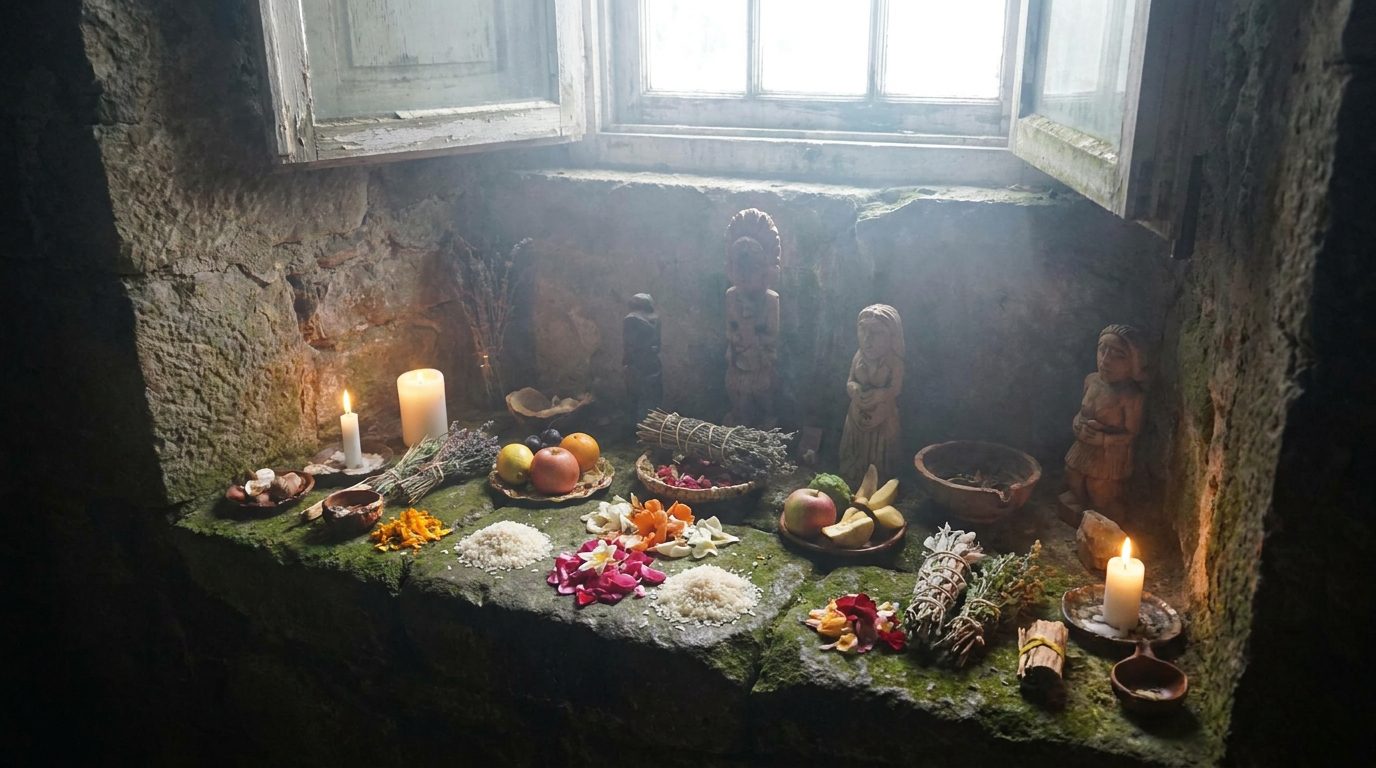
In every spiritual tradition, people have found ways to express love through offerings. A candle lit with reverence. A flower placed with gratitude. A meal prepared with prayer. A song sung from the heart.
In Bhakti Yoga, the path of loving devotion to God, sacred offerings are not simply rituals. They are relationships in action. They are a way of saying, “Dear Lord, this belongs to You. Please accept my love.”
Whether you are new to Bhakti, returning to spiritual practice, or simply curious about the meaning of sacred offerings, this guide is meant to welcome you gently. You do not need to know Sanskrit, have a temple in your home, or feel spiritually advanced. The heart of offering is sincerity.
A sacred offering can be as simple as a cup of water, a piece of fruit, a flower, a prayer, or your daily work. When offered with love, even the ordinary becomes holy.
A sacred offering is anything given to God with love, humility, and devotion. In Sanskrit, one common word is arpanam, which means “offering” or “dedication.” In Bhakti Yoga, we offer not because God needs anything, but because our hearts need connection.
God is complete. The Divine does not require our food, flowers, lamps, or songs. Yet, out of kindness, God accepts our offerings when they are made with love. This is one of the most beautiful teachings of Bhakti: the Infinite receives the simple gift of the finite soul.
Offering as a Language of Love
In human relationships, love naturally wants expression. We cook for those we care about. We give gifts. We write notes. We spend time. We serve.
Similarly, in spiritual life, offering is the language of love. It helps us move from “What can I get?” to “How can I serve?” This shift softens the heart and awakens devotion.
Bhakti Yoga teaches that the soul is not meant to live separately from God. Our deepest happiness comes when we remember our loving relationship with the Divine. Sacred offerings are one practical way to remember.
The Heart Matters Most
The Bhagavad Gita, one of the central scriptures of Bhakti Yoga, gives a very simple teaching:
“Whoever offers Me with love and devotion a leaf, a flower, a fruit, or water, I will accept it.”
— Bhagavad Gita 9.26
This verse is deeply encouraging. It does not say that we must offer something expensive, rare, or impressive. It says that God accepts what is offered with bhakti, which means loving devotion.
A leaf, a flower, a fruit, or water—these are humble gifts. The true offering is the love behind them.
Why Sacred Offerings Matter in Bhakti Yoga
Bhakti Yoga is a practical path of love. It includes chanting sacred names, prayer, service, hearing spiritual wisdom, and remembering God throughout daily life. Sacred offerings support all of these practices.
They help turn spiritual philosophy into lived experience.
Offerings Purify the Heart
In Bhakti, purification does not mean becoming harsh, judgmental, or disconnected from the world. It means gradually clearing the heart of selfishness, pride, fear, and forgetfulness.
When we offer something to God, we practice letting go of the idea, “This is mine.” Instead, we remember, “Everything is a gift.”
This simple awareness can transform our relationship with food, time, money, talents, and even our challenges. We begin to see our whole life as something sacred.
Offerings Help Us Remember God
The Sanskrit word smaranam means remembrance. One of the main practices of Bhakti is remembering God with affection.
Sacred offerings create moments of remembrance in the day. Before eating, we pause. Before beginning work, we pray. Before receiving blessings, we give thanks.
These pauses may seem small, but they gently reorient the heart. Over time, they help us live less automatically and more spiritually.
Offerings Transform the Ordinary
Bhakti Yoga does not ask us to reject life. It invites us to spiritualize life.
Cooking becomes worship. Singing becomes prayer. Cleaning becomes service. Work becomes dedication. Family life becomes a field of compassion and patience.
When offered to God, ordinary actions become part of seva, which means loving service. This is one reason Bhakti is so accessible. We do not have to wait for a perfect life to begin. We can begin right where we are.
Traditional Types of Sacred Offerings
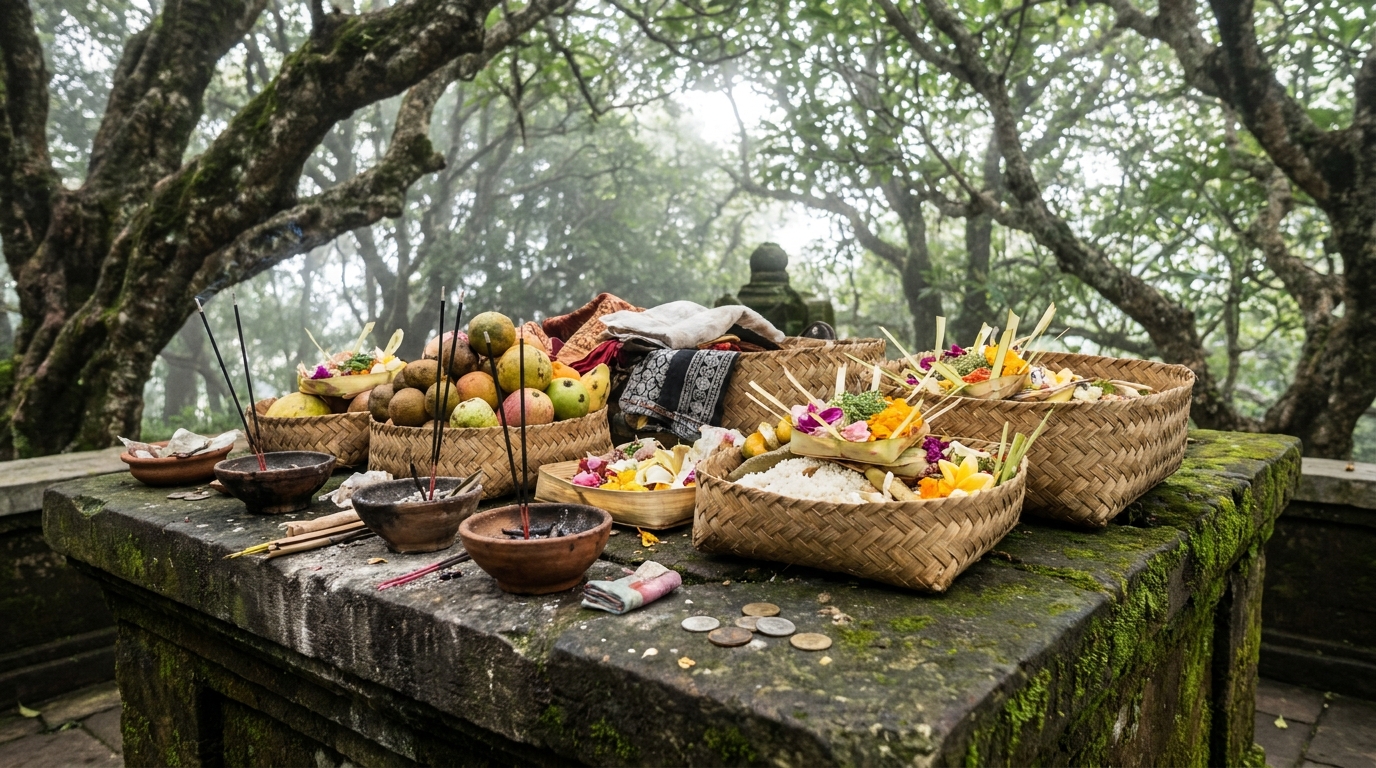
There are many forms of sacred offerings in Bhakti traditions. Some are offered in temples, some in homes, and some silently in the heart. The external form may vary, but the inner mood is the same: love, gratitude, and surrender.
Food Offerings: Prasadam
One of the most beloved practices in Bhakti Yoga is offering food to God before eating. Once food is offered with devotion, it is called prasadam, which means “mercy” or “grace.”
Prasadam is not ordinary food. It has been spiritually transformed by being offered to the Divine. When we honor prasadam, we receive nourishment for both the body and the soul.
This practice teaches gratitude. Instead of consuming with entitlement, we receive with humility. We remember the farmers, the earth, the rain, the sun, the cooks, and ultimately God, who is the source of all nourishment.
Flowers, Leaves, and Water
Flowers are often offered because they represent beauty, freshness, and the temporary nature of life. A flower blooms, gives fragrance, and fades. Offering it reminds us to use our own brief life in loving service.
Leaves and water are also traditional offerings. In many Bhakti traditions, devotees offer tulasi leaves. Tulasi is a sacred plant especially dear to Krishna. For those who are new, Krishna is a personal name of God meaning “the all-attractive one.”
Even if tulasi is not available, the principle remains: offer what is pure, simple, and given with affection.
Lamps and Incense
A lamp offering is often called arati. During arati, a flame is offered before the form of the Lord while devotees sing sacred songs. The lamp represents light, warmth, and the offering of our own consciousness.
Incense may also be offered as a symbol of fragrance and purification. Just as incense spreads a gentle scent, devotional practice spreads spiritual remembrance into the atmosphere.
These offerings engage the senses in worship. Bhakti does not deny the senses. It purifies and redirects them toward the Divine.
Chanting as an Offering
Sound is one of the most powerful offerings in Bhakti Yoga. The chanting of sacred names is called kirtan when sung together and japa when repeated personally, often on beads.
The maha-mantra is especially central in many Bhakti communities:
Hare Krishna Hare Krishna
Krishna Krishna Hare Hare
Hare Rama Hare Rama
Rama Rama Hare Hare
“Hare” calls upon the divine energy of the Lord. “Krishna” means the all-attractive one. “Rama” means the source of spiritual joy.
Chanting is an offering of voice, breath, attention, and heart. Even if the mind wanders, we can gently return. Each sincere sound is heard.
Service as an Offering
Service, or seva, is one of the most practical sacred offerings. Washing dishes after a community meal, caring for children, helping someone in need, cleaning a sacred space, sharing wisdom, or listening with compassion can all become offerings.
In Bhakti, the value of service is not measured by public recognition. It is measured by sincerity. A humble service done with love may be more spiritually powerful than a grand act done for praise.
Please visit our website for more information on our articles: articles.
How to Make a Sacred Food Offering at Home
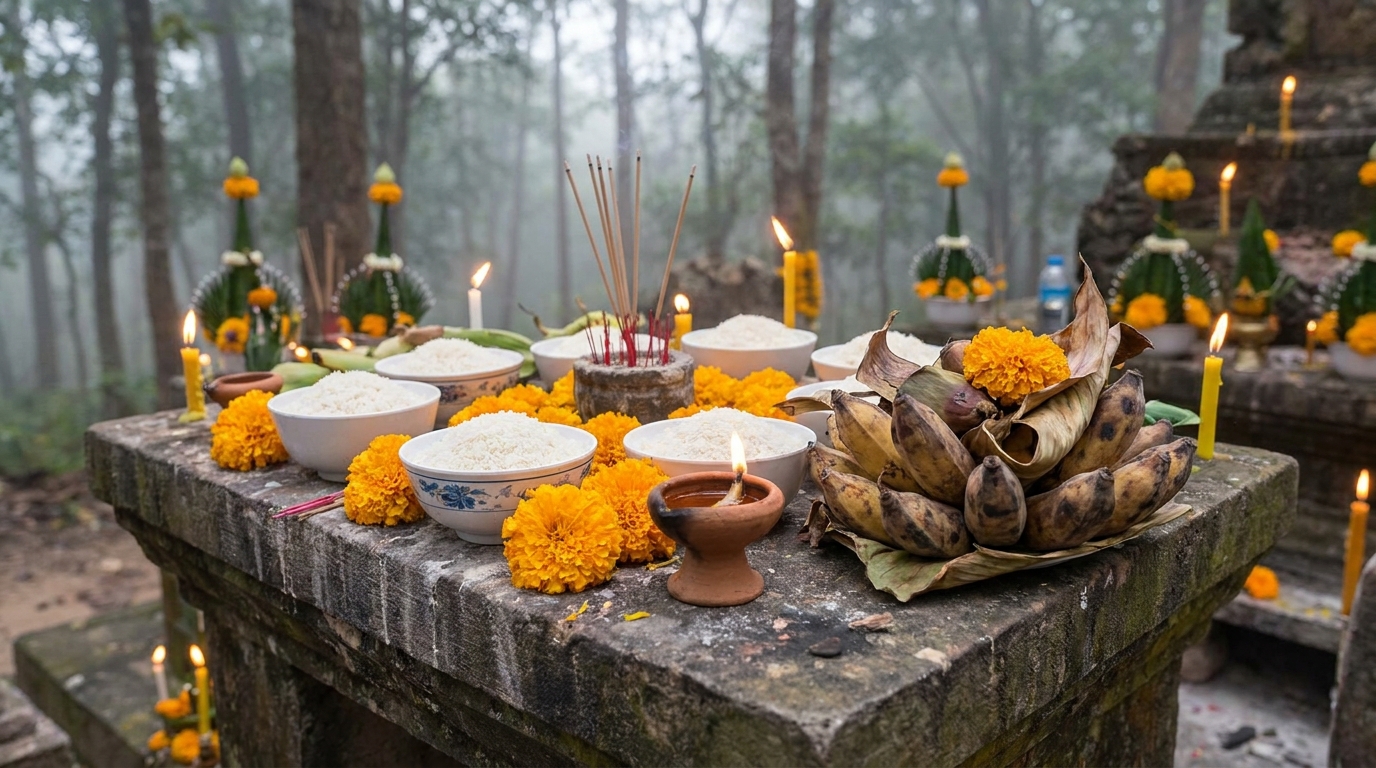
You do not need an elaborate altar or advanced training to begin offering food at home. The practice can be simple, respectful, and full of heart.
Prepare with Cleanliness and Care
Begin by preparing vegetarian food with a peaceful mood. In many Bhakti traditions, food offered to Krishna is vegetarian and free from meat, fish, and eggs. Many practitioners also avoid onion and garlic in offerings, following traditional temple standards, though beginners can take gradual steps.
Cleanliness matters because it expresses respect. Wash your hands. Keep the cooking area clean. Try to avoid tasting the food while cooking, since the offering is meant first for God.
As you cook, you can chant, pray, or simply hold a grateful mood. Cooking becomes meditation.
Set Aside a Small Portion
Place a small portion of the food on a clean plate or bowl reserved for offerings, if possible. You may also include water.
Set it before a picture or sacred form of Krishna, Radha-Krishna, Lord Vishnu, Lord Rama, or another form of God you worship with love. If you do not have a sacred image, you can still offer in your heart. God is present everywhere.
Offer a Simple Prayer
You may pray in your own words:
“Dear Lord, everything comes from You. Please accept this humble offering made with love. May this food become Your mercy and nourish all who receive it.”
You can also chant the maha-mantra or recite traditional prayers if you know them. The key is sincerity, not perfection.
Wait and Receive
After offering, wait a few moments. Then return the food to the rest of the meal. Now it is honored as prasadam.
When eating, try to receive the food with gratitude. Even one mindful bite can become a spiritual experience.
The Inner Mood of Offering
External offerings are beautiful, but Bhakti Yoga always points us back to the heart. We may offer the finest flowers, but if the heart is proud or distracted, something is missing. We may offer only water, but if the heart is sincere, God accepts it.
Humility
Humility does not mean thinking we are worthless. It means recognizing that everything we have is received. Our body, breath, talents, opportunities, and spiritual longing are all gifts.
A humble offering says, “I am not the owner. I am a caretaker. Please guide me in using what I have in Your service.”
This mood brings relief. We do not have to control everything. We can participate in life as servants of love.
Gratitude
Gratitude is the natural companion of offering. Before we ask for more, we pause to honor what has already been given.
In daily life, gratitude may look like thanking God before meals, appreciating the people around us, caring for the earth, or recognizing small blessings.
A grateful heart is fertile ground for devotion.
Surrender
The Sanskrit word saranagati means surrender or taking shelter. In Bhakti, surrender is not passive defeat. It is loving trust.
When we offer something to God, we practice surrender. We say, “May this be used for Your purpose.” Over time, we may learn to offer not only food and flowers, but also our worries, plans, relationships, and future.
This is a deep spiritual practice. It grows slowly and tenderly.
Sacred Offerings in Scripture
Bhakti scriptures are filled with stories of offerings made with love. These stories teach that God is moved by devotion, not social status, wealth, or external greatness.
The Bhagavad Gita: Offer Everything
In the Bhagavad Gita, Krishna expands the teaching of offerings:
“Whatever you do, whatever you eat, whatever you offer or give away, and whatever austerity you perform—do that as an offering to Me.”
— Bhagavad Gita 9.27
This verse turns all of life into a sacred possibility. It does not limit offering to a temple or ceremony. It invites us to offer our actions, meals, gifts, and efforts.
For a modern person, this can be very practical. Before starting work, we can pray, “May my work be of service.” Before speaking, “May my words bring kindness.” Before resting, “May this rest help me serve better.”
Srimad Bhagavatam: Devotion Over Display
The Srimad Bhagavatam, a cherished Bhakti scripture, repeatedly shows that devotion is the essence of spiritual life. God accepts the love of simple-hearted devotees more than ritual performed without feeling.
The stories of the Bhagavatam help us understand that sacred offerings are relational. They are not transactions. We are not buying blessings. We are entering a loving exchange with the Divine.
The Example of Sudama
One beloved story tells of Sudama, a poor Brahmin and childhood friend of Krishna. Sudama came to visit Krishna with a humble gift of chipped rice. He felt embarrassed because the offering was so simple.
But Krishna, the Lord of all opulence, accepted it with great joy because it was offered with love.
This story reminds us that God is not impressed by wealth. God is touched by sincerity.
Creating a Sacred Offering Practice in Daily Life
A sacred offering practice can be simple and sustainable. It is better to begin with something small and heartfelt than to create a complicated routine that becomes stressful.
Start with One Daily Offering
Choose one daily practice. Offer your morning water. Offer your breakfast. Light a candle and say a prayer. Chant one round of japa. Sing one kirtan. Offer your commute. Offer your workday.
Consistency helps devotion grow. Small offerings, repeated with love, shape the heart.
Create a Simple Sacred Space
If possible, create a small clean space for prayer and offering. It may include a picture of Krishna, Radha, Rama, Vishnu, a saint, your teacher, or a sacred symbol that inspires devotion.
You might place fresh flowers, a candle, incense, prayer beads, or scripture there. This space becomes a gentle reminder: “God is welcome in this home.”
It does not need to be expensive. It simply needs to be cared for.
Offer Your Talents
Each person has gifts. Some cook. Some sing. Some teach. Some organize. Some care quietly. Some give financially. Some encourage others. Some pray deeply.
In Bhakti, every talent can become an offering. Ask yourself, “How can this gift serve love? How can it help others remember God?”
When talents are offered, they become purified of ego and filled with purpose.
Offer Your Difficulties
This may be one of the most tender forms of offering. We can offer not only our success but also our pain.
“Dear Lord, I do not know how to carry this. Please guide me.”
“Please use this difficulty to soften my heart.”
“Please help me remember You even here.”
Bhakti does not deny suffering. It gives us a way to bring suffering into relationship with God.
Common Questions About Sacred Offerings
Many people feel unsure when they begin. This is natural. Bhakti is a path of learning through love, and everyone starts somewhere.
Do I Have to Be Hindu to Make Offerings?
No. Bhakti Yoga is rooted in the Vedic tradition, but love of God is not limited by background, nationality, or label. Anyone can offer with sincerity.
If you feel drawn to Krishna, to chanting, to prayer, or to devotional service, you are welcome to begin respectfully. The heart is the real doorway.
What If I Make a Mistake?
God is not waiting to reject you for a small mistake. Bhakti is not a performance for perfectionists. It is a relationship.
Of course, we try to learn proper practices and offer respectfully. But if you forget a mantra, feel distracted, or do not know all the rules, do not become discouraged. Offer your sincerity and keep learning.
Can I Offer Store-Bought Food?
Ideally, food is cooked fresh with devotion. However, many people begin where they are. Fruits, nuts, water, or simple vegetarian items can be offered easily.
As your practice deepens, you may feel inspired to cook more intentionally. Bhakti grows naturally when nourished with sincerity.
What Should Not Be Offered?
In traditional Krishna Bhakti, devotees offer vegetarian foods and avoid meat, fish, eggs, alcohol, and intoxicants. Many also avoid onion, garlic, mushrooms, and certain processed foods when preparing offerings according to temple standards.
If this feels new, take gradual steps. The purpose is not shame. The purpose is to cultivate purity, compassion, and devotion.
Sacred Offerings and Community
While offerings can be made privately at home, Bhakti also blossoms in community. When people gather to chant, pray, cook, serve, and honor prasadam together, the heart becomes encouraged.
Kirtan as a Shared Offering
Kirtan, or congregational chanting, is one of the most joyful forms of offering. Voices come together, sometimes strong and confident, sometimes soft and uncertain. All are welcome.
In kirtan, we offer our sound and attention. We receive the sacred name. We remember that spiritual life is not meant to be lonely.
Prasadam Distribution
Sharing prasadam is a beautiful act of compassion. Food offered to God carries grace, and giving it to others is a way of sharing spiritual nourishment.
At temples, yoga centers, homes, and community gatherings, prasadam brings people together beyond social divisions. Everyone can sit, receive, and be blessed.
Serving Devotees and Guests
Bhakti communities often emphasize welcoming guests. Hospitality itself is a sacred offering.
A warm smile, a clean space, a plate of prasadam, a kind explanation, a seat in kirtan—these are not small things. They can open a person’s heart to spiritual life.
The Deeper Offering: Giving the Heart
All sacred offerings ultimately lead to the greatest offering: the heart itself.
Krishna does not ask for our love to control us. He invites our love to free us. When the heart is offered, we begin to remember who we truly are: eternal souls, beloved parts of God, meant for loving relationship.
From Ritual to Relationship
Rituals are helpful when they carry remembrance. They give shape to devotion. But the goal is not ritual alone. The goal is relationship.
When offering a flower, we can think, “May my heart become fragrant with devotion.”
When offering water, “May my consciousness become clear.”
When offering food, “May my life nourish others.”
When offering a lamp, “May my love shine.”
This inner reflection makes practice alive.
Offering Moment by Moment
As Bhakti matures, offering becomes less confined to a specific time. It becomes a way of living.
We can offer our speech by choosing kindness.
We can offer our mind by remembering God.
We can offer our body through service.
We can offer our resources through generosity.
We can offer our relationships through patience and compassion.
This does not happen all at once. Spiritual growth is gradual. But every sincere offering plants a seed.
A Simple Sacred Offering Practice to Begin Today
If you would like to begin, here is a gentle practice you can try today.
Choose one piece of fruit or a small glass of water. Place it in a clean spot. If you have a sacred image, place it before the image. If not, simply hold it with reverence.
Take a breath.
Say a simple prayer:
“Dear God, thank You for this gift. Please accept this offering. Please help me live with more love, gratitude, and devotion.”
Then chant the maha-mantra once, or pray in your own words.
After a few moments, receive the offering as grace. Eat or drink slowly, with gratitude.
This small act can become the beginning of a beautiful devotional life.
Everyone Is Welcome to Offer
Sacred offerings are not about impressing God or proving spiritual worth. They are about opening the heart.
You may come with faith, questions, wounds, doubts, longing, or curiosity. You may know many prayers, or none at all. You may feel close to God, or very far away. Still, you are welcome.
Bhakti Yoga teaches that the Divine is lovingly present and ready to receive even the smallest sincere gesture. A leaf. A flower. A fruit. Water. A song. A tear. A prayer. A moment of service.
Begin where you are. Offer what you can. Let love grow naturally.
At The Bhakti House, all sincere seekers are welcome to explore this practical path of love through chanting, prayer, sacred offerings, service, and spiritual friendship. May your next offering, however simple, bring you closer to God. Everyone is welcome to take one sincere step toward the Divine today.
FAQs
What are sacred offerings?
Sacred offerings are items or gestures that are presented as gifts to a deity or spiritual entity as a sign of devotion, gratitude, or reverence. These offerings can include food, drink, incense, flowers, and other symbolic items.
What is the purpose of making sacred offerings?
The purpose of making sacred offerings is to establish a connection with the divine, express gratitude, seek blessings, and show reverence. It is a way for individuals to honor and acknowledge the presence of the divine in their lives.
How are sacred offerings used in different religious and spiritual traditions?
Sacred offerings are used in various religious and spiritual traditions as a way to connect with the divine. Different traditions have specific rituals and practices for making offerings, and the items offered can vary based on cultural and religious beliefs.
What are some common items used as sacred offerings?
Common items used as sacred offerings include fruits, grains, honey, milk, wine, candles, oils, flowers, herbs, and incense. These items are often chosen for their symbolic significance and their ability to evoke a sense of purity and reverence.
How can individuals make sacred offerings in their own spiritual practice?
Individuals can make sacred offerings in their own spiritual practice by setting up a sacred space, choosing meaningful items for offerings, and performing a ritual or prayer to accompany the offering. It is important to approach the practice with sincerity and respect for the divine.

