
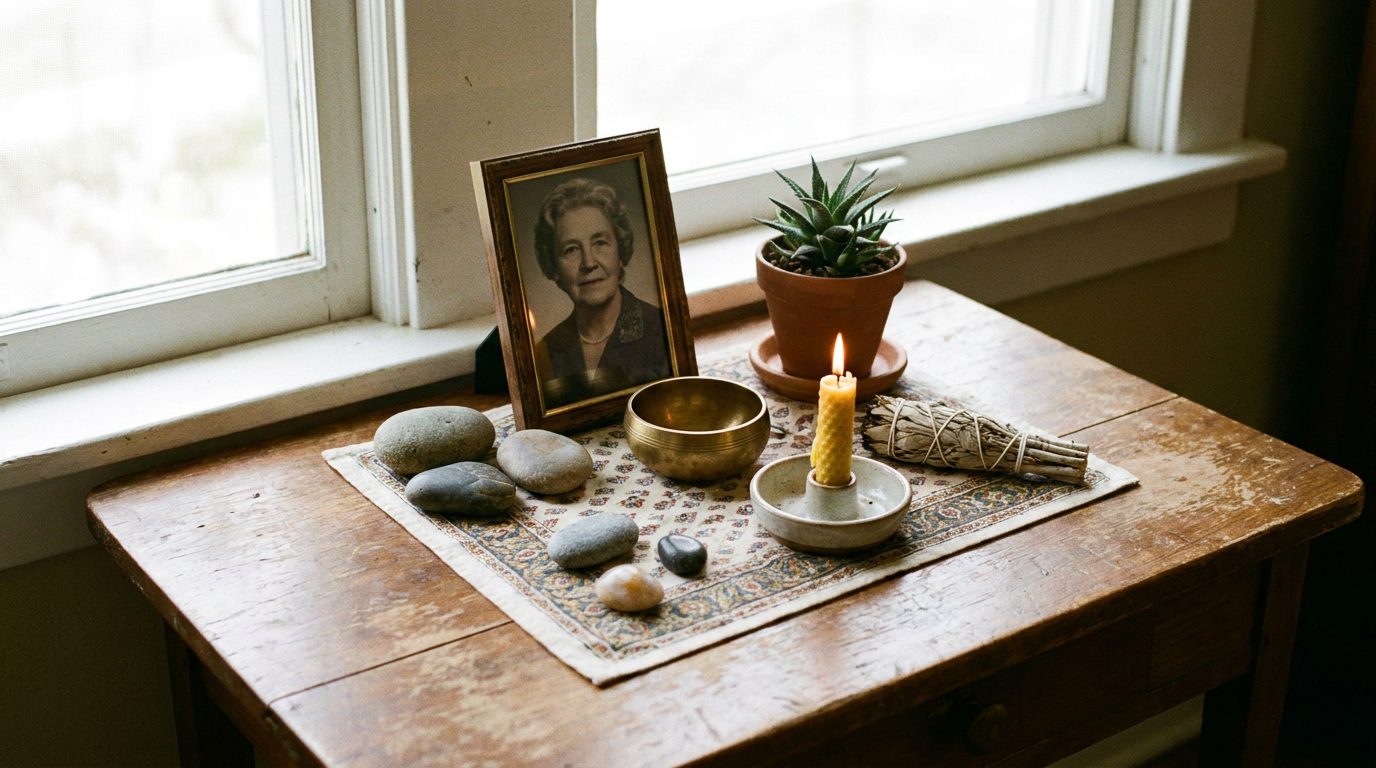
A personal altar is a sacred space in your home where your heart can remember God.
It does not need to be large, expensive, or elaborate. It can be a small shelf, a clean corner of a room, a simple table, or even a portable space that you set up when you pray. What matters most is not the size of the altar, but the sincerity you bring to it.
In Bhakti Yoga, the path of loving devotion, we create sacred spaces to help us turn toward the Divine with affection, attention, and humility. The Sanskrit word bhakti means loving devotion. It is the natural movement of the soul toward God through love, prayer, chanting, service, and remembrance.
A personal altar supports this remembrance.
In daily life, our minds are pulled in many directions. Work, family, responsibilities, worries, and digital distractions can make it difficult to feel spiritually centered. A home altar gently reminds us: “Pause. Breathe. Remember. Offer your heart.”
For some, an altar is a place to chant sacred names. For others, it is where they pray before beginning the day. Some may sit quietly there with a cup of tea and gratitude. Some offer flowers, incense, or a simple candle. Some read wisdom texts like the Bhagavad-gītā or Śrīmad-Bhāgavatam. Some simply sit and cry, ask for guidance, or say, “Thank You.”
All of this can be sacred.
A personal altar is not about performance. It is about relationship.
The Heart of a Bhakti Altar
In Bhakti Yoga, an altar is not just decoration. It is a place of loving exchange.
The Sanskrit word seva means service. In bhakti, service is not forced duty. It is love in action. When we clean the altar, light a candle, offer water, chant, or bow our head, we are practicing seva. We are training the heart to live with devotion.
A Place of Remembrance
One of the central practices of Bhakti Yoga is smaraṇam, or remembrance of God.
The Bhagavad-gītā teaches, “Always think of Me, become My devotee, worship Me, and offer your homage unto Me” (Bhagavad-gītā 18.65). This is not meant as a harsh command. It is an invitation into loving relationship.
A personal altar helps us remember throughout the day. Even passing by the altar can become a small moment of connection.
You may pause and whisper:
“Please guide me.”
“Thank You for this day.”
“May I serve with love.”
“Please help me remember You.”
These small prayers matter.
A Place of Offering
In the Bhagavad-gītā 9.26, Krishna says:
“If one offers Me with love and devotion a leaf, a flower, fruit, or water, I will accept it.”
This verse is deeply comforting. God does not ask for wealth, status, or perfection. The offering can be simple: a leaf, a flower, fruit, or water. But the essential ingredient is love.
This is the mood of a Bhakti altar.
You might offer a flower from your garden, a small bowl of fruit, a glass of clean water, or a homemade meal. If you do not have any of these, you can offer your prayer, your tears, your effort, your day.
Bhakti teaches us that God sees the heart.
A Place of Transformation
A personal altar can become a mirror for your spiritual growth.
At first, you may come to the altar only when you are suffering. Over time, you may begin to come with gratitude. Later, you may come with a desire to serve. Eventually, the altar becomes not only a place you visit, but a reminder of how you want to live everywhere.
The goal is not to keep God in one corner of the home. The altar helps us remember that every corner of life can become sacred.
Choosing the Right Space for Your Home Altar
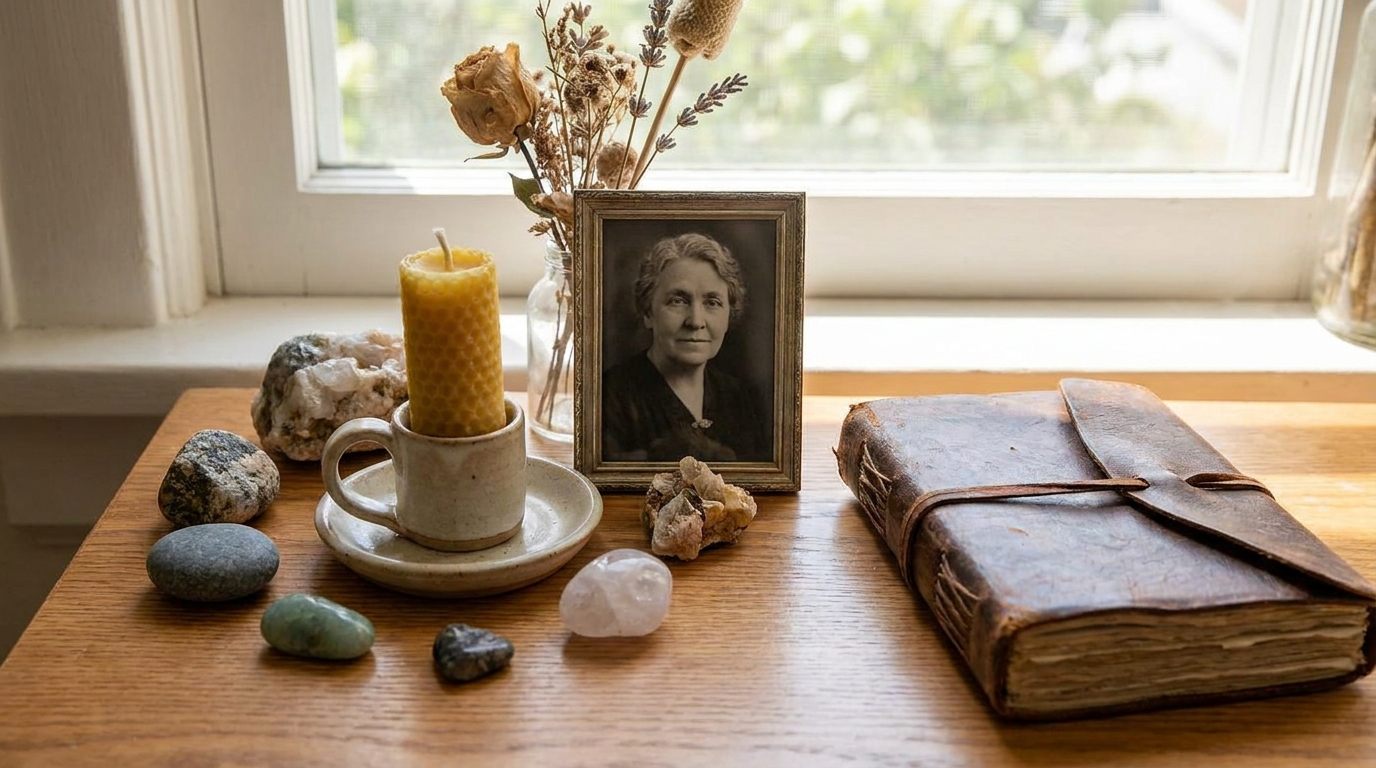
Creating a personal altar begins with choosing a space that feels peaceful, clean, and accessible.
It does not need to be perfect. Many people live in shared homes, small apartments, or busy family spaces. Bhakti is practical and compassionate. Begin with what you have.
Find a Quiet and Clean Location
If possible, choose a place where you can sit comfortably and pray without too much interruption.
Good options may include:
- A shelf in your bedroom
- A small table in a living room corner
- A windowsill with natural light
- A dedicated meditation room
- A clean cabinet or portable altar box
- A simple cloth placed on the floor during prayer time
Cleanliness is important because it reflects care. In Bhakti Yoga, external cleanliness can support internal clarity. When we clean the altar space, we are also invited to clean the heart of resentment, distraction, pride, and forgetfulness.
If your home is busy, do not be discouraged. Even a small sacred corner can hold great spiritual power when approached with sincerity.
Consider the Direction and Atmosphere
Some traditions suggest facing east, the direction of sunrise, or north, a direction associated with spiritual upliftment. If that is possible for you, wonderful. If not, do not worry.
The most important direction is the direction of your heart.
Try to create an atmosphere that encourages peace. You may want soft lighting, a clean cloth, fresh flowers, or a cushion for sitting. Avoid placing the altar in a cluttered or disrespectful area if you can.
A home altar is a place where you are saying, “This space is for remembering the Divine.”
Make It Accessible for Daily Practice
Your altar should be easy to approach.
If it is hidden away or difficult to access, you may forget to use it. A visible altar can become a gentle reminder throughout the day. You might see it when you wake up, before leaving the house, or before going to sleep.
The goal is to make spiritual practice natural and inviting.
Even one minute at your altar each morning can gradually change your life.
Please visit our website for more information on our articles: articles.
What to Place on Your Personal Altar
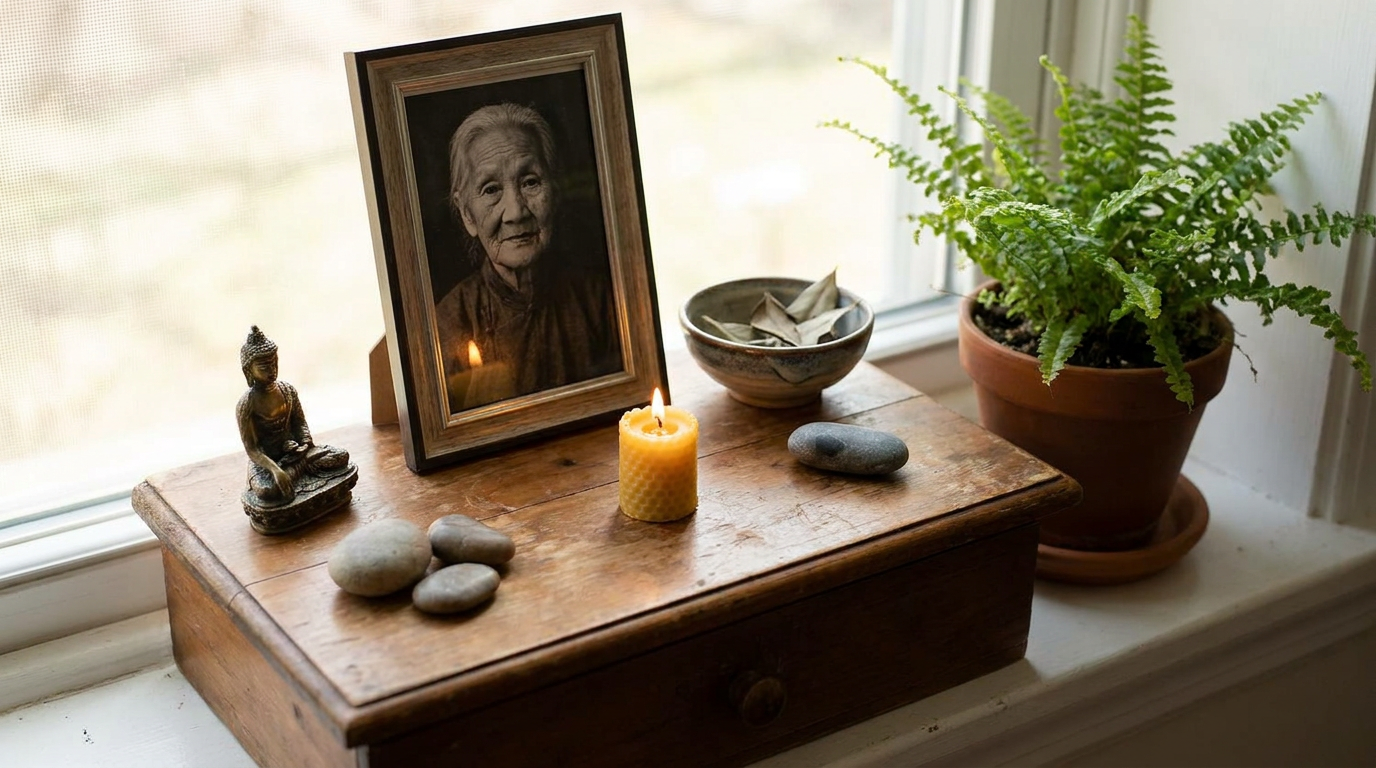
There is no single required design for every altar. Your personal altar should reflect sincerity, respect, and your spiritual focus.
In Bhakti Yoga, the altar often includes sacred images, scripture, offerings, and items used for chanting or prayer.
Sacred Images or Murtis
Many Bhakti practitioners place a sacred image of Krishna, Radha-Krishna, Lord Chaitanya, Vishnu, Rama, Narasimha, or another form of the Divine on the altar.
The Sanskrit word murti means a sacred form or worshipable image. In Bhakti traditions, a murti is not seen as an ordinary object. It is honored as a merciful way for the Divine to become visible to our limited eyes.
You may also include images of saints, teachers, or spiritual guides who inspire your devotion.
If you are new to this path, you might begin with a simple picture that awakens reverence and love in your heart. Choose something that helps you remember God with tenderness and respect.
Scripture and Sacred Books
Including scripture on your altar can remind you that spiritual life is guided by wisdom, not only emotion.
Common Bhakti scriptures include:
- Bhagavad-gītā — a sacred conversation between Krishna and Arjuna about life, duty, devotion, and surrender
- Śrīmad-Bhāgavatam — a devotional scripture filled with teachings and stories about God and the devotees
- Caitanya-caritāmṛta — the life and teachings of Sri Chaitanya Mahaprabhu, who shared the chanting of God’s names as a path of love
- Prayer books, songbooks, or collections of saintly teachings
You do not have to understand everything at once. Even reading one verse slowly, with humility, can nourish the heart.
A simple practice is to keep a sacred text on or near your altar and read a few lines daily.
Japa Mala or Prayer Beads
A japa mala is a string of prayer beads used for chanting. The word japa means soft repetition of a mantra, and mala means garland.
In Bhakti Yoga, many people chant the Hare Krishna mantra:
Hare Krishna Hare Krishna
Krishna Krishna Hare Hare
Hare Rama Hare Rama
Rama Rama Hare Hare
This mantra is made of sacred names of God. Hare calls upon the Divine energy of love and compassion. Krishna means the all-attractive Lord. Rama means the source of joy and spiritual pleasure.
Chanting is not only a ritual. It is a way of calling out from the heart.
You can keep your beads on the altar in a clean cloth or bead bag. If you do not have beads, you can still chant with your voice, breath, and sincerity.
Offerings: Flowers, Water, Fruit, and Light
Offerings are a beautiful part of altar practice.
You might include:
- Fresh flowers
- A small cup of water
- Fruit or simple vegetarian food
- Incense
- A candle or ghee lamp
- Tulsi leaves, if available and appropriate in your tradition
In Bhakti, offerings are made with love and then received back as mercy. Food that has been offered to God is called prasādam, meaning grace or mercy.
The practice of offering food transforms eating into a sacred exchange. Before eating, you may place a portion before the Lord and pray:
“My dear Lord, this is Yours. Please accept this offering made with love.”
Then, after some time, you may honor that food as prasādam.
Personal Items of Prayer and Gratitude
Your altar may also include items that support your spiritual remembrance:
- A gratitude journal
- A prayer list
- A photo of loved ones you are praying for
- A small bell
- A devotional poem
- A meaningful natural object, such as a stone, shell, or leaf
- A written intention for your spiritual life
Be careful not to let the altar become crowded or overly decorative. Simplicity often helps the heart focus.
Ask yourself: “Does this item help me remember God? Does it inspire devotion, humility, or gratitude?”
If yes, it may belong there.
How to Set Up Your Altar Step by Step
Creating a personal altar can be a joyful and prayerful process. You do not need to rush.
Let each step become part of your devotion.
Step 1: Clean the Space
Begin by cleaning the area physically.
Dust the surface, sweep or vacuum nearby, and remove clutter. You may place a fresh cloth on the altar table or shelf. Choose a cloth that feels respectful and uplifting. It can be white, yellow, red, blue, or any color that inspires sacredness for you.
As you clean, you can also pray:
“May this space become a place of remembrance. May my heart become clean and open.”
This simple prayer turns cleaning into meditation.
Step 2: Place the Sacred Focus
Next, place your sacred image, murti, or scripture at the center or back of the altar.
This becomes the focal point of your prayer. Arrange it respectfully, perhaps slightly elevated. If you have multiple images, arrange them with care and simplicity.
In Bhakti Yoga, we try to approach the Divine not casually, but lovingly. The altar is not a museum display. It is a place of relationship.
Take your time. Notice how the space feels.
Step 3: Add Prayer Items and Offerings
Now add your prayer beads, incense holder, candle, offering cup, flowers, or other devotional items.
Try to avoid overcrowding. Leave space for offerings and daily practice. A clear altar often helps create a clear mind.
If you are offering water or food, use clean cups or plates reserved for altar use if possible. This helps cultivate a mood of respect.
You do not need many items. A simple picture, a candle, and a sincere prayer can be enough.
Step 4: Offer a Simple Opening Prayer
Once your altar is arranged, sit before it quietly.
You may fold your hands, bow your head, or simply breathe with awareness. Offer a prayer in your own words.
For example:
“Dear Lord, please accept this small altar as an offering of love. May this space help me remember You. May my home be filled with peace, devotion, and service. Please guide me on the path of bhakti.”
There is no need to sound poetic. Speak honestly.
God understands the language of the heart.
Step 5: Begin a Daily Practice
Once your altar is set up, the most important thing is to use it regularly.
This does not mean you must spend hours every day. Start small. Let your practice be sustainable.
You might begin with:
- One minute of silence
- One heartfelt prayer
- Three rounds of deep breathing
- One verse from the Bhagavad-gītā
- One mala or a few minutes of mantra chanting
- Offering water or a flower
- Writing one thing you are grateful for
Consistency is more important than intensity.
A little daily devotion can become a strong spiritual foundation.
Daily Practices for Your Personal Altar
A personal altar comes alive through loving practice.
In Bhakti Yoga, practice is not meant to be dry or mechanical. It is meant to awaken the heart. Some days you may feel deep devotion. Other days you may feel distracted or tired. Come anyway. The act of showing up is powerful.
Morning Prayer
Morning is a sacred time. The mind is often clearer, and the day has not yet fully begun.
When you wake up, you can come to your altar and offer the day to God.
A simple morning prayer might be:
“Please guide my thoughts, words, and actions today. May I serve with kindness. May I remember You in all situations.”
This kind of prayer changes how we enter the day. Instead of living only for personal success or survival, we begin to live as an offering.
Mantra Meditation and Chanting
Chanting sacred names is one of the central practices of Bhakti Yoga.
The Sanskrit word mantra means a sacred sound vibration that helps free the mind. Man refers to the mind, and tra suggests protection or liberation. A mantra gives the mind a holy place to rest.
You can chant softly at your altar, sing aloud, or repeat the mantra on beads.
The Hare Krishna mantra is especially cherished in the Bhakti tradition because it is a direct call to God:
Hare Krishna Hare Krishna
Krishna Krishna Hare Hare
Hare Rama Hare Rama
Rama Rama Hare Hare
You do not need to be an expert singer. You do not need a perfect pronunciation before you begin. Chant with sincerity, and over time, your relationship with the holy name will deepen.
The Bṛhan-nāradīya Purāṇa emphasizes the chanting of God’s names as a powerful spiritual practice for this age. Sri Chaitanya Mahaprabhu also taught that chanting cleanses the heart, just as a mirror is cleaned of dust.
Reading Sacred Wisdom
Reading scripture at your altar can guide your spiritual growth.
You might read one verse from the Bhagavad-gītā each morning. After reading, pause and ask:
“What is this teaching inviting me to practice today?”
For example, when Krishna teaches in the Bhagavad-gītā 6.5 that the mind can be our friend or enemy, we can reflect practically: “Today, how can I make my mind my friend? Perhaps by chanting, by avoiding harsh speech, or by remembering gratitude.”
Scripture becomes alive when we apply it.
Offering Food with Love
Offering food is a beautiful daily altar practice.
In Bhakti Yoga, we prepare vegetarian food with care and offer it to God before eating. This practice helps us remember that everything comes from the Divine. We are not the ultimate owners. We are caretakers and recipients of grace.
A simple food offering prayer may be:
“My dear Lord, thank You for this food. Please accept it with love. May it nourish me for service.”
After offering, receive the food as prasādam, divine mercy.
This practice can transform your kitchen and dining table into extensions of your altar.
Evening Reflection
At the end of the day, return to your altar, even briefly.
You might ask:
“Where did I remember God today?”
“Where did I forget?”
“Whom did I serve?”
“Where do I need forgiveness?”
“What am I grateful for?”
This is not meant for shame. It is meant for honest growth. Bhakti is a path of relationship, and relationships deepen through honesty.
Offer your successes and failures. Offer your tiredness. Offer your hope.
Then rest in God’s care.
Caring for Your Altar with Devotion
An altar needs regular care, just as any loving relationship needs attention.
Caring for your altar is not a burden. It is a form of seva, loving service.
Keep It Clean and Fresh
Try to dust and clean the altar regularly. Remove old flowers before they decay. Change the water daily if you are offering water. Keep offering plates and cups clean.
These small acts teach the heart attentiveness.
If your life is very busy, choose simple altar care that you can maintain. It is better to have a simple, clean altar than a complicated one that becomes neglected.
Refresh the Mood, Not Just the Items
Sometimes we focus on external beauty but forget the inner mood.
A beautiful altar is lovely, but the real offering is your heart. When you approach the altar, try to pause before doing anything. Take a breath. Remember why you are there.
You may ask:
“Am I approaching with love?”
“Am I rushing?”
“Can I offer this moment more sincerely?”
Even if the answer is imperfect, that awareness itself is spiritual progress.
Involve Your Family or Housemates Respectfully
If you live with others, your altar can become a shared blessing, but it should not become a source of pressure.
Invite gently. Do not force.
Children may enjoy offering flowers, ringing a bell, singing, or placing fruit before the Lord. Family members from different backgrounds may simply appreciate the peaceful atmosphere.
Bhakti is welcoming. A home altar should radiate kindness, not judgment.
If others do not understand your practice, be patient and humble. Let your devotion show through your character.
Common Questions About Creating a Personal Altar
Many people hesitate to create an altar because they feel unsure. This is natural.
Let us address a few common questions with simplicity and encouragement.
Do I Need to Be Hindu to Have a Bhakti Altar?
No.
Bhakti Yoga is rooted in the Vedic tradition, but the heart of bhakti is universal: love for God. People from many backgrounds are drawn to chanting, prayer, sacred music, vegetarian offerings, and devotional living.
If you are from another faith tradition, you can approach respectfully and sincerely. You do not need to reject your background to begin learning from Bhakti Yoga. The path of devotion deepens the soul’s longing for God.
At The Bhakti House, all sincere seekers are welcome.
What If I Do Not Know the Rituals?
Begin simply.
You can sit, pray, chant, and offer gratitude. Rituals can be learned gradually, but sincerity is the foundation.
The Bhagavad-gītā reminds us that God accepts even simple offerings when they are given with love. This means your humble beginning is meaningful.
You do not need to wait until you know everything. Spiritual life begins with one sincere step.
Can My Altar Be Small?
Yes.
A small altar can be deeply powerful. A shelf with a picture of Krishna, a candle, and a small flower can be enough. If you travel often, you might keep a small image, prayer beads, and a sacred text in a pouch.
The Lord is not limited by space.
What matters is your intention.
What If I Miss a Day?
Do not become discouraged.
Bhakti is not about guilt. It is about returning. If you miss a day, simply come back the next day. Offer a prayer and begin again.
Spiritual growth is often made of many humble returns.
God is patient.
Can I Change My Altar Over Time?
Yes.
Your altar may evolve as your practice grows. You may add scripture, prayer beads, sacred images, or offerings. You may simplify it when life becomes busy. You may refresh it during holy days or personal transitions.
Let the altar remain alive, but always respectful.
Creating an Altar for Chanting, Prayer, and Service
A personal altar is not only a place to feel peaceful. It is a place to become more loving.
The true measure of altar practice is how we live after we rise from prayer.
Let Chanting Soften the Heart
When we chant, we are asking to be changed.
The holy names help soften pride, fear, envy, and anger. They awaken our natural desire to love and serve. Over time, chanting at your altar can help you become more patient, forgiving, and steady.
This is real spiritual progress.
Not visions. Not status. Not appearing holy.
A softer heart is a great miracle.
Let Prayer Become Honest
At your altar, you do not need to pretend.
You can bring your confusion, grief, longing, gratitude, and joy. Bhakti is deeply personal. The saints of the Bhakti tradition often prayed with complete honesty. They cried out for mercy, guidance, and love.
You might pray:
“Please help me want to love You.”
“Please remove what blocks my devotion.”
“Please teach me how to serve.”
“Please help me see others with compassion.”
These prayers are precious.
Let Service Extend Beyond the Altar
The altar teaches us to offer. But the offering should not stop there.
After offering a flower, can we offer kindness to a difficult person?
After lighting a candle, can we bring light into someone’s day?
After chanting God’s names, can we speak more gently?
After receiving prasādam, can we share food with others?
This is the beauty of Bhakti Yoga. The altar becomes the training ground for a life of devotion.
Sacred Simplicity: Avoiding Perfectionism
One of the greatest obstacles in spiritual life is the feeling that we are not good enough to begin.
We may think:
“My home is too messy.”
“I do not know enough.”
“My mind is too distracted.”
“I am not pure.”
“I will do it later when life is calmer.”
But bhakti begins exactly where we are.
The great gift of devotional life is that God meets us in our sincerity, not in our perfection. A beginner’s prayer can be as meaningful as a scholar’s recitation when offered with genuine longing.
Start with What You Have
If you have a small table, use it.
If you have one flower, offer it.
If you know one mantra, chant it.
If you have only five minutes, give those five minutes.
If all you can say is “Please help me,” begin there.
The path of love grows through simple, repeated acts of devotion.
Let the Altar Call You Back
There will be days when you feel inspired. There will be days when you feel dry. Let the altar be a gentle friend calling you back to what matters.
You do not have to fix your whole life before coming to God.
Come as you are, and let the relationship transform you.
A Simple Sample Altar Practice
If you are wondering how to begin, here is a simple 10-minute daily altar practice.
Minute 1: Arrive
Sit before your altar. Take a few deep breaths. Let your body settle.
Minute 2: Offer Respect
Fold your hands or bow your head. Offer a simple prayer of gratitude.
Minutes 3–6: Chant
Chant the Hare Krishna mantra or another sacred name of God with attention and humility.
Hare Krishna Hare Krishna
Krishna Krishna Hare Hare
Hare Rama Hare Rama
Rama Rama Hare Hare
Minutes 7–8: Read
Read one verse or short passage from a sacred text. Reflect on one practical lesson.
Minute 9: Offer Your Day
Pray for guidance. Offer your work, relationships, challenges, and hopes.
Minute 10: Close with Service
Ask, “How can I serve today?”
Then carry that intention into your life.
This small practice, done regularly, can become a doorway to deep spiritual growth.
Your Home Can Become a Place of Devotion
A personal altar is a beautiful beginning.
It reminds us that God is not far away. The Divine can be welcomed into our homes, our meals, our mornings, our decisions, and our relationships. Through Bhakti Yoga, ordinary life becomes sacred through love.
Your altar may be simple. Your prayers may be quiet. Your chanting may feel imperfect. Still, every sincere offering is seen.
The path of bhakti is generous. It welcomes the child, the scholar, the doubter, the lifelong practitioner, the wounded heart, the joyful singer, and the person who is simply curious.
You are welcome here.
Begin with one sincere step. Choose a small space. Place something sacred there. Offer a flower, a prayer, a chant, or a moment of gratitude. Let your personal altar become a loving invitation to remember God each day.
May your home be blessed with peace, your heart be strengthened in devotion, and your life become an offering of love.
Everyone is welcome to take one sincere step toward God.
FAQs
What is a personal altar?
A personal altar is a sacred space within your home that is dedicated to spiritual practice, meditation, and reflection. It is a place where you can connect with your inner self, higher power, or spiritual guides.
How do I create a personal altar?
To create a personal altar, you can start by choosing a designated space in your home, such as a table or shelf. Then, you can gather items that hold personal significance to you, such as candles, crystals, incense, and meaningful objects. Arrange these items in a way that feels harmonious and meaningful to you.
What can I include on my personal altar?
You can include a variety of items on your personal altar, such as candles, crystals, statues or images of deities or spiritual figures, incense, flowers, and meaningful objects such as photographs or mementos. The key is to include items that hold personal significance and that help you connect with your spiritual practice.
How can I use my personal altar?
Your personal altar can be used for a variety of spiritual practices, such as meditation, prayer, ritual, and reflection. You can also use it as a place to set intentions, express gratitude, and seek guidance or inspiration.
Is a personal altar associated with a specific religion or belief system?
Personal altars can be found in a variety of spiritual and religious traditions, including but not limited to Buddhism, Hinduism, Paganism, and New Age spirituality. However, creating a personal altar is a personal and individual practice, and it can be tailored to your own beliefs and spiritual path.

