

Meditation is often described as a practice for calming the mind, reducing stress, or becoming more present. These are beautiful benefits, and many people come to meditation because they are longing for peace in a busy world.
In the Bhakti Yoga tradition, meditation is also something more. It is a way of remembering our relationship with God. It is a loving turning of the heart toward the Divine, even if we are just beginning and do not yet know exactly what we believe, what we feel, or how to pray.
Bhakti means “devotion” or “loving service.” Yoga means “connection.” So Bhakti Yoga is the path of reconnecting with God through love—through chanting, prayer, service, study, and sincere remembrance.
Within Bhakti Yoga, there are different spiritual moods, or rasas. The Sanskrit word rasa can be translated as “taste,” “flavor,” or “relationship.” It describes the particular way the soul relates to God. One of these sacred moods is called śānta-rasa.
Śānta means “peaceful,” “calm,” or “tranquil.” Śānta-rasa is the devotional mood of peaceful reverence. It is a state where the heart becomes still, the mind becomes clear, and the soul rests in awareness of God’s greatness, beauty, and presence.
For many seekers, śānta-rasa is a gentle doorway into Bhakti. It does not demand dramatic emotion. It invites us to sit quietly, chant sincerely, breathe gently, and remember: “I am not alone. I am held by the Divine.”
Understanding Śānta-rasa in Simple Words
What Does Śānta-rasa Mean?
Śānta-rasa is a peaceful spiritual relationship with God. It is not empty peace or emotional numbness. It is peace filled with awareness. It is the calm that comes when we remember our eternal nature and the loving presence of the Supreme.
In Bhakti scriptures, śānta-rasa is described as one of the five main devotional relationships with Krishna, a name of God meaning “the all-attractive one.” These five rasas are often explained as:
- Śānta-rasa — peaceful reverence
- Dāsya-rasa — loving service as a servant of God
- Sakhya-rasa — friendship with God
- Vātsalya-rasa — parental affection toward God
- Mādhurya-rasa — intimate loving devotion
Śānta-rasa is the foundation of devotional life because it helps the heart become steady. Before deep loving service can blossom, the mind often needs to become quiet enough to hear the soul’s longing.
Peace Is Not the Final Goal, but It Is a Sacred Beginning
In Bhakti Yoga, inner peace is not the highest destination by itself. The ultimate goal is prema, pure love of God. Yet peace is deeply valuable because it creates space for love to grow.
When our minds are filled with anxiety, comparison, anger, or constant distraction, it can be difficult to feel devotion. Śānta-rasa softens the inner noise. It teaches us to pause, breathe, listen, and remember.
This peaceful devotional awareness can become the soil where deeper love takes root.
The Soul’s Natural Calm
The Bhagavad-gītā, one of the most beloved texts of Bhakti Yoga, teaches that the true self is not the temporary body or restless mind. The self is the ātmā, the eternal soul.
In Bhagavad-gītā 2.20, Krishna explains that the soul is never born and never dies. This teaching is not meant to be abstract philosophy. It is meant to bring courage and peace.
When we meditate on the truth that we are spiritual beings, beloved parts of God, we begin to loosen the tight grip of fear. We may still face challenges, grief, and uncertainty, but something deeper within us begins to rest.
Śānta-rasa grows from this remembrance: “I am spirit. I belong to God. I can take shelter in divine love.”
Meditation in Bhakti Yoga: More Than Quieting the Mind

A Loving Focus
Many meditation traditions teach us to observe the breath, watch the thoughts, or cultivate stillness. Bhakti Yoga honors these practices, while also offering a personal and devotional focus: the names, qualities, forms, and pastimes of God.
This means meditation is not only about emptying the mind. It is about filling the heart with sacred remembrance.
The Sanskrit word mantra means “that which protects the mind.” A mantra is a sacred sound vibration that helps lift the consciousness. In Bhakti Yoga, the most recommended meditation for this age is chanting the holy names of God.
One widely practiced mantra is the Hare Krishna mahā-mantra:
Hare Krishna Hare Krishna
Krishna Krishna Hare Hare
Hare Rama Hare Rama
Rama Rama Hare Hare
Mahā means “great,” and mantra means “sacred sound for the mind.” So mahā-mantra means “the great mantra.”
This chanting is simple, powerful, and open to everyone. You do not need to be perfect. You do not need to know Sanskrit deeply. You can begin with sincerity.
Hearing as Meditation
In Bhakti, meditation often begins with hearing. We chant and listen. We allow the sacred sound to enter the heart.
The Śrīmad-Bhāgavatam, a central scripture in the Bhakti tradition, emphasizes hearing and chanting about God as a direct path to purification and joy. This is called śravaṇam and kīrtanam.
Śravaṇam means “hearing.”
Kīrtanam means “chanting” or “glorifying.”
Together, they form a beautiful meditation practice. We hear the names of God, chant them, and gradually the mind becomes peaceful.
This is practical. When the mind wanders, we gently return to the sound. When the heart feels heavy, we chant softly. When we feel grateful, we chant with joy. When we feel nothing at all, we chant anyway, offering even our dryness to God.
Meditation as Relationship
In Bhakti Yoga, meditation is not merely a mental exercise. It is relationship.
If we sit quietly and remember Krishna, or God by any name we sincerely call upon, we are not alone in that moment. We are turning toward the Divine Person who is already present in the heart.
The Bhagavad-gītā 15.15 says that God is seated in everyone’s heart. This means meditation is not a search for something far away. It is a return to the One who has been with us all along.
When we chant or pray, we are not trying to impress God. We are opening a conversation.
Check out our latest articles at https://thebhaktihouse.org/blog.
The Inner Peace of Śānta-rasa in Daily Life
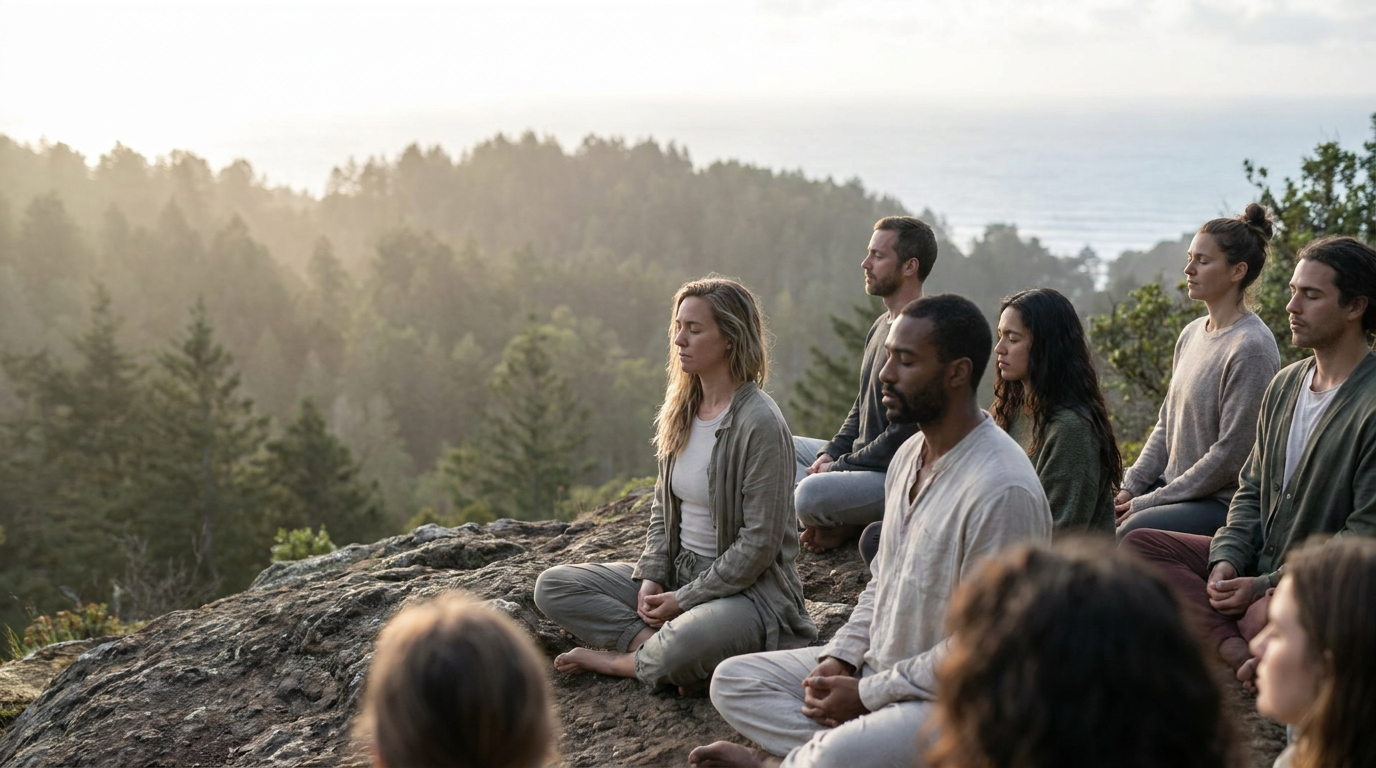
Finding Stillness in a Noisy World
Modern life often trains us to move quickly. We scroll, rush, compare, achieve, and worry. Even when the body is still, the mind may continue racing.
Śānta-rasa offers another way. It invites us to practice sacred pause.
A sacred pause may be as simple as closing the eyes for one minute and breathing with the holy name. It may be sitting before a small altar, lighting a candle, or quietly saying, “God, please help me remember You.”
Inner peace is not always found by escaping life. Often, it is found by bringing God into life.
You can practice śānta-rasa while washing dishes, walking to work, caring for children, studying, or sitting on a bus. The heart can learn to rest in divine remembrance anywhere.
Peace Through Acceptance
Śānta-rasa also includes a deep acceptance of God’s greatness. This does not mean becoming passive or ignoring suffering. It means recognizing that we are not the ultimate controllers.
So much anxiety comes from trying to control what is not ours to control. Bhakti gently teaches us to offer our efforts and release the results.
In Bhagavad-gītā 2.47, Krishna teaches that we have a right to perform our duty, but we are not entitled to control the fruits of our actions. This is a profound meditation for daily life.
We do our best. We act with sincerity. We serve with love. Then we place the outcome in God’s hands.
This kind of surrender brings peace.
The Calm of Gratitude
Gratitude is one of the simplest ways to enter a peaceful devotional mood.
When the mind focuses only on what is missing, it becomes restless. When the heart notices grace, it softens.
A Bhakti meditation on gratitude might sound like this:
“Thank You for this breath. Thank You for this day. Thank You for the chance to grow. Thank You for guiding me, even when I cannot see the whole path.”
Gratitude does not deny pain. It simply allows love to exist beside pain. It reminds us that even in difficulty, God’s presence can be found.
Practical Meditation Practices for Cultivating Śānta-rasa
1. Mantra Meditation with Beads
A traditional Bhakti practice is japa, which means quietly chanting a mantra, often on prayer beads.
Japa beads usually have 108 beads. Practitioners chant the Hare Krishna mahā-mantra once on each bead, moving bead by bead with attention and devotion.
If you are new, you do not need to begin with a large commitment. You might start with one round, or even five minutes of chanting.
Here is a simple way to practice:
Sit comfortably.
Take a few gentle breaths.
Hold your beads, or simply rest your hands.
Chant the mantra softly.
Listen carefully to each word.
When the mind wanders, kindly bring it back.
The key is not force. The key is returning.
Each return is an offering.
2. Breath and Prayer Meditation
If chanting feels unfamiliar at first, you can begin with a simple prayer connected to the breath.
As you inhale, silently pray: “God, I receive Your grace.”
As you exhale, pray: “God, I offer You my heart.”
Or you may use a sacred name:
Inhale: “Krishna”
Exhale: “Please guide me”
This kind of meditation helps the body relax and the heart remember. It can be practiced in the morning, before sleep, or during a stressful moment.
The goal is not to create a perfect spiritual experience. The goal is to turn sincerely toward God.
3. Meditating on Scripture
Bhakti Yoga encourages meditation on sacred teachings. This is not merely intellectual study. It is reflective listening.
You might read one verse from the Bhagavad-gītā or Śrīmad-Bhāgavatam and sit with it quietly.
For example, Bhagavad-gītā 9.22 says that for those who lovingly remember God, He carries what they lack and preserves what they have. A practical meditation on this verse might be:
“Where am I trying to carry everything alone? Can I trust that God sees me? Can I offer my worries today?”
Scripture becomes alive when we let it speak into our actual lives.
4. Silent Darshan
Darshan means “seeing” or “being seen.” In Bhakti, darshan often refers to seeing the sacred form of God in the temple, on an altar, or in a devotional image.
Silent darshan can be a powerful śānta-rasa meditation.
You may sit before a picture of Krishna, Rama, Vishnu, Radha-Krishna, or any form of God that inspires your devotion. Gently look, breathe, and allow yourself to be seen by the Divine.
You do not need many words. Sometimes the heart simply needs to rest in God’s presence.
This practice can be especially healing for those who feel tired from overthinking. Instead of trying to solve everything, we sit and receive.
5. Nature as a Reminder of God
Bhakti scriptures often describe the natural world as connected to God’s energy. The beauty of the sun, moon, rivers, trees, flowers, and birds can awaken devotion.
In Bhagavad-gītā 7.8, Krishna says, “I am the taste of water” and “the light of the sun and the moon.” This teaching helps us meditate throughout the day.
When you drink water, pause and remember: “This refreshment is a gift from God.”
When you see sunlight, remember: “This light points to the Divine.”
When you hear birdsong, remember: “Life is sacred.”
Śānta-rasa is cultivated when the world becomes a temple of remembrance.
Common Obstacles in Meditation and How Bhakti Helps
“My Mind Is Too Restless”
Many people feel discouraged because their mind wanders during meditation. But a wandering mind does not mean you have failed. It means you are human.
In the Bhagavad-gītā 6.34, Arjuna tells Krishna that the mind is restless, turbulent, and difficult to control. Krishna does not reject him. Instead, Krishna encourages practice and detachment.
This is comforting. Even great souls acknowledged the challenge of the mind.
In Bhakti, when the mind wanders, we bring it back to the holy name. Again and again. With patience. With humility. With hope.
The practice is not ruined by distraction. The practice is strengthened by returning.
“I Don’t Feel Peace Yet”
Sometimes we meditate and still feel anxious, sad, or unsettled. This can be painful, especially if we expected immediate peace.
Bhakti reminds us that spiritual growth is organic. A seed does not become a tree overnight. We water the seed daily.
Chanting, prayer, and service are like water for the soul. Over time, they cleanse the heart and awaken deeper peace.
Even if you do not feel peaceful today, your sincere effort matters. God sees the heart.
“I’m Not Sure I Believe Enough”
Bhakti Yoga welcomes sincere seekers at every stage. Faith does not always begin as certainty. Sometimes faith begins as a small willingness.
You might pray, “God, if You are there, please guide me.” This is a beautiful beginning.
In Sanskrit, faith is called śraddhā. It means a trusting inclination of the heart. It may be small at first, but through practice and association with spiritually minded people, it grows.
You do not need to have everything figured out before you begin. You can begin, and understanding will come gradually.
“I Feel Unworthy”
Many people carry shame or regret. They may feel they are not spiritual enough to approach God.
Bhakti offers a deeply healing message: God is not waiting for you to become perfect before loving you. Divine love is already reaching toward you.
The holy names are especially merciful because anyone can chant them. There is no price, no qualification, no social status required.
Come as you are. Bring your questions, wounds, hopes, and imperfections. Bhakti is a path of purification through love, not performance.
Śānta-rasa and the Deeper Journey of Love
Peace Opens the Door to Service
Śānta-rasa brings calm awareness of God. But in Bhakti, peace naturally matures into service.
When the heart becomes peaceful, it begins to ask, “How can I serve? How can I love? How can my life become an offering?”
This movement from peace to service is very important. Bhakti Yoga is not only sitting quietly. It is living devotion.
Service is called sevā. Sevā means loving service offered for the pleasure of God and the benefit of others.
You can practice sevā by cooking with love, helping someone in need, caring for a family member, volunteering, speaking kindly, sharing spiritual wisdom, or offering your work to God.
Even a small act becomes sacred when offered with devotion.
Peace Does Not Mean Indifference
Sometimes people misunderstand spiritual peace as detachment from people or problems. But true śānta-rasa is not cold. It is compassionate.
When we are centered in God, we can respond to life with more patience and clarity. We become less reactive and more loving. We can serve without needing to control everything.
This peace helps us become better friends, parents, partners, neighbors, and community members.
Bhakti meditation should make the heart softer, not harder. If our practice is real, it gradually increases humility, kindness, gratitude, and compassion.
From Stillness to Loving Relationship
Śānta-rasa is beautiful, but Bhakti scriptures describe even more intimate relationships with God. As the heart becomes purified, devotion may grow into active service, friendship, parental affection, or deep loving attachment.
We do not need to imitate advanced emotions. We simply begin where we are.
For many of us, the first step is peaceful remembrance: “God is real. I am spiritual. I am loved. I want to live in a way that honors this truth.”
That is a sacred beginning.
Creating a Peaceful Bhakti Meditation Routine
Begin the Morning with the Holy Name
The early morning is traditionally considered a powerful time for spiritual practice. The mind is often quieter, and the day has not yet fully pulled us outward.
You might begin with ten minutes of chanting. If possible, create a simple sacred space with a candle, a picture, scripture, or flowers.
A morning practice could look like this:
Offer a short prayer.
Chant the Hare Krishna mantra or another name of God.
Read one verse from scripture.
Set an intention to serve with love.
Even a short morning practice can change the mood of the whole day.
Pause During the Day
Peace is strengthened by repetition. Rather than saving meditation only for formal sitting, bring small moments of remembrance into daily life.
Before eating, offer gratitude.
Before speaking, ask for kindness.
Before working, offer the result to God.
Before sleeping, reflect on grace.
These small pauses help transform ordinary life into Bhakti practice.
End the Day with Reflection
At night, take a few minutes to sit quietly. You might ask:
Where did I remember God today?
Where did I forget?
Whom did I serve?
Where can I grow tomorrow?
What can I offer into God’s hands before I sleep?
This reflection should be gentle, not harsh. Bhakti grows through humility, not self-condemnation.
End with prayer:
“Dear Lord, thank You for guiding me today. Please forgive my mistakes. Please help me remember You tomorrow. Let my heart become peaceful, sincere, and full of love.”
The Role of Community in Finding Inner Peace
Satsang: Spiritual Association
The Sanskrit word satsang means “association with truth” or “company of spiritually minded people.” On the path of Bhakti, community is a great blessing.
Meditation can be personal, but we are not meant to walk alone. Being with others who chant, pray, serve, and seek God helps nourish our faith.
Sometimes when our own mind is restless, the devotion of others carries us. We hear kīrtan, we share prasāda, we listen to wisdom, and our heart remembers what it had forgotten.
Prasāda means “mercy” or “grace.” In Bhakti communities, prasāda often refers to vegetarian food lovingly offered to God and then shared. Receiving prasāda is a joyful form of meditation because it reminds us that nourishment is sacred.
Kīrtan: Meditation in Song
Kīrtan is congregational chanting, often with music. It is one of the most accessible and heart-opening practices in Bhakti Yoga.
You do not need a trained voice. You do not need to know the melodies. You can simply listen, clap, sing, or sit quietly.
Kīrtan allows the mind to rest in sacred sound while the heart opens through devotion. For many people, it becomes a direct experience of peace, joy, and connection.
In kīrtan, we remember that spiritual life is not only discipline. It is also celebration.
Serving Together
Community service deepens meditation because it helps us move beyond self-centeredness.
When we serve together—cooking, cleaning, welcoming guests, caring for others, sharing wisdom—the heart becomes lighter. We begin to experience that love grows when given away.
This is very practical. If the mind is too noisy, serve. If the heart feels closed, serve. If faith feels weak, serve alongside devotees and sincere seekers.
Service brings the teachings into the body, hands, and daily choices.
Śānta-rasa for People of All Backgrounds
You Are Welcome Wherever You Begin
Bhakti Yoga is a path of love, and love cannot be forced. It grows through sincerity.
You may come from a Hindu background, a Christian background, a Muslim background, a Jewish background, a Buddhist background, a secular background, or no clear background at all. You may be deeply religious, spiritually curious, or quietly unsure.
You are welcome.
The practice of meditation in śānta-rasa does not require pretending. It invites honesty. You can bring your real self before God.
You can say, “I want peace.”
You can say, “I want to know You.”
You can say, “I don’t know how to pray.”
You can say, “Please help me.”
All of these can be beginnings of devotion.
Respecting the Sacred Names of God
In Bhakti Yoga, God has many names, each revealing a different quality. Krishna means “the all-attractive one.” Rama means “the source of joy.” Hari or Hare refers to the Lord’s divine energy and the One who removes suffering and illusion.
Chanting these names is not about joining a label. It is about entering a living stream of divine remembrance.
When we chant with respect, the heart is gradually cleansed. The mind becomes more peaceful. Our natural love for God begins to awaken.
A Universal Longing for Peace and Love
Beneath our different cultures and stories, most of us long for the same things: peace, meaning, love, belonging, and guidance.
Śānta-rasa speaks to this universal longing. It tells us that peace is not found only by arranging the outer world. Peace begins when the heart reconnects with its spiritual source.
And Bhakti adds something very tender: the source of peace is not impersonal or distant. The source of peace is loving, conscious, and responsive. God is not only the peace we seek; God is the beloved Person who receives our love.
Bringing Śānta-rasa into Challenges and Healing
When Anxiety Arises
When anxiety comes, try not to fight yourself. Place one hand over your heart and breathe. Chant softly, even if only in a whisper.
“Hare Krishna Hare Krishna Krishna Krishna Hare Hare
Hare Rama Hare Rama Rama Rama Hare Hare”
Let the sound hold you. Let the holy name become a shelter.
You may still need practical support, therapy, rest, or guidance. Bhakti does not reject these. Spiritual practice and wise care can work together. Seeking help can also be an act of humility and courage.
When Grief Comes
Śānta-rasa can be especially meaningful in grief. It does not erase sorrow, but it offers a sacred place to bring sorrow.
You can sit before God and cry. You can chant through tears. You can pray for the soul of a loved one. You can remember that the ātmā, the soul, is eternal.
Bhakti does not ask us to be emotionless. It teaches us to bring every emotion into relationship with God.
When Life Feels Uncertain
Uncertainty is part of life in this world. But spiritual practice gives us an anchor.
A simple daily prayer can be:
“Dear Lord, I do not know what will happen, but I know I can turn toward You. Please guide my steps. Please make my heart peaceful and useful in Your service.”
This prayer is śānta-rasa in practice: calm surrender, reverent trust, and steady remembrance.
A Simple Seven-Day Practice for Inner Peace
Day 1: Chant for Five Minutes
Set a timer for five minutes and chant the Hare Krishna mahā-mantra. Listen gently. Do not worry about perfection.
Day 2: Read One Verse
Read one verse from the Bhagavad-gītā. Ask, “How does this apply to my life today?”
Day 3: Offer Gratitude
Write down five things you are grateful for. Offer them to God in prayer.
Day 4: Practice Sacred Breathing
Inhale with the thought, “I receive Your grace.” Exhale with, “I offer You my heart.”
Day 5: Serve Someone
Do one small act of kindness without expecting recognition. Offer it as sevā, loving service.
Day 6: Attend or Listen to Kīrtan
Join a local kīrtan if possible, or listen online. Let the chanting wash over the heart.
Day 7: Reflect and Pray
Sit quietly and ask: “What helped me feel closer to God this week?” Offer a simple prayer for guidance.
This seven-day practice is not a test. It is an invitation. If you miss a day, begin again. Bhakti is patient.
Resting in the Peace of Divine Love
Śānta-rasa teaches us that inner peace is not far away. It begins with remembering who we are and whose we are.
We are not merely restless minds or temporary bodies. We are eternal souls, beloved by God. Meditation helps us remember this. Chanting helps us hear it. Prayer helps us speak it. Service helps us live it.
The path of Bhakti Yoga is deeply practical. It can be practiced in a temple, at home, in a park, in the car, at work, or in the quiet spaces between responsibilities. It does not require perfection. It asks for sincerity.
If you are longing for peace, begin gently. Chant one mantra. Offer one prayer. Read one verse. Serve one person. Take one breath with God in your heart.
Everyone is welcome on this path. Whatever your background, whatever your story, whatever your questions, you can take one sincere step toward God today—and that step is precious.
FAQs
What is meditation?
Meditation is a practice where an individual uses a technique – such as mindfulness, focusing the mind on a particular object, thought, or activity – to train attention and awareness, and achieve a mentally clear and emotionally calm and stable state.
What is Śānta-rasa?
Śānta-rasa is a concept in Indian aesthetics and literary theory, referring to the aesthetic experience of tranquility, peace, and serenity. It is one of the nine rasas or emotions in Indian classical arts.
How does meditation relate to Śānta-rasa?
Meditation is often used as a tool to cultivate a sense of inner peace and tranquility, which aligns with the experience of Śānta-rasa. Through meditation, individuals seek to attain a state of mental calmness and emotional stability, which can lead to the experience of Śānta-rasa.
What are the benefits of practicing meditation for experiencing Śānta-rasa?
Practicing meditation can help individuals reduce stress, anxiety, and promote a sense of inner peace and tranquility. By cultivating a calm and stable mind through meditation, individuals may be more receptive to experiencing the aesthetic emotion of Śānta-rasa in their daily lives.
How can one incorporate meditation into their pursuit of experiencing Śānta-rasa?
One can incorporate meditation into their daily routine by setting aside dedicated time for meditation practice, finding a quiet and comfortable space, and using techniques such as mindfulness, deep breathing, or guided meditation to cultivate a sense of inner peace and tranquility. This can help create the mental and emotional conditions conducive to experiencing Śānta-rasa.

