
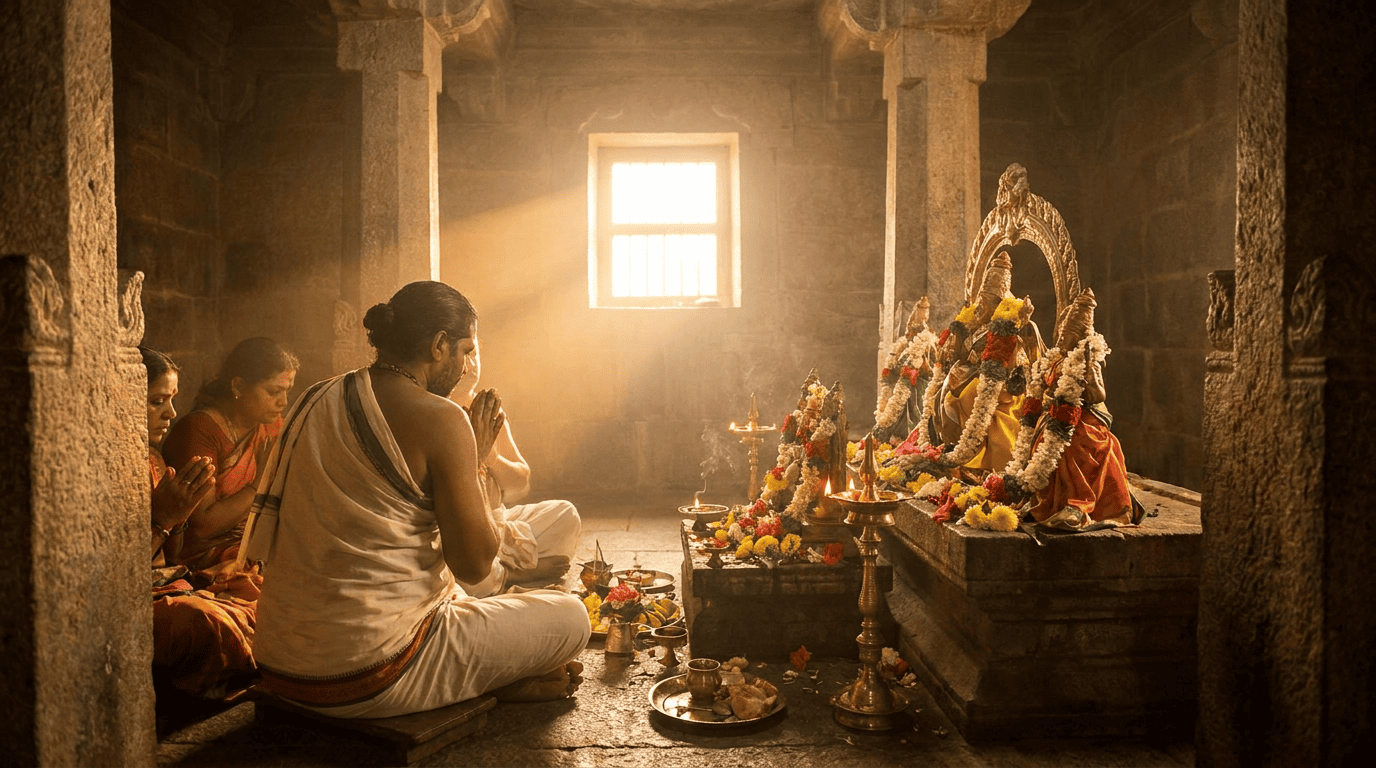
Deity worship is one of the most beautiful and practical ways to deepen our relationship with God. In Sanskrit, it is often called archana, which means worship offered with love, attention, and respect. In the Bhakti Yoga tradition, the Deity is not seen as an idol or a symbol invented by the mind. Rather, the Deity is understood as the merciful form of the Divine, who accepts our service through a form we can see, approach, dress, feed, pray to, and love.
Bhakti Yoga means the yoga of devotion. The word bhakti means loving devotion, and yoga means connection. So Bhakti Yoga is the path of reconnecting with God through love. Deity worship helps us bring that love into daily life in a tangible way.
Many people find it difficult to meditate on the invisible or to feel close to a distant idea of God. Deity worship invites us into a personal relationship. We can offer flowers, water, incense, food, songs, prayers, and our hearts. Through these simple acts, our home or temple becomes a sacred space, and our ordinary routine becomes an offering.
In the Bhagavad-gita 9.26, Krishna says:
“If one offers Me with love and devotion a leaf, a flower, fruit, or water, I will accept it.”
This verse is at the heart of Deity worship. God does not ask for wealth, status, or perfection. He asks for love. Even the simplest offering becomes spiritually powerful when given with sincerity.
Why Deity Worship Matters
It Makes Spiritual Life Personal
Deity worship helps us move from abstract belief to personal relationship. We are not simply thinking about God; we are serving God. We are waking Him, bathing Him, dressing Him, cooking for Him, singing for Him, and speaking to Him.
This may sound intimate, and it is. Bhakti is deeply personal. In the same way we naturally care for someone we love, Deity worship trains the heart to care for the Supreme Person.
In Bhakti scriptures, God is described not only as all-powerful but also as all-loving and approachable. Krishna, Rama, Vishnu, Narasimha, Gaura-Nitai, and other forms of the Lord are worshiped with devotion because devotees understand these forms to be eternal, spiritual, and full of compassion.
It Engages the Senses in Devotion
Our senses are always active. We see, hear, touch, taste, and smell throughout the day. Deity worship transforms these senses into instruments of love.
We see the beautiful form of the Lord.
We hear sacred mantras and kirtan, or devotional chanting.
We smell incense, flowers, and sacred oils.
We touch prayer beads, offering plates, and temple items with respect.
We taste prasadam, food that has been lovingly offered to God.
The word prasadam means mercy. When food is offered to God with love and then received by us, it becomes spiritually uplifting. Eating becomes not just nourishment for the body but also nourishment for the soul.
It Purifies the Heart
In Bhakti Yoga, spiritual growth is not about becoming proud or rigid. It is about softening the heart. Deity worship gently purifies our intentions. We begin by offering external things—flowers, water, lamps, food—but gradually we learn to offer our thoughts, choices, talents, struggles, and entire life.
The Srimad Bhagavatam, one of the central scriptures of Bhakti Yoga, teaches that hearing and chanting about God cleanses the heart. Deity worship supports this process by giving us regular moments of remembrance, gratitude, and loving service.
When practiced sincerely, Deity worship can help us become more humble, patient, clean, grateful, and compassionate.
The Spiritual Foundation of Deity Worship
God Accepts Loving Service
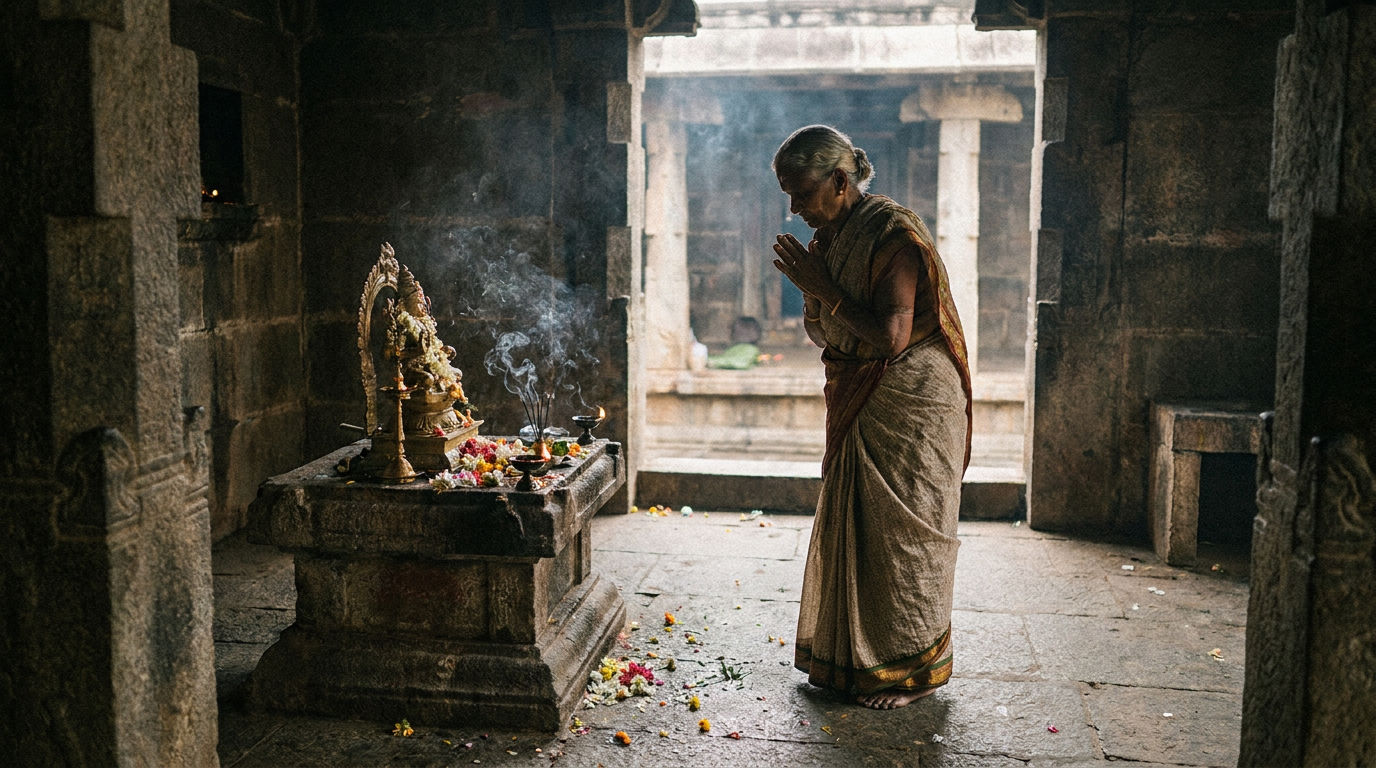
The foundation of Deity worship is not ritual for ritual’s sake. It is relationship. God is complete and does not need anything from us. Yet, out of love, He accepts our offerings so that we may awaken our love for Him.
A parent may not need a small child’s handmade gift, but the parent treasures it because of the love behind it. In the same way, the Lord accepts our simple offerings when they are made with devotion.
Krishna’s words in the Bhagavad-gita 9.26 remind us that love is the essential ingredient. A leaf, flower, fruit, or water is enough when offered sincerely.
The Deity Is a Merciful Form of the Lord
Some people may wonder, “How can God be present in a Deity form?” This is a natural and thoughtful question.
Bhakti scriptures explain that God is unlimited. Because He is unlimited, He can appear in ways that allow us to approach Him. If God can be present everywhere, He can certainly be present in a form worshiped according to scripture and devotion.
The Deity is not considered material in the ordinary sense. The Lord kindly agrees to receive worship through that form, just as a person can be present through their words, image, or voice in a meaningful way. Yet in Deity worship, this presence is understood as sacred and personal, not merely symbolic.
Scripture Guides the Practice
Authentic Deity worship is guided by scripture, saints, and teachers. This protects the practice from becoming sentimental, careless, or imaginary. In Bhakti Yoga, love is heartfelt, but it is also guided by wisdom.
Texts such as the Bhagavad-gita, Srimad Bhagavatam, Narada Pancharatra, and writings of great Bhakti teachers describe principles of worship, cleanliness, mantra, offerings, and devotional mood.
At the same time, the heart of the practice remains simple: remember God, serve God, and offer everything with love.
Sure, here is the sentence with the clickable link:
I love to visit The Bhakti House for spiritual inspiration.
Preparing for Deity Worship at Home
Begin with Humility
If you are new to Deity worship, please do not feel overwhelmed. You do not need to begin with elaborate rituals. In Bhakti Yoga, sincerity is more important than complexity.
You might begin with a sacred picture of Krishna, Radha-Krishna, Rama, Vishnu, Gaura-Nitai, Lord Jagannath, or another authorized form of the Lord. You can offer a flower, a small lamp, a prayer, or a simple bowl of fruit.
Start where you are. God sees the heart.
Create a Clean and Peaceful Space
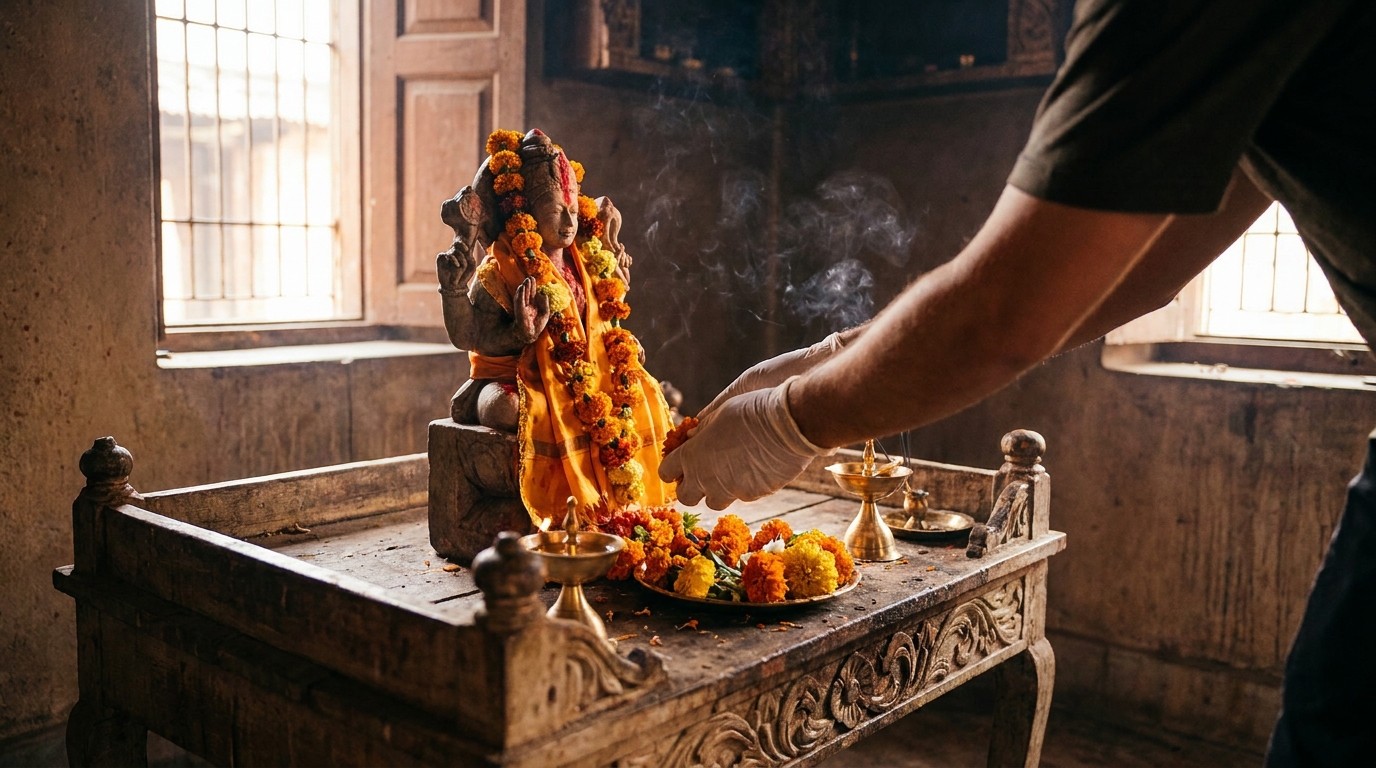
Choose a clean, quiet place in your home for worship. This may be a small altar, shelf, or table. Keep it respectful and free from clutter.
A home altar may include:
- A picture or Deity form of the Lord
- Pictures of saints or spiritual teachers
- A small cloth
- Fresh flowers or leaves
- A candle or ghee lamp
- Incense
- A water cup used only for worship
- A small bell
- A plate for food offerings
Cleanliness is an expression of care. Just as we prepare a home for a respected guest, we prepare a sacred space for the Lord.
Understand the Mood of Service
The Sanskrit word seva means service. Deity worship is seva. It is not about asking God to serve our desires; it is about learning to serve God with love.
This shift is powerful. Much of modern life teaches us to ask, “What can I get?” Bhakti gently asks, “How can I serve?” Through this mood, the heart becomes peaceful and generous.
Daily Practices in Deity Worship
Offering Food
One of the most accessible practices is offering food to God. In Bhakti Yoga, devotees prepare vegetarian food with care and offer it before eating.
A simple offering may include fruit, water, rice, vegetables, bread, or sweets. Traditionally, foods offered to Krishna are vegetarian and free from meat, fish, eggs, onion, garlic, and intoxicants. The focus is on purity, compassion, and devotion.
To offer food, place the preparation on a clean plate reserved for the Lord. Set it before the Deity or sacred picture. You may pray in your own words:
“My Lord, please accept this offering. I have prepared it for You with whatever love I have. Please bless me with devotion.”
You may also chant the Hare Krishna maha-mantra:
Hare Krishna, Hare Krishna, Krishna Krishna, Hare Hare
Hare Rama, Hare Rama, Rama Rama, Hare Hare
The word maha-mantra means “great mantra.” This sacred chant calls upon the Lord and His spiritual energy. “Hare” addresses the divine energy of God, “Krishna” means the all-attractive Lord, and “Rama” means the reservoir of joy.
After a few minutes, the food is considered prasadam, the Lord’s mercy. Receive it with gratitude and share it with others.
Offering Incense, Lamp, and Flowers
Many devotees offer incense, a lamp, flowers, and water as part of daily worship. This is often called arati, a ceremony of offering auspicious items to the Lord.
Arati can be simple or elaborate. At home, you may light incense and gently offer it in circular motions before the Deity while chanting or praying. You may offer a small candle or ghee lamp in the same way. You may place a flower at the Lord’s feet.
The meaning is beautiful: “My Lord, I offer You fragrance, light, beauty, and my attention. Please let my life become an offering to You.”
Chanting and Singing
Chanting is central to Bhakti Yoga. The most recommended practice for this age is chanting the holy names of God. This is taught throughout Bhakti scriptures and emphasized by Sri Chaitanya Mahaprabhu, the great saint who spread the chanting of Krishna’s names with deep love.
You can chant softly before your altar, sing kirtan, or play devotional music. The Lord is pleased by sincere sound vibration offered with devotion.
Even if your voice is not trained, sing anyway. Bhakti is not a performance. It is an offering.
Prayer and Personal Conversation
Deity worship includes formal prayers, but it also includes honest personal prayer. You can speak to God as you are.
You may pray:
“Please guide me.”
“Please help me remember You.”
“Please forgive my mistakes.”
“Please teach me how to love and serve.”
“Please bless my family, my community, and all beings.”
This kind of prayer opens the heart. Over time, the Deity becomes not simply something we look at but someone we turn to.
The Role of Cleanliness and Respect
External Cleanliness
Cleanliness supports spiritual awareness. Before worship, it is good to wash your hands, rinse your mouth, and wear clean clothes if possible. Keep worship items clean and separate from ordinary household use.
The altar should be cared for regularly. Remove old flowers, wipe surfaces, clean offering plates, and keep the space fresh.
These details are not meant to create anxiety. They are expressions of love. When we love someone, we naturally want to serve them nicely.
Internal Cleanliness
External cleanliness is important, but internal cleanliness is the deeper goal. We approach the Lord with humility, honesty, and a desire to be purified.
We may come with restless minds, imperfect habits, doubts, or emotional burdens. Still, we come. Bhakti does not require that we become perfect before approaching God. Rather, by approaching God sincerely, we become gradually transformed.
Avoiding a Mechanical Mood
Ritual can become mechanical if the heart is absent. This can happen in any spiritual tradition. The remedy is remembrance.
Before beginning worship, pause and remember: “I am about to serve the Lord. This is a sacred opportunity.”
Even one moment of sincere attention can bring life back into the practice.
Deity Worship in the Temple
The Temple as a Spiritual Home
In a Bhakti temple, Deity worship is often performed with great beauty and detail. The Deities may be awakened early in the morning, bathed, dressed, decorated, offered meals throughout the day, honored with arati ceremonies, and put to rest in the evening.
This may seem elaborate, but the principle is simple: the Lord is treated as the beloved center of the community.
The temple is not merely a building. It is a spiritual home where people gather to chant, pray, hear scripture, serve, honor prasadam, and grow together.
Darshan: Seeing and Being Seen
When devotees come before the Deity, they often use the word darshan. Darshan means seeing the Lord and receiving His merciful glance. In Bhakti, seeing is not one-sided. We come to see God, and we also allow ourselves to be seen by God.
This can be deeply healing. Many people go through life feeling unseen or unknown. In darshan, we stand before the Lord as we are. We are not our job, our failures, our social identity, or our past. We are souls, eternal parts of God, welcomed into His presence.
Participating with Respect
If you are visiting a Bhakti temple for the first time, you are welcome. You do not need to know everything. Simply come with respect.
You may observe the worship, join the chanting, bow if you feel comfortable, offer a prayer, or sit quietly. If prasadam is served, receive it with gratitude.
If you are unsure what to do, ask someone kindly. Devotee communities are usually happy to help newcomers understand the practices.
Common Questions About Deity Worship
Is Deity Worship Idol Worship?
This is one of the most common questions. In Bhakti Yoga, Deity worship is not idol worship in the sense of worshiping an ordinary object as God. The Deity is worshiped according to scriptural guidance as an authorized form through which the Lord accepts service.
The difference lies in understanding and presence. A mailbox may look like an ordinary box, but because it is authorized by the postal system, letters placed there reach their destination. Similarly, the Deity form is authorized through scripture and devotion as a way to offer love to God.
The material elements may appear to be stone, wood, metal, or paint, but the Lord, being unlimited, can accept worship through them. For devotees, the Deity is a merciful manifestation of God’s presence.
Do I Need a Guru to Worship at Home?
A guru is a spiritual teacher who helps guide us toward God. In Bhakti Yoga, guidance from authentic teachers is very important, especially for formal Deity worship and advanced practices.
However, anyone can begin simply by offering prayers, chanting the holy names, and offering food with sincerity. If you feel drawn to deeper worship, it is wise to seek guidance from experienced devotees or a qualified spiritual teacher.
The path unfolds step by step.
What If I Make Mistakes?
Mistakes are natural, especially in the beginning. The Lord is not looking for an excuse to reject us. He is looking for our sincerity.
If you forget a mantra, offer something imperfectly, or feel distracted, do not become discouraged. Simply apologize inwardly and continue. Humility is part of devotion.
In Bhakti, the goal is not flawless ritual performance but loving service. Accuracy matters, but love is the soul of the practice.
Can I Worship If I Am Not Hindu?
Yes. Bhakti Yoga is a universal path of loving devotion to God. While it comes through the Vedic tradition of India and uses Sanskrit language and sacred forms, its essence is for everyone.
The soul is not limited by nationality, race, gender, or background. Every person has the capacity to love God. Deity worship is open to anyone who approaches with respect and sincerity.
The Inner Meaning of Offerings
Offering Water
Water is simple, pure, and essential. Offering water reminds us that devotion does not need to be complicated. It also teaches gratitude for the basic gifts of life.
Offering Flowers
Flowers represent beauty and the temporary nature of this world. By offering a flower, we offer the best of nature back to its source. We also remember that our own life is brief and should be used in loving service.
Offering Light
A lamp represents the light of divine wisdom. When we offer light to the Lord, we pray that the darkness of ignorance may be removed from our hearts.
Offering Food
Food represents our labor, care, and dependence on God. By offering food before eating, we acknowledge that everything comes from the Divine. This practice can transform our relationship with eating, the earth, and other living beings.
Offering the Heart
Ultimately, every external offering points toward the final offering: the heart. Bhakti Yoga invites us to offer our fears, hopes, talents, relationships, and daily work to God.
This is the complete meaning of Deity worship—not only what happens at the altar, but how the altar teaches us to live.
Building a Sustainable Practice
Start Small and Be Consistent
It is better to offer one flower daily with attention than to attempt a complicated ritual and become discouraged. Choose a practice you can maintain.
You might begin with:
- Lighting incense each morning
- Offering a glass of water
- Chanting one round of the Hare Krishna mantra on beads
- Offering your meals
- Reading one verse from the Bhagavad-gita
- Saying a simple prayer before leaving home
Consistency creates spiritual strength.
Let Your Practice Grow Naturally
As your devotion deepens, you may feel inspired to learn more mantras, perform arati, cook more offerings, observe sacred days, or visit the temple regularly. Let growth come with joy, not pressure.
Bhakti is not forced. It is cultivated, like a garden.
Connect with Devotees
Spiritual life becomes stronger in loving community. In Sanskrit, this is called sadhu-sanga, association with saintly or spiritually minded people.
When we spend time with devotees, we learn by example. We hear stories, ask questions, chant together, and receive encouragement. Community helps us stay steady when life becomes difficult.
Study Scripture with a Practical Heart
Scripture gives direction and nourishment. The Bhagavad-gita teaches us how to live with devotion in the middle of daily responsibilities. The Srimad Bhagavatam fills the heart with stories and teachings of divine love. The lives of saints show us how devotion becomes real in action.
Try reading a little each day. Ask, “How can I apply this today? How can this help me love and serve better?”
Deity Worship as a Way of Life
Seeing God at the Center
Deity worship trains us to put God at the center. Over time, this affects everything. We begin to ask, “Will this choice please the Lord? Can this work become service? Can I treat this person as part of God’s family?”
This is where worship moves beyond the altar and enters the heart of daily life.
Serving Others as Service to God
True Deity worship should make us kinder. If we worship God in the temple but ignore the suffering of others, our worship remains incomplete.
Bhakti teaches that every living being is a soul, a beloved part of God. Service to the Lord naturally expands into compassion, hospitality, forgiveness, and care for others.
Cooking prasadam and sharing it, welcoming guests, helping those in need, encouraging someone spiritually, or simply listening with compassion can all become extensions of Deity worship.
Remembering the Lord Throughout the Day
The altar is like a spiritual anchor. When we begin the morning with worship, it becomes easier to remember God during the day.
You may pause before a meeting and silently chant. You may offer your work before beginning. You may thank God before eating. You may pray while walking. You may chant while driving or cooking.
This is practical Bhakti Yoga: bringing remembrance, love, and service into ordinary moments.
The Blessings of Deity Worship
A Peaceful Home
When Deity worship is practiced with sincerity, the home atmosphere changes. The altar becomes a place of refuge. Family members may gather for prayer, chanting, or prasadam. Guests may feel uplifted.
Even a small sacred space can bring great spiritual warmth.
A Softer Heart
Regular worship softens the heart. We become more aware of our dependence on God. We become more grateful. We begin to see our life as a gift rather than a possession.
This humility is not weakness. It is strength rooted in truth.
A Deeper Relationship with God
The greatest blessing of Deity worship is relationship. Day by day, the Lord becomes more real to us. We begin to feel that we are not alone. We have someone to serve, someone to thank, someone to turn to, someone to love.
This is the treasure of Bhakti Yoga.
Taking Your First Step in Deity Worship
Deity worship may appear grand from the outside, but it begins very simply. Offer a flower. Offer water. Offer your food. Chant the holy names. Say a prayer. Sit before the Lord and speak honestly.
If you already have a practice, deepen it with fresh sincerity. If you are new, begin gently. You do not need to be perfect, advanced, or from any particular background. God is the loving source of all beings, and every soul is invited into relationship with Him.
In the spirit of The Bhakti House, may your worship be warm, humble, and real. May your home become a place of prayer. May your meals become prasadam. May your voice discover the sweetness of chanting. May your hands find joy in service. May your heart take one sincere step toward God today.
Everyone is welcome. Wherever you are on the journey, you can begin with love.
FAQs
What is deity worship?
Deity worship, also known as murti puja, is a Hindu ritual in which devotees offer prayers, rituals, and offerings to a deity in the form of a murti (idol) or image.
Why is deity worship important in Hinduism?
Deity worship is important in Hinduism as it allows devotees to establish a personal relationship with the divine, seek blessings, and express devotion and gratitude towards the deity.
What are the common deities worshipped in Hinduism?
Common deities worshipped in Hinduism include Lord Shiva, Lord Vishnu (in his various forms such as Krishna and Rama), Goddess Lakshmi, Goddess Durga, and Lord Ganesha, among others.
What are the basic steps involved in deity worship?
The basic steps involved in deity worship include purifying oneself, offering prayers and mantras, performing rituals such as arati (waving of lamps), offering food and flowers, and seeking blessings from the deity.
Can anyone perform deity worship?
Yes, anyone can perform deity worship in Hinduism, regardless of caste, gender, or age. However, it is important to follow the prescribed rituals and guidelines with sincerity and devotion.

