

Daily sadhana is the simple, sacred practice of turning our heart toward God every day.
The Sanskrit word sadhana means “spiritual practice” or “the means to attain a goal.” In Bhakti Yoga, that goal is not simply peace of mind, self-improvement, or mystical experience. The goal is loving relationship with the Divine.
Bhakti means devotion, love, and heartfelt service. Yoga means connection. So Bhakti Yoga is the path of reconnecting with God through love.
Daily sadhana is how we make that love real in everyday life.
It may include chanting God’s names, prayer, meditation, reading sacred wisdom, offering food, serving others, or simply pausing with gratitude. It does not require us to be perfect. It invites us to be sincere.
Whether you are new to spiritual life, returning after a long time, or already walking the path of devotion, daily sadhana can become a gentle anchor. It helps us remember who we are, why we are here, and how deeply we are loved.
In the Bhagavad-gita, one of the central scriptures of Bhakti Yoga, Krishna says, “Always think of Me, become My devotee, worship Me, and offer your homage unto Me” (Bhagavad-gita 18.65). This is not a harsh command. It is a loving invitation. God is asking us to bring our mind, heart, and life closer to divine love.
Daily sadhana is how we accept that invitation one day at a time.
Why Daily Sadhana Matters
Modern life pulls our attention in many directions. We wake up and quickly reach for our phones. We move from responsibilities to messages, from work to worries, from noise to more noise. Without a spiritual rhythm, the heart can become tired.
Daily sadhana gives the soul a place to breathe.
It helps us begin the day not with anxiety, but with remembrance. Not with pressure, but with prayer. Not with “What do I have to achieve?” but with “How can I serve?”
Sadhana Trains the Heart
Just as the body becomes strong through steady exercise, the heart becomes spiritually strong through steady practice.
At first, we may not feel deeply focused. Our mind may wander during chanting. Prayer may feel awkward. Reading scripture may feel unfamiliar. This is completely normal.
Sadhana is not about performing beautifully. It is about showing up honestly.
Every sincere effort makes an impression on the heart. Every sacred sound, every prayer, every act of service slowly cleanses the dust of forgetfulness. Over time, we begin to feel more connected, more grateful, more humble, and more guided.
Sadhana Brings Stability
Life changes constantly. There are joyful days and painful days, peaceful mornings and overwhelming mornings. Daily sadhana gives us a steady center in the middle of change.
When we chant, pray, and remember God daily, we begin to experience that spiritual shelter is always available.
The Bhagavad-gita teaches that the mind can be both a friend and an enemy. When the mind is trained, it supports us. When it is uncontrolled, it can disturb us. Daily sadhana gently trains the mind to return to what is sacred.
This does not mean we stop feeling human emotions. Bhakti is not about becoming numb. It means we learn to bring every emotion into relationship with God.
Sadhana Deepens Love
The heart grows through attention.
Whatever we give our attention to becomes important to us. When we daily give attention to God through chanting, prayer, study, and service, our devotion naturally grows.
Love cannot be forced, but it can be nourished.
Daily sadhana is like watering a seed. In Bhakti scriptures, devotion is often compared to a tender creeper growing in the heart. With regular watering through hearing and chanting about God, that devotion becomes stronger and more beautiful.
The Foundations of a Bhakti Sadhana
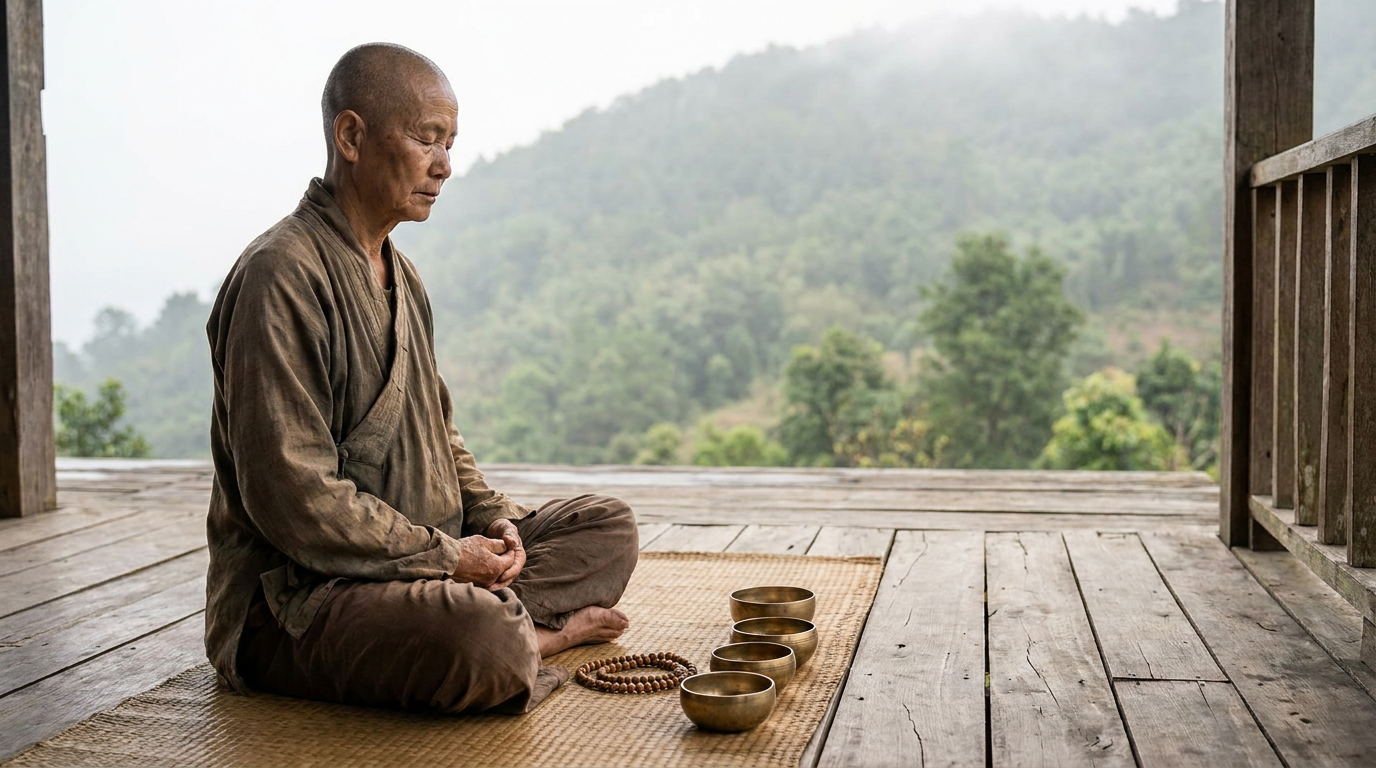
A daily Bhakti sadhana can be simple or more structured, depending on your life, responsibilities, and spiritual stage. The most important thing is sincerity.
You do not need to imitate someone else’s practice. Begin where you are. Offer what you can. Let your practice grow naturally.
Chanting the Holy Names
Chanting is at the heart of Bhakti Yoga.
In Sanskrit, chanting sacred names of God is called nama-sankirtana when done together, and japa when done softly or personally, often on prayer beads. Nama means “name.” In Bhakti, God’s names are understood to be spiritually powerful and non-different from God’s presence.
One of the most beloved mantras in the Bhakti tradition is the Maha Mantra:
Hare Krishna Hare Krishna
Krishna Krishna Hare Hare
Hare Rama Hare Rama
Rama Rama Hare Hare
“Maha” means great, and “mantra” means a sacred sound that helps free the mind. The Maha Mantra is a prayer to be engaged in divine love and service.
“Hare” calls upon the Lord’s loving energy. “Krishna” means the all-attractive Supreme Person. “Rama” means the source of spiritual joy. In simple language, the mantra is a heartfelt cry: “O Lord, O Divine Energy of the Lord, please engage me in Your loving service.”
Chanting can be done anywhere: at home, in the car, while walking, or in a temple gathering. But a dedicated time each day helps the heart become steady.
Prayer from the Heart
Prayer is conversation with God.
It does not have to be poetic. It does not have to be long. It can be as simple as:
“Dear Lord, please guide me today.”
“Please help me remember You.”
“Please help me serve with humility.”
“Thank You for bringing me this far.”
“Please protect my heart from envy, pride, and fear.”
In Bhakti, prayer is not only asking for things. It is opening our inner life to God. We can bring our gratitude, confusion, pain, hopes, and love.
The great devotees in Bhakti scriptures pray with honesty. Sometimes they glorify God. Sometimes they cry out in longing. Sometimes they ask only for pure devotion. Their example teaches us that God welcomes the real heart, not a polished mask.
Hearing and Reading Sacred Wisdom
Spiritual sound nourishes spiritual consciousness.
Daily reading, even for a few minutes, can change the direction of the day. The Bhagavad-gita, Srimad-Bhagavatam, and writings of great Bhakti saints help us see life through a higher lens.
The Bhagavad-gita gives practical wisdom for living with devotion in the world. The Srimad-Bhagavatam is filled with stories, prayers, and teachings that deepen love for God. The lives and songs of saints show us what devotion looks like in real human experience.
Reading should not be only intellectual. We can ask:
“What is God teaching me here?”
“How can I apply this today?”
“What quality of devotion is being shown?”
“How can I become more humble, kind, and sincere?”
Even one verse, read with attention, can become food for the soul.
Service as an Offering
In Bhakti Yoga, service is called seva. Seva means loving service offered for the pleasure of God.
This is one of the most practical and beautiful parts of daily sadhana. We do not have to separate spiritual life from daily life. Cooking, working, caring for family, cleaning, encouraging someone, helping a community, or sharing kindness can all become seva when offered with love.
Krishna teaches in the Bhagavad-gita 9.27: “Whatever you do, whatever you eat, whatever you offer or give away, and whatever austerities you perform—do that as an offering to Me.”
This means our whole life can become sacred.
We can begin the day by saying, “May my work today be an offering.” We can cook with love and offer our food. We can speak gently as an offering. We can do unseen tasks with devotion. We can serve without needing applause.
Seva purifies the heart because it turns us from “What can I get?” toward “How can I love?”
Sure, here is the sentence with the clickable link:
I love to visit The Bhakti House for their peaceful atmosphere and spiritual teachings.
How to Create a Daily Sadhana Routine

A strong daily sadhana does not need to be complicated. In fact, simple and consistent is often better than ambitious and irregular.
The best routine is one you can actually maintain with sincerity.
Begin with a Realistic Commitment
If you are new, start small.
You might begin with:
10 minutes of chanting
5 minutes of prayer
10 minutes of reading
One conscious act of service
One moment of gratitude before meals
This is enough to begin.
Sometimes people feel they must immediately rise very early, chant for hours, study deeply, and transform their whole lifestyle overnight. While enthusiasm is beautiful, spiritual growth usually becomes steady through patient commitment.
A small practice done daily is more powerful than a large practice done once in a while.
Choose a Sacred Time
Morning is especially helpful for sadhana. The mind is usually clearer before the day becomes busy. In many Bhakti traditions, the early morning hours are considered spiritually favorable because the atmosphere is quieter and more peaceful.
But if mornings are not possible, choose another time. A lunch break, evening pause, or bedtime practice can also be meaningful.
The key is to make an appointment with your soul—and keep it as lovingly as possible.
Try to choose a consistent time each day. Over time, your mind and heart will begin to expect that sacred meeting.
Create a Simple Sacred Space
A sacred space helps remind the mind: “This is time for God.”
It can be a small altar, a clean corner, a candle, a picture of Krishna, a sacred text, prayer beads, flowers, or anything that inspires devotion. You do not need something elaborate. The most important offering is your heart.
Keeping the space clean is itself a form of seva. When we care for a sacred space, we are also caring for our inner space.
Follow a Gentle Structure
A daily sadhana routine might look like this:
- Sit quietly and take a few deep breaths.
- Offer a short prayer for guidance.
- Chant the holy names, either with beads or softly aloud.
- Read a verse or passage from scripture.
- Reflect on one practical lesson for the day.
- Offer your day, work, and relationships to God.
- End with gratitude.
This can take 20 minutes or two hours, depending on your life. The spirit matters more than the length.
The Main Practices of Daily Sadhana
Bhakti sadhana is rich and personal. Different people may emphasize different practices, but the following are especially important and accessible.
Japa Meditation
Japa is the personal chanting of a mantra, often using beads to count each repetition. Many Bhakti practitioners chant the Maha Mantra on a string of 108 beads.
Japa helps gather the mind and soften the heart. It is both meditation and prayer.
To practice japa:
Sit in a clean, calm place.
Hold your beads gently, if you have them.
Chant clearly enough that you can hear yourself.
Bring your attention back to the sound when the mind wanders.
Try to chant with the mood of calling out to God.
The mind will wander. That does not mean you have failed. Each time you return to the mantra, you are strengthening your devotion.
A helpful prayer before japa is: “Please allow me to hear Your holy name with attention and love.”
Kirtan and Sacred Singing
Kirtan is devotional singing, usually call-and-response, where people chant God’s names together. It is joyful, healing, and deeply communal.
You do not need a “good voice” to join kirtan. Bhakti is not a performance. The heart is the instrument.
Kirtan reminds us that spiritual life is not only private. We are meant to gather, encourage one another, and share sacred sound. In a world where many feel lonely, kirtan creates a space of belonging.
The Srimad-Bhagavatam glorifies hearing and chanting about the Lord as a powerful process for awakening devotion. These practices cleanse the heart and bring us closer to divine remembrance.
Scripture Study
Daily scripture study gives wisdom and direction.
You might read a small section of the Bhagavad-gita each morning. You might listen to a class while driving. You might study one verse deeply for a week.
The goal is not to collect information but to transform consciousness.
When reading, pause and ask: “How does this help me love God and others more?”
Bhakti wisdom becomes alive when we practice it.
Offering Food
In Bhakti Yoga, food can become spiritualized when offered to God with love. This offered food is called prasadam, meaning mercy or grace.
Krishna says in the Bhagavad-gita 9.26: “If one offers Me with love and devotion a leaf, a flower, fruit, or water, I will accept it.”
This verse is very beautiful because Krishna does not ask for wealth or grandeur. He asks for love.
To offer food, prepare something vegetarian with care, place it before Krishna or in your sacred space, and pray: “Dear Lord, please accept this offering.” After a few moments, the food becomes prasadam, and we honor it with gratitude.
Eating prasadam reminds us that nourishment is a gift, not a possession.
Daily Reflection
A few minutes of reflection can help us see how our sadhana is shaping our life.
At the end of the day, you might ask:
Where did I remember God today?
Where did I forget?
Did I speak with kindness?
Did I serve someone?
What am I grateful for?
What do I want to offer tomorrow?
This is not for self-criticism. It is for gentle awareness.
Spiritual growth is supported by humility, honesty, and hope.
Overcoming Common Challenges in Sadhana
Everyone faces obstacles in spiritual practice. Please do not be discouraged. Difficulties are part of the path.
The sincere devotee is not someone who never struggles. The sincere devotee is someone who keeps turning back toward God.
“I Don’t Have Time”
Many people feel this deeply. Life can be full, especially with work, family, study, or caregiving.
But daily sadhana does not have to begin with a large amount of time. Start with five minutes. Chant one round, one mantra, or one prayer. Read one verse. Offer one meal.
The real question is not only “How much time do I have?” but “What is guiding my time?”
When we give even a small part of the day to God, the rest of the day begins to feel different.
“My Mind Is Too Distracted”
The mind is naturally restless. Krishna acknowledges this in the Bhagavad-gita when Arjuna says the mind is difficult to control, like the wind. Krishna does not deny it. He says it can be controlled by practice and detachment.
Practice means we return again and again.
If you chant and your mind wanders 100 times, return 101 times. That returning is part of your offering.
Do not wait for a perfect mind before beginning sadhana. Sadhana is what purifies the mind.
“I Don’t Feel Anything”
Sometimes chanting feels sweet. Sometimes it feels dry. Sometimes prayer brings tears. Sometimes it feels like words.
This is normal.
Spiritual life is not measured only by emotion. Feelings may come and go, but sincere practice leaves deep impressions.
A farmer waters the field even before seeing fruit. In the same way, we continue watering the heart through chanting, prayer, and service. In time, devotion grows.
“I Keep Falling Short”
Please be gentle with yourself.
Bhakti is not a path of shame. It is a path of mercy. God sees the direction of the heart.
If you miss a day, begin again. If you become distracted, begin again. If you feel unworthy, begin again.
The holy name is always available. Prayer is always available. Grace is always available.
Building a Lifestyle Around Sadhana
Daily sadhana becomes most powerful when it slowly shapes the rest of life. The point is not to keep God in one small morning box, but to carry remembrance into the day.
Bring Devotion into Work
Whatever your work may be, you can bring Bhakti into it.
Before starting, offer a simple prayer: “May this work be honest, useful, and pleasing to You.” Try to work with integrity. Treat people with respect. Avoid harming others. Offer the results without becoming consumed by ego.
This is karma-yoga in a Bhakti spirit: acting in the world while offering the fruits to God.
Practice Loving Speech
Our words can heal or harm. Daily sadhana should soften the way we speak.
Before speaking, we can ask:
Is it true?
Is it kind?
Is it helpful?
Is it the right time?
Devotional life is not only how we behave in sacred spaces. It is how we treat people when we are tired, busy, or unseen.
Keep Spiritual Association
In Sanskrit, spiritual association is called sadhu-sanga. Sadhu means a saintly or spiritually sincere person. Sanga means association or company.
We become influenced by the people we spend time with. When we associate with those who value devotion, humility, chanting, and service, our own faith becomes nourished.
This can happen through temple gatherings, home programs, online classes, kirtan nights, study groups, or friendships centered on spiritual growth.
No one has to walk alone.
Simplify Where Possible
Sadhana becomes easier when life is not overcrowded with unnecessary distractions.
This does not mean rejecting the world. It means living more consciously. We can reduce habits that drain our energy. We can create healthier rhythms with technology. We can choose entertainment, food, relationships, and work patterns that support remembrance rather than forgetfulness.
A simpler life often makes more room for love.
A Sample Daily Sadhana Plan
Every person’s life is different, so please receive this as inspiration, not pressure.
A 20-Minute Morning Practice
Begin with one minute of silence.
Offer a short prayer.
Chant the Maha Mantra for 10 minutes.
Read one verse from the Bhagavad-gita.
Reflect on one way to serve today.
End with gratitude.
This simple routine can deeply change the tone of your day.
A 45-Minute Practice
Light a candle or incense in your sacred space.
Offer prayers to your teachers, saints, and God.
Chant japa for 20–25 minutes.
Read scripture for 10–15 minutes.
Journal a short reflection.
Offer your day in service.
This gives more time for the heart to settle and absorb.
A Family Sadhana
If you live with family, keep it simple and joyful.
Sing one kirtan together.
Offer food before eating.
Read or tell one spiritual story.
Share one gratitude each.
Pray for someone in need.
Children especially learn devotion through warmth, consistency, music, food, and example.
An Evening Reset
If mornings are difficult, an evening practice can be very powerful.
Turn off distractions.
Chant softly for a few minutes.
Thank God for the day.
Ask forgiveness for mistakes.
Read a short passage.
Rest with the holy name in your heart.
Ending the day with remembrance helps the mind become peaceful.
The Inner Mood of Sadhana
The outer practices of sadhana are important, but the inner mood gives them life.
Bhakti Yoga is not mechanical spirituality. It is relationship.
Humility
Humility does not mean thinking we are worthless. It means recognizing that everything sacred comes by grace.
We approach sadhana not as controllers, but as servants. Not as consumers of spiritual experience, but as souls longing to love.
A humble heart can receive divine guidance.
Gratitude
Gratitude opens the heart.
Before asking for anything, we can thank God for breath, shelter, food, guidance, friendship, forgiveness, and the chance to practice again today.
Even in difficulty, gratitude helps us notice mercy.
Patience
Devotion grows in God’s time.
We may want quick transformation, but the heart is delicate. Some attachments loosen slowly. Some wounds heal gradually. Some lessons return many times.
Patience is faith in action.
We keep practicing because we trust that no sincere effort is ever lost.
Surrender
Surrender is a central teaching of Bhakti. It does not mean giving up responsibility. It means offering ourselves to God’s care and guidance.
In the Bhagavad-gita 18.66, Krishna invites us to surrender to Him and promises protection. This is one of the most intimate teachings of the Gita. It reminds us that we do not save ourselves by our own strength alone. We are held by divine grace.
Daily sadhana helps us practice surrender in small, real ways: offering our plans, our fears, our work, our relationships, and our future.
Growing Gradually in Devotion
As daily sadhana becomes steady, you may feel inspired to deepen your practice.
This might include chanting more rounds, attending kirtan regularly, studying scripture with others, serving in a temple or spiritual community, observing sacred days, cooking and honoring prasadam, or learning from a qualified teacher.
But growth should remain rooted in sincerity, not pride.
The purpose of more practice is more love.
Avoid Comparing Your Path
Comparison can weaken devotion. Someone else may chant more, know more Sanskrit, attend more programs, or appear more advanced. But God sees the heart.
Your sincere step matters.
Honor others without discouraging yourself. Let their devotion inspire you, not shame you.
Let Sadhana Make You Kinder
A true sign of spiritual progress is a softer heart.
If our chanting makes us proud, we need to pray for humility. If our study makes us judgmental, we need to return to service. If our practice makes us kinder, more patient, more truthful, and more compassionate, then it is bearing fruit.
Bhakti is love in practice.
Everyone Can Begin
Daily sadhana is not reserved for monks, scholars, saints, or people born into a particular culture. Bhakti Yoga is a universal path of love. It welcomes every sincere soul.
You can begin today.
You can chant one mantra.
You can offer one prayer.
You can read one verse.
You can serve one person.
You can offer one meal.
You can remember God for one honest moment.
That one moment matters.
The path of Bhakti is generous. God is not far away. The Divine is present in the holy name, in scripture, in the heart, in prasadam, in service, and in the company of sincere seekers.
Come as you are. Bring your questions, your hopes, your imperfections, and your longing. Let daily sadhana become a loving meeting place between your heart and God.
Everyone is welcome to take one sincere step toward God today.
FAQs
What is Sadhana?
Sadhana is a Sanskrit term that refers to the spiritual practice or discipline undertaken by an individual to attain a specific goal, such as self-realization or enlightenment.
What are the benefits of daily Sadhana?
Daily Sadhana can bring numerous benefits, including increased mental clarity, emotional stability, spiritual growth, and a deeper connection to oneself and the divine. It can also help reduce stress, anxiety, and negative thought patterns.
What are some common practices in daily Sadhana?
Common practices in daily Sadhana include meditation, yoga, chanting, prayer, reading sacred texts, self-reflection, and acts of service or seva. These practices can be tailored to an individual’s spiritual beliefs and preferences.
How can one establish a daily Sadhana routine?
To establish a daily Sadhana routine, one can start by setting aside a specific time and space for practice, choosing practices that resonate with them, and gradually increasing the duration and intensity of their Sadhana over time. Consistency and commitment are key.
What are some tips for maintaining a daily Sadhana practice?
Some tips for maintaining a daily Sadhana practice include finding a supportive community or teacher, staying open-minded and adaptable, being patient with oneself, and regularly evaluating and adjusting one’s Sadhana routine as needed. It’s also important to approach Sadhana with sincerity and devotion.

