
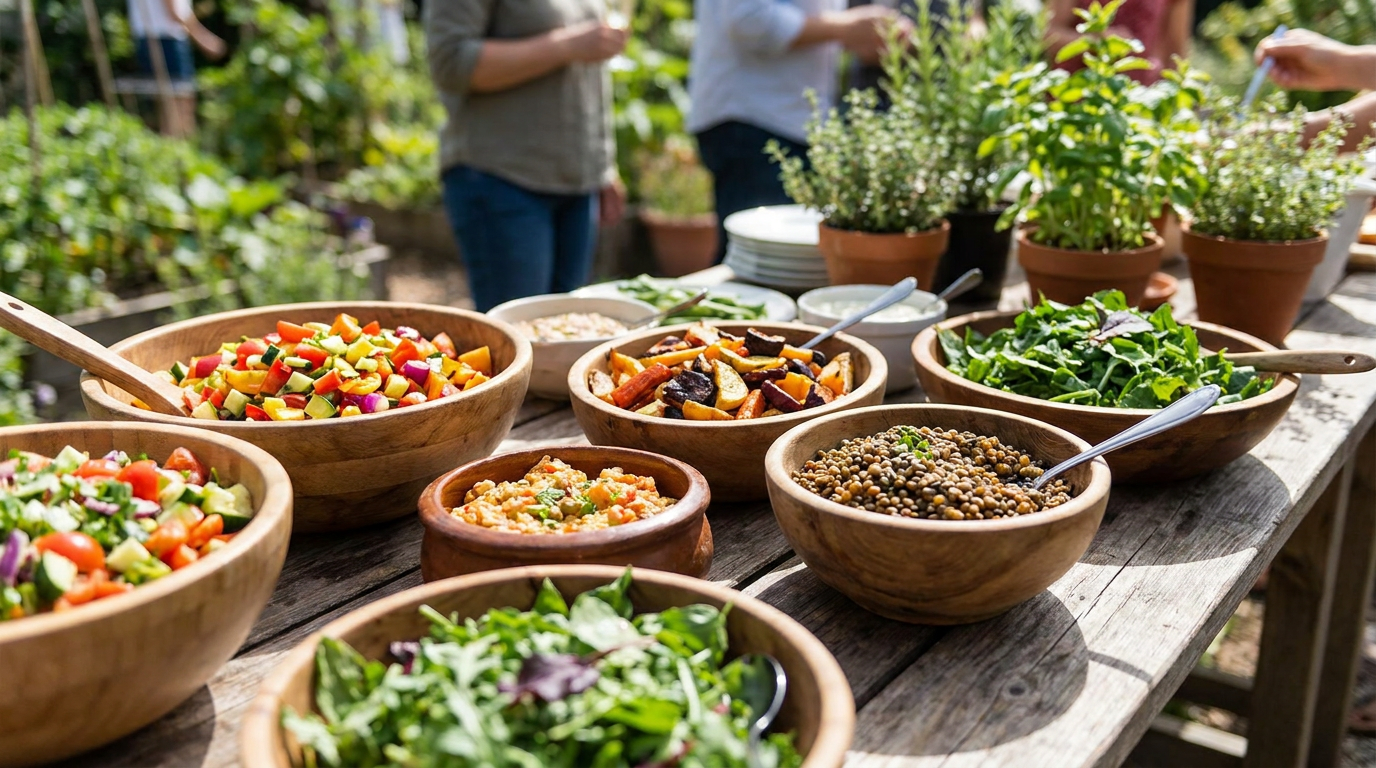
Vegetarian living is more than a diet. It is a gentle way of moving through the world with awareness, compassion, and gratitude. For many people, becoming vegetarian begins with a desire to feel healthier, to care for animals, to protect the earth, or to live more spiritually. In the tradition of Bhakti Yoga, vegetarian living is also an offering of love.
Bhakti Yoga is the yoga of devotion. The Sanskrit word bhakti means loving devotion, especially devotion to God. This path teaches that the heart can be purified and awakened through loving practices such as chanting sacred names, prayer, service, hearing wisdom, and offering our daily life to the Divine.
Food is part of that offering.
Every meal can become a moment of connection. Every ingredient can be received with gratitude. Every act of cooking can become service. When we prepare and eat vegetarian food with prayerful intention, we are not only nourishing the body—we are also nourishing the soul.
At The Bhakti House, we welcome seekers of all backgrounds. You do not need to be perfect, religious, or already vegetarian to begin. You can simply take one sincere step. Vegetarian living is a journey, and every compassionate choice matters.
What Is Vegetarian Living?
Vegetarian living generally means avoiding meat, fish, and poultry. Some vegetarians eat dairy products, while others choose a fully plant-based or vegan lifestyle. In Bhakti Yoga, vegetarian living traditionally includes foods such as fruits, vegetables, grains, beans, nuts, seeds, herbs, and dairy products that are offered with love and received with gratitude.
The deeper purpose is not merely restriction. It is purification, kindness, and spiritual awareness.
Vegetarianism as Compassion in Action
Compassion is one of the foundations of spiritual life. In Sanskrit, the word ahimsa means nonviolence or non-harm. It does not mean we can live in the world without affecting anything at all, but it invites us to reduce harm wherever possible.
Choosing vegetarian food is a simple and practical way to practice ahimsa every day. It allows us to eat in a way that is kinder to animals, gentler on the earth, and more supportive of a peaceful heart.
In the Bhagavad-gita, one of the most beloved texts of Bhakti Yoga, Krishna explains that a person of wisdom sees all living beings with equal vision. This does not mean we ignore practical differences, but it does mean we recognize the sacred presence of life everywhere. Animals are not objects; they are living beings with feelings, desires, and souls.
Vegetarian living helps us remember this truth.
A Lifestyle, Not Just a Menu
Vegetarian living includes food, but it can also influence how we shop, cook, speak, serve, and relate to others. It invites us to ask:
Is this choice bringing more peace?
Is this meal prepared with care?
Is my lifestyle aligned with my values?
Am I becoming more loving, humble, and conscious?
The goal is not to judge others. The goal is to grow in love. In Bhakti Yoga, the heart is the real center of transformation. A vegetarian plate is beautiful, but a softened heart is even more beautiful.
Progress Over Perfection
Many people feel overwhelmed when they begin. They wonder, “What if I make a mistake?” or “What if my family does not understand?” or “What if I still crave old foods?”
Please be gentle with yourself. Spiritual growth is not built on shame. It is built on sincerity.
Start where you are. Try one vegetarian meal a day. Learn one simple recipe. Offer one meal with prayer. Visit a spiritual community. Ask questions. Keep going.
God sees the heart.
The Spiritual Foundation of Vegetarian Living in Bhakti Yoga
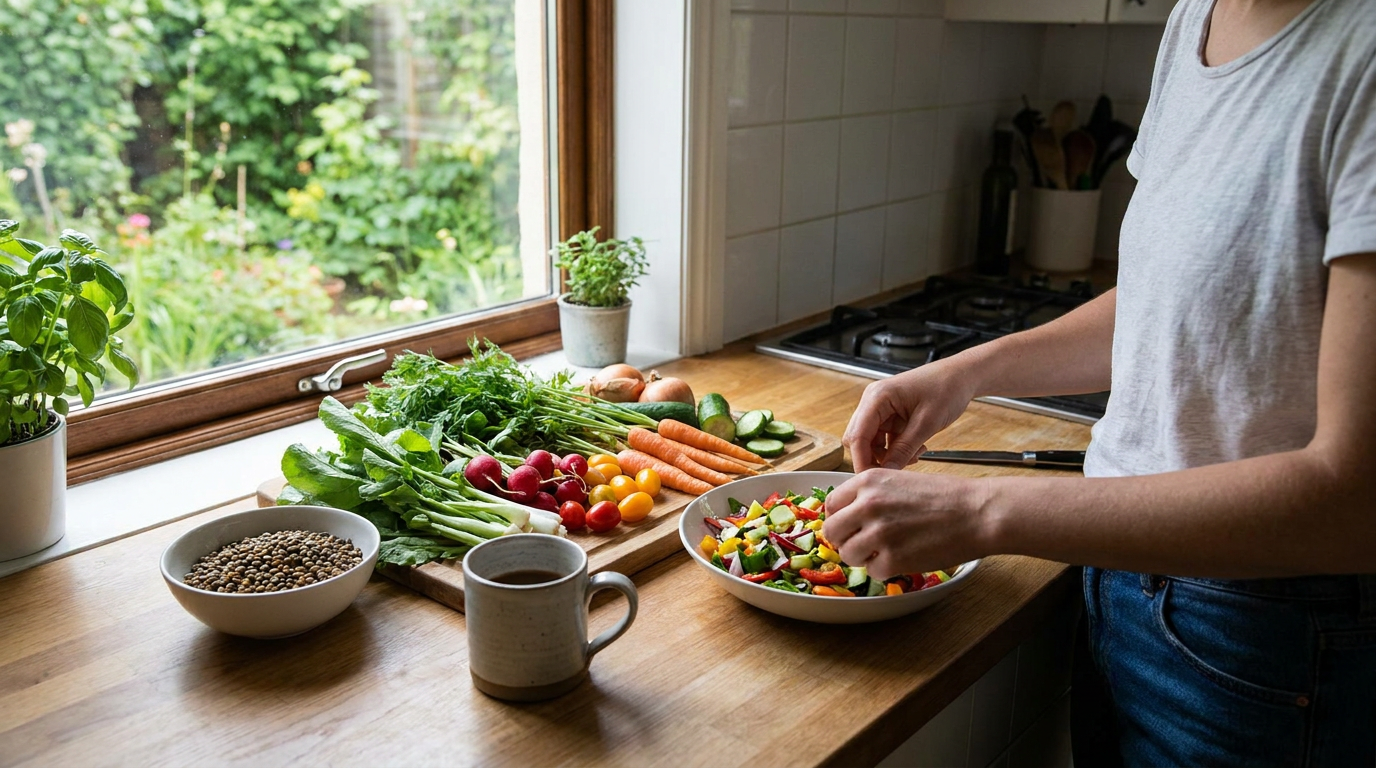
Bhakti Yoga offers a deeply sacred vision of food. Food is not simply fuel. Food carries consciousness. The mood in which food is grown, prepared, offered, and eaten affects us physically, mentally, and spiritually.
In Bhakti tradition, food becomes especially powerful when it is offered to God with love. This sanctified food is called prasadam.
What Is Prasadam?
Prasadam is a Sanskrit word that means mercy or grace. In Bhakti Yoga, prasadam refers to vegetarian food that has been lovingly offered to Krishna, a personal name of God meaning “the all-attractive one.”
The idea is simple and beautiful. We prepare food with devotion, place it before the Lord, offer a prayer, and then receive it back as grace. The food may look the same, but its spiritual quality has changed. It has become sacred.
This practice transforms eating from consumption into communion.
When we eat prasadam, we are reminded: “This is not mine. This is a gift. Let me receive it with gratitude and use this body in service.”
The Bhagavad-gita on Offering Food
In the Bhagavad-gita 9.26, Krishna says:
“If one offers Me with love and devotion a leaf, a flower, a fruit, or water, I will accept it.”
This verse is wonderfully inclusive. Krishna does not ask for something expensive or complicated. He asks for love. A leaf, a flower, a fruit, or water—simple offerings become sacred when given with devotion.
This is the heart of Bhakti vegetarian living. We do not need to be wealthy or highly trained. We can begin with a banana, a bowl of rice, a vegetable soup, or a cup of water. If offered with sincerity, it becomes part of our relationship with God.
Why Offer Vegetarian Food?
In Bhakti traditions, offerings to Krishna are made from foods in the mode of goodness—foods that support clarity, peace, health, and spiritual awareness. These include fruits, vegetables, grains, legumes, nuts, seeds, and milk products obtained with care.
Meat, fish, and eggs are not offered because they involve greater harm and tend to increase heaviness, restlessness, or violence in consciousness. The purpose is not to condemn anyone, but to choose foods that best support devotion, compassion, and inner purity.
When we cook for God, we naturally ask, “What would be pleasing? What would be pure? What would carry love?”
This question changes everything.
Sure, here is the sentence with the clickable link:
I love to visit The Bhakti House for spiritual inspiration.
The Benefits of Vegetarian Living

Vegetarian living offers many benefits for the body, mind, earth, and soul. While every person is different, many people find that a thoughtful vegetarian lifestyle brings more energy, peace, and purpose.
Physical Health Benefits
A balanced vegetarian diet can be rich in fiber, vitamins, minerals, antioxidants, and plant-based protein. Many whole vegetarian foods support heart health, digestion, healthy weight, and steady energy.
A nourishing vegetarian plate often includes:
Whole grains such as rice, oats, quinoa, or whole wheat
Legumes such as lentils, chickpeas, black beans, or mung beans
Vegetables in many colors
Fresh fruits
Nuts and seeds
Healthy fats such as avocado, olive oil, or ghee
Herbs and spices that support digestion and flavor
Of course, vegetarian does not automatically mean healthy. A diet of only fries, sweets, and processed foods is still not balanced. The key is to choose whole, fresh, nourishing foods as much as possible.
If you have medical conditions, are pregnant, nursing, elderly, or feeding children, it is wise to consult a qualified health professional or nutritionist. Spiritual life and practical care go together.
Mental and Emotional Benefits
Food affects consciousness. Many people notice that vegetarian meals feel lighter and more peaceful. When we eat with compassion, the heart often feels more aligned and less conflicted.
Cooking can also become a calming daily ritual. Washing vegetables, stirring a pot of soup, grinding spices, or baking bread can become a form of meditation when done with prayerful attention.
Instead of rushing through food, vegetarian living invites us to slow down and ask:
What am I taking into my body?
What mood am I cultivating?
How can this meal help me serve better?
This awareness can reduce anxiety and increase gratitude.
Environmental Benefits
Vegetarian living is also beneficial for the planet. Large-scale meat production often requires significant land, water, and feed, and it contributes to pollution and greenhouse gas emissions. Choosing plant-based vegetarian meals can reduce our ecological footprint.
From a devotional perspective, the earth is not merely a resource. She is sacred. In Vedic wisdom, the earth is honored as Mother Bhumi, Mother Earth. She nourishes us with grains, fruits, rivers, forests, and herbs.
When we eat more simply and compassionately, we honor the earth as a gift from God.
Spiritual Benefits
The greatest benefit of vegetarian living is that it supports spiritual growth. It helps purify the heart, refine the senses, and create a peaceful foundation for chanting, prayer, meditation, and service.
In Bhakti Yoga, the goal is love of God. Vegetarian living is not the final destination, but it is a powerful support. It helps us live in harmony with the values we are trying to cultivate: compassion, humility, gratitude, and devotion.
A simple meal offered with love can become a doorway to divine remembrance.
How to Start a Vegetarian Lifestyle
Beginning a vegetarian lifestyle does not need to be complicated. The best approach is practical, joyful, and sustainable. Rather than focusing on what you are giving up, focus on what you are discovering: new flavors, new recipes, new values, and a deeper connection with life.
Start With Familiar Foods
You may already eat many vegetarian meals without thinking about it. Oatmeal, vegetable soup, pasta with tomato sauce, bean burritos, rice and beans, lentil stew, grilled cheese, salads, smoothies, and vegetable curries can all be vegetarian.
Begin by identifying meals you already enjoy. Then slowly expand.
If your family loves tacos, try black bean or roasted vegetable tacos. If you love pasta, add sautéed vegetables and lentils. If you enjoy burgers, try a bean burger or veggie patty. If you like stir-fry, use tofu, paneer, or extra vegetables.
Small changes are powerful when they are consistent.
Create a Balanced Vegetarian Plate
A balanced vegetarian meal should be satisfying and nourishing. A simple formula is:
One part whole grains or starchy vegetables
One part protein-rich food
Two parts vegetables
A little healthy fat
Flavor from herbs, spices, sauces, or chutneys
Protein-rich vegetarian foods include lentils, beans, chickpeas, tofu, tempeh, paneer, yogurt, nuts, seeds, and peas. Whole grains and vegetables also contribute protein.
For example, a balanced meal might be rice, dal, roasted vegetables, cucumber salad, and a spoonful of ghee. Or it might be quinoa, chickpeas, steamed greens, tahini dressing, and avocado.
Learn Simple Vegetarian Cooking Skills
Cooking at home makes vegetarian living much easier. You do not need to become a gourmet chef. A few simple skills can carry you a long way.
Learn how to cook rice and lentils.
Learn how to roast vegetables.
Learn how to make a basic soup.
Learn how to season with spices.
Learn how to prepare one or two quick breakfasts.
Learn how to pack a simple lunch.
In Bhakti Yoga, cooking can be service. When we cook for ourselves, our family, guests, or God, we are practicing love in action.
Stock a Vegetarian Pantry
A good pantry makes healthy choices easier. Consider keeping these ingredients on hand:
Rice, oats, pasta, quinoa, or other grains
Lentils, chickpeas, black beans, kidney beans, and mung beans
Canned tomatoes and coconut milk
Olive oil or ghee
Nuts, seeds, and nut butters
Spices such as cumin, coriander, turmeric, ginger, black pepper, cinnamon, and cardamom
Herbs such as basil, oregano, cilantro, and parsley
Fresh onions, garlic, ginger, or, for those following stricter Bhakti offerings, hing instead of onion and garlic
Seasonal vegetables and fruits
Having simple ingredients available helps you avoid feeling stuck or tempted by convenience foods that do not support your goals.
Vegetarian Living and Bhakti Food Culture
Bhakti culture has a rich and joyful vegetarian food tradition. Around the world, temples and devotional communities serve beautiful vegetarian meals as an expression of love and hospitality.
Food is a bridge. It brings people together. It softens the heart. It allows spiritual philosophy to become tangible.
The Sacred Art of Cooking
In Bhakti Yoga, cooking is not merely a household task. It can be a sacred art. The cook tries to maintain a clean space, a peaceful mind, and a devotional intention.
Before cooking, you might pause and pray:
“Dear Lord, please help me prepare this food with love. May it nourish the body, calm the mind, and awaken devotion.”
This simple prayer changes the atmosphere. It reminds us that we are servants, not controllers. We are caretakers of what has been given.
Offering Food at Home
You can begin offering food at home in a very simple way.
Prepare a vegetarian meal.
Place a portion on a clean plate.
Set it before a picture or form of Krishna, God, or the Divine according to your faith.
Offer a sincere prayer.
Wait a few moments with gratitude.
Then receive the food as prasadam.
If you know traditional Bhakti prayers, you may recite them. If not, your own heartfelt words are enough to begin. The essence is love.
A simple prayer might be:
“My dear Lord, everything comes from You. Please accept this humble offering. May this food become blessed, and may my life be used in loving service.”
Sharing Prasadam With Others
Sharing sanctified vegetarian food is one of the sweetest forms of service. In Sanskrit, service is called seva. Seva means offering our time, energy, talents, and heart for the benefit of God and others.
When you share prasadam, you are not only feeding people. You are sharing mercy. You are offering comfort, friendship, and spiritual nourishment.
A pot of soup, a plate of cookies, a bowl of rice and dal, or a simple fruit offering can become a beautiful act of love.
Common Challenges and How to Overcome Them
Every sincere path has challenges. Vegetarian living is no different. But with patience, community, and practical planning, most challenges become manageable.
“I Don’t Know What to Eat”
This is one of the most common concerns. The solution is to build a small list of reliable meals.
Start with ten simple vegetarian meals you enjoy. Keep the list on your phone or refrigerator. When you feel uninspired, choose from the list.
Examples include:
Vegetable dal with rice
Chickpea curry
Bean and vegetable tacos
Pasta with marinara and roasted vegetables
Vegetable fried rice
Lentil soup
Baked potatoes with beans and salad
Paneer or tofu stir-fry
Oatmeal with fruit and nuts
Vegetarian chili
Once you have a foundation, you can experiment.
“My Family Is Not Vegetarian”
This can be sensitive. Try to lead with humility, not pressure. Cook delicious food. Share when invited. Explain your reasons gently. Avoid criticizing what others eat.
Bhakti Yoga teaches us to be compassionate, and that includes compassion toward family members who may not understand our choices.
You might say, “I’m trying to eat in a way that feels more peaceful and aligned with my spiritual values. I don’t expect everyone to do the same, but I’d love to share some meals with you.”
Love is more persuasive than argument.
“I’m Worried About Protein”
Protein is important, and vegetarian diets can provide plenty when planned well. Beans, lentils, chickpeas, tofu, tempeh, paneer, yogurt, milk, nuts, seeds, peas, and whole grains all contribute protein.
Try including a protein-rich food at each meal. For example:
Breakfast: Greek yogurt with fruit, or oatmeal with nuts and seeds
Lunch: Lentil soup, chickpea salad, or tofu bowl
Dinner: Dal and rice, bean chili, paneer curry, or tempeh stir-fry
If you are an athlete or have specific health needs, consider guidance from a qualified nutrition professional.
“I Miss Certain Foods”
Cravings can happen. Be patient. Often what we miss is not only the food itself, but the flavor, texture, habit, or memory connected with it.
Explore vegetarian alternatives that satisfy similar needs. If you miss smoky flavors, try smoked paprika. If you miss hearty textures, try mushrooms, lentils, beans, or tempeh. If you miss comfort food, make vegetarian versions of your favorite dishes.
Over time, taste changes. The heart changes too.
Important Nutrients for Vegetarians
A thoughtful vegetarian lifestyle should nourish the whole person. It is wise to pay attention to key nutrients so your body remains strong and steady for spiritual practice and daily service.
Protein
As mentioned, protein can come from legumes, dairy, soy foods, nuts, seeds, and whole grains. Combining foods throughout the day—such as rice and beans or dal and chapati—helps provide a full range of amino acids.
Iron
Vegetarian sources of iron include lentils, beans, spinach, pumpkin seeds, tofu, quinoa, and fortified foods. Eating vitamin C-rich foods, such as citrus, tomatoes, bell peppers, or strawberries, can help the body absorb plant-based iron.
Vitamin B12
Vitamin B12 is essential for nerve function and blood health. It is found naturally in animal-derived foods and is often low in fully plant-based diets. Vegetarians who eat dairy may get some B12, but many people still benefit from fortified foods or supplements. Speak with a health professional if you are unsure.
Omega-3 Fatty Acids
Omega-3 fats support brain and heart health. Vegetarian sources include flaxseeds, chia seeds, walnuts, hemp seeds, and algae-based supplements.
Calcium and Vitamin D
Calcium supports bones and teeth. Sources include dairy products, fortified plant milks, tofu set with calcium, sesame seeds, leafy greens, and almonds. Vitamin D may come from sunlight, fortified foods, or supplements when needed.
Caring for the body is not separate from spiritual life. The body is a sacred vehicle for service.
Vegetarian Meal Ideas for Daily Life
Vegetarian living becomes easier when meals are simple, satisfying, and repeatable. Here are some practical ideas for every part of the day.
Breakfast Ideas
A nourishing breakfast helps begin the day with steadiness. Try:
Oatmeal with bananas, dates, cinnamon, and walnuts
Yogurt with fruit, granola, and honey
Whole grain toast with avocado and tomato
Smoothie with berries, spinach, nut butter, and milk or plant milk
Upma, a savory Indian breakfast made from semolina and vegetables
Kitchari, a gentle dish of rice and mung dal, especially good for digestion
Before eating, pause for a moment. Offer gratitude. Even breakfast can become a sacred beginning.
Lunch Ideas
Lunch can be practical and portable:
Rice and dal with vegetables
Chickpea salad wrap
Quinoa bowl with roasted vegetables and tahini sauce
Vegetarian chili with cornbread
Lentil soup and whole grain bread
Paneer or tofu with rice and greens
If you work or study outside the home, packing lunch can help you stay committed and avoid stressful food decisions.
Dinner Ideas
Dinner is a beautiful time to gather and slow down:
Vegetable curry with rice
Pasta with tomato sauce, vegetables, and fresh basil
Black bean tacos with salsa and guacamole
Stuffed bell peppers with rice and beans
Mushroom and lentil shepherd’s pie
Homemade pizza with vegetables
Dal, chapati, sabji, and salad
In Bhakti homes, dinner can become a time for connection. You might play soft kirtan, which is devotional chanting, while cooking. You might invite family members to help chop vegetables or set the table. You might share one thing you are grateful for before eating.
Snacks and Sweets
Healthy snacks can keep energy balanced:
Fruit
Nuts and seeds
Hummus with vegetables
Roasted chickpeas
Yogurt
Trail mix
Dates with nut butter
Homemade energy balls
Bhakti culture also includes wonderful sweets, often made for festivals and offerings. Moderation is helpful, but sweetness also has its place. When offered with love, even a small sweet can remind us of divine kindness.
The Role of Chanting, Prayer, and Service
Vegetarian living becomes especially meaningful when connected to spiritual practice. Without inner nourishment, any lifestyle can become dry or prideful. Bhakti Yoga keeps the heart soft.
Chanting the Holy Names
Chanting is central to Bhakti Yoga. The Sanskrit word mantra means a sacred sound that helps free the mind. One beloved mantra in the Bhakti tradition is the Hare Krishna maha-mantra:
Hare Krishna Hare Krishna
Krishna Krishna Hare Hare
Hare Rama Hare Rama
Rama Rama Hare Hare
Maha-mantra means “great mantra.” This chant is a prayer to be engaged in divine love and service. You do not need to understand everything intellectually to begin. You can chant softly, sing with others, or simply listen.
Chanting helps cleanse the heart. It gives strength to live with compassion and steadiness.
Prayer Before Meals
Prayer before meals is a simple spiritual practice for everyone. It brings humility and gratitude. It reminds us that food does not appear by our own power alone. Sun, rain, soil, farmers, cooks, and divine grace all come together to nourish us.
A simple prayer can be:
“Thank You, Lord, for this food. Please bless it and bless all beings. May I use this energy in loving service.”
This prayerful mood turns eating into devotion.
Service Makes the Lifestyle Complete
Vegetarian living is not meant to make us feel superior. It is meant to help us serve. The more purified and nourished we become, the more we can give.
Service may look like cooking for others, volunteering at a temple or community kitchen, helping a neighbor, feeding guests, supporting animal welfare, caring for the environment, or simply speaking kindly.
In Bhakti, love becomes practical.
Vegetarian Living in Community
Spiritual life grows beautifully in community. We all need encouragement. We all need reminders. We all need people who understand the journey.
Finding Support
Look for vegetarian cooking classes, Bhakti gatherings, kirtan nights, temple feasts, online groups, or local community events. Being around others who value compassionate living can strengthen your inspiration.
If you are new, do not be shy. Everyone starts somewhere. A welcoming spiritual community should help you feel encouraged, not judged.
Learning Through Festivals
Bhakti festivals often include chanting, dancing, storytelling, worship, and abundant vegetarian prasadam. These gatherings show that vegetarian living is not dull or deprived. It is colorful, joyful, and full of flavor.
Festivals help us experience spiritual culture with the whole body and heart. We hear wisdom, chant sacred names, honor prasadam, and meet others walking the path.
Sharing Without Preaching
One of the best ways to inspire others is to live joyfully. When people see that vegetarian living makes you kinder, healthier, and more peaceful, they naturally become curious.
You do not need to force your beliefs. Share food. Share your story. Share resources when asked. Let your life become a gentle invitation.
A Gentle 7-Day Vegetarian Living Plan
If you are ready to begin, here is a simple 7-day approach. Adjust it according to your needs, culture, and schedule.
Day 1: Begin With One Prayerful Meal
Choose one vegetarian meal and eat it slowly. Offer gratitude before you begin. Notice how it feels to eat with awareness.
Day 2: Stock Your Kitchen
Buy a few basics: rice, lentils, beans, vegetables, fruit, spices, and nuts. Make it easy to choose vegetarian food.
Day 3: Cook One Simple Recipe
Try dal, soup, pasta, tacos, or stir-fry. Keep it simple. Do not worry about perfection.
Day 4: Learn About Prasadam
Offer your meal to God with a sincere prayer. Receive it as grace. Reflect on how this changes your relationship with food.
Day 5: Try Chanting
Chant or listen to the Hare Krishna mantra for five minutes. Let the sound nourish your heart.
Day 6: Share Food
Offer a vegetarian snack, meal, or sweet to someone else. Let food become service.
Day 7: Reflect and Continue
Ask yourself: What felt good? What was challenging? What is one step I can continue next week?
Small sincere steps become a path.
Living With Humility and Love
Vegetarian living is beautiful, but it is not meant to become a source of pride. In Bhakti Yoga, humility is essential. We may choose a compassionate diet, but we are all still learning how to love fully.
The real question is not only, “What is on my plate?” but also:
Is my heart becoming softer?
Am I more patient?
Am I more grateful?
Am I less judgmental?
Am I remembering God more often?
If vegetarian living helps us become more loving, then it is doing its sacred work.
The Srimad-Bhagavatam, another treasured Bhakti scripture, teaches that true spiritual practice awakens devotion to God and compassion for all beings. If our practices increase kindness, they are bearing fruit.
Let your vegetarian journey be rooted in love. Let it be nourished by chanting. Let it be protected by prayer. Let it be expressed through service. Let it grow naturally, one meal and one sincere choice at a time.
Everyone Is Welcome to Begin
Wherever you are on your journey, you are welcome. Whether you are fully vegetarian, curious, struggling, returning after many years, or simply exploring, there is a place for you.
God is not looking for perfection. God is looking for sincerity.
You can begin today with one compassionate meal, one whispered prayer, one moment of gratitude, one offering, one chant, or one act of service. These small steps are not small in the eyes of the Divine.
May your vegetarian living become a path of nourishment, kindness, and awakening love. May your kitchen become a sacred space. May your meals become offerings. May your heart become peaceful and joyful in service.
Everyone is welcome to take one sincere step toward God.
FAQs
What is a vegetarian diet?
A vegetarian diet is a diet that excludes the consumption of meat, poultry, and seafood. It primarily consists of plant-based foods such as fruits, vegetables, grains, legumes, nuts, and seeds.
What are the different types of vegetarian diets?
There are several types of vegetarian diets, including lacto-ovo vegetarian (excludes meat, poultry, and seafood but includes dairy and eggs), lacto-vegetarian (excludes meat, poultry, seafood, and eggs but includes dairy), ovo-vegetarian (excludes meat, poultry, seafood, and dairy but includes eggs), and vegan (excludes all animal products).
What are the health benefits of a vegetarian diet?
A vegetarian diet has been associated with numerous health benefits, including lower risk of heart disease, high blood pressure, type 2 diabetes, certain cancers, and obesity. It can also contribute to better weight management and improved digestion.
How can someone transition to a vegetarian diet?
Transitioning to a vegetarian diet can be done gradually by gradually reducing meat consumption and incorporating more plant-based foods into meals. It’s important to ensure adequate intake of protein, iron, calcium, vitamin B12, and other essential nutrients through a well-planned vegetarian diet.
What are some common misconceptions about vegetarian living?
Some common misconceptions about vegetarian living include the belief that vegetarians cannot get enough protein, that vegetarian diets are boring and lacking in flavor, and that vegetarian diets are not suitable for athletes or individuals with high energy needs. However, with proper planning and knowledge, these misconceptions can be debunked.

