
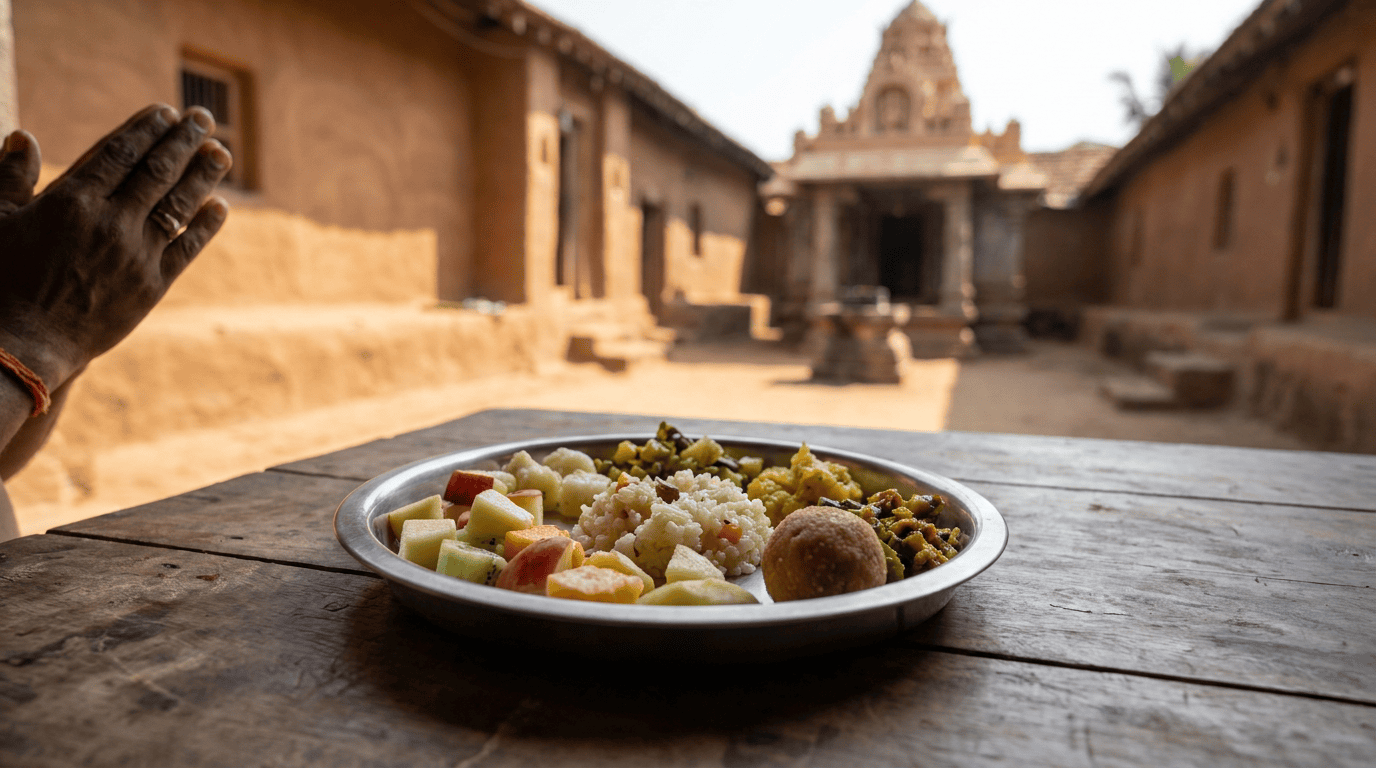
If you have ever received a simple plate of food and felt cared for, you already understand something about prasadam.
In Bhakti Yoga, food can become more than nourishment for the body. It can become a sacred exchange of love. When we prepare food with devotion, offer it to God, and receive it with gratitude, that food is called prasadam.
Prasadam is a Sanskrit word that means “mercy” or “grace.” It refers to food that has been lovingly offered to Krishna, a name of God meaning “the all-attractive one.” In the Bhakti tradition, prasadam is not just a ritual. It is a daily practice of remembering God, softening the heart, and learning to live with gratitude.
Whether you are new to Bhakti Yoga, returning after some time, or simply curious about spiritual food, you are warmly welcome here. This guide will walk you through what prasadam is, why it matters, how to prepare and offer it, and how this sacred practice can bring peace, devotion, and spiritual growth into everyday life.
Prasadam is food that has been prepared and offered to God with love and devotion. After the offering, it is honored and shared as God’s grace.
In Bhakti Yoga, we do not see food as separate from spiritual life. Eating is something we do every day, so the practice of prasadam helps bring spirituality into the heart of daily living.
The Meaning of the Word “Prasadam”
The Sanskrit word prasadam comes from a root that suggests kindness, mercy, and favor. In simple terms, prasadam means “God’s mercy.”
This is a beautiful idea. We may cook the food, arrange the plate, and speak the prayer, but the real gift is that God accepts our small offering and gives it back transformed by grace.
A banana, a bowl of rice, a fresh salad, or a warm vegetable preparation may look the same after being offered. But in the Bhakti understanding, it has become spiritually powerful because it has been touched by divine love.
Prasadam Is an Exchange of Love
In the Bhagavad-gita, Krishna says:
“If one offers Me with love and devotion a leaf, a flower, a fruit, or water, I will accept it.”
Bhagavad-gita 9.26
This verse is at the heart of prasadam. Krishna does not ask for something complicated or expensive. He asks for love.
A leaf, a flower, a fruit, or water—these are simple things. The offering is not about wealth, status, or perfection. It is about the heart.
When we prepare food with the intention, “Dear Lord, please accept this,” our kitchen becomes a sacred space. Our hands become instruments of service. Our meal becomes a prayer.
Prasadam Is for Everyone
You do not have to be born into a particular culture to receive prasadam. You do not have to know Sanskrit, understand philosophy, or have everything figured out.
Prasadam is one of the most welcoming practices in Bhakti Yoga. It invites everyone—children, elders, seekers, skeptics, families, students, and friends—to experience spiritual life through something universal: food shared with love.
At The Bhakti House, prasadam is often where many people first feel the warmth of Bhakti. Before someone understands the teachings deeply, they may feel, “I am cared for here. I am welcome here. This food has love in it.”
That feeling is also spiritual.
Why Prasadam Matters in Bhakti Yoga
Bhakti Yoga is the path of loving devotion to God. It includes chanting sacred names, prayer, hearing wisdom, serving others, and offering our lives in love.
Prasadam is one of the most practical and powerful ways to live Bhakti Yoga every day.
Food Shapes Consciousness
The Bhakti scriptures teach that what we eat affects not only the body, but also the mind and heart.
We have all experienced this in some way. Some food makes us feel heavy, restless, or dull. Other food makes us feel clear, peaceful, and grateful.
When food is prepared with anger, greed, or carelessness, it can carry that mood. When food is prepared with prayer, cleanliness, compassion, and love, it nourishes more deeply.
Prasadam carries devotion.
It reminds us that we are not independent enjoyers of the world. We are receivers of divine gifts. Every grain, fruit, vegetable, spice, and drop of water comes from God’s creation. Offering food before eating helps us remember the source of everything.
Eating Becomes a Spiritual Practice
Many people think spiritual life means going away from the world. Bhakti Yoga teaches that we can spiritualize ordinary life by connecting it to God.
Cooking, eating, cleaning, serving guests, packing lunch, feeding children—these can all become devotional acts.
When we honor prasadam, eating is no longer just consumption. It becomes gratitude.
Instead of thinking, “This is mine,” we begin to feel, “This is God’s gift.”
Instead of rushing through a meal, we pause.
Instead of eating only for pleasure, we receive nourishment for service.
This small shift can transform daily life.
Prasadam Purifies the Heart
In Bhagavad-gita 3.13, Krishna explains that those who eat food offered in sacrifice are freed from sin, while those who cook only for themselves eat only difficulty.
This may sound strong at first, but the practical meaning is gentle and profound. When we live only for ourselves, the heart becomes tight. We become caught in taking, consuming, and controlling.
But when we offer first, we loosen the grip of selfishness.
Prasadam helps purify the heart because it teaches us to receive rather than possess. It brings humility into the simple act of eating.
Over time, this practice can awaken devotion, gratitude, compassion, and inner peace.
How to Prepare Food for Offering
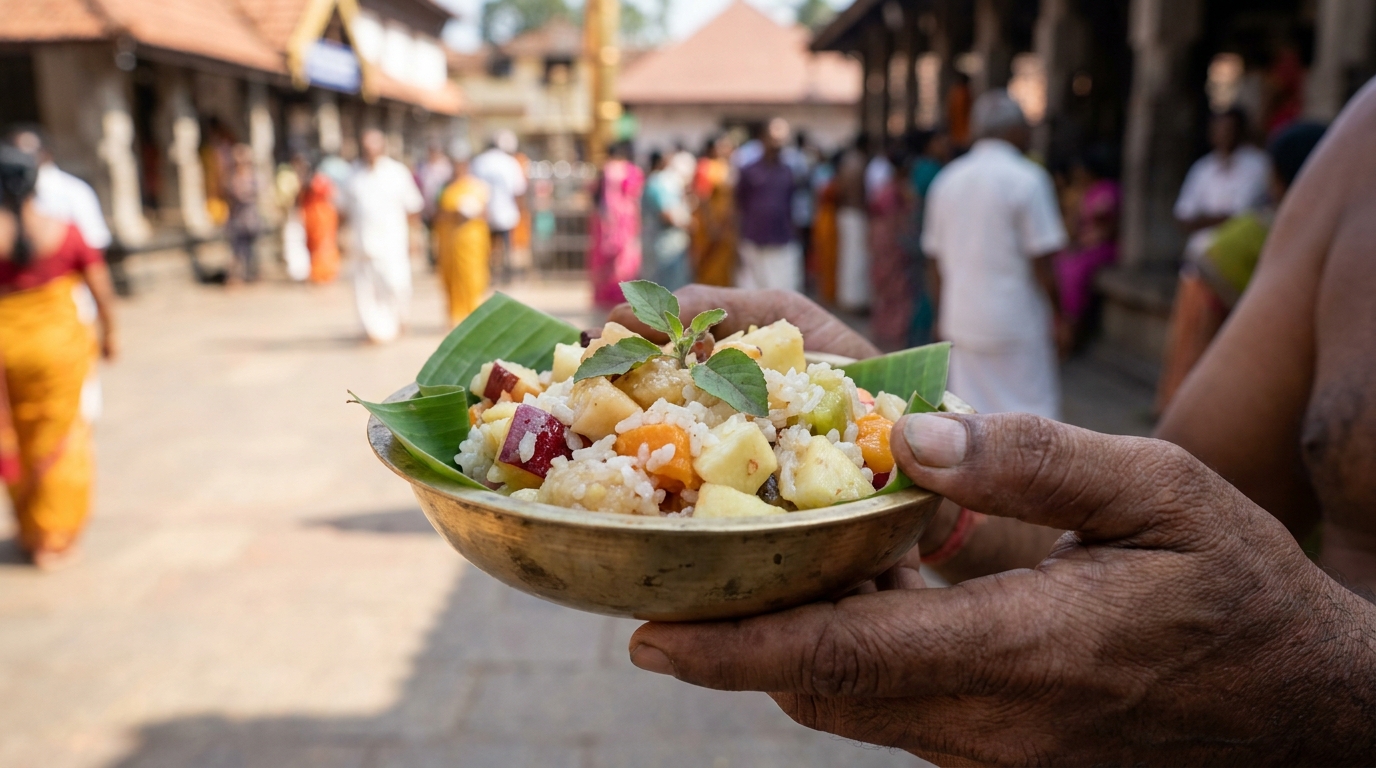
Preparing prasadam begins before the offering itself. The consciousness we bring into the kitchen matters.
The goal is not to become anxious or overly strict. The goal is to cook with love, cleanliness, and remembrance.
Begin with a Prayerful Mood
Before cooking, you can pause for a moment and offer a simple prayer:
“Dear Krishna, dear Lord, please let this cooking be an offering of love. Please guide my mind and hands.”
This small prayer changes the atmosphere. It reminds us that we are not cooking only for ourselves. We are cooking for God.
You may also chant the Hare Krishna maha-mantra:
Hare Krishna Hare Krishna
Krishna Krishna Hare Hare
Hare Rama Hare Rama
Rama Rama Hare Hare
“Maha-mantra” means “great mantra.” A mantra is a sacred sound that helps focus and purify the mind. The Hare Krishna mantra is a prayer asking to be engaged in loving service to God.
Chanting while cooking can make the kitchen peaceful and joyful.
Cook with Cleanliness and Care
Cleanliness is an important part of devotional cooking.
This includes washing hands, using clean utensils, keeping the cooking space tidy, and treating ingredients respectfully. Cleanliness is not only external. It also means trying to keep a peaceful and sincere mood.
Of course, we are all human. Sometimes the kitchen is busy. Sometimes children are running around. Sometimes we are tired. Bhakti is not about pretending. It is about sincerely offering what we can.
Even in a simple home kitchen, we can cook with care.
Use Ingredients Suitable for Offering
In the Bhakti tradition, Krishna is offered vegetarian foods prepared with devotion. Common offerings include grains, fruits, vegetables, milk products, nuts, seeds, legumes, herbs, spices, and sweets.
Traditionally, devotees do not offer meat, fish, eggs, onions, garlic, alcohol, or intoxicants. This is because Bhakti cooking is based on compassion, purity, and foods considered favorable for a peaceful consciousness.
If this is new to you, please do not feel discouraged. You can begin with something very simple. Offer a piece of fruit, a cup of water, or a small vegetarian meal.
Krishna says He accepts a leaf, flower, fruit, or water when offered with love. The heart is most important.
Avoid Tasting While Cooking
In devotional cooking, we try not to taste the food before it is offered. This is because the meal is first prepared for Krishna’s pleasure, not our own.
After the food is offered and becomes prasadam, then we honor it.
If you are learning to cook this way, it may take practice. You can use recipes, smell carefully, and learn through experience. The principle is simple: God is the first enjoyer.
This small discipline trains the heart in devotion.
Sure, here is the sentence with the clickable link:
I love to visit The Bhakti House for spiritual inspiration and community.
How to Offer Food to Krishna
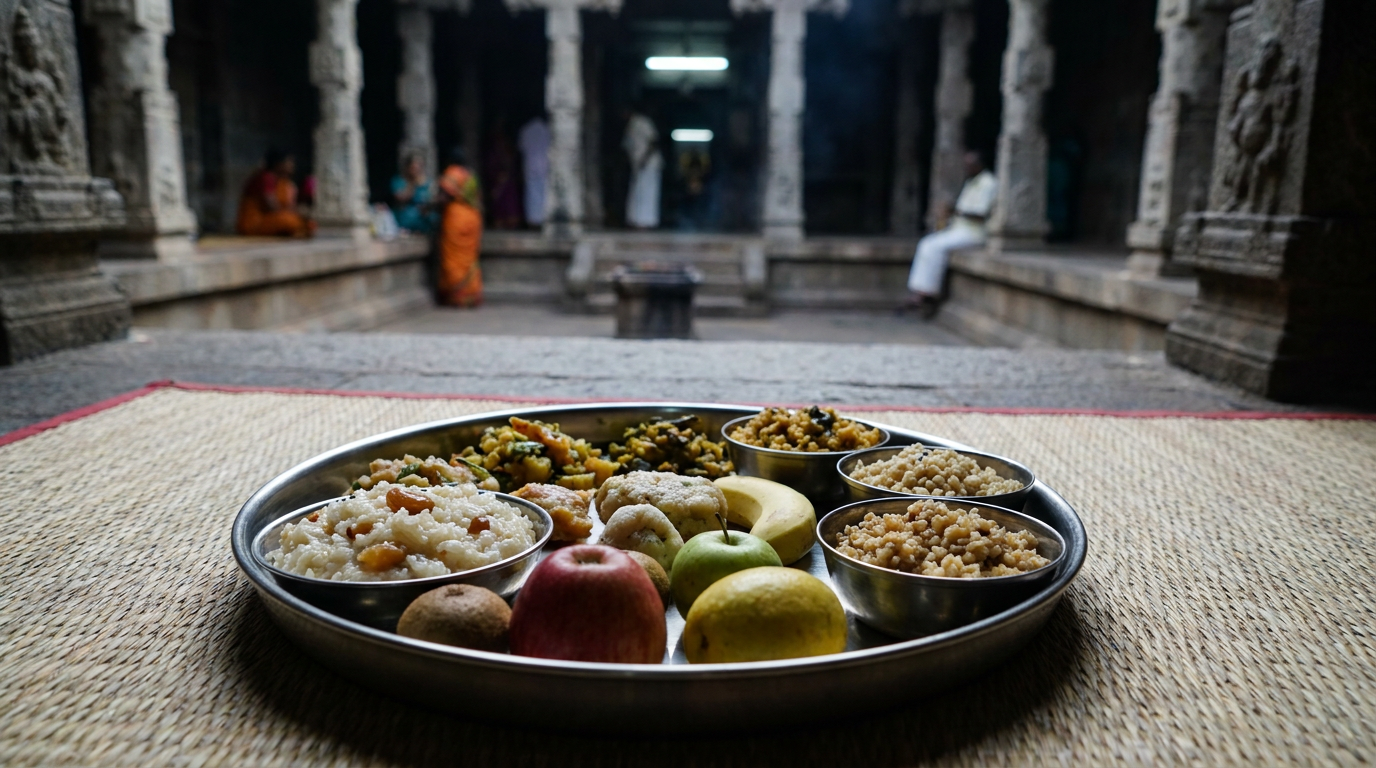
Offering food can be simple and heartfelt. You do not need a temple, elaborate altar, or perfect Sanskrit pronunciation to begin.
God sees the sincerity of the heart.
Set Aside a Plate for the Lord
After cooking, place a portion of the food on a clean plate or bowl for Krishna. If you have a home altar with a picture or deity form of Krishna, you can place the plate there.
If you do not have an altar, you can still make an offering. Place the plate in a clean space and prayerfully remember God.
The essential mood is: “This is for You.”
You can also offer water in a small cup.
Say a Simple Offering Prayer
A simple prayer is enough:
“Dear Krishna, dear Lord, please accept this food prepared with love. Thank You for providing everything. May this offering help me remember You and serve others.”
You may also chant the Hare Krishna mantra three times or more.
Some devotees learn traditional Sanskrit prayers from the disciplic line of Bhakti Yoga. These prayers honor the spiritual teachers who guide us in offering to Krishna. If you are connected to a Bhakti community, you can learn these prayers gradually.
But if you are just beginning, start simply. Offer with sincerity.
Wait and Receive
After offering the food, you can wait a few minutes. During this time, you might chant, pray, or sit quietly.
Then remove the plate. The offered food is now prasadam.
Many families mix the offered portion back into the main preparation, so everyone receives prasadam. Others serve from the offered plate respectfully. Customs may vary, but the heart is the same: we receive what God has kindly given back.
Honor, Don’t Just Eat
In Bhakti, we often say “honor prasadam” rather than simply “eat prasadam.”
Why?
Because prasadam is sacred. We receive it with gratitude, not carelessness.
Honoring prasadam can mean pausing before eating, avoiding waste, serving others first when possible, and remembering that this food is grace.
Even if the meal is simple, we can receive it with a grateful heart.
The Spiritual Benefits of Prasadam
Prasadam nourishes body, mind, and soul. It supports a life of devotion in very practical ways.
Prasadam Awakens Gratitude
Gratitude is one of the foundations of spiritual life.
When we offer food, we remember how dependent we are. We depend on sunlight, rain, earth, farmers, cooks, family, community, and ultimately God.
A simple plate of prasadam teaches us humility:
“I did not create this world. I am being cared for.”
This gratitude softens the heart. It helps us complain less and appreciate more.
Prasadam Builds Community
Many people first encounter Bhakti Yoga through a shared meal.
At temples, home programs, kirtans, retreats, and gatherings, prasadam brings people together. Someone may arrive feeling shy or uncertain, but after chanting and sharing prasadam, they often feel part of a family.
Food served with devotion crosses many boundaries. It speaks beyond language, age, nationality, and background.
In the Srimad Bhagavatam, we repeatedly see the importance of honoring saintly guests, sharing sacred food, and serving others with devotion. Hospitality is not separate from spirituality. It is an expression of love.
When prasadam is shared, hearts open.
Prasadam Supports Compassionate Living
Because prasadam is vegetarian and offered with devotion, it naturally supports a more compassionate way of life.
Bhakti Yoga teaches that all living beings are souls, beloved parts of God. This vision encourages kindness toward animals, people, and the earth.
Choosing food that can be lovingly offered helps us live more gently. It reminds us that our choices matter.
Compassion begins in the heart, but it also appears on the plate.
Prasadam Helps Us Remember God
The mind is often restless. It runs toward worries, desires, plans, and distractions.
Prasadam brings remembrance into a daily routine. Every meal becomes a spiritual reminder:
“God is the source.”
“I am loved.”
“I can offer my life.”
“Let me use this energy in service.”
This is the beauty of Bhakti Yoga. We do not have to wait for a perfect moment to connect with God. We can begin at breakfast, lunch, or dinner.
Prasadam in Daily Life
You may wonder how to practice prasadam in a modern, busy life. The good news is that Bhakti Yoga is deeply practical.
You can begin where you are.
Offering Breakfast
Breakfast can be very simple. You might offer fruit, oatmeal, toast, yogurt, nuts, or herbal tea.
Before eating, place a small portion before Krishna and say a prayer. Even a busy morning can include a moment of devotion.
If you are rushing, offer mentally with sincerity. Over time, try to create a small rhythm that supports remembrance.
Packing Lunch as Prasadam
If you prepare lunch for work, school, or travel, you can offer it before leaving home.
This transforms your day. When you open your lunch later, you are not just eating leftovers. You are receiving grace in the middle of your responsibilities.
Parents can also introduce children to prasadam gently:
“We made this for Krishna, and now Krishna is sharing it with us.”
Children often understand devotion naturally when it is presented with warmth.
Cooking for Family and Friends
Cooking for others is a beautiful service.
When you prepare prasadam for family or guests, you are not only feeding them. You are sharing spiritual nourishment.
You do not need to preach or pressure anyone. Simply serve with love.
Sometimes the most powerful spiritual teaching is a warm plate, a kind smile, and a peaceful home.
Eating Outside the Home
What about restaurants, travel, or situations where food cannot be formally offered?
Different practitioners handle this according to their level of practice and circumstances. If possible, choose vegetarian foods suitable for offering and offer a sincere prayer before eating.
You can pray:
“Dear Lord, please accept this in whatever way You kindly can. Please purify my heart and help me remember You.”
Bhakti is a path of sincerity. We do our best, and we keep growing.
Common Questions About Prasadam
Many sincere seekers have practical questions about prasadam. Here are a few gentle answers.
Do I Have to Be Hindu to Offer Prasadam?
No.
Bhakti Yoga is a spiritual path of love for God. While it comes through the Vedic tradition of India, its essence is universal.
Anyone can offer food with devotion. Anyone can chant God’s names. Anyone can pray. Anyone can serve.
Krishna is not limited by nationality, language, or background. He accepts love.
What If I Don’t Have an Altar?
You can still offer food.
A home altar is helpful because it creates a sacred focus, but it is not required to begin. You can place a picture of Krishna, Lord Chaitanya, or another form of God you are devoted to in a clean place.
If you do not have a picture, simply close your eyes and offer from the heart.
God is present everywhere.
What If My Offering Is Very Simple?
Simple offerings are beautiful.
Krishna specifically mentions a leaf, flower, fruit, or water. This means no one is excluded. A person in a palace and a person in a small apartment can both offer devotion.
A sincere apple may be more pleasing to God than a feast offered with pride.
The heart is the real ingredient.
Can I Offer Store-Bought Food?
In general, the Bhakti tradition emphasizes offering food we prepare ourselves, because cooking is part of the loving service.
However, if you are beginning, traveling, or in a limited situation, you can offer suitable vegetarian food with sincerity. As your practice grows, you may feel inspired to cook more from scratch.
The path of Bhakti is gradual and encouraging.
What Should I Do with Leftover Prasadam?
Prasadam should be treated respectfully.
Try not to waste it. Store leftovers properly and honor them later. If there is extra, share with others when appropriate.
Even crumbs of prasadam are considered sacred in the Bhakti tradition. This teaches us reverence and gratitude.
Prasadam and the Heart of Bhakti
Prasadam is not only about food. It is about relationship.
In Bhakti Yoga, we are learning to revive our eternal relationship with God. Every practice—chanting, prayer, scripture, service, and prasadam—helps awaken that love.
Offering Food Is Offering the Self
When we place food before Krishna, we are also practicing a deeper prayer:
“May my life be offered to You.”
The plate becomes a symbol of the heart. Just as we offer rice, vegetables, fruit, or water, we can offer our work, family, talents, struggles, and hopes.
Bhakti does not ask us to become someone else. It invites us to offer who we are.
Receiving Prasadam Is Receiving Grace
After the offering, we receive.
This is also a spiritual lesson. Many of us are used to striving, achieving, and controlling. Prasadam teaches us to receive mercy.
We sit before a plate and remember: God is kind. Life is a gift. I am being nourished in ways I may not fully understand.
This mood can bring healing to the heart.
Sharing Prasadam Is Sharing Love
One of the greatest joys in Bhakti is sharing prasadam.
When we give prasadam, we are not merely distributing food. We are sharing God’s mercy.
Srila Prabhupada, the founder-acharya of the International Society for Krishna Consciousness, placed great emphasis on prasadam distribution. He wanted people everywhere to receive spiritual nourishment through chanting, wisdom, and sacred food.
A simple prasadam meal can plant a seed of devotion in someone’s heart.
We may not see the full result, but no act of sincere service is lost.
Simple Ways to Begin Today
If this practice feels new, please begin gently. Bhakti grows through steady, sincere steps.
Offer One Piece of Fruit
Choose a fruit, wash it, place it on a clean plate, and pray:
“Dear Krishna, please accept this offering.”
Chant the Hare Krishna mantra, wait a few moments, and then honor the fruit as prasadam.
This is a complete beginning.
Cook One Prasadam Meal Each Week
Choose one day a week to cook a vegetarian meal for Krishna.
Keep it simple. Rice, dal, vegetables, salad, fruit, or a small sweet can be wonderful. Offer it with love, then share it with family or friends.
Consistency is more important than complexity.
Create a Small Sacred Space
If you feel inspired, create a small place in your home for prayer and offering. It may include a picture of Krishna, Lord Chaitanya, Srila Prabhupada, or saints who inspire your devotion.
Keep it clean and peaceful.
This sacred space can become the heart of your home.
Chant While Cooking
Try softly chanting the Hare Krishna mantra while preparing food.
You may notice the atmosphere change. The mind becomes calmer. The heart becomes lighter. Cooking becomes less of a chore and more of an offering.
Share Prasadam with Someone
Offer a friend a cookie, a meal, or a piece of fruit that has been offered to Krishna.
You do not need to make it complicated. You can simply say, “This is prasadam—food offered with love.”
Let the mercy do its quiet work.
A Gentle Prasadam Meditation
Before honoring prasadam, you may like to pause and reflect:
“This food is a gift from God.
May I receive it with gratitude.
May it nourish my body, calm my mind, and awaken love in my heart.
May the energy I receive be used in service.
May all beings be blessed.”
This simple meditation helps us eat with awareness.
Even if the world around us feels rushed, prasadam invites us to slow down and remember what is sacred.
The Complete Gift of Prasadam
Prasadam is one of the most beautiful gifts of Bhakti Yoga because it is both simple and profound.
It begins with ordinary ingredients, but through devotion, it becomes grace.
It begins in the kitchen, but it reaches the heart.
It begins with one offering, but it can grow into a life of gratitude, compassion, chanting, prayer, service, and love for God.
You are welcome to begin wherever you are. Offer a fruit. Say a prayer. Chant one mantra. Cook one meal. Share one plate. Take one sincere step.
Krishna lovingly accepts even the smallest offering made with devotion, and everyone is welcome to receive His mercy.
FAQs
What is Prasadam?
Prasadam is a Sanskrit word that refers to food that is first offered to a deity or spiritual figure and then distributed to devotees as a blessing.
What is the significance of Prasadam in Hinduism?
In Hinduism, Prasadam is considered to be spiritually and physically nourishing. It is believed that consuming Prasadam brings blessings and purifies the mind and body.
How is Prasadam prepared?
Prasadam is prepared with great care and devotion. It is usually vegetarian and made with fresh ingredients. The food is cooked in a clean and sanctified environment, and the preparation process involves chanting of mantras and prayers.
Can anyone partake in Prasadam?
Yes, Prasadam is meant to be shared with everyone, regardless of their background or beliefs. It is considered to be a universal blessing and is often distributed freely in temples and during religious ceremonies.
What are the common types of Prasadam?
Common types of Prasadam include sweets like laddu, halwa, and kheer, as well as savory dishes like rice, dal, and vegetables. The specific types of Prasadam offered can vary based on the deity being worshipped and the cultural traditions of the region.

