
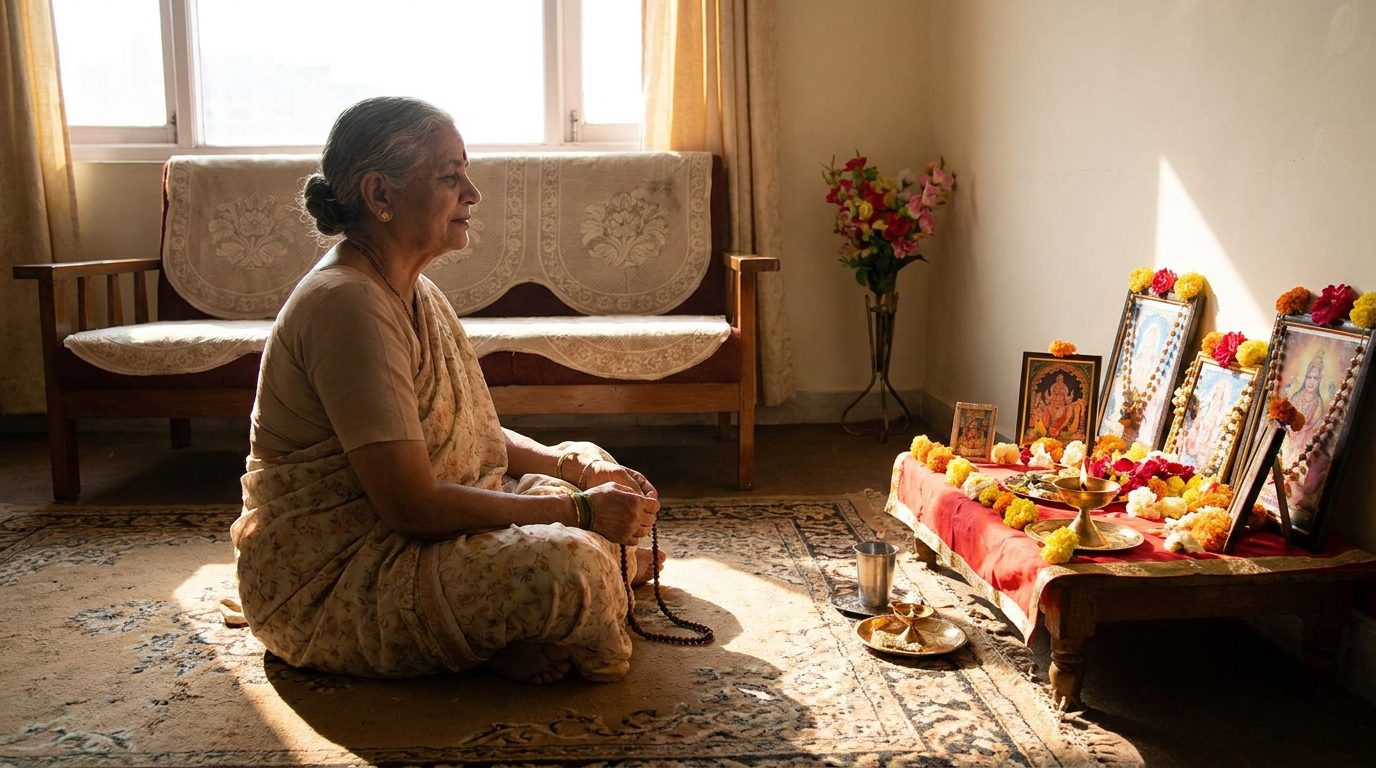
Bhakti begins with a simple truth: you do not need to leave your life to begin a life with God.
You can practice Bhakti at home—in your kitchen, bedroom, living room, garden, apartment, or shared family space. You can begin with five minutes. You can begin with a single prayer. You can begin with a small offering of gratitude before a meal.
Bhakti Yoga is the path of loving devotion. The Sanskrit word bhakti means devotion, loving service, or heartfelt connection with the Divine. Yoga means union or connection. So Bhakti Yoga is the practice of reconnecting the heart with God through love.
In the Bhakti tradition, God is understood as personal, loving, and present. Many practitioners call God by names such as Krishna, Rama, Govinda, Narayana, or Radha-Krishna. Others may simply say “the Divine,” “the Lord,” “Beloved,” or “God.” At The Bhakti House, all sincere seekers are welcome. You do not need to be from any particular culture, background, religion, or level of experience to begin.
This guide will help you build a practical home practice rooted in chanting, prayer, service, sacred study, and spiritual growth.
Bhakti at home means creating a daily rhythm of devotion within ordinary life. It is not about perfection. It is about remembrance.
The Bhagavad-gita, one of the most beloved Bhakti scriptures, teaches that the mind naturally goes toward what we love and remember. Krishna says, “Always think of Me, become My devotee, worship Me, and offer your homage unto Me” (Bhagavad-gita 18.65). This is not meant to be a heavy demand. It is an invitation into relationship.
Bhakti at home helps us turn our daily actions into offerings. Cooking can become service. Singing can become prayer. Cleaning can become meditation. Parenting, working, studying, and resting can all become part of a sacred life when offered with love.
Bhakti Is a Relationship
In Bhakti Yoga, spiritual life is not only about self-improvement or inner peace, although those may come. It is primarily about relationship with God.
Just as any relationship grows through attention, listening, affection, and service, our relationship with the Divine grows through regular devotional practices. We chant God’s names, offer food, read sacred wisdom, pray honestly, and serve others.
The heart gradually becomes softer, clearer, and more joyful.
Home Is a Sacred Place
A home does not need to look like a temple to become sacred. A small candle, a picture of Krishna, a clean shelf, a prayer corner, or a simple space for chanting can be enough.
The mood matters more than the size or beauty of the space.
If you live with others who do not share your practice, Bhakti can still grow quietly and respectfully. A sincere heart is the real altar.
Start Where You Are
Some people begin Bhakti with enthusiasm and want to do everything at once. Others feel shy, uncertain, or unworthy. Please know this: God is not waiting for your perfection. God is already present, waiting for your sincerity.
If all you can offer today is one humble prayer, that is meaningful.
As Krishna says in the Bhagavad-gita (9.26), “If one offers Me with love and devotion a leaf, a flower, fruit, or water, I will accept it.” The offering is simple. The love is everything.
Creating a Simple Sacred Space
A sacred space at home can help the mind remember the Divine. It gives your heart a place to return each day.
This space can be very simple. You do not need expensive items, elaborate decorations, or a large room. Begin with what you have.
Choosing a Place for Your Home Altar
A home altar is a dedicated place for prayer, chanting, and offerings. It may be a shelf, small table, windowsill, cabinet, or corner of a room.
Try to choose a clean and peaceful area. If possible, avoid placing it directly on the floor or in a cluttered space. But again, do not become discouraged if your options are limited. Many beautiful devotional lives have grown in small apartments, shared rooms, and busy family homes.
You may include:
- A picture or deity form of Krishna, Radha-Krishna, Rama, or another form of God you feel drawn to
- A candle or lamp
- Fresh flowers or a plant
- A small bowl or plate for food offerings
- Incense, if appropriate for your space
- Sacred books such as the Bhagavad-gita or Srimad Bhagavatam
- Prayer beads, called japa mala
Keep it clean and cared for. Cleaning the altar can itself become a loving meditation.
Understanding Deity Worship Simply
In Bhakti traditions, sacred images or deity forms are not seen as ordinary objects. They are honored as a merciful way God becomes accessible to our senses.
Just as a photograph of a loved one can awaken affection, a sacred form of Krishna can awaken devotion. The form helps us focus our love, prayers, and service.
If this is new to you, begin gently. You might simply place a picture of Krishna or Radha-Krishna on your altar and offer a prayer each morning.
Keeping the Mood Personal
Your altar is not meant to impress anyone. It is a place to meet God.
You can speak naturally there. You can bring gratitude, confusion, sorrow, joy, and longing. Bhakti is not about pretending to be spiritual. It is about becoming honest before the Divine.
A simple prayer might be:
“Dear Lord, please help me remember You today. Please guide my heart. Please let my thoughts, words, and actions become an offering of love.”
Daily Chanting: The Heart of Bhakti Practice
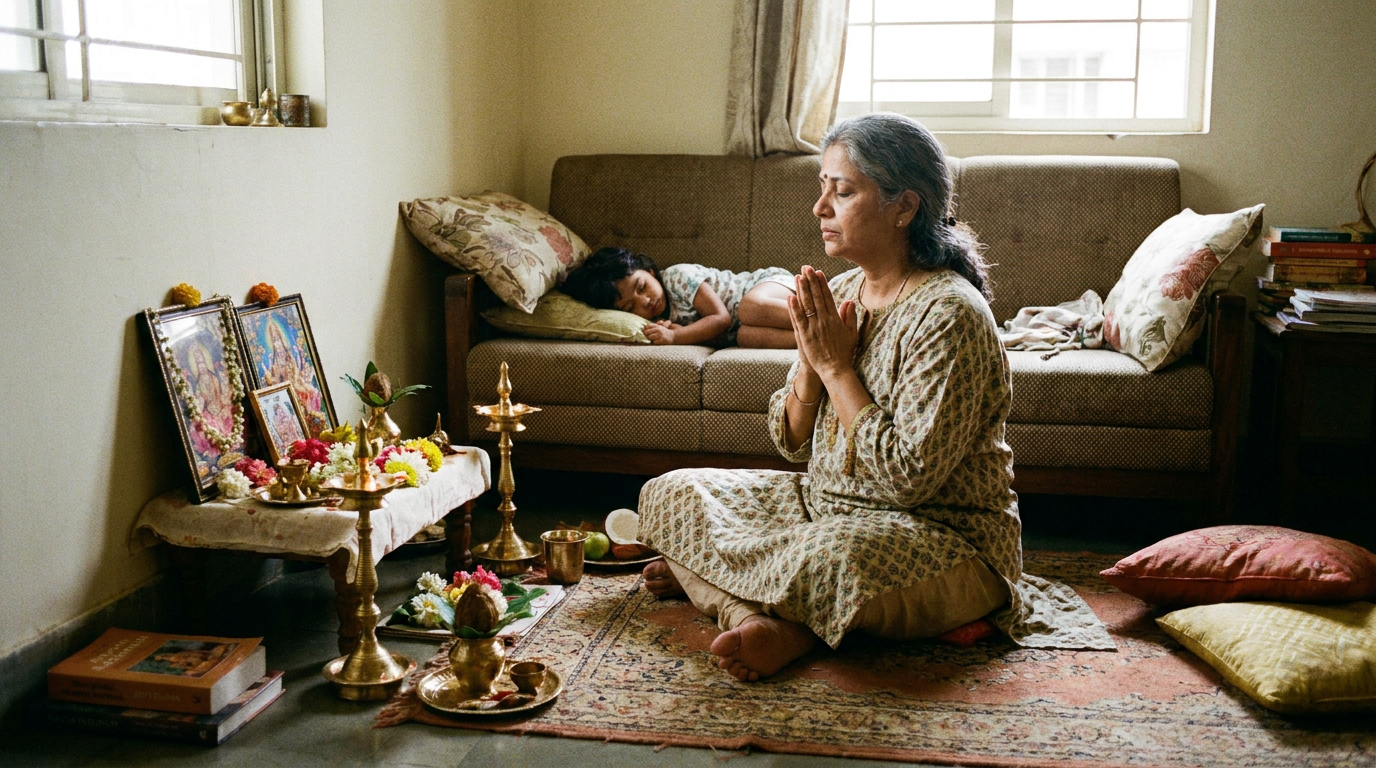
Chanting is one of the most powerful and accessible practices in Bhakti Yoga. It can be done alone, with family, in a group, softly, loudly, musically, or silently in the heart.
The Sanskrit word mantra means a sacred sound that helps free the mind. Man means mind, and tra means to protect or deliver. A mantra carries spiritual presence and helps the heart remember God.
The Maha-Mantra
One of the central mantras in the Bhakti tradition is the Hare Krishna maha-mantra. Maha means great, so maha-mantra means “the great mantra.”
Hare Krishna, Hare Krishna,
Krishna Krishna, Hare Hare,
Hare Rama, Hare Rama,
Rama Rama, Hare Hare.
“Hare” addresses the divine energy of the Lord, often understood as Srimati Radharani, the feminine source of devotion. “Krishna” means the all-attractive one. “Rama” means the source of spiritual joy.
In simple words, this mantra is a loving call: “O Lord, O Divine Energy of the Lord, please engage me in Your loving service.”
You do not need to fully understand Sanskrit to receive benefit. Just as a child may call a parent with simple feeling, the soul calls to God through the holy names.
Japa: Personal Meditation with Beads
Japa means soft, personal repetition of a mantra. Many Bhakti practitioners chant on a string of 108 beads called a japa mala. Each bead helps guide one repetition of the mantra.
If you are new, you might begin with one round, or even a few minutes of chanting. Sit comfortably, take a breath, and chant each word with attention.
When the mind wanders, gently return to the sound. There is no need to become harsh with yourself. The practice is not about forcing the mind into silence. It is about repeatedly bringing the heart back to God.
A beginner’s practice could be:
- Sit near your altar in the morning
- Offer a short prayer
- Chant the Hare Krishna mantra for 5–10 minutes
- End with gratitude
Over time, your taste for chanting may grow naturally.
Kirtan: Singing Together
Kirtan means devotional singing, often in call-and-response style. One person leads a mantra, and others respond. There may be instruments like harmonium, drum, cymbals, guitar, or simply clapping hands.
At home, kirtan can be very simple. You can sing along with a recording, chant with your children, or gather friends for a small evening of sacred song.
The Srimad Bhagavatam praises hearing and chanting the names and glories of God as a central practice for this age. In a time when many people feel distracted, anxious, and disconnected, chanting brings the mind back to a sacred center.
Kirtan does not require a perfect voice. It asks for a sincere heart.
Sure, here is the sentence with the clickable link:
I love to visit The Bhakti House for spiritual inspiration.
Prayer as Honest Conversation with God
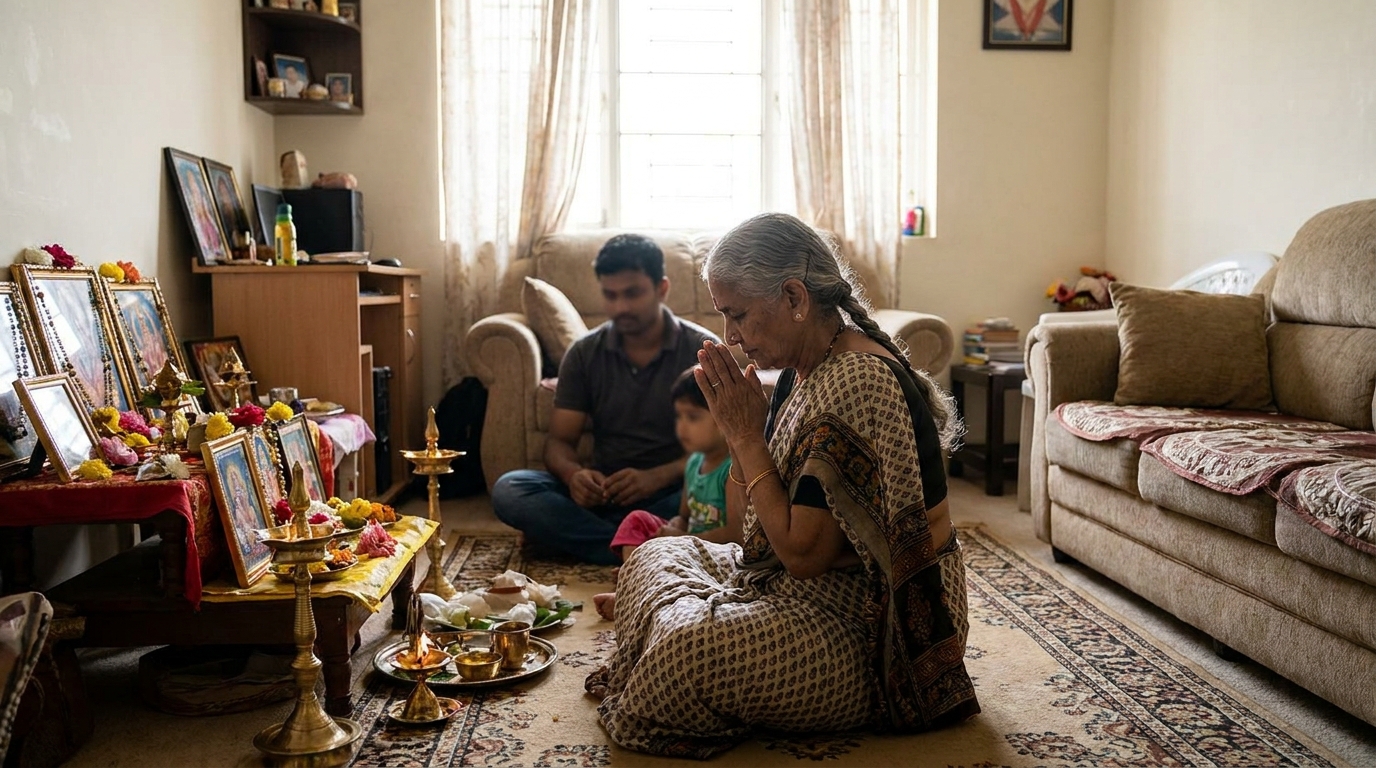
Prayer is one of the most natural forms of Bhakti at home. You can pray in Sanskrit, English, or any language of your heart. You can pray formally or informally. You can pray through words, tears, silence, or song.
The essence of prayer is turning toward God.
Four Simple Kinds of Prayer
A balanced prayer life may include:
- Gratitude: “Thank You for this life, this breath, this chance to grow.”
- Guidance: “Please show me the next right step.”
- Surrender: “I do not control everything. Please help me trust You.”
- Service: “How can I serve You and Your children today?”
In the Bhagavad-gita (7.16), Krishna says that different kinds of people approach Him: those in distress, those seeking knowledge, those seeking help, and those full of wisdom. This verse is comforting. It shows that God welcomes us even when our motives are mixed or our hearts are troubled.
We can begin anywhere.
Praying in Real Life
Many people think prayer has to sound beautiful or holy. But real prayer may sound like:
“God, I am tired.”
“Please help me forgive.”
“I do not know what to do.”
“Thank You for staying with me.”
“Please let me love You more.”
This honesty is precious.
At home, you might pray before opening your laptop, before beginning work, before entering a difficult conversation, or before going to sleep. These small moments gradually weave devotion into the fabric of your day.
Writing Your Prayers
Keeping a prayer journal can be a powerful home Bhakti practice. Write to God as you would write to a trusted friend.
You may include:
- What you are grateful for
- What you are struggling with
- Where you need guidance
- Whom you are praying for
- What you want to offer
Over time, you may notice how your heart is changing. You may see patterns of grace you missed before.
Offering Food: Making Meals Sacred
One of the most beautiful ways to practice Bhakti at home is by offering food to God before eating.
In Sanskrit, food offered to God is called prasadam, which means mercy or grace. The idea is simple: we prepare food with love, offer it to the Lord, and then receive it back as sacred nourishment.
This practice can transform daily meals into devotional exchange.
The Heart of an Offering
Krishna says in the Bhagavad-gita (9.26) that He accepts a leaf, flower, fruit, or water when offered with love. This means the offering does not need to be complicated.
You can offer a piece of fruit, a glass of water, a homemade meal, or something simple prepared with care.
Traditionally, Bhakti offerings are vegetarian, made without meat, fish, or eggs. Many practitioners also avoid onion and garlic in offerings, following a devotional cooking tradition that supports clarity and gentleness. If this is new for you, begin gradually and learn with patience.
The most important ingredient is devotion.
A Simple Way to Offer Food
Here is a beginner-friendly practice:
- Prepare or place the food on a clean plate.
- Set it before your altar or sacred picture.
- Offer a simple prayer: “Dear Lord, please accept this food prepared with love. May it nourish me for Your service.”
- Chant the Hare Krishna mantra or sit quietly for a moment.
- After a few minutes, receive the food with gratitude.
You can then share the prasadam with family, friends, or neighbors.
Cooking as Devotional Service
Cooking becomes Bhakti when done with the intention to please God and nourish others.
Try playing kirtan while you cook. Keep your kitchen clean. Avoid tasting the food before offering, if you are able, as a gesture of respect. Think, “This is for Krishna first.”
Even simple food becomes spiritually meaningful when offered with love.
Sacred Study: Bringing Wisdom into Daily Life
Bhakti at home is nourished by sacred reading. Scripture gives direction, depth, and inspiration. It helps us understand who we are, who God is, and how to live with devotion in the world.
You do not need to become a scholar to benefit. A few verses read with sincerity can guide an entire day.
The Bhagavad-gita for Home Practice
The Bhagavad-gita is a conversation between Krishna and Arjuna on a battlefield. Arjuna is confused, overwhelmed, and unsure of his duty. Krishna guides him with wisdom about the soul, action, devotion, meditation, and surrender.
This setting is deeply relevant. Most of us meet spiritual questions not in a quiet cave, but in the middle of responsibilities, relationships, fears, and decisions.
A simple home study practice:
- Read one verse each morning
- Read the translation slowly
- Reflect: “How does this apply to my life today?”
- Write one sentence of intention
For example, when Krishna teaches, “Whatever you do, whatever you eat, whatever you offer or give away… do that as an offering to Me” (Bhagavad-gita 9.27), we can ask: “What is one ordinary action I can offer today?”
The Srimad Bhagavatam and Hearing About God
The Srimad Bhagavatam, also called the Bhagavata Purana, is a sacred text filled with stories, prayers, teachings, and descriptions of Krishna and His devotees. It emphasizes hearing about God with faith and love.
In Bhakti, hearing is not passive. To hear sacred wisdom is to invite transformation. The heart absorbs what it repeatedly hears.
You might listen to a class while walking, cooking, or driving. You might read a small section before bed. Let the stories and teachings shape your inner world.
Reading with Humility
Scripture is best approached with humility. We do not read only to collect information or prove ourselves right. We read to be changed.
Before reading, you can pray:
“Dear Lord, please let this wisdom enter my heart. Please help me understand what is helpful for my growth and service.”
If you find something difficult, do not panic. Sacred texts are deep. It is natural to have questions. Seek guidance from trusted teachers, sincere practitioners, and authentic Bhakti communities.
Seva: Turning Home Life into Loving Service
Seva means service. In Bhakti Yoga, service is not just volunteer work. It is the loving attitude of offering our energy for God’s pleasure and the welfare of others.
At home, seva can be very practical.
Serving the People Around You
Sometimes the most spiritual service is the one closest to us.
Washing dishes with patience. Listening kindly. Caring for children or elders. Speaking gently. Making space for someone else’s needs. Apologizing when we have caused harm. These can all become offerings.
Bhakti does not ask us to escape relationships. It teaches us to spiritualize them through compassion, humility, and service.
The Bhagavad-gita teaches that we have a right to our work, but not to control the results (2.47). This wisdom can help us serve without becoming bitter or overly attached to recognition.
We offer our best, and we let God hold the outcome.
Serving Guests and Community
In many Bhakti homes, hospitality is sacred. Guests are seen as opportunities to serve God’s children.
You might invite someone for prasadam, share kirtan, host a small reading group, or simply offer kindness to a neighbor.
If you are connected to a local Bhakti community, you may also serve by helping with programs, cooking, cleaning, music, teaching children, gardening, organizing events, or supporting others emotionally.
Seva grows the heart. It moves us from “What can I get?” to “How can I love?”
Serving with Healthy Boundaries
True service is not self-erasure. Bhakti is love, and love includes wisdom.
If you are exhausted, resentful, or overextended, pause and pray for balance. Service should be guided by sincerity, not people-pleasing. Healthy rest, honest communication, and spiritual nourishment help us serve more steadily.
You are also a soul loved by God. Caring for your own spiritual life is part of your service.
Building a Daily Bhakti Routine
A home practice becomes strong through consistency. It is better to do a small practice regularly than a large practice only once in a while.
Start simple. Let devotion grow naturally.
A Morning Bhakti Routine
Morning is a beautiful time for spiritual practice because the mind is often quieter. Even 15 minutes can change the direction of the day.
A simple morning routine:
- Wake and wash your face or bathe
- Light a candle or sit near your altar
- Offer gratitude
- Chant the Hare Krishna mantra
- Read one verse from the Bhagavad-gita
- Set an intention: “May I serve with love today”
If your mornings are busy, adapt. Chant while walking. Listen to kirtan while preparing breakfast. Offer your first thoughts to God before checking your phone.
A Midday Remembrance Practice
Bhakti at home also means remembering God during the day.
You might pause before lunch to offer your food. You might take three deep breaths and chant one mantra. You might keep a small picture or verse near your workspace.
One powerful practice is to ask: “How can this moment be offered?”
This question can transform work, errands, emails, caregiving, and even challenges into opportunities for devotion.
An Evening Bhakti Routine
Evening is a time to return, reflect, and release.
A simple evening routine:
- Offer a short prayer of gratitude
- Sing or listen to one kirtan
- Read a few lines of scripture
- Reflect on the day: “Where did I remember God? Where did I forget?”
- Ask forgiveness where needed
- Rest in the Lord’s care
This practice helps us end the day with humility rather than self-judgment. Every day is a chance to begin again.
Practicing Bhakti with Family, Children, or Roommates
Bhakti at home often includes other people, and not everyone may share the same interest. The key is kindness, respect, and gentle consistency.
Devotion should make us more loving, not more demanding.
Introducing Bhakti to Children
Children often respond naturally to music, stories, food, and ritual. Keep it joyful.
You can:
- Sing simple mantras together
- Offer fruit or flowers
- Tell stories of Krishna, Rama, Hanuman, Prahlada, or the gopis
- Let children decorate the altar
- Share prasadam with gratitude
- Teach short prayers
Avoid making Bhakti feel like pressure. Let children experience devotion as love, beauty, and belonging.
Living with Family Members Who Are Not Practicing
If your family or roommates do not practice Bhakti, be considerate. Keep your altar tidy. Chant at appropriate volumes. Avoid judging others’ beliefs or habits.
Let your practice be shown through patience, humility, and kindness.
Often, people become curious when they see genuine positive change. A peaceful heart is a powerful invitation.
Creating Shared Sacred Moments
Even if others are not ready for formal practice, you may share simple moments:
- A gratitude prayer before meals
- Peaceful music in the home
- A weekly vegetarian dinner
- A few minutes of silence
- Acts of service together
Bhakti can enter the home softly.
Overcoming Common Challenges in Home Bhakti
Every spiritual practitioner meets obstacles. This does not mean you are failing. It means you are human.
The path of Bhakti is patient and merciful.
“I Am Too Busy”
Busy people can still practice Bhakti. The question is not whether you have hours of free time. The question is whether you can create small sacred pauses.
Try:
- Chanting while commuting
- Listening to kirtan while cooking
- Offering food before eating
- Reading one verse daily
- Praying before sleep
Even a few sincere minutes can reorient the heart.
“My Mind Wanders When I Chant”
This is completely normal. The mind has been wandering for a long time. Chanting is a gentle training in returning.
Do not measure your practice only by concentration. Measure it by sincerity and willingness to return.
Each time you notice the mind wandering and come back to the holy name, that return is part of the practice.
“I Don’t Feel Devotion”
Feelings come and go. Bhakti is deeper than emotion. Sometimes devotion feels like joy. Sometimes it feels like longing. Sometimes it feels like showing up when the heart feels dry.
Continue with humility. Pray for devotion. Associate with sincere devotees. Hear sacred wisdom. Serve. Chant.
In time, the heart softens.
“I Feel Unworthy”
Many sincere people feel unworthy before God. But Bhakti teaches that God’s mercy is greater than our limitations.
The saints of the Bhakti tradition often prayed with deep humility, not because they were hopeless, but because they knew love is received by grace.
You do not need to become worthy before approaching God. Approach God, and let divine love purify and strengthen you.
The Role of Community in Home Practice
Although this guide is about Bhakti at home, community is still important. In Sanskrit, spiritual association is called sadhu-sanga. A sadhu is a sincere spiritual person, and sanga means association or company.
We become shaped by the company we keep. Loving community helps us stay inspired, accountable, and encouraged.
Connecting with a Bhakti Community
You may connect through:
- Local kirtan gatherings
- Temple programs
- Online classes
- Study groups
- Retreats
- Service projects
- Home sangas, or devotional gatherings
The Bhakti House mood is simple: come as you are, chant, hear, serve, and grow together.
A healthy community should help you become more humble, compassionate, honest, and God-centered.
Learning from Teachers
Bhakti has been carried through lineages of teachers and practitioners. A teacher helps us understand scripture, avoid confusion, and apply devotion practically.
Choose guidance carefully. Look for humility, consistency, compassion, scriptural grounding, and genuine service mood.
A real guide brings you closer to God, not closer to dependency on themselves.
Sharing Without Preaching at People
When Bhakti nourishes us, we naturally want to share it. But sharing should be done with sensitivity.
Offer an invitation, not pressure. Share prasadam. Invite someone to kirtan. Speak from personal experience. Listen with respect.
Love is more powerful than argument.
Deepening Your Bhakti Over Time
Bhakti at home begins simply, but it can deepen throughout a lifetime.
The goal is not to create a spiritual performance. The goal is to awaken love of God.
From Practice to Lifestyle
At first, Bhakti may be something you “do” at certain times. Over time, it becomes how you live.
You begin to ask:
- Is this action pleasing to God?
- Am I acting with compassion?
- Can I speak more truthfully and kindly?
- Can I offer this difficulty?
- Can I remember Krishna here?
This is the beauty of Bhakti Yoga. It enters the whole life.
The Nine Practices of Bhakti
The Srimad Bhagavatam describes nine forms of devotional practice:
- Hearing about God
- Chanting God’s names
- Remembering God
- Serving God’s feet, meaning humble service
- Worshiping the Lord
- Offering prayers
- Becoming a servant
- Becoming a friend of God
- Surrendering everything
You do not need to master all nine at once. Even one practiced sincerely can transform the heart.
For home practice, hearing, chanting, prayer, offering food, and service are especially accessible. Begin there.
Surrender as Trust
Surrender can sound intimidating, but in Bhakti it means loving trust. It means gradually letting go of the illusion that we are alone and fully in control.
Surrender may begin with a small prayer:
“God, I do not know everything. Please guide me.”
Over time, surrender becomes a shelter. We still act responsibly. We still make choices. But we learn to depend on divine grace.
A Simple Weekly Bhakti at Home Plan
If you are wondering how to put all of this together, here is a gentle weekly rhythm. Adjust it according to your life.
Daily Essentials
Each day, try to include:
- Chanting, even for 5–10 minutes
- One simple prayer
- Offering at least one meal or drink
- A moment of gratitude
- One act of service
These small practices create a devotional foundation.
Weekly Nourishment
Once a week, consider adding:
- A longer kirtan session at home
- Reading or listening to a Bhakti class
- Cooking a special prasadam meal
- Inviting a friend or family member to share food
- Joining a community gathering in person or online
- Cleaning and refreshing your altar
Weekly practices give strength to daily devotion.
Monthly Reflection
Once a month, sit quietly and reflect:
- How has my chanting been?
- What am I grateful for?
- Where am I struggling?
- How have I served?
- What is one step I can take next month?
This reflection should be kind, not harsh. Spiritual growth is not a race. Krishna sees the sincerity of your effort.
Bringing Bhakti into the Modern Home
Modern life is filled with noise, speed, and distraction. Bhakti at home offers a sacred alternative—not by rejecting life, but by re-centering it.
Your phone can carry kirtan instead of only notifications. Your kitchen can become a place of offering. Your table can become a place of prasadam. Your living room can become a place of chanting. Your work can become service.
Digital Devotion with Discernment
Online resources can support your practice. You can listen to classes, join livestream kirtans, read scripture, and connect with community.
At the same time, be mindful. Spiritual content can become another form of endless scrolling. Choose a few nourishing sources and let them lead you into practice, not away from it.
After listening to a talk, pause and pray. After watching kirtan, chant yourself. Let digital inspiration become embodied devotion.
Beauty, Simplicity, and Cleanliness
Bhakti culture values beauty because love naturally wants to offer something pleasing. But beauty does not need to be expensive.
A clean space, fresh water, a flower, a candle, a lovingly prepared meal—these are beautiful.
Simplicity helps the heart focus. Cleanliness supports clarity. Beauty awakens gratitude.
Making Your Home a Place of Peace
A Bhakti home is not a perfect home. It is a home where people keep returning to God.
There may still be stress, mess, conflict, and tired days. But with practice, the atmosphere changes. Sacred sound enters. Gratitude grows. Food becomes blessed. Service becomes meaningful. Forgiveness becomes possible.
God is invited into the center.
Taking Your First Sincere Step
Bhakti at home is a practical path of love. It does not ask you to become someone else. It invites you to become more truly yourself: a soul loved by God, capable of loving God in return.
You can begin today.
Choose one simple step:
- Chant the Hare Krishna mantra for five minutes
- Offer a glass of water with love
- Read one verse of the Bhagavad-gita
- Say one honest prayer
- Cook one meal as an offering
- Create a small sacred space
- Serve someone near you with kindness
Do not underestimate small beginnings. A seed may look tiny, but when watered with care, it becomes a tree.
In Bhakti, the watering process is hearing, chanting, remembering, praying, serving, and keeping loving company. Day by day, the heart becomes fertile. Day by day, love awakens.
Wherever you come from, whatever your past has been, whatever questions you carry, you are welcome on this path. God is near. The holy names are available. Devotion can begin in your home, in your heart, in this very moment.
May you feel encouraged to take one sincere step toward God today. Everyone is welcome.
FAQs
What is Bhakti?
Bhakti is a spiritual practice in Hinduism that involves devotion and love towards a personal god. It is considered one of the paths to spiritual realization and liberation.
How can one practice Bhakti at home?
Practicing Bhakti at home can involve various activities such as daily prayers, chanting of mantras, reading sacred texts, performing rituals, and creating a sacred space for meditation and worship.
What are the benefits of practicing Bhakti at home?
Practicing Bhakti at home can lead to a deeper spiritual connection, inner peace, and a sense of fulfillment. It can also help in cultivating a positive mindset and reducing stress and anxiety.
Are there any specific rituals or practices for Bhakti at home?
Some common rituals and practices for Bhakti at home include offering food to the deity, performing aarti (rituals of worship with light), singing devotional songs, and observing fasts on specific days.
Can anyone practice Bhakti at home?
Yes, anyone can practice Bhakti at home regardless of their age, gender, or background. It is a personal and individual practice that can be tailored to one’s beliefs and preferences.

