
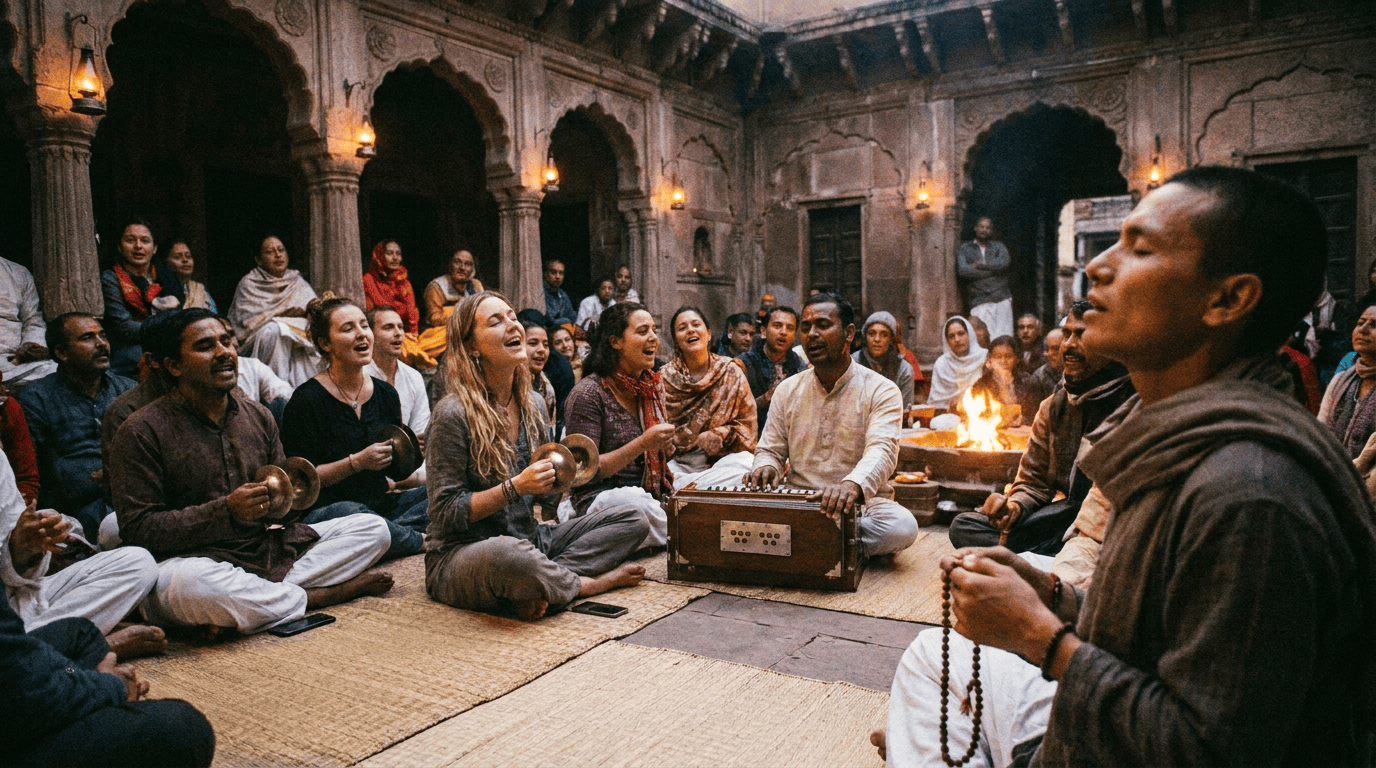
Bhakti Yoga is the path of the heart.
It is the practice of awakening love for God through chanting, prayer, service, remembrance, worship, friendship, humility, and daily surrender. While yoga is often associated with postures and physical wellness, Bhakti Yoga reaches into the deepest part of the human being: our longing to love and be loved.
At The Bhakti House, we understand that people come from many backgrounds. Some have grown up with religion. Some are healing from religion. Some are spiritually curious but unsure where to begin. Some simply feel a quiet longing for something more real, more loving, more sacred.
Bhakti Yoga welcomes you as you are.
You do not need to be perfect. You do not need to know Sanskrit. You do not need to change your culture, your personality, or your whole life overnight. Bhakti begins with one sincere step toward God, taken with the heart.
Bhakti Yoga is the yoga of devotion. The Sanskrit word “bhakti” comes from a root meaning “to share,” “to serve,” or “to love with devotion.” In simple terms, Bhakti Yoga means offering our heart to the Divine.
The word “yoga” means connection or union. So Bhakti Yoga is the practice of reconnecting the soul with God through love.
In the Bhagavad Gita, one of the most beloved texts of the Bhakti tradition, Lord Krishna says:
“Always think of Me, become My devotee, worship Me, and offer your homage unto Me. Thus you will come to Me without fail.”
— Bhagavad Gita 18.65
This verse is not a demand for blind belief. It is an invitation into relationship. Krishna is describing a practical spiritual life: remember God, offer love, live with devotion, and walk steadily toward divine connection.
Bhakti Is Relationship
At the center of Bhakti Yoga is the understanding that the Absolute Truth is not only an energy, a force, or a distant mystery. God is personal, loving, and responsive.
Different traditions may use different names for God: Krishna, Rama, Vishnu, Allah, Yahweh, Christ, the Divine Mother, the Supreme, the Beloved. Bhakti Yoga honors the heart’s sincere call to the Divine.
In the Vaishnava Bhakti tradition, Krishna is worshiped as the all-attractive Supreme Person, the source of beauty, compassion, wisdom, and love. Yet Bhakti does not begin with philosophical perfection. It begins with sincerity.
Bhakti Is Both Ancient and Practical
Bhakti Yoga is thousands of years old, yet it is deeply practical for modern life.
It can be practiced while cooking, working, parenting, walking, singing, grieving, celebrating, or sitting quietly in prayer. Bhakti does not ask us to escape the world. It teaches us how to spiritualize our life within the world.
When we offer our actions with love, ordinary life becomes sacred.
The Heart of Bhakti: Love for God
Every soul longs for love. We may look for it in relationships, success, creativity, pleasure, service, or belonging. These things can be meaningful, but Bhakti teaches that the deepest longing of the soul is fulfilled in loving relationship with God.
This love is not sentimental or shallow. It is transformative. It softens the heart, purifies our intentions, and gradually frees us from selfishness, fear, envy, and loneliness.
Love That Purifies
In the Bhakti tradition, the heart is compared to a mirror. Over time, the mirror becomes covered with dust: ego, wounds, desires, distractions, anxieties, and forgetfulness of our true spiritual nature.
Chanting, prayer, service, and sacred remembrance clean that mirror.
The great saint Sri Chaitanya Mahaprabhu taught that the chanting of God’s names cleanses the heart and awakens love. This does not happen only through dramatic mystical experience. Often, it happens quietly: a little more patience, a little more gratitude, a little more kindness, a little more faith.
Devotion Is Not Weakness
Sometimes people think devotion means becoming passive or losing individuality. But true Bhakti makes the heart strong.
To love God is to become courageous in compassion. It means learning to forgive, serve, speak truth gently, and live with integrity. It means allowing our life to be guided by something higher than selfish impulse.
Bhakti is not an escape from responsibility. It is a sacred way of carrying responsibility with grace.
The Main Practices of Bhakti Yoga
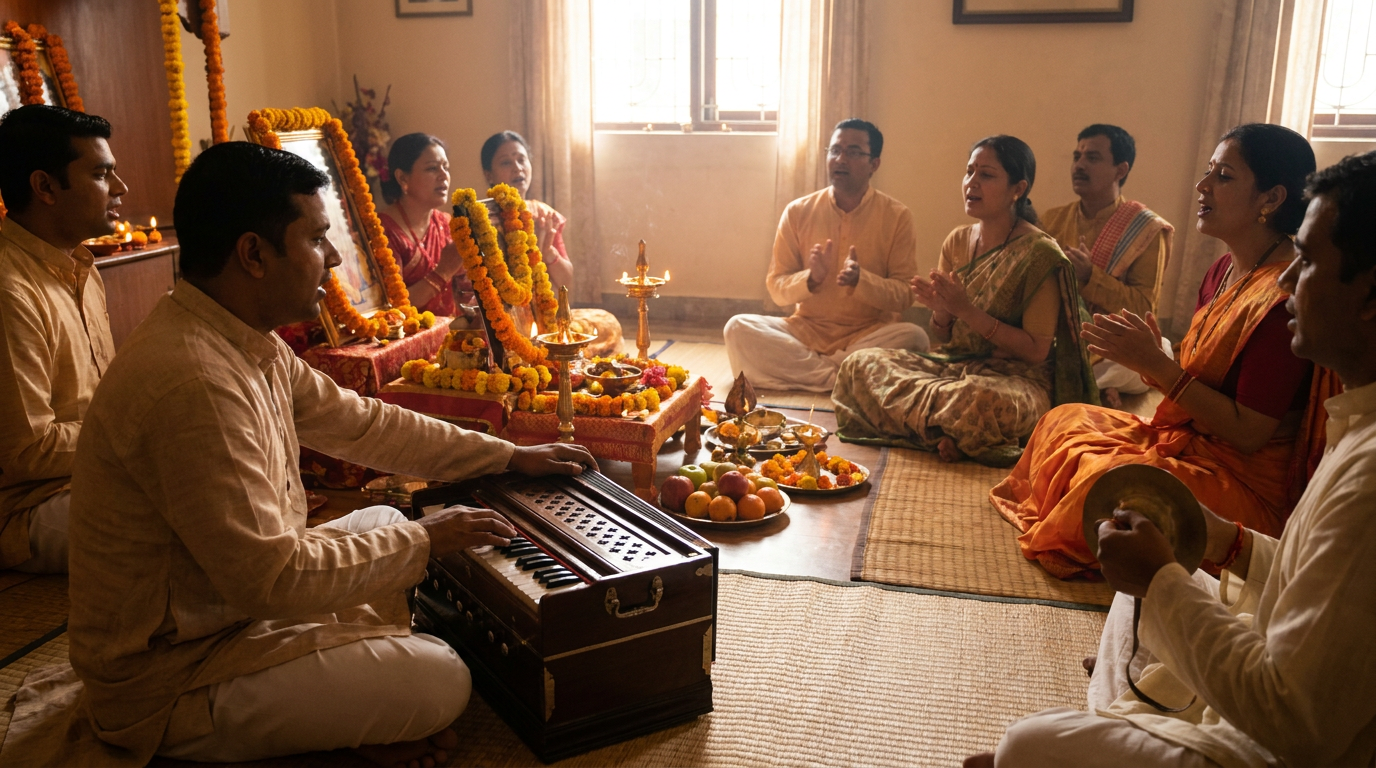
Bhakti Yoga is beautifully accessible because its practices are simple, natural, and heart-centered. You do not need expensive equipment or advanced training to begin. You only need sincerity and a willingness to offer your heart.
Chanting the Holy Names
One of the central practices of Bhakti Yoga is chanting sacred names of God. In Sanskrit, this is called “nama-sankirtana” when done together in a group, and “japa” when done softly or privately as meditation.
A common mantra in the Bhakti tradition is the Hare Krishna maha-mantra:
Hare Krishna Hare Krishna
Krishna Krishna Hare Hare
Hare Rama Hare Rama
Rama Rama Hare Hare
“Maha-mantra” means “great mantra.” “Mantra” means a sacred sound that helps free the mind. “Hare” refers to the divine energy of God, “Krishna” means the all-attractive one, and “Rama” means the source of joy and pleasure.
This mantra is a prayer: “O Lord, O divine energy of the Lord, please engage me in Your loving service.”
Chanting is not about performance. You do not need a beautiful voice. You do not need to understand everything intellectually. The sound itself is sacred, and the heart gradually opens through sincere repetition.
Kirtan: Singing Together
Kirtan is devotional singing, often in a call-and-response style. One person leads a mantra, and others respond. There may be harmonium, drums, hand cymbals, guitar, or simply voices.
Kirtan creates community. It allows people from all walks of life to gather in shared spiritual sound. Some come with faith, some with questions, some with pain, some with joy. The chanting holds everyone.
In kirtan, we are not trying to impress one another. We are trying to remember God together.
Prayer From the Heart
Prayer is another essential practice of Bhakti Yoga. Prayer can be formal or spontaneous. It may be spoken aloud, whispered, sung, written in a journal, or held silently in the heart.
A simple Bhakti prayer might be:
“Dear Lord, please guide me. Help me remember You. Help me serve with love. Please purify my heart.”
Bhakti prayer is honest. We can bring our gratitude, confusion, longing, weakness, and hope before God. The Divine is not frightened by our humanity. God meets us in truth.
Seva: Sacred Service
“Seva” means service. In Bhakti Yoga, service is love in action.
Seva may include cooking for others, cleaning a temple or sacred space, helping at a gathering, supporting someone in need, offering your talents, sharing wisdom, caring for the earth, or simply listening with compassion.
The Bhagavad Gita teaches that we can offer our work to God. This transforms our daily duties into spiritual practice.
When we serve without expecting praise or reward, the heart becomes lighter. We begin to taste the joy of giving.
Remembering God Throughout the Day
In Sanskrit, remembrance of God is called “smaranam.” It means bringing the Divine into our awareness again and again.
This can be very simple:
Before eating, offer gratitude.
Before work, say a short prayer.
While walking, chant softly.
When facing difficulty, ask for guidance.
Before sleeping, remember one blessing.
Bhakti Yoga grows through these small moments of remembrance. Spiritual life is not only what happens in a temple, church, mosque, ashram, or meditation room. It can happen in the kitchen, on the bus, at your desk, beside a child’s bed, or in a hospital waiting room.
Sure, here is the sentence with the clickable link:
I love to visit The Bhakti House for spiritual inspiration.
Bhakti Yoga in the Scriptures
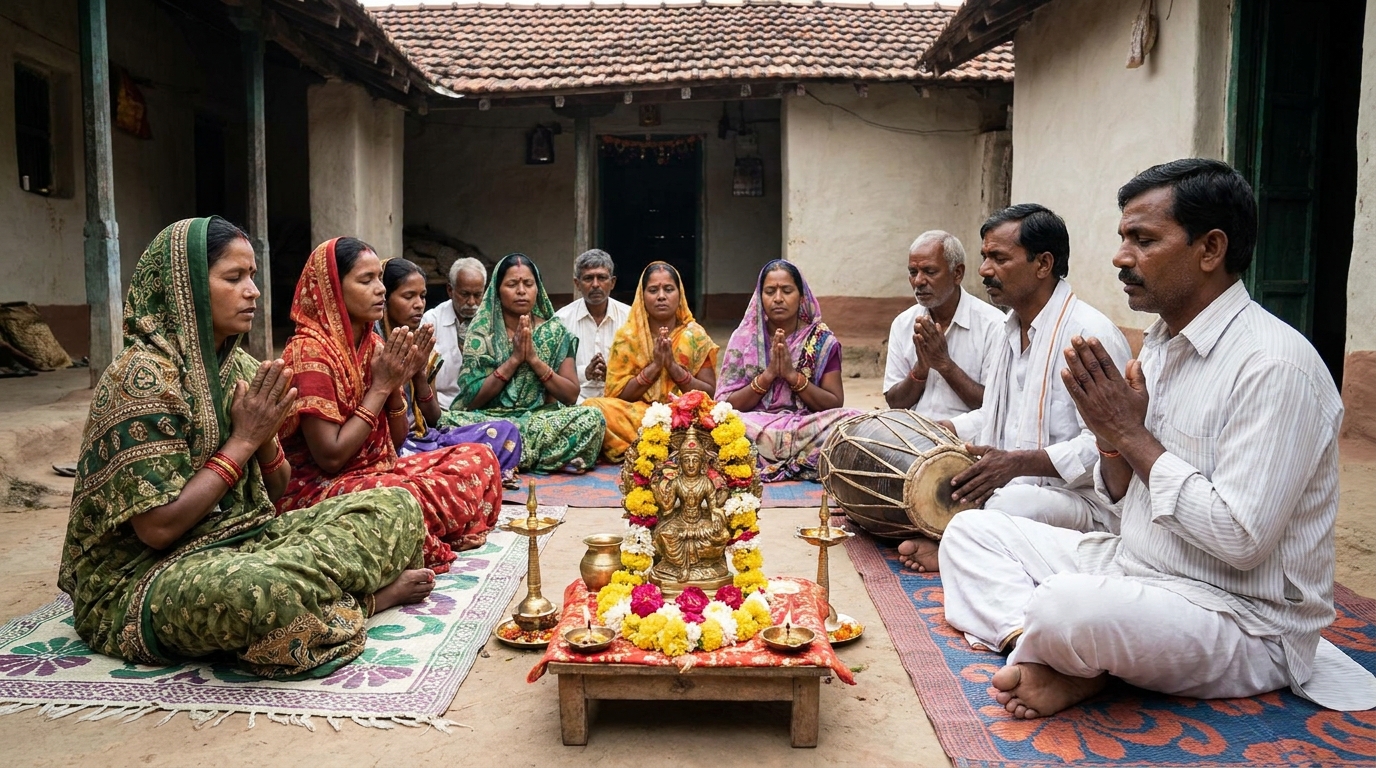
Bhakti Yoga is deeply rooted in sacred texts. These scriptures are not meant only for scholars. They are living guides for the heart.
The Bhagavad Gita
The Bhagavad Gita is a conversation between Krishna and Arjuna on a battlefield. Arjuna is overwhelmed, confused, and unsure of his duty. Krishna teaches him about the soul, karma, meditation, wisdom, devotion, and surrender.
One of the Gita’s most comforting teachings is that God accepts even the simplest offering when it is given with love:
“If one offers Me with love and devotion a leaf, a flower, fruit, or water, I will accept it.”
— Bhagavad Gita 9.26
This verse shows the heart of Bhakti. God is not asking for wealth, status, or perfection. God is asking for love.
A leaf. A flower. A little fruit. A cup of water. Offered sincerely, these become sacred.
The Srimad Bhagavatam
The Srimad Bhagavatam, also called the Bhagavata Purana, is one of the great devotional scriptures of India. It tells many stories of saints, sages, kings, children, and seekers who found their way to God through devotion.
The Bhagavatam teaches that hearing and chanting about God purifies the heart. This is why Bhakti communities gather to sing, read scripture, discuss spiritual truth, and support one another.
In a world filled with noise, sacred hearing gives the soul nourishment.
The Teachings of Sri Chaitanya
Sri Chaitanya Mahaprabhu, a 15th-century saint and incarnation of divine love in the Gaudiya Vaishnava tradition, spread the practice of chanting the holy names. He taught that love of God is the highest goal of life and that chanting is the most accessible practice for this age.
His life showed deep humility, ecstatic devotion, compassion, and inclusiveness. He welcomed people across social boundaries and emphasized that spiritual qualification is based on sincerity, not birth, status, or external identity.
This spirit is central to Bhakti Yoga: everyone has a place in the circle of divine love.
The Nine Forms of Bhakti
The Bhakti scriptures describe nine classic forms of devotional practice. These are not rigid requirements. They are doorways into relationship with God. Different people may feel drawn to different forms.
1. Hearing
Hearing sacred wisdom, stories, mantras, and teachings opens the heart. This may include listening to scripture classes, kirtan, podcasts, or spiritual conversations.
When we hear about God from sincere devotees, faith awakens.
2. Chanting
Chanting God’s names, singing kirtan, reciting prayers, or speaking spiritual truth purifies the mind and connects the heart to divine sound.
Chanting is especially recommended because it engages the voice, ears, mind, and heart together.
3. Remembering
Remembering God throughout the day brings spiritual awareness into ordinary life. Even a brief moment of remembrance can change the quality of our actions.
4. Serving the Lord’s Feet
This traditional phrase symbolizes humble service. It means approaching God not with pride, but with a willingness to serve.
In practical life, this may mean serving a sacred place, caring for others, or offering our work to the Divine.
5. Worship
Worship may include offering flowers, incense, food, candles, prayers, or songs. In Bhakti temples, worship is often offered to the deity form of the Lord, called “murti,” a sacred form through which devotees lovingly serve God.
For beginners, worship can be as simple as lighting a candle and offering a sincere prayer.
6. Offering Prayers
Prayer helps us develop personal relationship with God. We can pray for guidance, strength, forgiveness, devotion, and the welfare of others.
7. Serving as a Friend
Bhakti can include friendship with God. This means speaking to God with trust and affection, as one would speak to a dear companion.
Krishna’s relationship with His friends in Vrindavan is celebrated as one of the sweetest forms of divine love.
8. Surrendering Everything
Surrender does not mean giving up in despair. It means trusting God more deeply than our fear. It means offering our life, choices, talents, struggles, and future into divine care.
This takes time. Surrender grows through practice.
9. Becoming a Loving Servant
Service is the natural expression of love. In Bhakti, the soul’s true happiness is found not in being the center, but in lovingly serving the Supreme and all living beings connected to Him.
How to Begin a Bhakti Yoga Practice
Starting Bhakti Yoga does not have to be complicated. Begin gently. Let your practice be steady, sincere, and realistic.
Create a Small Sacred Space
You may create a simple space in your home with a picture of Krishna, Rama, Vishnu, Jesus, a saint, or a sacred symbol that inspires devotion. You might include a candle, flowers, scripture, prayer beads, or a small cloth.
This space is not about decoration. It is a reminder: “My life has a spiritual center.”
Chant a Little Every Day
Begin with five minutes of chanting each morning or evening. You can chant the Hare Krishna mantra, another name of God, or a prayer from your own tradition.
If you use japa beads, each bead helps you stay present. But you can also chant while walking, driving, cooking, or sitting quietly.
Consistency matters more than quantity.
Offer Your Food
In Bhakti Yoga, food can be offered to God before eating. This practice is called offering “prasadam.” “Prasadam” means mercy or grace. Food prepared and offered with love becomes spiritually uplifting.
A simple way to begin:
Prepare vegetarian food with care.
Place a portion before a picture or sacred space.
Say, “Dear Lord, please accept this offering.”
Wait a moment in gratitude.
Then eat with reverence.
This practice transforms eating into communion.
Read a Little Scripture
You might read one verse of the Bhagavad Gita each day, along with a commentary from a trusted Bhakti teacher. Do not rush. Let the teaching enter your life.
Ask: “How can I live this today?”
Scripture is not meant only to inform us. It is meant to transform us.
Find Devotional Community
Spiritual community is called “sanga,” meaning association. Good association nourishes faith and helps us stay steady.
Look for a Bhakti gathering, kirtan night, temple program, study group, or online community where humility, kindness, and sincere practice are encouraged.
We grow best when we walk together.
Bhakti Yoga and Daily Life
The beauty of Bhakti Yoga is that it can enter every part of life. It is not limited to a mat, a monastery, or a particular day of the week.
At Work
Before beginning work, offer your efforts to God. Pray to be useful, honest, patient, and compassionate. See your skills as gifts to be used in service.
Even difficult work can become spiritual when performed with integrity and offering.
In Relationships
Bhakti teaches us to see every living being as a soul, a beloved child of God. This vision can soften how we speak, listen, and respond.
Relationships become places of practice: forgiveness, patience, humility, gratitude, and service.
This does not mean tolerating harm or losing healthy boundaries. True spiritual love includes wisdom. Bhakti helps us love others while also honoring the soul within ourselves.
In Times of Suffering
Bhakti Yoga does not deny pain. Devotees also experience grief, illness, disappointment, and loss. But Bhakti gives us a way to bring suffering into relationship with God.
We can pray honestly: “I do not understand, but please stay with me. Please guide me. Please help me remember You.”
Sometimes the deepest devotion is not a joyful song, but a tearful prayer.
In Times of Joy
Joy is also an offering. When life is beautiful, we can remember the source of all beauty. Gratitude protects joy from becoming pride or forgetfulness.
We can say, “Thank You. Let this blessing help me serve.”
Common Questions About Bhakti Yoga
Many people feel curious about Bhakti Yoga but also have questions. These questions are welcome. Bhakti is not afraid of honest inquiry.
Do I Have to Be Hindu to Practice Bhakti Yoga?
No. Bhakti Yoga comes from the Vedic and Vaishnava traditions of India, and it should be approached with respect for those roots. At the same time, devotion to God is universal.
People from many backgrounds practice Bhakti Yoga. Some identify as Hindu, some as Vaishnava, some as Christian, Jewish, Muslim, Buddhist, interfaith, spiritual-but-not-religious, or simply seeking.
The essential qualification is sincerity.
Do I Need a Guru?
In Bhakti traditions, the guidance of a genuine spiritual teacher, or “guru,” is considered very important. “Guru” means one who brings light and helps remove ignorance.
However, finding a guru is not something to rush. Begin by studying, chanting, praying, serving, and associating with sincere devotees. Over time, pray for guidance. A true teacher will deepen your love for God, encourage humility, live with integrity, and point you toward service rather than control.
What If My Mind Wanders While Chanting?
It will. Everyone’s mind wanders.
When you notice the mind has drifted, gently return to the sound of the mantra. Do not be harsh with yourself. The practice is the returning.
Each return is an offering.
Is Bhakti Yoga Emotional?
Bhakti includes emotion, but it is not merely emotional. It involves the whole person: heart, mind, body, words, actions, values, and relationships.
Real devotion becomes visible through character. Are we becoming kinder? More truthful? More humble? More serviceful? More steady in remembering God?
These are signs that Bhakti is taking root.
The Inner Transformation of Bhakti
Bhakti Yoga is simple, but it is not superficial. Over time, devotional practice changes the heart.
From Ego to Humility
The ego wants to be the center. Bhakti gently teaches us that God is the center. This shift brings relief. We no longer have to carry the impossible burden of being everything.
Humility does not mean hating ourselves. It means seeing ourselves truthfully: small, dependent, loved, and capable of serving.
From Restlessness to Remembrance
Modern life pulls the mind in many directions. Bhakti gives the mind a sacred resting place: the names, forms, qualities, and pastimes of God.
The more we remember the Divine, the less we are ruled by fear and distraction.
From Isolation to Belonging
Bhakti reveals that we are not alone. We belong to God, and we belong in a family of souls.
This belonging is not based on perfection. It is based on our eternal spiritual identity.
From Taking to Offering
Much of material life trains us to ask, “What can I get?” Bhakti invites us to ask, “What can I offer?”
This simple shift can transform everything.
When we offer our words, food, work, relationships, creativity, grief, joy, and time to God, life becomes meaningful.
Bhakti Yoga, Compassion, and the World
A true devotional life should make us more compassionate, not less. If we love God, we naturally learn to care for God’s creation.
Seeing All Beings as Sacred
The Bhagavad Gita teaches that a wise person sees with equal vision. This does not mean ignoring differences, but recognizing the soul within every being.
Humans, animals, the earth, and all living beings are connected to the Divine. This vision inspires kindness, nonviolence, and responsibility.
Service Beyond the Temple
Temple worship and kirtan are beautiful, but Bhakti does not end there. It flows outward into feeding others, protecting the vulnerable, caring for families, building community, supporting spiritual education, and acting with compassion.
Devotion should make our hands useful.
Living Simply and Gratefully
Bhakti often inspires a simpler life. Not because the world is evil, but because the heart becomes more satisfied in spiritual connection.
Gratitude helps us consume less, share more, and live with greater awareness.
A Simple Daily Bhakti Yoga Routine
If you are new to Bhakti Yoga, here is a gentle daily rhythm you can try. Adjust it according to your life.
Morning
Begin with a short prayer: “Dear Lord, please guide me today.”
Chant for five to fifteen minutes. Read one verse from the Bhagavad Gita or another sacred text. Offer your day to God.
Midday
Before eating, pause and offer gratitude. If possible, offer your food first as prasadam.
During work or daily tasks, remember the mantra once or twice. Even a quiet inward prayer can reconnect you.
Evening
Reflect on your day. Where did you remember God? Where did you forget? Offer both without shame.
Chant again, read something devotional, or listen to kirtan. End with gratitude and prayer for others.
Weekly
Join a kirtan, satsang, temple program, study group, or service opportunity. Spiritual life becomes stronger in community.
The Goal of Bhakti Yoga
The goal of Bhakti Yoga is pure love for God.
This love is called “prema” in Sanskrit. Prema means divine love that is selfless, joyful, and uninterrupted. It is the soul’s natural love fully awakened.
Bhakti teachings explain that we are not trying to manufacture love for God from nothing. That love is already within us, covered over by forgetfulness. The practices of Bhakti help uncover what is eternally true.
We are souls.
We are loved by God.
We are meant to love God.
We are meant to serve with joy.
The journey may take time, and that is okay. Bhakti is not a race. It is a relationship. Every sincere prayer matters. Every mantra matters. Every act of service matters. Every step toward God is seen.
You Are Welcome on the Path of Bhakti
Bhakti Yoga is a practical path of love. It invites us to chant, pray, serve, hear sacred wisdom, remember God, honor food as grace, gather in community, and live with compassion.
You may come with strong faith or fragile faith. You may come with joy or pain. You may come knowing many scriptures or none at all. You may come from any background, culture, or life story.
The door of Bhakti is open.
Begin where you are. Chant one mantra. Offer one prayer. Serve one person. Read one verse. Take one breath with gratitude. Place one small flower, one cup of water, or one sincere tear before God.
The Lord accepts love.
Everyone is welcome to take one sincere step toward God today.
FAQs
What is Bhakti Yoga?
Bhakti Yoga is a spiritual practice that focuses on devotion and love for a personal god. It is one of the paths of yoga outlined in ancient Indian texts and emphasizes the cultivation of a loving relationship with the divine.
What are the key principles of Bhakti Yoga?
The key principles of Bhakti Yoga include surrender to the divine, selfless service, chanting or singing the praises of the divine, and cultivating love and devotion through various practices such as prayer, meditation, and rituals.
What are the benefits of practicing Bhakti Yoga?
Practicing Bhakti Yoga can lead to a deep sense of inner peace, joy, and fulfillment. It can also help individuals develop a greater sense of connection with the divine, as well as with others, and can lead to a more compassionate and loving outlook on life.
How is Bhakti Yoga practiced?
Bhakti Yoga can be practiced through various means, including devotional singing or chanting, prayer, meditation, selfless service (seva), and participating in rituals and ceremonies dedicated to the divine.
What are some popular deities in Bhakti Yoga?
Some popular deities in Bhakti Yoga include Krishna, Radha, Rama, Sita, Hanuman, and various forms of the goddess such as Durga, Kali, and Lakshmi. Different practitioners may have a personal connection to a specific deity and focus their devotional practices accordingly.

