
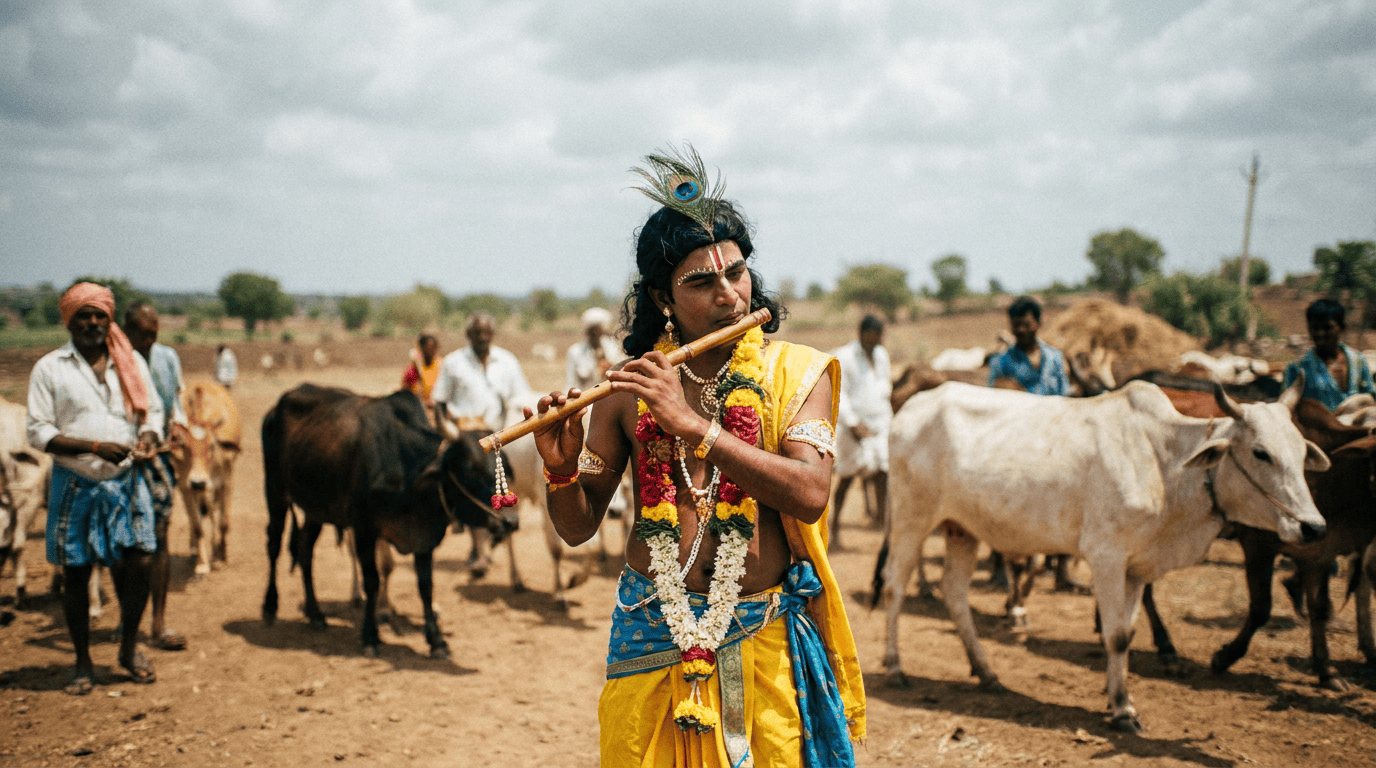
Krishna is one of the most beloved names of God in the world’s spiritual traditions. For millions of devotees, Krishna is not a distant idea or abstract force. He is a personal, loving, all-attractive Lord who invites every soul into a relationship of joy, devotion, and eternal belonging.
In Bhakti Yoga, the path of devotion, Krishna is approached through love. We learn to remember Him, chant His names, offer our food and work to Him, pray with sincerity, serve others, and gradually awaken the heart’s natural connection with the Divine.
Whether you are new to Krishna, returning after many years, or simply curious, this guide is offered with humility. You do not need to be born into a certain culture, know Sanskrit, or have everything figured out. Bhakti begins wherever you are, with one sincere step toward God.
Krishna is described in the Vedic scriptures as the Supreme Personality of Godhead: the original source of all divine qualities, beauty, wisdom, strength, compassion, and love. The Sanskrit word “Krishna” means “the all-attractive one.” This means that everything we find attractive in this world—beauty, kindness, intelligence, music, friendship, courage, sweetness—has its origin in Krishna.
In the Bhagavad-gita, one of the most important texts of Bhakti Yoga, Krishna speaks directly to His friend and devotee Arjuna. He explains the nature of the soul, the purpose of life, the reality of karma, and the path of loving surrender.
Krishna is not presented as merely a historical teacher or symbolic figure. He is the eternal Lord who appears in this world to protect the faithful, uplift humanity, and remind us of our forgotten relationship with Him.
Krishna as the Supreme Person
In many spiritual paths, God is understood as infinite light, universal energy, or the source of creation. Bhakti Yoga honors these understandings while also revealing that the Absolute Truth has a personal form and heart.
Krishna is a person—not limited like us, but perfect, eternal, and unlimited. He has feelings, desires, relationships, and loving exchanges with His devotees. This personal understanding makes Bhakti deeply relational. We do not simply meditate on a concept; we learn to love and be loved by the Divine.
The Srimad Bhagavatam, another essential Bhakti scripture, describes Krishna’s beauty, playfulness, compassion, and intimate relationships with His devotees. These stories are not ordinary mythology. They are sacred invitations to see God as the most loving friend, child, beloved, guide, and protector.
Krishna and the Soul
Bhakti Yoga teaches that we are not the temporary body or restless mind. We are the atma, the eternal soul. The soul is spiritual by nature, and its deepest need is loving connection with God.
Just as a fish cannot be fully happy outside water, the soul cannot be fully satisfied apart from Krishna. We may try to fill the heart with achievement, pleasure, relationships, or possessions, but without spiritual connection, something remains missing.
Krishna says in the Bhagavad-gita that every living being is His eternal part. This means no one is spiritually excluded. Every person, every background, every sincere heart belongs to Krishna.
Krishna in the Bhagavad-gita
The Bhagavad-gita, often called the “Song of God,” is a conversation between Krishna and Arjuna on a battlefield. Arjuna is a warrior facing a painful moral crisis. Confused and overwhelmed, he turns to Krishna for guidance.
This setting is very meaningful. Spiritual life is not only for quiet temples, peaceful retreats, or perfect moments. Krishna speaks wisdom in the middle of stress, duty, grief, and uncertainty. He meets Arjuna in real life—and He meets us there too.
The Call to Remember Krishna
One of Krishna’s central teachings in the Gita is simple and profound: remember Him. He says, “Always think of Me, become My devotee, worship Me, and offer your homage unto Me.”
This does not mean we must abandon our responsibilities. Rather, Krishna teaches us to spiritualize daily life. We can remember Him while working, caring for family, cooking, studying, walking, driving, or resting.
The heart of Bhakti is not external performance but loving remembrance. Even a small act, done with devotion, can transform consciousness.
Karma, Dharma, and Devotion
Krishna explains several important Sanskrit terms in the Bhagavad-gita.
Karma means action and the reactions that follow our actions. Every choice has an effect, shaping our consciousness and future experiences.
Dharma means our true duty or spiritual purpose. On one level, dharma includes our responsibilities in family, society, and work. On a deeper level, the soul’s eternal dharma is to love and serve God.
Krishna teaches that the highest perfection of action is to offer it to Him. This is called karma-yoga: acting in the world while staying connected to the Divine.
When work becomes an offering, ordinary life becomes sacred.
Surrender as Love, Not Fear
Krishna’s final instruction in the Bhagavad-gita is often summarized as surrender. But in Bhakti, surrender does not mean losing ourselves in a harsh or fearful way. It means placing our trust in Krishna’s love.
Surrender is the heart saying, “Krishna, I cannot control everything. Please guide me. Please accept me. Please help me live in a way that pleases You.”
This surrender can begin very gently. We may start with a simple prayer, a few minutes of chanting, or one choice made with spiritual intention.
Krishna’s Names and the Power of Chanting
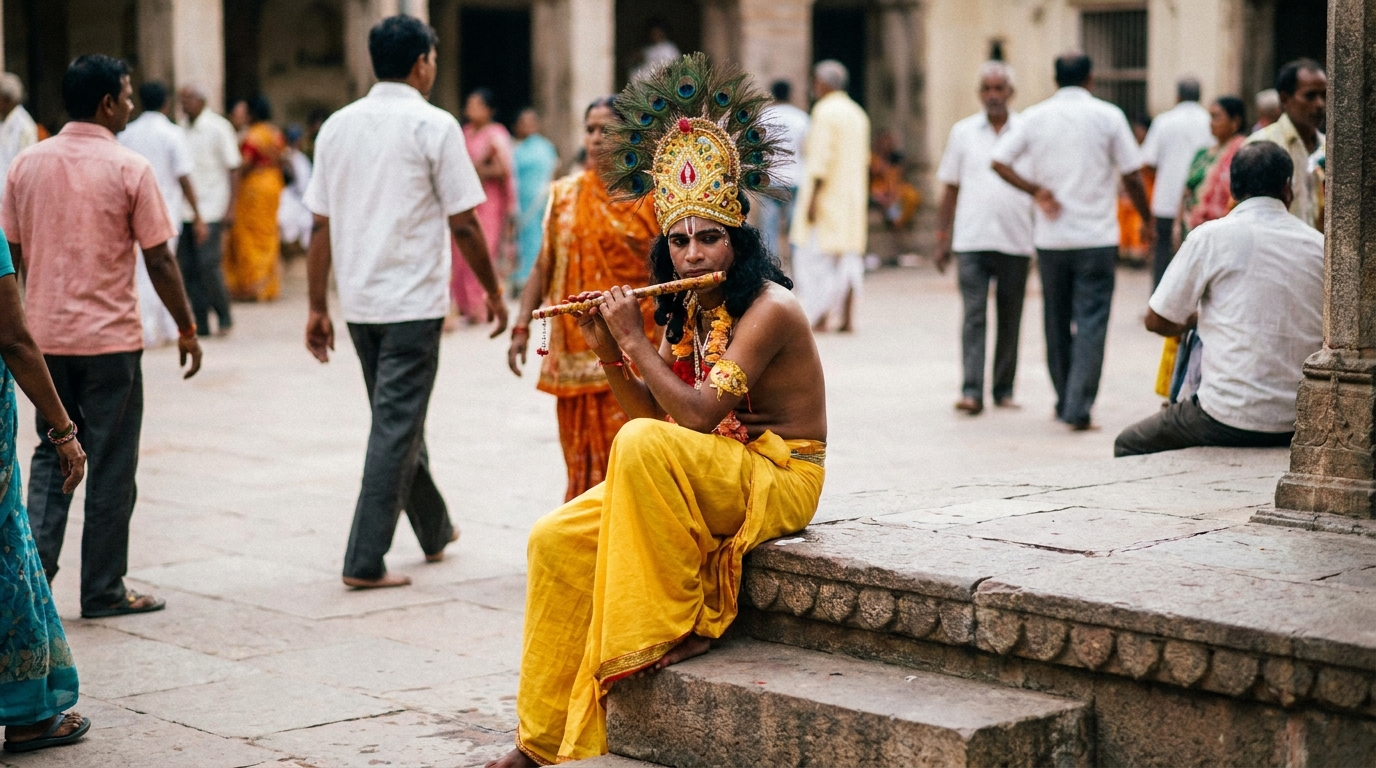
One of the most accessible practices in Bhakti Yoga is chanting the names of Krishna. In Sanskrit, this is called nama-japa or kirtan. Nama means name, japa means soft personal repetition, and kirtan means congregational singing or glorification.
Bhakti scriptures teach that Krishna is fully present in His holy names. When we chant sincerely, we are not merely repeating sound. We are calling out to God and allowing His presence to enter the heart.
The Maha-mantra
The most well-known Krishna mantra is the Hare Krishna maha-mantra:
Hare Krishna Hare Krishna
Krishna Krishna Hare Hare
Hare Rama Hare Rama
Rama Rama Hare Hare
Maha-mantra means “great mantra.” A mantra is sacred sound that helps free the mind and awaken spiritual consciousness.
“Hare” is a call to Krishna’s divine energy, especially His loving energy. “Krishna” means the all-attractive Lord. “Rama” means the reservoir of pleasure, the source of spiritual joy.
A simple meaning of the mantra is: “O Lord, O divine energy of the Lord, please engage me in Your loving service.”
How to Begin Chanting
You do not need to chant perfectly. You do not need a beautiful voice. You do not need to be in a temple. You can begin exactly where you are.
Try setting aside five minutes each day. Sit comfortably, take a breath, and chant the maha-mantra softly or aloud. Listen to each word. When the mind wanders, gently return to the sound.
Some people use beads, called japa mala, to count their chanting. A traditional mala has 108 beads. But if you are new, you can simply chant for a few minutes with sincerity.
The goal is not mechanical repetition. The goal is relationship. We chant like a child calling for a loving parent, or a friend calling for a dear companion.
Kirtan: Singing Together
Kirtan is the joyful singing of Krishna’s names, often with instruments like harmonium, mridanga drum, and kartals, which are small hand cymbals. Kirtan can be lively or meditative, simple or elaborate.
In kirtan, everyone can participate. You do not have to know the melodies. You can sing, clap, listen, or simply sit with an open heart.
Many people first experience Krishna through kirtan because it touches something beyond the intellect. Sacred sound softens the heart, calms the mind, and creates a space of shared devotion.
Sure, here is the sentence with the clickable link:
I love to visit The Bhakti House for spiritual inspiration.
Krishna’s Life and Divine Pastimes
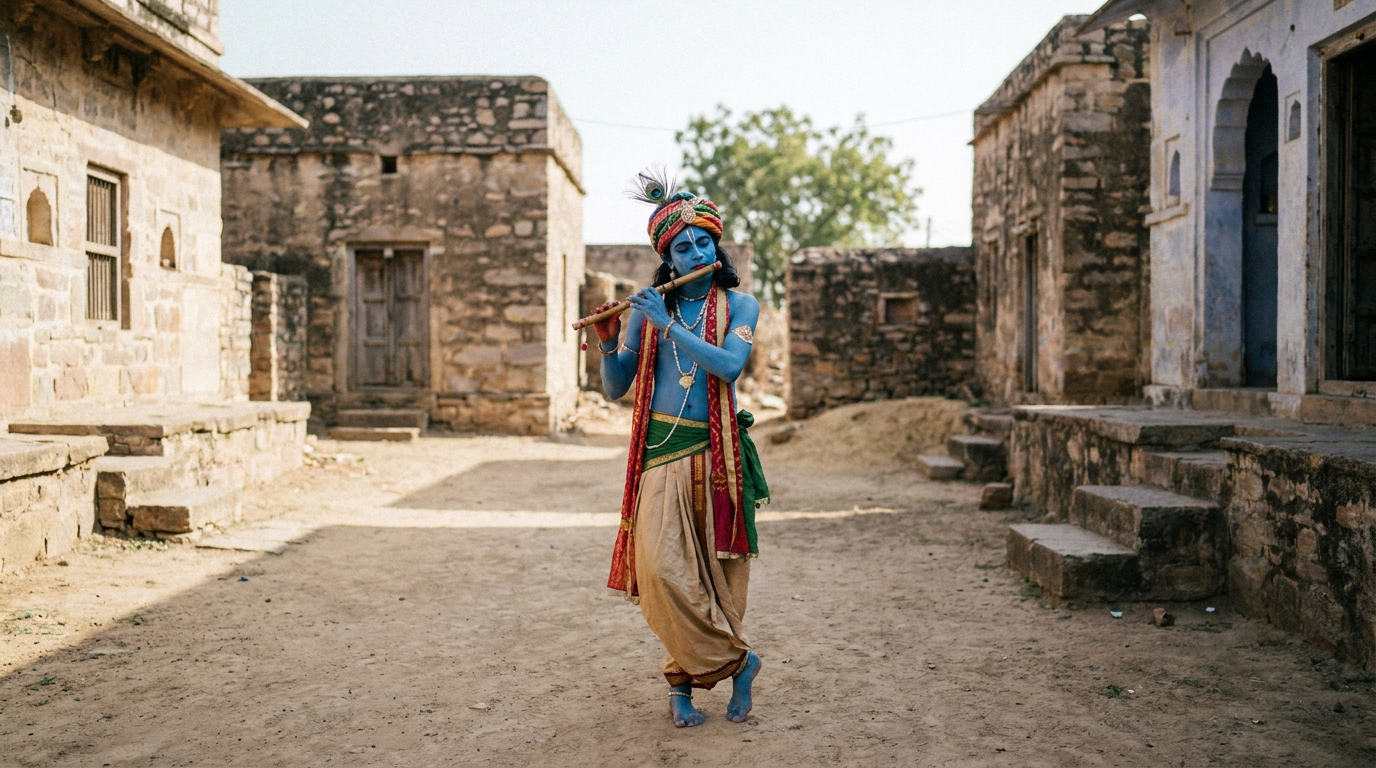
Krishna’s life is described in sacred texts such as the Srimad Bhagavatam, the Mahabharata, and various writings of great Bhakti saints. His divine activities are called lila, meaning spiritual pastimes or loving play.
The word “pastime” helps us understand that Krishna’s actions are not forced by karma like ours. He appears and acts out of love, to attract souls back to Him.
Krishna in Vrindavan
Krishna spent His childhood in Vrindavan, a sacred village known for forests, cows, rivers, music, and simple-hearted devotion. There He played as a cowherd boy, cared for the calves, danced with His friends, stole butter, and filled everyone’s hearts with love.
These stories may appear sweet and simple, but they reveal deep spiritual truths. Krishna allows His devotees to love Him intimately. In Vrindavan, some love Him as a child, some as a friend, some as a beloved, and some as the Lord of their life.
Bhakti teaches that love of God can be personal, tender, and full of emotion. Krishna is not only the ruler of the universe; He is also the butter thief of Vrindavan, stealing the hearts of His devotees.
Krishna and the Gopis
The gopis are the cowherd maidens of Vrindavan, famous for their pure love for Krishna. Their devotion is considered the highest example of selfless love in Bhakti literature.
Their love is not ordinary romance. It is the soul’s complete longing for God, beyond ego, pride, and selfish desire. The gopis show us what it means to give the heart fully to Krishna.
For newcomers, these teachings should be approached respectfully and gradually, with guidance. The deeper pastimes of Krishna are sacred and meant to purify, not imitate. Their message is that divine love is the highest treasure.
Krishna as Arjuna’s Friend
In the Mahabharata, Krishna becomes the charioteer and guide of Arjuna. Though He is God, He takes the humble role of servant to His devotee.
This is one of the most beautiful aspects of Krishna. He does not demand love from a distance. He enters relationship. He drives Arjuna’s chariot, speaks wisdom, protects him, and stays beside him in crisis.
This teaches us that Krishna is not far away from our struggles. When we turn toward Him, He becomes the guide of our inner chariot—the heart and mind.
The Practice of Bhakti Yoga
Bhakti Yoga means the yoga of love and devotion. The word yoga means connection, and bhakti means loving devotion. So Bhakti Yoga is the path of reconnecting with God through love.
It is not limited to a certain nationality, gender, age, or social status. Bhakti is the natural activity of the soul. Everyone can practice it.
Hearing About Krishna
One of the first practices of Bhakti is sravanam, or hearing. We hear about Krishna from scripture, saints, teachers, kirtan, and sincere devotees.
Hearing cleanses the heart. The Srimad Bhagavatam explains that by regularly hearing about Krishna, the desire to love Him awakens naturally.
Practical ways to hear include reading the Bhagavad-gita, listening to kirtan, attending satsang, hearing classes, or reading devotional reflections. Even a few minutes daily can make a difference.
Chanting and Prayer
Chanting Krishna’s names and offering heartfelt prayers are central to Bhakti. Prayer does not need to be complicated. You can speak honestly.
You might pray:
“Krishna, please help me remember You.”
“Please guide my choices.”
“Please purify my heart.”
“Please teach me how to love.”
“Please accept whatever I can offer today.”
The sincerity matters more than the words.
Offering Food to Krishna
Another beautiful practice is offering food to Krishna before eating. In Sanskrit, sanctified food is called prasadam, meaning mercy.
Krishna says in the Bhagavad-gita that if one offers Him a leaf, a flower, fruit, or water with love, He accepts it. This verse shows Krishna’s kindness. He does not ask for something extravagant. He asks for love.
To begin, prepare vegetarian food with care, place it before a picture or form of Krishna, and offer a simple prayer: “Dear Krishna, please accept this food prepared with love.” After a few moments, the food becomes prasadam.
Eating prasadam reminds us that nourishment is a gift from God.
Service as Devotion
Service is the natural expression of love. In Bhakti, service is called seva. Seva can include helping in a temple, cooking, cleaning, sharing wisdom, supporting others, caring for family, using talents for Krishna, or simply being kind.
When service is offered to Krishna, it purifies the heart. Even simple tasks become sacred.
A person may think, “I am only washing dishes,” but if done with devotion, those dishes become part of worship. Bhakti transforms the ordinary into an offering.
Krishna and Daily Life
Many people wonder how to bring Krishna into modern life. We may have jobs, families, studies, responsibilities, stress, and distractions. Bhakti does not require that we escape the world. It teaches us how to live with spiritual purpose within it.
Creating a Sacred Morning
Morning is a powerful time for spiritual practice. Even a short morning routine can shape the entire day.
You might begin with:
- A few minutes of chanting
- Reading one verse from the Bhagavad-gita
- Offering a simple prayer
- Lighting a candle or incense
- Sitting quietly and remembering Krishna
The goal is not perfection. The goal is connection.
If your mornings are busy, start with one sincere moment. Even saying “Krishna, please guide me today” can open the heart.
Remembering Krishna at Work
Work can become spiritual when we shift our intention. Instead of working only for ego, recognition, or anxiety, we can offer our efforts to Krishna.
Before starting work, you might pray: “Krishna, may I do this with honesty, patience, and service.”
This simple intention changes consciousness. It helps us act with integrity and humility. It reminds us that our talents are gifts meant to be used in a higher way.
Family and Relationships
Krishna consciousness can deeply enrich relationships. When we understand that every person is a soul, part of Krishna, we become more patient and compassionate.
Bhakti does not make us cold or detached from others. True devotion softens the heart. It teaches us to love people as beloved children of God.
In family life, devotional practices can be simple: chanting together, honoring prasadam, keeping sacred books at home, celebrating Krishna’s festivals, or offering gratitude before meals.
Facing Difficulty with Krishna
Life brings pain, loss, confusion, and fear. Bhakti does not deny suffering. Instead, it gives us shelter.
Krishna promises in the Bhagavad-gita that He protects what His devotees have and carries what they lack. This does not mean life will always be easy. It means we are never alone.
In hard times, chanting may become more honest. Prayer may become deeper. We may discover that Krishna was closest when we felt most broken.
The Scriptures That Reveal Krishna
Bhakti Yoga is rooted in a rich scriptural tradition. These texts are not meant only for scholars. They are living guides for the heart.
Bhagavad-gita
The Bhagavad-gita is a practical and profound guide to spiritual life. It explains the soul, God, action, meditation, knowledge, devotion, and surrender.
For beginners, the Gita is one of the best places to start. Reading even one verse a day, with reflection, can gradually transform our vision.
Krishna’s teachings are compassionate and realistic. He understands the human struggle and gives a path that can be practiced step by step.
Srimad Bhagavatam
The Srimad Bhagavatam is a beautiful scripture centered on devotion to Krishna. It includes philosophical teachings, stories of saints, prayers, and detailed descriptions of Krishna’s pastimes.
The Bhagavatam teaches that hearing about Krishna is spiritually powerful. It nourishes faith and awakens love.
It also presents the lives of great devotees who faced challenges with courage, humility, and deep trust in God.
Chaitanya Charitamrita
The Chaitanya Charitamrita tells the life and teachings of Sri Chaitanya Mahaprabhu, who is honored in the Gaudiya Vaishnava tradition as Krishna Himself appearing in the mood of a devotee.
Sri Chaitanya spread the chanting of Krishna’s holy names and taught that divine love is the highest goal of life. His message was generous and inclusive: anyone can chant, anyone can serve, anyone can receive Krishna’s mercy.
Krishna Festivals and Sacred Culture
Devotional culture helps the heart remember Krishna through music, food, art, celebration, and community. Festivals are not only cultural events; they are opportunities to enter sacred remembrance.
Janmashtami
Janmashtami celebrates Krishna’s appearance in this world. Devotees fast, sing kirtan, hear Krishna’s pastimes, decorate temples, and joyfully welcome Him at midnight.
The mood of Janmashtami is gratitude. Krishna appears to remind us that divine love is real and available.
Even at home, you can celebrate by reading about Krishna’s birth, chanting, preparing a simple offering, or praying for your heart to become a place where Krishna can appear.
Govardhan Puja
Govardhan Puja honors Krishna’s lifting of Govardhan Hill to protect the residents of Vrindavan from devastating rain. This pastime reveals Krishna as the loving protector of His devotees.
It also teaches humility. Krishna redirected worship away from prideful ritual and toward simple gratitude for God’s gifts: land, cows, food, community, and nature.
Radhastami
Radhastami celebrates Srimati Radharani, Krishna’s most beloved devotee and the embodiment of pure devotion. In Bhakti, Radha represents the highest love for Krishna.
Devotees pray to Radharani for the blessing of sincere devotion. Her compassion helps us approach Krishna with a softened heart.
Common Questions About Krishna
It is natural to have questions. Bhakti welcomes honest inquiry. Faith grows stronger when it is nourished by understanding, practice, and experience.
Is Krishna a Hindu God?
Krishna appears within the Vedic tradition, which many people associate with Hinduism. But Krishna is not limited by any label. Bhakti teachings describe Him as the Supreme Lord of all beings, beyond nationality, race, and religious boundary.
A person from any background can chant Krishna’s names, read the Bhagavad-gita, offer prayer, and develop love for Him.
At The Bhakti House, all sincere seekers are welcome. You do not have to “become” something externally before beginning. You can start with your heart.
Do I Have to Give Up My Life to Follow Krishna?
Following Krishna does not necessarily mean leaving your home, career, or family. It means bringing Krishna into the center of your life.
Some people live as monks or nuns. Others practice Bhakti as students, parents, professionals, artists, or community members. The essence is the same: remember Krishna, chant His names, offer your actions, and serve with love.
Bhakti grows naturally. As your heart changes, your choices become clearer.
What If I Am Not Pure?
No one begins perfect. Krishna does not ask for perfection before relationship. He asks for sincerity.
The path itself purifies. Chanting, hearing, prayer, and service gradually cleanse the heart. We may stumble, but we keep returning.
Krishna is known as bhakta-vatsala, which means He is especially affectionate to His devotees. He sees our effort, even when it is small.
Can I Practice Krishna Bhakti Alongside My Current Faith?
Many people first approach Krishna while coming from another faith or spiritual background. Bhakti encourages respect for sincere devotion wherever it is found.
If you feel drawn to Krishna, you can begin gently: chant, read, pray, and see how your heart responds. Krishna consciousness is not about rejecting others. It is about deepening love for God and compassion for all beings.
The Heart of Krishna Bhakti
At its core, Krishna Bhakti is love. Not fear. Not social identity. Not mere ritual. Not dry philosophy. Love.
This love is awakened through practice and grace. We practice by chanting, hearing, praying, serving, and remembering. Grace comes from Krishna, from the holy names, from scripture, from saints, and from the community of devotees.
Humility Opens the Door
Bhakti grows in a humble heart. Humility does not mean thinking we are worthless. It means recognizing our dependence on God and honoring others as souls.
Sri Chaitanya Mahaprabhu taught that one should chant the holy name with humility, tolerance, and respect for all. These qualities make the heart a welcoming place for Krishna.
Love Expressed Through Service
Love becomes real through service. If we say we love Krishna, we naturally want to serve Him and His creation.
This service may be very simple: offering food, chanting with attention, helping someone in need, cleaning a sacred space, sharing prasadam, or speaking kindly.
Krishna accepts the heart behind the offering.
Spiritual Growth Is a Journey
Bhakti is not a race. Some days feel inspired. Other days feel dry or distracted. This is normal.
The important thing is to continue. Keep chanting. Keep hearing. Keep praying. Keep serving. Keep good company. Over time, the heart becomes softer, faith becomes steadier, and Krishna becomes more real in daily life.
How to Begin Your Relationship with Krishna Today
You can begin right now, without waiting for ideal circumstances. Krishna is already in your heart as the Supersoul, the inner guide. He has been with you through every season of life, patiently waiting for you to turn toward Him.
Start with One Simple Practice
Choose one practice and do it sincerely for a week:
- Chant the Hare Krishna maha-mantra for five minutes daily
- Read one verse from the Bhagavad-gita each morning
- Offer one meal to Krishna before eating
- Say a heartfelt prayer before bed
- Attend one kirtan or Bhakti gathering
- Listen to Krishna kirtan while walking or driving
- Do one act of service in Krishna’s name
Small steps, taken with sincerity, are powerful.
Keep Devotional Association
In Sanskrit, spiritual community is called sanga. Good association strengthens the heart. When we spend time with people who are trying to remember Krishna, we feel encouraged to keep going.
A Bhakti community should be a place of humility, kindness, learning, and service. We grow together, not by judging one another, but by helping each other remember God.
Let Krishna Meet You Personally
Everyone’s journey with Krishna is personal. Some feel drawn through philosophy. Some through music. Some through prasadam. Some through prayer. Some through the beauty of Krishna’s form. Some through the kindness of devotees.
Trust the way Krishna is reaching for you. Be curious. Be patient. Be sincere.
Krishna says in the Bhagavad-gita that as we approach Him, He reciprocates accordingly. This means He responds to every honest step.
A Loving Invitation
Krishna is the all-attractive Lord, the friend of every soul, and the source of the love we have always been searching for. He is found in sacred scripture, in the sound of His holy names, in the taste of prasadam, in humble service, in prayer, and in the quiet turning of the heart.
You do not need to know everything to begin. You do not need to be perfect. You do not need to come from any particular background. Bhakti Yoga is a practical path of love, open to all.
Today, you can take one sincere step toward Krishna. Chant one mantra. Offer one prayer. Read one verse. Serve one person with love. Sit for one moment and say, “Krishna, please guide me.”
Everyone is welcome. Your heart is welcome. Your questions are welcome. Your journey is welcome. And Krishna, who has always loved you, is ready to receive your sincere step toward Him.
FAQs
What is Krishna?
Krishna is a major deity in Hinduism, considered to be the eighth avatar of the god Vishnu. He is a central figure in the sacred text, the Bhagavad Gita, and is often depicted as a young, blue-skinned man playing a flute.
What are the key teachings of Krishna?
Krishna’s teachings emphasize the importance of duty, righteousness, and devotion. He encourages his followers to perform their duties selflessly and without attachment to the results, and to surrender to the divine.
What are some of the popular stories and legends associated with Krishna?
Krishna is known for his childhood exploits, such as stealing butter and playing pranks on the villagers. He is also famous for his role in the Mahabharata, where he serves as the charioteer and advisor to the warrior Arjuna.
How is Krishna worshipped?
Krishna is worshipped in various forms, including as a child (Balakrishna), a lover (Radha-Krishna), and a charioteer (Parthasarathi). Devotees often perform puja (ritual worship), chant his names, and celebrate festivals such as Janmashtami.
What is the significance of Krishna in Hinduism?
Krishna is revered as a supreme being and a source of divine love and joy. His teachings and actions serve as a guide for living a righteous and fulfilling life, and he is considered a symbol of compassion and wisdom.

