
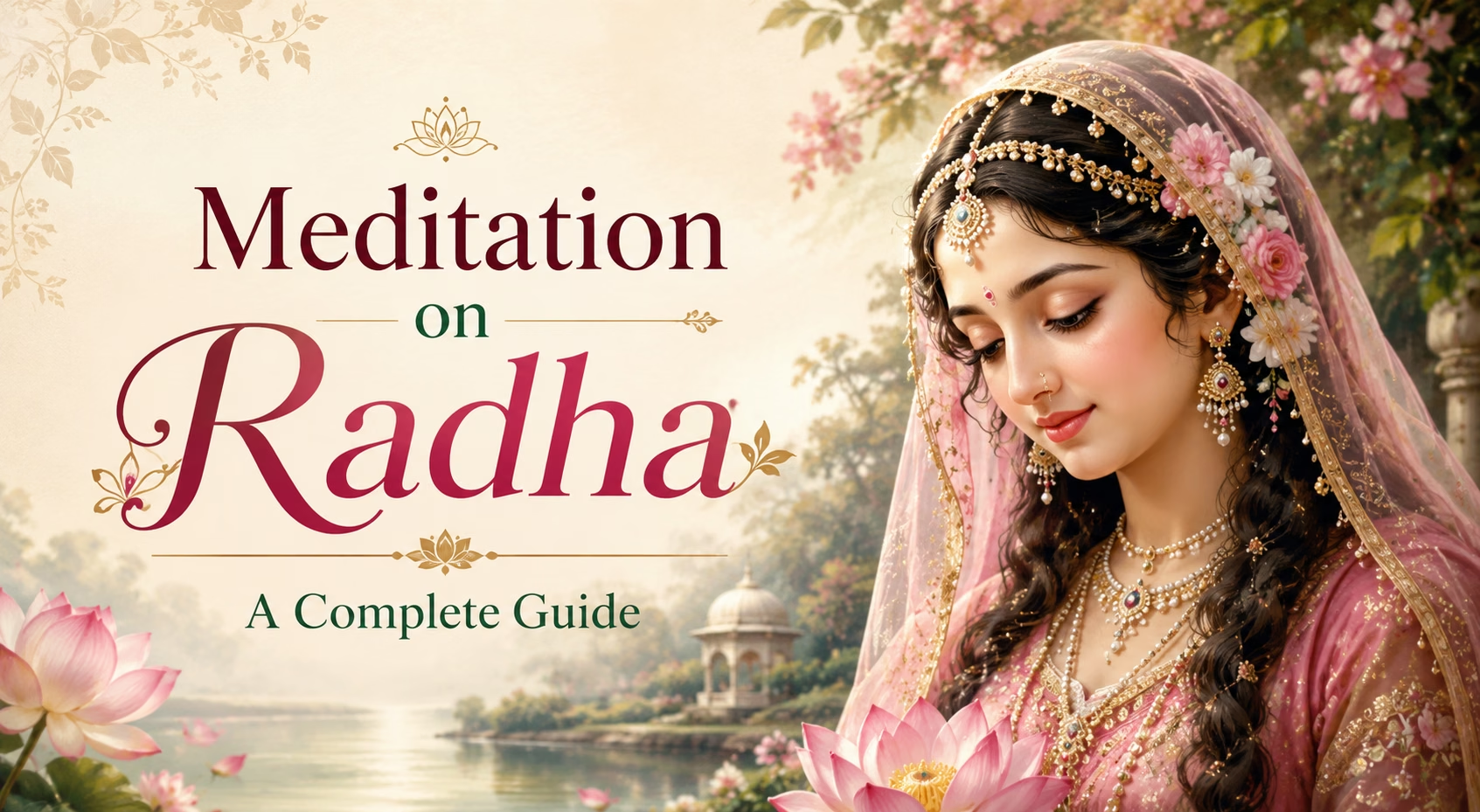
Meditation on Radha is a gentle doorway into the heart of Bhakti Yoga, the path of loving devotion. In Bhakti, meditation is not only a technique for calming the mind. It is a sacred practice of remembering, serving, and lovingly turning our whole being toward the Divine.
Radha, often called Srimati Radharani in the Bhakti tradition, is the supreme devotee of Krishna. She is the embodiment of pure love, divine compassion, and selfless devotion. To meditate on Radha is to meditate on the highest expression of love for God.
Whether you are new to Bhakti Yoga, returning after time away, or simply curious about the spiritual meaning of Radha, this guide is offered with humility. You do not need to come from any particular background, culture, or level of experience. The path of devotion begins with sincerity.
Radha is the beloved of Krishna and the most exalted devotee in the Vaishnava tradition, especially in the teachings of the Bhagavata Purana and the writings of great Bhakti saints.
In simple terms, Krishna is understood as the all-attractive Supreme Person, and Radha is the perfect expression of love for Him. She shows us what it means to love God without selfish desire, without pride, and without expectation of reward.
Radha as the Embodiment of Divine Love
The Sanskrit word bhakti means devotion, loving service, or heartfelt dedication to God. Radha is the fullest embodiment of bhakti. Her love is not ordinary emotion. It is pure, self-giving, and completely centered on Krishna’s happiness.
In Bhakti scriptures, Radha’s love is described as the highest spiritual treasure because it is free from ego. She does not love Krishna for personal gain. She loves because love itself is her nature.
For practitioners, meditating on Radha helps us ask a simple but powerful question:
“How can my heart become more loving, more humble, and more available to God?”
Radha and Krishna: The Divine Couple
Radha and Krishna are often worshiped together as the Divine Couple. In many Bhakti traditions, they are understood as the divine feminine and divine masculine aspects of the Absolute Truth.
This does not mean they are separate in a material sense. Rather, Radha and Krishna reveal the fullness of divine relationship: the Lover and the Beloved, the One who is loved and the One who loves perfectly.
Meditating on Radha naturally leads us toward Krishna, and meditating on Krishna naturally awakens reverence for Radha. Their love is the spiritual center of many devotional practices.
Why Radha Matters for Spiritual Seekers Today
In a world that often teaches us to measure our worth by productivity, appearance, or success, Radha reminds us that the deepest identity of the soul is love.
She teaches that spiritual life is not only about knowledge, discipline, or morality, though all of these can be helpful. At its core, spiritual life is about relationship with God.
Radha’s example invites us to become softer, more sincere, more prayerful, and more compassionate.
What Does It Mean to Meditate on Radha?
Meditation on Radha means bringing the mind, heart, and senses into loving remembrance of her qualities, her service, her compassion, and her relationship with Krishna.
This kind of meditation is devotional. It is not emptying the mind for its own sake, though the mind may become peaceful. It is filling the heart with sacred remembrance.
Meditation as Remembrance
In Sanskrit, the word smaranam means remembrance. It is one of the nine practices of Bhakti described in the Bhagavata Purana. These nine practices include hearing, chanting, remembering, serving, praying, worshiping, and offering oneself to God.
To meditate on Radha is to practice sacred remembrance. We remember her love, her humility, her sweetness, and her complete dedication to Krishna.
This remembrance can happen while sitting quietly, chanting, singing, walking, cooking, serving others, or praying.
Meditation as Relationship
In Bhakti Yoga, meditation is personal. We are not simply focusing on an abstract idea. We are turning toward a living spiritual reality.
Radha is approached with reverence, tenderness, and humility. Many practitioners pray to Radha for guidance because she is known as the compassionate intercessor who helps souls come closer to Krishna.
A simple prayer might be:
“Dear Radha, please teach me how to love God. Please soften my heart and guide me in sincere devotion.”
Meditation as Service
The Sanskrit word seva means service. In Bhakti, love becomes real through service. Meditation on Radha is not separate from how we live. If we meditate on her compassion but do not become more compassionate, our meditation remains incomplete.
To meditate on Radha is to ask:
“How can I serve with less ego today?”
“How can I bring kindness into my relationships?”
“How can my work, words, and choices become an offering?”
Preparing the Heart for Meditation on Radha
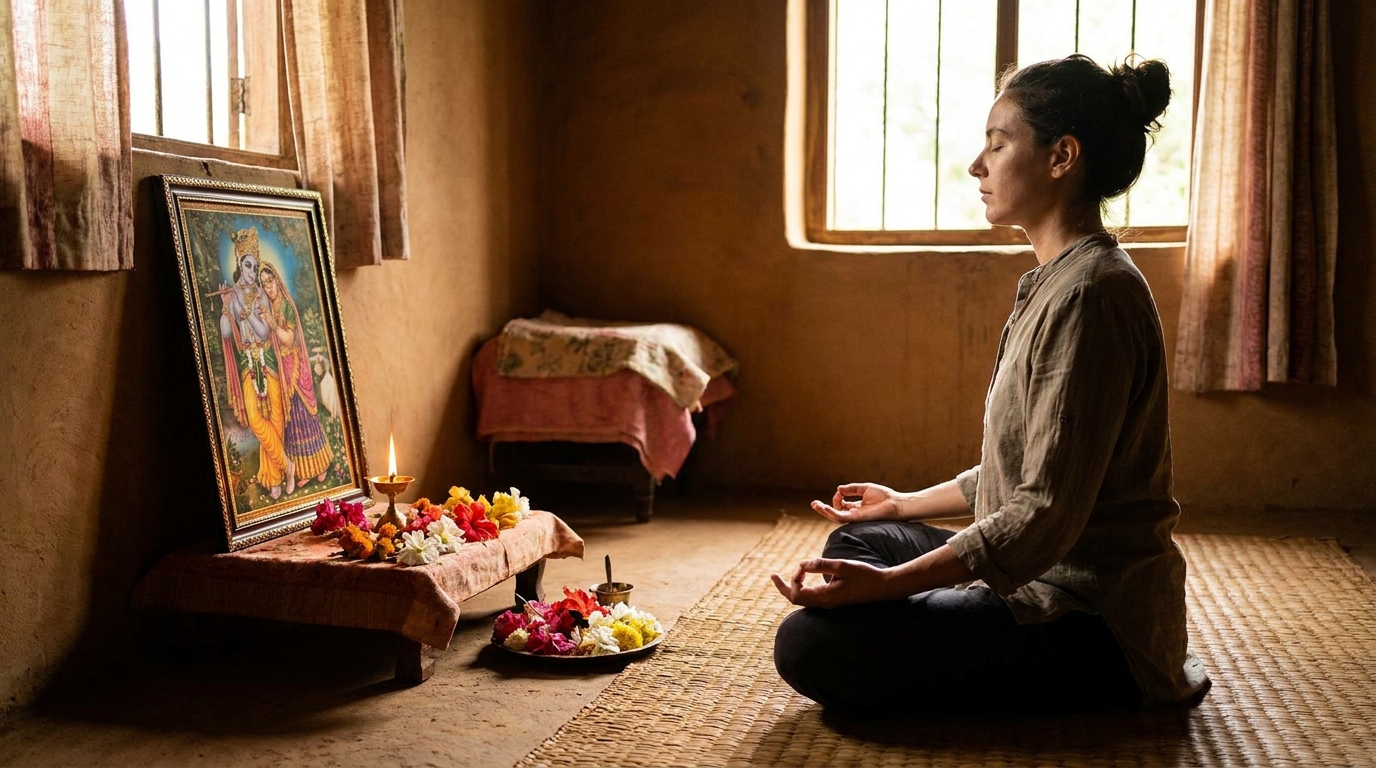
Before beginning any spiritual meditation, it is helpful to prepare the heart. This preparation does not need to be complicated. Radha is approached through sincerity, not perfection.
Create a Simple Sacred Space
You may choose a quiet corner in your home for prayer and meditation. It can be very simple: a clean space, a candle, flowers, a picture of Radha and Krishna, sacred texts, or prayer beads.
The purpose of a sacred space is not decoration alone. It is a gentle reminder: “This part of my life belongs to God.”
If you do not have any items, do not worry. Your heart is the first temple.
Begin with Cleanliness and Respect
In Bhakti traditions, cleanliness is valued because it supports clarity and reverence. You may wash your hands, sit comfortably, and take a few slow breaths before beginning.
This is not about becoming spiritually impressive. It is about signaling to the mind and body that you are entering sacred time.
Even one sincere minute can become holy when offered with love.
Offer a Prayer of Humility
Humility is essential in Bhakti Yoga. We do not force spiritual experience. We receive grace.
Before meditating on Radha, you can offer a simple prayer:
“Dear Srimati Radharani, I do not know how to love purely. Please guide me. Please allow me to remember you and serve God with sincerity.”
This kind of prayer opens the heart. It reminds us that meditation is not merely self-effort; it is a meeting place between our longing and divine mercy.
Please visit our website for more information on our articles: articles.
Practical Ways to Meditate on Radha
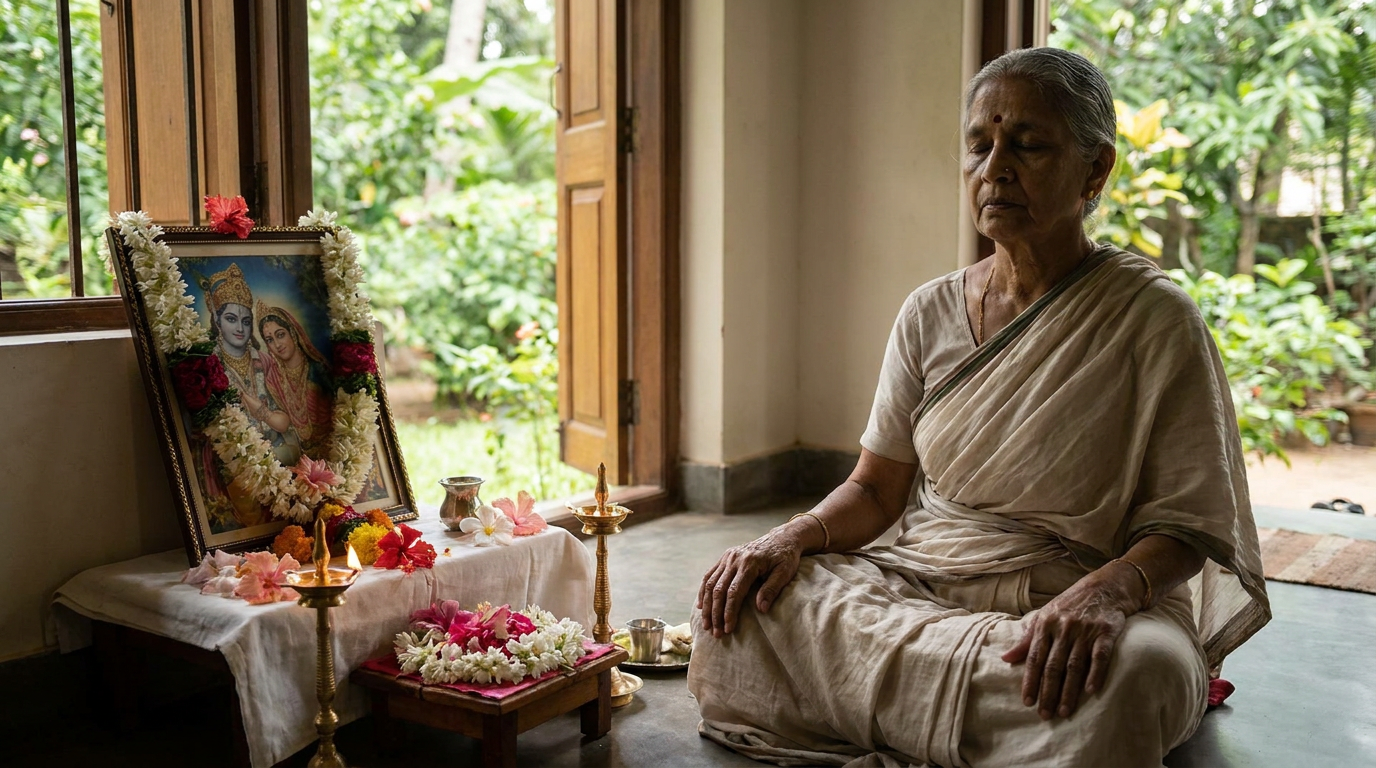
There are many ways to meditate on Radha. Different people connect in different ways, and Bhakti Yoga lovingly gives room for the whole person: the voice, the mind, the body, the emotions, and the daily life.
Chanting the Holy Names
Chanting is one of the most accessible and powerful practices in Bhakti Yoga. The Sanskrit word mantra means a sacred sound that helps free the mind and awaken spiritual consciousness.
A central mantra in the Bhakti tradition is the Hare Krishna maha-mantra:
Hare Krishna Hare Krishna
Krishna Krishna Hare Hare
Hare Rama Hare Rama
Rama Rama Hare Hare
In this mantra, “Hare” is understood by many teachers as an address to the divine energy of the Lord, especially Radha. When we chant “Hare,” we are calling out for divine grace, asking to be engaged in loving service.
The word maha means great, so maha-mantra means “the great mantra.” This chant is a prayer: “O Divine Energy, O Lord, please engage me in Your loving service.”
You can chant softly, sing with others, or repeat the mantra on prayer beads called japa mala. Begin with a few minutes daily. Let the sound be sincere rather than perfect.
Visual Meditation on Radha and Krishna
Some practitioners meditate by gently contemplating a sacred image of Radha and Krishna. The goal is not fantasy or forced visualization. It is loving remembrance.
You may look at an image and notice Radha’s grace, compassion, and devotion. Then close your eyes and hold that feeling in your heart.
If the mind wanders, gently return to the prayer:
“Please let me remember You with love.”
This practice can soften the heart and help the mind become steady.
Meditating on Radha’s Qualities
Another beautiful practice is to meditate on Radha’s qualities one at a time.
For example:
- Her compassion
- Her humility
- Her complete devotion to Krishna
- Her sweetness
- Her patience
- Her selfless service
- Her ability to bring others closer to God
Choose one quality and sit with it. Ask yourself, “How can this quality appear in my life today?”
If you meditate on Radha’s compassion, you might choose to forgive someone, speak more gently, or serve someone in need.
Singing Kirtan
Kirtan means devotional singing, usually of God’s names. In Bhakti Yoga, kirtan is meditation through music, community, and the heart.
When we sing the names of Radha and Krishna, we are not performing for approval. We are offering our voice, breath, and emotions back to God.
Kirtan can be joyful, tearful, peaceful, or simple. There is no need to be a trained singer. The sincerity of the heart is the real offering.
Names often sung include:
Radhe Govinda
Radhe Shyam
Radha Krishna
Jaya Radhe, Jaya Krishna
“Jaya” means victory, praise, or glory. “Govinda” and “Shyam” are names of Krishna. “Radhe” is a loving way of calling out to Radha.
Journaling as Devotional Reflection
Writing can also become meditation. After chanting or prayer, take a few minutes to journal.
You might write:
“Dear Radha, please help me understand love.”
“Where am I holding back from God?”
“How can I serve with more humility today?”
“What did I notice during chanting?”
This practice helps bring spiritual insight into daily life.
A Step-by-Step Meditation on Radha
Here is a simple practice you can try at home. You may do it for five minutes or thirty minutes. Let it be gentle.
Step 1: Sit and Breathe
Find a comfortable seat. Keep your spine relaxed but upright. Take a few slow breaths.
With each exhale, release tension from the body. Allow the mind to settle.
You might quietly say:
“I am here to remember. I am here to love. I am here to serve.”
Step 2: Offer Respect
Bring your palms together if that feels natural. Offer a simple prayer:
“Dear Radha, please bless this meditation. Please guide my heart toward sincere devotion.”
This prayer helps shift the mood from self-centered effort to sacred receptivity.
Step 3: Chant or Repeat a Name
Begin chanting the maha-mantra or a simple name such as “Radhe” or “Radha Krishna.”
Let each repetition be like placing a flower at the feet of the Divine.
If the mind wanders, do not become discouraged. Wandering is natural. Gently return to the sound.
Step 4: Remember Radha’s Love
After chanting, sit quietly and reflect on Radha’s love for Krishna. Her love is pure, humble, and complete.
You do not need to imitate her exalted state. Simply honor it.
Pray:
“May even one drop of this love awaken in my heart.”
Step 5: Offer Your Day
End by offering your life as service.
You might say:
“May my words, thoughts, and actions today become an offering. Please help me serve with kindness.”
Then carry the meditation into your day through one practical act of love.
Radha in Bhakti Scriptures
Authentic Bhakti scripture gives us a foundation for meditation. These sacred texts do not present Radha as a mythological symbol only, but as the highest expression of divine devotion.
The Bhagavata Purana and the Mood of Devotion
The Bhagavata Purana, also called Srimad Bhagavatam, is one of the most beloved scriptures in the Bhakti tradition. It describes the loving pastimes of Krishna and the deep devotion of the residents of Vrindavan, the sacred land associated with Radha and Krishna.
While Radha’s name is often revealed indirectly in the Bhagavata Purana, the tradition understands her presence as central. The gopis, the cowherd maidens of Vrindavan, represent the highest devotion, and Radha is honored as the foremost among them.
Their love is not ordinary romance. Bhakti teachers explain that it is the soul’s total longing for God, beyond ego and selfishness.
The Brahma-Samhita and Divine Beauty
The Brahma-Samhita praises Krishna as Govinda, the original Lord, and describes the spiritual world as full of beauty, love, and devotion. In the Bhakti tradition, Radha is inseparable from this divine reality.
Meditating on Radha helps us understand that spiritual life is not dry or lifeless. It is full of beauty, music, fragrance, kindness, and loving exchange.
This can transform how we see the world. A flower can become an offering. A meal can become sacred. A song can become prayer.
The Teachings of Chaitanya Mahaprabhu
Sri Chaitanya Mahaprabhu, a 15th-century saint and incarnation of divine love according to Gaudiya Vaishnava tradition, deeply emphasized the worship of Radha and Krishna through chanting the holy names.
Chaitanya Mahaprabhu taught that in this age, the most practical spiritual method is nama-sankirtana, the congregational chanting of God’s names. Nama means name, and sankirtana means singing or chanting together.
His life showed that love of God is not limited by birth, status, education, gender, or background. Anyone can chant. Anyone can pray. Anyone can receive grace.
Common Questions About Meditating on Radha
Spiritual practice often brings questions. Questions are welcome. In Bhakti, honest inquiry can deepen faith.
Do I Have to Be Hindu to Meditate on Radha?
No. While Radha is honored within Hindu and Vaishnava traditions, sincere meditation on divine love is open to all.
Bhakti Yoga welcomes the heart. You do not need to change your cultural identity to begin chanting, praying, or learning from Radha’s example of love.
Respect is important. Approach the tradition with humility, openness, and willingness to learn from authentic teachers and scriptures.
Is Radha a Goddess?
In many Bhakti traditions, Radha is worshiped as the supreme goddess, the divine feminine energy of Krishna, and the queen of devotion. She is not seen as separate from God’s highest reality, but as God’s own loving potency.
The Sanskrit word shakti means energy or power. Radha is understood as Krishna’s internal spiritual energy, the power of divine love.
For beginners, it may help to understand Radha as the fullest revelation of God’s love and the greatest guide into loving relationship with Krishna.
What If I Feel Nothing During Meditation?
This is very common. Spiritual practice is not measured only by feelings.
Some days meditation feels peaceful. Other days the mind is restless. Sometimes we feel devotion; sometimes we feel dry. The important thing is sincerity and steadiness.
In Bhakti Yoga, even showing up is meaningful. Every sincere mantra, every humble prayer, every small act of service is spiritually valuable.
Radha sees the intention of the heart.
Can I Meditate on Radha During Daily Life?
Yes. In fact, daily life is where meditation becomes real.
You can remember Radha while cooking, driving, working, caring for family, cleaning, or walking. You can silently chant while doing simple tasks. You can offer your actions before beginning them.
A practical prayer is:
“May this be done as service.”
This turns ordinary life into devotional life.
The Inner Attitudes That Support Radha Meditation
Techniques are helpful, but the heart’s attitude is even more important. Radha meditation grows in the soil of humility, sincerity, gratitude, and service.
Humility
Humility does not mean thinking poorly of yourself. It means recognizing that love of God is a gift.
We come before Radha not as spiritual achievers, but as learners. We ask to be taught how to love.
This attitude protects us from pride and opens us to grace.
Sincerity
Sincerity means being honest with God. If you feel distracted, say so. If you feel longing, offer it. If you feel confused, pray through it.
Bhakti does not require pretending. Radha’s compassion reaches the real heart, not the polished image we may try to present.
Gratitude
Gratitude nourishes meditation. Before or after your practice, name a few blessings: breath, shelter, friendship, food, the chance to chant, the guidance of saints, or even the desire to seek God.
Gratitude helps the heart become receptive.
Service
Meditation matures through service. If you chant but remain unkind, the practice has not yet reached the heart. If meditation helps you become more patient, generous, and truthful, then it is bearing fruit.
Service can be simple:
- Offer food with prayer
- Help someone without expecting praise
- Speak gently
- Give time to spiritual community
- Support those in need
- Care for the earth as God’s creation
Radha’s meditation becomes living devotion when love flows outward.
Building a Daily Practice of Radha Meditation
A daily practice does not need to be long. It needs to be sincere and sustainable.
Start Small and Stay Steady
Begin with five to ten minutes each day. Choose a time that works for your life, perhaps early morning, before sleep, or during a quiet lunch break.
You might follow this rhythm:
- Offer a short prayer
- Chant the maha-mantra or Radha’s name
- Sit quietly in remembrance
- Read one verse or teaching
- Offer one action of the day as service
Consistency matters more than intensity. A small flame, protected daily, can become a steady lamp.
Read Sacred Texts with Devotion
Reading scripture is another form of meditation. You may read from the Bhagavad Gita, Bhagavata Purana, or writings of Bhakti saints and teachers.
The Bhagavad Gita teaches that whatever we do, whatever we eat, whatever we offer or give, can be offered to Krishna. This practical teaching helps us bring devotion into every part of life.
When reading, do not rush. Ask:
“What is this teaching inviting me to practice today?”
Keep Holy Company
In Sanskrit, sadhu-sanga means association with saintly or spiritually sincere people. The company we keep shapes the heart.
Seek out people who encourage humility, chanting, kindness, and devotion. This may be through a local temple, kirtan gathering, study group, online community, or devotional friendships.
Bhakti grows beautifully in community.
Offer Food with Love
In Bhakti Yoga, food can become sacred when offered to God. Such blessed food is called prasadam, meaning mercy or grace.
Before eating, you can simply pray:
“Dear Radha and Krishna, please accept this offering. May this food nourish me for loving service.”
This transforms eating into gratitude and remembrance.
The Fruits of Meditating on Radha
The fruits of Radha meditation may be subtle at first. Over time, they can touch every part of life.
A Softer Heart
Meditating on Radha can soften the heart. We may become more aware of our pride, impatience, or selfishness—not to condemn ourselves, but to grow.
Softness is not weakness. In Bhakti, a soft heart is a strong heart because it can receive and give love.
Deeper Love for Krishna
Radha’s greatest gift is that she brings us closer to Krishna. When we pray to her, we are asking to be guided into deeper love of God.
Many Bhakti teachers explain that Krishna is especially pleased when we approach Him through Radha’s mercy, because she is His dearest devotee.
Greater Compassion for Others
True devotion expands compassion. If meditation on Radha is real, it will help us see others with more kindness.
We begin to recognize that every person is a soul, a beloved part of God, carrying hopes, wounds, and longing.
This vision can heal relationships and inspire service.
A Life of Sacred Remembrance
The goal is not only to have peaceful meditation sessions. The deeper goal is to live in remembrance.
Radha meditation invites us to make the whole day devotional: our work, meals, conversations, rest, and struggles.
Even difficulties can become prayers:
“Please help me remember You here too.”
A Simple Radha Meditation for Beginners
If you are just beginning, here is a short practice you can use today.
Five-Minute Practice
Sit quietly and take three slow breaths.
Offer this prayer:
“Dear Radha, please guide my heart toward love.”
Chant softly for a few minutes:
Hare Krishna Hare Krishna
Krishna Krishna Hare Hare
Hare Rama Hare Rama
Rama Rama Hare Hare
Then sit in silence and reflect:
“What is one loving step I can take today?”
End with gratitude:
“Thank You for allowing me to remember.”
One Loving Step
After meditation, do one small act of service. Send a kind message. Wash dishes with prayer. Offer your meal. Forgive someone inwardly. Read one verse. Attend kirtan. Help a neighbor.
Bhakti grows through simple, sincere steps repeated over time.
Walking the Path with Radha’s Mercy
Meditation on Radha is not about becoming spiritually advanced in the eyes of others. It is about becoming more real, more loving, and more surrendered before God.
Radha teaches us that the highest spiritual life is not cold perfection, but warm devotion. She invites us to love Krishna with humility, to chant with sincerity, to pray honestly, and to serve others as beloved souls.
If you feel unqualified, you are not alone. Most sincere practitioners feel that way. In Bhakti, our qualification is not our perfection. Our qualification is our willingness to turn toward divine grace.
Come as you are. Bring your questions, your longing, your doubts, your gratitude, and your small offering of love. Radha’s path is tender and deep, and every sincere step matters.
Everyone is welcome to take one sincere step toward God today—one mantra, one prayer, one act of service, one moment of remembrance. Begin gently, and trust that divine love will meet you there.
FAQs
What is Radha meditation?
Radha meditation is a form of meditation that focuses on the divine love and devotion of Radha, a central figure in Hindu mythology. Practitioners of Radha meditation seek to connect with the energy and essence of Radha through various meditation techniques.
What are the benefits of practicing Radha meditation?
Practicing Radha meditation is believed to bring about a sense of inner peace, love, and devotion. It can help individuals cultivate a deeper connection with their spiritual selves and develop a greater sense of compassion and empathy towards others.
How is Radha meditation practiced?
Radha meditation can be practiced through various techniques such as chanting mantras, visualizing Radha, and focusing on her divine qualities. Practitioners may also engage in bhakti yoga, a form of devotional yoga that emphasizes love and devotion towards the divine.
Is Radha meditation associated with any specific religious tradition?
Radha meditation is closely associated with the Hindu tradition, particularly within the context of the worship of Radha and Krishna. However, individuals from diverse religious backgrounds may also practice Radha meditation as a means of connecting with the universal themes of love and devotion.
Are there any specific guidelines for practicing Radha meditation?
While there are no strict guidelines for practicing Radha meditation, individuals may choose to seek guidance from experienced practitioners or spiritual teachers. It is important to approach the practice with sincerity, reverence, and an open heart.

