

In a world that often feels hurried, noisy, and uncertain, many people are searching for inner peace. We may try to quiet the mind through rest, entertainment, achievement, or distraction, but the heart still longs for something deeper. Bhakti Yoga offers a simple and beautiful practice for this longing: daily chanting.
In Sanskrit, the word bhakti means devotion, love, or loving service to God. Bhakti Yoga is the path of awakening that love through prayer, chanting, service, sacred wisdom, and sincere spiritual living. It is not limited by background, culture, nationality, or religious history. It welcomes everyone who wants to grow in love, humility, and connection with the Divine.
Chanting is one of the most accessible practices in Bhakti Yoga. It can be done at home, in a temple, while walking, driving, cooking, or sitting quietly with prayer beads. It does not require wealth, status, or advanced study. It asks only for sincerity.
Daily chanting is not simply a sound practice. It is a relationship practice. We call out to God, and in that calling, the heart begins to soften. The mind becomes clearer. The soul remembers its true nature. Peace is not something we force into existence; it is something uncovered when we turn toward the Divine with love.
What Is Chanting in Bhakti Yoga?
Chanting in Bhakti Yoga usually means repeating sacred names of God, prayers, or mantras. A mantra is a sacred sound vibration that helps carry the mind beyond anxiety, distraction, and material confusion. The word mantra comes from two Sanskrit roots: man, meaning “mind,” and tra, meaning “to free” or “to protect.” In simple terms, a mantra is a sound that helps free the mind and protect the heart.
Chanting as a Loving Call
In Bhakti, chanting is not mechanical or impersonal. It is a loving call. Just as a child calls out to a parent, or a friend calls the name of someone beloved, the devotee calls upon God through sacred names.
One of the most widely practiced mantras in the Bhakti tradition is the Hare Krishna maha-mantra:
Hare Krishna Hare Krishna
Krishna Krishna Hare Hare
Hare Rama Hare Rama
Rama Rama Hare Hare
Maha-mantra means “great mantra.” “Hare” addresses the divine energy of the Lord, the compassionate spiritual energy that helps us reconnect with God. “Krishna” means “the all-attractive one,” and “Rama” means “the source of joy and spiritual pleasure.” When we chant this mantra, we are praying, “O Lord, O divine energy of the Lord, please engage me in Your loving service.”
This is the heart of Bhakti: not just asking God to serve our plans, but asking to be lovingly guided into God’s plan.
Japa and Kirtan
There are two common forms of chanting in Bhakti Yoga: japa and kirtan.
Japa is personal, meditative chanting, often done softly or quietly on prayer beads. A traditional set of Bhakti prayer beads has 108 beads, and the practitioner chants one mantra on each bead. Japa helps develop steadiness, focus, and a personal relationship with God.
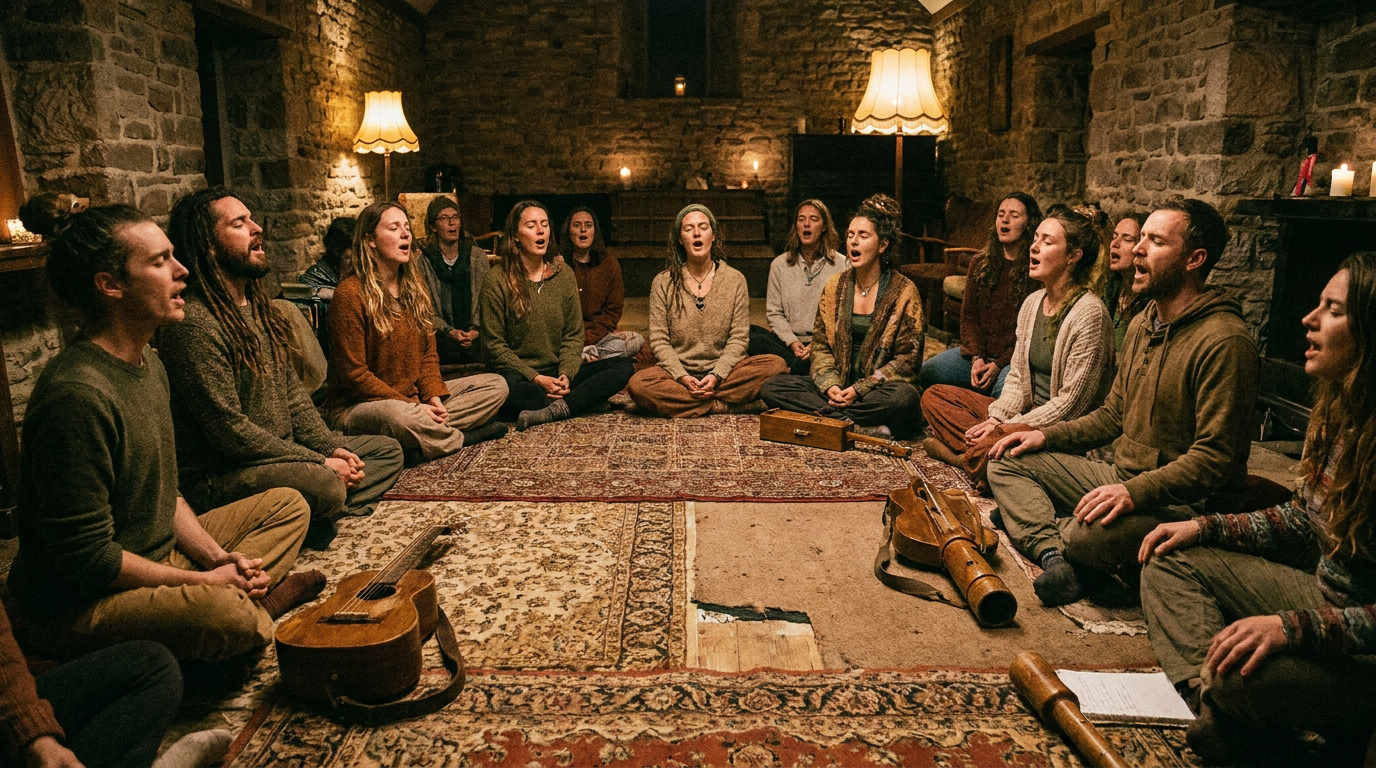
Kirtan is congregational chanting, often with music. It may include call-and-response singing, instruments, clapping, and joyful participation. Kirtan reminds us that spiritual life is not only private; it is also shared. We support one another by singing the holy names together.
Both japa and kirtan can bring inner peace because both reconnect the wandering mind with the sacred.
The Mind Needs a Higher Resting Place

Many of us know what it feels like to have a restless mind. Thoughts repeat themselves. Worries grow larger than life. Memories and expectations pull us in many directions. We may sit down to relax, but the inner noise continues.
Bhakti Yoga understands that the mind is active by nature. It needs engagement. If we do not give the mind a higher focus, it will run toward fear, comparison, desire, regret, and endless planning.
Chanting gives the mind a spiritual resting place.
The Bhagavad-gita on Steady Practice
In the Bhagavad-gita, one of the most important scriptures of Bhakti Yoga, Lord Krishna speaks about the restless mind. Arjuna, Krishna’s friend and student, says that the mind is difficult to control, “restless, turbulent, obstinate, and very strong.” Many of us can relate.
Krishna does not dismiss Arjuna’s struggle. Instead, He teaches that the mind can be trained by practice and detachment. Daily chanting is one such practice. We gently bring the mind back to the sacred sound, again and again.
This is important: chanting is not about having a perfectly quiet mind from the beginning. It is about lovingly returning. If the mind wanders one hundred times, we bring it back one hundred times. Each return is an offering.
Peace Through Spiritual Absorption
The mind becomes peaceful when it is absorbed in something pure, loving, and eternal. Sacred sound is not ordinary sound. In the Bhakti understanding, God and God’s names are spiritually connected. When we chant with sincerity, we are associating with the Divine through sound.
This is why chanting can touch the heart so deeply. Even if we do not understand everything philosophically, the soul responds. The heart recognizes nourishment.
Just as sunlight naturally removes darkness, the holy names gradually remove fear, envy, anger, and loneliness from the heart. This may happen slowly, but it is real. Daily chanting invites a steady purification, like water flowing over stone until it becomes smooth.
Check out our latest posts at https://thebhaktihouse.org/blog.
Daily Chanting as a Practical Path to Inner Peace
Inner peace is not only a feeling. It is a way of living. Daily chanting helps us respond to life with more patience, compassion, and clarity. It gives us a sacred pause before the day begins, and a gentle shelter when the day feels heavy.
Begin Where You Are
One of the beautiful qualities of Bhakti Yoga is that it is practical. You do not need to change everything overnight. You can begin with five minutes a day. You can chant one mantra sincerely. You can listen to kirtan while you cook or commute. You can sit quietly and repeat God’s names with humility.
The key is consistency. A small daily practice done with sincerity is more powerful than a large practice done only once in a while.
If you are new to chanting, try this:
Set aside a simple time each day, perhaps in the morning.
Sit comfortably.
Take a few slow breaths.
Offer a short prayer: “Dear God, please help me chant with sincerity.”
Chant the Hare Krishna mantra or another sacred name of God that is meaningful to you.
When the mind wanders, gently return to the sound.
End by offering gratitude.
This simple daily chanting practice can become an anchor for your spiritual growth.
Chanting in the Morning
Morning is a sacred time in many spiritual traditions. Before the phone, the messages, the responsibilities, and the noise of the day, there is a quiet opportunity to turn toward God.
In Bhakti Yoga, morning chanting is especially valued because it sets the direction of the heart. When we begin the day with sacred sound, we remember that we are not alone. We are not merely workers, parents, students, leaders, or caretakers. We are souls, beloved by God, invited to live with purpose.
Even ten minutes of morning chanting can change the tone of the entire day. It can make us more thoughtful in our speech, more patient in our relationships, and more aware of divine guidance.
Chanting During Stress
Daily chanting does not remove every challenge from life, but it changes how we move through challenges. When stress rises, the mantra becomes a shelter.
Instead of reacting immediately, we can pause and chant softly. Instead of feeding anxious thoughts, we can place the mind on sacred sound. Instead of feeling abandoned, we can remember that God is present.
This is not escapism. It is spiritual grounding. When the heart is connected, we can face responsibilities more wisely. Chanting gives us the strength to act without being consumed by fear.
The Sacred Power of the Holy Name
Bhakti scriptures speak with great reverence about the holy names of God. The names are not considered symbolic only. They are understood as spiritually potent and merciful.
The Srimad-Bhagavatam, a beloved scripture in the Bhakti tradition, describes hearing and chanting about God as a process that cleanses the heart. When the heart is cleansed, our natural love for God begins to awaken.
The Holy Name Cleanses the Heart
One famous prayer from Sri Chaitanya Mahaprabhu, the great teacher of love and chanting, begins with the words ceto-darpana-marjanam. This means “cleansing the mirror of the heart.”
This image is simple and profound. The heart is like a mirror. Our true spiritual nature is already there, but the mirror is covered by dust: pride, fear, resentment, selfish desire, and forgetfulness of God. Chanting wipes away that dust.
We do not become spiritual by pretending to be someone else. We become spiritually awake by removing what covers the soul.
The more we chant, the more we may notice subtle changes. We may become less interested in gossip. We may feel more compassion for others. We may become more honest with ourselves. We may feel a longing to serve. These are signs that the heart is being cleansed.
The Name Meets Us With Mercy
Sometimes people worry, “Am I qualified to chant?” Bhakti answers with tenderness: yes, you can chant. The holy name is merciful.
You do not need to be perfect to begin. In fact, chanting is how we ask for help. We come with our distractions, wounds, doubts, and imperfections. We bring our whole self before God.
A humble mood is more important than a polished image. We can pray, “I do not know how to love You fully, but I want to learn. Please accept this small effort.”
That prayer is beautiful.
How Daily Chanting Transforms the Heart
Daily chanting gradually transforms the way we see ourselves, others, and the world. This transformation is often gentle. We may not notice it day by day, but over time, we recognize that something within us is becoming softer and stronger at the same time.
From Anxiety to Trust
Anxiety often grows from the feeling that everything depends on us. Chanting reminds us that we are held by a higher love. We still do our duties, but we do not carry the illusion that we control everything.
In the Bhagavad-gita, Krishna teaches that we should do our work with devotion and offer the results to Him. This is a deeply practical teaching. We act sincerely, but we release the outcome into God’s hands.
Chanting helps us live this truth. As we repeat God’s names, we remember: “I am not alone. I can serve, and I can trust.”
From Self-Centeredness to Service
Bhakti Yoga is not only about personal peace. It is about love. Real peace grows when the heart becomes less self-centered and more service-oriented.
The Sanskrit word seva means service. In Bhakti, service means offering our time, abilities, words, and actions for the pleasure of God and the welfare of others. Chanting nourishes the desire to serve because it reconnects us with the source of love.
When we chant daily, we may begin asking different questions. Not only “How can I be comfortable?” but “How can I be useful?” Not only “What can I receive?” but “What can I offer?”
This shift brings deep peace because the soul is naturally joyful in loving service.
From Isolation to Connection
Many people feel lonely, even when surrounded by others. Chanting connects us vertically with God and horizontally with all living beings.
In Bhakti wisdom, every living being is a soul, a beloved part of God. This vision helps us treat others with dignity. It also reminds us that we belong to a spiritual family.
Kirtan especially reveals this truth. When voices come together in sacred song, differences soften. People of many backgrounds can sit together, sing together, and feel the shared longing of the heart. The holy name creates community.
Common Challenges in Daily Chanting
Every sincere practitioner faces challenges. This is normal. Bhakti is a path of love, and love grows through practice, patience, and grace.
“My Mind Wanders”
This is perhaps the most common concern. The mind wanders during chanting, and we may feel discouraged.
But wandering does not mean failure. The practice is to notice and return. Each return is an act of devotion. Imagine a small child learning to walk. A loving parent does not reject the child for falling. In the same way, God sees our sincere effort.
If your mind wanders, try chanting a little more clearly. Listen carefully to each word. You can also slow down and place your attention on hearing the mantra rather than simply saying it.
“I Don’t Feel Anything”
Sometimes chanting feels sweet and peaceful. Other times it may feel dry. This is also normal.
We live in a culture that often measures value by immediate feeling. But spiritual growth is deeper than mood. A tree does not bear fruit the day after planting. It needs water, sunlight, and time.
Daily chanting is like watering the seed of devotion in the heart. Some days we may feel inspired. Some days we simply show up. Both are valuable.
A humble prayer can help: “Dear Lord, even if I do not feel much today, please let me keep chanting. Please help my heart awaken.”
“I’m Too Busy”
Life can be full. Work, family, school, health, and responsibilities require attention. But daily chanting does not need to compete with life; it can sanctify life.
You can chant while walking. You can chant before meals. You can chant in the car. You can chant quietly before sleep. You can listen to kirtan while doing simple tasks.
Still, it is helpful to protect one dedicated time each day, even if short. What we value, we gently make space for. And when we make space for God, we often find more peace in everything else.
Creating a Daily Chanting Practice
A daily chanting practice becomes easier when it is simple, steady, and connected to love rather than pressure.
Choose a Sacred Time and Place
Select a time that you can realistically keep. Morning is ideal for many people, but consistency matters most. Choose a clean, peaceful place if possible. You might keep a small altar, a candle, a sacred picture, scripture, or prayer beads nearby.
The environment can support the heart. Over time, your chanting place may become a place of comfort and spiritual strength.
Use Prayer Beads if Helpful
Many Bhakti practitioners chant japa on beads. This helps keep the hands engaged and the mind focused. Each bead becomes a small step toward God.
If you do not have beads, you can still chant. Use a timer, count on your fingers, or simply chant for a set number of minutes. The most important ingredient is sincerity.
Listen as You Chant
In chanting, hearing is essential. Try to hear each word of the mantra. The mind may wander, but the ear can bring it back.
Chanting is not only speaking to God; it is also receiving grace through sound. Let the mantra enter the heart through attentive listening.
Add Meaning With Prayer
Before chanting, offer a simple prayer. It may be as humble as:
“Dear Lord, please guide me.”
“Please help me remember You.”
“Please let this chanting be an offering of love.”
After chanting, offer gratitude. This frames the practice as a relationship rather than a routine.
Chanting and the Rest of Spiritual Life
Daily chanting is central, but it blossoms beautifully when supported by other Bhakti practices.
Study Sacred Wisdom
Reading scriptures like the Bhagavad-gita and Srimad-Bhagavatam helps us understand who God is, who we are, and how to live with devotion. Even a few verses a day can nourish the mind.
When we study, chanting becomes more meaningful. When we chant, study becomes more alive.
Offer Your Food With Love
In Bhakti Yoga, food can become spiritualized when offered to God with devotion. This is called prasadam, meaning “mercy.” Preparing and offering food with love reminds us that everything comes from God and can be returned to God.
Eating prasadam supports a peaceful mind and grateful heart.
Serve Others
Chanting should make us kinder. If our spiritual practice does not soften our behavior, we may need to go deeper.
Service can be simple: helping a neighbor, encouraging someone, volunteering, cooking for others, supporting a spiritual community, or offering your talents for a higher purpose. Every act of sincere service can become Bhakti.
Keep Good Company
In Sanskrit, satsanga means association with those who seek truth and spiritual growth. Good company strengthens our practice. When we spend time with people who chant, pray, serve, and strive sincerely, our own faith becomes nourished.
Spiritual community reminds us that we do not walk alone.
The Fruit of Daily Chanting: A Peace That Deepens
The peace that comes from chanting is not fragile. It is not dependent on perfect circumstances. It grows from remembering our eternal relationship with God.
This does not mean we never feel sadness, stress, or confusion. Devotees are human. We still experience life’s waves. But chanting gives us a deeper shelter beneath the waves.
Inner Peace Is Remembering
In Bhakti Yoga, our deepest problem is forgetfulness of God, and our deepest healing is remembrance. Daily chanting is remembrance made practical.
When we chant, we remember that we are souls. We remember that God is loving and present. We remember that life has a purpose beyond temporary success and struggle. We remember that love is the highest path.
This remembrance brings peace.
Love Is the Goal
The goal of chanting is not simply calmness, though calmness may come. The goal is love: awakened love for God and compassionate love for all beings.
Inner peace is a beautiful gift on the way, but Bhakti invites us even further. It invites us into relationship, surrender, joy, and service.
The holy name is both the path and the companion on the path. We chant when we are joyful, and we chant when we are hurting. We chant when we are clear, and we chant when we are confused. We chant because the heart needs God.
A Simple Invitation to Begin Today
If daily chanting is new for you, begin gently. Do not wait for perfect conditions. Do not wait until you feel qualified. The door of Bhakti is open.
You might begin with five minutes each morning. You might chant one round on beads. You might join a kirtan. You might listen to the maha-mantra and softly sing along. You might simply say, “God, please help me remember You,” and repeat a sacred name with sincerity.
Wherever you are, whatever your background, whatever your questions, you are welcome. Bhakti Yoga is a practical path of love, chanting, prayer, service, and spiritual growth. It does not ask us to be perfect before we begin. It invites us to begin so that our hearts can be transformed by grace.
May your daily chanting become a place of shelter. May the holy names bring peace to your mind, warmth to your heart, and purpose to your life. And may each sincere sound draw you one step closer to God.
Everyone is welcome to take one sincere step toward God today.
FAQs
What is daily chanting?
Daily chanting is the practice of reciting or singing specific prayers, mantras, or sacred texts on a regular basis, often as part of a spiritual or religious practice.
What are the benefits of daily chanting?
Daily chanting is believed to have various benefits, including promoting a sense of inner peace, reducing stress and anxiety, increasing focus and concentration, and fostering a deeper connection to one’s spiritual beliefs.
What are some common forms of daily chanting?
Common forms of daily chanting include reciting specific prayers or mantras from religious texts such as the Bible, the Quran, or the Bhagavad Gita, as well as chanting specific mantras from traditions such as Buddhism, Hinduism, or Sikhism.
How long should daily chanting sessions last?
The length of daily chanting sessions can vary depending on individual preferences and traditions. Some people may chant for just a few minutes each day, while others may engage in longer chanting sessions that last 20-30 minutes or more.
Is daily chanting suitable for everyone?
While daily chanting can be a beneficial practice for many people, it may not be suitable for everyone. Individuals with certain medical conditions or mental health concerns should consult with a healthcare professional before starting a daily chanting practice.

