
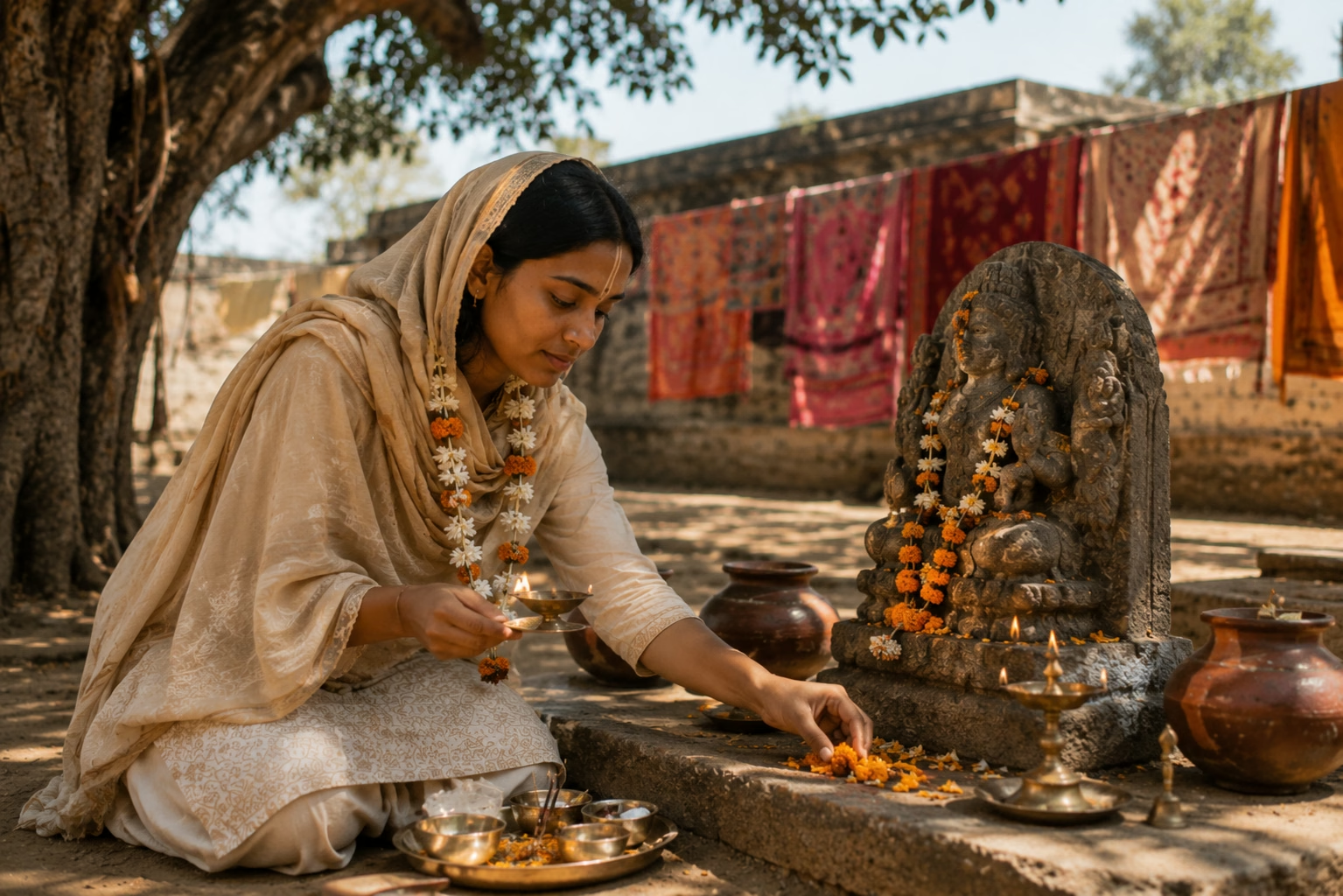
Bhakti Yoga is the path of loving devotion to God. The word bhakti means devotion, love, or loving service. It is not simply a belief system or a set of rituals. It is a way of living with the heart turned toward the Divine.
In the Bhakti tradition, the scriptures describe nine main processes of devotional life. In Sanskrit, these are called navadha bhakti—“nine kinds of devotion.” They are:
- Śravaṇam — hearing about God
- Kīrtanam — chanting or speaking about God
- Smaranam — remembering God
- Pāda-sevanam — serving the Lord’s feet, or serving with humility
- Arcanam — worshiping the Lord
- Vandanam — offering prayers
- Dāsyam — serving as a devoted servant
- Sakhyam — relating to God as a friend
- Ātma-nivedanam — offering oneself fully to God
These nine processes are mentioned in the Śrīmad-Bhāgavatam 7.5.23–24, where the young saint Prahlāda Mahārāja teaches that devotional service can be practiced through these nine forms. Though they are listed separately, they are not isolated practices. They work together like instruments in a sacred song. Each one supports the others. Each one helps awaken the heart.
Some people may feel drawn first to chanting. Others may begin with prayer, service, meditation, study, or worship. Bhakti Yoga welcomes all sincere beginnings. The beauty of these nine processes is that each one can become a doorway into a deeper relationship with God.
Hearing and Chanting: The Foundation of Devotional Life
Śravaṇam: Opening the Heart Through Sacred Hearing
The first process is śravaṇam, hearing about God. In Bhakti Yoga, hearing is not passive. It is a sacred act. When we hear spiritual sound with sincerity, the heart becomes softened and purified.
We may hear from scripture, from saints, from spiritual teachers, from devotional songs, or from the names and qualities of God. In the Bhakti tradition, hearing about Krishna—the all-attractive Supreme Person—is especially cherished. But the principle is universal: when we lovingly hear about God, we invite divine remembrance into our lives.
The Bhagavad-gītā teaches that spiritual wisdom helps us see beyond temporary circumstances and remember our eternal nature. We are not merely the body or the mind. We are spiritual beings, beloved parts of God. Hearing this truth again and again helps us live with more peace, clarity, and purpose.
In daily life, śravaṇam can be very simple. We can listen to a sacred talk while driving. We can read a few verses of scripture in the morning. We can sit quietly and hear the chanting of God’s names. Even a few sincere minutes can nourish the soul.
Kīrtanam: Chanting as a Loving Response
The second process is kīrtanam, chanting or glorifying God. If hearing is receiving, chanting is responding. We hear about God’s love, mercy, beauty, and guidance—and naturally, we want to speak, sing, or chant in gratitude.
Kīrtan often refers to the congregational chanting of sacred names, especially the mahā-mantra:
Hare Krishna, Hare Krishna, Krishna Krishna, Hare Hare
Hare Rama, Hare Rama, Rama Rama, Hare Hare
The word Hare calls upon the divine energy of the Lord. Krishna means “the all-attractive one.” Rama means “the source of joy.” This mantra is a prayer: “O Lord, O divine energy of the Lord, please engage me in loving service.”
Chanting can be done with music in a group, softly on meditation beads, or quietly in the heart. It does not require a perfect voice, advanced knowledge, or a particular background. It asks only sincerity.
How Hearing and Chanting Work Together
Hearing and chanting are deeply connected. When we hear spiritual sound, we become inspired to chant. When we chant, we become eager to hear more. Together, they create a cycle of grace.
For example, someone may attend a kīrtan for the first time and simply listen. The melodies, the mantra, and the atmosphere of devotion may touch something deep within. Gradually, they begin to chant along. Later, they may want to learn what the mantra means. This leads to more hearing, more understanding, and more faith.
In this way, śravaṇam and kīrtanam form the foundation of Bhakti Yoga. They awaken remembrance, prayer, service, friendship, and surrender.
Remembering God in the Middle of Daily Life
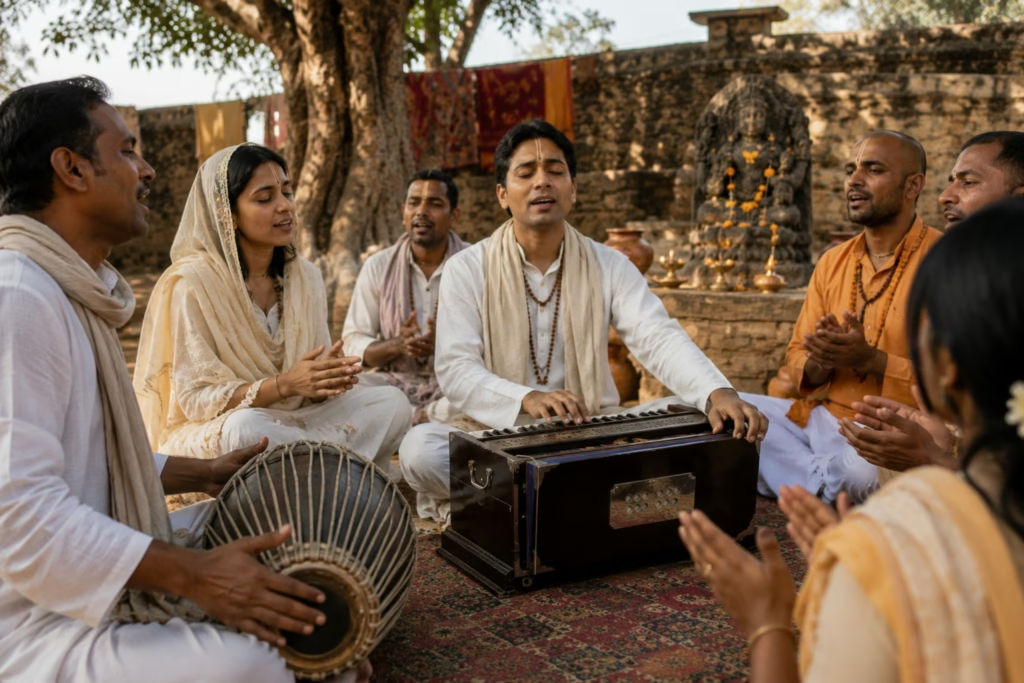
Smaranam: Sacred Remembrance
The third process is smaranam, remembering God. This is the natural fruit of hearing and chanting. The more we hear and chant, the more the heart begins to remember God throughout the day.
Remembrance does not mean we must leave our responsibilities. Bhakti Yoga is practical. We can remember God while cooking, working, studying, parenting, walking, creating, or resting. The goal is not to escape life, but to spiritualize life.
In the Bhagavad-gītā 9.27, Krishna says that whatever we do, whatever we eat, whatever we offer or give away, and whatever austerity we perform can be offered to Him. This is a very compassionate teaching. It means our ordinary lives can become sacred when offered with love.
A simple way to practice smaranam is to pause during the day and silently say a prayer: “Dear Lord, please guide me.” Or, “Krishna, please help me remember You.” Or, “Thank You for this moment.” Such small acts of remembrance gradually change the quality of our consciousness.
Remembering Through Gratitude
Gratitude is one of the most accessible forms of remembrance. When we notice beauty, kindness, protection, or nourishment, we can remember the divine source behind it.
The warmth of sunlight, a kind word from a friend, food on the table, the strength to continue, the chance to begin again—these can all become reminders of God’s care.
Bhakti does not ask us to force artificial feelings. It invites us to become honest and attentive. Even when life is painful, we can pray, “I do not understand everything, but please stay with me. Help me grow through this.”
Remembering in Difficulty
Sometimes people think spiritual life means always feeling peaceful or joyful. But Bhakti Yoga is also for times of confusion, grief, loneliness, and struggle. In fact, remembrance in difficulty can be very deep.
Prahlāda Mahārāja, who taught the nine processes of devotion, remembered the Lord even while facing great danger. His life shows that devotion is not dependent on external comfort. When the heart takes shelter of God, even hardship can become a place of spiritual strength.
For us, this may mean chanting through anxiety, praying through tears, or simply saying, “God, I need help.” That honest turning of the heart is smaranam.
Check out our latest articles at https://thebhaktihouse.org/blog.
Serving With the Body, Mind, and Heart
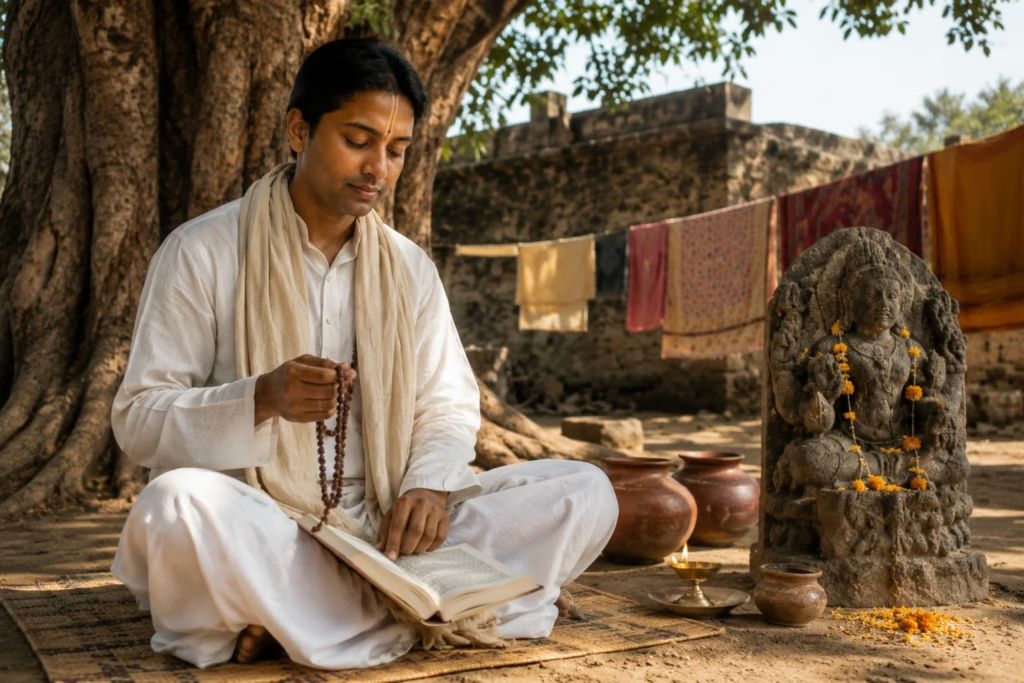
Pāda-sevanam: Humble Service
The fourth process is pāda-sevanam, often translated as serving the lotus feet of the Lord. In Sanskrit devotional language, the “lotus feet” of God represent shelter, humility, and loving service. To serve the Lord’s feet means to approach God with reverence and a willingness to serve.
Practically, this can include visiting a temple, cleaning a sacred space, helping arrange devotional gatherings, serving pilgrims, caring for others, or using our talents in God’s service.
In Bhakti Yoga, service is not considered lower than meditation. Service is meditation in action. When done with devotion, even simple tasks become sacred.
Washing dishes after a spiritual program, welcoming a newcomer, preparing food to offer to God, arranging flowers, sweeping the floor, or helping someone feel seen and cared for—these can all be expressions of pāda-sevanam.
Dāsyam: The Joy of Being God’s Servant
The seventh process is dāsyam, serving God with the mood of a servant. In modern culture, the word “servant” may sound uncomfortable. But in Bhakti, spiritual service is not exploitation or loss of dignity. It is the soul’s joyful nature.
We are always serving something—our desires, our fears, our ambitions, our family, our community, our ideals. Bhakti gently asks: what if our service becomes connected to love for God? What if we serve not from pressure, but from devotion?
The servant of God is not insignificant. Rather, such a person becomes deeply meaningful, because their life is connected to the highest purpose. Hanumān, the great devotee of Lord Rama, is honored in the Bhakti tradition as the perfect example of dāsyam. His service is strong, courageous, humble, and full of love.
Service as a Cure for Self-Centeredness
Service helps purify the heart because it moves us beyond the small circle of “me” and “mine.” Many of our anxieties grow when the self becomes the center of everything. Loving service opens the heart outward.
This does not mean neglecting ourselves. A healthy devotional life includes care for the body, mind, and emotions. But it also helps us discover that we are happiest when love flows through us.
When pāda-sevanam and dāsyam work together, devotion becomes practical. We stop asking only, “What can I get?” and begin asking, “How can I serve?” That question can transform a home, a workplace, a community, and a heart.
Worship and Prayer: Making the Heart Personal
Arcanam: Worship With Attention and Love
The fifth process is arcanam, worshiping the Lord. This often includes offering lamps, incense, flowers, water, food, or prayers before a sacred image or deity form of God.
In Bhakti Yoga, deity worship is based on the understanding that God is personal and merciful. The Lord can receive our love through forms that are accessible to our senses. Just as we may keep a photo of someone we love to help us remember them, sacred worship helps focus the mind and heart on God.
For newcomers, arcanam can begin very simply. You might create a small sacred space in your home with a picture of Krishna, Rama, Vishnu, or another form of God you feel drawn to. You can offer a flower, a candle, or a small bowl of water. You can place your food before the Lord and say, “Please accept this with love.”
The offering does not need to be elaborate. In the Bhagavad-gītā 9.26, Krishna says that if one offers Him a leaf, a flower, fruit, or water with devotion, He accepts it. The key is love.
Vandanam: The Healing Power of Prayer
The sixth process is vandanam, offering prayers. Prayer is the language of the soul. It may be formal or spontaneous, spoken or silent, joyful or tearful.
Some prayers praise God. Some ask for guidance. Some confess weakness. Some express gratitude. Some simply say, “I am here.” All sincere prayer is valuable.
In Bhakti Yoga, prayer helps us become honest before God. We do not need to pretend to be more advanced than we are. We can bring our doubts, hopes, wounds, and longings. God is not distant from the sincere heart.
A beautiful prayer from the Bhakti tradition is: “Please engage me in Your service.” This prayer is simple, but very powerful. It shifts our focus from controlling life to offering life.
Worship and Prayer Support Remembrance
Arcanam and vandanam make devotion personal. They help us slow down and bring intention into our day.
When we worship, we remember that God is present. When we pray, we speak to that presence. Together, worship and prayer create a living relationship.
A person may begin by offering food once a day. Then they may add a short prayer. Over time, they may feel that their home is becoming more peaceful, their meals more sacred, and their heart more connected. This is how Bhakti grows—not always through dramatic experiences, but through steady, loving practice.
Friendship and Surrender: The Inner Maturity of Bhakti
Sakhyam: Becoming a Friend of God
The eighth process is sakhyam, friendship with God. This is one of the most intimate aspects of Bhakti Yoga. It means relating to God not only with reverence, but also with trust, openness, and affection.
In the Bhagavad-gītā, Arjuna is both Krishna’s student and friend. He speaks honestly with Krishna, asks questions, admits confusion, and receives guidance. Their relationship shows us that spiritual life is not about blind imitation. It is a heartfelt dialogue.
To practice sakhyam, we can begin to include God in our inner life. We can speak to Krishna as a dear friend: “This is what I am feeling. This is what I am afraid of. This is what I hope for. Please guide me.”
Friendship with God does not remove reverence. Rather, it deepens it. We begin to understand that the Supreme Lord is not only powerful and majestic, but also loving, approachable, and kind.
Ātma-nivedanam: Offering the Whole Self
The ninth process is ātma-nivedanam, full self-surrender. Ātma means self or soul, and nivedanam means offering. This is the offering of our whole being to God.
Surrender can sound frightening if misunderstood. It does not mean losing our personality, intelligence, or freedom. In Bhakti, surrender means lovingly placing ourselves in God’s care. It means trusting that our deepest fulfillment is found in divine love.
The Bhagavad-gītā 18.66 expresses this beautifully, when Krishna invites Arjuna to take shelter in Him and promises protection. This is not a harsh command. It is a loving invitation.
Most of us do not surrender all at once. We surrender step by step. We offer one habit, one fear, one relationship, one decision, one day. We learn to say, “Let my life become an offering.”
Surrender Grows Through the Other Eight Processes
The ninth process is supported by all the others. Hearing gives us knowledge of God’s nature. Chanting purifies the heart. Remembering keeps us connected. Service softens ego. Worship brings focus. Prayer builds trust. Servant mood gives purpose. Friendship brings intimacy.
Then surrender becomes natural. We do not surrender to an unknown force. We surrender to the One we have heard about, chanted to, remembered, served, worshiped, prayed to, worked for, and befriended.
This is why the nine processes work together so beautifully. Each one prepares the heart for deeper love.
How the Nine Processes Strengthen One Another
They Create a Complete Spiritual Lifestyle
The nine processes are not merely nine items on a checklist. They form a complete spiritual lifestyle.
Hearing gives us wisdom. Chanting gives us purification. Remembering gives us inner connection. Serving gives us humility. Worship gives us sacred focus. Prayer gives us honesty. Devotional service gives us purpose. Friendship gives us closeness. Surrender gives us peace.
Together, they engage the whole person—ears, voice, mind, body, heart, relationships, and will. Bhakti Yoga is not limited to one hour of meditation or one day of worship. It can touch every part of life.
They Help Different People Begin in Different Ways
One person may love music and enter Bhakti through kīrtan. Another may love philosophy and begin through hearing scripture. Another may be naturally service-oriented and begin by helping in the temple kitchen. Another may be prayerful and begin by speaking to God each morning.
All of these beginnings are valid. The nine processes give many doors into the same house of devotion.
Over time, the practices naturally connect. The person who chants may want to hear more. The person who serves may begin to pray. The person who worships may remember God throughout the day. The person who studies scripture may feel inspired to surrender.
This is the gentle genius of Bhakti Yoga: no sincere effort is wasted.
They Balance Inner and Outer Practice
Some spiritual paths emphasize inner meditation. Others emphasize outer ritual or service. Bhakti includes both.
Smaranam, vandanam, sakhyam, and ātma-nivedanam nourish the inner life. Kīrtanam, arcanam, pāda-sevanam, and dāsyam engage the body and senses. Śravaṇam bridges both, because sacred hearing enters through the ears and transforms the heart.
This balance is important. If our spirituality remains only internal, we may become disconnected from practical compassion. If it remains only external, we may lose inner depth. The nine processes help devotion become both heartfelt and lived.
Practical Ways to Practice the Nine Processes Today
A Simple Morning Practice
You might begin the day with a few minutes of sacred hearing. Read a verse from the Bhagavad-gītā or Śrīmad-Bhāgavatam, or listen to a short devotional talk.
Then chant the holy names for a few minutes. If you have meditation beads, you can chant one round of the Hare Krishna mantra. If not, simply chant aloud or softly.
Offer a short prayer: “Dear Lord, please help me remember You today. Please guide my thoughts, words, and actions.”
In just ten or fifteen minutes, you have touched śravaṇam, kīrtanam, smaranam, and vandanam.
Turning Meals Into Devotion
Before eating, pause and offer your food to God. In Bhakti Yoga, food offered with love becomes prasādam, which means mercy or grace.
You can say, “Krishna, please accept this offering. May this food nourish me for Your service.”
This simple act brings arcanam, remembrance, gratitude, and surrender into daily life. It also helps us become more conscious of what we consume and why.
Serving Others as Service to God
Look for one practical act of service each day. It may be helping at a temple, supporting a spiritual community, calling someone who is lonely, feeding others, cleaning, teaching, listening, or offering your skills.
Before serving, inwardly pray, “May this be pleasing to You.” This transforms ordinary kindness into Bhakti.
Service is especially powerful when done without needing recognition. The heart becomes lighter when we serve as an offering rather than a performance.
Ending the Day With Reflection
At night, take a few moments to remember God. You might ask:
Where did I feel grace today?
Where did I forget my spiritual intention?
What can I offer from this day?
How can I take one sincere step tomorrow?
Then chant or pray before resting. This brings the day back into divine shelter.
Common Misunderstandings About the Nine Processes
“Do I Have to Practice All Nine Perfectly?”
No. Bhakti begins with sincerity, not perfection. The scriptures describe great devotees who became perfected through even one process practiced deeply. For example, King Parīkṣit attained perfection through hearing, and Śukadeva Gosvāmī through chanting the glories of God.
Still, for most of us, the nine processes naturally support one another. We do not need to force them all at once. We can begin where our heart feels most open and gradually allow the others to enter.
“Is Bhakti Only for Hindus?”
Bhakti Yoga comes through the Vedic tradition of India, and its Sanskrit language and sacred stories are precious. At the same time, the essence of Bhakti is universal: the soul’s loving relationship with God.
People of all backgrounds are welcome to chant, pray, serve, hear spiritual wisdom, and grow in love. Bhakti does not require us to reject the sincere spiritual values we already hold. It invites us to deepen our love for God and live with devotion.
“What If I Do Not Feel Devotion Yet?”
That is very natural. Devotion often begins as a small seed. The practices of Bhakti are like watering that seed.
We may not feel deep love immediately. But if we keep hearing, chanting, praying, and serving, the heart gradually changes. We may notice more peace, more gratitude, more humility, more compassion, and more attraction to spiritual life.
In Bhakti, even the desire to desire God is meaningful. We can pray, “Please help me want to love You.”
The Heart of the Nine Processes
Love Is the Thread That Connects Them All
The nine processes work together because they share one purpose: awakening love for God.
Without love, hearing may become information. Chanting may become sound only. Worship may become ritual. Service may become duty. Prayer may become habit. But with even a little sincerity, each practice becomes alive.
Bhakti is not about impressing God. God is already complete. Bhakti is about opening our hearts to the love that is eternally available.
The Sanskrit word seva means service. In Bhakti, service is the natural expression of love. When we love someone, we want to hear about them, speak about them, remember them, serve them, honor them, pray to them, help their mission, trust them, and give ourselves to them. In this way, the nine processes are not artificial. They are the natural movements of a loving heart.
A Path for Real Life
The nine processes are not meant only for monks, scholars, or saints. They are for parents, students, workers, artists, elders, children, seekers, and anyone longing for spiritual connection.
They can be practiced in a temple, at home, in the car, at work, in a hospital room, in a quiet park, or in the middle of a busy city. The holy name can go anywhere. Prayer can happen anywhere. Service can be offered anywhere. Remembrance can begin at any moment.
This is the kindness of Bhakti Yoga. It meets us where we are and gently leads us toward who we truly are.
Taking One Sincere Step
The nine processes of Bhakti Yoga are like nine lamps lighting the path home. Hearing leads to chanting. Chanting leads to remembrance. Remembrance inspires service. Service deepens prayer. Prayer makes worship heartfelt. Worship strengthens friendship. Friendship matures into surrender. And surrender brings the soul into the shelter of divine love.
You do not need to do everything today. You do not need to be perfect, pure, learned, or certain. You are welcome as you are.
Begin with one sincere step. Hear one verse. Chant one mantra. Offer one prayer. Serve one person. Remember God for one moment. Place one part of your life in divine hands.
At The Bhakti House, everyone is welcome—wherever you come from, whatever your story, and however near or far you may feel from God. The path of Bhakti is open, compassionate, and alive. Take one sincere step toward God, and trust that God is already taking many steps toward you.
FAQs
What are the nine processes that work together?
The nine processes that work together are: initiating, planning, executing, monitoring and controlling, closing, scope management, time management, cost management, and quality management.
How do the nine processes work together?
The nine processes work together by following a systematic approach to project management. Each process has its own set of activities and deliverables, but they are all interconnected and dependent on each other for the successful completion of a project.
What is the importance of the nine processes working together?
The importance of the nine processes working together is to ensure that a project is completed on time, within budget, and meets the quality standards. By working together, these processes help to streamline project management and minimize risks.
How do the nine processes contribute to project success?
The nine processes contribute to project success by providing a framework for project managers to plan, execute, and control their projects effectively. By following these processes, project teams can identify and address potential issues early on, leading to successful project outcomes.
What are some examples of how the nine processes work together in a real-world project?
In a real-world project, the initiating process sets the project in motion, the planning process outlines the project scope and schedule, the executing process carries out the project activities, the monitoring and controlling process tracks project progress, and the closing process finalizes the project. Throughout this entire process, scope, time, cost, and quality management processes are integrated to ensure project success.

