

Seva is a Sanskrit word that means “selfless service.” It is service offered with love, humility, and a desire to please God and care for others. In the path of Bhakti Yoga, seva is not merely volunteer work, duty, or charity—though it may look like those things on the outside. Seva is a spiritual practice of offering our time, energy, skills, and heart in a mood of devotion.
Bhakti means “loving devotion,” and yoga means “connection.” So Bhakti Yoga is the path of reconnecting with the Divine through love. We can practice this love through chanting sacred names, prayer, hearing spiritual wisdom, serving others, and living with kindness and remembrance of God.
In seva, ordinary actions become sacred. Cooking a meal, cleaning a room, listening to a friend, helping at a temple, caring for children, working honestly, sharing wisdom, or offering encouragement can all become spiritual when done with a sincere heart.
The Bhagavad-gita, one of the central scriptures of Bhakti Yoga, teaches that we can spiritualize our actions by offering them to the Supreme. Krishna says:
“Whatever you do, whatever you eat, whatever you offer or give away, and whatever austerities you perform—do that as an offering to Me.”
—Bhagavad-gita 9.27
This is the essence of seva. We do not have to run away from life to become spiritual. We can begin right where we are, offering what we have, as we are, with love.
Seva Is Service With Consciousness
Two people may perform the same activity, but the inner consciousness can be very different. One person may cook with frustration, pride, or a desire to be praised. Another may cook with gratitude, prayer, and the hope that others will be nourished in body and spirit.
The activity may look the same, but the offering is different.
Seva asks us gently: “Why am I doing this? Who am I serving? Can I offer this with love?”
This does not mean we must be perfect. Bhakti Yoga is a path of sincerity, not performance. Even if our heart is mixed, even if we still desire appreciation, even if we become tired or distracted, we can keep practicing. Over time, seva purifies our intentions and softens the heart.
Seva Is for Everyone
You do not need to be born in a certain tradition, know Sanskrit, live in an ashram, or have years of spiritual training to practice seva. If you have a heart, you can serve. If you have a moment, you can offer it. If you have a skill, you can use it for good. If you have a voice, you can chant or speak kindness. If you have hands, you can help.
Seva is accessible because love is accessible. The door of devotion is open to all.
Why Seva Matters in Bhakti Yoga
Bhakti Yoga is the yoga of relationship. It teaches that we are eternal souls, naturally connected to God, and that our deepest happiness comes from awakening love for the Divine and all living beings. Seva is one of the most practical ways to awaken that love.
In daily life, we are often trained to ask, “What can I get?” Seva gently teaches us to ask, “How can I serve?” This shift may seem simple, but it is spiritually powerful.
Service Cleanses the Heart
The heart can become covered by many things: ego, resentment, fear, envy, pride, loneliness, and the constant pressure to prove ourselves. Seva helps cleanse these coverings because it turns our attention outward and upward.
When we serve, we remember that life is not only about our own comfort or success. We remember that others are sacred. We remember that God is present in every heart.
The Srimad-Bhagavatam, a beloved Bhakti scripture, describes devotional service as a process that purifies the heart and awakens joy. When we hear about God, chant God’s names, and serve with devotion, the heart gradually becomes clear, like a mirror being polished.
This purification is not harsh or cold. It is loving. Just as sunlight naturally removes darkness, sincere seva invites divine light into the heart.
Service Helps Us Move Beyond Ego
The ego says, “I am the doer. I am the enjoyer. I should be recognized. I should be in control.” Seva teaches a different truth: “I am a servant of God. My gifts are blessings. Let me use them in love.”
This is a humble understanding, but it is not a weak one. In Bhakti, humility means living in truth. We are not the center of the universe, yet we are deeply loved by the One who is.
Seva helps us become free from the exhausting need to be seen as special. Instead, we find joy in being useful, present, and loving.
Service Makes Spiritual Life Practical
Sometimes spirituality can feel abstract. We may read sacred texts, attend gatherings, chant, or pray, but wonder how to bring devotion into ordinary life. Seva gives us a practical bridge.
If we chant in the morning and then speak gently throughout the day, that is seva. If we pray for compassion and then show patience to someone difficult, that is seva. If we hear spiritual wisdom and then use our work to benefit others, that is seva.
Bhakti Yoga is not only something we do on a meditation cushion, in a temple, or during kirtan. It is something we live.
The Inner Mood of Seva
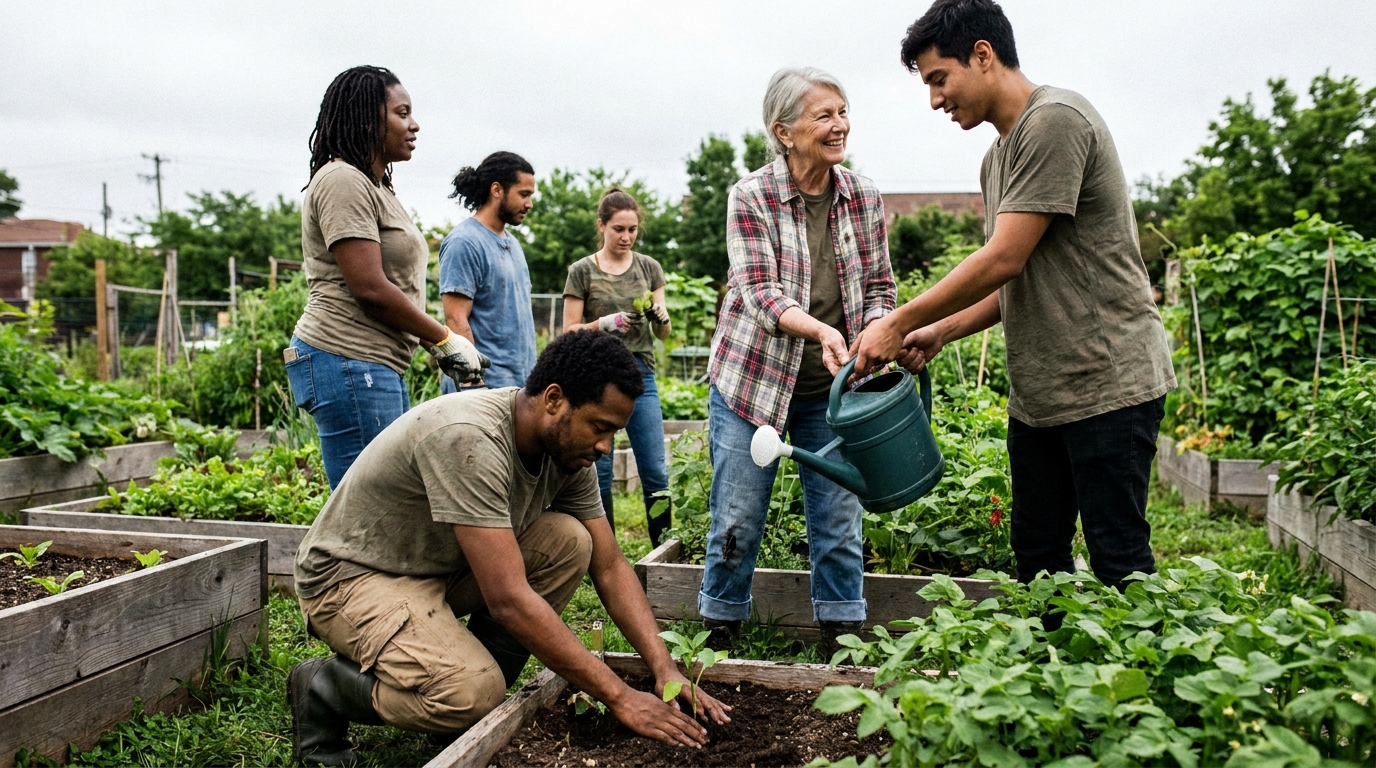
In Bhakti Yoga, the mood behind the action is deeply important. Seva is not about looking spiritual. It is about becoming sincere. It is not about doing the biggest service. It is about offering whatever we do with love.
A small act done with devotion may be more spiritually powerful than a large act done for pride.
Offering, Not Owning
A key principle of seva is offering. We may use our intelligence, money, time, talents, or strength, but we remember that none of these truly belong to us. They are gifts from God, entrusted to us for a while.
This understanding brings relief. We do not have to carry the heavy burden of being the owner and controller of everything. We can become caretakers.
Before beginning a task, we can pause and pray:
“Dear Lord, please let this be an offering. Please guide my words, my hands, and my heart. May this service bring benefit.”
This simple prayer can transform the mood of the entire action.
Serving Without Expectation
One of the challenges in seva is the desire for appreciation. This is natural. We are human, and encouragement matters. But if appreciation becomes the main reason we serve, our heart may become disturbed when praise does not come.
Bhakti teaches us to seek a deeper satisfaction: the joy of pleasing God.
Krishna explains in the Bhagavad-gita that we have a right to perform our duty, but not to control the results. This wisdom helps us serve steadily, without becoming overly attached to recognition, success, or outcome.
Serving without expectation does not mean accepting unhealthy treatment or never communicating needs. It means we practice offering our service sincerely, while remembering that the ultimate witness is God in the heart.
Humility in Action
Humility is one of the jewels of Bhakti. Sri Chaitanya Mahaprabhu, a great teacher and saint in the Bhakti tradition, taught that one should chant the holy names of God in a humble state of mind, feeling lower than a blade of grass, more tolerant than a tree, and ready to offer respect to others without demanding respect for oneself.
This teaching is not meant to make us feel worthless. Rather, it frees us from arrogance and opens the heart to love.
In seva, humility may look like cleaning without being noticed, listening without interrupting, apologizing when we make a mistake, learning from others, or doing simple tasks with gratitude.
No service is small when it is offered to God.
Please visit our website for more information on our articles: articles.
Different Forms of Seva
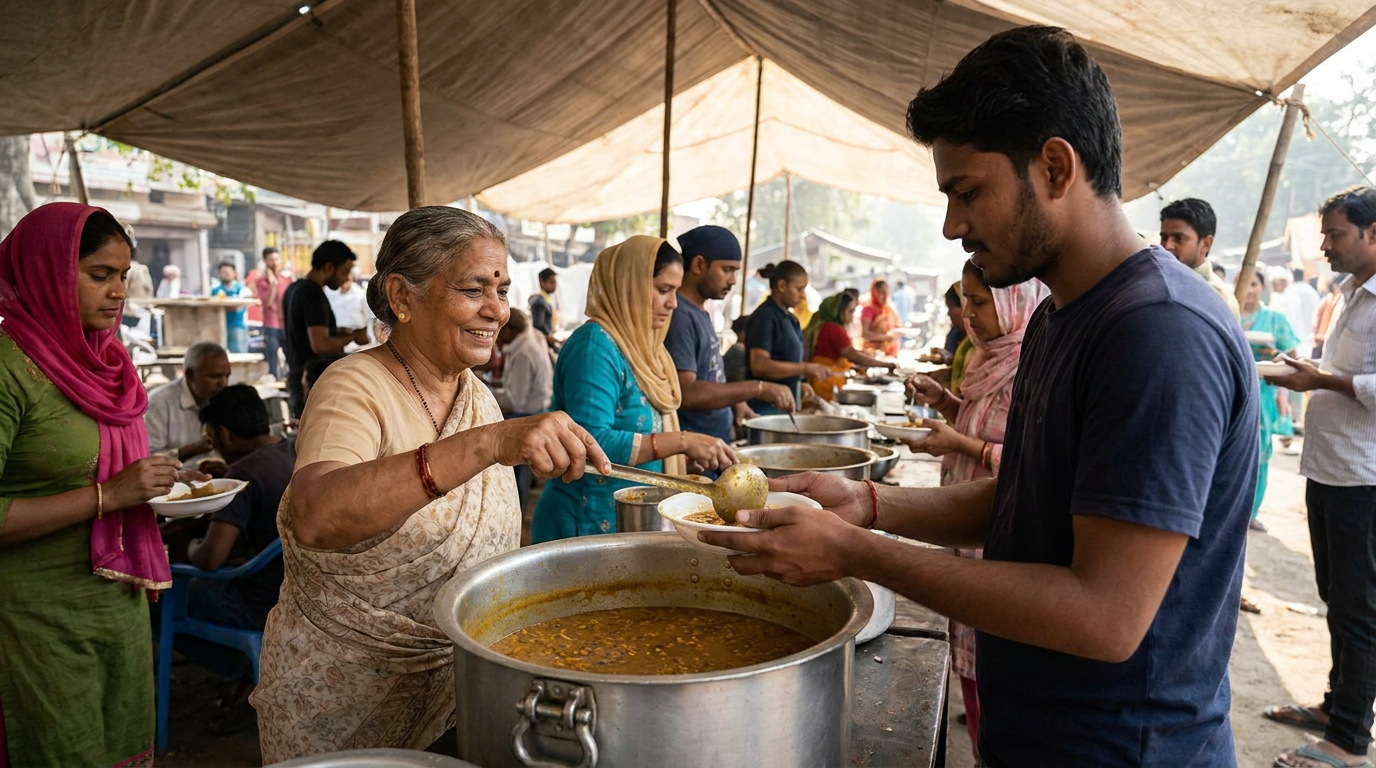
Seva can be practiced in many ways. Some forms are directly connected to temple worship, spiritual community, or devotional gatherings. Others happen quietly in homes, workplaces, neighborhoods, and relationships.
The beauty of Bhakti Yoga is that every part of life can become an offering.
Seva Through the Body
Physical service is often the most visible form of seva. This includes cooking, cleaning, gardening, setting up for programs, serving meals, driving someone who needs help, building, organizing, or caring for a sacred space.
In a Bhakti community, cleaning the temple floor or washing pots after a feast is not considered lesser service. These acts are honored because they support the worship of God and the nourishment of others.
The body is a precious instrument. When used in service, it becomes spiritualized.
Even at home, we can practice bodily seva by caring for our family, keeping our space clean as an offering, preparing food with devotion, or helping someone in need.
Seva Through Speech
Our words have power. Speech can heal or harm, uplift or discourage. Seva through speech means using our voice in service of truth, kindness, remembrance, and encouragement.
This may include chanting mantras, singing kirtan, reading scripture aloud, teaching, counseling, thanking others, apologizing sincerely, or speaking gently during conflict.
In Bhakti Yoga, chanting the holy names of God is one of the most important practices. A mantra is a sacred sound vibration that helps focus the mind and awaken devotion. The Hare Krishna maha-mantra is especially cherished:
Hare Krishna, Hare Krishna, Krishna Krishna, Hare Hare
Hare Rama, Hare Rama, Rama Rama, Hare Hare
“Maha” means great, and “mantra” means a sound that helps free the mind. This mantra is a prayer calling out to the Divine energy and the Supreme Lord: “Please engage me in Your loving service.”
When we chant, we are doing seva with our voice and ears. We are offering sound, attention, and longing.
Seva Through the Mind
Service is not only external. The mind can also be offered.
We practice mental seva by remembering God, praying for others, meditating on sacred teachings, planning ways to serve, and choosing thoughts that support compassion rather than judgment.
If we cannot physically serve due to illness, age, distance, or life circumstances, we can still serve through prayer. A sincere prayer is not small. When offered with love, it reaches the heart of God.
We can pray:
“May all beings be guided. May those who suffer feel comfort. May I become an instrument of peace. May my life be used in service.”
Seva Through Our Talents
Every person has gifts. Some can cook beautifully. Some can organize. Some can teach, write, sing, paint, manage finances, care for children, welcome guests, repair things, grow food, or offer emotional support.
In Bhakti, talents are not meant only for personal achievement. They can become offerings.
A musician can sing for God. A writer can share wisdom. A businessperson can support sacred projects. A parent can raise children with devotion. A student can study as an offering. A professional can work ethically and use resources for service.
The question is not, “Do I have a spiritual talent?” The question is, “How can I spiritualize the talents I already have?”
Seva in Daily Life
It is beautiful to serve in a temple, spiritual center, or community. But seva is not limited to formal religious settings. For most of us, the main field of service is daily life.
Our homes, jobs, families, friendships, and communities are places where devotion can grow.
Seva at Home
Home can be a sacred space. We can practice seva by cooking with love, offering food to God before eating, speaking respectfully, caring for elders, helping children grow in goodness, and creating an atmosphere of prayer and gratitude.
In Bhakti Yoga, food offered to God is called prasadam, which means “mercy” or “grace.” The practice is simple: prepare vegetarian food with care, place it before a picture or form of the Lord, and offer a heartfelt prayer. After the offering, the food becomes prasadam, spiritually blessed and nourishing.
This is a powerful form of seva. Cooking becomes worship. Eating becomes receiving grace. Sharing prasadam becomes an act of love.
Seva at Work
Many people spend much of their lives working. Work can feel separate from spirituality, but Bhakti Yoga invites us to bring devotion into our professional life.
We can practice seva at work by being honest, treating colleagues with respect, avoiding exploitation, doing our tasks responsibly, and using the fruits of our work in service.
This does not mean every job is easy or ideal. But even in difficult environments, we can cultivate inner offerings: patience, integrity, prayer, and compassion.
Before beginning work, we can say quietly:
“May this work be offered to You. May I act with honesty and kindness. May the results be used for good.”
Seva in Relationships
Relationships are among the deepest places of spiritual practice. It is often easier to feel devotional in a peaceful meditation than when someone disappoints us, misunderstands us, or presses our old wounds.
Seva in relationships means learning to love with patience and truth. It means listening, forgiving, setting healthy boundaries, and seeing others as souls on their own journey.
This does not mean allowing harm. True service includes wisdom. Sometimes the most loving service is to say no, to step back, or to encourage accountability. Bhakti is not sentimental; it is rooted in genuine care for the soul.
Seva to the Earth and All Living Beings
Bhakti scriptures teach that all living beings are parts of God and that the world is God’s energy. Therefore, caring for animals, rivers, forests, and the earth can be a sacred responsibility.
Choosing compassion in our lifestyle, reducing harm, honoring food, avoiding waste, and protecting the vulnerable can all be forms of seva.
A devotional heart does not see the world as something to exploit. It sees creation as sacred, entrusted to us by the Divine.
Seva and Chanting: Serving Through Sacred Sound
Chanting is central to Bhakti Yoga. It may seem different from service, but in truth, chanting and seva nourish one another.
Chanting cleanses the heart and awakens the desire to serve. Service gives practical expression to the love awakened through chanting.
Why Chanting Supports Seva
When we chant God’s names, we remember our spiritual identity. We are not simply workers, parents, students, bodies, minds, or social roles. We are souls, beloved by God, meant for loving relationship.
This remembrance changes how we serve. We become less likely to serve from guilt, pride, or burnout, and more likely to serve from devotion.
The holy name gives strength. When service feels difficult, chanting can refresh the heart.
Kirtan as Collective Seva
Kirtan is the practice of singing sacred names together, often with instruments and call-and-response singing. It is joyful, heartfelt, and open to everyone.
In kirtan, the person leading, the musicians, the people responding, the person setting up chairs, the one cooking afterward, and the one quietly listening are all participating in seva.
Kirtan reminds us that spiritual life is not a lonely climb. We are meant to encourage one another.
Japa as Personal Seva
Japa is personal mantra meditation, often practiced with beads. One softly chants or hears the mantra one bead at a time. This is a quiet form of seva because we are offering our attention to God.
In a world that constantly pulls our attention outward, giving our attention to the Divine is a profound act of love.
Even a few minutes of sincere chanting can begin to transform the day.
Challenges on the Path of Seva
Seva is beautiful, but it is not always easy. Because service touches the heart, it may also reveal our attachments, expectations, wounds, and limitations. This is not a sign of failure. It is part of the purification process.
Bhakti Yoga welcomes honesty. We do not have to pretend to be saintly. We simply keep turning toward God.
Burnout and Balance
Sometimes sincere people serve beyond their capacity. They may feel guilty saying no or believe that devotion means never resting. But the body and mind also need care.
Healthy seva is sustainable. Rest can also be part of service when it helps us continue with a clear and grateful heart.
We can ask:
“Am I serving from love or pressure?”
“Do I need support?”
“Is my service helping me remember God, or am I becoming resentful?”
“Can I serve in a simpler, steadier way?”
Bhakti is not about impressing others with how much we can do. It is about offering ourselves sincerely.
Pride in Service
Another challenge is pride. We may begin to think, “I am doing so much,” or “This service cannot happen without me.” Pride can quietly enter even noble work.
The remedy is remembrance. Everything we have—our body, intelligence, opportunity, and ability—comes by grace. We are instruments, not owners.
A helpful prayer is:
“Please protect me from pride. Let me remember that this service belongs to You.”
When we see ourselves as instruments, service becomes lighter and sweeter.
Discouragement When Results Are Hidden
Sometimes we serve and do not see results. We teach, but people do not change. We help, but problems remain. We pray, but life is still hard.
Seva teaches faithfulness. We offer the effort, and God arranges the results in ways we may not see.
A seed planted today may grow years later. A kind word may stay in someone’s heart. A meal served with love may give hope. A prayer may support someone invisibly.
No sincere service is ever lost.
Seva and Spiritual Growth
Seva transforms us gradually. It may not always feel dramatic, but over time, it reshapes the heart.
We may become more patient. More grateful. Less self-centered. More prayerful. More aware of God’s presence. More compassionate toward others. More willing to forgive. More eager to chant and hear sacred wisdom.
This is spiritual growth—not becoming superior to others, but becoming more loving.
Seva Awakens Our True Identity
Bhakti Yoga teaches that the soul’s natural identity is to be a servant of God. This may sound unfamiliar at first, especially in cultures where service is associated with inferiority. But in Bhakti, divine service is the highest freedom.
To serve God is not slavery; it is love. Just as a mother serves her child out of affection, or a friend serves a friend out of care, the soul finds joy in loving service to the Divine.
We are always serving something—our desires, our fears, our ambitions, our families, our communities, our ideals. Bhakti invites us to consciously place our service in the highest relationship: loving service to God.
Seva Deepens Compassion
When we serve others, we begin to see their struggles more clearly. We become less quick to judge. We realize that everyone is carrying something. Everyone wants love. Everyone is searching for shelter.
The Bhagavad-gita teaches that a wise person sees with equal vision, recognizing the spiritual nature within all beings. Seva helps us practice that vision.
We may not feel equal vision fully yet, but every act of sincere service trains the heart to see more deeply.
Seva Brings Joy
There is a special joy that comes from service. It is different from the pleasure of receiving praise or gaining something for ourselves. It is quieter, deeper, and more nourishing.
This joy comes because seva aligns us with our spiritual nature. The soul is made for love. When we act in love, we feel more whole.
Even if the service is simple, even if no one notices, the heart can feel blessed.
How to Begin a Seva Practice
If you are new to Bhakti Yoga or returning after some time away, seva can begin very simply. You do not need to change your whole life overnight. Start with one sincere offering.
God sees the heart.
Start With a Daily Prayer
Each morning, offer a short prayer:
“Dear God, please guide me today. Please show me how I can serve. May my thoughts, words, and actions be offered with love.”
This prayer opens the heart and invites divine guidance into ordinary moments.
Choose One Small Act of Service
Pick one simple daily seva. It might be:
Preparing food with gratitude.
Calling someone who is lonely.
Cleaning a space as an offering.
Chanting one round or a few minutes of mantra.
Reading a verse from the Bhagavad-gita and reflecting on how to live it.
Offering kindness to someone you usually overlook.
Helping in a spiritual community once a week.
Donating time or resources to support devotional service.
Small acts become powerful when repeated with sincerity.
Connect With Spiritual Community
Sanga means “association” or “spiritual company.” In Bhakti Yoga, good association is very important because we are shaped by the people we spend time with.
Serving alongside others can encourage us, teach us humility, and help us stay steady. A Bhakti community may include temple programs, kirtan gatherings, study groups, service projects, online classes, or simply a few sincere friends who want to grow spiritually.
We need each other. Spiritual life becomes warmer and stronger when shared.
Offer the Results
At the end of the day, pause for a moment and offer whatever you did:
“Whatever was good, I offer to You. Whatever was lacking, please purify it. Please help me serve better tomorrow.”
This keeps seva from becoming ego-centered. It reminds us that spiritual growth is a relationship of grace.
Seva as a Way of Life
Seva begins as a practice, but gradually it becomes a way of seeing. We start to notice opportunities everywhere. We see that every person we meet is a soul. Every task can be an offering. Every difficulty can become a chance to grow in patience, surrender, and love.
This does not mean life becomes perfect. We will still face challenges, emotions, conflicts, and fatigue. But seva gives our life a sacred direction.
Instead of asking only, “How can I be happy?” we begin asking, “How can I love? How can I serve? How can I remember God here?”
And mysteriously, through that offering, happiness comes—not as something we chase, but as a gift that arises from connection.
The Heart of Seva Is Love
Without love, service can become dry. Without service, love can remain only a feeling. Bhakti brings them together.
We chant so our hearts may awaken. We pray so we may be guided. We serve so love may become real in our hands, words, choices, and relationships.
Seva is love in motion.
Everyone Has Something to Offer
Sometimes we may think, “I do not have much to give.” But Bhakti scriptures remind us that God accepts even the simplest offering when it is given with devotion.
Krishna says in the Bhagavad-gita:
“If one offers Me with love and devotion a leaf, a flower, fruit, or water, I will accept it.”
—Bhagavad-gita 9.26
This verse is deeply comforting. God is not asking for what we do not have. God is asking for our love.
A leaf, a flower, a little water, a few minutes, a kind word, a humble prayer—when offered sincerely, these become beautiful.
Taking One Sincere Step
Seva as a spiritual practice is not about becoming impressive. It is about becoming available to love. It is about letting our life, little by little, become an offering.
Wherever you are on your path—curious, uncertain, devoted, wounded, hopeful, new to Sanskrit, familiar with scripture, from any background or tradition—you are welcome. Bhakti Yoga is a practical path of chanting, prayer, service, and spiritual growth, and it begins with sincerity.
May we each find one small way today to serve with love. May our hands become instruments of kindness, our words become offerings of encouragement, our minds become places of prayer, and our hearts become homes for God.
Everyone is welcome to take one sincere step toward God. Begin where you are. Offer what you can. Love will guide the way.
FAQs
What is Seva?
Seva is a Sanskrit word that means “selfless service” or “volunteer work.” It is the act of giving back to the community or helping others without expecting anything in return.
How is Seva practiced as a spiritual practice?
Seva is practiced as a spiritual practice by cultivating a sense of selflessness, compassion, and humility. It is believed to purify the heart and mind, and help individuals connect with a higher purpose or divine presence.
What are some examples of Seva activities?
Examples of Seva activities include volunteering at a homeless shelter, serving meals at a soup kitchen, participating in environmental clean-up efforts, tutoring underprivileged children, and providing free medical or legal services to those in need.
What are the benefits of practicing Seva as a spiritual practice?
The benefits of practicing Seva as a spiritual practice include developing a sense of gratitude, empathy, and interconnectedness with others. It also helps individuals transcend their ego and experience a deeper sense of fulfillment and purpose in life.
How can one incorporate Seva into their daily life?
One can incorporate Seva into their daily life by seeking out opportunities to serve others in their community, being mindful of the needs of others, and making a conscious effort to act with kindness and compassion in all interactions.

