

In Bhakti Yoga, food is not only fuel for the body. Food can become a beautiful bridge between the soul and God.
When devotees offer food to Kṛṣṇa, they are practicing a simple, heartfelt truth: everything we have is a gift, and love becomes complete when we offer that gift back to its source.
Kṛṣṇa is a Sanskrit name for God meaning “the all-attractive one.” In the Bhakti tradition, Kṛṣṇa is understood as the Supreme Person, the loving source of all life. To offer food to Kṛṣṇa is to say, “This is Yours. Thank You for giving it to me. Please accept my love.”
This offering is not meant to be complicated or exclusive. It is not only for monks, priests, or people born in a particular culture. Anyone, from any background, can begin. A parent cooking dinner, a student preparing fruit, a working person making tea, or a child placing a flower beside a plate—each can offer something with sincerity.
Bhakti Yoga is the yoga of love and devotion. It includes chanting sacred names, prayer, service, hearing wisdom, remembering God, and offering our daily life in a spirit of gratitude. Offering food to Kṛṣṇa is one of the most practical and nourishing parts of this path.
It brings spirituality into the kitchen. It turns ordinary meals into sacred moments. It helps us remember that love can be practiced in the simplest actions.
Kṛṣṇa Asks for Love, Not Luxury
One of the most beloved verses in the Bhagavad-gītā explains the heart of food offering. Kṛṣṇa says:
“Whoever offers Me with devotion a leaf, a flower, a fruit, or water, I accept that loving offering from the pure-hearted devotee.”
—Bhagavad-gītā 9.26
This verse is deeply comforting. Kṛṣṇa does not ask for wealth, status, or elaborate rituals. He asks for devotion.
A Leaf, a Flower, a Fruit, or Water
The items Kṛṣṇa mentions are simple and accessible: a leaf, a flower, a fruit, or water. This shows that God is not hungry for our food in the way we are hungry. Kṛṣṇa is complete. He does not need anything from us.
What He desires is our love.
A small piece of fruit offered with devotion is more meaningful than a feast prepared with pride. A cup of water offered with humility can become sacred. A simple home-cooked meal can become an offering of the heart.
This is one of the most merciful teachings of Bhakti Yoga: everyone has something to offer.
Devotion Is the Main Ingredient
In Sanskrit, devotion is called bhakti. Bhakti means loving service, heartfelt connection, and the desire to please God. When we offer food, the outer ingredient may be rice, vegetables, fruit, or bread—but the inner ingredient is love.
This changes the mood of cooking. Instead of thinking only, “What do I want to eat?” we begin to ask, “What can I prepare with care and offer to Kṛṣṇa?”
This question gently purifies the heart. It shifts us from self-centeredness toward service. It makes the kitchen a sacred space and the cook a loving servant.
God Accepts the Heart
Many people worry, “What if I do it wrong?” or “What if I don’t know the proper prayers?” These concerns are natural, especially when approaching a tradition with respect.
But Kṛṣṇa is not looking for fault. He is looking for sincerity.
Of course, learning from authentic teachers and scriptures helps us offer in a more refined way. But the beginning is simple: prepare pure vegetarian food with care, place it before Kṛṣṇa, and pray, “Please accept this offering.”
That sincere prayer is powerful.
What Happens When Food Is Offered?
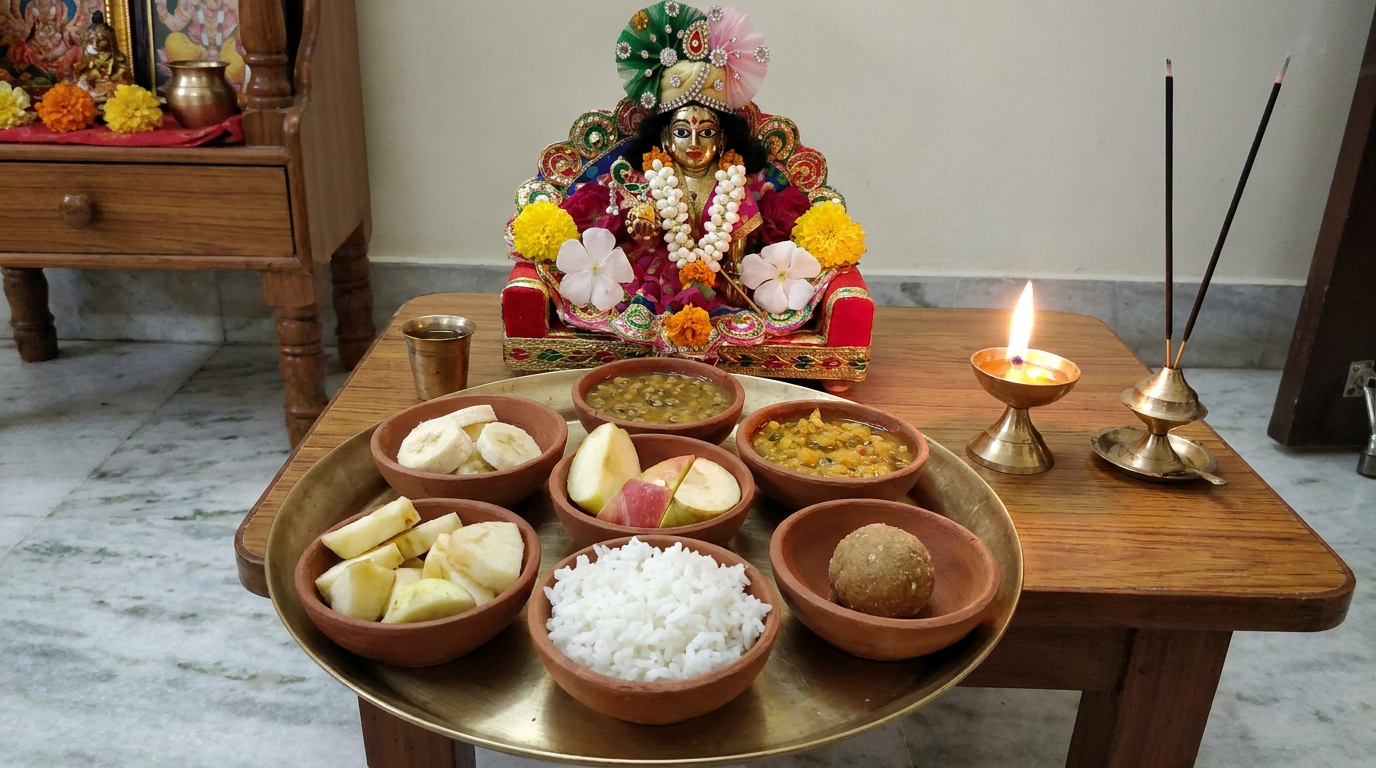
When food is offered to Kṛṣṇa with devotion, it becomes prasādam. The word prasādam means “mercy” or “grace.” It refers to food that has been lovingly offered to God and then received as His blessing.
This is a central practice in Bhakti Yoga. Devotees do not see prasādam as ordinary food. It is honored as sacred, purifying, and spiritually nourishing.
From Food to Prasādam
Before offering, the food is prepared with the intention of pleasing Kṛṣṇa. After offering, it is no longer simply “my meal.” It is Kṛṣṇa’s mercy returned to us.
This is a beautiful exchange. We offer what ultimately belongs to God, and God gives it back filled with grace.
In daily life, this teaches humility. We begin to see that we are not the owners of the world. We are caretakers, servants, and grateful recipients. Even the ability to cook, eat, digest, and enjoy comes from divine arrangement.
When we eat prasādam, we are invited to remember this.
Eating Becomes Spiritual Practice
Most people eat several times a day. If eating remains disconnected from spiritual life, we miss many opportunities to remember God.
But when food is offered, eating becomes part of our sādhana. Sādhana means a regular spiritual practice that helps awaken the heart. Chanting, prayer, study, meditation, and service can all be sādhana. Honoring prasādam is also sādhana.
This does not mean eating becomes stiff or joyless. Quite the opposite. Prasādam is meant to be honored with gratitude. Families can share it. Friends can gather around it. Communities can serve it freely. Children can learn devotion through it.
A meal becomes more than a meal. It becomes communion.
Prasādam Purifies the Heart
Bhakti scriptures teach that what we eat affects our consciousness. Food carries energy, intention, and subtle impressions. When food is cooked with anger, greed, or carelessness, that mood can influence us. When food is cooked and offered with love, it nourishes us in a deeper way.
In the Bhagavad-gītā, Kṛṣṇa explains that those who eat food first offered in sacrifice become freed from reactions, while those who cook only for themselves become bound by selfish action.
—Bhagavad-gītā 3.13
In practical terms, offering food helps us move from consumption to gratitude. It frees us from the mentality of taking and trains us in the joy of receiving and serving.
This is purification—not a harsh rejection of life, but a loving reorientation of life toward God.
Check out our latest posts at https://thebhaktihouse.org/blog.
Why Vegetarian Food Is Offered to Kṛṣṇa
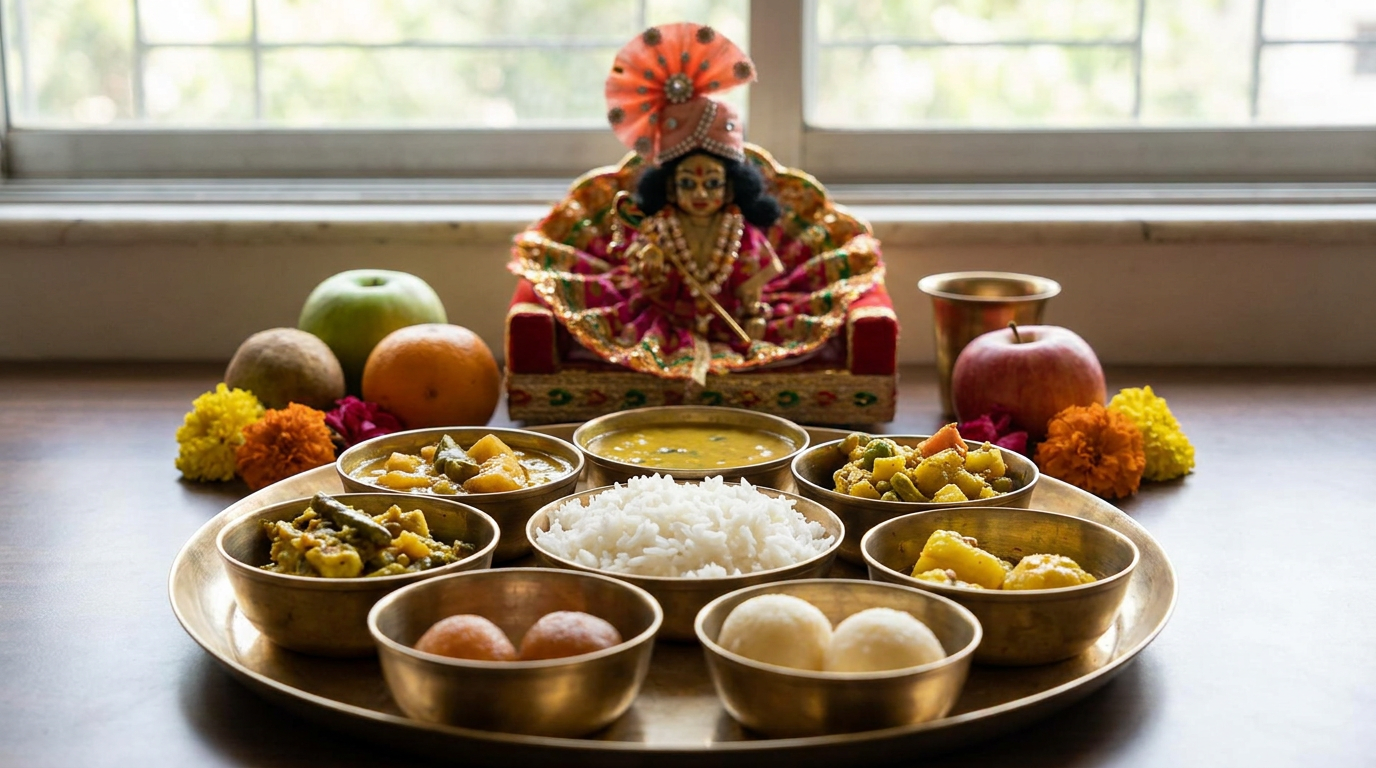
In traditional Bhakti practice, devotees offer Kṛṣṇa vegetarian food prepared without meat, fish, eggs, onion, or garlic. The offering commonly includes grains, vegetables, fruits, dairy, nuts, seeds, herbs, and sweets made with pure ingredients.
For newcomers, this may raise questions. Why these foods? Why not offer whatever we like?
The answer is rooted in compassion, scripture, and the desire to offer what Kṛṣṇa asks for.
Following Kṛṣṇa’s Request
In Bhagavad-gītā 9.26, Kṛṣṇa specifically mentions a leaf, flower, fruit, and water. Devotees understand this as indicating foods from the plant and milk categories, offered in a mood of purity and nonviolence.
Bhakti is not about inventing our own idea of worship. It is about lovingly hearing what Kṛṣṇa desires and responding. If a dear friend tells us what they like, love means we try to honor that.
Similarly, devotees prepare foods that are pleasing to Kṛṣṇa according to scripture and tradition.
A Practice of Compassion
The Sanskrit word ahiṁsā means nonviolence or minimizing harm. Since all living beings are souls, Bhakti Yoga encourages compassion toward humans, animals, and the earth.
A vegetarian offering supports this compassionate spirit. It helps us become more aware of the lives of other beings and the impact of our choices.
This does not mean we judge others harshly. Bhakti begins with humility. Everyone is on a journey. But for those who want to deepen their offering practice, preparing vegetarian meals for Kṛṣṇa is a meaningful step.
Purity in Body and Mind
Certain foods influence the mind in different ways. The Bhagavad-gītā describes food in relation to the three guṇas, or qualities of nature: goodness, passion, and ignorance. The word guṇa means “quality” or “mode.”
Foods in goodness tend to support clarity, steadiness, health, and peacefulness. Fresh, wholesome vegetarian foods are considered favorable for spiritual practice.
Offering food to Kṛṣṇa is not only about rules. It is about creating an atmosphere where the heart can become peaceful and receptive. The cleaner the intention and the preparation, the easier it is to remember God.
The Spiritual Meaning of Cooking for Kṛṣṇa
Cooking for Kṛṣṇa is a form of sevā. Sevā means service offered with love. In Bhakti Yoga, service is not inferior to meditation. It is meditation in action.
When we cook for Kṛṣṇa, our hands are active, but our heart can be prayerful. We wash, chop, stir, bake, and season with awareness: “This is for You.”
The Kitchen as a Sacred Space
A home kitchen can become like a small temple. This does not require expensive equipment or a perfect setting. It requires intention.
Before cooking, we can wash our hands, clean the cooking area, and take a moment to remember Kṛṣṇa. Some devotees chant the mahā-mantra while cooking:
Hare Kṛṣṇa, Hare Kṛṣṇa, Kṛṣṇa Kṛṣṇa, Hare Hare
Hare Rāma, Hare Rāma, Rāma Rāma, Hare Hare
This mantra is a prayer calling upon the divine energy of God. “Hare” addresses the Lord’s spiritual energy, “Kṛṣṇa” means the all-attractive Lord, and “Rāma” means the source of joy. Chanting while cooking helps fill the food and the cook’s heart with devotion.
Cooking Without Tasting First
In traditional offering practice, the cook does not taste the food before offering it to Kṛṣṇa. This may feel unusual at first. But the principle is sweet: Kṛṣṇa should be the first to enjoy.
Just as we would not take a bite from a guest’s plate before serving them, we prepare the offering for Kṛṣṇa first. After He is offered the food, we receive it as prasādam.
Practically, this means we learn to cook carefully, using experience, aroma, texture, and good recipes. Over time, it becomes natural.
Love in the Details
Devotional cooking is not only about the final dish. It is in the small acts: choosing fresh ingredients, keeping things clean, avoiding waste, preparing with patience, and offering with humility.
Even simple food becomes special when prepared with care.
A bowl of rice, vegetables, and dal—a nourishing lentil soup—can be deeply satisfying when offered to Kṛṣṇa. A piece of fruit can become sacred. A cup of water can carry devotion.
The heart matters most.
How to Offer Food to Kṛṣṇa at Home
Many people feel drawn to the idea of offering food but are unsure how to begin. The practice can be simple, especially at home.
You do not need to know everything. You can begin with sincerity and gradually learn more.
Prepare a Simple Vegetarian Offering
Start with something manageable. You might offer fruit, cooked rice, vegetables, bread, a sweet, or a glass of water.
Try to use fresh, clean ingredients. Avoid meat, fish, eggs, onion, and garlic if you are following the traditional Bhakti standard. Cook with care and avoid tasting before the offering.
If you are new, even offering a banana or a cup of water is a beautiful beginning.
Set Aside a Plate for Kṛṣṇa
It is helpful to have a special plate or small bowl used only for offering to Kṛṣṇa. Place a portion of the prepared food on that plate.
If you have a picture or deity form of Kṛṣṇa, you may place the plate before Him. If not, you can simply place it in a clean, respectful space and remember Him in your heart.
The external arrangement helps focus the mind, but the essential offering is the prayerful intention.
Offer a Prayer
You can pray in your own words:
“My dear Kṛṣṇa, thank You for this food and for all Your gifts. Please accept this offering made with love. Please help me remember You and serve You.”
Many devotees also chant traditional prayers received through the Bhakti lineage. If you are connected with a teacher or community, they can guide you in those prayers.
You may also chant the Hare Kṛṣṇa mantra softly. Let the offering sit for a few minutes, allowing yourself to be present and grateful.
Honor the Prasādam
After the offering, the food is prasādam. Return the offered portion to the main preparation or serve it respectfully. Eat with gratitude.
In Bhakti culture, we say “honor prasādam” rather than simply “eat food.” This reminds us that it is sacred mercy, not something to consume thoughtlessly.
You may pause before eating and remember, “This is Kṛṣṇa’s blessing.” That remembrance can transform the whole meal.
Offering Food Changes Our Relationship With the World
The practice of offering food to Kṛṣṇa gradually changes how we see everything.
We begin with food, but the lesson expands. If this food belongs to God, then perhaps my home, my time, my talents, my relationships, and my body also belong to God. Perhaps my life can become an offering.
This is the heart of Bhakti Yoga.
From Ownership to Stewardship
Modern life often teaches us to think, “This is mine. I earned it. I control it.” But spiritual wisdom gently asks us to look deeper.
Did we create the sun that grows the vegetables? Did we make the rain? Did we design the soil, the seed, the intelligence of digestion, or the breath in our lungs?
We participate, but we are not the ultimate source.
Offering food helps us remember that we are stewards, not owners. Stewardship brings peace because it relieves us of the burden of false control. We can work, cook, serve, and care—but with gratitude instead of anxiety.
From Consumption to Gratitude
Many of us eat quickly, distracted by screens, stress, or busy schedules. Offering food invites us to slow down.
Before eating, we remember the farmers, the earth, the cook, the family, the community, and ultimately Kṛṣṇa. This remembrance softens the heart.
Gratitude is not just a pleasant feeling. It is a spiritual practice. It trains the mind to see grace everywhere.
From Isolation to Relationship
Bhakti teaches that we are not alone in the universe. We are eternally connected with God and with all living beings.
Offering food restores relationship. We relate to Kṛṣṇa as the beloved receiver of our offering. We relate to others by sharing prasādam. We relate to the earth with more respect. We relate to ourselves as souls meant for love and service.
This is why prasādam distribution is so central in Bhakti communities. Sharing sanctified food is a way of sharing mercy without pressure. A person may not understand philosophy, but they can taste kindness. They can feel welcome. They can experience something sacred through a meal.
Food Offering and the Practice of Bhakti Yoga
Offering food is one part of a larger devotional life. It supports and deepens other Bhakti practices, such as chanting, prayer, scripture study, and service.
Bhakti Yoga is practical because it meets us where we are. We do not have to leave the world to begin loving God. We can start in our own home, with our own hands, in our daily routines.
Chanting and Offering
Chanting the holy names of God is the central practice of Bhakti Yoga. The Hare Kṛṣṇa mantra cleanses the heart and awakens devotion.
When we chant while cooking or before offering food, we invite sacred sound into the process. The mind becomes calmer. The intention becomes clearer. The food becomes connected with remembrance.
Even a few sincere moments of chanting can change the atmosphere of the kitchen.
Prayer and Dependence
Offering food teaches dependence on Kṛṣṇa in a healthy, loving way. We acknowledge, “I am not independent. I depend on Your mercy.”
This dependence is not weakness. It is spiritual honesty.
When we pray over food, we open the heart. We ask to be purified. We ask to serve better. We ask to remember God not only at the altar, but at the table, at work, in family life, and in difficulty.
Service and Sharing
Food offering naturally leads to sharing. Once we receive prasādam, we want others to receive it too.
In many Bhakti communities, cooking and serving prasādam is one of the most joyful forms of service. People from all walks of life sit together and receive the same mercy. Distinctions soften. Hearts open.
Sharing prasādam can be as simple as offering a friend a homemade sweet, bringing sanctified food to a gathering, feeding your family with devotion, or helping at a community meal.
Love becomes visible through service.
Common Questions About Offering Food to Kṛṣṇa
It is natural to have questions when beginning a spiritual practice. Bhakti welcomes sincere inquiry. Questions help us understand the heart behind the practice.
Does Kṛṣṇa Really Eat the Offering?
Yes, but not in the limited way we eat. Kṛṣṇa is spiritual, complete, and unlimited. He can accept the love and essence of the offering while the food remains physically present.
A simple example may help: if someone gives us a handwritten card, the paper remains, but we receive the love within it. Similarly, Kṛṣṇa accepts the devotion in the offering.
Scripture describes that God can see, hear, taste, and accept through any of His senses because His spiritual nature is unlimited. The important point for our practice is faith: Kṛṣṇa lovingly accepts what is offered with devotion.
What If I Am Not Perfect?
No one begins perfectly. Bhakti is a path of growth.
If you forget, begin again. If your mind wanders, gently return. If your cooking is simple, offer it anyway. If your heart feels dry, pray honestly: “Kṛṣṇa, please help me want to love You.”
Sincerity is more important than performance.
The practice itself purifies us. We do not become qualified first and then offer. We offer, and by offering, we become purified.
Can I Offer Food If I Am New to Bhakti?
Yes. You are welcome.
You do not need to be Indian, Hindu, initiated, or highly knowledgeable to begin offering food to Kṛṣṇa. Respectful learning is important, but the doorway is open.
Start with one small offering. A fruit. A glass of water. A simple meal. Let it be real. Let it be from the heart.
Kṛṣṇa’s invitation in the Bhagavad-gītā is personal and universal: “Whoever offers Me with devotion…” That “whoever” includes you.
The Inner Offering: Giving the Heart
Ultimately, the food is a doorway to a deeper offering. Kṛṣṇa wants our love because love is the nature of the soul.
In Sanskrit, the self is called ātmā, meaning the eternal soul. We are not merely bodies or minds. We are spiritual beings, meant for relationship with God. Bhakti Yoga helps us awaken that relationship.
Offering Our Actions
The Bhagavad-gītā teaches:
“Whatever you do, whatever you eat, whatever you offer or give away, and whatever austerity you perform—do that as an offering to Me.”
—Bhagavad-gītā 9.27
This verse expands the practice beyond the kitchen. Whatever we do can become an offering: our work, parenting, studies, art, rest, words, and choices.
Food offering trains us in this consciousness. If I can offer this meal, perhaps I can offer this day. If I can offer this fruit, perhaps I can offer this challenge. If I can offer this prayer, perhaps I can offer my whole heart.
Offering Our Gratitude
Gratitude is one of the first flowers of devotion. When we offer food, we practice saying thank you.
Thank You for the earth.
Thank You for nourishment.
Thank You for the people who helped bring this food.
Thank You for the chance to remember You.
Thank You for accepting even my small offering.
Such gratitude softens pride and opens the heart to grace.
Offering Our Love
The goal of Bhakti Yoga is prema, pure love of God. Prema is love without selfish demand, love that wants to please the beloved.
Food offering is a daily way to practice prema in seed form. We may not have pure love yet, but we can act in the direction of love. We can prepare, offer, pray, chant, serve, and share.
Over time, these simple acts shape the heart.
A Gentle Beginning for Every Home
Offering food to Kṛṣṇa is a sacred practice, but it is also very human. We all need to eat. We all need love. We all need moments of meaning in ordinary life.
Bhakti Yoga does not ask us to reject the world. It teaches us to reconnect the world with God.
Your kitchen can become a place of prayer. Your meals can become moments of gratitude. Your family table can become a place where grace is remembered. Your hands can become instruments of service.
Begin simply.
Choose one meal this week, or even one piece of fruit. Place it before Kṛṣṇa. Offer a sincere prayer. Chant if you can. Then receive the prasādam with gratitude.
Do not worry about being advanced. Do not wait until everything is perfect. Love grows by practice, and Kṛṣṇa sees every sincere effort.
Everyone is welcome on the path of Bhakti. Whatever your background, wherever you are in life, you can take one sincere step toward God today—with a prayer, a chant, an act of service, or a simple offering of food made with love.
FAQs
What is the significance of offering food to Kṛṣṇa?
Offering food to Kṛṣṇa is a way of expressing gratitude and devotion to the deity. It is believed that by offering food to Kṛṣṇa, one can purify the food and receive spiritual benefits.
What kind of food is offered to Kṛṣṇa?
The food offered to Kṛṣṇa is known as prasadam, which is vegetarian and prepared with love and devotion. It typically includes grains, fruits, vegetables, dairy products, and sweets.
How is the food offered to Kṛṣṇa prepared and presented?
The food offered to Kṛṣṇa is prepared in a clean and hygienic manner, and it is presented on a clean plate or altar. It is offered with devotion and accompanied by chanting of mantras.
What happens to the food after it is offered to Kṛṣṇa?
After the food is offered to Kṛṣṇa, it is considered to be sanctified and spiritually potent. It is then distributed as prasadam to the devotees, who consume it as a blessing.
What are the benefits of offering food to Kṛṣṇa?
Offering food to Kṛṣṇa is believed to purify the mind and body, bestow spiritual blessings, and foster a sense of gratitude and devotion. It is also considered a way to share the blessings of the deity with others.

