

In the journey of Bhakti Yoga, there is a beautiful Sanskrit word that brings comfort, clarity, and strength to the heart: niṣṭhā.
Niṣṭhā means steadiness, firm faith, or spiritual stability. It describes the stage where a person becomes more grounded in their spiritual practice. The mind may still have waves, life may still bring challenges, and the heart may still be growing—but something deeper has become fixed. A sincere soul begins to feel, “This path of devotion is my shelter. I want to keep walking toward God.”
In Bhakti Yoga, niṣṭhā is not about becoming rigid, proud, or perfect. It is not a cold determination or a harsh discipline. Rather, it is the gentle strength that grows when love becomes more important than distraction. It is the steadiness that comes when the soul has tasted the sweetness of chanting, prayer, service, and remembrance of the Divine.
The word bhakti means loving devotion, and yoga means connection. So Bhakti Yoga is the path of reconnecting with God through love. Niṣṭhā is an important development on this path because love becomes more consistent. Instead of spiritual life being only occasional inspiration, it becomes a daily relationship.
Everyone is welcome on this path—whether you are new to spirituality, returning after a long time, raised in a faith tradition, or simply curious about the heart’s deeper purpose. Niṣṭhā is not reserved for monks, scholars, or advanced saints. It can begin in any life, in any home, with one sincere step.
Niṣṭhā in the Journey of Bhakti Yoga
The ancient Bhakti scriptures describe spiritual life as a natural progression of the heart. One famous verse from the Bhakti-rasāmṛta-sindhu, a devotional text by Śrīla Rūpa Gosvāmī, outlines stages of growth in devotion:
First comes śraddhā, or initial faith. Then sādhu-saṅga, association with spiritually minded people. Then bhajana-kriyā, the beginning of devotional practices. Then anartha-nivṛtti, the gradual clearing of unwanted habits and inner obstacles. After that comes niṣṭhā, steadiness.
This is very practical. Many of us begin spiritual life with curiosity or hope. We may hear chanting, visit a temple, read a sacred text, join a prayer circle, or feel moved by the kindness of a devotee. Something awakens.
Then we seek community. We want to spend time with people who remind us of God, love, simplicity, and service.
Then we begin practices. We chant. We pray. We read. We offer food. We try to serve. We try to live with more compassion.
But as we practice, we also meet ourselves. We notice impatience, pride, distraction, fear, doubt, old patterns, and attachments. This is not a failure. It is purification. Bhakti gently brings what is hidden into the light so it can be healed.
Over time, by grace, the heart becomes steadier. That steadiness is niṣṭhā.
Śraddhā: The Seed of Faith
Śraddhā means faith, but not blind belief. It is the soft trust that says, “Maybe there is something sacred here. Maybe this practice can help me remember who I really am.”
Faith may begin very small. A person may not understand Sanskrit, philosophy, rituals, or theology. But they may feel peace when hearing the holy names of God. They may feel touched by kindness. They may sense that life has a higher purpose.
That little seed is precious.
In the Bhagavad-gītā, Krishna says that even a little progress on this path can protect one from great fear. This means that no sincere spiritual effort is wasted. Even one heartfelt prayer, one moment of chanting, one act of service, or one tear offered to God can nourish the soul.
Sādhu-saṅga: The Power of Spiritual Company
Sādhu-saṅga means the association of saintly or spiritually sincere people. A sādhu is someone who is trying to live for truth, compassion, and devotion. Saṅga means association or company.
We become influenced by the people we spend time with. If we are surrounded only by anxiety, competition, gossip, or material ambition, our consciousness naturally absorbs those vibrations. But when we spend time with people who chant, serve, forgive, study scripture, and speak about God, our hearts become encouraged.
Spiritual community does not mean everyone is perfect. It means we gather around a sacred center. We help each other remember.
Bhajana-kriyā: Beginning Devotional Practice
Bhajana-kriyā means taking up regular devotional practices. These may include chanting God’s names, praying, reading scripture, worshiping, serving others, cooking and offering food, or joining kīrtan.
Kīrtan is the joyful singing or chanting of God’s names, often with music. In Bhakti Yoga, sound is sacred. The holy names are not considered ordinary sound; they are understood to carry the presence and mercy of God.
A simple and beloved mantra in the Bhakti tradition is the Hare Krishna mahā-mantra:
Hare Krishna Hare Krishna
Krishna Krishna Hare Hare
Hare Rama Hare Rama
Rama Rama Hare Hare
A mantra is a sacred sound that helps free the mind and awaken the heart. The word mahā means great, so the mahā-mantra is a great prayer of calling out to God and divine energy: “Please engage me in Your loving service.”
Anartha-nivṛtti: Clearing the Heart
Before niṣṭhā becomes strong, many practitioners go through anartha-nivṛtti. Anartha means unwanted things, and nivṛtti means removal or clearing away.
These unwanted things may include selfish habits, resentment, envy, laziness, spiritual confusion, unhealthy desires, or patterns that keep us away from love. This stage can feel humbling. We may think, “I started spiritual life and now I see more of my flaws!”
But this is actually mercy. If a room has been dark for many years, turning on the light reveals the dust. The dust was already there. The light did not create it. The light helps us clean.
Bhakti is that light.
The Heart of Niṣṭhā: Steady Devotion in Real Life
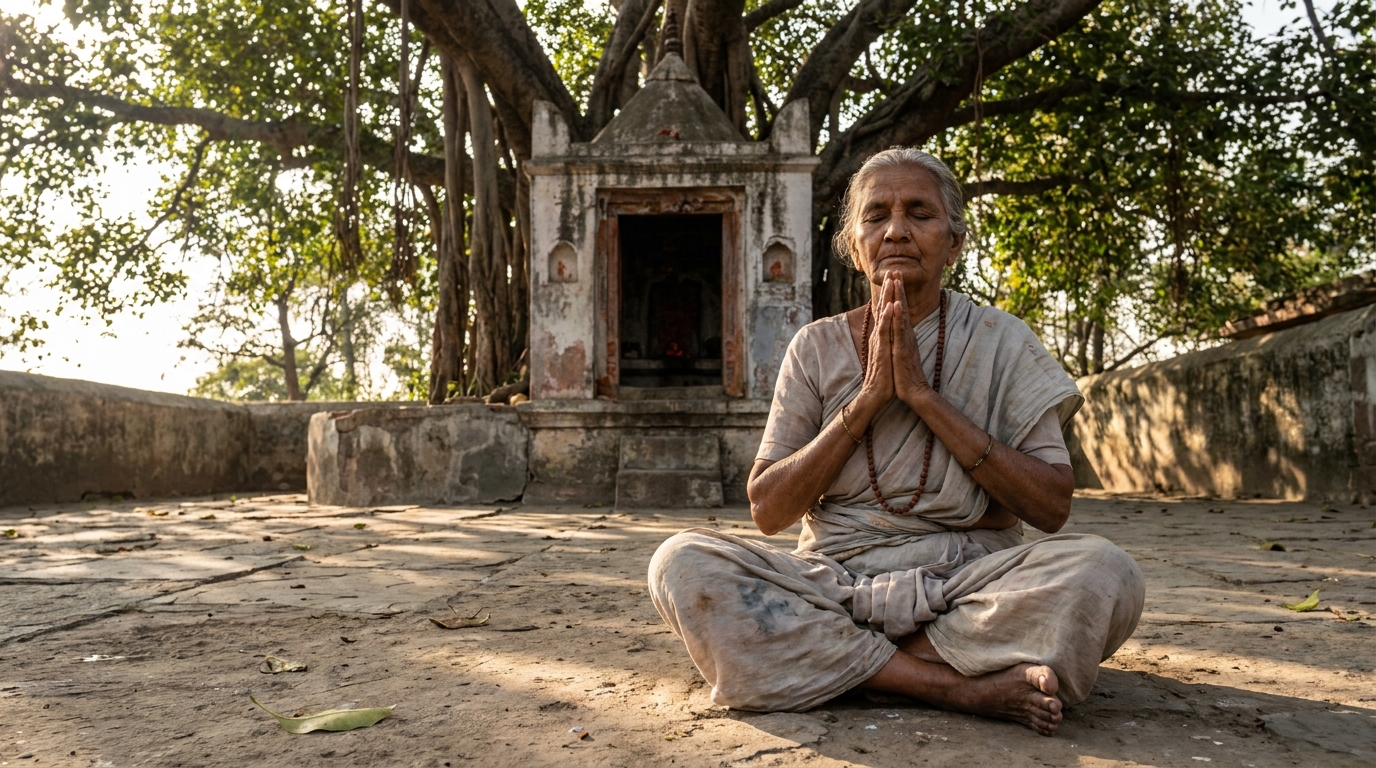
Niṣṭhā means we keep showing up.
Not because every day feels mystical. Not because the mind is always peaceful. Not because life is easy. We keep showing up because our heart has begun to understand: “My relationship with God is the most important relationship in my life.”
This steadiness may be quiet. It may look like chanting a little every morning before work. It may look like offering gratitude before meals. It may look like reading one verse of the Bhagavad-gītā each day. It may look like serving guests, caring for children, working honestly, forgiving someone, or choosing kindness when anger arises.
Niṣṭhā is devotion becoming dependable.
Not Perfection, But Direction
One of the most encouraging truths in Bhakti Yoga is that spiritual advancement is not measured by external perfection. It is measured by the heart’s direction.
A person in niṣṭhā may still struggle. They may still have doubts, emotions, or worldly responsibilities. But their life is increasingly oriented toward God. When they fall, they return. When they forget, they remember. When they feel weak, they pray.
This is very different from pretending to be spiritually advanced. Niṣṭhā is humble. It does not announce itself loudly. It grows through sincerity.
In the Bhagavad-gītā, Krishna lovingly says that even if a devotee sometimes struggles, if they are sincerely determined in devotion, they should be considered saintly because their direction is right. This teaching is filled with compassion. Krishna sees the heart’s intention and the soul’s movement toward Him.
A Daily Relationship with God
Niṣṭhā turns spiritual practice into relationship.
Chanting is no longer just a technique for peace. It becomes calling out to the Beloved.
Prayer is no longer only asking for help. It becomes conversation.
Service is no longer duty alone. It becomes an offering of love.
Scripture is no longer just information. It becomes guidance from the Divine.
In Bhakti Yoga, God is not understood as distant, abstract, or unreachable. Krishna, a name of God meaning “the all-attractive one,” is described as a loving person who reciprocates with every soul. The more we turn toward Him, the more we begin to feel guided, held, and transformed.
Steadiness Through All Seasons
Life brings seasons. There are times of joy, grief, excitement, exhaustion, clarity, confusion, success, and loss. Niṣṭhā does not mean we avoid these human experiences. It means our devotion becomes an anchor within them.
When life is joyful, we offer gratitude.
When life is painful, we take shelter.
When life is confusing, we seek guidance.
When life is busy, we simplify and remember.
When life is uncertain, we chant.
Steadiness does not remove all storms, but it gives the soul a place to stand.
Please visit our website for more information on our articles: articles.
How Niṣṭhā Develops Through Chanting

Chanting is one of the central practices of Bhakti Yoga. It is simple, accessible, and deeply powerful. Anyone can chant. One does not need wealth, academic training, social status, or previous qualification. The holy names are open to all.
The Bṛhan-nāradīya Purāṇa, an ancient scripture, emphasizes that in this age, chanting the holy names of God is the recommended path for spiritual awakening. This is not because other practices have no value, but because chanting is especially merciful and practical for people living in a busy and distracted world.
Japa: Personal Meditation with Mantra
Japa means softly chanting or repeating a mantra, often on beads. In many Bhakti traditions, practitioners chant the Hare Krishna mahā-mantra on a strand of 108 beads. Each bead becomes a moment of connection, a small offering of attention.
Japa helps train the mind to return to God. The mind naturally wanders. That is not surprising. The practice is to gently bring it back.
Hare Krishna Hare Krishna
Krishna Krishna Hare Hare
Hare Rama Hare Rama
Rama Rama Hare Hare
Each repetition is like knocking on the door of the heart.
Some days japa may feel focused and sweet. Other days it may feel dry or distracted. Niṣṭhā means we continue with patience. We trust that the holy name is working, even when we cannot immediately perceive it.
Kīrtan: Chanting Together
Kīrtan is congregational chanting, often call-and-response. One person leads, and others respond. Instruments may be played, hands may clap, and hearts may open.
There is something very healing about chanting together. We remember that spiritual life is not lonely. Voices blend. Differences soften. People from many backgrounds can sit together and call upon God’s names.
In kīrtan, we do not need to perform. We do not need to sing perfectly. We simply offer our voice. Even if someone only listens with an open heart, that listening can be devotional.
Kīrtan nourishes niṣṭhā because it gives us a taste of spiritual joy. That taste strengthens our desire to continue.
Chanting in Ordinary Moments
Chanting does not have to be limited to formal practice. We can remember God’s names while walking, cooking, driving, cleaning, or waiting. A mother can chant while caring for her child. A student can chant before studying. A worker can silently pray during a difficult day.
The holy name is a companion.
When chanting becomes part of daily life, niṣṭhā grows naturally. We begin to carry sacred remembrance into ordinary moments.
Prayer, Service, and Scripture as Foundations of Niṣṭhā
Niṣṭhā is supported by a balanced devotional life. Chanting is central, but prayer, service, and scripture also nourish the heart.
Prayer: Speaking Honestly with God
Prayer in Bhakti Yoga can be formal or spontaneous. We can recite traditional prayers, or we can speak from the heart.
A simple prayer might be:
“Dear Lord, please help me remember You today. Please guide my words, my choices, and my heart. Please help me serve with humility.”
Prayer does not require fancy language. God hears sincerity.
Sometimes prayer is gratitude. Sometimes it is confession. Sometimes it is longing. Sometimes it is silence. Sometimes it is simply, “Please help me.”
As niṣṭhā develops, prayer becomes more honest and less transactional. We may still ask for help, but we also begin asking for love, purity, wisdom, and the strength to serve.
Seva: Service as Love in Action
Seva means service. In Bhakti Yoga, service is love expressed through action. It may include helping in a temple, cooking sacred food, cleaning, teaching, caring for guests, supporting community, feeding others, offering skills, or encouraging someone spiritually.
Service purifies the heart because it shifts the center from “What can I get?” to “How can I offer?”
This does not mean neglecting healthy boundaries or personal responsibilities. True seva is not burnout. It is loving offering. When done with humility and remembrance, even simple service becomes sacred.
Washing a floor can be worship. Preparing a meal can be devotion. Listening to someone with compassion can be service to God in the heart.
Śāstra: Scripture as a Lamp
Śāstra means scripture. Bhakti scriptures like the Bhagavad-gītā, Śrīmad-Bhāgavatam, and writings of great teachers help guide the soul.
Scripture is like a lamp on the path. It helps us understand who we are, who God is, why we suffer, how karma works, what devotion means, and how to live with purpose.
But scripture is not meant only for intellectual debate. It is meant to transform the heart. Even reading a small passage each day can help bring clarity.
For example, in the Bhagavad-gītā, Krishna teaches that whatever we do, whatever we eat, whatever we offer or give away, we can do it as an offering to Him. This means spiritual life can enter every part of our day. Our home, work, relationships, meals, and responsibilities can become connected to devotion.
That understanding strengthens niṣṭhā.
Obstacles to Niṣṭhā and How to Meet Them with Compassion
Every sincere practitioner faces obstacles. This does not mean we are failing. It means we are human, and we are healing.
Niṣṭhā grows not by denying obstacles, but by learning how to meet them with humility, guidance, and grace.
Doubt and Discouragement
Doubt may arise: “Am I really making progress? Is God hearing me? Why is my mind still restless?”
In Bhakti Yoga, doubt is not treated with shame. Honest questions can deepen faith when brought into sincere discussion with experienced practitioners and scripture.
Discouragement often comes when we expect quick results. But the heart has been conditioned for a long time. Transformation takes patience.
A helpful reminder is: keep the practice simple and steady. Chant. Pray. Serve. Hear from scripture. Stay connected with devotees. Small steps repeated over time become powerful.
Distraction and Inconsistency
Modern life is full of distraction. Phones, responsibilities, entertainment, anxiety, and social pressure compete for our attention.
Niṣṭhā does not mean we suddenly become free from distraction. It means we create gentle structure.
This might include:
- Choosing a regular time for chanting
- Keeping sacred books visible
- Attending weekly kīrtan or spiritual gatherings
- Offering meals before eating
- Reducing habits that disturb the mind
- Spending time with people who support spiritual growth
Consistency is easier when our environment supports our values.
Pride in Practice
Sometimes, when we become steady, pride can quietly enter. We may think, “I am more devoted than others,” or “My practice is better.”
This is dangerous because bhakti grows in humility. The more we advance, the more grateful and compassionate we should become.
True niṣṭhā makes the heart soft. It helps us honor others. We remember that whatever steadiness we have is a gift of grace, not our personal achievement.
Dryness in the Heart
There may be times when chanting feels dry or prayer feels distant. This can be painful.
But even dryness can become an offering. We can say, “My Lord, I do not feel much today, but I am here. Please accept this small effort.”
That kind of prayer is very dear. Love is not proven only in moments of sweetness. Love is also shown by faithfulness.
Niṣṭhā and Spiritual Growth in Community
Bhakti Yoga is deeply personal, but it is not meant to be isolated. Community helps niṣṭhā become joyful, balanced, and protected.
In spiritual community, we learn by hearing, serving, asking questions, and seeing examples. We also learn patience, forgiveness, and humility because community naturally reveals our edges.
Learning from Devotees
A devotee is someone who is trying to love and serve God. Devotees may be at different stages, with different personalities and life situations. Some may be very experienced, while others may be just beginning.
By associating with sincere devotees, we see devotion lived in real ways. We see how someone chants through hardship, serves without seeking recognition, apologizes when wrong, or keeps faith during uncertainty.
These examples nourish niṣṭhā more than theory alone.
Asking Questions with Humility
The Bhagavad-gītā encourages approaching spiritual truth through humility, sincere questions, and service. Questions are welcome on the path of bhakti. They help us understand more deeply.
A humble question is not asked to defeat others, but to learn. We might ask:
“How can I chant with more attention?”
“How do I balance work and spiritual practice?”
“What should I do when I feel discouraged?”
“How can I serve in a way that is healthy and sincere?”
Such questions open the heart to guidance.
Creating a Sacred Home Life
Niṣṭhā can be cultivated at home. A home does not need to be elaborate to be spiritual. Even a small sacred space can remind us of God.
You might keep a picture of Krishna, sacred texts, prayer beads, flowers, or a candle. You might play kīrtan in the morning. You might offer your food with gratitude. You might read one verse together as a family or silently before bed.
The home becomes a place of remembrance when daily life is gently connected to devotion.
Practical Ways to Cultivate Niṣṭhā
Niṣṭhā grows through repeated sincere choices. We do not force it artificially. We nourish it.
Here are practical ways to invite steadiness into your Bhakti Yoga practice.
Begin the Day with Remembrance
The morning is a sacred doorway. Before the world becomes loud, offer a moment to God.
This could be as simple as:
“Thank You for this day. Please guide me. Please help me remember You.”
If possible, chant some rounds of japa, read a verse, or listen to kīrtan. Even ten focused minutes can shape the whole day.
Choose a Realistic Practice
It is better to choose a practice you can maintain than to make a dramatic vow and quickly abandon it.
Start with what is sincere and sustainable. Perhaps chant one round daily. Attend one kīrtan each week. Read one paragraph of scripture each morning. Offer one meal each day.
Steadiness grows when practice is both meaningful and realistic.
Offer Your Food
In Bhakti Yoga, food can become sacred when prepared and offered with love. Such sanctified food is called prasāda, meaning mercy.
You can place vegetarian food before a picture of Krishna or God and pray:
“My Lord, please accept this offering made with love.”
Then receive the food with gratitude.
This simple practice brings devotion into daily life. Eating becomes spiritualized, and the heart remembers that everything comes from God.
Serve Someone Every Day
Service does not always need to be grand. Each day, we can ask, “How can I serve?”
Maybe we encourage someone. Maybe we help clean. Maybe we cook, donate, listen, teach, forgive, or pray for another person.
When service becomes part of daily life, niṣṭhā becomes practical and compassionate.
Return Gently After Falling Away
Sometimes we miss our practice. Sometimes we drift. Sometimes we make choices that do not reflect our values.
The important thing is to return.
Do not let shame keep you away from God. In bhakti, every return is meaningful. Krishna is more eager for us than we can imagine. The path is not about never stumbling; it is about continuing to turn toward love.
The Fruit of Niṣṭhā: A Heart Becoming Steady in Love
As niṣṭhā matures, spiritual life becomes less dependent on mood. The soul feels more anchored. The heart becomes clearer. The mind becomes easier to guide. Devotion becomes a natural priority.
This steadiness eventually leads to deeper stages of bhakti, including ruci, or taste; āsakti, attachment to God; bhāva, spiritual emotion; and ultimately prema, pure love of God.
But we do not need to rush ahead. Bhakti is not a race. Each stage is sacred when lived sincerely.
Niṣṭhā itself is a great blessing. To become steady in love, even a little, is a profound gift.
Peace That Comes from Shelter
When we take shelter of God through chanting, prayer, service, and remembrance, we begin to experience a peace that is not dependent on external circumstances.
This does not mean we never feel pain. It means pain is held within a larger relationship. We are not alone. The Lord in the heart is guiding us.
In the Bhagavad-gītā, Krishna promises that His devotee never perishes. This assurance gives courage. Spiritual life is protected by divine love.
Humility and Gratitude
A steady devotee becomes grateful. They see that every step forward has been supported by mercy—by teachers, community, scripture, the holy name, and God’s kindness.
Niṣṭhā does not make us feel superior. It helps us bow inwardly. We begin to honor every soul as beloved by God.
Love That Becomes Reliable
The world often teaches us to chase excitement, novelty, and immediate satisfaction. Bhakti teaches us the beauty of faithful love.
Niṣṭhā is love becoming reliable.
We chant even when busy. We pray even when unsure. We serve even when unnoticed. We remember even when life is complicated.
And slowly, the heart changes. What once felt like discipline becomes nourishment. What once felt like effort becomes joy.
Niṣṭhā Is for Everyone
Niṣṭhā may sound like a lofty spiritual concept, but it begins very simply. It begins when a person says, “I want to keep going. I want to keep remembering God. I want my life to become an offering.”
You do not need to know everything. You do not need to be perfect. You do not need to have a certain background, culture, language, or history. Bhakti Yoga welcomes the sincere heart.
If you are new, begin gently. Chant one mantra. Offer one prayer. Read one verse. Attend one kīrtan. Serve one person. Take one step.
If you have been practicing for years, renew your intention. Let niṣṭhā become softer, deeper, and more loving. Return to the heart of the path: to love God and serve all beings.
The path of Bhakti Yoga is practical, personal, and full of grace. Through chanting, prayer, service, scripture, community, and daily remembrance, the heart becomes steady. This is niṣṭhā—a sacred steadiness that carries us closer to God.
Wherever you are on your journey, you are welcome. Take one sincere step toward God today. Sing, pray, serve, remember, or simply open your heart and say, “Please guide me.” That step matters, and divine love will meet you there.
FAQs
What is Niṣṭhā?
Niṣṭhā is a Sanskrit term that translates to “steadfastness” or “devotion” in English. It is a concept in Hinduism that refers to unwavering faith and dedication to a particular deity or spiritual practice.
How is Niṣṭhā practiced?
Niṣṭhā is practiced through consistent and sincere devotion to a chosen deity or spiritual path. This may involve regular prayer, meditation, rituals, and adherence to moral and ethical principles.
What is the significance of Niṣṭhā in Hinduism?
In Hinduism, Niṣṭhā is considered essential for spiritual progress and attaining moksha (liberation). It is believed that unwavering devotion and commitment to a spiritual practice can lead to a deeper connection with the divine and ultimately, liberation from the cycle of birth and death.
Are there different forms of Niṣṭhā?
Yes, there are different forms of Niṣṭhā based on the deity or spiritual path that an individual follows. For example, one may practice Niṣṭhā towards a specific deity such as Vishnu, Shiva, or Devi, or towards a particular spiritual tradition such as Bhakti Yoga or Karma Yoga.
How does Niṣṭhā differ from other spiritual concepts?
Niṣṭhā is similar to other spiritual concepts such as faith and devotion, but it emphasizes the quality of steadfastness and unwavering commitment. It is considered a foundational aspect of many spiritual practices in Hinduism and is often seen as a precursor to deeper states of meditation and realization.

