
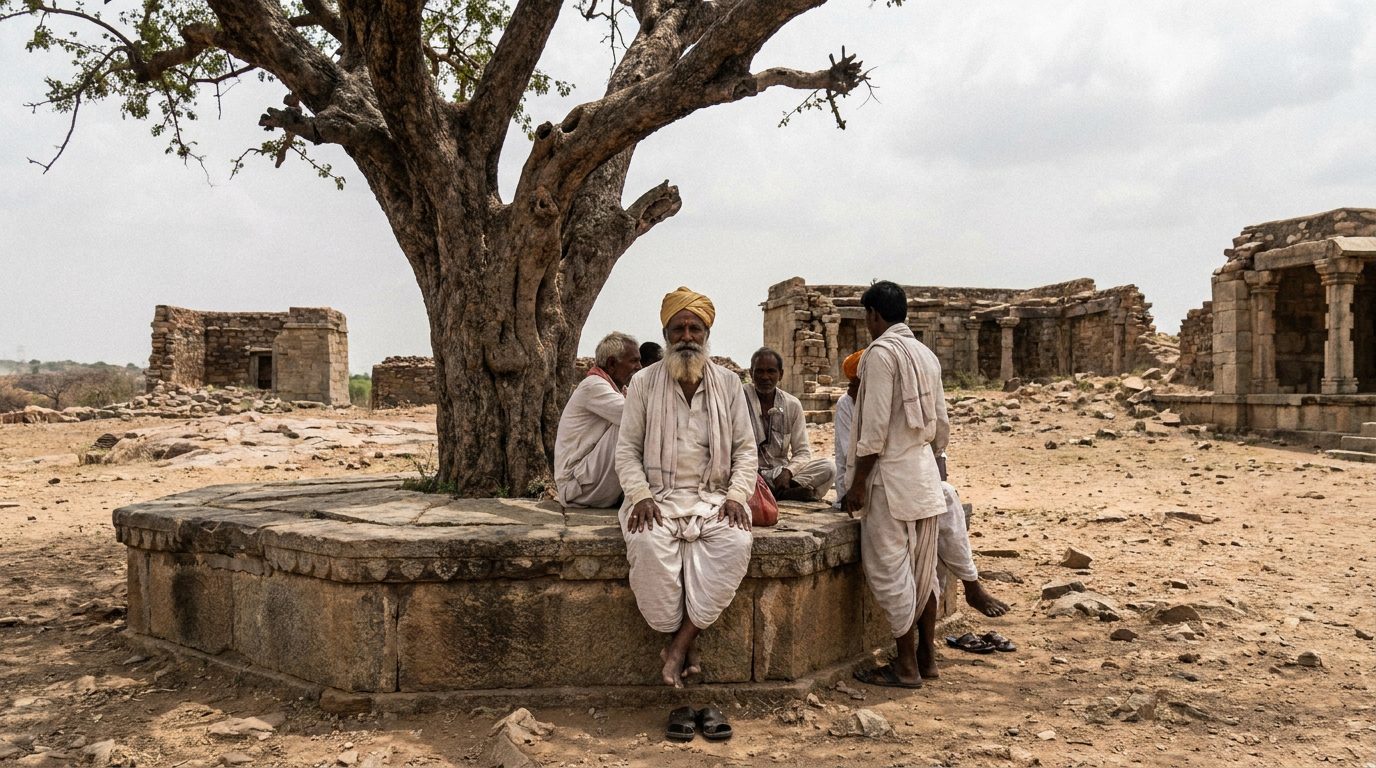
In the timeless wisdom of the Bhakti tradition, certain souls shine like lighthouses, guiding the rest of us home. One such soul is Ambarīṣa Mahārāja — a great king who lived thousands of years ago yet whose example speaks directly to our lives today.
Ambarīṣa was not a renunciant living in a remote forest. He was a powerful emperor, surrounded by wealth, responsibilities, and all the temptations that come with worldly power. And yet, he is celebrated as one of the greatest devotees of Lord Viṣṇu (God in His all-pervading, sustaining form) in the entire Bhakti tradition.
His story is found primarily in the Ninth Canto of the Śrīmad-Bhāgavatam, one of the most beloved scriptures in the Bhakti path. What makes his journey so encouraging is this: he shows us that devotion to God is not about abandoning life. It is about transforming every part of life into an offering of love.
Whether you are new to Bhakti Yoga or have been walking this path for years, whether you come from a spiritual background or are simply curious, the lessons from Ambarīṣa Mahārāja’s life are deeply practical, deeply human, and deeply hopeful.
Let us explore them together.
Lesson One: Engage Everything You Have in God’s Service
The most famous teaching from Ambarīṣa Mahārāja’s story is how he engaged every single one of his senses — his mind, his words, his hands, his legs, his ears, and even his kingdom — in the loving service of the Lord.
The Śrīmad-Bhāgavatam (9.4.18–20) beautifully describes this:
> “Mahārāja Ambarīṣa always engaged his mind in meditating upon the lotus feet of Kṛṣṇa, his words in describing the glories of the Lord, his hands in cleansing the Lord’s temple, and his ears in hearing the words spoken by Kṛṣṇa or about Kṛṣṇa.”
This is not just poetry. It is a practical blueprint for spiritual life.
How Can We Apply This Today?
You do not need to be a king to follow Ambarīṣa’s example. You simply start where you are:
- Your mind — Try spending a few minutes each morning thinking of God, even before you check your phone. Meditation on God’s names, forms, or qualities is a gentle way to begin.
- Your words — Speak kindly. Chant God’s holy names. Share something uplifting with someone. The practice of kīrtana (devotional chanting) is one of the simplest and most joyful ways to engage your voice in divine service.
- Your hands — Cook a meal and offer it to God with love. Clean a sacred space. Serve someone in need. These small acts become profound when done with devotion.
- Your ears — Listen to sacred stories, devotional music, or the wisdom of those who love God. What we listen to shapes who we become.
- Your legs — Visit a temple, a sacred place, or simply walk in nature with gratitude and awareness of God’s creation.
The beauty of Ambarīṣa’s example is that it is not about perfection. It is about direction. He turned his entire life toward God, and that turning — that sincerity — is what made him extraordinary.
The Inner Transformation Behind the Outer Action
It is important to understand that Ambarīṣa did not simply go through the motions of devotion. His heart was genuinely absorbed in love for the Lord. The Śrīmad-Bhāgavatam (9.4.22) explains:
> “In this way, Mahārāja Ambarīṣa was the emperor of the entire world, but he considered his opulence temporary. Therefore, being in the transcendental position, he gave up all attachment to worldly opulence.”
He possessed everything, yet he was possessed by nothing. This is the secret of Bhakti Yoga. It does not ask us to reject the world but to hold it gently, using everything we have as an instrument of love.
Lesson Two: The Power of Vows and Spiritual Discipline
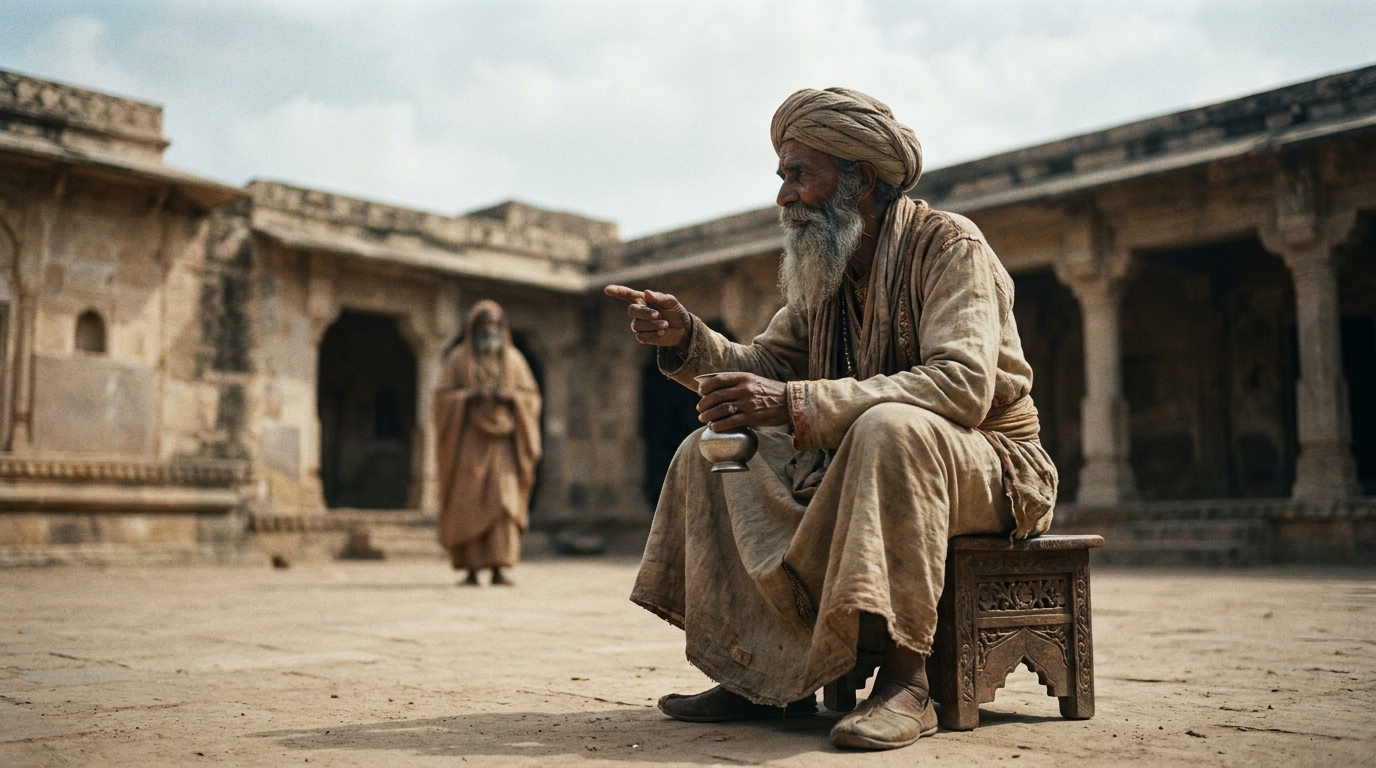
One of the pivotal events in Ambarīṣa Mahārāja’s story involves his observance of Ekādaśī — a sacred day of fasting and heightened devotion that falls twice each month in the Vedic calendar. Devotees honor this day by fasting (or eating simply), chanting more, and focusing their hearts on God.
Ambarīṣa observed Ekādaśī with great care and devotion. After completing a year-long vow of fasting on every Ekādaśī, he was preparing to break his fast at the proper time on Dvādaśī (the day after Ekādaśī), when the powerful sage Durvāsā Muni arrived unexpectedly as his guest.
Honoring Both the Guest and the Vow
In Vedic culture, a guest — especially a sage — is considered a representative of God. Ambarīṣa welcomed Durvāsā with great respect and invited him to eat. Durvāsā went to bathe in the river before accepting the meal, but he took a very long time to return.
Meanwhile, the auspicious time window for breaking the Ekādaśī fast was closing. Ambarīṣa faced a dilemma: if he ate before his guest, it would be disrespectful. But if he did not break his fast at the proper time, his spiritual vow would be broken.
After consulting with learned brāhmaṇas (priests and scholars), Ambarīṣa chose a middle path. He sipped a small amount of water — which technically breaks the fast — without eating a full meal, thus honoring both the vow and his guest.
What This Teaches Us
This moment carries a profound lesson: spiritual life sometimes asks us to navigate complex situations with humility, wisdom, and trust in God. Ambarīṣa did not act out of ego or defiance. He acted out of sincere devotion and a desire to do what was right.
For us, this means that spiritual discipline — whether it is chanting a certain number of rounds of the mahā-mantra, fasting on Ekādaśī, or maintaining a daily prayer practice — is not about rigid rule-following. It is about cultivating sincerity and consistency in our relationship with God.
Even a small vow, kept with love, has tremendous power.
Sure, here is the sentence with the clickable link:
Check out our website for more articles: more articles.
Lesson Three: God Protects Those Who Take Shelter in Him
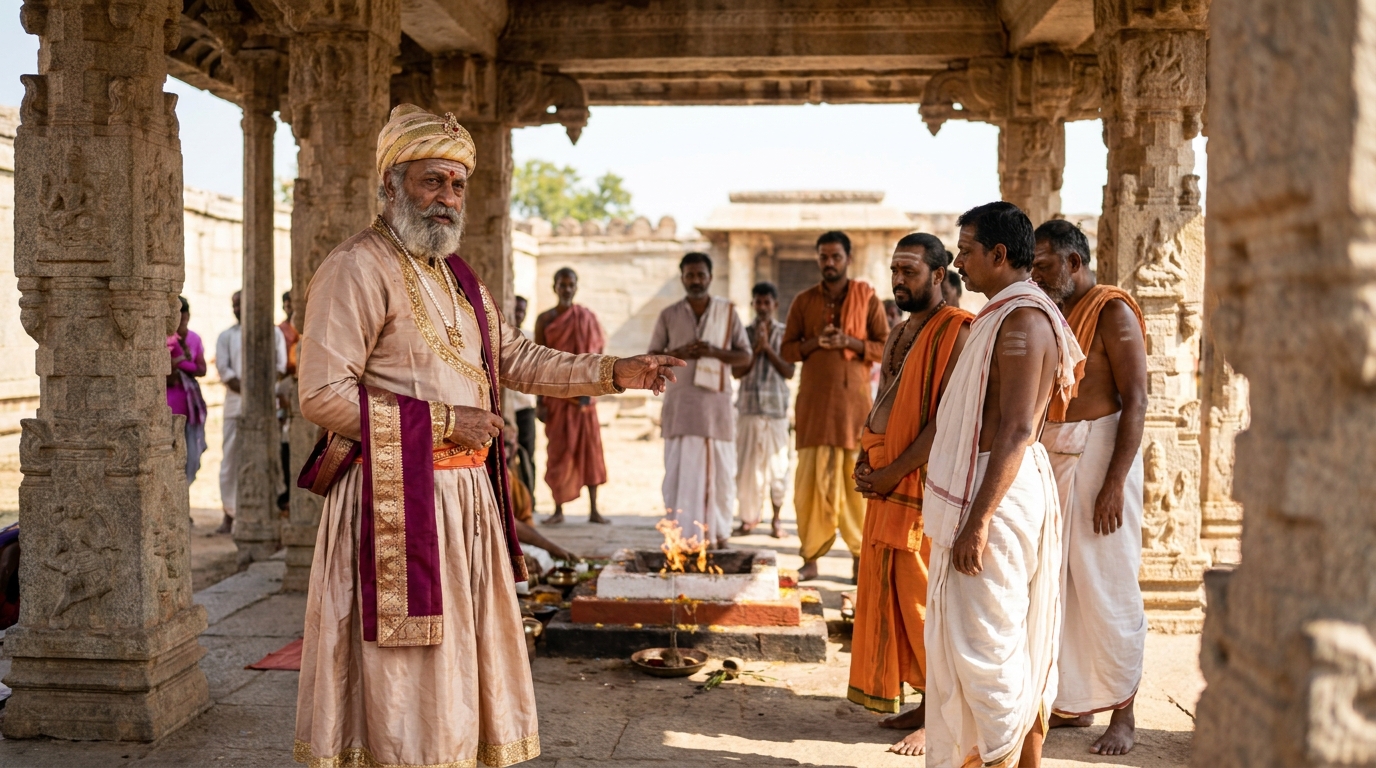
When Durvāsā Muni returned and learned that Ambarīṣa had sipped water before his return, the sage became furious. Durvāsā was known for his fierce temper, and in his anger, he created a fiery demon from a strand of his hair and sent it to attack Ambarīṣa.
But Ambarīṣa did not flinch. He did not run. He did not retaliate. He simply stood in devotion, trusting in the Lord.
And the Lord responded. The Sudarśana Cakra — the powerful divine disc of Lord Viṣṇu — appeared and destroyed the demon. Then it began to chase Durvāsā himself.
The Śrīmad-Bhāgavatam (9.4.46) records:
> “When the Sudarśana disc chased Durvāsā Muni, the sage went to Lord Brahmā, Lord Śiva, and ultimately to Lord Viṣṇu Himself, but none could protect him.”
The Shelter of God’s Grace Is Unshakeable
This part of the story is deeply reassuring. Ambarīṣa did not protect himself through physical power, political influence, or even his own spiritual prowess. He was protected by the Lord’s grace — a grace that responds to genuine love and surrender.
In Bhakti Yoga, this principle is called śaraṇāgati — the act of taking complete shelter in God. It does not mean we become passive or irresponsible. It means that, after doing our sincere best, we trust that God holds us in His care.
Even Great Souls Face Challenges
Notice that Ambarīṣa’s devotion did not exempt him from difficulty. A powerful sage attacked him. The situation was frightening. But through it all, his devotion remained steady.
This is a beautiful and honest teaching. The spiritual path does not promise a life without challenges. It promises that we will never face them alone.
Lesson Four: A Devotee’s Heart Is Full of Compassion
Perhaps the most touching part of the entire story is what happens after Lord Viṣṇu tells Durvāsā that only Ambarīṣa himself can call off the Sudarśana Cakra.
Durvāsā — the same sage who tried to destroy Ambarīṣa — returned and fell at the king’s feet, begging for forgiveness.
And what did Ambarīṣa do?
He immediately prayed to the Sudarśana Cakra to stop. He bore no grudge. He held no resentment. He saw his attacker not as an enemy but as a soul in distress, and he responded with pure compassion.
The Śrīmad-Bhāgavatam (9.5.14) records Ambarīṣa’s heartfelt prayer to the Sudarśana Cakra on behalf of Durvāsā:
> “If I have given charity to the brāhmaṇas, if I have performed sacrifices and ritualistic activities properly, and if I have properly seen the Personality of Godhead, let the Sudarśana cakra be pacified.”
What This Teaches Us About Forgiveness
In a world where resentment is often seen as justified and revenge is even celebrated, Ambarīṣa’s compassion stands as a radical, counter-cultural example. True devotion naturally produces a soft heart — a heart that cannot bear to see another suffer, even someone who has caused us harm.
This does not mean we ignore wrongdoing or abandon healthy boundaries. But it does mean that a heart connected to God gradually loses its taste for bitterness and grows in its capacity for mercy.
This is one of the most beautiful fruits of Bhakti Yoga: the transformation of the heart itself.
Lesson Five: Humility Is the Crown of a True Devotee
Throughout this entire drama, Ambarīṣa never once boasted about his devotion. He never pointed out Durvāsā’s fault. He never reminded anyone that he was right and the sage was wrong.
He simply loved God and treated everyone — from the humblest citizen to the angriest sage — with respect and care.
Humility in the Bhakti Tradition
In the Śikṣāṣṭaka, a sacred set of eight verses by Śrī Caitanya Mahāprabhu (the 15th-century saint who revived the saṅkīrtana movement of congregational chanting), the third verse teaches:
> “One should chant the holy name of the Lord in a humble state of mind, thinking oneself lower than the straw in the street; one should be more tolerant than a tree, devoid of all sense of false prestige, and should be ready to offer all respect to others.”
Ambarīṣa Mahārāja embodied this teaching centuries before it was spoken. His story is living proof that humility is not weakness — it is the quiet, immovable strength of a soul rooted in God’s love.
Spiritual Greatness Looks Different Than Worldly Greatness
The world often measures greatness by power, fame, or how loudly someone can assert themselves. But in the Bhakti tradition, greatness is measured by how deeply one can love, how gently one can serve, and how sincerely one can surrender.
Ambarīṣa was an emperor. But his true greatness had nothing to do with his throne. It had everything to do with his heart.
How Ambarīṣa’s Journey Speaks to Our Lives Today
You might be thinking: “I am not a king. I am not facing attacks from powerful sages. How does this ancient story apply to me?”
It applies because the essence of Ambarīṣa’s journey is universal:
- We all have senses and resources. Like Ambarīṣa, we can choose to direct them toward love and service, one step at a time.
- We all face difficult choices. Like Ambarīṣa’s Ekādaśī dilemma, life constantly asks us to navigate competing demands with sincerity and wisdom.
- We all encounter hostility. Like Ambarīṣa facing Durvāsā, we can choose to respond not with anger but with trust in God and compassion for others.
- We all need protection. Like Ambarīṣa, we can take shelter in the Lord’s grace, knowing that divine love is the strongest force in the universe.
- We all long to grow. Like Ambarīṣa, we can cultivate humility as the foundation of genuine spiritual transformation.
You Are Welcome Here, Just as You Are
At The Bhakti House, we believe that the path of Bhakti Yoga — the yoga of love and devotion — is open to every single person, regardless of background, experience, or belief. You do not need to be perfect. You do not need to have all the answers. You do not even need to fully understand what you are feeling when your heart stirs toward something greater.
Ambarīṣa Mahārāja’s story reminds us that devotion is not about being extraordinary. It is about being sincere. It is about taking one small, genuine step toward God — and discovering that God has already taken a thousand steps toward you.
So today, perhaps you might chant God’s name once with feeling. Perhaps you might cook a meal with gratitude. Perhaps you might forgive someone who has hurt you. Perhaps you might simply sit quietly and say, “God, I am here.”
That is enough. That is everything.
You are welcome here. You are loved. And your journey, wherever it begins, is sacred.
FAQs
Who was Ambarīṣa Mahārāja?
Ambarīṣa Mahārāja was a great king and a devotee of Lord Krishna, who is mentioned in the ancient scriptures of India, such as the Śrīmad-Bhāgavatam.
What were the qualities of Ambarīṣa Mahārāja?
Ambarīṣa Mahārāja was known for his devotion to Lord Krishna, his compassion towards all living beings, his adherence to religious principles, and his humility.
What is the significance of Ambarīṣa Mahārāja in Hinduism?
Ambarīṣa Mahārāja is revered as a great devotee and an exemplary ruler in Hinduism. His life and teachings serve as an inspiration for devotees and leaders alike.
What are some stories or incidents associated with Ambarīṣa Mahārāja?
One of the most famous incidents associated with Ambarīṣa Mahārāja is the confrontation between him and the powerful sage Durvāsā Muni, which resulted in the intervention of Lord Krishna.
How is Ambarīṣa Mahārāja remembered and celebrated in Hindu culture?
Ambarīṣa Mahārāja is remembered and celebrated through various festivals, prayers, and discourses that highlight his devotion, wisdom, and exemplary character.

