When people search for a Hindu temple in Jackson, Michigan and discover The Bhakti House, a natural question arises:
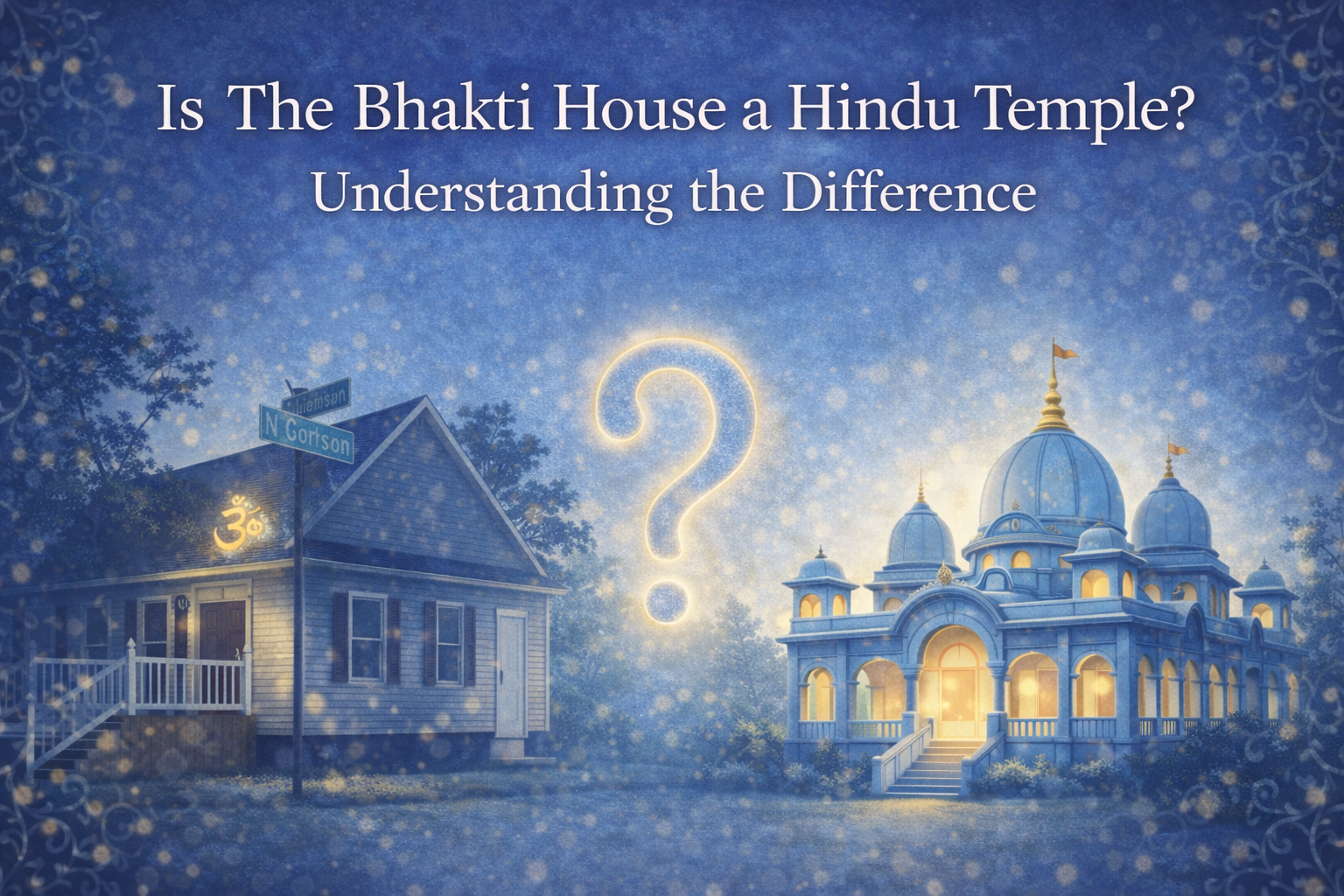
Is The Bhakti House a Hindu temple?
The honest answer is important—and reassuring.
A Clear, Honest Answer
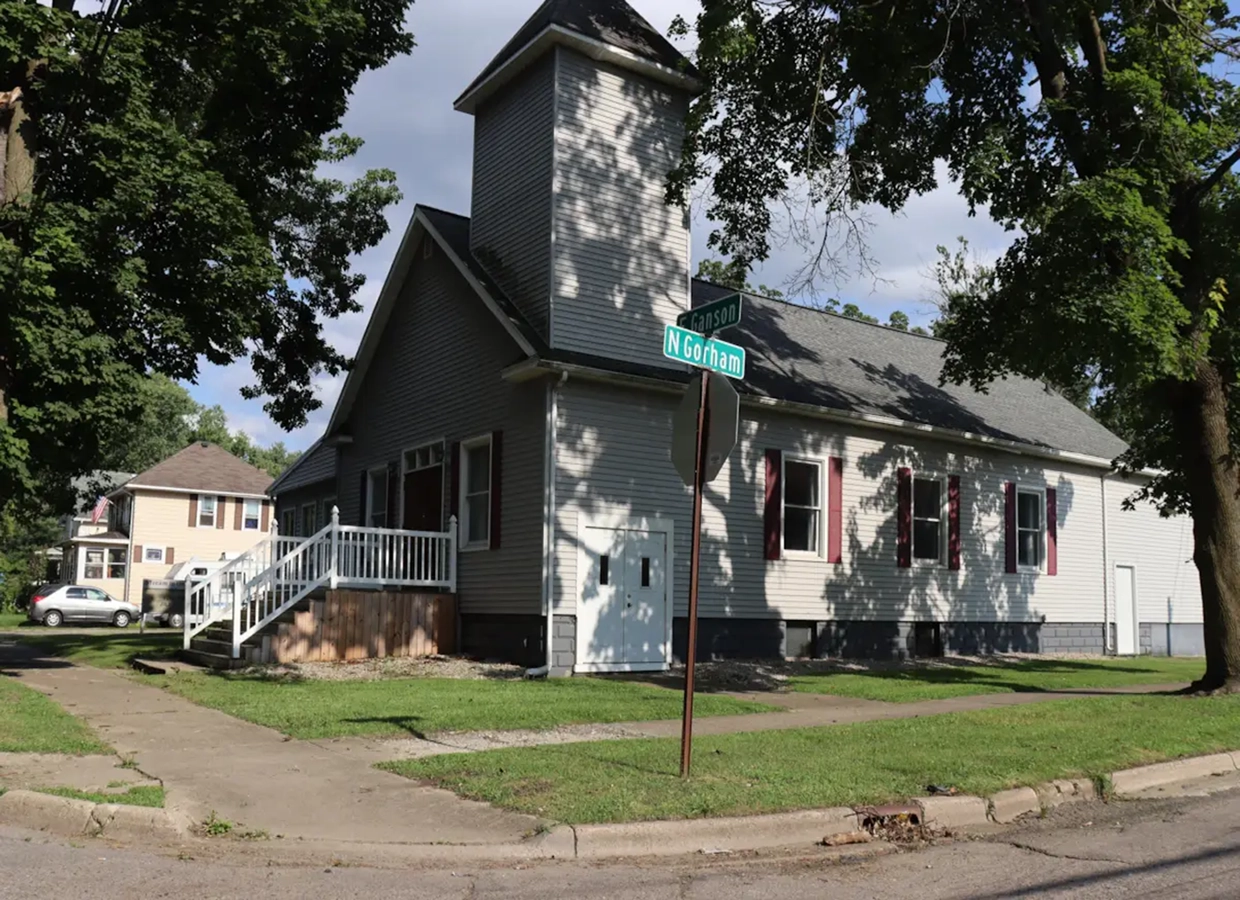
The Bhakti House is not a large, traditional Hindu temple in the metropolitan sense.
It does not function as:
- a priest-run institution
- a murti-installed temple with full daily arati schedules
- a formal cultural complex
Instead, The Bhakti House is a Hindu Bhakti spiritual community—and for many people in Jackson, it serves the same spiritual role a temple does.
What a Hindu Temple Traditionally Provides
When people say “temple,” they are often seeking:
- a place to connect with Hindu spirituality
- devotion centered on Krishna
- chanting and prayer
- spiritual learning
- community and belonging
- sacred food (prasadam)
- guidance without pressure
These needs are spiritual, not architectural.
How Hinduism Has Always Worked
Historically, Hinduism has never required large temples in order to function.
For most of Hindu history, spiritual life was centered in:
- homes
- villages
- small devotional groups
- teacher-student relationships
- traveling saints
- community gatherings
Especially within Bhakti traditions, practice has always been portable, relational, and community-based.
The Bhakti House’s Role in Jackson
In Jackson, Michigan, The Bhakti House fulfills the spiritual function people are actually seeking when they search for a Hindu temple.
It provides:
- Krishna-centered Bhakti practice
- chanting (kirtan and japa)
- study of the Bhagavad Gita and Srimad Bhagavatam
- honoring and sharing prasadam
- spiritual discussion and guidance
- a consistent devotional rhythm
- a welcoming community space
For many people locally, this is their Hindu temple in practice, even if it looks different from a large city institution.
Bhakti Is the Heart of Temple Life
In Hinduism, the essence of temple life is Bhakti—devotion expressed through love, remembrance, and service.
Bhakti does not depend on:
- scale
- formality
- ethnicity
- elaborate ritual
It depends on sincerity and practice.
That is exactly what The Bhakti House is designed to support.
Why This Difference Matters
Being honest about what The Bhakti House is—and is not—builds trust.
Rather than claiming a label that doesn’t fit, The Bhakti House offers:
- transparency
- authenticity
- accessibility
- spiritual depth without intimidation
For seekers, this often feels more approachable than a formal temple environment.
Who Feels at Home Here
People who connect with The Bhakti House include:
- Hindus by upbringing
- people exploring Krishna devotion
- interfaith families
- those new to Hinduism
- yoga and meditation practitioners
- seekers looking for a spiritual home
No conversion is required. No pressure is applied.
A Simple Way to Understand the Difference
A traditional Hindu temple emphasizes institutional structure.
The Bhakti House emphasizes lived devotion.
Both are valid.
Both are Hindu.
Both serve spiritual life—just in different forms.
So Where Should You Go?
If you are seeking:
- a massive temple complex — you may need to travel to a larger city
- a local place to practice Hindu devotion in Jackson — The Bhakti House is where people go
Final Summary
The Bhakti House is not a traditional Hindu temple in form, but it is a Hindu Bhakti spiritual home in function.
For many people in Jackson, it is where Hindu devotional life is lived, shared, and sustained.
If you are searching for Hindu spirituality locally, this is the place your search naturally leads.