
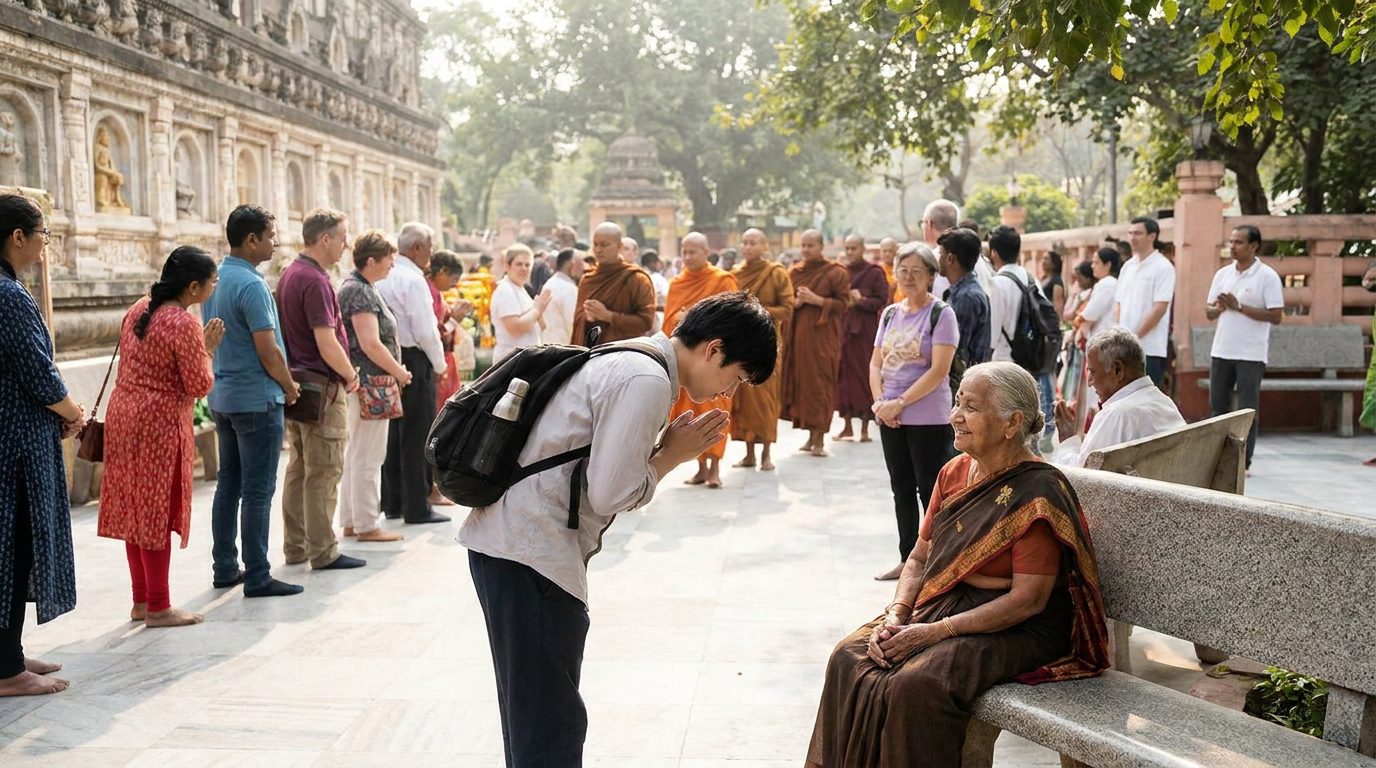
Why Respecting Devotees Matters on the Path of Bhakti
In Bhakti Yoga, the path of devotion, we learn to see every living being as sacred. Each person carries a soul within the body, and that soul is eternally connected with God. This vision is not sentimental. It is the foundation of spiritual life.
The Sanskrit word bhakti means loving devotion or loving service to the Supreme. Bhakti is not only something we practice in a temple, during prayer, or while chanting. It is also something we practice in how we treat people—especially those who are sincerely trying to love and serve God.
A devotee is someone who turns their heart toward the Divine. They may be advanced or just beginning. They may be from India, America, Africa, Europe, or anywhere else. They may chant loudly or quietly. They may know many scriptures or only one simple prayer. They may live in a monastery, raise a family, work a regular job, or serve quietly behind the scenes.
To respect devotees means to honor the sincerity of their spiritual journey. It means to appreciate their relationship with God, even if we do not fully understand their background, personality, culture, or stage of growth.
In the Bhagavad-gita, Krishna teaches that a wise person sees with equal vision. This means we learn to look beyond temporary labels and recognize the divine spark within everyone. Respecting devotees is a practical expression of that vision. It protects our own hearts from pride, criticism, and spiritual carelessness. It also creates a community where people feel safe to grow, serve, ask questions, make mistakes, and continue walking toward God.
Understanding Who a Devotee Is
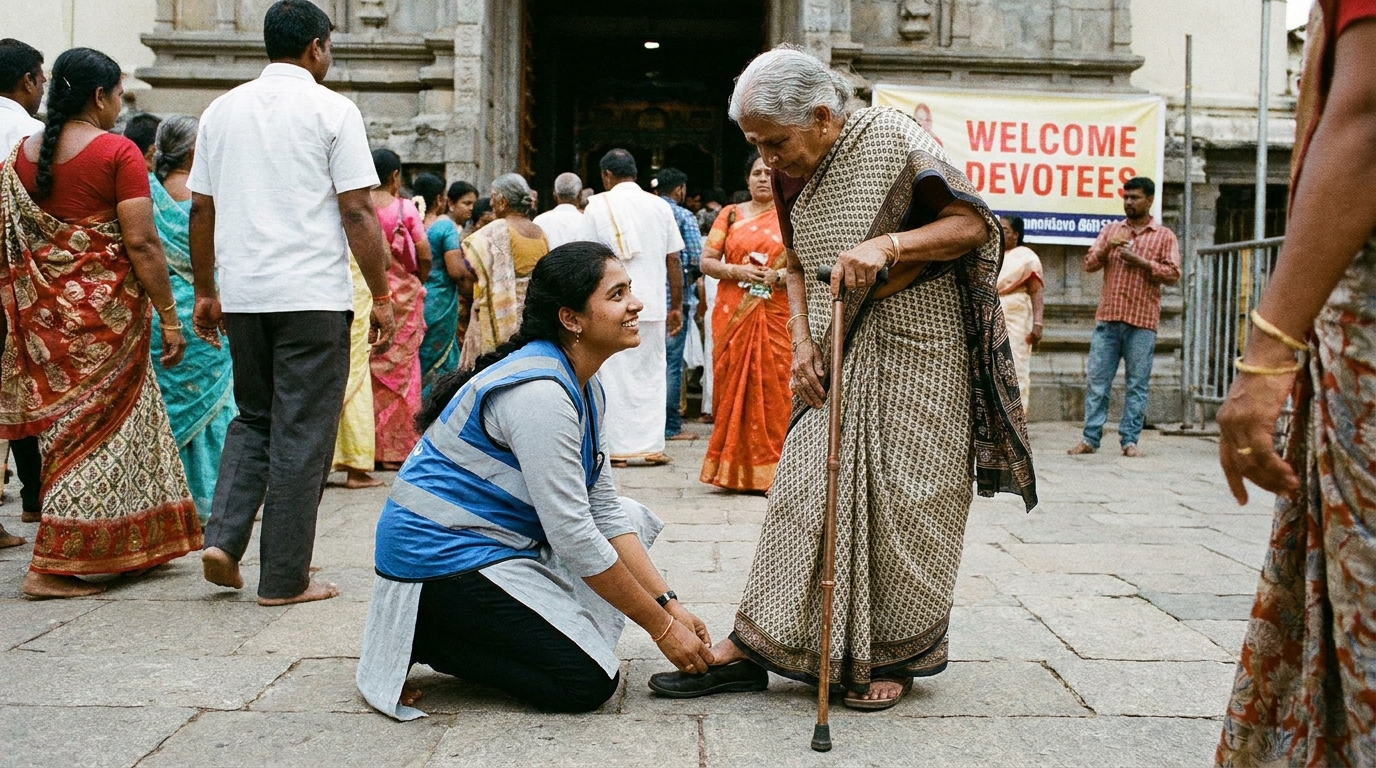
A devotee is not defined by external perfection. A devotee is someone who is sincerely turning toward God with love.
This is an important point. Sometimes we imagine that a devotee must always appear peaceful, speak perfectly, know scripture deeply, and never struggle. But Bhakti Yoga is a path of transformation. People come to devotion with different histories, wounds, habits, cultures, and levels of understanding. The path is meant to purify the heart gradually.
The Meaning of Devotee in Simple Terms
The Sanskrit word often used for devotee is bhakta. A bhakta is one who practices bhakti—loving devotion to God. In the Bhakti tradition, God is known by many sacred names, including Krishna, Rama, Vishnu, Narayana, and Govinda. Different traditions may use different names, but the heart of devotion is the same: love, surrender, remembrance, and service.
A devotee may show devotion through chanting the holy names, offering prayers, cooking for God, caring for others, studying sacred texts, serving the community, or simply trying to live with more kindness and humility.
Some devotees are steady and mature. Others are new and still learning. Some may have deep faith but little knowledge. Others may have much knowledge but are still cultivating softness of heart. Respect means recognizing that God is working in each person’s life in a unique way.
Respect Does Not Mean Blindness
Respecting devotees does not mean ignoring harm, enabling unhealthy behavior, or pretending that everyone is spiritually advanced. Bhakti is rooted in truth as well as compassion.
We can honor the soul while still setting healthy boundaries. We can respect a person’s spiritual potential while also acknowledging that certain actions may be immature, hurtful, or inappropriate. Real respect is not flattery. It is not fear. It is not blind approval.
Real respect means, “I recognize that you belong to God. I will treat you with dignity. I will not reduce you to your mistakes. And I will also act responsibly, with honesty and care.”
This balanced understanding is essential for healthy spiritual community.
The Scriptural Foundation for Honoring Devotees

The Bhakti scriptures repeatedly teach that devotees are very dear to God. This is not because they are socially important, intellectually impressive, or externally perfect. They are dear because they are trying to offer their hearts.
Krishna’s Love for His Devotees
In the Bhagavad-gita 9.26, Krishna says that if someone offers Him a leaf, a flower, fruit, or water with devotion, He accepts it. The offering may be simple, but devotion makes it sacred.
This verse helps us understand how Krishna sees His devotees. He is not attracted by wealth, status, or outward display. He is attracted by love. If God values the sincere offering of a humble heart, then we should learn to value that sincerity too.
In another beloved verse, Bhagavad-gita 9.30, Krishna explains that even if a devotee has imperfect conduct, if they are sincerely devoted and determined on the path, they should be considered saintly. This does not excuse wrongdoing, but it teaches us not to dismiss someone’s spiritual life because they are still in process.
Bhakti invites us to hold two truths at once: people are responsible for their actions, and people are also more than their actions. God’s mercy can transform anyone.
The Bhagavata’s Vision of Devotees
The Srimad-Bhagavatam, one of the great devotional scriptures of India, gives many teachings about the qualities of devotees. It describes advanced devotees as compassionate, humble, truthful, peaceful, and devoted to the welfare of others.
But the Bhagavatam also shows us devotees in many stages of growth. We meet kings, sages, children, parents, warriors, simple villagers, and even people who made serious mistakes but were purified by devotion.
This is encouraging. It reminds us that devotion is not a private trophy for the perfect. It is a living relationship with God that can awaken in any heart.
The Teaching of Vaishnava Respect
In many Bhakti traditions, especially the Vaishnava tradition, a devotee of Vishnu or Krishna is called a Vaishnava. Saints have taught that honoring Vaishnavas is essential for spiritual progress.
A simple prayer often expressed in Bhakti communities is the desire to become the servant of the servants of God. This mood is very beautiful. It means we do not approach spiritual life with the desire to dominate, impress, or be praised. We approach with gratitude: “How can I serve those who are serving the Lord?”
This attitude softens the heart and protects us from spiritual pride.
If you’re looking for insightful spiritual guidance, check out the latest articles on their website. The articles cover a wide range of topics that can help deepen your understanding. For those interested in personal growth, these articles are a great resource.
Different Levels of Respect in Bhakti Practice
Respect is not one-size-fits-all. Bhakti scriptures and teachers explain that we should relate to different people in thoughtful, appropriate ways. This helps us avoid both judgment and naivety.
General Respect for Every Living Being
The first level is respect for all beings. Every person, animal, and living entity is part of God’s creation. The soul within each body is sacred.
This means we should avoid cruelty, exploitation, harsh speech, and unnecessary harm. Even when we disagree with someone, we can speak with dignity. Even when we must correct or protect, we can avoid hatred.
This broad respect is a foundation of spiritual character.
Warm Friendship with Fellow Practitioners
Those who are sincerely practicing devotion deserve friendship and encouragement. Spiritual life can be challenging. Many devotees struggle with old habits, doubt, family pressure, loneliness, or the demands of daily life.
A kind word can strengthen someone’s faith. A simple invitation to chant, pray, share a meal, or attend a gathering can help someone continue. In Bhakti, association is powerful. The Sanskrit word sanga means association or company. Good association nourishes devotion, just as sunlight and water nourish a plant.
When we respect fellow practitioners, we help create a spiritual atmosphere where devotion can grow.
Deep Honor for Advanced Devotees
Some devotees have spent many years sincerely serving, chanting, studying, teaching, forgiving, and sacrificing for others. Their hearts carry spiritual depth. Such persons should be honored deeply.
Honor does not always mean external ceremony. Sometimes it means listening carefully, asking sincere questions, accepting guidance, supporting their service, and not treating their time or wisdom casually.
At the same time, honoring advanced devotees should not become personality worship. In Bhakti, true spiritual teachers always point us toward God, not toward themselves. We honor them because they help us remember the Divine.
Practical Ways to Respect Devotees Every Day
Respect becomes real through daily actions. It is not only a concept in scripture. It is how we speak, listen, serve, forgive, and live together.
Speak with Care and Humility
Words can heal or wound. In spiritual community, careless speech can discourage people deeply. Gossip, sarcasm, harsh criticism, and public embarrassment can weaken trust.
Before speaking about a devotee, we can ask ourselves:
Is this true?
Is this necessary?
Is this kind?
Will this help their spiritual life or harm it?
Am I speaking to serve, or to feel superior?
This does not mean we never discuss concerns. Sometimes responsible communication is needed. But we should speak in the right setting, with the right intention, to the right person, and with a desire for healing.
The practice of chanting God’s names helps purify speech. If the tongue is used for sacred sound, it becomes less natural to use it for gossip.
Listen Before Judging
Every person has a story. A devotee may be carrying burdens we cannot see. They may be grieving, healing, struggling financially, recovering from trauma, or facing family difficulty. If we judge quickly, we may misunderstand.
Listening is a form of respect. It tells someone, “Your experience matters.” We do not need to agree with everything to listen compassionately.
In Bhakti, the heart becomes gentle through hearing sacred wisdom and chanting holy names. That gentleness should extend into our relationships.
Offer Service Without Expectation
The Sanskrit word seva means service. In Bhakti Yoga, service is an expression of love. We serve God, and we also serve God’s devotees.
Serving devotees may be simple:
Preparing a meal for someone who is tired
Helping clean after a gathering
Giving someone a ride to a program
Encouraging a new person who feels shy
Supporting a devotee’s family during hardship
Offering your skills for the community
Praying for someone sincerely
Service becomes powerful when it is offered without demand for recognition. The heart thinks, “May this please God. May this help this soul continue on the path.”
Avoid Comparing Devotees
Comparison can create pride, insecurity, and division. One devotee may sing beautifully. Another may cook wonderfully. Another may organize, teach, clean, care for children, manage finances, decorate the altar, or quietly pray for everyone.
Not all service is visible. Some of the most sacred service is hidden.
Krishna sees the heart. We should not assume that public service is greater than private sacrifice. The person washing pots with devotion may be very dear to God. The person sitting in the back quietly chanting may be offering tears of love that no one sees.
Respect means appreciating the variety of devotional offerings.
Protect the Faith of Newcomers
New people often observe how devotees treat each other. If they see warmth, humility, and kindness, they feel welcomed. If they see criticism, competition, or coldness, they may become discouraged.
To respect devotees is also to protect the environment of devotion. A temple, home gathering, kirtan circle, or study group should feel like a place where people can breathe spiritually.
Kirtan means devotional chanting, often done together with music. In kirtan, many voices become one offering. That mood should continue after the music stops. We are learning to live in harmony, not only sing in harmony.
Avoiding Offenses and Healing the Heart
Bhakti scriptures place special emphasis on avoiding offenses toward devotees. An offense is not merely a mistake. It is an action, word, or attitude that wounds the heart of devotion.
What Is Devotee Offense?
The Sanskrit term aparadha means offense or that which takes us away from worship. Vaishnava-aparadha means offending a devotee of the Lord.
This can happen through envy, mockery, harsh criticism, disrespect, exploitation, or trying to damage someone’s spiritual life. It can also happen subtly, through dismissiveness or pride.
Why is this so serious? Because devotees are dear to God. If we claim to love God but mistreat those who are trying to love Him, our devotion becomes inconsistent. It is like watering a plant while cutting its roots.
This teaching is not meant to make us fearful or neurotic. It is meant to make us careful, humble, and compassionate.
The Difference Between Discernment and Criticism
Sometimes people worry, “If I should not criticize devotees, does that mean I cannot recognize problems?” No. Bhakti does not ask us to abandon intelligence.
Discernment means seeing clearly for the purpose of service, safety, and truth. Criticism means finding fault with a mood of superiority, anger, or enjoyment.
For example, if someone is causing harm, it may be necessary to speak to a trusted leader, set a boundary, or protect others. That is discernment. But if we speak negatively to many people just to lower someone’s reputation, that becomes harmful criticism.
The heart knows the difference when we are honest before God.
How to Seek Forgiveness
We will make mistakes. We may speak harshly, misunderstand someone, neglect someone, or act from ego. The good news is that Bhakti is a path of mercy.
If we have hurt a devotee, we can take sincere steps:
Acknowledge the mistake without excuses.
Approach humbly, if it is appropriate and safe.
Ask forgiveness with sincerity.
Listen to how our actions affected them.
Make practical changes.
Pray for humility and purification.
A simple apology can be deeply healing when it is real. “I am sorry. I spoke carelessly. I value you as a devotee and a child of God. Please forgive me.”
Forgiveness may take time. Respect includes giving people space to heal.
When You Have Been Hurt by a Devotee
It can be especially painful when hurt comes from someone in spiritual life. We may think, “How could a devotee behave this way?” This pain is real and should not be minimized.
If you have been hurt, please remember: a person’s mistake does not cancel the truth of God’s love for you. It does not mean Bhakti is false. It does not mean you are wrong to seek healing and support.
You can pray, chant, speak with a wise and trustworthy person, set boundaries, and take time to recover. Respecting devotees does not require accepting abuse or remaining in unsafe situations.
God is compassionate. Krishna is not asking you to silence your pain. He invites you to bring your pain into prayer and seek shelter in healthy, loving association.
Building a Culture of Honor in Spiritual Community
A Bhakti community becomes strong not by numbers, buildings, or programs alone, but by the quality of relationships. When devotees honor one another, the community becomes a sacred home for the heart.
Welcoming People of All Backgrounds
The Bhakti House mood is one of welcome. Everyone is invited to come closer to God, regardless of race, nationality, age, gender, education, financial status, religious background, or previous life experience.
Some people come from Hindu families. Some come from Christian, Muslim, Jewish, Buddhist, Sikh, Indigenous, secular, or interfaith backgrounds. Some are exploring spirituality for the first time. Some carry doubts. Some do not know the Sanskrit words or customs.
Respect means making space for sincere seekers. We can explain practices simply. We can avoid making people feel embarrassed for not knowing. We can remember that devotion is not owned by any one culture or group. Bhakti is the soul’s natural love for God.
Honoring Elders, Teachers, and Caregivers
In devotional culture, elders and teachers are respected because they carry experience. They may have served through many seasons, challenges, and sacrifices. Their lives can offer wisdom.
But we should also honor caregivers, parents, cooks, cleaners, musicians, organizers, donors, and quiet helpers. Spiritual communities often depend on people whose service is rarely noticed.
A culture of honor says, “We see you. We are grateful. Your service matters.”
Gratitude is one of the simplest and most powerful ways to respect devotees.
Encouraging Without Controlling
Sometimes, in the name of helping others, we may become controlling. We may pressure people to practice exactly as we do, move faster than they are ready, or adopt external forms without inner understanding.
True encouragement respects free will. Krishna Himself gives guidance in the Bhagavad-gita, then allows Arjuna to choose. He does not force love, because love cannot be forced.
We can inspire others by example, kindness, and patient support. We can share what has helped us. But each soul’s relationship with God unfolds personally.
Celebrating Service Over Status
Spiritual communities become unhealthy when status becomes more important than service. Bhakti teaches the opposite. The highest mood is humble service.
Jesus washed the feet of his disciples. Chaitanya Mahaprabhu, a great saint of the Bhakti tradition, taught humility through His life and prayers. Saints in every tradition show us that closeness to God makes the heart gentle, not arrogant.
In Bhakti, we can measure growth not by how many people admire us, but by how sincerely we are willing to serve.
Respect in Chanting, Prayer, and Worship
Respecting devotees is closely connected with the central practices of Bhakti Yoga: chanting, prayer, worship, and remembrance.
Chanting the Holy Names with a Respectful Heart
Chanting is one of the most accessible and powerful practices in Bhakti Yoga. Many devotees chant the maha-mantra:
Hare Krishna Hare Krishna
Krishna Krishna Hare Hare
Hare Rama Hare Rama
Rama Rama Hare Hare
Mantra means a sacred sound that helps free the mind and awaken the heart. Maha means great. This great mantra is a prayer asking to be engaged in loving service to God.
The holy names purify the heart, but our attitude matters. If we chant while holding envy or contempt toward devotees, our chanting may feel dry. When we try to honor others, the heart becomes more receptive to grace.
One practical prayer before chanting is: “Dear Lord, please help me let go of pride and resentment. Please help me honor Your children. Please let me chant with sincerity.”
Praying for Devotees
Prayer is a beautiful way to cultivate respect. When we pray for someone, our heart softens toward them.
We can pray for those we love, those who serve us, those who guide us, and even those with whom we struggle. This does not mean pretending everything is fine. It means asking God to bless them, guide them, heal them, and help us relate wisely.
A simple prayer may be: “Krishna, please bless this devotee. Please help them in their service. Please help me see them with humility and compassion.”
Such prayers gradually change our inner vision.
Sharing Prasadam with Appreciation
Prasadam means mercy. In Bhakti, food offered to God with love becomes sanctified. Sharing prasadam is one of the sweetest ways to build community.
When devotees cook, offer, serve, and distribute prasadam, they are sharing grace. We can respect that service by receiving with gratitude, avoiding waste, helping clean up, and appreciating those who prepared it.
A plate of prasadam is more than food. It is love made visible.
Common Challenges in Respecting Devotees
Because we are human, respect is not always easy. Spiritual community can bring our ego to the surface. This is not a failure—it is an opportunity for growth.
Dealing with Envy
Envy means feeling disturbed by another person’s success, service, recognition, or spiritual advancement. It is painful, but many sincere practitioners face it.
If envy arises, we can gently admit it before God: “This feeling is in my heart. Please help me.” Then we can intentionally bless the person we envy. We can appreciate their service. We can remember that Krishna has unlimited love. Another person’s blessing does not reduce our own.
In Bhakti, everyone has a unique relationship with God. There is no need to compete for divine affection.
Navigating Personality Differences
Devotees are not all the same. Some are quiet; some are expressive. Some are organized; some are spontaneous. Some love philosophy; some love music. Some are traditional; some are creative. Differences can enrich a community, but they can also create misunderstanding.
Respect means not demanding that everyone have our personality. The goal is not sameness. The goal is shared devotion.
When differences arise, we can ask: “How can I honor this person’s sincerity, even if their style is different from mine?”
Responding to Mistakes
When a devotee makes a mistake, we can respond in a way that helps or harms. Public shaming rarely produces spiritual growth. Compassionate correction, when needed, is more effective.
If we are responsible for guiding someone, correction should be given privately when possible, with humility and clarity. We can address behavior without attacking identity. We can say, “This action needs to change,” while still communicating, “You are valued.”
Krishna’s compassion does not deny truth. It delivers truth with the purpose of restoration.
Respecting Yourself as a Devotee
Sometimes we speak about respecting devotees but forget that we are also souls on the path. Humility does not mean self-hatred. Service does not mean neglecting your own spiritual well-being.
You Also Belong to God
You are not outside God’s mercy. You may feel unqualified, inconsistent, or burdened by past mistakes. Still, if you are turning toward God, even slightly, that movement is sacred.
Respecting yourself as a devotee means taking your spiritual life seriously. It means making time to chant, pray, learn, rest, and seek good association. It means not allowing shame to define you.
In the Bhagavad-gita, Krishna promises that His devotee never perishes. This assurance is full of tenderness. Krishna sees the sincere effort, even when others do not.
Healthy Boundaries Support Devotion
Some people think a devotee should always say yes. But boundaries can protect devotion. If we become exhausted, resentful, or overwhelmed, our service may suffer.
It is okay to serve according to your capacity. It is okay to ask for help. It is okay to step back from unhealthy dynamics. Saying no with respect can be part of spiritual maturity.
Bhakti is a lifelong path. We want to serve sustainably, with a heart that remains soft.
A Daily Practice for Honoring Devotees
Respect grows through practice. We can cultivate it intentionally, one day at a time.
Morning Intention
Begin the day with a simple prayer: “Dear Lord, please help me honor every devotee I meet today. Let my words be kind, my mind be humble, and my actions be useful.”
This prayer sets the direction of the heart.
One Act of Appreciation
Each day, appreciate one devotee sincerely. Send a message. Offer thanks. Notice a service that is usually overlooked. Speak encouragement.
Appreciation nourishes spiritual community like rain nourishes the earth.
Careful Speech Practice
Choose one day a week to be especially mindful of speech. Avoid gossip. Avoid unnecessary criticism. If a negative conversation begins, gently redirect it or remain silent.
Silence can be powerful when it protects another person’s dignity.
Evening Reflection
At the end of the day, reflect:
Did I honor others today?
Did I speak carelessly?
Did I feel envy or pride?
Did I encourage someone?
Do I need to apologize or pray for someone?
This reflection is not for guilt. It is for growth. Bhakti is practical, honest, and merciful.
Walking Forward with Humility and Love
Respecting devotees is not a small etiquette point. It is central to the heart of Bhakti Yoga. If devotion means loving God, then we must learn to honor those who belong to God. And everyone belongs to God.
We respect devotees by speaking kindly, listening deeply, serving humbly, avoiding gossip, forgiving sincerely, setting healthy boundaries, and appreciating each person’s unique offering. We honor advanced devotees without idolizing them. We encourage new devotees without pressuring them. We correct when necessary without cruelty. We protect community without losing compassion.
This path is learned slowly. None of us does it perfectly. But every sincere effort matters.
If you are new to Bhakti, you are welcome. If you have practiced for many years, you are welcome. If you are returning after pain or distance, you are welcome. If you do not know the prayers, the customs, or the Sanskrit words, you are welcome. God is not far away. The holy names are available. Prayer is available. Service is available. Love is available.
Today, take one sincere step. Offer one prayer. Chant one mantra. Thank one devotee. Forgive one small hurt. Ask for guidance. Serve in one simple way. Turn your heart toward God with honesty.
Everyone is welcome to take one sincere step toward God, and by grace, that one step can open the door to a lifetime of love.
FAQs
What does it mean to respect devotees?
Respecting devotees involves acknowledging their beliefs, practices, and the emotional and spiritual significance of their devotion. It means treating them with dignity, understanding their perspectives, and supporting their right to practice their faith without judgment or discrimination.
Why is it important to respect devotees in a diverse society?
In a diverse society, respecting devotees fosters harmony and coexistence among different religious and spiritual groups. It promotes tolerance, reduces conflict, and encourages dialogue, allowing individuals to share their beliefs and practices in a safe and supportive environment.
How can one show respect to devotees of different faiths?
One can show respect to devotees by actively listening to their beliefs, participating in interfaith dialogues, being mindful of their customs and practices, and avoiding derogatory language or actions. Additionally, educating oneself about different religions can enhance understanding and respect.
What are some common misconceptions about devotees?
Common misconceptions about devotees include the belief that they are overly zealous or intolerant of other beliefs, that their practices are outdated or irrelevant, and that they lack critical thinking. These stereotypes can lead to misunderstandings and should be challenged through education and open dialogue.
How can communities promote respect for devotees?
Communities can promote respect for devotees by organizing interfaith events, providing educational resources about different religions, encouraging respectful discussions, and creating inclusive policies that protect the rights of individuals to practice their faith freely. Engaging in community service together can also build mutual respect and understanding.

