
The Heart of Vaishnava Etiquette
Vaishnava etiquette is the art of practicing devotion with humility, kindness, and awareness of God’s presence in everyone’s heart. A “Vaishnava” is a devotee of Vishnu or Krishna, names of the Supreme Lord in the Bhakti tradition. “Etiquette” means respectful behavior. Together, Vaishnava etiquette means learning how to live, speak, serve, chant, pray, and relate to others in a way that nourishes love for God.
At its deepest level, Vaishnava etiquette is not about rigid rules or religious performance. It is about the softening of the heart.
In Bhakti Yoga, the path of devotion, our external actions support our internal intention. We bow, offer respect, chant sacred names, serve others, honor prasadam, and avoid hurting devotees—not because God is demanding formality, but because love naturally expresses itself through care.
Just as we behave gently in the home of someone we love, we practice mindful conduct in spiritual life because everything belongs to Krishna. The temple, our home altar, sacred books, food offered to God, the holy name, and every living being are all connected to the Divine.
The Bhagavad-gita teaches that a wise person sees with equal vision, recognizing the soul within all beings. This vision is the foundation of Vaishnava etiquette. We are not simply trying to look spiritual. We are practicing how to see spiritually.
Etiquette Begins With Humility
One of the most beloved teachings in the Bhakti tradition comes from Sri Chaitanya Mahaprabhu, the great teacher of chanting the holy names. He taught:
“One should chant the holy name of the Lord in a humble state of mind, thinking oneself lower than a blade of grass, more tolerant than a tree, free from pride, and ready to offer respect to all.”
This verse gives the essence of Vaishnava etiquette. Humility does not mean thinking we are worthless. It means remembering that we are dependent on divine grace. It means we do not need to dominate, impress, or defeat others. We can live with open hands and an open heart.
When humility is present, respectful devotion becomes natural. We listen more carefully. We speak more gently. We serve without demanding recognition. We forgive more easily. We approach Krishna not as consumers of spirituality, but as souls longing to love and be loved.
Respect Is a Form of Worship
In Bhakti, respect is not reserved only for the altar or the temple room. Respect is a way of seeing.
We honor the Lord. We honor the devotees. We honor teachers. We honor guests. We honor sacred sound. We honor the Earth, food, animals, and all people as children of God.
This does not mean we ignore harmful behavior or abandon healthy boundaries. Vaishnava etiquette includes wisdom. Respectful devotion is not passivity. It is a commitment to act with compassion and truth, without hatred.
A devotee tries to ask, “How can I respond in a way that pleases Krishna? How can I preserve dignity—my own and others’? How can my words and actions support spiritual growth?”
These questions turn ordinary moments into offerings.
Honoring God, the Holy Name, and Sacred Spaces
A central part of Vaishnava etiquette is learning how to relate respectfully to Krishna and all that is connected to Him. Whether we are in a temple, at home, in a kirtan gathering, or chanting quietly on a walk, our consciousness matters.
The external practices help us remember: “I am entering sacred relationship.”
Entering a Temple or Devotional Gathering
A temple is not merely a building. It is a place where the Lord is worshiped with love. The atmosphere is shaped by prayer, chanting, offering, and service. When entering such a space, it is helpful to pause inwardly and become present.
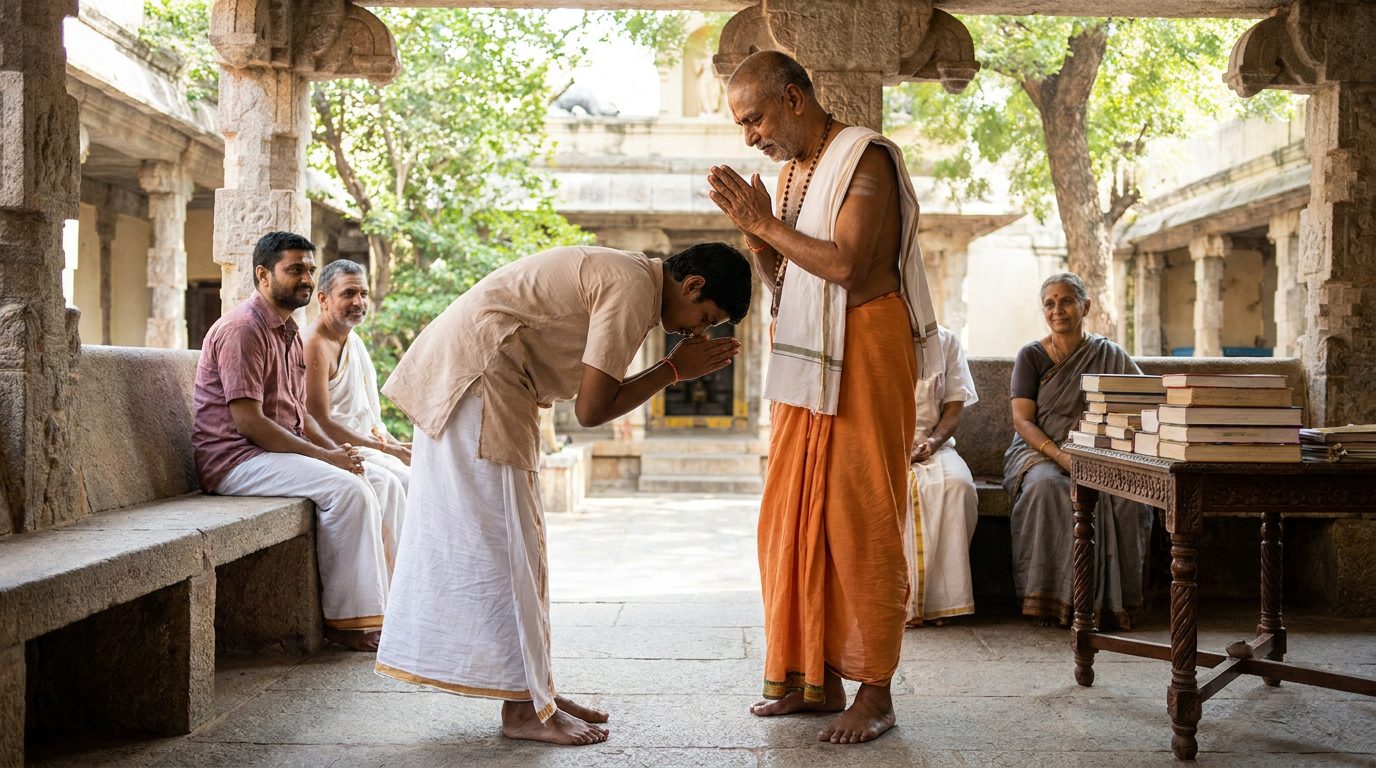
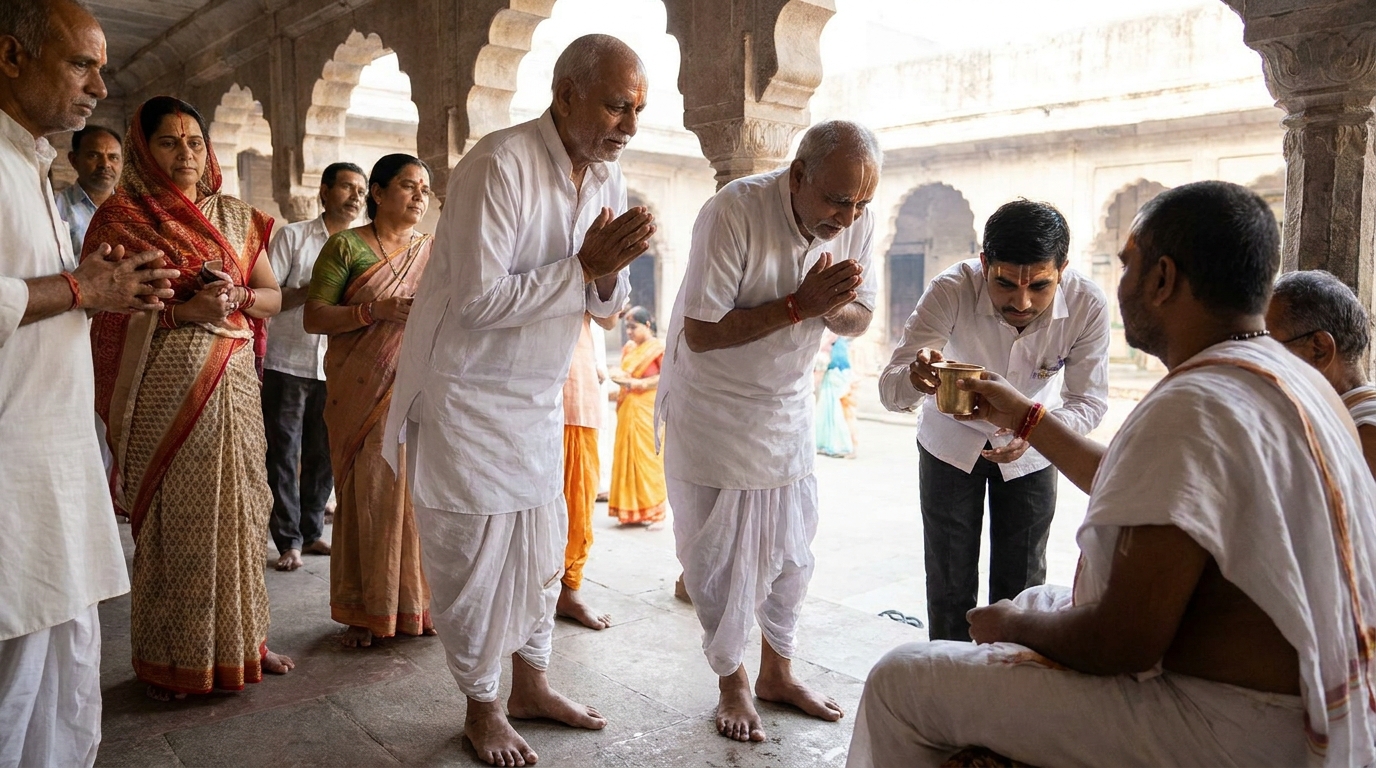
Many devotees bow down upon entering the temple room. Bowing is a physical prayer. It says, “I am not the center. I come to serve.” If bowing fully is not possible, one may simply fold the palms, lower the head, or offer a sincere prayer within the heart.
It is also respectful to dress modestly and cleanly when visiting a temple or spiritual event. This is not about judging fashion or wealth. It is about coming before the Divine with care. Cleanliness supports clarity of mind.
In devotional spaces, we try to avoid loud casual talk, gossip, phone use, and distraction. A warm greeting is beautiful, but the mood should remain honoring and mindful. If the kirtan is happening, we can join, listen, or sit quietly. If a class is being given, we can receive it as a sacred opportunity.
Respecting the Deity Form
In many Vaishnava temples, Krishna or Vishnu is worshiped in the Deity form, called “murti” or “archa-vigraha.” This means the Lord has kindly agreed to appear in a visible form so that we can offer service with our senses.
To someone new, this may look like a statue. But in Bhakti understanding, the Deity is not imaginary or symbolic only. Krishna is present through His mercy, allowing us to dress Him, feed Him, sing for Him, and remember Him personally.
Vaishnava etiquette around the Deity includes approaching with reverence, not turning our back carelessly when very close, not pointing the feet toward the altar, and avoiding casual behavior in front of the Lord. We may offer prayers, flowers, lamps, incense, music, or simply our attention.
The most important offering is sincerity. Krishna says in the Bhagavad-gita that if one offers Him a leaf, a flower, fruit, or water with devotion, He accepts it. The ingredient may be simple, but the love is precious.
Chanting the Holy Names With Care
Chanting is at the heart of Bhakti Yoga. Many devotees chant the maha-mantra:
Hare Krishna, Hare Krishna, Krishna Krishna, Hare Hare
Hare Rama, Hare Rama, Rama Rama, Hare Hare
“Hare” calls upon the divine energy of the Lord. “Krishna” means the all-attractive Supreme Person. “Rama” means the source of spiritual joy. In simple words, this mantra is a prayer: “O Lord, O divine energy of the Lord, please engage me in Your loving service.”
Vaishnava etiquette teaches us to honor the holy name as non-different from Krishna. This means we do not treat chanting as ordinary sound. We try to chant attentively, respectfully, and with longing.
Of course, the mind wanders. That is normal. Bhakti is a practice. When we notice distraction, we gently return to the sound. We do not become discouraged. Every sincere repetition is spiritually powerful.
It is respectful to avoid using the holy name mockingly or casually. We chant as prayer, not performance. Whether softly on beads, loudly in kirtan, or quietly in the heart, the holy name is a sacred meeting place.
Relationships Among Devotees
Vaishnava etiquette becomes most real in our relationships. It is easy to feel devotional during a song or prayer. It is often harder to remain devotional when someone disagrees with us, corrects us, overlooks us, or behaves imperfectly.
Yet this is where Bhakti matures. The community of devotees is a sacred field of growth.
Offering Respect to All
A foundational Vaishnava principle is to offer respect to every living being. This includes people who share our beliefs and those who do not. It includes elders, children, newcomers, experienced practitioners, family members, strangers, and even those who challenge us.
Respect does not always mean agreement. We can disagree while still honoring the soul. We can have boundaries without contempt. We can speak truth without cruelty.
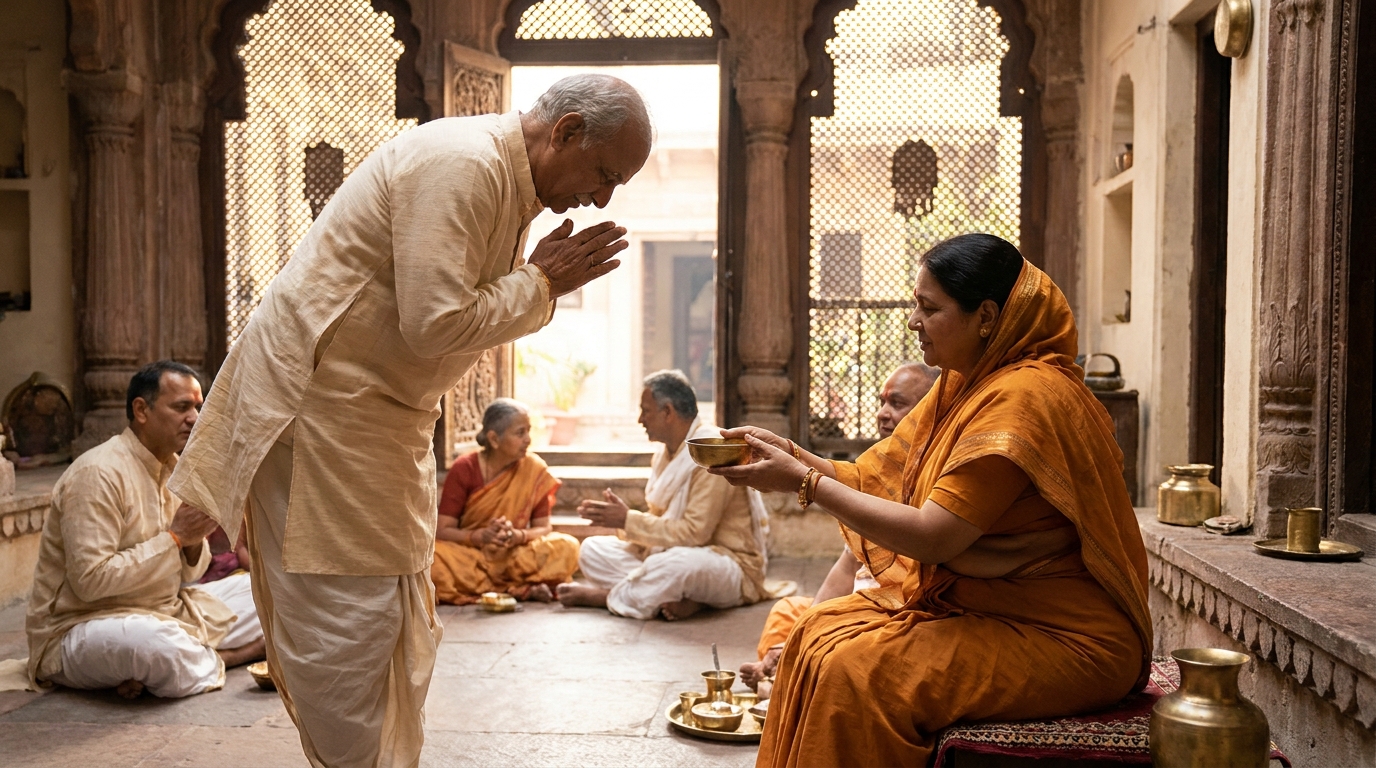
In devotional communities, people often greet each other with folded palms and phrases such as “Hare Krishna” or “Haribol,” which means “chant the name of Hari,” another name for the Lord. These greetings remind us that our relationship is spiritual, not merely social.
When we see another devotee, we can think, “This person is dear to Krishna.” That one thought can change the way we speak and act.
Avoiding Vaishnava Aparadha
One of the most important teachings in Bhakti is to avoid “aparadha,” which means offense or harmful conduct, especially toward devotees. “Vaishnava aparadha” refers to offending or disrespecting those who are trying to serve God.
Why is this emphasized so strongly? Because love for Krishna grows in the company of devotees. If we criticize, envy, or harm devotees, our own heart becomes covered. The tender plant of devotion struggles to grow in a soil of fault-finding.
This does not mean we pretend everyone is perfect. Devotees are human beings on a journey. Communities must address misconduct responsibly. But there is a difference between humble concern and malicious criticism, between accountability and gossip, between protection and pride.
A helpful practice is to ask before speaking about someone: Is it true? Is it necessary? Is it kind? Is it my service to say this? Am I speaking to the right person in the right way?
If we have offended someone, Vaishnava etiquette encourages us to apologize sincerely. A simple, honest apology can cleanse the heart: “I am sorry. I spoke harshly. Please forgive me.” This humility is deeply pleasing to Krishna.
Serving Without Expectation
Service, or “seva,” is love in action. In Bhakti Yoga, service may include cooking, cleaning, singing, teaching, listening, welcoming guests, caring for children, supporting the temple, offering professional skills, or simply encouraging another soul.
Vaishnava etiquette invites us to serve without demanding honor. This is not always easy. The ego wants to be seen. It wants credit, position, and appreciation. But service offered quietly can be very powerful.
Krishna sees what others may not see. No sincere offering is lost.
At the same time, healthy devotional communities should appreciate service and avoid exploiting anyone. Humility does not mean burnout. Service should be guided by wisdom, balance, and care. A devotee serves best when nourished by chanting, prayer, rest, and supportive association.
If you’re looking for insightful spiritual guidance, check out the latest articles on their website. The articles cover a wide range of topics that can help deepen your understanding. For those interested in personal growth, these articles offer valuable perspectives and advice.
Etiquette With Teachers, Elders, and Guests
Bhakti Yoga is received through relationship. We learn from scripture, from saints, from teachers, from elders, and from sincere practitioners. Vaishnava etiquette helps us approach these relationships with gratitude and discernment.
Honoring Spiritual Teachers
A spiritual teacher, often called “guru,” is one who helps remove darkness by giving divine knowledge. In the Vaishnava tradition, the guru is honored because they guide the soul toward Krishna.
Respecting a teacher may include listening carefully, asking sincere questions, following guidance according to one’s capacity, and avoiding a fault-finding mentality. We do not approach spiritual wisdom as consumers collecting opinions. We approach with humility and eagerness to grow.
At the same time, authentic Bhakti never asks us to abandon intelligence or conscience. A genuine teacher points us toward Krishna, scripture, and loving service—not toward manipulation or personal worship for selfish gain. Respect and discernment can live together.
The Bhagavad-gita recommends approaching spiritual truth through humility, inquiry, and service. This balance is important. We inquire, not to challenge arrogantly, but to understand deeply. We serve, not blindly, but with devotion and sincerity.
Caring for Elders and Senior Devotees
In Vaishnava culture, senior devotees are respected for their experience, sacrifice, and years of practice. This respect may be shown by offering a seat, listening to their memories, seeking blessings, or serving them practically.
A senior devotee is not only someone older in age. It may be someone more experienced in chanting, scripture, service, or steady devotional character. We can learn from their example.
Still, seniority is not meant to create fear. True spiritual maturity makes others feel safe, encouraged, and closer to Krishna. The mood is not domination, but care.
Younger devotees also deserve respect. Newcomers often bring freshness, sincerity, and honest questions. Children are especially dear and should be treated with gentleness. Vaishnava etiquette protects the dignity of every person.
Welcoming Guests and Newcomers
One of the sweetest expressions of Vaishnava etiquette is hospitality. A guest is not an interruption; a guest is an opportunity to serve Krishna.
Many Bhakti communities honor the principle that guests should be welcomed warmly, offered a seat, kind words, and prasadam—sanctified food offered to God. No one should feel embarrassed for not knowing the customs. Everyone begins somewhere.
If someone is new to kirtan, temple worship, Sanskrit words, or devotional dress, we can explain gently. We do not need to correct every small mistake. Love teaches better than pressure.
A welcoming devotee might say, “We are so happy you are here. Please feel comfortable. If you have any questions, I’d be glad to help.” Such simple kindness can open a person’s heart for life.
Prasadam, Cleanliness, and Daily Devotional Conduct
Vaishnava etiquette is practical. It touches the way we eat, cook, clean, speak, and move through the day. These practices are not meant to make life stiff. They help us remember Krishna in ordinary activities.
Honoring Prasadam
“Prasadam” means mercy. In Bhakti, food prepared with love and offered to Krishna becomes prasadam. It is no longer ordinary food; it carries spiritual grace.
Honoring prasadam means receiving it with gratitude. We do not waste it, criticize it casually, or treat it as just another meal. Even a small piece of prasadam is considered sacred.
Before eating, devotees may offer a prayer of thanks. We can remember: “This food is Krishna’s mercy. May it purify my heart and give me strength to serve.”
When distributing prasadam, etiquette means serving with cleanliness, generosity, and sensitivity. We consider people’s needs, health, and comfort. We do not pressure anyone to eat beyond their capacity. We serve with love.
Cleanliness as Support for Consciousness
Cleanliness is valued in Vaishnava practice because it supports peaceful, sattvic living. “Sattva” means clarity, harmony, and goodness. A clean body, clean home, clean kitchen, and clean altar can help the mind become steady for prayer and chanting.
This does not mean a devotee’s home must look perfect. Many people are caring for families, working long hours, or living with limited resources. The spirit is to create a simple, respectful environment for spiritual life.
Washing hands before cooking or worship, keeping sacred items in clean places, and caring for one’s chanting beads and scriptures respectfully are all expressions of devotion.
External cleanliness should be joined with internal cleanliness. A spotless room with a harsh heart is not the goal. We clean our spaces, and we also ask Krishna to clean our intentions.
Respecting Sacred Books and Beads
Vaishnava scriptures such as the Bhagavad-gita, Srimad-Bhagavatam, and teachings of saints are honored as spiritual guides. We try not to place sacred books on the floor, step over them, or handle them carelessly. We read them with reverence and a desire to apply their wisdom.
Chanting beads, often called “japa beads,” are also treated respectfully because they assist us in chanting the holy names. Many devotees keep them in a bead bag and avoid placing them in unclean places.
These gestures may seem small, but they train the heart. When we respect sacred objects, we deepen our respect for sacred sound and sacred relationship.
Speech, Conflict, and Compassionate Communication
Words can heal or wound. In spiritual life, speech is a powerful form of service. Vaishnava etiquette encourages us to use our voice for truth, encouragement, chanting, prayer, and glorification of Krishna and His devotees.
Speaking Truth With Kindness
The Bhagavad-gita describes austerity of speech as words that are truthful, pleasing, beneficial, and not agitating to others, along with regular recitation of sacred wisdom. This is a very practical guideline.
Before speaking, we can ask: Is this true? Is it beneficial? Can I say it kindly? Is now the right time?
Kind speech does not mean avoiding difficult conversations. Sometimes love requires honesty. But Vaishnava communication aims to correct without humiliating, guide without crushing, and disagree without dehumanizing.
Gossip is especially harmful. It may feel bonding in the moment, but it weakens trust and pollutes the heart. If we must discuss a problem, we should do so with the aim of service, clarity, and healing.
Handling Conflict in a Devotional Way
Conflict can happen in any community. Devotees have different backgrounds, temperaments, expectations, and levels of maturity. Vaishnava etiquette does not deny conflict; it gives us a way to pass through it with dignity.
If hurt arises, we can begin with prayer: “Krishna, please help me see clearly. Please protect me from anger and pride.” Then we can seek a respectful conversation, preferably in private.
It is helpful to speak from personal experience rather than accusation. For example: “When this happened, I felt hurt and confused. Can we talk about it?” This opens a door more gently than “You always do this.”
If needed, a trusted senior devotee or mediator may help. The goal is not to win but to restore service, understanding, and spiritual focus.
Forgiveness is central in Bhakti, but forgiveness does not always mean immediate trust or lack of boundaries. We can forgive in the heart while still taking practical steps to prevent harm.
Encouraging Rather Than Competing
Spiritual comparison can quietly enter devotional life. We may compare our chanting, knowledge, service, dress, purity, recognition, or closeness to teachers. This creates anxiety and envy.
Vaishnava etiquette invites us to celebrate others’ service. If someone sings beautifully, teaches well, cooks wonderfully, or receives appreciation, we can rejoice: “Krishna is being served.”
Each soul has a unique relationship with God. We do not need to imitate another person’s offering. A small sincere service may be more pleasing to Krishna than a grand service done for prestige.
Encouragement is a sacred gift. A few kind words—“Your service helped me,” “Thank you for coming,” “Please keep chanting”—can strengthen someone’s faith.
Practicing Vaishnava Etiquette at Home and in Modern Life
Many people today practice Bhakti while working jobs, raising children, studying, caring for family, or living far from a temple. Vaishnava etiquette is not limited to traditional settings. It can be lived in apartments, offices, schools, kitchens, online spaces, and quiet hearts.
Creating a Devotional Home
A devotional home does not need to be elaborate. A small clean place for a picture of Krishna, Lord Vishnu, Sri Chaitanya, or one’s spiritual teachers can become a sacred center. Offer a flower, a candle, water, or a simple prayer. Chant there daily if possible.
Family members may be at different stages of faith. Vaishnava etiquette at home includes patience. We should not force spiritual practice on others. Better to inspire through kindness, steadiness, and joy.
Cooking can become worship by preparing vegetarian food with gratitude and offering it to Krishna before eating. Cleaning can become service. Parenting can become service. Work can become service when we offer the fruits and act with integrity.
Bhakti Yoga is practical because it meets us where we are and gradually spiritualizes our life.
Online Etiquette for Devotees
In modern life, much of our speech happens online. Vaishnava etiquette applies there too.
Before posting or commenting, we can ask: Does this honor Krishna? Does this uplift others? Am I reacting from ego? Would I say this face-to-face in a temple room?
Online debates about philosophy, teachers, institutions, or practices can easily become harsh. While thoughtful discussion has value, cruelty does not become devotional because it is typed in the name of truth.
Sharing kirtan, scripture, reflections, and encouragement online can be a beautiful service. But we should be careful not to perform spirituality for attention. Let our digital presence be honest, humble, and kind.
Respecting Different Backgrounds and Journeys
People come to Bhakti Yoga from many cultures, religions, races, ages, identities, and life experiences. Some grew up in Hindu families. Some came through yoga, music, philosophy, hardship, friendship, or a search for meaning. Some are certain in faith. Some are curious. Some are wounded by religion and cautious.
Vaishnava etiquette means making room for sincere souls.
We can explain Sanskrit terms simply. We can avoid insider language that makes newcomers feel excluded. We can honor someone’s previous faith background while sharing the beauty of Bhakti. We can remember that Krishna is already in their heart.
The goal is not to create a club of people who look the same. The goal is to awaken love of God.
Common Mistakes and Gentle Corrections
Because Vaishnava etiquette includes many customs, it is natural to make mistakes. We may forget to bow, mispronounce a mantra, step in the wrong place, interrupt at the wrong time, or misunderstand a practice.
Mistakes are part of learning. The mood of correction matters.
Learning Without Shame
No one becomes expert immediately. Bhakti grows through sincerity and repetition. If someone corrects us kindly, we can receive it as help. If we feel embarrassed, we can remember that Krishna sees our intention.
A humble response might be, “Thank you for explaining. I’m still learning.” This simple attitude keeps the heart open.
If we are correcting someone else, we should do so gently and only when helpful. Public embarrassment is rarely necessary. A quiet explanation is usually better than a sharp correction.
The purpose of etiquette is to increase devotion, not fear.
Balancing Principles and Compassion
Sometimes devotees become attached to the outer form of etiquette while forgetting its purpose. We may insist on a rule but neglect the person in front of us. This can make spiritual life feel cold.
Other times, we may dismiss etiquette entirely, saying only the heart matters. But the heart is trained through action. Respectful practices shape consciousness.
The healthy balance is principle with compassion. We honor sacred standards while remembering that people are growing. We protect the essence: love for Krishna and kindness toward all beings.
When You Feel Unworthy
Some people hesitate to practice Bhakti because they feel unqualified. They think, “I do not know enough. I am not pure. I have made too many mistakes.”
But Bhakti is not only for the already pure. Bhakti is the path that purifies. Krishna is known as bhava-grahi, the One who accepts the feeling behind the offering.
If you can chant one holy name sincerely, that is valuable. If you can offer one prayer, one flower, one act of service, one moment of gratitude—that is a beginning. And in spiritual life, a sincere beginning is blessed.
Growing in Respectful Devotion Day by Day
Vaishnava etiquette is a lifelong practice. It is not a checklist we finish. As love deepens, respect becomes more natural. As chanting purifies the heart, our behavior becomes softer, wiser, and more compassionate.
We may begin with external habits: bowing, speaking politely, honoring prasadam, respecting sacred books, and learning temple customs. Over time, these practices invite internal transformation.
We become less interested in being honored and more interested in honoring others. Less eager to criticize and more eager to serve. Less centered on our own comfort and more open to Krishna’s will.
This is the beauty of Bhakti Yoga. It is practical, personal, and deeply relational. We grow not by force, but by grace-filled practice: chanting, prayer, service, study, friendship, and remembrance.
A Simple Daily Practice
If you would like to begin or deepen Vaishnava etiquette, try this simple daily rhythm:
Chant the holy names, even for a few minutes.
Offer your food to Krishna with a sincere prayer.
Read a few lines from the Bhagavad-gita or another Bhakti scripture.
Speak one word of encouragement to someone.
Avoid one unnecessary criticism.
Offer one act of service without seeking recognition.
Before sleeping, pray: “Krishna, please help me grow in love, humility, and respect.”
These small steps matter. Spiritual life is built through sincere daily offerings.
The Essence to Remember
If all the details feel overwhelming, remember this essence:
Honor Krishna.
Honor the holy name.
Honor prasadam.
Honor sacred teachings.
Honor devotees.
Honor every soul.
Serve with humility.
Speak with kindness.
Chant with sincerity.
Begin again when you fall short.
Vaishnava etiquette is not meant to make us proud of being proper. It is meant to make us gentle, grateful, and devoted. The real ornament of a devotee is humility. The real success of etiquette is love.
Wherever you are on your journey, you are welcome. Whether you know many Sanskrit words or none, whether you have visited temples for years or are just beginning to explore, Krishna sees your heart. Take one sincere step toward God today—chant one name, offer one prayer, serve one person, or simply say, “Please guide me.” In Bhakti, no sincere step is ever lost.
FAQs
What is Vaishnava etiquette?
Vaishnava etiquette refers to the set of guidelines and practices that followers of Vaishnavism, a major tradition within Hinduism, observe in their daily lives. This etiquette encompasses behaviors, rituals, and interactions that reflect devotion to Lord Vishnu and his avatars, emphasizing respect, humility, and devotion in both personal and communal settings.
Why is etiquette important in Vaishnavism?
Etiquette is important in Vaishnavism as it helps maintain a sense of community and respect among devotees. Following these guidelines fosters an environment conducive to spiritual growth, enhances the worship experience, and promotes harmony within the community. It also reflects the devotee’s commitment to their faith and the teachings of the scriptures.
What are some common practices of Vaishnava etiquette?
Common practices of Vaishnava etiquette include greeting others with respect, using appropriate titles for spiritual leaders, maintaining cleanliness, offering food to deities before consumption, and participating in communal prayers and rituals. Additionally, devotees are encouraged to avoid gossip and negative speech, promoting a positive and uplifting atmosphere.
How should one dress according to Vaishnava etiquette?
Dress in Vaishnava etiquette typically involves wearing clean and modest clothing. For men, this may include dhotis or kurta-pajamas, while women often wear sarees or salwar kameez. It is customary to avoid overly extravagant or revealing attire, especially when attending temple functions or participating in religious ceremonies, to reflect humility and respect.
Are there specific dietary restrictions in Vaishnava etiquette?
Yes, Vaishnava etiquette includes specific dietary restrictions, primarily the avoidance of meat, fish, and eggs. Many devotees follow a lacto-vegetarian diet, consuming only plant-based foods that are prepared with devotion and offered to deities before being eaten. This practice is rooted in the principle of ahimsa, or non-violence, which is central to Vaishnava philosophy.

