

Compassion Begins With Seeing the Soul
Respect for all beings begins with a simple but life-changing understanding: every living being is more than a body, a label, a role, or a species. In the Bhakti Yoga tradition, we learn that each person, each creature, and each living entity is a soul—an eternal spiritual being, beloved by God.
In Sanskrit, the word atma means “self” or “soul.” The atma is not temporary like the body. Bodies change from childhood to youth to old age, but the conscious self within remains present. This spiritual vision invites us to look deeper. Instead of seeing someone only as “friend,” “stranger,” “human,” “animal,” “rich,” “poor,” “agreeable,” or “difficult,” we begin to see a sacred being on a journey.
This is the foundation of compassionate living.
The Bhagavad-gita, one of the most cherished scriptures of Bhakti Yoga, teaches that a wise person sees with equal vision. In Bhagavad-gita 5.18, Krishna describes the truly learned person as one who sees a gentle scholar, a cow, an elephant, a dog, and a person of humble social standing with spiritual equality. This does not mean we ignore practical differences. Rather, we recognize the same divine spark within all.
When this truth enters the heart, respect becomes natural. We become slower to judge, quicker to listen, and more willing to serve. Compassion is no longer just a nice idea. It becomes a way of walking through the world.
Seeing Beyond External Differences
We live in a world that often trains us to divide. We may divide by nationality, religion, race, gender, political view, social class, education, ability, or lifestyle. Some differences are meaningful and should be honored. Diversity is beautiful. But when differences become reasons for pride, fear, hatred, or exploitation, the heart becomes dry.
Bhakti Yoga invites us to see both difference and unity. We can honor someone’s unique story while remembering their eternal spiritual identity. We can disagree without dehumanizing. We can protect truth without becoming cruel. We can set boundaries without losing compassion.
This kind of vision takes practice. It grows through prayer, chanting, study, service, and association with people who are trying to live with humility and love.
The Heart of Respect
Respect does not mean we approve of every action. It does not mean we allow harm. It does not mean we avoid difficult conversations. True respect means we acknowledge the sacred value of every being, even when we must act firmly.
A compassionate person may say no. A loving person may protect the vulnerable. A spiritual person may speak truth. But they do so with a heart that remembers, “This person is also a soul. This being also belongs to God.”
That remembrance changes everything.
Bhakti Yoga and the Practice of Compassionate Living
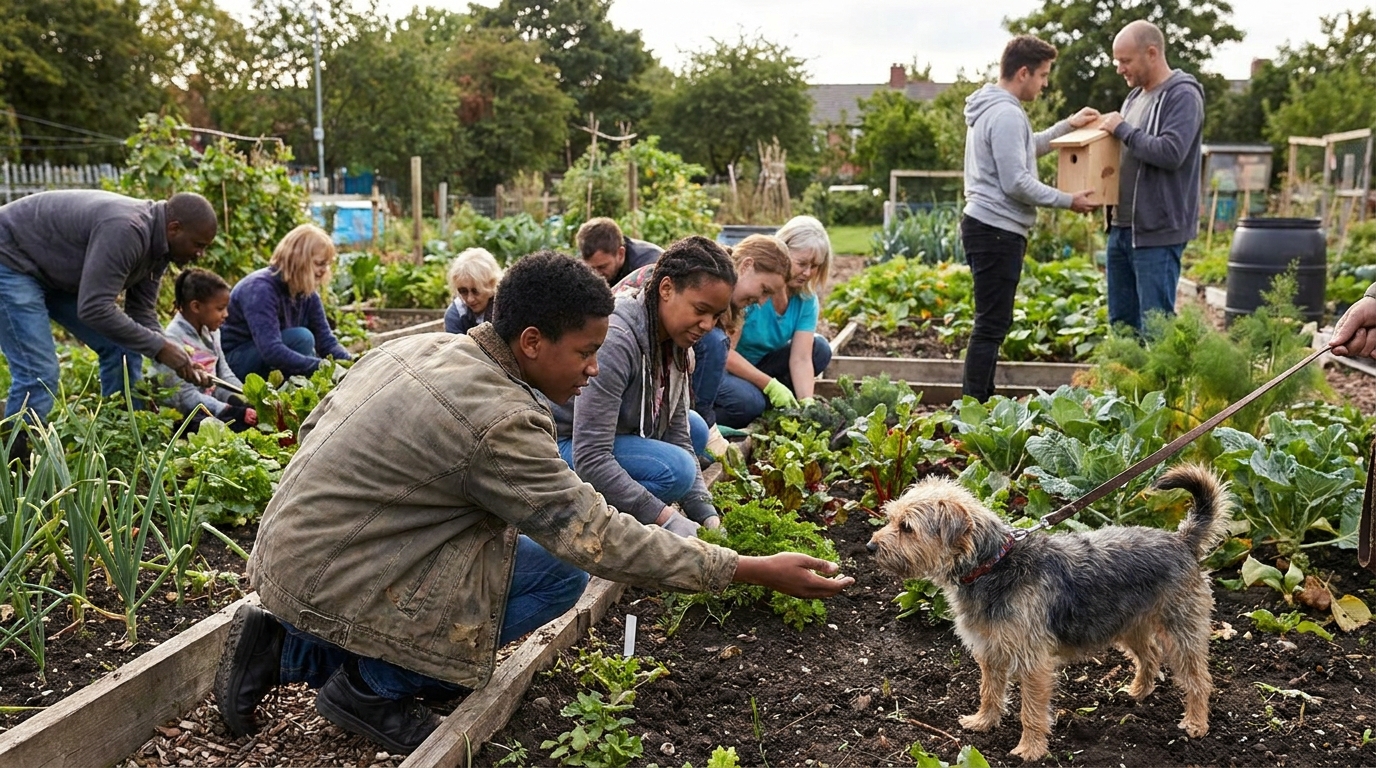
Bhakti Yoga is the yoga of devotion—the path of loving relationship with God. The Sanskrit word bhakti means loving service or devotion, and yoga means connection. So Bhakti Yoga means reconnecting with the Divine through love.
In Bhakti, compassion is not separate from spirituality. It is an expression of love for God. If all beings are children of the Divine, then how we treat others is part of our worship. Our kindness, our patience, our care for the earth, our gentleness toward animals, our forgiveness, and our service all become offerings.
This makes compassionate living deeply practical. It is not only something we feel during meditation or prayer. It is something we practice in the kitchen, in traffic, at work, in family life, online, in our food choices, in our speech, and in how we respond when life becomes uncomfortable.
Chanting Softens the Heart
One of the central practices of Bhakti Yoga is chanting sacred names of God. In Sanskrit, this is called kirtan when sung together, and japa when chanted softly or privately, often on prayer beads. The sacred names are understood to carry divine presence. Through chanting, the heart gradually becomes cleansed of envy, anger, greed, and forgetfulness.
A well-known mantra in the Bhakti tradition is:
Hare Krishna, Hare Krishna, Krishna Krishna, Hare Hare
Hare Rama, Hare Rama, Rama Rama, Hare Hare
“Hare” calls upon the divine energy of the Lord. “Krishna” means the all-attractive one. “Rama” means the source of joy. This mantra is a prayer: “O Lord, O divine energy of the Lord, please engage me in loving service.”
When we chant sincerely, we begin to remember who we are. We are not isolated consumers, competitors, or controllers. We are servants of love. And as that identity awakens, compassion becomes more natural.
Prayer Opens Us to Grace
Compassionate living is not always easy. We may want to be kind, but old habits arise. We may want to forgive, but pain remains. We may want to respect all beings, but irritation, fear, or pride can cloud our vision.
This is why prayer is so important.
Prayer is honest conversation with God. It does not need to be polished. We can pray, “Please help me see others with kindness.” “Please help me respond with wisdom.” “Please help me protect without hatred.” “Please soften my heart.” “Please guide my words.”
In Bhakti, we do not depend only on our own strength. We take shelter of divine grace. Compassion grows when we admit, humbly, “I need help to love well.”
Service Makes Love Real
In Sanskrit, devotional service is called seva. Seva means service offered with love. It may be cooking a meal, cleaning a temple, caring for a child, listening to a friend, feeding people, protecting animals, supporting spiritual community, or offering one’s skills for a higher purpose.
Service transforms compassion from sentiment into action. It asks, “How can I help?” rather than “How can I be seen?” It teaches humility because real service often happens quietly.
At The Bhakti House and in sincere spiritual communities everywhere, service is a sacred doorway. Through service, we learn that love is not merely emotion. Love is participation in another’s well-being.
Respect for Human Beings in Everyday Life

Respect for all beings begins close to home. Sometimes it is easier to feel compassion for humanity in general than to be patient with the person in front of us. Bhakti Yoga gently brings spirituality into ordinary relationships.
Every interaction becomes an opportunity: Can I speak with kindness? Can I listen fully? Can I honor this person’s dignity? Can I remember God in this moment?
Listening as an Act of Devotion
Listening is one of the most overlooked forms of compassion. Many people are carrying invisible burdens. When we truly listen, without rushing to correct, compare, or control, we offer a sacred gift.
Listening does not mean we agree with everything. It means we create space for another person’s humanity. We allow them to be heard. In a world full of noise, sincere listening is healing.
Before responding, we can pause and silently pray, “May my words be helpful. May I serve this soul.” This small inner practice can transform conversations.
Speaking With Truth and Kindness
The Bhakti scriptures value truthful speech, but truth should be spoken with care. Words can heal or harm. They can build trust or create wounds that last for years.
Compassionate speech asks several questions:
Is it true?
Is it necessary?
Is it kind?
Is this the right time?
Am I speaking to serve, or to win?
In the Bhagavad-gita 17.15, Krishna describes speech that is truthful, pleasing, beneficial, and not agitating to others as a form of austerity, or sacred discipline. This does not mean we avoid difficult truths. It means we speak them in a way that serves spiritual growth.
Respectful speech is especially needed in families, workplaces, spiritual communities, and online spaces. The internet can make people forget there is a soul behind the screen. Bhakti reminds us: every comment, message, and conversation can be an offering.
Honoring Boundaries Without Hardening the Heart
Compassion does not require us to stay in unhealthy or harmful situations. Respect for all beings includes respect for ourselves. Setting boundaries can be an act of wisdom and love.
If someone is abusive, manipulative, or dangerous, we may need distance, support, and protection. Bhakti does not ask us to become passive in the face of harm. Rather, it teaches us to act with clarity, courage, and prayer.
We can hold two truths at once: “This person is a soul loved by God,” and “This behavior is harmful, and I must protect myself or others.” Mature compassion is not sentimental. It is rooted in spiritual vision and practical intelligence.
Discover a wide range of insightful articles that delve into various spiritual topics. Our articles provide guidance and inspiration for your personal growth journey. Stay updated with the latest articles to enhance your understanding of spiritual practices.
Compassion Toward Animals and All Living Creatures
A complete guide to compassionate living must include animals. In Bhakti Yoga, animals are not objects for human pleasure. They are living beings with consciousness, feelings, relationships, fear, comfort, and the desire to live.
The same atma, or soul, is present in different bodies. The outer form may vary, but the inner life is sacred. This understanding naturally leads to gentleness.
Ahimsa: The Principle of Nonviolence
The Sanskrit word ahimsa means nonviolence or non-harming. It is an essential spiritual principle found throughout the yoga tradition. Ahimsa is not only about avoiding physical violence. It also includes reducing harm through our choices, speech, lifestyle, and consumption.
In daily life, ahimsa may include:
Choosing food that causes less suffering
Treating animals with kindness
Avoiding cruelty for convenience or entertainment
Being mindful of insects and small creatures
Supporting ethical and compassionate practices
Reducing waste and unnecessary consumption
For many on the Bhakti path, ahimsa is expressed through a vegetarian or plant-based diet, especially food prepared and offered to God with love. This offering is called prasadam, meaning “mercy” or “grace.” When food is prepared with devotion and offered to Krishna, it becomes spiritually nourishing.
Eating prasadam is a beautiful practice of compassion. It reminds us that food is not merely fuel. It is a gift. It connects the body, mind, earth, animals, farmers, cooks, and God in one circle of gratitude.
Cows, Care, and Sacred Responsibility
In Bhakti scriptures, cows are especially honored because of their gentle nature and their gifts of nourishment. The cow is seen as a motherly figure, not as a commodity. This does not mean compassion is limited to cows. Rather, the cow teaches us to reconsider our relationship with all animals.
Do we see animals as beings to serve and protect, or as resources to exploit? Do we take more than we need? Are we grateful for what we receive?
Respect for animals helps soften the human heart. When we become gentle toward the vulnerable, we become more capable of spiritual love.
Small Acts of Kindness Matter
Not everyone can transform their lifestyle overnight. Bhakti is a path of sincere steps. We can begin where we are.
Perhaps we start by offering one vegetarian meal a week. Perhaps we learn to cook simple prasadam. Perhaps we stop supporting entertainment that harms animals. Perhaps we teach children to be gentle with insects, birds, pets, and wildlife. Perhaps we pause before swatting or crushing and choose relocation when possible.
Each act may seem small, but small acts done with sincerity purify the heart.
Compassion for the Earth as God’s Sacred Energy
Respect for all beings includes respect for the earth. The natural world is not separate from spiritual life. In Bhakti understanding, the earth and all material elements are energies of God. They are meant to be used with gratitude, care, and responsibility.
When we see the world as sacred, we stop treating it as disposable.
Gratitude Changes Consumption
Modern life often encourages constant consumption. We are told to buy more, desire more, waste more, and replace more. But spiritual life asks a different question: “What do I truly need, and how can I use what I have in service?”
Gratitude naturally reduces greed. When we are thankful, we become more careful. We waste less food. We use water respectfully. We repair what we can. We share. We simplify.
This is not about guilt. It is about love. The earth supports our bodies, our homes, our communities, and our worship. Caring for the earth is one way to say thank you.
Living Simply, Loving Deeply
The Bhakti tradition often praises simple living and high thinking. Simple living does not mean poverty or neglect. It means arranging life in a way that supports spiritual growth rather than endless distraction.
A simpler life creates space for chanting, prayer, family, community, study, service, and rest. It also reduces harm to other beings.
Practical steps may include:
Buying less and choosing mindfully
Cooking at home with devotion
Growing herbs or vegetables if possible
Composting or reducing food waste
Using reusable items
Supporting local and ethical producers
Spending more time in nature
Offering gratitude before meals
These practices may appear ordinary, but when done in remembrance of God, they become sacred.
Nature as a Place of Remembrance
Nature can help us remember our dependence on divine grace. The sunrise, trees, rivers, animals, soil, wind, and stars all speak quietly of a wisdom greater than our own. In the Bhagavad-gita, Krishna says He is the taste of water, the light of the sun and moon, and the ability in all people. This means the Divine can be remembered through the beauty and order of creation.
A walk in nature can become prayer. Planting a tree can become service. Drinking water can become gratitude. Caring for the earth can become devotion.
The Inner Work of Becoming Compassionate
Compassionate living is not only about external actions. It also requires inner work. We may perform kind acts, but if the heart is filled with resentment, pride, or superiority, compassion remains incomplete.
Bhakti Yoga helps us cleanse the heart through steady spiritual practice. This cleansing is not harsh. It is loving. Like sunlight entering a room, devotion gradually reveals what needs healing.
Humility: The Doorway to Love
Humility is essential for respect. Without humility, we may think, “I am better than others. My group is superior. My suffering matters more. My opinion is always correct.” These thoughts create distance from both God and living beings.
Humility does not mean self-hatred. It means seeing ourselves truthfully: we are small, dependent, loved, and meant to serve. We have gifts, but those gifts are blessings. We have knowledge, but it is incomplete. We need grace.
The great Bhakti teacher Sri Chaitanya Mahaprabhu taught that one should chant the holy names with humility, tolerance, and respect for others. This teaching is very practical. If we want to chant deeply, we must learn to honor others. If we want to love God, we must let go of arrogance.
Forgiveness and Healing
Forgiveness is often misunderstood. It does not mean pretending harm did not happen. It does not mean avoiding justice. It does not mean trusting someone who has not changed.
Forgiveness means we ask God to help free our heart from hatred. We stop allowing bitterness to define us. We place our pain before the Divine and pray for healing.
Sometimes forgiveness takes time. Sometimes it requires counseling, community support, distance, or honest grief. Bhakti honors the sincerity of the process. God sees every effort.
We can begin with a simple prayer: “Please help me release what I cannot carry. Please protect me from hatred. Please guide me toward healing.”
Compassion for Ourselves
Many sincere people struggle to show compassion to themselves. They may speak gently to others but harshly to their own hearts. Yet self-compassion is also part of spiritual life.
We are also souls. We are also loved by God. We are also learning.
Self-compassion does not mean excusing harmful behavior. It means allowing ourselves to grow without despair. We can admit mistakes, make amends, and continue walking the path. Bhakti is not for perfect people. It is for sincere people.
If we fall short, we can return to chanting. Return to prayer. Return to service. Return to community. The door of devotion remains open.
Building a Culture of Respect in Family, Community, and Society
Compassionate living becomes stronger when it is shared. A culture of respect is built through many small choices, repeated over time. Families, temples, spiritual gatherings, schools, workplaces, and online communities can all become places where the dignity of every being is honored.
Teaching Children Sacred Respect
Children learn compassion not only from what we say but from how we live. If they see adults speaking respectfully, caring for animals, offering food with gratitude, helping others, and apologizing when wrong, they absorb those lessons deeply.
We can teach children simple spiritual truths:
Every living being has a soul.
God loves everyone.
Food is a gift.
Animals feel and deserve kindness.
Words should not be used to hurt.
Service brings joy.
Prayer helps us when we feel angry or sad.
Children often understand these truths naturally. Their hearts are open. Our role is to nurture that openness with patience and example.
Welcoming People of All Backgrounds
A compassionate spiritual community welcomes sincere seekers from all backgrounds. People may come with different beliefs, cultures, questions, wounds, or experiences. Some may be familiar with Sanskrit and scriptures. Others may be hearing about Bhakti Yoga for the first time.
Everyone should feel they can take a step toward God without fear of being shamed.
Welcoming does not mean watering down spiritual teachings. It means presenting them with kindness, clarity, and humility. It means making space for questions. It means remembering that spiritual growth is a journey.
At its best, a Bhakti community becomes like a shelter—a place where chanting, prasadam, prayer, friendship, and service help people remember their eternal identity.
Social Compassion and Spiritual Responsibility
Respect for all beings also calls us to care about suffering in society. Poverty, loneliness, racism, exploitation, violence, addiction, and mental distress are not just social issues; they affect souls loved by God.
Bhakti Yoga offers both inner transformation and outward service. Feeding people prasadam, supporting those in crisis, visiting the lonely, practicing nonviolence, advocating for dignity, and building communities of care are all expressions of devotion.
We may not be able to solve every problem. But we can ask, “What service is mine to offer?” One sincere act, offered with love, has spiritual power.
Practical Daily Steps for Compassionate Living
A compassionate life is built one day at a time. We do not need to wait until we are fully pure, fully peaceful, or fully knowledgeable. We can begin today with simple practices that align the heart with love.
Begin the Day With Remembrance
How we begin the morning often shapes the day. Before checking messages or entering responsibilities, take a few moments for spiritual remembrance.
You might chant a mantra, offer a prayer, read a verse from the Bhagavad-gita, or simply say, “Dear Lord, please guide me today. May I be an instrument of compassion.”
Even five sincere minutes can change the direction of the heart.
Offer Your Food With Gratitude
Preparing and offering food is one of the most practical Bhakti practices. Cook with care. Avoid tasting while cooking if you are making an offering. Place the food before a picture or form of Krishna, or simply in your heart offer it to God with prayer.
You can say, “My Lord, this food is Yours. Please accept it with love.”
Then honor the food as prasadam, divine mercy. Share it when possible. This simple practice brings compassion, gratitude, and devotion into daily life.
Practice One Conscious Act of Kindness
Each day, choose one intentional act of kindness. It may be sending an encouraging message, feeding someone, listening patiently, helping an elder, caring for an animal, forgiving a small offense, or cleaning a shared space.
When done as an offering to God, ordinary kindness becomes spiritual practice.
Pause Before Reacting
Many harms happen in moments of reaction. Someone says something painful, and we respond quickly. Anger rises, and words escape. Later we regret it.
A sacred pause can protect relationships. Before reacting, breathe. Remember the soul within the other person. Silently chant. Ask, “What response would serve love and truth?”
This pause is not weakness. It is strength guided by spirit.
End the Day With Reflection
Before resting, reflect gently:
Where did I act with compassion today?
Where did I struggle?
Whom do I need to forgive?
Whom did I hurt, and how can I make amends?
How did God guide me?
Then offer the day to the Divine. Spiritual life grows through honest reflection, not self-condemnation.
Respect as a Lifelong Spiritual Journey
Respect for all beings is not a one-time decision. It is a lifelong practice. Some days the heart feels open and kind. Other days we may feel tired, impatient, or discouraged. Still, the path remains.
Bhakti Yoga teaches that every sincere step matters. Every mantra chanted, every prayer whispered, every meal offered, every being treated with care, every apology made, every act of service performed—nothing is lost.
Krishna says in the Bhagavad-gita that even a little progress on this path can protect one from great fear. This is deeply encouraging. We do not have to become perfect overnight. We simply have to keep turning toward love.
The World Needs Soft Hearts and Strong Faith
Compassionate living is not passive. It requires courage. It takes courage to be kind in a harsh world. It takes strength to be humble when pride is praised. It takes faith to serve when results are not immediate. It takes devotion to respect those who are different from us.
But this is the beauty of Bhakti Yoga. We are not walking alone. God is present in the heart. The holy names are available. Scripture gives wisdom. Community gives support. Service gives purpose. Grace carries us forward.
A respectful life becomes a prayer in motion.
One Sincere Step Toward God
Wherever you are beginning from, you are welcome. You may have practiced Bhakti Yoga for years, or you may be exploring for the first time. You may be full of faith, full of questions, or somewhere in between. You may feel peaceful, broken, hopeful, or uncertain.
Please know this: the path of devotion is open to you.
Begin with one sincere step. Chant one mantra. Offer one prayer. Prepare one meal with gratitude. Show kindness to one being. Listen with your whole heart. Ask God to help you see the sacred life in everyone.
Respect for all beings grows from love, and love grows by practice. May we walk gently, serve humbly, chant sincerely, and remember that every soul belongs to God.
Everyone is welcome to take one sincere step toward God today.
FAQs
What does “Respect for all beings” mean?
“Respect for all beings” refers to the ethical principle that all living creatures, including humans, animals, and plants, deserve consideration and respect. This concept emphasizes the interconnectedness of life and the importance of treating all beings with dignity, compassion, and care.
Why is it important to respect all beings?
Respecting all beings is crucial for fostering a harmonious coexistence within ecosystems and communities. It promotes empathy, reduces suffering, and encourages sustainable practices that benefit both the environment and society. By valuing all forms of life, we contribute to a more equitable and compassionate world.
How can individuals practice respect for all beings in their daily lives?
Individuals can practice respect for all beings by adopting compassionate behaviors such as reducing waste, supporting animal welfare, choosing sustainable products, and advocating for environmental conservation. Additionally, practicing kindness and empathy towards others, including humans and animals, can create a ripple effect of respect in communities.
What role does education play in promoting respect for all beings?
Education plays a vital role in promoting respect for all beings by raising awareness about the importance of biodiversity, animal rights, and environmental stewardship. Educational programs can teach individuals about the ethical implications of their choices and inspire them to take action in support of all living beings.
Are there any organizations dedicated to promoting respect for all beings?
Yes, there are numerous organizations dedicated to promoting respect for all beings, including animal rights groups, environmental organizations, and humanitarian efforts. These organizations work to raise awareness, advocate for policy changes, and provide resources for individuals looking to make a positive impact on the lives of all beings.

