

Understanding the Stages of Bhakti with a Gentle Heart
Many sincere seekers ask, “Can I skip a stage of Bhakti?” It is a beautiful question, because it often comes from eagerness. The heart tastes something sacred—perhaps through chanting, prayer, kirtan, a scripture, or the kindness of a devotee—and suddenly it wants to run toward God.
In Bhakti Yoga, this eagerness is treasured. Bhakti means devotion, or loving service to the Divine. Yoga means connection. So Bhakti Yoga is the path of reconnecting with God through love.
Still, love matures in stages. Just as a seed becomes a sprout, then a plant, then a flowering tree, devotion grows through a natural process. We may sometimes receive a glimpse of a higher stage by grace, but lasting spiritual growth usually asks us to honor the steps in front of us.
The great Bhakti tradition often describes a devotional progression, especially in the teachings of Śrīla Rūpa Goswāmī, a saint and teacher of divine love. In his classic text Bhakti-rasāmṛta-sindhu—often translated as “The Ocean of the Nectar of Devotion”—he outlines stages of spiritual development, beginning with faith and moving toward pure love of God.
These stages are not meant to make us feel measured, compared, or judged. They are like a map for the heart. They help us understand where we are, what nourishes us, and how to keep walking with humility.
The Traditional Flow of Devotional Growth
A commonly shared sequence in Bhakti is:
- Śraddhā — faith, or a seed of trust that spiritual life has meaning
- Sādhu-saṅga — association with saintly people and sincere practitioners
- Bhajana-kriyā — beginning regular devotional practices
- Anartha-nivṛtti — cleansing unwanted habits and inner obstacles
- Niṣṭhā — steadiness in devotion
- Ruci — genuine taste and attraction for spiritual practice
- Āsakti — deep attachment to God and devotional life
- Bhāva — spiritual emotion, the first rays of pure love
- Prema — pure love of God
These Sanskrit terms may sound lofty, but the path is deeply practical. It is about becoming more loving, honest, prayerful, and surrendered. It is about chanting God’s names with sincerity, serving others with kindness, and allowing the heart to be purified over time.
When we ask whether we can skip a stage, we are really asking: “Can love awaken quickly?” The answer is both simple and mysterious: by grace, anything is possible; by practice, the heart becomes ready to hold that grace.
Can You Skip a Stage of Bhakti?
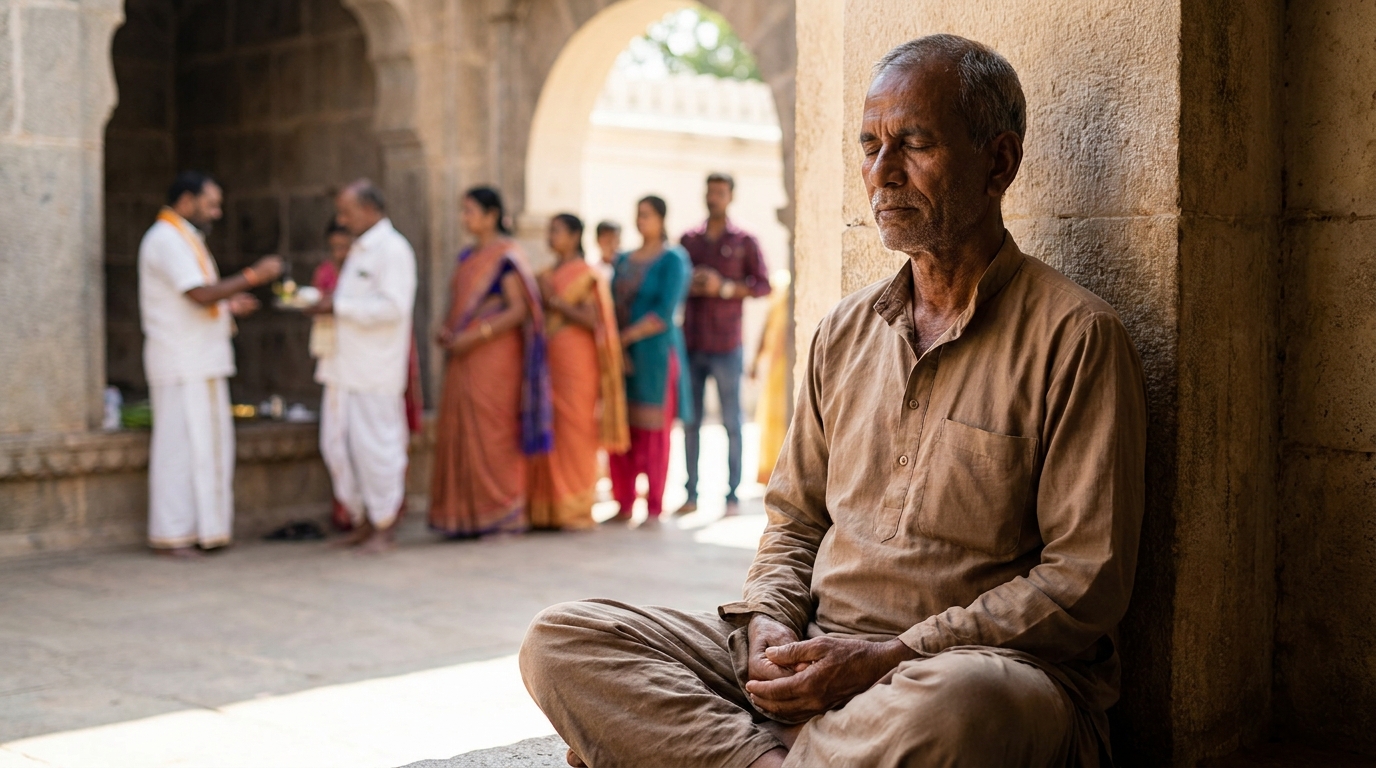
In the deepest sense, God is not limited by systems. Divine grace can enter anyone’s life at any moment. A person may hear the holy name once and be changed forever. Someone may walk into a temple, a kirtan, or a prayer gathering and feel tears rising without understanding why. Another person may read one verse of the Bhagavad-gītā and feel their whole life turn toward Krishna, the all-attractive Supreme Person.
So yes, grace can move faster than our calculations.
But in practical spiritual life, we usually do not “skip” stages in a stable way. More often, we may receive a glimpse of a higher stage, then return to the necessary work of integrating that gift. A moment of deep spiritual emotion does not always mean we have permanently reached bhāva. A period of enthusiasm does not always mean we have already passed through purification. A powerful experience in chanting does not mean all ego, fear, or selfish desire has disappeared.
This is not discouraging. It is actually comforting. Bhakti is not a performance. We do not have to pretend to be more advanced than we are. We simply keep showing up.
Grace Can Give a Glimpse
Many practitioners have moments that feel like open windows into the spiritual world. During kirtan—devotional chanting—one may feel overwhelmed by love. During japa, the personal chanting of a mantra, one may feel the presence of God very near. During service, one may forget oneself and feel joy in giving.
These glimpses are gifts. They encourage us. They tell the heart, “Yes, this path is real. Keep going.”
But a glimpse is not the same as full realization. If someone sees the sunrise through a window, they have truly seen sunlight. Yet they may still need to walk outside and live in that light. Similarly, a sacred experience can inspire us, but daily practice makes the heart a home for devotion.
Growth Usually Needs Integration
The stages of Bhakti are not arbitrary hurdles. Each stage prepares us for the next.
Faith opens the door. Spiritual association gives guidance. Practice builds rhythm. Cleansing removes what blocks love. Steadiness protects us from being tossed by moods. Taste makes practice joyful. Attachment deepens our relationship with God. Spiritual emotion softens the heart completely. Pure love becomes the soul’s natural life.
If we try to rush past purification, our unresolved habits may follow us into spiritual practice. If we seek advanced emotion without steadiness, we may become discouraged when feelings change. If we desire deep attachment to God without regular chanting, prayer, and service, our longing may remain sentimental rather than transformative.
In Bhakti, nothing is wasted. Every sincere prayer matters. Every mantra matters. Every act of service matters. But lasting growth comes when grace and practice meet.
Why the Stages Are a Mercy, Not a Restriction
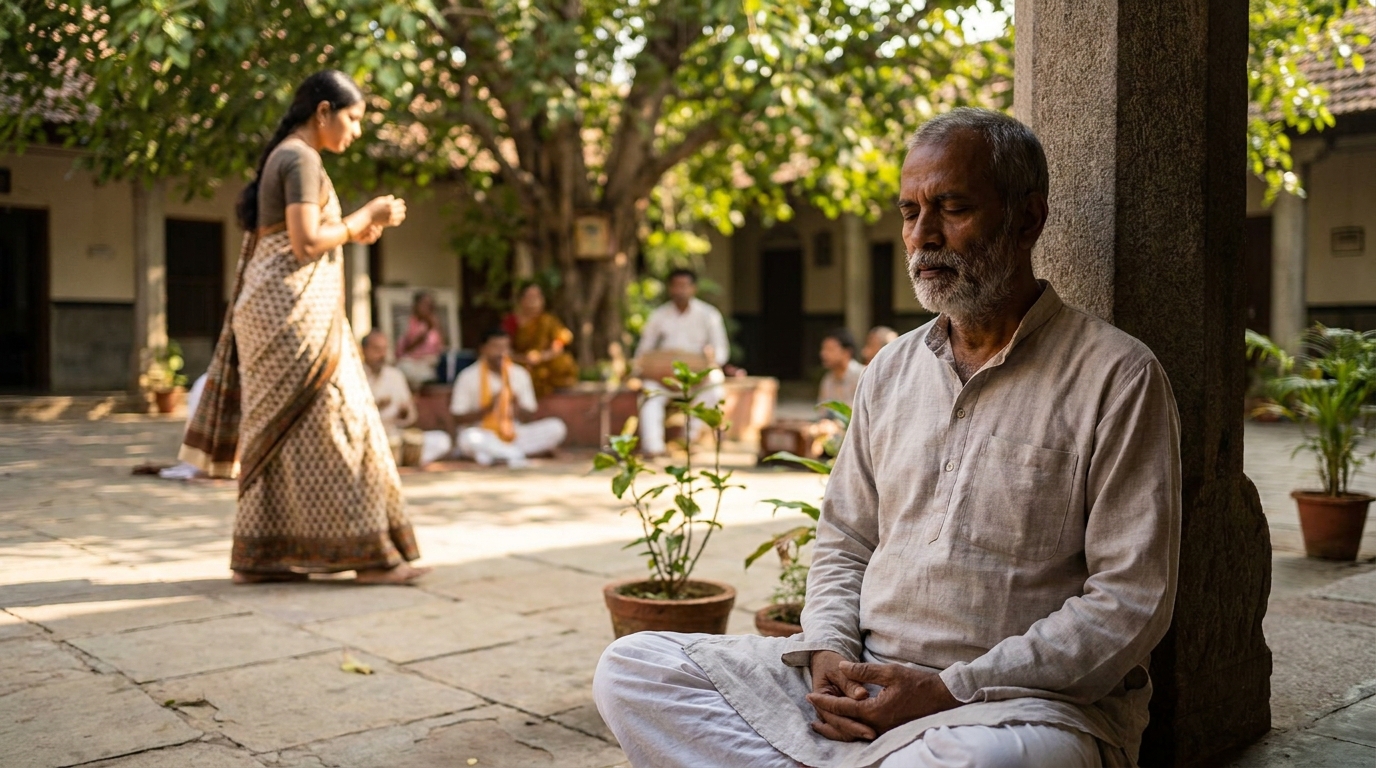
Sometimes spiritual stages can sound like a ladder we must climb through effort alone. But Bhakti is not dry self-improvement. It is relationship. The stages are the natural unfolding of a loving relationship with God.
Imagine meeting someone kind and trustworthy. At first, you may have faith that this person is good. Then you spend time with people who know them well. You learn how to communicate with them. You gradually let go of behaviors that harm the relationship. Over time, trust becomes steady. Then affection deepens. Eventually, your heart becomes lovingly attached.
Our relationship with Krishna, or God, also develops through sincere contact.
The Bhagavad-gītā gives us a deeply practical invitation. Krishna says:
“Always think of Me, become My devotee, worship Me, and offer your homage unto Me. Thus you will come to Me without fail.”
— Bhagavad-gītā 18.65
This verse is not only philosophy. It is a daily practice. Think of God. Offer love. Bow the heart. Live in remembrance. Krishna does not demand that we artificially leap into perfection. He invites us into relationship.
Stages Help Us Stay Humble
Humility is essential in Bhakti. Not humiliation. Not shame. True humility means living honestly before God.
When we understand the stages, we can say, “I have some faith, but I need good association.” Or, “I am practicing, but I still struggle with distraction.” Or, “I have taste sometimes, but I want to become steady.” This honesty is beautiful.
A humble practitioner does not need to claim advanced devotion. They are happy to serve, chant, learn, and grow.
The Śrīmad-Bhāgavatam, one of the central scriptures of Bhakti, teaches that hearing and chanting about God purify the heart. It says that by regular hearing of sacred teachings and serving the devotees, what is troublesome within the heart becomes cleansed, and devotion becomes established.
This is a gentle but powerful promise: keep hearing, keep chanting, keep serving, and the heart will change.
Stages Protect Us from Spiritual Impatience
Spiritual impatience is very human. We may want peace now, divine love now, freedom from struggle now. This longing is understandable. Life can be heavy. The world can feel uncertain. The heart wants shelter.
But if we become impatient, we may start comparing ourselves with others. We may chase experiences rather than relationship. We may become discouraged when devotional feelings are not constant. We may think, “I must not be progressing,” when in truth, deep roots are growing underground.
A tree does not become strong by skipping roots. A devotee does not become deep by avoiding the hidden work of purification.
The stages of Bhakti remind us that slow growth is still sacred growth.
Discover a wealth of knowledge by exploring our insightful articles. Our articles cover a wide range of topics to inspire and educate. Stay informed and engaged by reading our latest articles.
The Role of Practice: Chanting, Prayer, Service, and Surrender
Bhakti is wonderfully practical. It is not reserved for monks, scholars, or people born into a particular culture. Anyone can begin. Any sincere person, from any background, can take up devotional life in a way that is real and meaningful.
The practices of Bhakti help us move naturally through the stages. They are not mechanical rituals when done with heart. They are ways of turning toward God again and again.
Chanting the Holy Names
Chanting is central in Bhakti Yoga. The holy names of God are considered non-different from God’s presence. In the Krishna Bhakti tradition, many practitioners chant the mahā-mantra:
Hare Krishna Hare Krishna
Krishna Krishna Hare Hare
Hare Rama Hare Rama
Rama Rama Hare Hare
“Hare” calls upon the divine energy of God, the compassionate spiritual power that connects us with the Divine. “Krishna” means the all-attractive one. “Rama” means the source of joy and spiritual pleasure.
Chanting can be done musically in kirtan with others, or softly on prayer beads in japa. We do not need to be perfect to chant. We chant because we need help. We chant to remember. We chant to offer the heart.
If someone asks, “Can chanting help me move faster through the stages?” the answer is yes, in the sense that chanting directly nourishes devotion. But chanting also reveals what needs healing. Sometimes when we chant, we notice distraction, resistance, sadness, pride, or longing. This is part of purification. The holy name is lovingly cleaning the mirror of the heart.
Prayer as Honest Relationship
Prayer in Bhakti does not have to be elaborate. It can be as simple as:
“Dear Lord, please guide me.”
“Krishna, please help me remember You.”
“Please let me serve with love.”
“Please purify my heart.”
“Please accept me, even with all my imperfections.”
Prayer softens the ego. It reminds us that devotion is not something we conquer. It is something we receive and cultivate.
If we feel stuck in a stage, prayer is a doorway. If we feel proud of our progress, prayer brings us back to humility. If we feel unworthy, prayer reminds us that God’s mercy is greater than our limitations.
Service as Love in Action
Sevā means service. In Bhakti, service is not merely volunteering or being useful. It is love expressed through action.
We may serve by helping in a temple, cooking sacred food, singing in kirtan, cleaning, supporting a community, caring for family, offering our work, or speaking kindly to someone in need. Service becomes spiritual when it is offered to God and done with a sincere heart.
Service protects us from self-centered spirituality. Sometimes we may want advanced states of devotion while still keeping ourselves at the center. Service gently shifts the focus: “How can I please God? How can I support others on their path? How can my life become an offering?”
Through service, Bhakti becomes embodied. Love becomes practical.
Surrender in Daily Life
Surrender does not mean giving up intelligence, responsibility, or personal dignity. In Bhakti, surrender means trusting God and aligning our life with divine love.
It may begin simply:
- I will chant a little each day.
- I will seek good association.
- I will offer my food with gratitude.
- I will avoid actions that harden my heart.
- I will serve where I can.
- I will ask for guidance when I am confused.
Surrender grows naturally. We do not need to force a dramatic gesture. We can offer one honest piece of our life at a time.
When It Feels Like Others Are Moving Faster
One of the tender challenges in spiritual community is comparison. We may see someone chanting with tears, speaking beautifully, serving tirelessly, or seeming deeply peaceful. Then we may wonder, “Why am I not there? Did they skip ahead? Am I behind?”
Bhakti asks us to be careful with such thoughts. We cannot fully see another person’s journey. We do not know their past practice, their inner struggles, their grace, or their sacrifices. And we do not need to measure ourselves against them.
God is personal. Krishna meets each soul uniquely.
Spiritual Life Is Not a Race
The stages of Bhakti are not a competition. No one wins by appearing advanced. The real victory is sincerity.
A person who chants one round of japa with humility may be making profound progress. A person who quietly forgives someone may be taking a sacred step. A person who comes to kirtan after a difficult week and simply listens may be receiving deep mercy.
In the Bhagavad-gītā 9.26, Krishna says:
“If one offers Me with love and devotion a leaf, a flower, a fruit, or water, I will accept it.”
This verse is so merciful. Krishna does not say He only accepts grand offerings from advanced saints. He accepts simple offerings given with love. The heart matters.
Honor Inspiration Without Imitation
It is good to be inspired by advanced devotees. Their faith, compassion, steadiness, and love can show us what is possible. But inspiration becomes dangerous when it turns into imitation.
If someone naturally chants for many hours, we may admire them. But if we suddenly imitate beyond our capacity, we may become exhausted. If someone speaks with deep emotion about Krishna, we can appreciate it. But if we try to copy their emotion, our practice may become artificial.
Bhakti grows best in truthfulness. We can pray, “May I one day have such devotion,” while faithfully practicing at our present level.
Your Pace Can Still Be Powerful
Sometimes the most powerful growth is quiet. You may not feel dramatic emotion, but you are becoming kinder. You may not have visions, but you are becoming more honest. You may not feel constant taste in chanting, but you keep chanting anyway. This steadiness is precious.
Niṣṭhā, steadiness, is a beautiful stage because it means devotion is no longer entirely dependent on mood. We practice because we know this relationship matters. We show up because love is worth showing up for.
What Happens If We Try to Bypass Purification?
The stage called anartha-nivṛtti is especially important. Anartha means things that are unwanted or not truly beneficial. Nivṛtti means removal or clearing away. So anartha-nivṛtti refers to the cleansing of the heart’s obstacles.
These obstacles may include pride, envy, greed, resentment, selfish desire, laziness, distraction, or the need for recognition. Everyone has something to be purified. This is not a reason for shame. It is part of being human and part of spiritual healing.
Trying to bypass this stage can create confusion. We may develop spiritual language without spiritual character. We may enjoy being seen as devotional while avoiding the inner work of becoming more loving. We may chase mystical experiences while neglecting basic kindness.
Bhakti is merciful, but it is also honest. Love reveals what is not love.
The Heart Must Become a Suitable Place
If pure love of God is like a sacred flame, the heart must become a lamp that can hold it. Purification prepares the heart.
This is why regular practice matters even when it feels ordinary. Each mantra is cleaning. Each prayer is softening. Each act of service is reorienting the heart. Each moment of humility creates space for grace.
The cleansing process may not always feel pleasant. Sometimes spiritual practice brings up old pain, hidden motives, or uncomfortable truths. But this is not failure. It is healing.
Just as a room may look messier when we begin cleaning it, the heart may feel more unsettled when purification begins. With patience, guidance, and continued practice, clarity comes.
Avoiding the Trap of Spiritual Appearance
One reason people may want to skip stages is the desire to look advanced. This can happen subtly. We may want others to see us as devotional, knowledgeable, renounced, or spiritually emotional.
But Krishna is not impressed by performance. He sees the heart.
The Bhakti path repeatedly teaches that sincerity is more valuable than appearance. A beginner with a soft heart may be more spiritually protected than an outwardly impressive person filled with pride.
This is why association with genuine devotees is essential. Sādhu-saṅga helps us stay real. True spiritual friends do not pressure us to pretend. They encourage us to practice, serve, and depend on God.
The Mystery of Grace and the Beauty of Gradual Growth
The question of skipping stages cannot be answered only by rules. Bhakti is a path of grace. God can lift the soul in ways we cannot predict.
There are stories in Bhakti scriptures of people transformed in a moment. The Śrīmad-Bhāgavatam tells of great souls who awakened devotion through hearing, remembrance, surrender, or even unexpected contact with the holy name. These stories remind us that mercy is not bound by our qualifications.
At the same time, the scriptures also glorify steady practice. Hearing, chanting, remembering, serving, worshiping, praying, becoming a servant, friendship with God, and full surrender are known as nine processes of devotion. These are not separate from grace; they are how we place ourselves in the current of grace.
Grace Does Not Cancel Practice
Sometimes we may think, “If everything depends on grace, why practice?” But practice is how we open the heart to receive grace.
The sun may be shining, but if the curtains are closed, the room remains dark. Our chanting, prayer, study, and service are ways of opening the curtains. The sunlight is God’s mercy. We do not create it, but we can welcome it.
Spiritual practice also expresses our desire. Even a small daily effort says, “Dear Lord, I want to remember You. I want to love You. Please help me.”
That desire is powerful.
A Higher Taste Comes Naturally
In the Bhagavad-gītā 2.59, Krishna explains that one can give up lower attractions by experiencing a higher taste. In Bhakti, this higher taste is the sweetness of connection with God.
At first, practice may require discipline. We chant because we have faith. We attend kirtan because it is good for the heart. We read scripture because we need wisdom. Over time, these practices become nourishing. The heart begins to taste spiritual joy.
This taste cannot be forced, but it can be invited. We invite it through sincerity, consistency, and loving association.
The Path Is Personal and Relational
The stages of Bhakti are not merely psychological levels. They describe the deepening of a relationship. And relationships are alive.
Some people come to Bhakti through philosophy. Others through music. Others through prasāda, sanctified food offered to God. Others through friendship, hardship, service, or prayer. Krishna can call the soul through many doors.
So while we may not truly skip the inner development needed for pure love, our outer journey may not look identical to someone else’s. We may experience the stages in ways that overlap, return, deepen, and mature.
The important question is not, “How advanced do I appear?” but “Am I becoming more sincerely connected to God?”
Practical Guidance for Walking Your Own Bhakti Path
If you are wondering where you are on the path, take heart. You do not need to label yourself too tightly. The stages can guide you, but they are not meant to create anxiety.
Here are some simple ways to walk steadily and lovingly.
Begin with Faith, However Small
Śraddhā, faith, may begin as curiosity. You may not know what you believe fully. You may simply feel drawn to chanting, Krishna, sacred wisdom, or the company of devotees. That is enough to begin.
Faith grows when we nourish it. Listen to kirtan. Read a little scripture. Ask honest questions. Spend time with sincere practitioners. Offer a simple prayer.
Even a small seed of faith can become a great tree.
Seek Nourishing Association
Sādhu-saṅga means keeping company with people who help us remember God. This does not mean everyone must be perfect. It means we seek those whose presence encourages sincerity, kindness, humility, and devotion.
Good association can come through a temple, a Bhakti community, online classes, scripture study, kirtan gatherings, or friendships rooted in spiritual intention.
If you want to grow in Bhakti, do not walk alone if you can help it. The heart becomes strong in loving community.
Create a Simple Daily Practice
Bhajana-kriyā means taking up devotional practices. Start realistically.
You might choose:
- Chant one round of the mahā-mantra on beads each day.
- Set aside five minutes for prayer.
- Read one verse of the Bhagavad-gītā daily.
- Offer your meals with gratitude.
- Attend one kirtan or satsang regularly.
- Do one act of service each week.
Consistency matters more than dramatic beginnings. A small practice done daily can transform the heart over time.
Welcome Purification with Compassion
When unwanted habits arise, do not despair. Purification is part of the path.
Instead of thinking, “I am failing,” try thinking, “Krishna is showing me what needs healing.” Bring it into prayer. Seek guidance. Keep chanting. Make practical changes. Forgive yourself and continue.
Bhakti is not for perfect people. It is for souls longing to love and be loved by God.
Let Love Mature Naturally
Do not force advanced emotions. Do not be discouraged if practice sometimes feels dry. Every relationship has seasons. Continue with patience.
If taste comes, be grateful. If steadiness is being built, be grateful. If purification feels difficult, be grateful that the heart is being prepared.
The path itself is sacred.
So, Can You Skip a Stage?
In one sense, no: the heart must be prepared to fully embody pure devotion. Faith, association, practice, purification, steadiness, taste, attachment, spiritual emotion, and pure love each have their place in the soul’s awakening.
In another sense, yes: grace can give glimpses, breakthroughs, and transformations beyond what we think we deserve. God is free. Krishna’s mercy is not limited by our timeline.
But perhaps the most helpful answer is this: do not worry about skipping stages. Worry less about advancement and more about sincerity. Let the map guide you, but let love lead you.
The Bhakti path is not about rushing to a finish line. It is about learning to live in loving remembrance of God. It is about chanting when the heart is bright and when the heart is tired. It is about serving when no one sees. It is about praying honestly. It is about becoming softer, humbler, and more available to divine love.
Every stage has its mercy. Faith is mercy. Association is mercy. Practice is mercy. Purification is mercy. Steadiness is mercy. Taste is mercy. Longing is mercy. Tears are mercy. Even the awareness of our need for God is mercy.
Wherever you are, you are not disqualified.
You are welcome in Bhakti. Whether you are new to Sanskrit, new to chanting, returning after time away, or already walking this path deeply, there is a place for you. Bring your questions. Bring your hopes. Bring your imperfect but sincere heart.
Take one step today. Chant one mantra. Offer one prayer. Do one act of service. Read one sacred verse. Sit with one devotee. Turn toward God in one honest moment.
That one sincere step can open the door to a lifetime of love.
FAQs
Can one skip a stage of Bhakti and still progress on the spiritual path?
It is generally believed in the Bhakti tradition that each stage of Bhakti is essential for spiritual growth. Skipping a stage may hinder one’s progress as each stage builds upon the previous one.
What are the different stages of Bhakti?
The traditional stages of Bhakti are known as Shraddha (faith), Sadhu-sanga (association with devotees), Bhajana-kriya (engagement in devotional service), Anartha-nivritti (cleansing of unwanted habits), Nishtha (steadiness), Ruci (taste), Asakti (attachment), Bhava (ecstasy), and Prema (pure love).
Is it possible to experience higher stages of Bhakti without going through the initial stages?
While it is possible for some individuals to experience glimpses of higher stages of Bhakti due to past spiritual practices or grace, a strong foundation in the initial stages is generally considered necessary for sustained progress and growth.
What are the potential consequences of trying to skip stages of Bhakti?
Attempting to skip stages of Bhakti may lead to spiritual bypassing, where unresolved issues or emotions are not properly addressed. This can hinder one’s spiritual growth and lead to a lack of depth in one’s practice.
How can one ensure steady progress through the stages of Bhakti?
To ensure steady progress through the stages of Bhakti, it is recommended to cultivate patience, humility, and a sincere desire for spiritual growth. Regular practice, guidance from experienced practitioners, and self-reflection can also help navigate the different stages effectively.

