
Understanding the Stages of Bhakti as a Journey of Love
Bhakti Yoga is the path of loving devotion to God. The Sanskrit word bhakti means devotion, loving service, or heartfelt connection with the Divine. It is not simply a belief system, a cultural identity, or a set of rituals. Bhakti is a living relationship.
In Bhakti Yoga, we learn to turn the heart toward God through chanting sacred names, prayer, hearing wisdom, serving others, and remembering the Divine in daily life. Some people call God Krishna, Rama, Allah, Yahweh, Christ, the Divine Mother, the Supreme Being, or simply Love. At The Bhakti House, all sincere seekers are welcome.
Many spiritual traditions describe growth in stages. In the Bhakti tradition, especially as explained by great teachers like Srila Rupa Goswami in the Bhakti-rasamrita-sindhu, the journey of devotion unfolds gradually. These stages are not meant to make us proud or discouraged. They are meant to help us understand where we are, honor the grace already present, and take the next sincere step.
A beautiful verse often quoted in the Bhakti tradition describes this progression:
“In the beginning there is faith. Then one seeks the company of spiritually minded people. From that association, one begins devotional practice. Through practice, unwanted habits are purified. Then one becomes steady, develops taste, attachment, spiritual emotion, and finally pure love of God.”
This journey is not mechanical. It is deeply personal. Some days we may feel inspired, and other days dry. Some seasons may feel full of faith, while others bring questions. That is normal. Bhakti is a relationship, and relationships grow through honesty, patience, and loving care.
So if you are wondering, “Which stage of Bhakti am I in?” please receive this article gently. It is not a test. It is a mirror. And the purpose of the mirror is not shame—it is clarity, encouragement, and deeper love.
Why Knowing Your Stage Can Help Your Spiritual Growth
Understanding your stage of Bhakti can be helpful, but only when approached with humility. The point is not to label ourselves as advanced or fallen. The point is to understand what kind of nourishment the heart needs now.
Just as a gardener tends a seed differently than a flowering plant, our spiritual life needs appropriate care at each stage. A beginner may need encouragement, community, and simple daily practices. Someone more established may need deeper study, steadiness, and inner purification. Someone with strong love may need protection from pride and distraction.
Spiritual Stages Are Not Spiritual Status
It is easy for the ego to turn even spirituality into comparison. We may think, “Am I ahead of others?” or “Why am I not more advanced?” But Bhakti softens this mentality.
In the Bhagavad Gita, Krishna says, “Even if one commits the most difficult mistakes, if they are sincerely devoted, they are to be considered saintly because their intention is rightly directed” (Gita 9.30, paraphrased). This does not mean that actions do not matter. It means sincerity is powerful. Direction matters.
A person taking one humble step toward God may be more blessed than someone who appears religious but lacks love. Bhakti is measured by the heart’s surrender, not by outward performance.
Growth Often Feels Like a Spiral
You may recognize yourself in more than one stage. That is natural. Spiritual growth is not always a straight ladder. It is often a spiral.
You may have faith, but also struggle with consistency. You may enjoy chanting, but still wrestle with old habits. You may love serving, but sometimes feel spiritually dry. You may feel deep devotion in kirtan, then feel distracted the next morning.
This does not mean you are failing. It means you are human, and you are on the path.
Bhakti grows through grace and practice. We offer our effort, and God responds in ways both seen and unseen.
The First Stage: Shraddha, the Seed of Faith
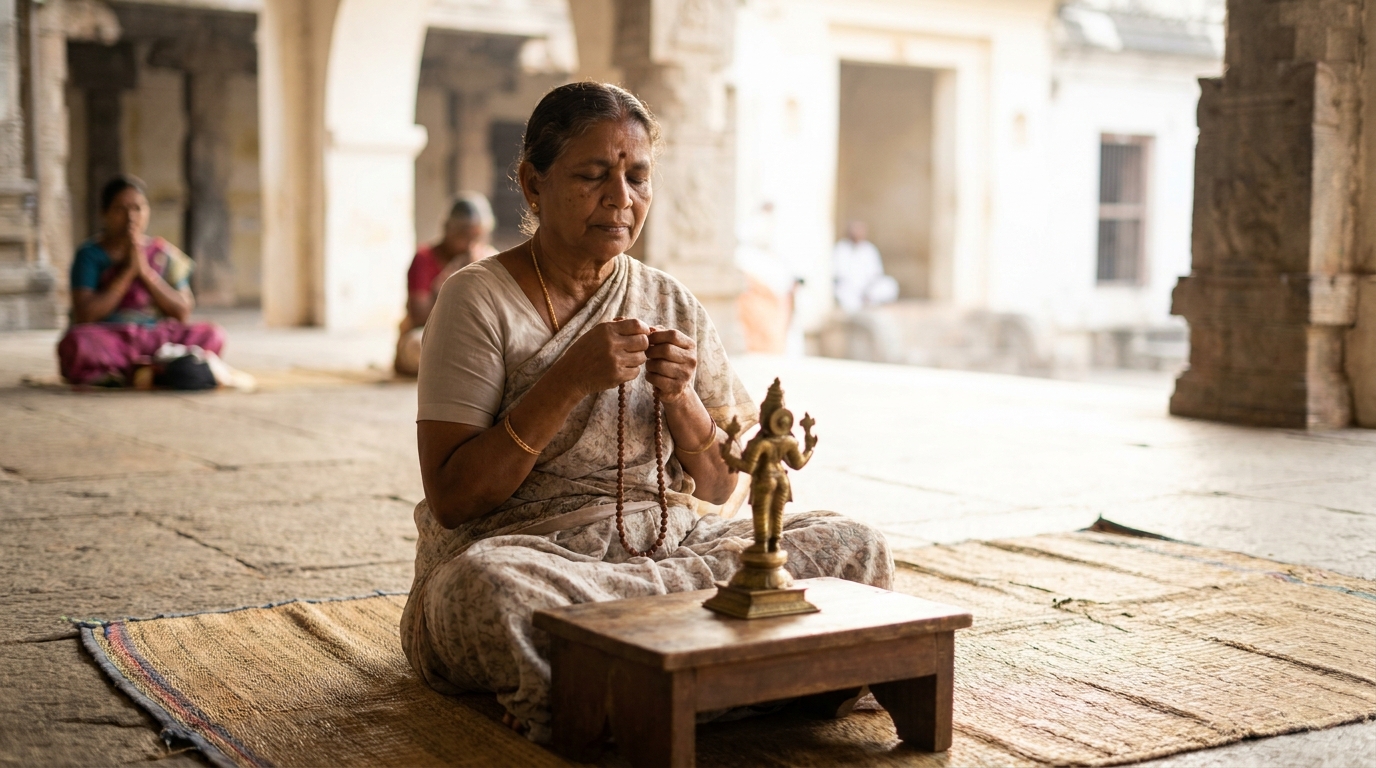
The first stage of Bhakti is called shraddha. This Sanskrit word is often translated as faith, but it means more than blind belief. Shraddha is a gentle trust, a sacred curiosity, a sense that there is something real and beautiful in the path of devotion.
Maybe you heard a mantra and felt peace. Maybe you stepped into a temple, church, mosque, meditation circle, or kirtan gathering and felt something awaken. Maybe you read a sacred text and thought, “This is speaking to my soul.” Maybe suffering brought you to your knees, and in that vulnerable place you whispered, “God, are You there?”
That small turning of the heart is shraddha.
Signs You May Be in Shraddha
You may be in the stage of faith if:
- You feel drawn to spiritual life, even if you do not understand everything.
- You are curious about chanting, prayer, meditation, or sacred wisdom.
- You sense that material success alone cannot satisfy the heart.
- You want to believe in divine love, even if doubts remain.
- You feel inspired by devotees or spiritually sincere people.
- You are beginning to ask deeper questions: “Who am I?” “Why am I here?” “How can I love God?”
This stage is precious. In the Bhagavad Gita, Krishna says that those who approach Him with faith are very dear. Even a little faith can become a doorway to great transformation.
How to Nourish the Seed of Faith
If you are in this early stage, be kind to yourself. You do not need to know everything. You do not need to change your entire life overnight.
Begin simply:
- Chant a sacred name or mantra for a few minutes each day.
- Offer one honest prayer in your own words.
- Read a small portion of scripture or devotional wisdom.
- Spend time with people who inspire your spiritual heart.
- Ask questions without fear.
- Notice where you feel peace, humility, and love.
In Bhakti, the seed of faith grows when watered by hearing and chanting. The sacred sound cleanses the heart gently, like rain softening dry ground.
Discover a wealth of knowledge by exploring our insightful articles. Our articles cover a wide range of topics to enhance your understanding. Stay informed and inspired by reading our latest articles.
The Second Stage: Sadhu-Sanga, Keeping Holy Company
The next stage is sadhu-sanga. Sadhu means a saintly or spiritually sincere person. Sanga means association or company. So sadhu-sanga means spending time with people who are trying to live in remembrance of God.
This does not mean you must only associate with perfect people. In fact, true devotees do not usually think of themselves as perfect. They are people who sincerely try to live with humility, compassion, and devotion.
Community is essential in Bhakti Yoga. Love grows in relationship. We learn devotion by seeing devotion lived.
Why Spiritual Association Matters
The people around us influence what we value. If we spend most of our time in environments of gossip, greed, anger, or distraction, the heart absorbs those impressions. But when we spend time with people who chant, pray, serve, study, and speak about God, something changes within us.
The Srimad Bhagavatam teaches that hearing about God in the company of devotees purifies the heart and awakens devotion. This is not merely intellectual learning. It is heart transmission.
In sadhu-sanga, we may discover:
- How to chant with sincerity.
- How to serve without needing recognition.
- How to forgive and begin again.
- How to bring God into family life, work, and daily duties.
- How to keep going when enthusiasm fades.
- How to live with spiritual purpose.
Signs You May Be in Sadhu-Sanga
You may be in this stage if:
- You are drawn to devotional gatherings, kirtan, satsang, temple programs, or prayer circles.
- You feel spiritually strengthened by being around devotees.
- You are beginning to value spiritual friendship.
- You ask for guidance from teachers, mentors, or sincere practitioners.
- You notice that your desires and priorities are slowly changing.
- You want your life to reflect your spiritual values.
This stage is deeply protective. Many seekers struggle when they try to walk alone. Spiritual community reminds us that we are not alone, and that God’s grace often reaches us through people.
Practicing Sadhu-Sanga in Daily Life
If you do not have a nearby Bhakti community, do not lose heart. You can begin where you are.
You may join online classes, listen to devotional talks, read the writings of saints, attend kirtan when possible, or connect with sincere practitioners. Even reading sacred texts with an open heart is a form of association.
Still, if possible, seek living community. Eat together, chant together, serve together, and speak honestly. The heart heals in sacred friendship.
The Third Stage: Bhajana-Kriya, Beginning Devotional Practice
After faith and spiritual association, we naturally begin bhajana-kriya. Bhajana means worship, devotion, or loving spiritual practice. Kriya means action. Together, bhajana-kriya means taking up regular devotional practices.
This is where Bhakti becomes part of daily life.
We may begin chanting the maha-mantra:
Hare Krishna Hare Krishna
Krishna Krishna Hare Hare
Hare Rama Hare Rama
Rama Rama Hare Hare
The word Hare calls upon the divine energy of love. Krishna means the all-attractive Lord. Rama means the source of spiritual joy. This mantra is a prayer: “O Divine Lord, O Divine Energy, please engage me in loving service.”
Some may chant other names of God according to their tradition. In Bhakti, the heart of the practice is sincere remembrance and loving connection.
Signs You May Be in Bhajana-Kriya
You may be in this stage if:
- You have begun a daily or weekly spiritual practice.
- You chant, pray, read scripture, serve, or meditate with some regularity.
- You are learning how to worship or make offerings.
- You want practical structure in your spiritual life.
- You are trying to align your habits with devotion.
- You may feel inspired some days and resistant on others.
This stage can be exciting because the path becomes real. But it can also bring challenge. Once we begin practicing regularly, we become more aware of what is inside the heart.
Simple Practices That Support Bhajana-Kriya
Bhakti practice does not have to be complicated. Start with a rhythm that is honest and sustainable.
You might try:
- Chanting one round of japa, or a set number of mantras daily.
- Offering your food to God with gratitude before eating.
- Reading five to ten minutes of the Bhagavad Gita or Srimad Bhagavatam.
- Lighting a candle and offering a prayer each morning.
- Serving someone without expecting anything in return.
- Attending kirtan or devotional gatherings regularly.
- Keeping a small altar or sacred space in your home.
The goal is not perfection. The goal is relationship. When you chant, you are calling out. When you pray, you are opening the heart. When you serve, you are offering love in action.
The Fourth Stage: Anartha-Nivritti, Releasing What Blocks the Heart
As devotional practice deepens, we enter the stage called anartha-nivritti. Anartha means unwanted things, habits, or patterns that do not serve the soul. Nivritti means removal or letting go.
This stage can be humbling. Many people think spiritual life will immediately make them peaceful. Sometimes it does. But it also reveals the parts of us that need healing.
When you clean a room, dust becomes visible. Similarly, when chanting and prayer cleanse the heart, old patterns may rise to the surface: anger, envy, pride, lust, greed, fear, laziness, judgment, or the desire for control.
This does not mean Bhakti is not working. It may mean Bhakti is working deeply.
Signs You May Be in Anartha-Nivritti
You may be in this stage if:
- You are more aware of your ego, attachments, and emotional patterns.
- You feel both inspired and exposed by spiritual practice.
- Old habits feel less satisfying, but not yet fully gone.
- You struggle with consistency, distraction, or inner conflict.
- You feel called to purify your life but need compassion and support.
- You sometimes feel discouraged because you expected faster progress.
This is a tender stage. Please do not shame yourself. The heart is being purified by grace.
How to Move Through Purification with Compassion
The key to this stage is humble perseverance. Keep practicing, but do not become harsh. Bhakti is not self-hatred. It is the awakening of our true self as a loving servant of God.
Helpful supports include:
- Honest prayer: “God, please help me release what keeps me from loving You.”
- Accountability with a trusted spiritual friend or mentor.
- Regular chanting, even when the mind resists.
- Studying scripture for guidance and strength.
- Avoiding environments that intensify unhealthy habits.
- Serving others to soften self-centeredness.
- Remembering that transformation takes time.
The Bhagavad Gita teaches that the mind can be a friend or an enemy. Through practice and detachment, it can be trained. In Bhakti, we do not train the mind by force alone. We give it a higher taste—remembrance of God.
The Fifth Stage: Nishtha, Becoming Steady in Devotion
After much purification, the devotee comes to nishtha, which means steadiness or firm commitment. At this stage, spiritual practice becomes less dependent on mood.
In earlier stages, we may chant when inspired and stop when distracted. In nishtha, we continue because devotion has become a central priority. There is still work to do, but the foundation is stronger.
Steadiness does not mean emotionless practice. It means faithful practice. The heart says, “Whether today feels easy or difficult, I belong to God.”
Signs You May Be in Nishtha
You may be in this stage if:
- You maintain devotional practices with regularity.
- You are less shaken by external praise or criticism.
- You return to God more quickly after difficulty.
- You feel committed to the path, even when enthusiasm fluctuates.
- You are more thoughtful about choices, speech, food, relationships, and service.
- You have less interest in distractions that once dominated your life.
Nishtha is a beautiful stage because it brings spiritual dignity. The practitioner becomes grounded. Others may feel safe around them because their devotion has consistency.
Strengthening Steadiness Without Becoming Rigid
There is a subtle danger in this stage: becoming proud of our discipline or judging others who are less steady. True nishtha is humble. It does not look down on beginners. It remembers, “I am steady only by grace.”
To strengthen nishtha:
- Keep a daily devotional schedule.
- Continue associating with sincere devotees.
- Serve in practical ways.
- Study scripture regularly.
- Protect the heart from unnecessary distraction.
- Offer your steadiness back to God, not to the ego.
Steadiness is not meant to make us hard. It is meant to make us reliable vessels of love.
The Sixth Stage: Ruchi, Developing a Taste for Spiritual Life
The next stage is ruchi, meaning taste. Here, devotional practice is no longer only a duty. It becomes genuinely sweet.
The devotee begins to relish chanting, hearing about God, serving, worshiping, and spending time with devotees. Spiritual life feels nourishing. The heart starts to prefer divine remembrance over worldly distraction.
This taste is not ordinary pleasure. It is a glimpse of the soul’s natural joy.
Signs You May Be in Ruchi
You may be in this stage if:
- You look forward to chanting or prayer.
- Scripture feels alive and personally meaningful.
- Kirtan touches your heart deeply.
- Service brings joy, even when unnoticed.
- You feel less attracted to gossip, excessive entertainment, or shallow pleasures.
- You experience gratitude more naturally.
- You feel that spiritual life is not a burden but a gift.
Ruchi can come in moments before it becomes steady. A beginner may taste deep sweetness in chanting once, then struggle for weeks. Do not dismiss those glimpses. They are gifts, inviting us onward.
Protecting the Taste of Devotion
Spiritual taste is delicate. It grows when protected.
To nourish ruchi:
- Chant attentively, not mechanically.
- Hear from realized or sincere teachers.
- Spend time in sacred sound, especially kirtan.
- Serve with love rather than obligation.
- Avoid habits that dull the heart.
- Practice gratitude daily.
- Remember that taste comes by mercy, not demand.
The Narada Bhakti Sutra describes Bhakti as supreme love for God—immortal, fulfilling, and beyond material desire. Ruchi is an early fragrance of that love.
The Seventh Stage: Asakti, Loving Attachment to God
After ruchi comes asakti, meaning attachment. In worldly life, attachment often binds us. But in Bhakti, attachment to God liberates us.
At this stage, the heart naturally turns toward the Lord. God is not simply part of life; God becomes the center of life. The devotee feels personal affection for the Divine.
In Krishna Bhakti, this may mean deep attachment to Krishna’s names, form, qualities, pastimes, devotees, and service. For seekers from other devotional backgrounds, it may appear as constant loving remembrance of the Divine Beloved.
Signs You May Be in Asakti
You may be in this stage if:
- You think of God throughout the day naturally.
- Chanting feels like meeting someone beloved.
- You feel a personal relationship with the Divine.
- You want your actions to please God.
- You feel separation when you forget God.
- Service feels like an expression of love, not duty.
- Your spiritual identity feels more real than external labels.
Asakti is intimate. It is not forced sentiment. It is a deepening bond.
Living With Divine Attachment in the Modern World
Many people wonder, “Can I have deep devotion while living a normal life—with work, family, bills, responsibilities, and imperfections?”
Yes. Bhakti is meant to enter real life.
You can remember God while cooking, driving, parenting, working, studying, or resting. You can offer your day. You can chant while walking. You can silently pray before meetings. You can see service to family and community as service to God.
The Bhagavad Gita teaches that whatever we do, whatever we eat, whatever we offer, and whatever austerity we perform can be offered to the Lord. This means our whole life can become sacred when offered with love.
The Eighth and Ninth Stages: Bhava and Prema, Deep Spiritual Love
The final stages are bhava and prema. These are very elevated states of devotion.
Bhava means spiritual emotion, the first blossoming of pure love. It is like the first rays of the sun before sunrise. Prema means pure love of God—the fully blossomed state of divine love.
These stages are rare and sacred. They are not easily imitated. They are not about emotional display, spiritual performance, or mystical reputation. They are the fruit of complete purification and divine grace.
Understanding Bhava With Reverence
In bhava, the heart is deeply softened. The devotee may experience intense longing for God, tears in prayer, profound humility, compassion for all beings, and constant remembrance.
But outward symptoms are not the essence. Someone may cry in kirtan for many reasons—emotion, healing, music, or devotion. Tears alone do not prove bhava. True bhava transforms character. It makes one gentle, humble, surrendered, and full of love.
Prema as the Goal of Bhakti
Prema is pure love of God without selfish motive. The devotee does not love God for wealth, relief, recognition, power, or even liberation. The devotee loves because love is the soul’s nature.
The Srimad Bhagavatam describes the highest devotion as uninterrupted and without selfish motivation, satisfying the self completely. This is prema: love that flows naturally, freely, and fully toward God.
Most of us may not be in bhava or prema, and that is okay. We honor these stages from afar, pray for the mercy of true love, and keep walking sincerely.
How to Honestly Discern Your Current Stage
It can be helpful to reflect on your spiritual life with honesty and kindness. Again, this is not about ranking yourself. It is about understanding your next step.
Ask yourself:
- Do I feel curious and drawn to spiritual life? This may be shraddha.
- Do I seek uplifting spiritual company? This may be sadhu-sanga.
- Have I begun regular devotional practices? This may be bhajana-kriya.
- Am I becoming aware of inner obstacles and old habits? This may be anartha-nivritti.
- Am I growing steady, even when I do not feel inspired? This may be nishtha.
- Do I genuinely taste joy in chanting, prayer, scripture, or service? This may be ruchi.
- Is my heart becoming lovingly attached to God throughout the day? This may be asakti.
- Do I feel deep spiritual emotion and humility in remembrance of God? This may be bhava.
- Is my love becoming selfless, constant, and fully surrendered? This points toward prema.
Most sincere practitioners will see themselves moving between the earlier and middle stages. That is normal. The important question is not “How advanced am I?” but “How can I love more sincerely today?”
A Gentle Self-Reflection Practice
Take a few quiet minutes. Breathe deeply. Place your hand on your heart if that feels natural.
You might pray:
“Dear Lord, please help me see myself honestly and kindly. Show me where I am on this path. Please guide me to the next step in love, service, and remembrance.”
Then journal on these questions:
- What first drew me toward God or spiritual life?
- What devotional practices feel most alive for me?
- What habits or fears are blocking my heart?
- Who inspires my devotion?
- Where do I need more steadiness?
- How can I serve with more humility?
- What is one sincere step I can take this week?
This kind of reflection turns spiritual knowledge into personal transformation.
Practical Guidance for Each Stage of Bhakti
Each stage has its own medicine. The same practice—chanting, prayer, service, study, association—continues throughout the journey, but our relationship with it deepens.
If You Are Beginning With Faith
Do not rush. Let your faith be nourished.
Come to kirtan. Listen to sacred sound. Read a little. Ask questions. Pray honestly. You do not need to pretend certainty. God can receive your curiosity, your doubts, and your longing.
A simple prayer for this stage is:
“God, if You are there, please guide me. Help me know You.”
This prayer is powerful when spoken sincerely.
If You Are Seeking Spiritual Community
Look for people whose presence helps you remember God and become kinder. A true spiritual community should encourage humility, compassion, service, and sincere practice.
Do not expect perfection from people. Communities are made of humans. But do seek integrity, kindness, and a shared commitment to spiritual growth.
If You Are Building Daily Practice
Start small and be consistent. Five sincere minutes daily can be more transformative than one intense session followed by weeks of neglect.
Choose a practice you can keep:
- Morning mantra meditation.
- Evening gratitude prayer.
- Weekly kirtan.
- Reading one verse of the Bhagavad Gita daily.
- Offering meals with love.
- Serving at a community gathering.
Let devotion become woven into your life.
If You Are Facing Inner Obstacles
Please know this stage is sacred. When old patterns arise, do not run from God. Run toward God.
Chant through difficulty. Pray with your real emotions. Seek support. If needed, receive help from counselors, mentors, or healing professionals. Bhakti does not deny emotional healing; it can work beautifully alongside it.
God is not waiting for you to become perfect before loving you. Divine love is already present, calling you deeper.
If You Are Growing Steady or Tasting Devotion
Stay humble. Keep serving. Protect your heart from pride. Deepen your study and prayer. Let your steadiness become compassion for others.
If sweetness comes, receive it gratefully. If dryness comes, remain faithful. Both can bring you closer to God when offered sincerely.
Common Misunderstandings About the Stages of Bhakti
Spiritual stages can be misunderstood if we approach them with ego, fear, or comparison. Let us gently clear up a few common concerns.
“If I Struggle, I Must Not Be Devotional”
Struggle does not disqualify you. In fact, the struggle to turn toward God is part of devotion. If you fall and rise again, that rising is beautiful.
The path of Bhakti is filled with mercy. What matters is sincerity, not flawlessness.
“Advanced Devotion Means Leaving the World”
Some people are called to monastic life, and that is beautiful. Others are called to family, work, art, education, activism, healing, or community service. Bhakti can spiritualize all of it.
Advanced devotion is not defined by external lifestyle alone. It is defined by love, surrender, remembrance, and service.
“I Should Feel Bliss All the Time”
Bhakti brings deep joy, but it also opens the heart. An open heart may feel longing, compassion, grief, repentance, and tenderness. These are not failures.
Spiritual life is not emotional escape. It is learning to bring every emotion into relationship with God.
“I Can Figure Out My Stage Exactly”
Sometimes we can see general patterns, but only God fully knows the heart. Even great saints often considered themselves beginners. This humility is part of their greatness.
So use these stages as guidance, not identity. Let them inspire growth, not self-importance.
The Heart of Every Stage Is Sincere Devotion
Whether you are just beginning to wonder about God or have practiced Bhakti Yoga for many years, the essence remains the same: turn your heart toward the Divine with sincerity.
Chant with love. Pray honestly. Serve humbly. Seek uplifting company. Study sacred wisdom. Offer your life little by little.
The stages of Bhakti remind us that spiritual growth is possible. Faith can become practice. Practice can become purification. Purification can become steadiness. Steadiness can become taste. Taste can become attachment. Attachment can blossom into spiritual emotion, and by grace, pure love.
But do not wait for some future stage to feel blessed. God is present now. The holy name is available now. Prayer is available now. Service is available now. Love can begin now.
At The Bhakti House, we believe everyone is welcome on this path—every background, every story, every question, every sincere heart. You do not need to be perfect to begin. You do not need to know Sanskrit. You do not need to have all the answers.
You only need to take one sincere step.
Maybe that step is chanting one mantra. Maybe it is joining a kirtan. Maybe it is offering one meal with gratitude. Maybe it is asking for guidance. Maybe it is whispering, “Dear God, please help me love You.”
Wherever you are on the journey, you are welcome. May your faith be nourished, your heart be softened, and your life become an offering of love.
Take one sincere step toward God today. The path of Bhakti is waiting for you with open arms.
FAQs
What are the different stages of Bhakti?
The different stages of Bhakti are known as shradha (faith), sadhu-sanga (association with devotees), bhajana-kriya (engagement in devotional service), anartha-nivritti (decrease in unwanted habits), nishtha (steadiness), ruci (taste), asakti (attachment), bhava (emotion), and prema (pure love).
How can I determine which stage of Bhakti I am in?
You can determine which stage of Bhakti you are in by reflecting on your level of faith, association with devotees, engagement in devotional service, decrease in unwanted habits, steadiness, taste for devotional activities, attachment to the divine, emotional experiences, and the presence of pure love in your heart.
What are some signs that indicate progress in Bhakti?
Some signs that indicate progress in Bhakti include increased faith and devotion, a deeper connection with the divine, a natural inclination towards devotional activities, a decrease in material desires, a sense of inner peace and contentment, and a growing love for all living beings.
How can I advance to the next stage of Bhakti?
You can advance to the next stage of Bhakti by deepening your faith, seeking the association of advanced devotees, engaging in more devotional practices, working on eliminating unwanted habits, cultivating steadiness in your spiritual practices, developing a taste for devotional activities, and surrendering more fully to the divine.
Is it normal to experience challenges or setbacks in one’s Bhakti practice?
Yes, it is normal to experience challenges or setbacks in one’s Bhakti practice. These difficulties can serve as opportunities for growth and learning, helping you to become stronger in your faith and more determined in your devotion to the divine.

