
Understanding Vraja Mandala with an Open Heart
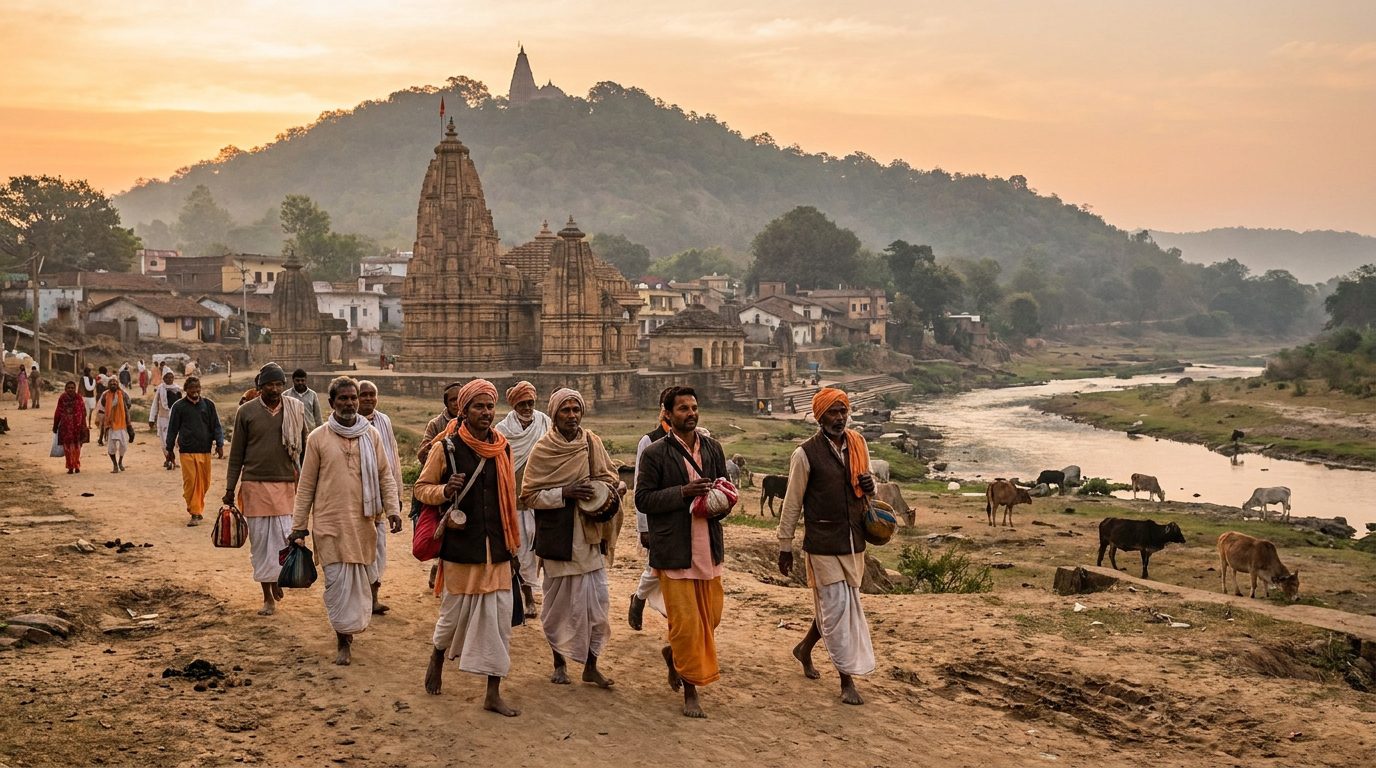
Vraja Mandala is one of the most beloved sacred regions in the Bhakti Yoga tradition. The word Vraja refers to the land where Lord Krishna lived His childhood and youth, and Mandala means a sacred circle or spiritual region. Together, Vraja Mandala means the holy land surrounding Vrindavan, Mathura, Govardhan, Nandagaon, Barsana, and many other places connected with Krishna’s loving pastimes.
For devotees, Vraja Mandala is not only a geographical place. It is a living spiritual reality. It is remembered as the land of divine love, where God appears not as a distant ruler, but as a playful child, a dear friend, a beloved son, and the supreme object of the soul’s love.
People from many backgrounds visit Vraja Mandala. Some come as pilgrims, some as students of Indian culture, some as seekers of peace, and some with no fixed belief at all. In the spirit of Bhakti, everyone is welcome. The sacred land of Vraja invites us gently—not by force, but through beauty, music, prayer, and remembrance.
Bhakti Yoga teaches that the heart can be purified through loving connection with God. In Vraja Mandala, this teaching becomes visible. Every forest grove, riverbank, temple bell, cowherd path, and sacred pond reminds us that spiritual life is not only philosophy. It is relationship.
The Spiritual Meaning of Vraja Mandala
To understand Vraja Mandala deeply, we begin with its spiritual heart: love.
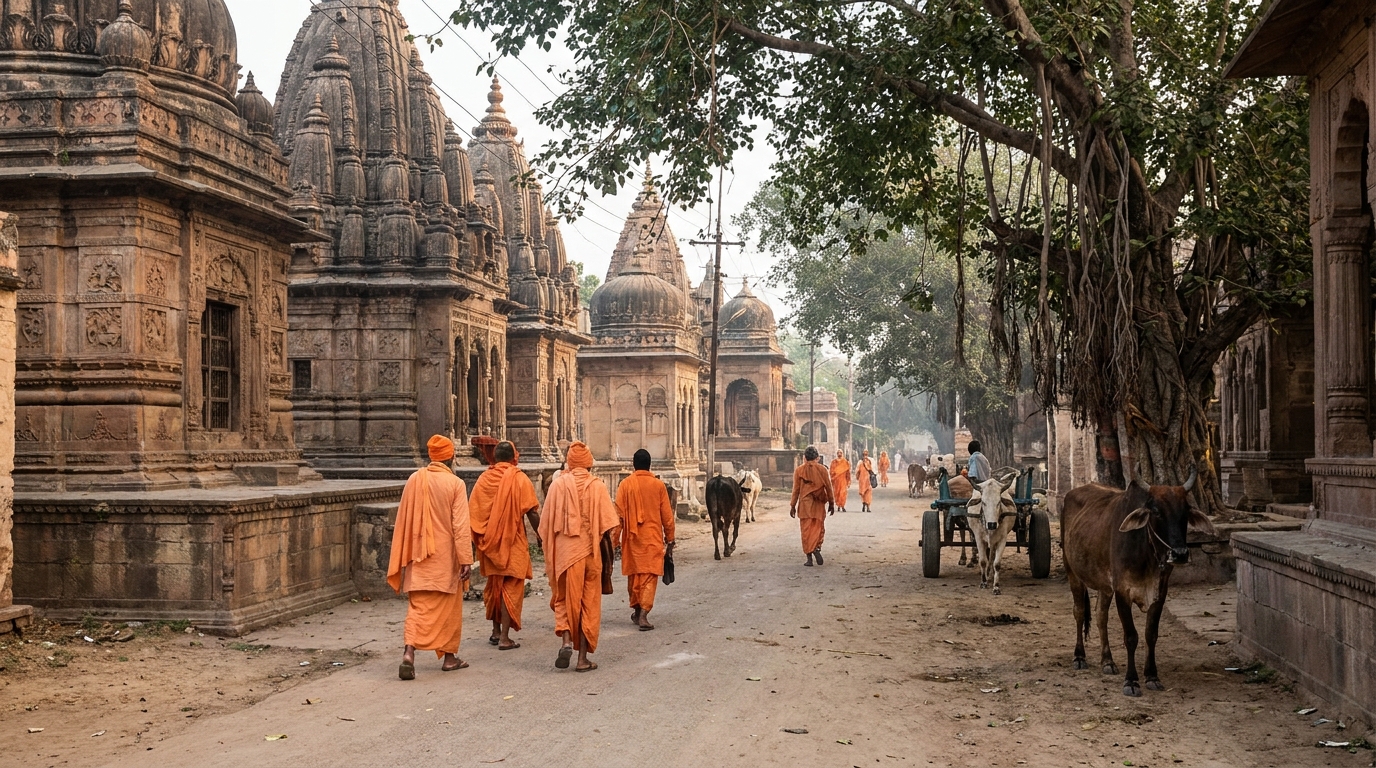
In the Bhakti scriptures, especially the Srimad Bhagavatam, Vraja is described as the place where Krishna reveals His sweetest relationships with His devotees. The residents of Vraja do not approach Krishna with fear or formality. They love Him naturally.
Mother Yashoda loves Krishna as her child. The cowherd boys love Him as their best friend. The gopis, the devoted cowherd maidens, love Him with complete self-offering. The cows, birds, trees, rivers, and hills all participate in this divine atmosphere of devotion.
Vraja as the Land of Divine Relationship
In many spiritual paths, God is worshiped as the all-powerful creator, and this is true and beautiful. But in Vraja Mandala, another side of the Divine is revealed: God as intimately lovable.
The Srimad Bhagavatam describes Krishna’s life in Vraja not only as history, but as sacred revelation. Through His childhood pastimes, Krishna shows that the highest spiritual reality is not impersonal emptiness or distant power, but loving exchange.
This is the essence of Bhakti Yoga. Bhakti means devotion, loving service, or the offering of the heart to God. It is not limited to one culture, nation, or external identity. Bhakti is the soul’s natural longing to love and be loved by the Divine.
In Vraja, this love is simple and complete. The residents do not think, “Krishna is God, so I must love Him.” They simply love Him. Their devotion is spontaneous, personal, and pure.
Why Vraja Is Called a Sacred Mandala
A mandala is often understood as a sacred circle that helps the mind focus on divine reality. Vraja Mandala is traditionally understood to extend about 84 kos, an ancient Indian measure of distance, often associated with a pilgrimage route around the sacred region.
This area includes many holy places connected with Krishna’s pastimes. Devotees walk, sing, pray, and remember Krishna while traveling through these places. This practice is called parikrama, which means circumambulation—walking around a sacred place as an act of respect and devotion.
The circular journey of Vraja Mandala parikrama reminds us of a deeper truth: our lives also revolve around what we love most. Bhakti gently asks us, “Can we place God at the center?”
The Geography and Sacred Places of Vraja Mandala
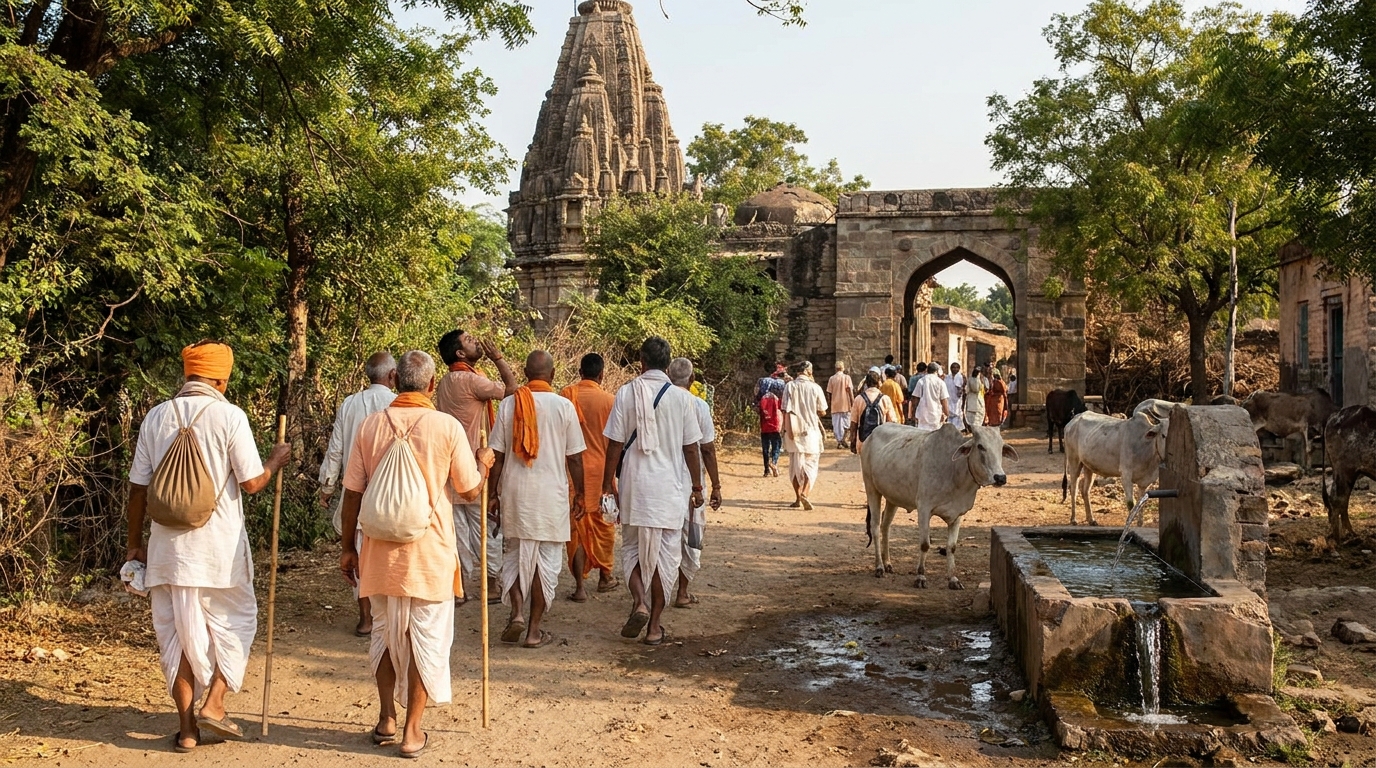
Vraja Mandala is centered around Mathura and Vrindavan in the Indian state of Uttar Pradesh. Though many visitors know Vrindavan as the main devotional town, the wider region of Vraja includes dozens of sacred sites, each carrying its own spiritual mood and history.
To walk through Vraja is to enter a sacred map of Krishna’s life. The land itself becomes a teacher.
Mathura: The Birthplace of Lord Krishna
Mathura is one of India’s most ancient sacred cities. It is honored as the birthplace of Lord Krishna, who appeared in a prison cell to His parents, Vasudeva and Devaki.
The story is found in the Srimad Bhagavatam. At the time of Krishna’s birth, the world was troubled by injustice and oppression. Krishna appeared to restore dharma, or divine harmony, and to bless His devotees.
Mathura reminds us that divine hope can appear even in dark circumstances. Krishna was born in a prison, yet His birth brought freedom, joy, and transformation.
For modern seekers, this is deeply practical. Many of us carry inner prisons—fear, regret, grief, anxiety, or loneliness. The remembrance of Krishna’s birth teaches us that God can enter even the most difficult places in our lives.
Vrindavan: The Forest of Devotion
Vrindavan is perhaps the most famous place in Vraja Mandala. The name comes from Vrinda, associated with the sacred Tulasi plant, and vana, meaning forest. Vrindavan is remembered as the forest where Krishna played with His friends, danced with the gopis, and enchanted all beings with His flute.
Today, Vrindavan is filled with temples, ashrams, sacred groves, and chanting. Pilgrims come from around the world to walk its streets, hear kirtan, and visit temples such as Radha Raman, Banke Bihari, Radha Damodar, ISKCON Krishna Balaram Mandir, and many others.
Vrindavan teaches the heart to soften. It reminds us that spiritual life is not dry. It can be musical, colorful, emotional, and full of tenderness.
Govardhan Hill: Shelter and Surrender
Govardhan Hill is one of the most beloved places in Vraja Mandala. According to the Srimad Bhagavatam, Krishna lifted Govardhan Hill to protect the residents of Vraja from a devastating storm.
This pastime is rich with meaning. Krishna taught the people of Vraja to honor Govardhan Hill because the hill provided grass for cows, water, caves, fruits, and natural shelter. When Indra, the king of heaven, became angry and sent torrential rain, Krishna lifted the hill like an umbrella, protecting everyone.
Devotees see Govardhan as a symbol of Krishna’s protection. The practice of Govardhan parikrama—walking around the hill, usually about 21 kilometers—is a cherished act of devotion.
As we walk around Govardhan, we can pray: “Dear Lord, please help me take shelter in You. Please lift the burden of pride from my heart.”
Barsana and Nandagaon: The Homes of Divine Love
Barsana is honored as the home of Srimati Radharani, Krishna’s supreme beloved and the greatest teacher of pure devotion. Radharani represents the highest expression of selfless love for Krishna.
Nandagaon is the village of Nanda Maharaj and Mother Yashoda, Krishna’s foster parents. It is remembered as Krishna’s childhood home, filled with family affection, cowherd life, and playful sweetness.
Together, Barsana and Nandagaon reveal two central moods of Bhakti: loving God as the beloved and loving God as one’s own child or family member. These sacred places teach that devotion is not abstract. It is deeply personal.
Radha Kund and Shyama Kund: Sacred Waters of Love
Radha Kund and Shyama Kund are two sacred ponds near Govardhan Hill. In the Bhakti tradition, they are considered among the holiest places in all of Vraja Mandala.
Radha Kund is especially associated with Srimati Radharani’s love for Krishna. Devotees approach this place with great reverence, humility, and prayer.
The waters of Radha Kund remind us that divine love is the deepest purification. While external bathing may cleanse the body, sincere remembrance, humility, and devotion cleanse the heart.
Discover a wealth of knowledge by exploring our insightful articles. Our articles cover a wide range of topics to enhance your understanding. Stay informed and inspired by reading our latest articles.
The Cultural Significance of Vraja Mandala
Vraja Mandala is spiritually significant, but it is also a vast cultural treasure. Its art, music, festivals, food, poetry, and village traditions have shaped devotional life for centuries.
The culture of Vraja is not separate from its spirituality. In Bhakti, culture becomes a vessel for love.
Kirtan and the Sound of the Holy Names
One of the most important cultural practices in Vraja is kirtan, the singing or chanting of God’s names. In Bhakti Yoga, sound is sacred. The holy names of Krishna are understood to carry Krishna’s presence.
The most widely known mantra in the Gaudiya Vaishnava tradition is:
Hare Krishna Hare Krishna
Krishna Krishna Hare Hare
Hare Rama Hare Rama
Rama Rama Hare Hare
This is called the Maha Mantra, meaning “great mantra.” A mantra is a sacred sound that helps focus the mind and awaken the heart. “Hare” calls upon the divine energy of the Lord, especially Srimati Radharani. “Krishna” means the all-attractive Lord. “Rama” means the source of spiritual joy.
Chanting does not require wealth, scholarship, or social position. Anyone can chant. We can chant softly at home, sing in community, or repeat the names prayerfully while walking.
In Vraja, kirtan is everywhere—in temples, streets, homes, and festivals. It reminds us that devotion can be practiced through the voice, the breath, and the heart.
Festivals of Vraja Mandala
The festivals of Vraja are colorful expressions of devotion. Janmashtami celebrates Krishna’s birth. Radhashtami honors the appearance of Srimati Radharani. Holi, the festival of colors, is especially famous in Vrindavan, Barsana, and Nandagaon.
Govardhan Puja celebrates Krishna lifting Govardhan Hill. During this festival, devotees offer large arrangements of food called annakuta, meaning “mountain of food,” to express gratitude for God’s care and nature’s abundance.
Kartik, also known as the month of Damodar, is a deeply devotional time when many pilgrims visit Vraja Mandala. Devotees offer lamps to Krishna and sing the Damodar prayers, remembering the pastime in which Mother Yashoda bound child Krishna with love.
These festivals teach us to celebrate spiritually. Joy is not rejected in Bhakti. Joy is purified by offering it to God.
Food, Hospitality, and Prasadam
Food in Vraja is also sacred. In Bhakti Yoga, food offered to Krishna with love becomes prasadam, which means mercy or grace.
Prasadam is more than vegetarian food. It is food transformed by devotion. When we cook with care, offer the food to God, and receive it with gratitude, eating becomes a spiritual practice.
Vraja culture is known for milk sweets, butter, yogurt, simple grains, fresh vegetables, and temple offerings. These foods reflect Krishna’s cowherd life and the loving hospitality of Vraja’s people.
The practice is practical for anyone. Before eating, we can pause and offer gratitude: “Dear Lord, thank You for this food. May it nourish me for a life of love and service.”
Vraja Mandala in Bhakti Scriptures
The spiritual importance of Vraja Mandala is deeply rooted in authentic Bhakti scriptures. These sacred texts do not present Vraja merely as a travel destination. They reveal it as a place where divine love reaches its fullest expression.
The Srimad Bhagavatam and Krishna’s Pastimes
The Srimad Bhagavatam, also called the Bhagavata Purana, is one of the central scriptures of Bhakti Yoga. Its Tenth Canto describes the appearance and activities of Lord Krishna, especially His life in Vrindavan and the broader Vraja region.
The Bhagavatam presents Krishna’s pastimes as spiritually transformative. Hearing about Krishna with faith and sincerity is itself a form of devotion. This practice is called sravanam, or hearing.
For example, when we hear about Krishna stealing butter, we may smile at the sweetness of the story. But Bhakti teachers explain that butter represents the soft essence of the heart. Krishna, the divine thief, steals the hearts of His devotees.
When we hear about Krishna playing His flute, we may understand that the flute represents the soul made hollow of ego, allowing God’s song to flow through it.
In this way, the stories of Vraja are simple enough for children and deep enough for saints.
The Bhagavad Gita and the Call to Devotion
The Bhagavad Gita was spoken by Krishna to Arjuna on the battlefield of Kurukshetra, outside Vraja, yet its teachings help us understand Vraja’s spirit.
In the Gita, Krishna says, “Always think of Me, become My devotee, worship Me, and offer your homage unto Me.” This is the heart of Bhakti Yoga: remembrance, devotion, worship, and surrender.
Vraja Mandala shows what this teaching looks like in daily life. The residents of Vraja naturally remember Krishna while cooking, herding cows, singing, walking, and caring for one another.
This is encouraging for us. We may not live in Vrindavan physically, but we can bring the mood of Vraja into our lives. We can remember God while working, parenting, studying, serving, and resting.
The Teachings of the Saints of Vraja
Many saints have lived in Vraja Mandala, including the Six Goswamis of Vrindavan, who were followers of Sri Chaitanya Mahaprabhu. Sri Chaitanya, a great teacher of divine love, spread the chanting of Krishna’s names and revealed the inner mood of devotion to Radha and Krishna.
The Goswamis wrote profound scriptures, discovered lost holy places, established temples, and taught how to practice Bhakti with humility and sincerity.
Their lives show that love for God is not sentimental weakness. It is disciplined, thoughtful, compassionate, and deeply transformative.
They taught that Vraja should be approached with humility. We do not go to Vraja to consume sacredness as tourists. We go to receive mercy, offer service, and learn how to love.
The Practice of Vraja Mandala Parikrama
Vraja Mandala parikrama is the traditional pilgrimage around the sacred region of Vraja. Many devotees undertake this journey during the month of Kartik, though pilgrims visit throughout the year.
Parikrama is not simply walking. It is prayer in motion.
Walking as a Spiritual Practice
In modern life, we often rush from one task to another. Parikrama invites us to slow down. Each step becomes an offering.
Devotees may chant the holy names, hear Krishna’s pastimes, visit sacred sites, bow down, serve other pilgrims, and take prasadam along the way. The body may become tired, but the heart becomes nourished.
Walking through Vraja reminds us that the spiritual path is gradual. We do not reach pure love in one leap. We take step after step, prayer after prayer, choice after choice.
The Inner Mood of Pilgrimage
The most important part of pilgrimage is not how many places we visit, but the consciousness we carry.
A humble pilgrim may pray:
“Dear Krishna, I have come with many imperfections. Please allow me to remember You. Please help me serve others. Please awaken love in my heart.”
This mood is more valuable than pride in completing a route. In Bhakti Yoga, sincerity matters more than performance.
Vraja Mandala parikrama also teaches respect. The land is sacred, and so are the people, animals, trees, rivers, and temples. Pilgrimage should deepen our compassion, not inflate our ego.
Practical Tips for Visiting Vraja Mandala
If you visit Vraja Mandala, come with both devotion and practical awareness.
Dress modestly and respectfully, especially in temples and villages. Remove shoes before entering sacred places. Ask before taking photographs of people or rituals. Avoid littering and protect the sacred environment.
If possible, travel with experienced devotees or guides who understand the spiritual significance of the places. Listen more than you speak. Let the land teach you.
Be prepared for crowds, dust, heat, noise, and unexpected changes. Vraja is not always externally comfortable. Yet many pilgrims find that its spiritual sweetness shines through the simplicity and intensity of the experience.
Above all, chant. Even if you know very little, the holy names can guide you.
Vraja Mandala as a Practical Path for Everyday Life
Not everyone can physically travel to Vraja Mandala. Some may live far away. Some may have health, family, financial, or work responsibilities. Bhakti Yoga is compassionate and practical. The essence of Vraja can be cultivated wherever we are.
Vraja is not only a place on a map. It is also a direction of the heart.
Creating a Vrindavan Mood at Home
You can create a small sacred space in your home with a picture of Krishna, Radha-Krishna, Sri Chaitanya, or another form of God that inspires devotion in your heart.
Light a candle or lamp. Offer water, flowers, or simple vegetarian food. Chant or pray for a few minutes each day.
This simple practice can transform the atmosphere of a home. It reminds us that God is welcome in our daily life, not only in temples.
The heart of Vraja is loving remembrance. When we remember Krishna with affection, even a small room can become spiritually meaningful.
Chanting as Daily Connection
Chanting is one of the easiest and most powerful practices of Bhakti Yoga. You can begin with a few minutes daily.
Chant the Maha Mantra, or simply repeat the name of God in a way that is sincere and meaningful to you. The important thing is to chant with attention and humility.
If the mind wanders, gently bring it back. If the heart feels dry, continue softly. Bhakti grows through regular contact, like watering a seed.
The Bhagavad Gita teaches that even a little practice on this path can protect one from great fear. No sincere effort is wasted.
Service as Love in Action
In Bhakti, love is expressed through seva, or service. Seva means offering our time, energy, skills, and care for the pleasure of God and the welfare of others.
In Vraja, everyone serves Krishna in some way. Mother Yashoda cooks for Him. The cowherd boys play with Him. The cows give milk. The trees offer fruits and shade. Every being contributes.
We can practice seva in our own lives. We can help at a temple, feed others, support spiritual communities, care for the environment, encourage someone who is struggling, or do our work with integrity and devotion.
Service purifies the heart because it moves us from self-centeredness toward love.
Prayer as Honest Relationship
Prayer in Bhakti does not have to be formal or perfect. We can speak to God honestly.
“Dear Krishna, I do not know how to love You, but I want to learn.”
“Dear Lord, please guide me.”
“Please help me forgive.”
“Please let my life become useful in Your service.”
This kind of prayer is deeply powerful. It opens the heart. Vraja Mandala teaches us that God is not only to be admired from far away. God can be approached personally, tenderly, and honestly.
The Ecological and Social Lessons of Vraja Mandala
Vraja Mandala also carries important lessons for our world today. Krishna’s pastimes are deeply connected with nature—cows, forests, rivers, hills, birds, and village life.
In a time of environmental crisis and social loneliness, Vraja offers a sacred vision of harmony.
Honoring the Yamuna River
The Yamuna River is one of the most sacred rivers in the Bhakti tradition. Krishna played on her banks, crossed her waters, and blessed her with His presence.
Devotees honor Yamuna Devi as a sacred personality, not merely a natural resource. This devotional view can inspire ecological responsibility.
If we see rivers as sacred, we will not pollute them casually. If we see land as God’s creation, we will care for it. If we see animals as beloved by Krishna, we will treat them with compassion.
The culture of Vraja calls us to live gently.
Cow Protection and Compassion
Krishna is known as Govinda and Gopala. Go means cows, senses, or land; vinda means one who gives pleasure; pala means protector. These names remind us of Krishna’s loving relationship with cows and the pastoral life of Vraja.
Cow protection in Bhakti is not only an economic idea. It is a spiritual culture of gratitude, gentleness, and care for dependent beings.
More broadly, Vraja teaches compassion. Spiritual progress should make the heart softer toward all life.
Community and Sacred Belonging
The residents of Vraja live in relationship—with Krishna, with one another, with animals, and with the land. Their life is not isolated.
Modern people often suffer from loneliness, even in crowded cities. Bhakti community offers a healing alternative. Through chanting, shared meals, study, service, and friendship, people can experience sacred belonging.
The Bhakti House spirit welcomes people of all backgrounds into this kind of community. You do not have to know everything. You do not have to be perfect. You can simply come as you are and take one step.
How to Approach Vraja Mandala with Humility and Respect
Because Vraja Mandala is sacred, it is best approached with reverence. This does not mean fear. It means loving respect.
The saints teach that Vraja reveals itself to the humble heart. We cannot force spiritual experience. We receive it as grace.
Avoiding a Consumer Mentality
It is possible to visit holy places with a tourist mindset—collecting photos, rushing through temples, comparing experiences, or seeking entertainment. While curiosity is natural, Vraja invites something deeper.
Rather than asking, “What can I take from this place?” we can ask, “How can I serve? How can I listen? What is Krishna teaching me here?”
This shift changes everything.
Learning from Local Devotees and Traditions
Vraja Mandala has been cared for by generations of devotees, priests, families, saints, scholars, musicians, and simple villagers. Their traditions carry living wisdom.
When visiting, it is good to be respectful of local customs. Some may be unfamiliar. Some may be deeply ancient. We can ask sincere questions without judgment.
Humility opens doors that intelligence alone cannot open.
Remembering That Vraja Is a Gift
Ultimately, Vraja Mandala is a gift of divine mercy. Whether we visit physically or meditate from afar, we can receive that gift through gratitude.
The sacred land of Vraja reminds us that God is not only great. God is sweet. God is not only the Lord of the universe. God is also the beloved of the heart.
Bringing the Blessings of Vraja Mandala into Your Spiritual Journey
Vraja Mandala is a complete guide in itself. It guides us toward love, humility, simplicity, service, and remembrance of God.
Its spiritual significance is found in Krishna’s pastimes, the devotion of Radharani, the love of the gopis, the affection of Mother Yashoda, the friendship of the cowherd boys, and the shelter of Govardhan Hill.
Its cultural significance is found in kirtan, festivals, prasadam, pilgrimage, poetry, sacred art, and a way of life centered on devotion.
But the deepest significance of Vraja Mandala is personal. It asks each of us: “Where is your heart going? What do you love? Can you offer that love to God?”
Bhakti Yoga does not demand that we become someone else overnight. It invites us to begin sincerely.
Chant one name of God.
Offer one prayer.
Serve one person.
Read one verse.
Take one mindful step.
Whether you are new to Bhakti, returning after many years, or simply curious about Krishna and Vrindavan, you are welcome. The path of devotion is generous. The holy land of Vraja is calling every heart toward its original home in divine love.
May the remembrance of Vraja Mandala bless your journey. May Sri Radha and Krishna guide you gently. And may you feel encouraged today to take one sincere step toward God, knowing that everyone is welcome in the house of Bhakti.
FAQs
What is Vraja mandala?
Vraja mandala refers to the sacred land of Vrindavan in India, which is believed to be the earthly manifestation of the spiritual realm of Lord Krishna. It is a place of great significance for devotees of Krishna and is known for its association with various pastimes of the Lord.
What are some important places to visit in Vraja mandala?
Some important places to visit in Vraja mandala include the Banke Bihari Temple, Radha Raman Temple, Govind Dev Temple, and the ISKCON temple. Other significant sites include the Radha Kund, Govardhan Hill, and the Yamuna River.
What is the best time to visit Vraja mandala?
The best time to visit Vraja mandala is during the months of October to March when the weather is pleasant and conducive for sightseeing and exploring the various temples and sacred sites in the region.
What are the spiritual practices one can engage in while in Vraja mandala?
While in Vraja mandala, one can engage in various spiritual practices such as chanting the Hare Krishna mantra, attending temple ceremonies and kirtans, reading sacred texts, performing seva (service), and taking part in parikrama (circumambulation) of sacred sites.
How can one prepare for a visit to Vraja mandala?
One can prepare for a visit to Vraja mandala by studying the history and significance of the place, packing appropriate clothing for temple visits, carrying essential items like water and snacks, and maintaining a respectful and devotional attitude towards the sacred sites and the local culture.

