
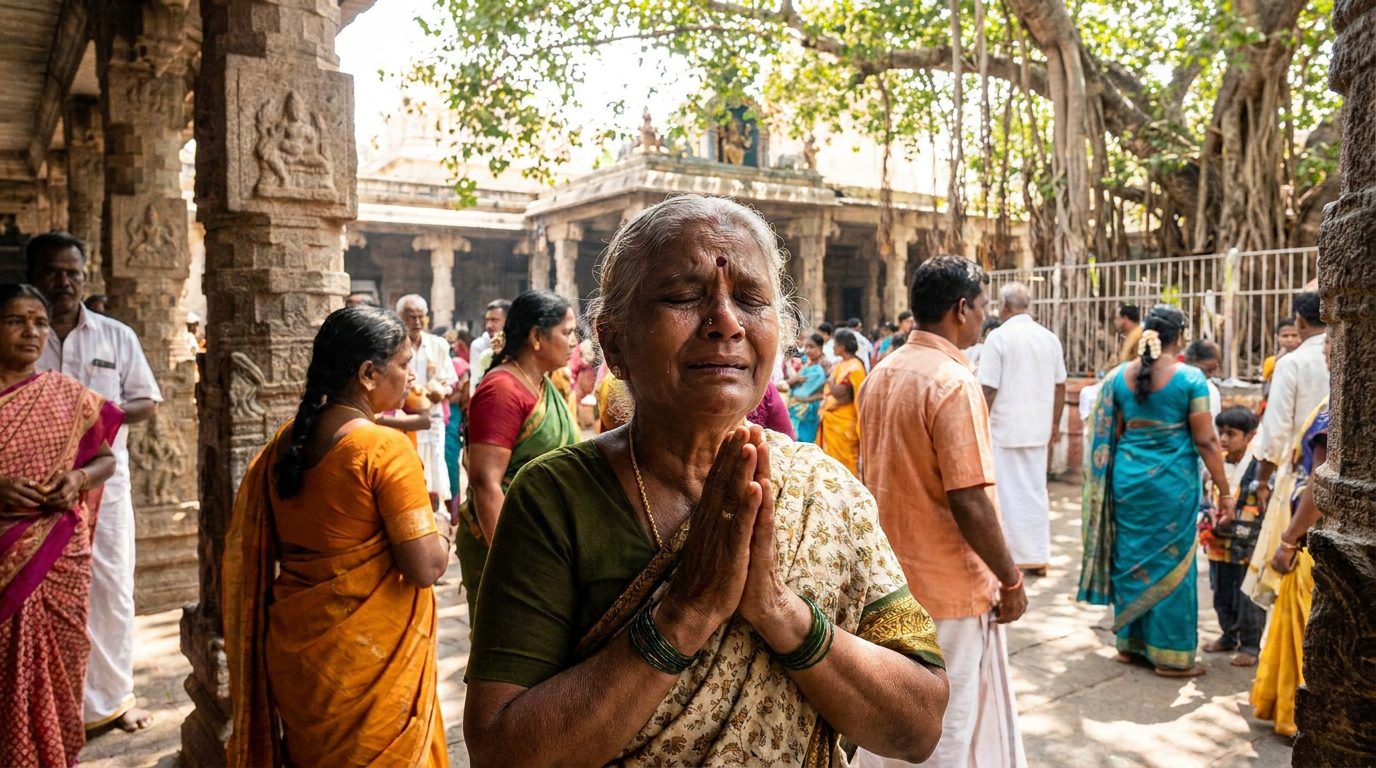
The Heart’s Longing for Prema
In Bhakti Yoga, the word prema means pure divine love—love for God that is free from selfish desire, fear, pride, or bargaining. It is not ordinary affection, and it is not simply religious emotion. Prema is the soul’s awakened love for the Supreme Person, known in the Bhakti traditions by many sacred names: Krishna, Rama, Vishnu, Narayana, Hari, and more.
The great Bhakti scriptures describe prema as the highest perfection of spiritual life. In the Bhagavad-gita, Krishna says, “Always think of Me, become My devotee, worship Me, and offer your homage to Me” (18.65). This is not a cold command. It is an invitation into relationship. God is asking for our heart.
Many people wonder, “Is divine love possible for someone like me?” The stories of devotees say yes. Again and again, the Bhakti tradition shows that prema is not limited by birth, education, wealth, gender, nationality, or social position. It grows in the heart that sincerely turns toward God.
The path may begin very simply: chanting God’s holy names, offering a prayer, serving others, reading sacred wisdom, or remembering the Lord during an ordinary day. These small acts, when done with sincerity, become powerful. They soften the heart and open us to grace.
The lives of great devotees are not meant only to be admired from a distance. They are living lamps. Their journeys show us how divine love is awakened through faith, surrender, humility, service, and remembrance.
Prahlada: Love That Remained Fearless
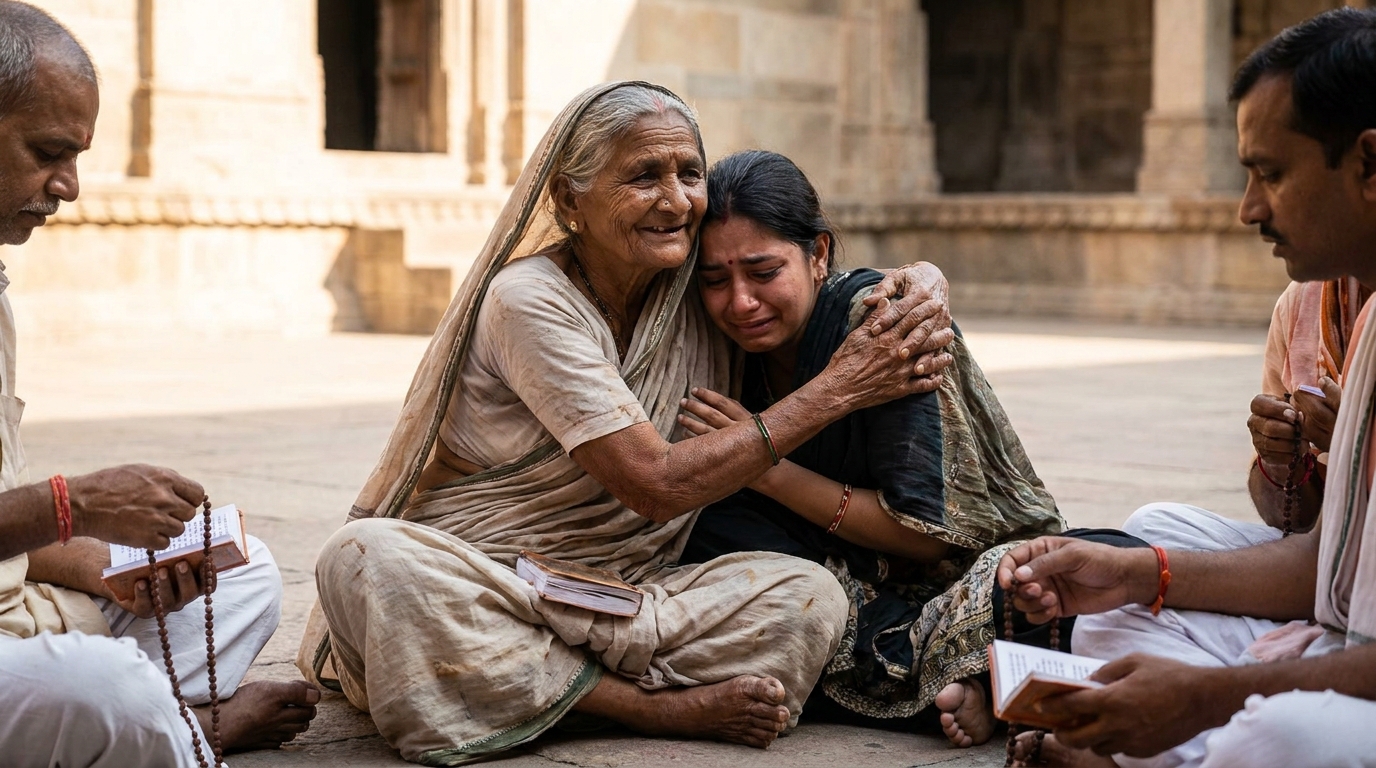
Prahlada Maharaja, whose story is told in the Srimad Bhagavatam, is one of the most beloved examples of steadfast devotion. He was born in a royal family, but his father, Hiranyakashipu, was a powerful king who hated Lord Vishnu. Despite living in a palace filled with pride, anger, and worldly power, young Prahlada’s heart rested in God.
As a child, Prahlada learned devotion while still in his mother’s womb, hearing sacred teachings from the sage Narada. This reminds us that spiritual impressions are powerful. The heart can receive divine wisdom even before the mind fully understands it.
Prahlada’s father tried to turn him away from Vishnu. He offered wealth, power, education, and threats. When none of that worked, he tried to kill him. Prahlada was thrown into danger again and again, yet he remained peaceful. His love did not depend on safety or comfort.
Prahlada’s Simple Teaching
When asked what he had learned, Prahlada spoke of remembering God, hearing about God, chanting God’s names, serving Him, worshiping Him, praying to Him, becoming His servant, becoming His friend, and surrendering everything to Him. These are known as the nine processes of Bhakti Yoga, described in the Srimad Bhagavatam.
This teaching is deeply practical. We may not live in a palace with a tyrant king, but we all face pressures that try to pull us away from the heart: fear, distraction, ambition, resentment, and doubt. Prahlada shows us that devotion can live even in difficult surroundings.
He did not pray for revenge. When Lord Narasimha, the fierce form of Vishnu, appeared to protect him, Prahlada prayed for his father’s welfare. This is the fragrance of prema. Divine love expands the heart beyond personal injury.
For us, Prahlada’s journey teaches that chanting and remembrance can anchor us. Even a simple prayer—“Lord, please help me remember You”—can become a shelter in fear. Prema begins when we turn toward God not only in comfort, but also in hardship.
Dhruva: From Wounded Desire to Pure Devotion
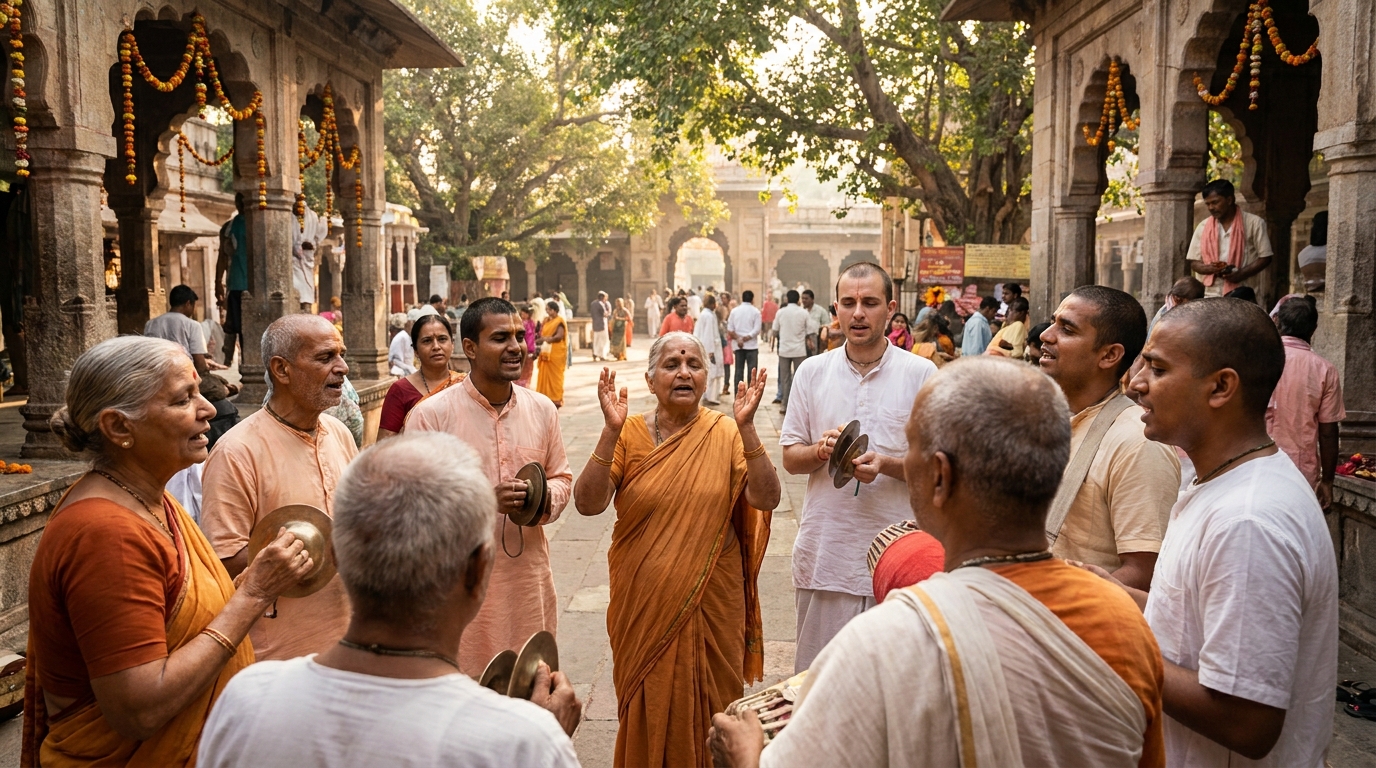
Dhruva Maharaja’s story, also found in the Srimad Bhagavatam, begins with pain. As a young prince, he was rejected by his father and insulted by his stepmother. Deeply hurt, he wanted a kingdom greater than anyone else’s. His devotion began with ambition and sorrow, not pure love.
This is important for all of us. Many people come to spiritual life with mixed motives. We may pray because we want relief, success, healing, peace, or recognition. Bhakti Yoga does not reject us for having an imperfect beginning. It gently purifies the heart.
Dhruva’s mother advised him to seek the Supreme Lord. Following this instruction, Dhruva went to the forest and met the sage Narada. Narada gave him a mantra, a sacred sound formula, to meditate on Lord Vishnu. Dhruva practiced with determination, chanting and focusing his mind.
The Transformation of Dhruva’s Heart
After intense devotion, Lord Vishnu appeared before Dhruva. Seeing the Lord, Dhruva’s heart changed completely. The kingdom he had wanted suddenly seemed small. He famously compared his earlier desire to broken glass and the Lord’s presence to a priceless jewel.
This is one of the most encouraging lessons in Bhakti. We may begin by asking God for something, but through sincere practice we may come to want God Himself. The heart’s desires become refined by contact with divine love.
Dhruva did receive blessings, but the true blessing was his transformation. He became a devotee whose love was no longer centered on wounded pride. His story teaches us not to be discouraged by our mixed motivations. We can bring them honestly before God.
A practical lesson from Dhruva is consistency. He chanted, meditated, and followed guidance. In modern life, this might mean setting aside a few minutes each day to chant the maha-mantra—Hare Krishna, Hare Krishna, Krishna Krishna, Hare Hare / Hare Rama, Hare Rama, Rama Rama, Hare Hare—or any holy name of God that opens the heart. The Sanskrit word mantra means a sacred sound that helps free the mind. Through repetition with sincerity, the heart becomes clearer.
If you’re looking for insightful spiritual guidance, check out the latest articles on Bhakti House. The articles provide a deep dive into various aspects of spiritual living. For those interested in personal growth, these articles are a must-read.
The Gopis of Vrindavan: Love Beyond Calculation
Among all stories of divine love, the devotion of the gopis of Vrindavan shines with extraordinary beauty. The gopis were the cowherd women of Krishna’s village, described in the Srimad Bhagavatam and celebrated by saints throughout the Bhakti tradition. Their love for Krishna was spontaneous, wholehearted, and free from calculation.
It is important to approach these sacred stories with humility. The love of the gopis is not ordinary romance. It is the highest expression of the soul’s longing for God. Bhakti teachers explain that their love is completely pure, without selfish desire. They wanted only Krishna’s happiness.
When Krishna played His flute in the forests of Vrindavan, the gopis left everything to be with Him. Their response represents the soul hearing the call of the Divine. In our own lives, God may call us quietly through prayer, scripture, music, nature, suffering, kindness, or the company of devotees. The question is: will we respond?
Radha’s Supreme Devotion
Srimati Radharani is honored in many Bhakti traditions as the greatest devotee, the embodiment of pure love for Krishna. Her name is often spoken with deep reverence because she represents the highest prema. She does not seek anything separate from Krishna. Her joy is His joy.
For seekers, Radha’s example teaches that love is not possession. Divine love is service. It asks, “How may I please the Beloved?” This mood can transform everyday life. Cooking, working, parenting, studying, cleaning, singing, and caring for others can all become offerings.
In the Bhagavad-gita, Krishna says, “If one offers Me with love and devotion a leaf, a flower, fruit, or water, I accept it” (9.26). The offering may be simple, but love makes it sacred. The gopis teach us that the heart is the real offering.
Their stories invite us beyond a transactional relationship with God. Instead of praying only, “Please give me what I want,” we can pray, “Please help me love You. Please help me serve with a pure heart.” This shift is the beginning of deep Bhakti Yoga.
Hanuman: Prema Expressed Through Service
Hanuman, the devoted servant of Lord Rama, is one of the most cherished figures in the Ramayana. His love is powerful, humble, practical, and fearless. Hanuman does not merely speak of devotion—he lives it through service.
When Sita, Rama’s beloved wife, was taken to Lanka, Hanuman crossed the ocean to find her. He faced danger, uncertainty, and opposition, but his heart was fixed on Rama’s mission. His strength came from devotion, not ego.
In Sanskrit, seva means loving service. Hanuman is the perfect example of seva. He uses every gift—his intelligence, courage, speech, strength, and speed—for the pleasure of Rama. This teaches us that our talents are not separate from spiritual life. They can become offerings.
The Humility of a Great Devotee
Although Hanuman performed astonishing deeds, he remained humble. He did not think, “I am the doer.” He saw himself as Rama’s servant. This humility is a sign of mature love.
In Bhakti Yoga, humility does not mean self-hatred. It means seeing truthfully: everything we have is a gift from God, and we are happiest when we use it in loving service. Hanuman’s humility made him fearless because he was not serving his own reputation.
For modern seekers, Hanuman’s story is deeply practical. We may ask: What service is before me today? Who needs kindness? What duty can I do with love? How can my work become an offering?
Chanting the names of Rama, reading the Ramayana, or simply praying, “Lord, let me serve like Hanuman,” can awaken courage and devotion. Prema is not passive. It moves the hands, feet, words, and mind in loving service.
Sudama: Love Hidden in Poverty and Friendship
Sudama, also known as Kuchela, was a poor brahmana and childhood friend of Krishna. His story appears in the Srimad Bhagavatam and is treasured because it reveals the sweetness of friendship with God.
Sudama lived in great poverty with his wife. One day, she encouraged him to visit Krishna, who had become the king of Dvaraka. Sudama felt shy. He did not want to ask his friend for wealth. Still, he went, carrying a humble gift of chipped rice.
When Sudama arrived, Krishna welcomed him with overwhelming affection. Though Krishna was a king and Sudama was poor, Krishna personally washed his feet and honored him. This scene is deeply moving. It shows that God values love, not status.
The Offering of Chipped Rice
Sudama’s chipped rice was materially insignificant, but Krishna accepted it with delight because it was offered with love. This reflects the teaching of the Bhagavad-gita that even a simple offering becomes dear when given with devotion.
Sudama did not ask Krishna for anything. He simply enjoyed the Lord’s presence. When he returned home, he found that his poverty had been removed by Krishna’s grace. Yet the real treasure of the story is not material blessing. It is the love between Krishna and His devotee.
Sudama teaches us that God is not impressed by external display. We do not need to wait until life is perfect before we approach Him. We can offer what we have: a little time, a small prayer, a sincere song, a meal prepared with gratitude, a kind act done in His name.
Prema often hides in simplicity. A poor devotee with a loving heart may be richer than a king. Sudama reminds us that friendship with God is possible, intimate, and tender.
Mirabai: A Life of Song, Courage, and Surrender
Mirabai, the beloved saint-poet of India, lived many centuries after the ancient scriptures, yet her life continues to inspire seekers around the world. She loved Krishna as her Lord, friend, and beloved. Her songs are full of longing, surrender, and fearless devotion.
Born into a royal family, Mira was expected to follow social and political duties. But her heart belonged to Krishna. She sang to Him, worshiped Him, and spoke of Him with the intimacy of one who had given everything.
Her devotion brought misunderstanding and opposition. Yet Mira did not abandon her path. She wandered, sang, and shared Krishna’s love through poetry. Her songs remain alive because they arise from genuine longing.
The Power of Devotional Singing
In Bhakti Yoga, singing the names and glories of God is called kirtan. Kirtan is not performance in the ordinary sense. It is prayer with melody. It allows the heart to speak when ordinary words are not enough.
Mira’s life shows the power of kirtan to carry the soul through loneliness, opposition, and longing. She did not have to argue her theology at every moment. She sang her love, and her songs became a bridge for countless others.
For people today, kirtan can be a gentle doorway into Bhakti. One does not need to be an expert singer. The sincerity matters more than the sound. Chanting alone, joining a group, listening to sacred music, or singing softly while cooking or walking can all nourish remembrance.
Mira’s courage also teaches that divine love may ask us to become honest. Sometimes we must choose what is true over what is merely expected. This does not mean becoming harsh or proud. It means allowing love for God to guide our life from within.
Chaitanya Mahaprabhu: The Gift of the Holy Name
Sri Chaitanya Mahaprabhu, a 15th-century saint revered by many Bhakti traditions as Krishna in the mood of His devotee, spread the chanting of the holy names widely. His life was a river of compassion, ecstatic devotion, and deep humility.
He taught that in this age, the simplest and most powerful spiritual practice is nama-sankirtana—the congregational chanting of God’s holy names. Nama means name, and sankirtana means chanting together. The holy name is not considered different from God; it carries divine presence.
Chaitanya Mahaprabhu embraced people from many backgrounds. He showed that Bhakti is not limited to social position or scholarship. The qualification is sincerity.
Tears of Love and Practical Humility
Many accounts describe Chaitanya Mahaprabhu chanting with tears of love for Krishna. Yet His teachings are profoundly practical. One of His most famous instructions says that one should chant the holy name in a humble state of mind, feeling lower than a blade of grass, more tolerant than a tree, offering respect to others, and not demanding honor for oneself.
This humility creates the inner atmosphere where chanting can flourish. When the heart is filled with pride, the holy name may stay on the surface. When the heart becomes soft, the name enters deeply.
For seekers today, this teaching is a daily practice. Before chanting, we can pause and pray: “Please help me chant with sincerity. Please help me respect others. Please soften my heart.” Even a few minutes of humble chanting can change the quality of a day.
Chaitanya Mahaprabhu’s gift is especially relevant now, when so many people feel disconnected, anxious, or spiritually hungry. Chanting gathers the scattered mind and returns it to divine relationship.
What These Divine Love Journeys Teach Us
The devotees who attained prema did not all look the same. Prahlada was a child in danger. Dhruva began with wounded ambition. The gopis loved with total surrender. Hanuman served with heroic strength. Sudama offered friendship in poverty. Mirabai sang through opposition. Chaitanya Mahaprabhu shared the holy name with everyone.
Their lives show that Bhakti Yoga is both deeply mystical and beautifully practical. It is not only for monasteries, temples, or scholars. It can be lived in homes, workplaces, families, friendships, and quiet moments.
Prema Grows Through Sincere Practice
In Sanskrit, sadhana means spiritual practice. Sadhana is the loving discipline that helps awaken the heart. We do not manufacture prema by force, but we can prepare the heart to receive grace.
Some simple practices include:
- Chanting God’s holy names daily
- Offering food with gratitude before eating
- Reading a few verses from the Bhagavad-gita or Srimad Bhagavatam
- Praying honestly, in our own words
- Serving others without expecting praise
- Spending time with spiritually minded people
- Singing kirtan or listening to devotional music
- Remembering God during ordinary tasks
These practices are not meant to make us feel superior. They are meant to make us more loving, humble, patient, and connected to God.
Grace Meets Effort
Bhakti Yoga honors both effort and grace. We take steps toward God, and God responds in ways we may not expect. Krishna says in the Bhagavad-gita (10.10) that to those who are devoted with love, He gives the understanding by which they can come to Him.
This is a comforting promise. We do not have to figure out the entire spiritual path alone. If we sincerely turn toward the Divine, guidance comes—through scripture, teachers, community, inner clarity, and life itself.
Prema is the soul’s natural condition, but it is often covered by ego, fear, and distraction. Bhakti practices gently uncover it. Like the sun hidden behind clouds, divine love is not created from nothing. It is revealed.
Taking One Step Toward Divine Love Today
The stories of devotees who attained prema are sacred reminders that God is approachable. The path of divine love is open to the scholar and the beginner, the confident and the wounded, the joyful and the grieving. No one is disqualified from calling out to God.
You do not need a perfect life to begin. You do not need perfect concentration, perfect knowledge, or perfect faith. You can begin with one sincere step.
Chant one holy name. Offer one heartfelt prayer. Read one verse. Serve one person with kindness. Place one flower, one fruit, one cup of water, or one simple meal before God with love. Sit quietly and say, “Please guide me. Please help me love You.”
This is how the journey begins. And by grace, small steps become a path. A path becomes a relationship. A relationship becomes love. And love, when purified and deepened, becomes prema.
At The Bhakti House, all sincere seekers are welcome. Whatever your background, wherever you are on your spiritual journey, you are invited to come closer to God through chanting, prayer, service, sacred wisdom, and loving community.
May the lives of Prahlada, Dhruva, the gopis, Hanuman, Sudama, Mirabai, and Chaitanya Mahaprabhu encourage your heart. May their devotion remind us that divine love is real, living, and available. And may each of us take one sincere step today toward the loving shelter of the Lord.
FAQs
What is prema in the context of devotion?
Prema is a Sanskrit term that refers to pure, unconditional love and devotion towards a deity or spiritual figure. It is considered the highest form of love in the practice of bhakti yoga.
How do devotees attain prema?
Devotees attain prema through consistent practice of devotion, such as chanting mantras, performing rituals, meditation, and selfless service. It is believed that by surrendering oneself completely to the divine, one can cultivate prema.
Can prema be experienced by anyone?
Prema is said to be attainable by anyone who sincerely practices devotion with a pure heart and unwavering faith. It is not limited by factors such as age, gender, or social status.
What are some common characteristics of devotees who have attained prema?
Devotees who have attained prema are often described as selfless, compassionate, humble, and filled with unconditional love for all beings. They are known for their unwavering faith and devotion to the divine.
Are there any specific stories of devotees who have attained prema?
Yes, there are many stories in various spiritual traditions that recount the lives of devotees who have attained prema. These stories often serve as inspiration for others on the path of devotion.

