
A Warm Welcome to Barsana, the Village of Divine Love
Barsana is not just a destination on a map. For many pilgrims, seekers, and lovers of sacred culture, Barsana is a doorway into the tender heart of Bhakti Yoga—the path of loving devotion to God.
Located in the Mathura district of Uttar Pradesh, India, Barsana is revered as the beloved home of Srimati Radharani, the eternal consort of Lord Krishna. In the Bhakti tradition, Radha represents the highest expression of pure love for God. Her love is selfless, joyful, and completely centered on Krishna. To visit Barsana is to enter a place where this divine love is remembered in songs, festivals, temples, daily worship, and the simple kindness of the people.
Whether you are a lifelong devotee, a spiritual traveler, a culture lover, or someone simply curious about India’s sacred places, Barsana welcomes you. You do not need to know Sanskrit, be born into a particular tradition, or have everything figured out. Bhakti begins with sincerity. Even one prayer, one chant, one humble step can open the heart.
In Sanskrit, the word “bhakti” means loving devotion. It is the practice of connecting with God through love—through chanting, prayer, service, remembrance, and heartfelt living. Barsana beautifully embodies this spirit.
Understanding the Sacred Significance of Barsana
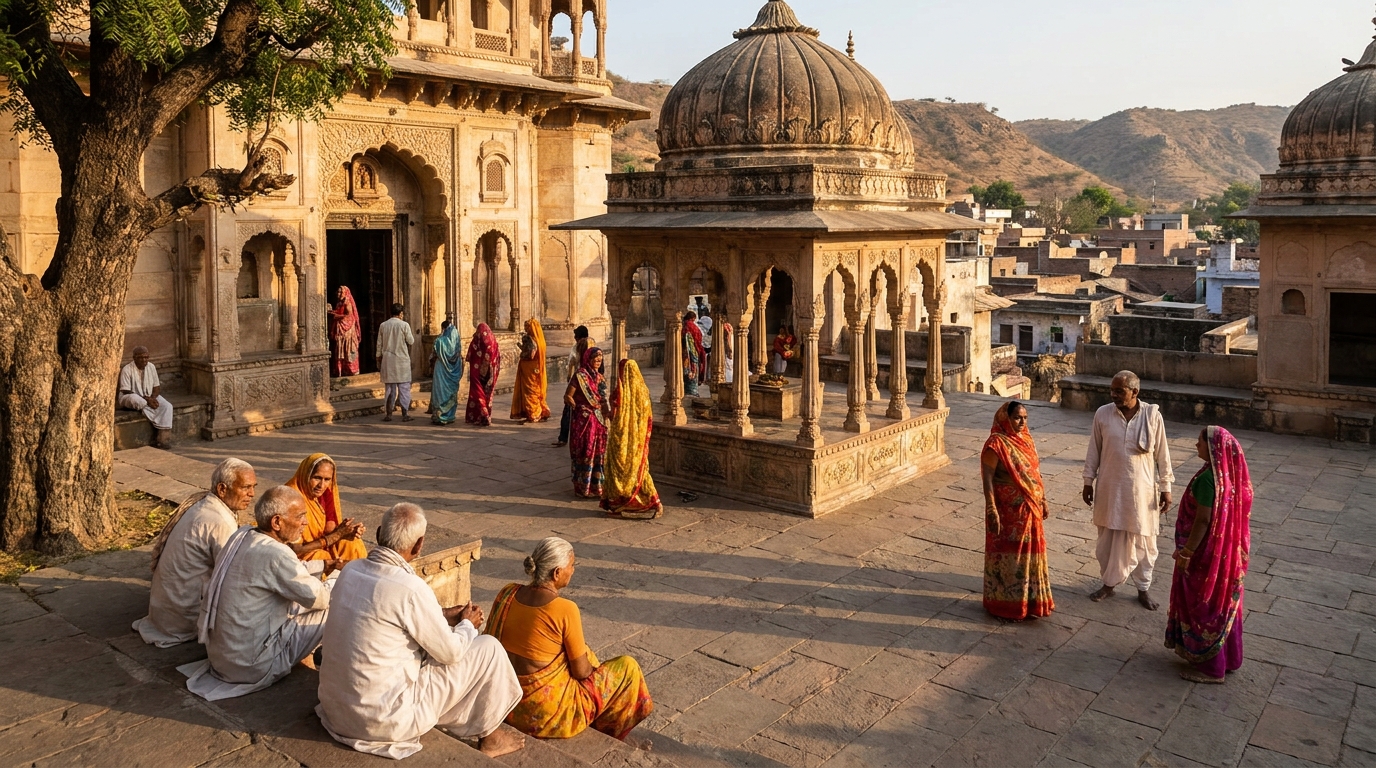
Barsana is one of the most cherished places in Braj, the sacred region associated with the childhood and youth pastimes of Lord Krishna. Braj includes Vrindavan, Mathura, Govardhan, Nandgaon, Gokul, and many other holy villages. Each place carries its own mood, stories, and devotional atmosphere.
Barsana is especially dear because it is known as the home of Radha. In many Bhakti scriptures and songs of saints, Radha is described as the supreme devotee—the one who loves Krishna more completely than anyone else. Devotees visit Barsana not merely to see historic sites, but to pray for a drop of that loving devotion.
The Meaning of Radha’s Presence
In the Bhakti tradition, God is understood not only as powerful and majestic, but also as deeply personal and loving. Krishna means “the all-attractive one,” and Radha is the embodiment of divine love for Krishna. Together, Radha and Krishna represent the complete truth of divine love: the beloved and the lover, God and the soul in perfect relationship.
The Srimad Bhagavatam, one of the great Bhakti scriptures, describes Krishna’s loving pastimes in Vrindavan and Braj. Though Radha’s name is often hidden in the Bhagavatam in a poetic way, the acharyas—spiritual teachers in the Bhakti lineage—explain that her presence is central. Later sacred texts and devotional poetry, such as the works of the Goswamis of Vrindavan, lovingly reveal her glories.
For a practical seeker, Radha’s example teaches us this: spiritual life is not meant to be dry or mechanical. It is meant to soften the heart. We may begin with simple practices, but the goal is love—love for God, love for all beings, and love expressed through humble service.
Barsana and the Four Hills
Barsana is built around four sacred hills. Traditionally, these hills are associated with the four heads of Lord Brahma, the creator in Vedic cosmology, who desired to serve Radha and Krishna in the form of this holy land. The four main hills are often known as Bhanugarh, Vilasgarh, Danagarh, and Mangarh.
The most famous hill is Bhanugarh, where the Shri Radha Rani Temple stands. The climb to the temple is part of the pilgrimage experience. With each step, many pilgrims chant the holy names, offer prayers, or simply walk quietly, absorbing the sacred atmosphere.
The journey upward can remind us of spiritual life itself. Sometimes the path is steep. Sometimes we pause. Sometimes we feel tired. But with faith, community, and grace, we keep going.
Top Sacred Attractions to Visit in Barsana
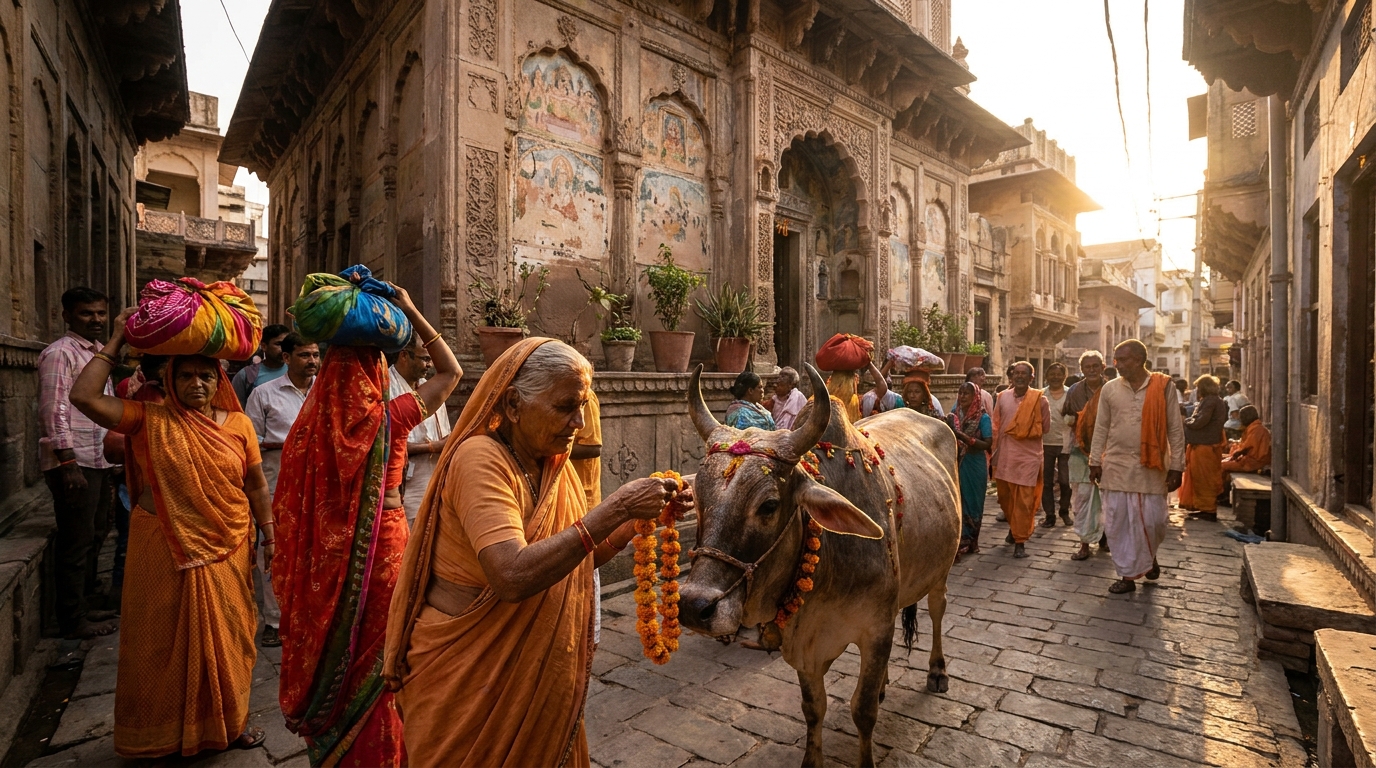
Barsana offers many sacred sites, each carrying a unique devotional mood. Some are grand and well known, while others are quiet and intimate. If possible, visit with patience rather than rushing. The beauty of Barsana is best received with a soft heart and unhurried attention.
Shri Radha Rani Temple
The Shri Radha Rani Temple, also known as Ladliji Temple, is the main temple of Barsana. “Ladli” means beloved daughter, a sweet name for Radha. The temple sits atop Bhanugarh Hill and offers sweeping views of the surrounding town and countryside.
The temple’s architecture, stone steps, arches, and devotional atmosphere make it one of the most important pilgrimage sites in Braj. Inside, devotees have darshan—a Sanskrit word meaning “sacred seeing.” Darshan is not just looking at the deity. It is a prayerful exchange, where the devotee comes before God with humility and receives divine grace.
The worship here is joyful and intimate. You may hear kirtan, devotional singing, or the ringing of bells during arati, a ceremony in which lamps are offered to the Lord. Even if you are unfamiliar with the rituals, you can simply stand respectfully, observe, and offer a prayer from your heart.
A simple prayer could be: “Radha Rani, please help me grow in love, humility, and service.”
Rangeeli Mahal
Rangeeli Mahal is a beautiful spiritual and cultural center in Barsana connected with the teachings of Jagadguru Kripalu Ji Maharaj. It is known for its colorful devotional art, peaceful setting, and celebrations of Radha-Krishna bhakti.
Visitors often appreciate its clean surroundings, vibrant decorations, and devotional programs. For travelers who are new to Bhakti culture, Rangeeli Mahal can be an accessible place to experience the beauty of devotional music, sacred stories, and spiritual hospitality.
Maan Mandir
Maan Mandir is another deeply meaningful site in Barsana. The word “maan” refers to a loving mood of affectionate sulking or divine playful emotion, often described in Radha-Krishna pastimes. While this may sound unusual at first, Bhakti literature uses these intimate expressions to show that divine love is full of personality, emotion, and sweetness.
Maan Mandir is also associated with preservation efforts in Braj, including cow protection, environmental service, and the restoration of sacred places. This reminds us that devotion is not only expressed through temple worship. It is also expressed by caring for the land, animals, rivers, and communities connected with God.
Mor Kutir
Mor Kutir, meaning “peacock cottage,” is a lovely place connected with the pastimes of Radha and Krishna. Peacocks are beloved symbols in Krishna devotion. Krishna is often pictured wearing a peacock feather, representing beauty, grace, and divine playfulness.
The atmosphere at Mor Kutir is quieter than the main temple. It can be a good place for reflection, chanting, or simply sitting in gratitude. In Bhakti Yoga, remembrance is a powerful practice. To remember God in a sacred place, even for a few minutes, can nourish the heart.
Prem Sarovar
Prem Sarovar, located near Barsana, is a sacred pond whose name means “lake of love.” According to tradition, this pond was formed from the tears of Radha and Krishna in deep divine emotion.
Sacred ponds, known as kunds or sarovars, are important throughout Braj. They are places of remembrance, prayer, and pilgrimage. When visiting Prem Sarovar, it is best to maintain a respectful mood. Avoid treating it as just a photo spot. Pause, offer gratitude, and remember the meaning of “prem”—pure love.
Sankari Khor
Sankari Khor is a narrow passage between hills, connected with playful pastimes of Radha, Krishna, and the cowherd girls of Braj. Many pilgrims enjoy visiting this place because it brings to life the stories sung in devotional songs.
These stories are not meant to be ordinary romance. In the Bhakti tradition, they are sacred teachings about the soul’s longing for God. The gopis, the cowherd maidens of Braj, represent the highest devotion because they love Krishna without selfish desire.
Discover a wealth of knowledge by exploring our insightful articles. Our articles cover a wide range of topics to enhance your understanding. Stay informed and inspired by reading our latest articles.
Culture, Festivals, and Living Traditions in Barsana
Barsana’s culture is vibrant, devotional, and deeply rooted in Braj traditions. Here, spirituality is not separated from daily life. It is woven into music, food, language, festivals, greetings, and family customs.
The Spirit of Braj Bhasha
The local language of the region is Braj Bhasha, a sweet and poetic dialect associated with many devotional songs. Even if you do not understand every word, you may feel the affection in the way people speak.
You will often hear greetings such as “Radhe Radhe.” This is more than a hello. It is a blessing, a remembrance, and a gentle invitation to keep Radha in the heart. Visitors are welcome to use this greeting respectfully. Saying “Radhe Radhe” with sincerity is a simple way to participate in the devotional culture.
Lathmar Holi
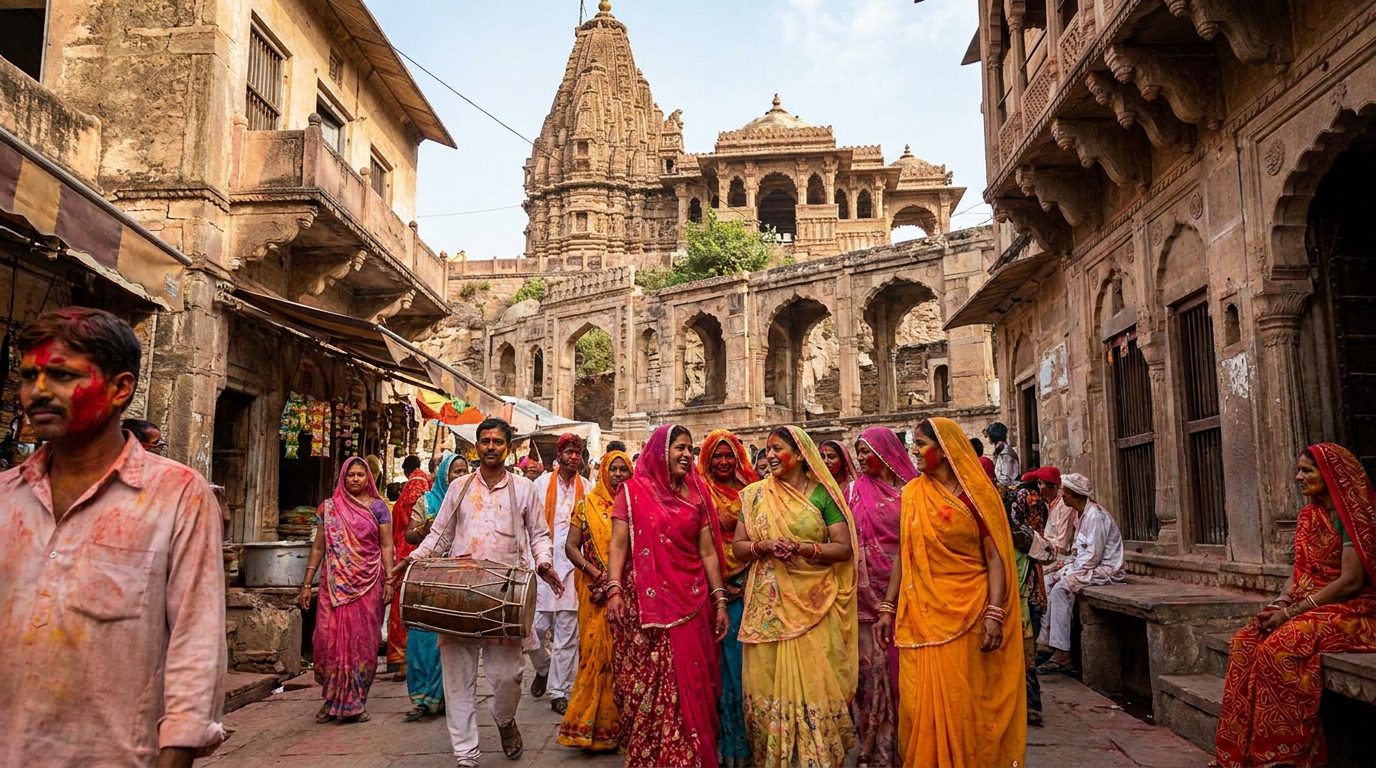
Barsana is world-famous for Lathmar Holi, a colorful and playful celebration before the main Holi festival. The word “lath” means stick, and “mar” means to strike. During this festival, women of Barsana playfully strike men from Nandgaon with sticks, while the men protect themselves with shields.
This tradition is connected with the playful mood of Radha and Krishna. Krishna, from Nandgaon, is said to have come to Barsana to tease Radha and her friends, and the women responded with playful strength.
For visitors, Lathmar Holi is unforgettable, but it can also be crowded and intense. If you attend, go with local guidance, protect your belongings, dress modestly, and be mindful of personal boundaries. The best way to experience the festival is not merely as spectacle, but as sacred cultural joy.
Radhashtami
Radhashtami celebrates the appearance day of Srimati Radharani. It is one of the most important festivals in Barsana. The town becomes filled with pilgrims, kirtan, decorations, temple ceremonies, and heartfelt devotion.
For devotees, Radhashtami is a day to pray for bhakti. Since Radha is known as the compassionate giver of devotion to Krishna, many people offer prayers asking for a pure heart and the ability to serve.
A beautiful practice on this day is to chant the maha-mantra:
Hare Krishna Hare Krishna
Krishna Krishna Hare Hare
Hare Rama Hare Rama
Rama Rama Hare Hare
This mantra is a sacred prayer made of divine names. “Hare” calls upon the Lord’s loving energy, often understood as Radha. “Krishna” means the all-attractive Lord. “Rama” means the source of spiritual joy. Chanting can be done softly, musically, or quietly in the mind.
Daily Temple Life
Beyond big festivals, Barsana’s daily rhythm is devotional. Morning bells, temple songs, offerings of food, flower garlands, and evening arati create a sacred flow throughout the day.
In Bhakti Yoga, offering food to God is called prasadam. The word “prasadam” means mercy or grace. Food prepared with devotion and offered to the Lord becomes spiritually nourishing. When visiting Barsana, try to honor prasadam respectfully, without waste, and with gratitude.
Practical Travel Tips for Visiting Barsana
A journey to Barsana can be deeply rewarding when planned with care. The town is sacred and traditional, so respectful preparation will help you have a smoother and more meaningful visit.
Best Time to Visit
The best time to visit Barsana is generally from October to March, when the weather is cooler and more comfortable. Winter mornings can be chilly, but daytime travel is pleasant.
If you want to experience festivals, plan around Holi or Radhashtami. However, be prepared for very large crowds, limited accommodation, and higher travel demand. If you prefer quiet pilgrimage, avoid major festival days and visit during ordinary weekdays.
Summer, from April to June, can be extremely hot. If you visit during this time, begin early in the morning, stay hydrated, and rest during the afternoon.
How to Reach Barsana
Barsana is located about 50 kilometers from Mathura and around 115 kilometers from Delhi, depending on the route. The nearest major railway station is Mathura Junction, which is well connected to Delhi, Agra, Jaipur, and other cities.
From Mathura, you can hire a taxi, take a local bus, or arrange a car through your accommodation or tour provider. Many pilgrims combine Barsana with nearby sacred places such as Nandgaon, Govardhan, Vrindavan, and Radha Kund.
If traveling from Delhi, a private car is often the most comfortable option, especially for families or groups. The journey may take around three to four hours depending on traffic and road conditions.
What to Wear
Barsana is a traditional pilgrimage town, so modest clothing is recommended. Lightweight cotton clothes are helpful in warm weather. For temple visits, shoulders and knees should be covered. Comfortable footwear is important because you may walk and climb steps, especially to reach the Radha Rani Temple.
Remember that shoes are removed before entering temples. It is helpful to wear footwear that is easy to take off and put on.
During Holi, wear clothes you do not mind getting colored or stained. Protect your eyes, phone, and camera. Natural colors are best, though crowds may use different types.
Health, Safety, and Comfort
Carry drinking water, especially during warmer months. Use bottled or filtered water if you are not accustomed to local water. Keep basic medicines, sunscreen, and any personal health items with you.
Because Barsana can become crowded, especially near temples and festivals, keep valuables secure. Travel with companions when possible, and use trusted transport.
It is also wise to carry some cash. Smaller shops and local transport may not always accept digital payments.
Accommodation Options
Barsana has some guesthouses, dharamshalas, and ashram-style stays, though options may be simpler than in larger cities. Many travelers choose to stay in Vrindavan, Mathura, or Govardhan and visit Barsana as a day trip.
If staying overnight in Barsana, book early during festival seasons. Ask about basic facilities such as hot water, cleanliness, meal availability, and distance from the main temple.
A humble pilgrim mindset can make simple accommodations feel meaningful. Comfort is welcome, but the heart of the journey is devotion.
A Suggested One-Day Barsana Itinerary
If you have only one day, you can still experience Barsana in a meaningful way. Try not to overpack the schedule. Leave room for prayer, rest, and unexpected moments of grace.
Morning Arrival and Radha Rani Temple Darshan
Begin early. Arrive in Barsana in the morning and climb to the Shri Radha Rani Temple. Move slowly and respectfully. If you are able, chant “Radhe Radhe” or the maha-mantra as you climb.
After darshan, spend a few moments sitting quietly. Instead of rushing immediately to the next place, let the experience settle in your heart. You may offer a prayer for guidance, healing, or deeper devotion.
Midday Visits to Nearby Sacred Sites
After the main temple, visit Maan Mandir, Mor Kutir, and Sankari Khor. Depending on time and local conditions, you may also visit Rangeeli Mahal.
If you have a guide, ask them to explain the devotional meaning of each place. A good guide can help you understand the stories without reducing them to entertainment. In Bhakti, sacred stories are meant to awaken remembrance of God.
Afternoon Rest and Prasadam
Take time for lunch or prasadam. Eat simply and gratefully. If you are sensitive to spicy food, ask politely for milder options.
The afternoon can be warm, so rest before continuing. Pilgrimage is not a race. A peaceful heart receives more than a hurried mind.
Evening Reflection
If possible, return to a temple for evening arati. The lamps, music, and chanting create a beautiful devotional mood. Even if you do not know the words, you can participate by listening, folding your hands, or offering gratitude.
Before leaving Barsana, take one final moment to reflect: What did this place awaken in me? What one practice can I carry home?
Food, Local Experiences, and Devotional Hospitality
Barsana and the wider Braj region are known for simple vegetarian food, milk sweets, and devotional hospitality. Food culture here is connected with Krishna, who is lovingly remembered as a cowherd boy fond of butter, yogurt, and sweets.
Vegetarian Food in a Sacred Town
Most food in Barsana is vegetarian, especially near temples. You may find puri-sabzi, kachori, samosa, pakora, lassi, tea, and local sweets. Milk-based items are popular because Braj has a long culture of cow care and dairy offerings.
For spiritual travelers, eating vegetarian food in a sacred place can be a way to practice ahimsa, a Sanskrit word meaning nonviolence or kindness toward living beings. In Bhakti, food is ideally prepared with cleanliness, gratitude, and devotion, then offered to God.
Sweets of Braj
If you enjoy sweets, try local favorites like peda, rabri, and lassi. Mathura peda is especially famous in the region. As always, choose clean and reputable shops.
When honoring sweets or meals, remember the deeper principle: enjoyment becomes purified when connected with gratitude. Bhakti does not reject the world; it teaches us to offer everything in love.
Meeting Local Devotees
One of the blessings of Barsana is meeting people who live with daily remembrance of Radha and Krishna. Some may be temple priests, shopkeepers, sadhus, families, or fellow pilgrims.
The word “sadhu” means a saintly person or spiritual practitioner. Not everyone wearing robes is necessarily advanced, so be respectful but also discerning. Offer donations thoughtfully, avoid pressure, and follow your inner sense of integrity.
Many simple interactions—someone saying “Radhe Radhe,” giving directions, or sharing a story—can become part of your pilgrimage.
Bhakti Yoga Lessons from Barsana for Everyday Life
A visit to Barsana is not meant to remain only a memory. The real blessing is to bring something sacred back into daily life. Bhakti Yoga is practical. It can be practiced in a city apartment, a family home, a workplace, a school, or a quiet room anywhere in the world.
Chanting as a Daily Anchor
Chanting the names of God is one of the central practices of Bhakti Yoga. In Sanskrit, this is called nama-japa or kirtan. “Nama” means name, “japa” means personal repetition of a mantra, and “kirtan” means congregational singing or glorification.
You can begin with five minutes a day. Chant the maha-mantra, or simply say a prayerful name of God that is meaningful to you. The practice is not about performance. It is about relationship.
The Bhagavad Gita teaches, “Always think of Me, become My devotee, worship Me, and offer your homage unto Me” (Bhagavad Gita 18.65). Practically, this means we can turn our attention toward God throughout the day, even in small ways.
Prayer as Honest Conversation
Prayer does not need to be complicated. You can speak to God honestly. You can ask for guidance, strength, forgiveness, or love. You can also simply say thank you.
Barsana teaches us the mood of humble prayer. Radha’s love is not proud. It is tender, surrendered, and fully alive. We can pray, “Please help me love better. Please help me serve. Please remove selfishness from my heart.”
Service as Love in Action
In Bhakti, service is called seva. Seva means offering our time, energy, skills, and heart for the pleasure of God and the benefit of others.
Service may look like helping at a temple, feeding others, caring for family, protecting nature, teaching, cleaning, cooking, listening with compassion, or supporting spiritual communities. When done with devotion, ordinary actions become sacred.
The Bhagavad Gita also teaches that whatever we do, whatever we eat, whatever we offer, and whatever austerity we perform can be offered to God (Bhagavad Gita 9.27). This is a beautiful teaching for modern life. We do not have to abandon our responsibilities. We can spiritualize them through intention.
Spiritual Growth with Humility
Barsana reminds us that the highest love is also the humblest. Real spiritual growth is not about becoming superior to others. It is about becoming softer, kinder, more truthful, and more devoted.
The saints of Bhakti often pray not for wealth, fame, or power, but for pure devotion. This is the heart of the path. We grow by hearing sacred wisdom, chanting, serving, keeping good company, and honestly examining our hearts.
Responsible and Respectful Pilgrimage in Barsana
Because Barsana is a sacred place, visitors have a responsibility to honor its spiritual culture, people, animals, and environment. Pilgrimage is not only about what we receive; it is also about how we behave.
Temple Etiquette
When entering temples, dress modestly, remove shoes, and avoid loud conversation. Photography may be restricted in some areas, so always ask before taking pictures, especially of deities, priests, or worship ceremonies.
If you do not understand a ritual, observe respectfully. You are not required to imitate everything. A humble heart is more important than external display.
Offer donations through official boxes or trusted channels when possible. Be cautious of anyone demanding money aggressively.
Caring for the Sacred Environment
Braj is holy, but like many pilgrimage regions, it faces environmental pressure from crowds, plastic waste, and development. Carry a reusable water bottle if practical, avoid littering, and dispose of waste properly.
Do not pollute ponds, temples, or pathways. If you bring offerings such as flowers or food, follow local guidance for proper disposal.
Caring for Barsana’s environment is also seva. The land itself is honored as sacred because it is connected with Radha and Krishna.
Respecting Local Life
Barsana is home to local families, not only a tourist destination. Be mindful when walking through residential areas, photographing people, or attending festivals.
Women travelers may feel more comfortable in groups, especially during crowded festivals. Families with children should plan carefully and avoid the most intense crowd areas unless accompanied by experienced local guides.
Respect creates trust. Trust opens the door to deeper cultural exchange.
Nearby Places to Include with Barsana
If you have more time, Barsana can be part of a larger Braj pilgrimage. Many nearby places are deeply connected with Krishna’s pastimes and the living Bhakti tradition.
Nandgaon
Nandgaon is known as the village of Nanda Maharaj and Mother Yashoda, Krishna’s foster parents. It is closely connected with Barsana, especially during Holi traditions. The mood of Nandgaon is sweet and parental, reminding devotees of Krishna as the beloved child of Braj.
Govardhan
Govardhan is famous for Govardhan Hill, which Krishna lifted to protect the people of Braj from torrential rains. Pilgrims perform Govardhan parikrama, a sacred circumambulation around the hill. “Parikrama” means walking around a holy place as an act of devotion.
The story of Govardhan teaches dependence on God, humility, and the importance of honoring nature. Krishna encouraged the people of Braj to worship Govardhan Hill, the cows, and the land that sustained them.
Radha Kund and Shyama Kund
Radha Kund and Shyama Kund are among the most sacred places in the Bhakti tradition. They are associated with Radha and Krishna’s most intimate loving pastimes. Visitors should approach with deep respect and avoid casual behavior.
For many pilgrims, visiting Radha Kund after Barsana feels like entering even deeper into the heart of Radha-Krishna devotion.
Vrindavan and Mathura
Vrindavan is one of the most famous centers of Krishna devotion, filled with temples, ashrams, kirtan, and sacred sites. Mathura is revered as Krishna’s birthplace. Together with Barsana, they form a powerful pilgrimage route for anyone interested in Bhakti Yoga, sacred history, and devotional culture.
Final Reflections: Let Barsana Soften the Heart
Barsana is a place of color, song, hills, temples, festivals, and sacred memory. But more than anything, it is a place of love. It invites us to remember that spiritual life is not only about knowledge or ritual. It is about relationship—with God, with others, with the earth, and with our own deepest self.
You may come to Barsana as a traveler and leave with a prayer. You may come for culture and discover devotion. You may come with questions and leave with a softer heart.
In the Bhakti tradition, no sincere step is small. One name of God chanted with feeling, one act of service, one moment of humility, one prayer for love—these can change the direction of a life.
May Srimati Radharani, the compassionate queen of Barsana, bless your journey. May you feel welcomed, guided, and encouraged. Whoever you are, wherever you come from, you are welcome to take one sincere step toward God today.
FAQs
1. What is Barsana known for?
Barsana is known for being the birthplace of Radha, the consort of Lord Krishna in Hindu mythology. It is a significant pilgrimage site for devotees.
2. What are the main attractions in Barsana?
The main attractions in Barsana include the Radha Rani Temple, Rangeeli Mahal, and the Larily Lal Temple. These sites are popular among tourists and pilgrims.
3. When is the best time to visit Barsana?
The best time to visit Barsana is during the Lathmar Holi festival, which usually takes place in February or March. This colorful and lively festival attracts visitors from all over the world.
4. How can one reach Barsana?
Barsana is well-connected by road and can be reached by bus or taxi from nearby cities like Mathura and Vrindavan. The nearest railway station is Mathura Junction, which is about 50 kilometers away.
5. Are there any accommodations available in Barsana?
Yes, there are a few guesthouses and hotels in Barsana where visitors can stay. It is recommended to book accommodations in advance, especially during the peak tourist season.

