

The Sacred Heart of Govardhan
Govardhan is not only a place on a map. For millions of devotees, it is a living sanctuary of love, humility, and divine protection. Located in the sacred land of Vraja, near Vrindavan in Uttar Pradesh, India, Govardhan Hill is one of the most beloved places connected with Sri Krishna, the Supreme Lord as worshiped in the Bhakti tradition.
In Sanskrit, the word “Govardhan” is often understood in two beautiful ways. “Go” can mean cows, senses, or the Earth, and “vardhan” means that which nourishes or increases. Govardhan is therefore “that which nourishes the cows,” “that which uplifts the senses,” and “that which increases devotion.” For the heart walking the path of Bhakti Yoga—the yoga of loving devotion—Govardhan teaches us how to depend on God with simplicity and trust.
People from many backgrounds come to Govardhan: lifelong practitioners, curious travelers, families, scholars, seekers, and those who may not know much about Krishna but feel called by sacred places. Everyone is welcome. Govardhan’s message is gentle and universal: the Divine protects those who sincerely take shelter, and spiritual life becomes real through love, service, prayer, and remembrance.
Govardhan is most famous for the Govardhan Lila, the pastime in which young Krishna lifted Govardhan Hill to protect the people of Vrindavan from devastating rains. This story, found in sacred Bhakti texts such as the Srimad Bhagavatam and the Vishnu Purana, is not merely ancient history. It is a living teaching about surrender, humility, community, ecology, and loving relationship with God.
The History of Govardhan in the Bhakti Tradition
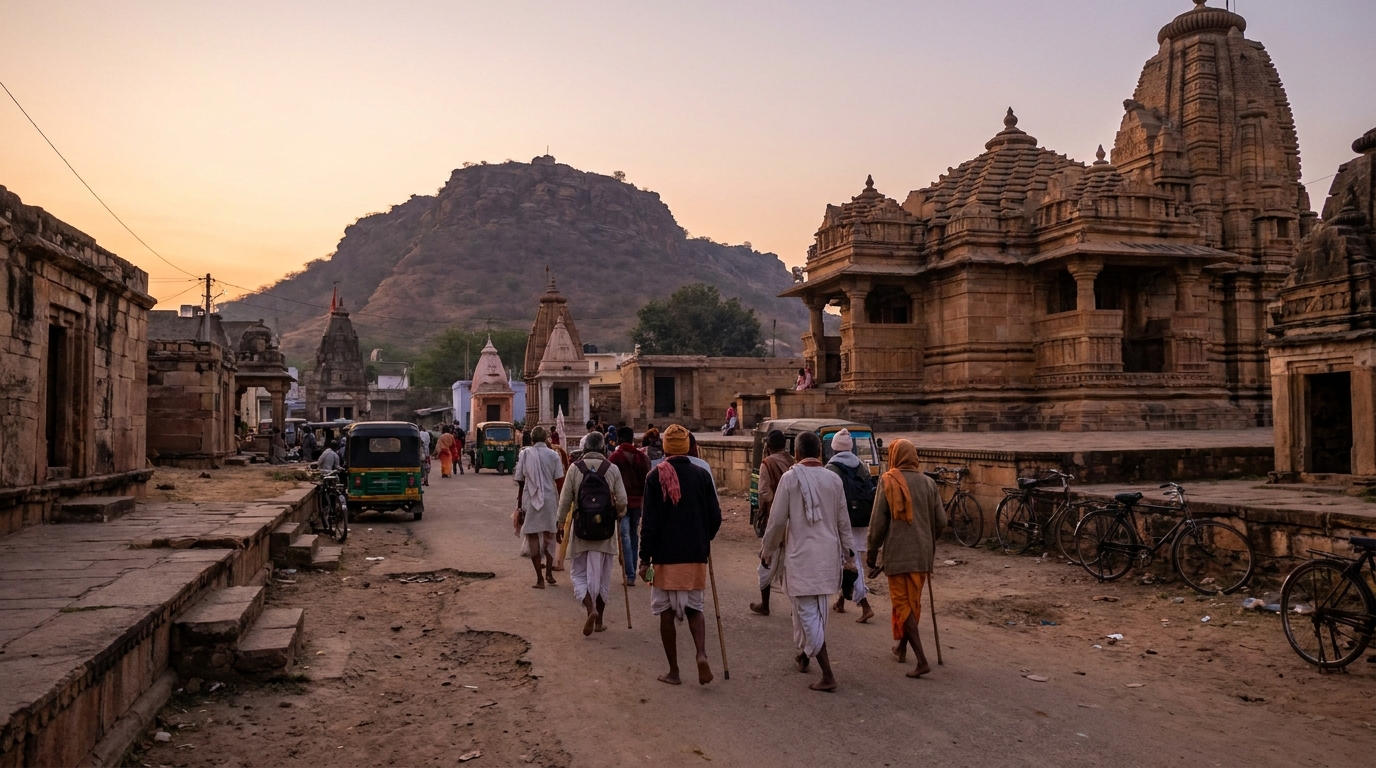
Govardhan’s history is woven deeply into the spiritual landscape of Vraja, the land where Krishna performed His childhood pastimes. In the Bhakti tradition, these events are called lilas, meaning divine pastimes. A lila is not only an event; it is an expression of God’s loving nature and a doorway into spiritual meditation.
Govardhan in Krishna’s Childhood Pastimes
According to the Srimad Bhagavatam, Krishna spent His childhood in the villages and forests of Vraja with His parents, Nanda Maharaja and Mother Yashoda, along with the cowherd boys, cowherd girls, elders, and cows. Govardhan Hill was part of their daily life. The cowherd community depended on Govardhan for fresh grasses, clean water, caves, minerals, fruits, flowers, and shade.
Krishna and His friends would herd the cows near Govardhan, play flutes, share food, and wander through the forests. Devotees meditate on Govardhan as a place where God is not distant or formal, but intimate, playful, and lovingly present among His devotees.
This vision is central to Bhakti Yoga. Bhakti does not teach that God is only an abstract force or a faraway judge. It reveals that the Divine Person can be known through love. Krishna walks with His friends, eats with them, protects them, and accepts their offerings of simple affection.
The Lifting of Govardhan Hill
The most celebrated history of Govardhan is the lifting of the hill. The people of Vraja traditionally prepared a sacrifice for Indra, the celestial king associated with rain. Krishna, still a young boy, lovingly questioned this practice. He encouraged the residents to instead honor Govardhan Hill, the cows, and the land that directly sustained their lives.
Krishna’s instruction was not an act of disrespect. It was a spiritual redirection. He taught that gratitude should be personal, practical, and rooted in loving service. The people of Vraja followed His advice and prepared a great festival for Govardhan.
Indra became angry that his worship had been stopped. In pride, he sent powerful storms to flood Vraja. The rain fell heavily, and the residents became afraid. Then Krishna lifted Govardhan Hill with the little finger of His left hand and held it like a great umbrella for seven days and nights. The people, cows, and animals gathered safely beneath it.
This beautiful pastime reveals many layers of meaning. Krishna protects His devotees. Pride is humbled by divine love. Nature is sacred. Community is strengthened when centered on God. And the simplest act of faith—taking shelter—can become the beginning of deep spiritual transformation.
Govardhan Through the Ages
Over centuries, Govardhan became one of the most important pilgrimage places in India. Saints, poets, and teachers of Bhakti Yoga walked around Govardhan, sang Krishna’s names, offered prayers, and taught others to see this sacred hill as non-different from Krishna Himself.
In the Gaudiya Vaishnava tradition, Sri Chaitanya Mahaprabhu, the great 15th-century saint who spread the chanting of the holy names, had deep love for Govardhan. His followers, including the Six Goswamis of Vrindavan, revealed and honored many sacred places around Govardhan, such as Radha Kund, Shyama Kund, Kusuma Sarovara, and Manasi Ganga.
Govardhan’s history is therefore not only ancient. It continues in the lives of devotees today. Every prayer, every circumambulation, every chant of God’s names adds to the living stream of devotion flowing around this holy place.
The Spiritual Significance of Govardhan
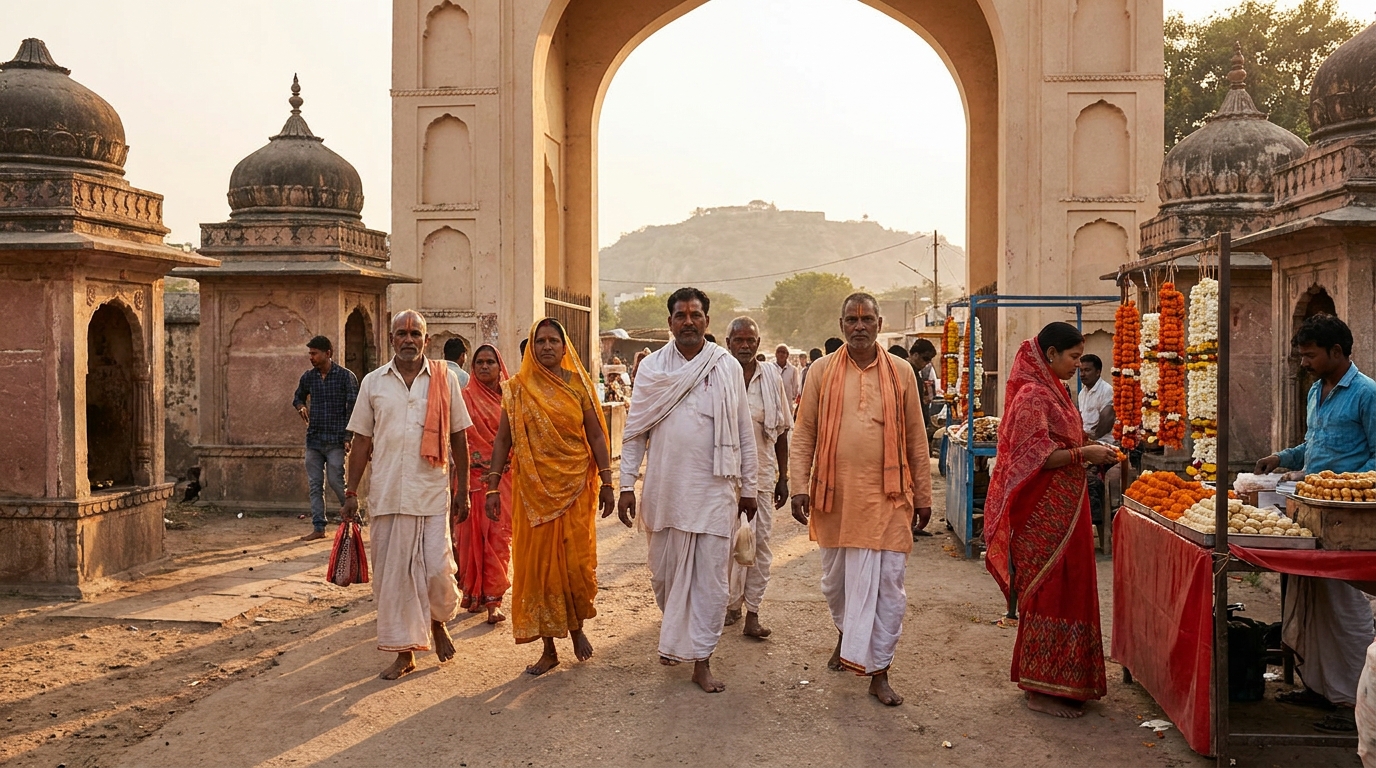
Govardhan is beloved because it represents shelter. In the Bhakti heart, shelter means taking refuge in God’s love, especially when life feels uncertain. We all experience storms: grief, fear, confusion, loneliness, pressure, and change. The story of Krishna lifting Govardhan reminds us that divine shelter is real and available.
Govardhan as Krishna’s Compassion
Many Bhakti teachers explain that Govardhan is an expansion of Krishna’s compassion. The hill served the residents of Vraja in countless ways. It gave grass for cows, water for all, caves for shelter, stones for worship, and beauty for the heart.
This teaches us that God’s love often reaches us through ordinary gifts: food, friendship, nature, breath, sunlight, scripture, and the kindness of others. When we become grateful, the world becomes a temple.
In Bhakti Yoga, gratitude is not just a positive mindset. It is a spiritual practice. We learn to see everything as connected to the Divine and to use our life in service. Service is called seva in Sanskrit. Seva means loving service offered without selfish expectation. Govardhan invites us into seva: caring for the Earth, feeding others, protecting animals, supporting community, and offering our talents to God.
Govardhan and Humility
The Govardhan pastime also teaches humility. Indra, though powerful, became blinded by pride. Krishna did not destroy him. Instead, Krishna gently corrected him. When Indra realized his mistake, he came before Krishna with repentance.
This is deeply encouraging for all of us. Spiritual life is not about pretending to be perfect. It is about becoming honest, soft-hearted, and willing to grow. Bhakti Yoga welcomes sincere imperfection. We can come to God with our pride, wounds, questions, and doubts, and ask to be guided.
Humility in Bhakti is not self-hatred. It is clarity. It means remembering that we are loved souls, dependent on divine grace. It means offering respect to others and accepting that every person is on a sacred journey.
Govardhan and Loving Dependence
For seven days, the people of Vraja stood beneath Govardhan, looking at Krishna as He held the hill. Imagine their hearts. They were protected, but they also had the blessing of gazing constantly upon Krishna. Their fear became an opportunity for deeper closeness.
Sometimes our life’s difficulties can bring us closer to God. This does not mean suffering is easy or that we should dismiss pain. Rather, Bhakti offers a tender way to bring our pain into prayer. We can say, “Krishna, I do not know how to carry this. Please guide me. Please let me remember You.”
Govardhan teaches loving dependence. Not helplessness, but sacred trust. We do our part with sincerity, and we remember that the deepest shelter comes from the Divine.
Discover a wealth of knowledge by exploring our insightful articles. Our articles cover a wide range of topics to inspire and educate. Stay informed and engaged by reading our latest articles.
Govardhan Parikrama: Walking the Sacred Path
One of the most important practices connected with Govardhan is parikrama. Parikrama means walking around a sacred place as an offering of devotion. The Govardhan Parikrama is approximately 21 kilometers, or about 13 miles, depending on the route taken.
Devotees walk around Govardhan while chanting, praying, singing, or meditating. Some walk barefoot. Some walk slowly with family. Some elderly pilgrims take small steps with great devotion. Some people offer full-body prostrations along the route, a practice known as dandavat parikrama. Every sincere offering is honored.
The Meaning of Parikrama
Parikrama is more than physical walking. It is a way of placing God at the center. When we walk around Govardhan, we symbolically say, “My life revolves around the Divine, not around my ego.”
This is a beautiful practice even for those who cannot travel to India. We can create a kind of inner parikrama in daily life. We can begin the morning with prayer, chant during a walk, offer our meals, serve someone in need, and end the day with gratitude. In this way, our ordinary day becomes a sacred circle around God.
Bhakti Yoga is practical. It meets us where we are. If we cannot walk 21 kilometers, we can chant one round of mantra. If we cannot visit Govardhan physically, we can hear the Govardhan pastime with faith. If we cannot do something grand, we can offer one sincere flower, one kind word, one moment of remembrance.
Important Places Around Govardhan
The Govardhan Parikrama route includes many sacred places connected to Krishna and His devotees. Each place carries its own mood of remembrance.
Manasi Ganga is a sacred lake near Govardhan town. Tradition says Krishna manifested it from His mind, or manas, to satisfy the desire of His loved ones to bathe in the Ganges.
Radha Kund and Shyama Kund are among the holiest lakes in the Bhakti tradition. Radha Kund is especially revered as the sacred bathing place of Srimati Radharani, Krishna’s greatest devotee and the embodiment of pure love. Shyama Kund is connected with Krishna, who is also called Shyama, “the beautiful dark one.”
Kusuma Sarovara is a peaceful lake associated with the gathering of flowers, or kusuma, for Radha and Krishna’s loving pastimes. Its architecture and quiet atmosphere invite prayerful reflection.
Govinda Kund is connected with Indra’s repentance after the Govardhan pastime. Here, Indra offered prayers and bathing ceremony to Krishna, recognizing His supreme position.
Each sacred site around Govardhan invites us not only to see, but to remember. In Bhakti, remembrance is called smaranam. Smaranam means lovingly holding God in the heart.
How to Approach Govardhan Parikrama Respectfully
If you visit Govardhan, it is helpful to come with humility. The area can be crowded, dusty, and full of life. There may be pilgrims, cows, monkeys, vendors, temples, and traffic. The external environment may not always match a romantic idea of sacredness. Yet devotion teaches us to look deeper.
A respectful pilgrim avoids littering, treats local residents kindly, honors cows and animals without disturbing them, dresses modestly, and avoids taking photos in intrusive ways. If possible, chant the holy names while walking. A common mantra in the Bhakti tradition is the Hare Krishna maha-mantra:
Hare Krishna, Hare Krishna, Krishna Krishna, Hare Hare
Hare Rama, Hare Rama, Rama Rama, Hare Hare
“Maha-mantra” means “great mantra.” A mantra is a sacred sound vibration that helps focus the mind and awaken the heart. The names Krishna and Rama refer to God as the source of all attraction and joy, while Hare calls upon the divine energy of love. This chanting is simple, universal, and open to everyone.
Govardhan Puja and Annakut Celebrations
Govardhan Puja is one of the most joyful festivals in the Bhakti calendar. It is usually celebrated the day after Diwali, though the exact date follows the lunar calendar. The festival commemorates Krishna lifting Govardhan Hill and the original worship of Govardhan arranged by the residents of Vraja.
The Meaning of Govardhan Puja
“Puja” means worship or loving offering. Govardhan Puja is the worship of Krishna as the protector of His devotees and the worship of Govardhan Hill as dear to Krishna. It is a festival of gratitude.
Instead of worshiping power for personal gain, the residents of Vraja worshiped the land, cows, and Krishna’s loving arrangement. This is a meaningful lesson for our time. Govardhan Puja encourages ecological gratitude, simplicity, and community care. It reminds us that food is sacred, nature is sacred, and all nourishment ultimately comes by divine grace.
In the Bhagavad Gita, Krishna says that if one offers Him a leaf, a flower, fruit, or water with devotion, He accepts it. The key is not wealth or display. The key is love. Govardhan Puja brings this teaching alive in a colorful and communal way.
Annakut: The Mountain of Food
A central feature of Govardhan Puja is Annakut, which means “mountain of food.” Devotees prepare many vegetarian dishes and arrange them in the form of a hill to represent Govardhan. These offerings may include rice, sweets, vegetables, breads, fruits, savories, and traditional preparations made with love.
Before eating, the food is offered to Krishna. Offered food is called prasadam, which means mercy or grace. Prasadam is not ordinary food. It has been spiritualized through devotion and then shared with everyone.
This practice is deeply inclusive. Feeding others is one of the most beautiful expressions of Bhakti. Whether in a temple, home, yoga studio, community center, or small apartment kitchen, Govardhan Puja can be celebrated by cooking with prayer and sharing prasadam with others.
Celebrating Govardhan Puja at Home
You do not need a large temple to honor Govardhan. A simple home celebration can be very meaningful.
You may place a picture of Krishna lifting Govardhan or an image of Govardhan Hill on a clean altar. You can prepare one or more vegetarian dishes without onion, garlic, meat, fish, or eggs, according to traditional Vaishnava offering standards. You can offer water, fruit, flowers, incense, or a candle.
Most importantly, offer your heart. Say a simple prayer: “Dear Krishna, thank You for protecting us. Please help me live with gratitude, humility, and love. Please accept this offering.”
You can read the Govardhan pastime from the Srimad Bhagavatam, sing kirtan, chant the Hare Krishna mantra, and share prasadam with family, friends, neighbors, or anyone who would appreciate a loving meal.
Govardhan in Sacred Scriptures
Govardhan’s significance is beautifully described in Bhakti scriptures and songs. These texts are not meant only for scholars. They are living guides that help us bring divine wisdom into daily life.
The Srimad Bhagavatam and the Govardhan Lila
The Srimad Bhagavatam, also called the Bhagavata Purana, is one of the most treasured scriptures in the Bhakti tradition. In its Tenth Canto, it describes Krishna’s childhood pastimes in Vrindavan, including the Govardhan Lila.
When Krishna encourages the people of Vraja to worship Govardhan, He teaches that spiritual life includes honoring our real sources of support. For the cowherd community, Govardhan, the cows, the land, and the brahmanas—spiritual teachers and priests—were essential to life. Krishna’s instruction was practical and devotional.
The Bhagavatam also shows that Krishna is both fully divine and intimately loving. He can lift a mountain, yet He does so as a small cowherd boy surrounded by His family and friends. This paradox is one of the sweetnesses of Bhakti: God is great, yet He becomes close through love.
The Bhagavad Gita and Shelter in God
Although the Bhagavad Gita does not tell the Govardhan story directly, its teachings illuminate the heart of the pastime. Krishna’s call to surrender, especially in the Gita’s famous instruction to take refuge in Him, echoes the mood of Govardhan. Surrender in Sanskrit is often called sharanagati, meaning taking shelter.
Taking shelter does not mean abandoning responsibility. It means aligning our responsibility with devotion. We still work, care for family, study, serve, and make decisions. But we do so while remembering, “I am not alone. I belong to God.”
The Govardhan pastime gives a visual form to this truth: all of Vraja beneath the lifted hill, protected by Krishna’s hand.
Songs of the Saints
Many saints have sung the glories of Govardhan. Srila Raghunatha dasa Goswami, a great saint of the Gaudiya Vaishnava tradition, wrote heartfelt prayers to Govardhan, seeing the hill as the best servant of Krishna. Devotees often call Govardhan “Haridasa-varya,” meaning “the best among the servants of Hari,” another name for Krishna.
This title is very meaningful. Govardhan serves Krishna and Krishna’s devotees constantly. It provides everything needed for loving pastimes. It does not demand attention. It simply serves.
For practitioners, this becomes a model. We may ask, “How can I become like Govardhan? How can I nourish others, support devotion, and offer my life in quiet service?”
Practical Lessons from Govardhan for Daily Life
Govardhan is sacred, but its message is not distant. It speaks directly to modern life. Whether we live in a city, suburb, village, or ashram, we can bring Govardhan’s teachings into our choices and relationships.
Practice Gratitude for What Sustains You
Govardhan Puja begins with gratitude. Take a moment each day to notice what sustains your life: food, water, family, teachers, the Earth, community, and divine grace. Gratitude softens the heart and reduces the restless hunger for more.
A simple practice is to pause before meals and offer thanks. In Bhakti, we can offer our food to God with love and then honor it as prasadam. This transforms eating from consumption into communion.
Choose Humility Over Pride
Indra’s mistake was pride. He forgot that his power came from a higher source. We may not command clouds, but we all face the temptation to seek control, recognition, or superiority.
Govardhan invites us to humility. We can practice by listening more carefully, apologizing when we hurt someone, honoring others’ contributions, and remembering that every gift we have is meant for service.
Take Shelter Through Chanting and Prayer
When the storms came, the residents of Vraja ran to Krishna. In our own storms, we can also turn toward God. Chanting is one of the most accessible forms of shelter.
Even five minutes of sincere chanting can change the atmosphere of the heart. You may chant the Hare Krishna mantra softly, sing kirtan, repeat a prayer, or simply call out to God in your own words. Bhakti is personal. God hears sincerity.
Serve People, Animals, and the Earth
Govardhan nourished cows, people, and nature. To honor Govardhan today, we can serve life around us. This may include feeding others, supporting ethical food practices, caring for animals, reducing waste, planting trees, volunteering, or offering kindness to someone who feels unseen.
In Bhakti Yoga, service is not separate from meditation. When offered with love, service becomes worship.
Build Community Around Sacred Love
The Govardhan Lila is a community story. Everyone took shelter together. Spiritual growth is strengthened by good association, called sadhu-sanga. This means the company of sincere spiritual people.
Community does not have to be perfect to be sacred. It simply needs shared intention: to remember God, support one another, chant, learn, serve, and grow. A Bhakti community is a place where people of all backgrounds can come as they are and take steps toward divine love.
Visiting Govardhan Today: A Pilgrim’s Guide
For those who feel called to visit Govardhan, the journey can be deeply transformative. Pilgrimage in Sanskrit is called tirtha-yatra. A tirtha is a sacred crossing place, where the material and spiritual worlds feel close.
When to Visit Govardhan
Govardhan can be visited throughout the year, but certain times are especially significant. Govardhan Puja, Kartik month, and full moon days attract many pilgrims. Kartik, also called Damodara month, is considered a very sacred time for deepening devotion to Krishna.
The winter months are generally more comfortable for walking parikrama, while summer can be extremely hot. If you are planning a visit, prepare practically with water, modest clothing, comfortable walking arrangements, and respect for local customs.
What to Bring in Your Heart
The most important preparation is inner preparation. Bring humility, patience, and a desire to serve. Sacred places can reveal both beauty and challenge. You may feel peace, but you may also feel tired, overwhelmed, or confronted by poverty and complexity. Let all of it become prayer.
Instead of approaching Govardhan as a tourist attraction, approach as a guest. Ask inwardly, “How may I honor this place? What is Krishna teaching me here?”
Supporting the Sacred Ecology of Govardhan
Govardhan’s physical environment needs care. Pilgrims and visitors can help by avoiding plastic waste, using refillable bottles when possible, not leaving offerings in ways that create pollution, and supporting organizations that care for the area responsibly.
Devotion includes responsibility. Loving Govardhan means not only singing its glories, but helping preserve its sacred environment for future generations.
Govardhan as a Path of Love for Everyone
Govardhan’s message is universal because everyone needs shelter. Everyone longs to be loved, protected, forgiven, and guided. The Govardhan Lila assures us that God is not indifferent to our storms. Krishna sees, hears, and responds to sincere hearts.
Bhakti Yoga gives us simple ways to enter this relationship. We can chant God’s names. We can pray honestly. We can offer food with love. We can serve others. We can read sacred wisdom. We can keep company with people who help us remember our spiritual nature. Step by step, the heart becomes lighter and more open.
You do not have to be born into a particular culture to love Krishna. You do not have to know Sanskrit perfectly. You do not have to be spiritually advanced. Bhakti begins wherever you are. One sincere chant, one humble prayer, one act of kindness, one offering of gratitude—these are precious.
Govardhan teaches us that the Divine may appear as a mountain, a child, a protector, a friend, and the quiet strength beneath our feet. It invites us to live with reverence for the Earth, tenderness toward all beings, and trust in Krishna’s loving care.
May the remembrance of Govardhan bring shelter to your heart. May its history awaken faith, its significance deepen your devotion, and its celebrations inspire joyful service. Whoever you are, wherever you come from, you are welcome on this path of love. Today, take one sincere step toward God—chant, pray, serve, remember—and trust that Krishna lovingly receives it.
FAQs
What is the significance of Govardhan in Hindu mythology?
Govardhan holds great significance in Hindu mythology as it is believed to be the sacred mountain lifted by Lord Krishna to protect the residents of Vrindavan from the wrath of Indra, the god of rain and thunder.
What are the main attractions at Govardhan?
Some of the main attractions at Govardhan include Govardhan Hill, Kusum Sarovar, Radha Kund, and Manasi Ganga. These sites are considered holy by devotees and are visited by pilgrims from all over the world.
How can one reach Govardhan?
Govardhan is well-connected by road and can be easily reached by bus or taxi from nearby cities like Mathura and Vrindavan. The nearest railway station is Mathura Junction, which is approximately 25 kilometers away from Govardhan.
What is the best time to visit Govardhan?
The best time to visit Govardhan is during the winter months of October to March when the weather is pleasant and conducive for sightseeing and exploring the religious sites. It is advisable to avoid visiting during the summer months due to the extreme heat.
Are there any accommodations available in Govardhan for tourists?
Yes, there are several guesthouses, hotels, and ashrams in and around Govardhan that offer accommodations for tourists and pilgrims. These accommodations cater to different budgets and preferences, providing a comfortable stay for visitors.

