
Entering Vrindavan with a Humble Heart
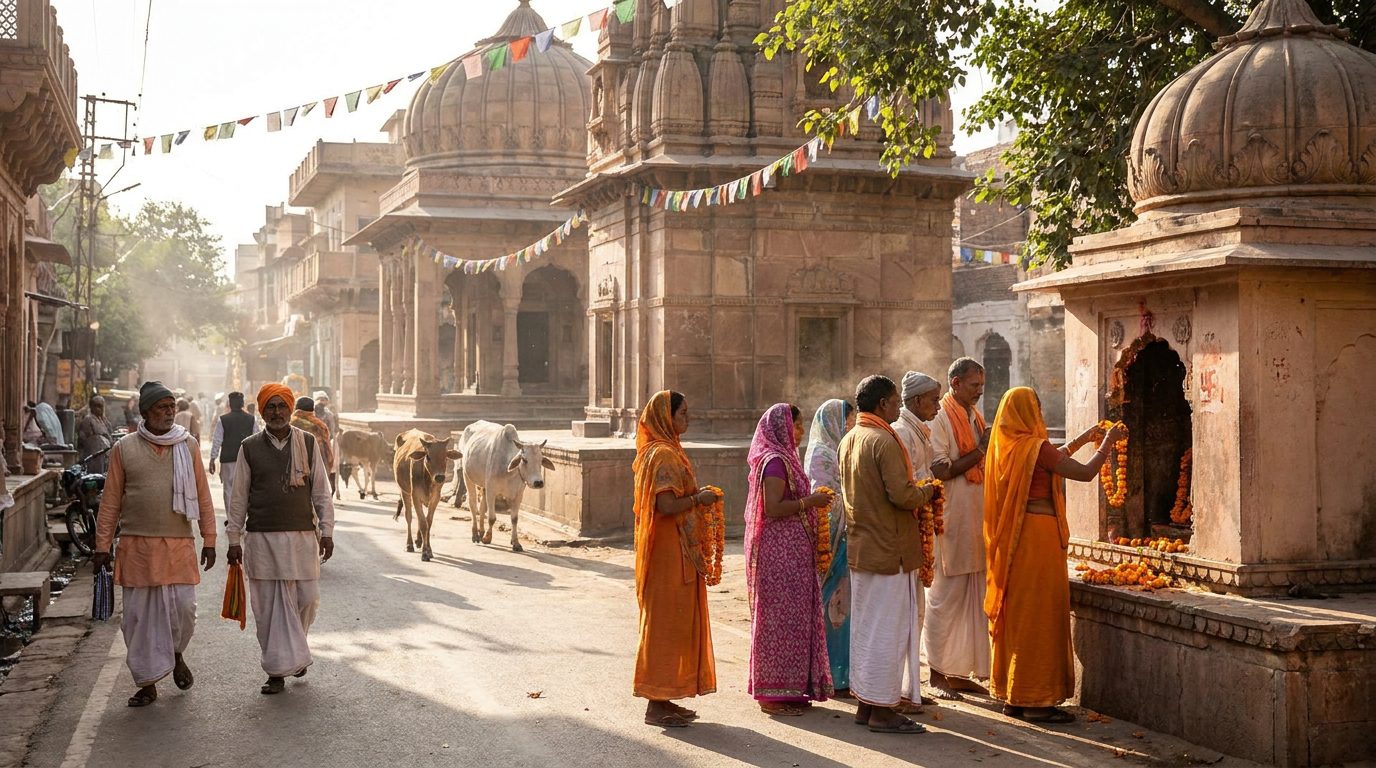
Vrindavan is not only a town in Uttar Pradesh, India. For millions of devotees, seekers, pilgrims, artists, and travelers, Vrindavan is a sacred doorway into love of God. It is the holy land associated with the childhood and youth pastimes of Sri Krishna, the Supreme Lord adored in the Bhakti tradition as the all-attractive source of divine love.
In Sanskrit, bhakti means loving devotion. Bhakti Yoga is the path of awakening the heart through chanting, prayer, service, remembrance, sacred community, and offering our daily life to God. Vrindavan is one of the most beloved places in the world for this practice because every lane, temple, tree, and song seems to whisper the names of Radha and Krishna.
Sri Radha is worshiped in Bhakti scriptures as the highest expression of pure love for Krishna. Together, Radha and Krishna represent divine love in its most intimate, beautiful, and compassionate form. To walk through Vrindavan is to be invited into that love—not by force, not by fear, but through sincerity.
Whether you are a lifelong devotee, a curious traveler, a yoga practitioner, or someone simply seeking peace, Vrindavan welcomes you. You do not need to know everything before you come. You only need a respectful heart, a willingness to listen, and a desire to take one sincere step closer to God.
Why Vrindavan Is Sacred in the Bhakti Tradition
Vrindavan is considered one of the holiest places in India because it is the land of Krishna’s loving pastimes, known in Sanskrit as lila. The word lila means divine play. In Bhakti Yoga, God is not seen as distant or impersonal. Krishna plays, laughs, protects, dances, loves, and invites souls into relationship.
The Srimad Bhagavatam, one of the most important scriptures in the Bhakti tradition, describes Krishna’s life in Vrindavan with great sweetness. It tells of Krishna as a cowherd boy who plays the flute, cares for cows, protects His devotees, and shares loving exchanges with the residents of Vrindavan. These residents are known as Vrajavasis, the people of Vraja, the sacred region that includes Vrindavan, Govardhan, Barsana, Nandgaon, and other holy places.
The Mood of Vrindavan
The spiritual mood of Vrindavan is simple, intimate, and full of love. In many religious traditions, God is approached with reverence and awe. In Vrindavan, God is also approached as a beloved child, a dear friend, and the eternal beloved of the heart.
This does not reduce God’s greatness. Rather, it reveals God’s kindness. Krishna allows His devotees to love Him personally. This is the gift of Bhakti Yoga: the understanding that the soul is made for loving relationship with the Divine.
When visitors come to Vrindavan, they often notice the constant chanting of the holy names:
*Hare Krishna Hare Krishna
Krishna Krishna Hare Hare
Hare Rama Hare Rama
Rama Rama Hare Hare*
This mantra is called the maha-mantra, meaning “great mantra.” A mantra is a sacred sound that helps focus the mind and awaken the heart. In the Bhakti tradition, chanting God’s names is both a prayer and a spiritual practice. It can be done softly, musically, alone, or in a group.
Vrindavan as a Living Pilgrimage
A pilgrimage is not just tourism. It is travel with spiritual intention. In Vrindavan, pilgrimage often includes visiting temples, hearing sacred stories, chanting, offering prayers, serving others, and walking around holy places. This walking is called parikrama, meaning circumambulation.
Many devotees walk the Vrindavan Parikrama path, a sacred route around the town, while chanting and remembering Krishna. Even if one’s mind is busy or one’s heart feels restless, the simple act of walking with prayer can become a form of healing.
Vrindavan teaches us that spiritual life does not always begin with perfection. It begins with sincerity.
Must-Visit Temples in Vrindavan
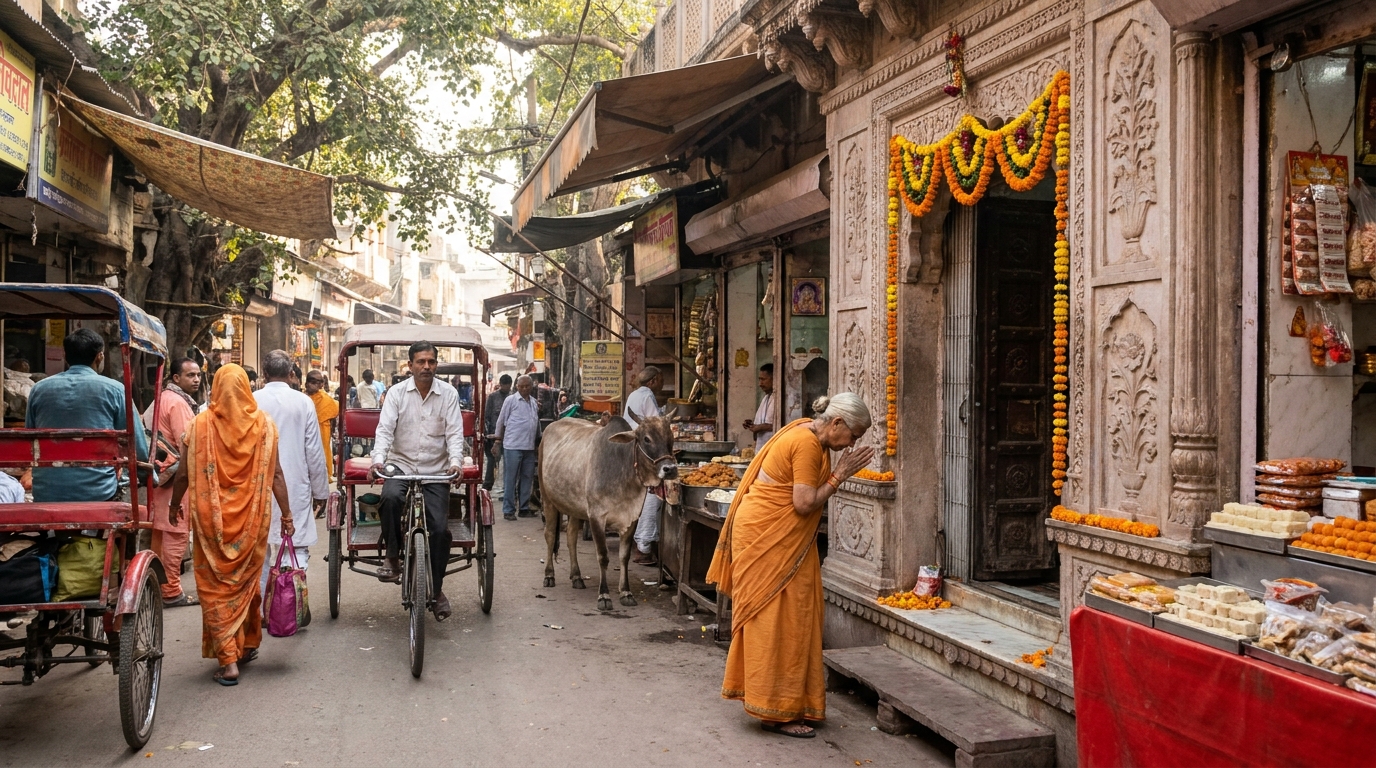
Vrindavan is home to thousands of temples, from grand historic mandirs to tiny shrines tucked inside narrow lanes. A mandir is a temple, a sacred place where devotees gather to worship and remember God. Each temple has its own mood, history, and beauty.
Here are some of the most important temples to include in your Vrindavan travel guide.
Banke Bihari Temple
Banke Bihari Temple is one of the most famous temples in Vrindavan. The deity of Krishna here is known as Banke Bihari, which means “the charming one who bends in three places.” This beautiful form of Krishna is deeply beloved by devotees.
The temple atmosphere is lively, crowded, and full of emotion. The curtain before the deity opens and closes frequently because devotees believe Krishna’s glance is so powerful and loving that it can overwhelm the heart.
When visiting Banke Bihari Temple, be prepared for crowds, especially during weekends, festivals, and the evening darshan time. Darshan means seeing and being seen by the Divine. In Bhakti understanding, we do not simply look at God; we come to be seen by God with love.
Radha Raman Temple
Radha Raman Temple is one of Vrindavan’s most sacred and historic temples. The deity of Radha Raman appeared to the great saint Gopal Bhatta Goswami, one of the Six Goswamis of Vrindavan. These Goswamis were spiritual teachers who helped reveal and preserve the sacred places of Vrindavan in the 16th century.
“Radha Raman” means “Krishna, who gives pleasure to Radha.” The worship here is very traditional and graceful. The temple is smaller than some modern temples, but the spiritual atmosphere is profound.
Visitors often feel a deep peace here. The prayers, bells, lamps, and devotional songs remind us that Bhakti Yoga is not only philosophy—it is love expressed through daily offerings.
ISKCON Krishna Balaram Mandir
The Krishna Balaram Mandir, established by Srila A.C. Bhaktivedanta Swami Prabhupada, is one of the most visited temples in Vrindavan, especially for international pilgrims. Srila Prabhupada carried the teachings of Bhakti Yoga around the world and made the chanting of the Hare Krishna maha-mantra accessible to people of all backgrounds.
The temple worships Krishna and Balaram, Radha Shyamasundar, and Gaura Nitai. Balaram is Krishna’s elder brother, and Gaura Nitai refer to Sri Chaitanya Mahaprabhu and Nityananda Prabhu, who spread the chanting of God’s names with great compassion.
The temple offers daily kirtan, classes, prasadam, and a welcoming environment for visitors. Kirtan is devotional chanting, often with music and call-and-response singing. Prasadam means sanctified food that has been offered to God with love.
For those new to Bhakti Yoga, this temple can be a gentle and practical introduction.
Prem Mandir
Prem Mandir, meaning “Temple of Love,” is a newer temple known for its beautiful white marble architecture and illuminated evening displays. It depicts many scenes from Krishna’s life and attracts families, pilgrims, and visitors from across India and the world.
While it can feel more spacious and organized than some older temples, it still carries a devotional message: divine love is the heart of spiritual life. The temple grounds are especially beautiful in the evening when the lights come on.
Prem Mandir is a good place for those traveling with children or elders because the campus is wide and easier to navigate compared to the narrow lanes of old Vrindavan.
Radha Damodar Temple
Radha Damodar Temple holds special importance for students of Bhakti scriptures and history. It is connected with Srila Jiva Goswami, one of the great theologians of the Bhakti tradition. Srila Rupa Goswami and Srila Sanatana Goswami, two key teachers in the Chaitanya tradition, are also honored here.
Srila Prabhupada lived at Radha Damodar Temple before traveling to the West. His rooms are preserved and visited by devotees who remember his dedication, humility, and mission to share Krishna consciousness worldwide.
This temple invites deep reflection. It reminds us that sacred places are not only made of stone and marble. They are shaped by the prayers, sacrifices, and love of saints.
Govind Dev Ji Temple
The Govind Dev Ji Temple is one of Vrindavan’s great historic temples. Built in the 16th century, it once stood as a magnificent seven-story structure. Though partially damaged over time, it remains a powerful symbol of devotion, architecture, and spiritual heritage.
The temple is associated with Srila Rupa Goswami, whose writings explain the science of Bhakti Yoga with great depth and tenderness. Visiting Govind Dev Ji Temple can help travelers understand how Vrindavan’s devotion has been preserved through centuries of change.
Madan Mohan Temple
Madan Mohan Temple is among the oldest temples in Vrindavan and is connected with Srila Sanatana Goswami. “Madan Mohan” means Krishna, who attracts even Cupid, the force of worldly attraction. In Bhakti, Krishna’s beauty and love gently turn the heart away from temporary distractions and toward eternal joy.
The temple sits on a small hill near the Yamuna River. Its red sandstone structure and peaceful setting make it a meaningful stop for pilgrims seeking both history and prayer.
Discover a wide range of insightful articles that delve into various spiritual topics. These articles provide guidance and inspiration for your personal growth journey. Stay updated with the latest articles to enhance your understanding of spiritual practices.
The Culture of Vrindavan: Chanting, Festivals, and Daily Devotion
Vrindavan culture is devotional at its core. It is not only what people do in temples. It is how people greet one another, how food is offered, how music is sung, and how ordinary life becomes connected with Krishna.
You will often hear people say, “Radhe Radhe.” This is both a greeting and a prayer. It invokes the name of Srimati Radharani, the divine feminine embodiment of pure devotion. Saying “Radhe Radhe” is a way of remembering that love is the path and the goal.
Kirtan and the Holy Name
One of the most beautiful experiences in Vrindavan is kirtan. The harmonium, mridanga drum, kartals, and voices rise together in the holy names of God. You may not understand every word, but the heart often understands the mood.
The Bhagavad Gita teaches that when we offer even a leaf, a flower, fruit, or water with devotion, Krishna accepts it. This simple teaching shows that God is not impressed by wealth or status. He is moved by love.
In Vrindavan, chanting is an offering. Whether sung by trained musicians in a temple or whispered by an elderly devotee counting beads, the holy name is honored as sacred and alive.
Prasadam and Sacred Food
Food is an important part of Vrindavan culture. In Bhakti Yoga, vegetarian food is prepared with cleanliness and devotion, offered to Krishna, and then shared as prasadam. The word prasadam means mercy or grace.
Eating prasadam is not ordinary eating. It is receiving God’s kindness through food. Visitors can find prasadam in temples, ashrams, and devotional restaurants throughout Vrindavan.
Simple meals such as rice, dal, sabzi, chapati, khichdi, sweets, and fresh fruit can become spiritually uplifting when received with gratitude. If you are new to the practice, you can begin at home by offering your food to God with a simple prayer before eating.
Festivals in Vrindavan
Vrindavan is famous for its festivals, especially Janmashtami, Holi, Radhashtami, Kartik month, and Govardhan Puja.
Janmashtami celebrates Krishna’s appearance in this world. Temples are decorated beautifully, devotees fast, sing, and stay awake until midnight, the traditional time of Krishna’s birth.
Holi in Vrindavan is world-famous, full of colors, songs, and joyful celebration. Yet its deeper meaning is spiritual joy—the soul’s celebration in divine love.
Radhashtami honors the appearance of Srimati Radharani. For devotees, this is one of the most tender and sacred days of the year.
Kartik, also known as the month of Damodar, is a deeply devotional time when pilgrims offer lamps, sing prayers, and remember Krishna’s childhood pastime of being lovingly bound by Mother Yashoda. The Damodarastakam prayer, sung during this month, reveals a profound truth: God, who cannot be bound by anything, becomes bound by the love of His devotee.
Sacred Places Around Vrindavan
While Vrindavan itself is filled with temples, the surrounding Vraja region is also deeply sacred. If time allows, travelers may visit nearby holy places connected with Krishna’s pastimes.
Yamuna River
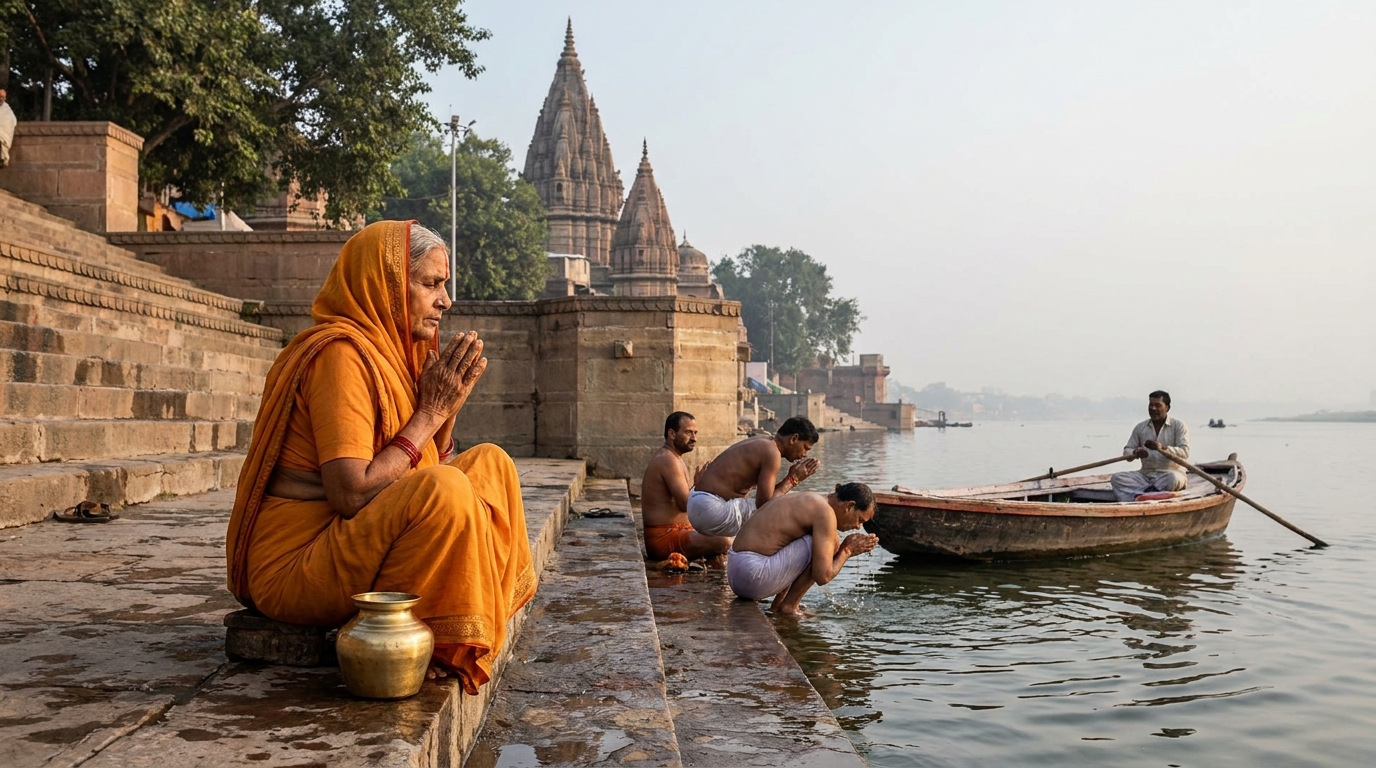
The Yamuna River is worshiped as a sacred river and dear servant of Krishna. Many pilgrims visit Keshi Ghat, one of the most famous bathing ghats in Vrindavan. A ghat is a series of steps leading down to a river.
The Yamuna has witnessed countless prayers, songs, and offerings. Visitors should approach the river respectfully and avoid polluting it. Even sitting quietly near the Yamuna and chanting can be a powerful devotional experience.
Govardhan Hill
Govardhan Hill is about 25 kilometers from Vrindavan and is one of the most sacred places in Vraja. According to the Srimad Bhagavatam, Krishna lifted Govardhan Hill to protect the people of Vrindavan from a great storm. This pastime teaches that Krishna lovingly protects those who take shelter of Him.
Many pilgrims perform Govardhan Parikrama, walking around the hill, a route of about 21 kilometers. Some walk barefoot, some chant quietly, and some move slowly with deep prayer. If you plan to do the full parikrama, begin early, carry water, dress modestly, and respect the sacred environment.
Barsana
Barsana is known as the home of Srimati Radharani. The main temple, Shri Radha Rani Temple, sits on a hill and offers beautiful views of the area. The mood in Barsana is especially sweet and connected with Radha’s loving service to Krishna.
For devotees, visiting Barsana is a chance to pray for a heart filled with compassion, humility, and devotion. In Bhakti Yoga, we do not try to love God by our own strength alone. We pray for the grace of those who love God perfectly.
Nandgaon
Nandgaon is associated with Krishna’s childhood home, where He lived with His father Nanda Maharaj and mother Yashoda. The temples and landscapes here remind pilgrims of Krishna’s early life as a cowherd boy.
These sacred villages help visitors experience Vrindavan not as a single location, but as a living spiritual landscape.
Practical Vrindavan Travel Tips for Pilgrims and Visitors
Vrindavan can be deeply beautiful, but it can also be intense for first-time visitors. The streets may be crowded, traffic can be unpredictable, and the temple schedule may feel overwhelming. A little preparation can help you travel with peace and respect.
Best Time to Visit Vrindavan
The most comfortable months to visit Vrindavan are generally October to March, when the weather is cooler. The Kartik month, usually around October or November, is especially sacred and attracts many pilgrims. However, it can also be crowded.
Summer, from April to June, can be extremely hot. If you visit during this time, plan temple visits early in the morning or in the evening, rest during the afternoon, and stay hydrated.
Monsoon season brings rain and humidity, but also a softer beauty to the land. Roads may become muddy, so practical footwear is important.
How to Reach Vrindavan
Vrindavan is located near Mathura in Uttar Pradesh. Mathura Junction is the nearest major railway station, with connections to Delhi, Agra, Jaipur, and other cities. From Mathura, you can take an auto-rickshaw, taxi, or local transport to Vrindavan.
The nearest major airport is in Delhi. From Delhi, Vrindavan can be reached by road in about three to four hours, depending on traffic. Many visitors also combine Vrindavan with trips to Mathura, Govardhan, Barsana, and Agra.
Where to Stay
Vrindavan offers a wide range of accommodations, including ashrams, guesthouses, hotels, and retreat centers. If your purpose is spiritual practice, staying near a temple or ashram can help you join morning and evening programs.
Some ashrams have simple rules regarding meal times, quiet hours, dress, and spiritual conduct. These rules are not meant to exclude anyone. They help maintain a devotional atmosphere. Before booking, check whether the place is suitable for families, elders, international travelers, or first-time visitors.
What to Wear
Modest clothing is appreciated in Vrindavan, especially in temples. For women, long skirts, loose pants, kurtas, shawls, or modest dresses are suitable. For men, long pants and simple shirts or kurtas are respectful choices. Shoulders and knees should generally be covered in sacred places.
Comfortable footwear is important because you may walk a lot. However, shoes must be removed before entering temples, so sandals that are easy to slip on and off can be helpful.
Staying Safe and Respectful
Vrindavan is a sacred town, but practical awareness is still needed. Keep your belongings secure, especially in crowded temples. Be cautious with monkeys, who may snatch glasses, phones, or food. Avoid carrying visible food in areas known for monkeys.
Drink bottled or filtered water. Eat at clean, trusted places. If you are sensitive to spices, ask for mild food.
Photography rules vary by temple. Some temples do not allow photos inside. Always ask or observe posted signs. More importantly, remember that temples are places of worship, not just tourist attractions.
Respect local customs, avoid loud or disruptive behavior, and be patient in crowds. A humble mood will protect your heart more than perfect travel planning.
How to Experience Vrindavan Spiritually, Not Just Visually
It is possible to visit many temples and still miss the heart of Vrindavan. The real gift of Vrindavan is not only what we see with our eyes. It is what awakens within us.
Begin the Day with Prayer
Before stepping out, take a few moments to pray. You might say:
“Dear Krishna, dear Radha, please guide me today. Help me see this place with respect. Help me become more humble, more loving, and more sincere.”
Simple prayer opens the heart. You do not need elaborate words. God hears sincerity.
Chant While You Walk
Carry prayer beads if you have them, or simply chant softly as you walk:
Hare Krishna Hare Krishna
Krishna Krishna Hare Hare
Hare Rama Hare Rama
Rama Rama Hare Hare
Chanting helps transform travel into pilgrimage. Even if the streets are noisy, the holy name can create a quiet temple within the heart.
Offer Service
Bhakti grows through service. Service is called seva in Sanskrit. It means offering our energy for the pleasure of God and the welfare of others.
In Vrindavan, seva may include helping at a temple, feeding cows, supporting prasadam distribution, cleaning a sacred place, assisting pilgrims, or simply treating others with kindness. Not all service is public or dramatic. Sometimes the most meaningful service is patience, gratitude, and humility.
Hear Sacred Wisdom
Try to attend a class on the Bhagavad Gita, Srimad Bhagavatam, or the teachings of saints. Hearing spiritual wisdom is called sravanam, or devotional listening. In Bhakti Yoga, hearing is powerful because divine truth enters the heart through sound.
The Bhagavad Gita teaches that the mind can be our friend or our enemy. In a busy place like Vrindavan, this becomes very practical. If we come only to consume experiences, the mind may become restless. If we come to hear, serve, and remember, the mind gradually becomes peaceful.
Keep Expectations Gentle
Some people arrive in Vrindavan expecting instant spiritual ecstasy. Others feel overwhelmed by crowds, noise, poverty, or culture shock. Both experiences are normal.
Vrindavan is spiritually perfect, but our ability to perceive it may be covered. Bhakti Yoga teaches us not to demand mystical experiences. Instead, we practice sincerely and allow grace to unfold in God’s time.
Sometimes Vrindavan’s blessing comes as joy. Sometimes it comes as humility. Sometimes it comes as the realization that we need to deepen our prayer.
Suggested Vrindavan Itinerary for First-Time Visitors
A thoughtful itinerary can help you experience Vrindavan without rushing. It is better to visit fewer places with attention than many places with a distracted mind.
One-Day Vrindavan Visit
If you have only one day, begin early. Visit ISKCON Krishna Balaram Mandir for morning kirtan and darshan. Then go to Radha Raman Temple or Radha Damodar Temple for a quieter, traditional atmosphere.
In the afternoon, rest and take prasadam. Later, visit Banke Bihari Temple and end the evening at Prem Mandir to see the lights and devotional displays.
This one-day plan offers a balance of chanting, history, darshan, and beauty.
Three-Day Vrindavan Visit
With three days, you can move more slowly.
On the first day, focus on the main temples of Vrindavan: Banke Bihari, Radha Raman, Radha Damodar, ISKCON, and Prem Mandir.
On the second day, walk part or all of the Vrindavan Parikrama path, visit Keshi Ghat, and spend time near the Yamuna. Attend evening kirtan if possible.
On the third day, take a trip to Govardhan Hill or Barsana. If you choose Govardhan Parikrama, begin early and allow the day to be centered on prayer rather than sightseeing.
One-Week Pilgrimage
A week in Vrindavan allows for deeper spiritual rhythm. You can attend morning programs, hear classes, visit sacred places slowly, and leave space for reflection.
Include Mathura, Govardhan, Barsana, Nandgaon, and perhaps Gokul if time allows. But also keep time for stillness. Sit in a temple courtyard. Chant near the Yamuna. Write in a journal. Offer gratitude.
Vrindavan is not asking us to hurry. Vrindavan is inviting us to remember.
Food, Shopping, and Local Etiquette in Vrindavan
Vrindavan has many devotional restaurants, sweet shops, bookshops, and stalls selling prayer beads, deity clothes, incense, pictures, and spiritual items. Shopping can be part of the experience, but it is helpful to keep the mood sacred.
Vegetarian Food and Sweets
Vrindavan is largely vegetarian due to its devotional culture. Many places avoid onion and garlic as well, especially those connected with temple cooking. This style of food is called satvik, meaning pure, peaceful, and supportive of spiritual life.
Try local sweets such as peda, rabri, lassi, and fresh milk preparations from trusted shops. Dairy is deeply connected with Krishna’s cowherd pastimes, though visitors should choose clean, reputable places.
If you receive prasadam in a temple, honor it respectfully. Avoid wasting food. Even a small portion can be received as grace.
Spiritual Books and Japa Beads
Vrindavan is a wonderful place to find translations of the Bhagavad Gita, Srimad Bhagavatam, and writings of Bhakti saints. If you are new, begin with the Bhagavad Gita. It offers timeless guidance on duty, devotion, meditation, and surrender.
You may also purchase japa mala, a string of prayer beads used for personal chanting. Japa means quiet repetition of a mantra. Many practitioners chant the Hare Krishna maha-mantra daily on beads as a way to steady the mind and nourish devotion.
Giving Donations Thoughtfully
You may be approached for donations. Giving is honorable, but it is wise to give thoughtfully. Support temples, verified charities, cow protection programs, prasadam distribution, or trusted service organizations.
Bhakti is not measured by the size of a donation. It is measured by the sincerity of the heart.
The Inner Meaning of Visiting Vrindavan
At the heart of every Vrindavan travel guide is a deeper question: why do we travel to sacred places?
We travel because the soul is searching for home. We travel because the heart knows there is more than temporary success and struggle. We travel because love is calling us.
Vrindavan reminds us that God is not far away. Krishna is present in His holy name, in the scriptures, in the hearts of His devotees, in prasadam, in prayer, and in every sincere act of service.
The Bhagavad Gita says that whoever offers love and devotion to Krishna is accepted. This is a deeply hopeful teaching. We do not need to be born in a particular place, speak a particular language, or have a perfect past. Bhakti Yoga is open to everyone.
Vrindavan does not ask, “Are you qualified?” Vrindavan gently asks, “Are you willing to love?”
That love may begin very simply. Chant one round of the maha-mantra. Offer your meal with gratitude. Read one verse of the Bhagavad Gita. Serve someone without expecting praise. Bow your head and say, “God, please guide me.”
These small acts are not small to Krishna. In Bhakti, even one sincere step has eternal value.
A Gentle Invitation to Your Vrindavan Journey
If you feel drawn to Vrindavan, honor that calling with humility. Plan your journey carefully, but leave room for grace. Visit the temples, chant the holy names, receive prasadam, serve where you can, and listen to the wisdom carried by saints for generations.
If you cannot physically travel to Vrindavan right now, you can still invite Vrindavan into your heart. Create a small sacred space at home. Chant daily. Read Krishna’s teachings. Offer food with love. Join a kirtan. Pray in your own words.
Bhakti Yoga is practical. It is not limited to a temple town, though holy places help us remember. The real Vrindavan begins to awaken wherever the heart turns toward Radha and Krishna with sincerity.
You are welcome on this path, exactly as you are. Whatever your background, questions, hopes, or struggles, divine love is not closed to you. Take one sincere step toward God today—through chanting, prayer, service, or remembrance—and trust that Krishna lovingly sees your effort.
FAQs
What is Vrindavan known for?
Vrindavan is known for being a sacred town in India, famous for its association with Lord Krishna and his childhood pastimes.
What are the popular temples to visit in Vrindavan?
Some of the popular temples to visit in Vrindavan include Banke Bihari Temple, ISKCON Temple, Radha Raman Temple, and Prem Mandir.
When is the best time to visit Vrindavan?
The best time to visit Vrindavan is during the months of October to March when the weather is pleasant and conducive for exploring the town and its temples.
What are the popular festivals celebrated in Vrindavan?
Some of the popular festivals celebrated in Vrindavan include Holi, Janmashtami, Radhashtami, and Kartik Purnima, which attract devotees and tourists from all over the world.
Is it necessary to follow a dress code when visiting temples in Vrindavan?
Yes, it is advisable to dress modestly and respectfully when visiting temples in Vrindavan. It is recommended to wear clothes that cover the shoulders and knees as a sign of respect for the religious and cultural significance of the place.

