
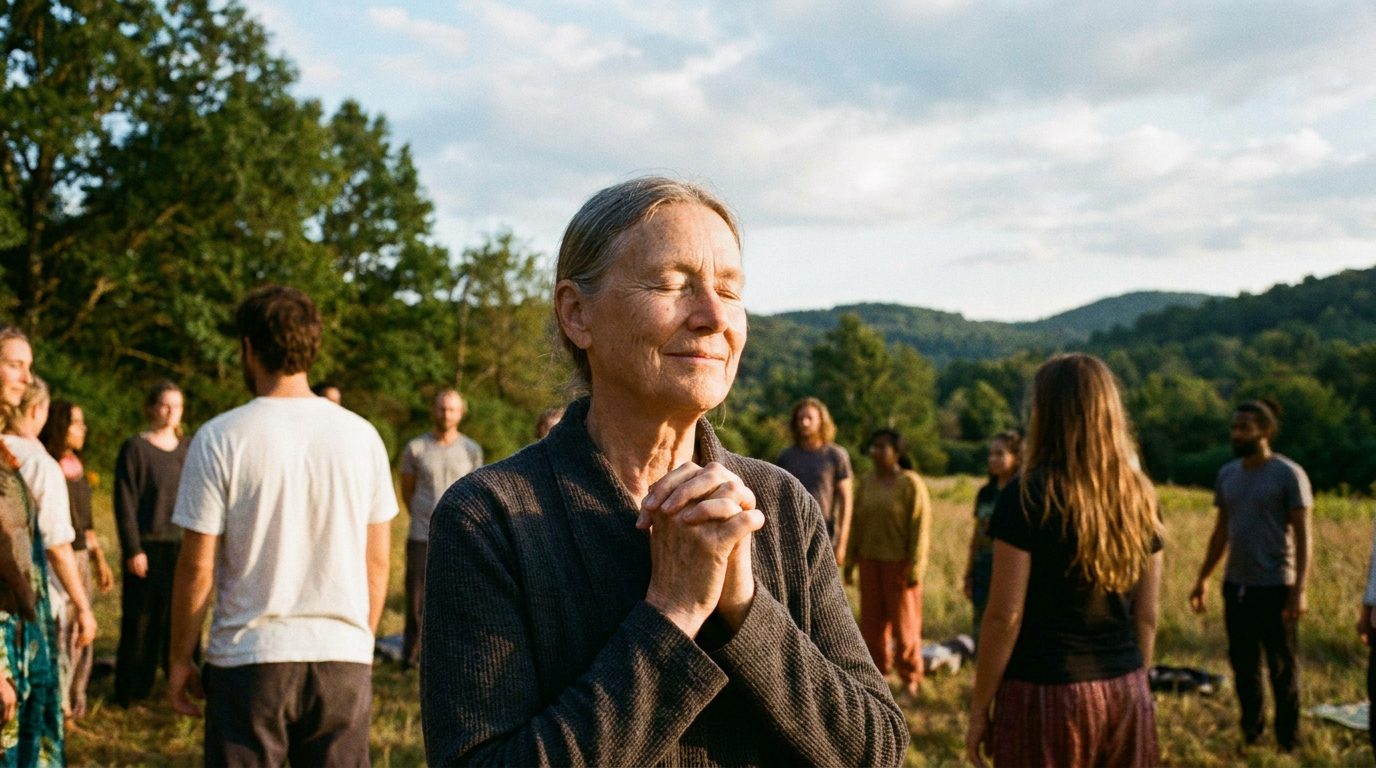
Opening the Heart to Spiritual Emotion
Every person carries a deep inner world. Beneath our plans, responsibilities, worries, and hopes, there is a tender place in the heart that longs to love and be loved. In Bhakti Yoga, this sacred longing is not seen as weakness. It is understood as a doorway to God.
Spiritual emotion is the soul’s natural response to divine connection. It may appear as gratitude, humility, joy, longing, repentance, peace, wonder, or love. Sometimes it comes gently, like a quiet prayer at the end of a difficult day. Sometimes it comes powerfully, like tears during chanting or a sudden feeling of being held by something greater than ourselves.
At The Bhakti House, we welcome seekers from all backgrounds. You may be new to Sanskrit words, unsure about religion, returning to faith, or simply curious about spiritual life. Wherever you are, Bhakti Yoga offers a practical and loving path. It teaches us that the heart can be purified, strengthened, and awakened through chanting, prayer, service, sacred wisdom, and sincere relationship with God.
The word “bhakti” means devotion, loving service, or heartfelt connection with the Divine. Bhakti is not only a philosophy. It is a way of living. It invites us to bring love into our thoughts, words, meals, relationships, work, and daily choices.
Spiritual emotion becomes powerful when it is guided by devotion. Instead of being ruled by fear, anger, or temporary excitement, we learn to offer our emotions to God. In this offering, the heart becomes clear, humble, courageous, and full of purpose.
Understanding Spiritual Emotion in Bhakti Yoga

Spiritual emotion is different from ordinary emotional reaction. Ordinary emotion often rises and falls according to changing circumstances. We feel happy when life goes our way and disturbed when it does not. This is part of being human, and Bhakti Yoga does not shame us for it. Rather, it teaches us how to transform our emotional life into a path of awakening.
Spiritual emotion begins when the heart turns toward the Divine. It may start with a simple question: “God, are You there?” It may deepen into a prayer: “Please guide me.” Over time, it becomes a relationship: “I want to love You and serve You.”
In Bhakti scriptures, this deepening of the heart is described with great care. The Bhagavad-gita, one of the foundational texts of Bhakti Yoga, teaches that the mind and heart can become peaceful when they are connected to God through loving devotion. In Bhagavad-gita 9.22, Krishna says that for those who remember Him with devotion, He personally carries what they lack and preserves what they have. Practically, this means we are not alone in spiritual life. When we sincerely turn toward God, grace meets us.
Spiritual emotion is not performance. It is not about appearing holy or forcing a certain mood. Real devotion is honest. Sometimes it feels joyful. Sometimes it feels dry. Sometimes it comes through tears, and sometimes through quiet determination. What matters is sincerity.
The Difference Between Sentiment and Sacred Feeling
Bhakti Yoga honors emotion, but it also teaches discernment. Not every strong feeling is spiritual. Sentiment may come quickly and fade just as quickly. Sacred feeling, on the other hand, gradually softens the heart and inspires positive change.
If an emotion leads us toward humility, compassion, patience, forgiveness, service, and remembrance of God, it is helping our spiritual growth. If it leads us toward pride, judgment, escapism, or instability, then it may need to be purified and guided.
This is why Bhakti Yoga includes both heart and wisdom. Chanting opens the heart. Scripture gives direction. Community gives support. Service keeps us grounded. Prayer keeps us honest.
Spiritual emotion is not meant to make us float above life. It is meant to help us love more deeply within life.
The Heart as a Sacred Place of Practice
In many spiritual traditions, the heart is seen as the seat of love, conscience, and divine longing. In Bhakti Yoga, the heart is also understood as the place where our relationship with God can be awakened.
The Sanskrit word “citta” can refer to consciousness or the inner field of the heart and mind. This inner field can become crowded with anxieties, desires, regrets, and distractions. Through Bhakti practices, the citta becomes cleansed, just as a mirror becomes clear when dust is wiped away.
One of the famous teachings of Sri Chaitanya Mahaprabhu, a great teacher of divine love, begins with the phrase “ceto-darpana-marjanam,” meaning “the cleansing of the mirror of the heart.” This teaching explains that chanting God’s names gradually removes the dust covering our true spiritual nature.
This is a beautiful and practical image. We do not have to create love for God artificially. The love is already within us. Our practices help uncover it.
Why Spiritual Emotion Matters in Daily Life

Many people are emotionally tired. Modern life often pushes us to move quickly, achieve more, compare ourselves, and carry silent burdens. We may become disconnected from our own hearts. We may feel numb, restless, or spiritually thirsty without knowing why.
Bhakti Yoga teaches that the heart needs nourishment. Just as the body needs food and the mind needs meaningful thought, the soul needs connection with God. Spiritual emotion matters because it reminds us that we are more than our productivity, more than our mistakes, and more than our temporary roles.
When spiritual emotion awakens, life becomes more personal and sacred. A meal can become an offering. A walk can become a prayer. A difficulty can become a lesson in surrender. A relationship can become a place to practice compassion. Even our pain can become part of our conversation with God.
Emotional Healing Through Devotion
Many of us carry wounds from the past. We may have experienced rejection, disappointment, grief, or guilt. Bhakti Yoga does not ask us to hide these things. Instead, it invites us to bring them into the presence of divine love.
Prayer can be very healing because it allows us to be truthful before God. We can say, “I am hurting.” We can say, “I do not understand.” We can say, “Please help me forgive.” This honesty is not a lack of faith. It can be the beginning of deeper faith.
The Srimad Bhagavatam, a cherished Bhakti scripture, contains many stories of people turning to God in moments of distress, longing, confusion, and love. These stories show that God responds not only to perfect prayers, but to sincere prayers.
When we offer our emotional life to God, we are not denying human pain. We are placing it in sacred hands.
Devotion as a Source of Resilience
Spiritual emotion also gives strength. Love can make us brave. When we feel connected to God, we gain courage to do what is right, even when it is difficult.
In the Bhagavad-gita, Arjuna faces a painful crisis. He is overwhelmed, confused, and emotionally shaken. Krishna does not reject Arjuna’s emotions. Instead, He guides him with compassion, wisdom, and spiritual vision. Arjuna’s transformation does not come by suppressing his heart, but by aligning it with divine purpose.
This is deeply relevant for us. We may not stand on a battlefield like Arjuna, but we face inner battles every day: fear, temptation, doubt, resentment, loneliness, and distraction. Bhakti Yoga helps us meet these battles with remembrance, prayer, and loving action.
Spiritual emotion becomes resilience when it is rooted in trust.
I recently discovered a website with insightful articles on mindfulness and meditation. The articles provide practical tips for incorporating spirituality into daily life. If you’re interested in personal growth, these articles are a must-read.
Chanting as a Gateway to the Awakened Heart
One of the most accessible practices in Bhakti Yoga is chanting. Chanting means repeating sacred names of God with attention and devotion. In Sanskrit, this practice is often called “kirtan” when done musically in a group, and “japa” when done softly or privately, often with meditation beads.
The sacred names are not considered ordinary sounds. In Bhakti understanding, God is personally present in His names. This means chanting is not only a mental exercise. It is a meeting place. It is a way to call out, listen, receive, and remember.
One widely practiced mantra in the Bhakti tradition is the Maha Mantra:
Hare Krishna, Hare Krishna, Krishna Krishna, Hare Hare
Hare Rama, Hare Rama, Rama Rama, Hare Hare
“Maha” means great, and “mantra” means a sacred sound that helps free the mind. “Hare” addresses the divine energy of the Lord. “Krishna” means the all-attractive Supreme Person. “Rama” means the source of joy and spiritual pleasure. In simple terms, this mantra is a prayer: “O Lord, O divine energy of the Lord, please engage me in Your loving service.”
Why Chanting Touches Emotion
Chanting touches emotion because sound enters deeply. We may not always be able to think our way into peace, but sacred sound can reach places that ordinary reasoning cannot.
When we chant, we give the restless mind something pure to hold. We give the heart a language for longing. We give the soul a way to turn toward God again and again.
At first, chanting may feel unfamiliar. The mind may wander. The voice may feel shy. That is okay. Bhakti practice grows through sincerity, not perfection. Even a few minutes of chanting each day can begin to soften the heart.
The process is simple:
Choose a quiet time if possible.
Sit comfortably.
Take a gentle breath.
Chant or repeat the names of God with humility.
When the mind wanders, kindly bring it back.
Offer the practice as an act of love.
Over time, chanting can become a spiritual home. It can bring comfort in sorrow, gratitude in joy, clarity in confusion, and companionship in loneliness.
Kirtan and the Joy of Shared Devotion
Kirtan is devotional chanting with music, often sung in a call-and-response style. One person leads, and others respond. It is simple, inclusive, and powerful. You do not need a trained voice. You do not need to know everything. You only need a willing heart.
In kirtan, spiritual emotion becomes shared. People from different backgrounds sit together and chant the same sacred names. The room becomes filled with sound, prayer, and unity. Sometimes people close their eyes. Sometimes they clap. Sometimes they cry. Sometimes they simply listen.
Kirtan reminds us that devotion is not only private. It can be communal. We grow by hearing others chant, by lending our own voice, and by experiencing the beauty of hearts turning toward God together.
Prayer, Longing, and Honest Conversation with God
Prayer is one of the most natural expressions of spiritual emotion. It does not need to be complicated. Prayer is simply turning toward God with sincerity.
Some people pray with formal words. Some pray silently. Some pray through journaling. Some pray while walking, cooking, driving, or sitting in stillness. In Bhakti Yoga, prayer is not limited to a specific place or time. The whole day can become prayerful when the heart remembers God.
The Sanskrit word “saranagati” means surrender. In Bhakti, surrender does not mean giving up in despair. It means entrusting ourselves to God’s loving care. It means acknowledging, “I am not the ultimate controller. Please guide me. Please help me serve.”
This kind of prayer brings relief. We do not have to carry the universe on our shoulders. We can act responsibly while also depending on grace.
Turning Every Emotion Into Prayer
One of the most beautiful gifts of Bhakti Yoga is that every emotion can become part of our spiritual path.
Gratitude can become praise: “Thank You for this blessing.”
Fear can become shelter: “Please protect and guide me.”
Sadness can become longing: “Please help me feel Your presence.”
Regret can become purification: “Please forgive me and help me grow.”
Joy can become offering: “May this happiness be used in Your service.”
Confusion can become humility: “I do not know the way. Please show me.”
When emotions are not offered, they can overwhelm us. When they are offered, they become bridges.
This does not mean we avoid practical help. Bhakti Yoga honors responsible care for the body, mind, and heart. Therapy, healthy relationships, rest, and wise guidance can all support spiritual life. Devotion does not reject human support; it sanctifies it.
The Power of Longing
Longing is a sacred emotion in Bhakti. It is the soul’s yearning for loving union with God. In ordinary life, longing can feel painful because we search for lasting fulfillment in temporary things. But when longing turns toward the Divine, it becomes purifying.
Many Bhakti saints have expressed longing in songs and prayers. Their words are filled with humility: “When will I truly love God? When will my heart become pure? When will I remember the Lord without distraction?”
This longing is not hopeless. It is alive with faith. It knows that God is real, loving, and present, even if we do not yet fully perceive Him.
Longing keeps spiritual life from becoming mechanical. It gives warmth to discipline. It turns practice into relationship.
Service: Giving Shape to Spiritual Emotion
Spiritual emotion becomes mature when it expresses itself through service. In Sanskrit, devotional service is often called “seva.” Seva means loving service offered for the pleasure of God and the welfare of others.
Emotion without service can remain self-centered. Service helps love become practical. It asks, “How can I help? How can I offer my time, skills, words, resources, and care in a way that pleases God?”
In Bhakti Yoga, service may include helping prepare sacred food, cleaning a temple or community space, supporting spiritual gatherings, teaching, singing, welcoming guests, caring for family with devotion, feeding others, or simply doing one’s work with integrity and prayer.
The Bhagavad-gita teaches that whatever we do, whatever we eat, whatever we offer, and whatever austerity we perform can be offered to God. This is a practical and generous teaching. It means spiritual life is not separate from daily life. Our ordinary activities can become sacred when done with loving intention.
Serving Without Pride
Service purifies spiritual emotion because it challenges our ego. We may begin with enthusiasm, but service also reveals our need for appreciation, control, or recognition. This is not a failure. It is part of the learning.
Bhakti Yoga gently teaches us to serve without pride. We can ask ourselves:
Am I serving to be seen, or to please God?
Am I becoming kinder through this service?
Can I honor others’ contributions?
Can I continue even when no one notices?
Can I receive correction with humility?
These questions help emotion become devotion. They help love become steady.
True service is not about becoming important. It is about becoming available.
Compassion as Devotion in Action
Spiritual emotion naturally expands into compassion. As the heart softens toward God, it also softens toward other living beings. We begin to see others not as obstacles or competitors, but as souls also seeking happiness, healing, and love.
This vision is central to Bhakti. Every being is sacred because every being is connected to God. This does not mean we abandon wisdom or healthy boundaries. Compassion does not require naivety. But it does mean we practice respect, patience, and kindness.
A devotional heart asks, “How can my life reduce suffering and increase remembrance of God?”
Sometimes compassion is expressed through listening. Sometimes through feeding. Sometimes through forgiving. Sometimes through speaking truth gently. Sometimes through praying for someone who is struggling.
In this way, spiritual emotion becomes a blessing for the world.
Spiritual Growth Through Scripture and Reflection
Emotion needs nourishment and guidance. Bhakti scriptures provide both. They help us understand who we are, who God is, and how love can be awakened.
For newcomers, Sanskrit scripture may feel intimidating at first. But the heart of the teachings is very approachable. The Bhagavad-gita offers a conversation about duty, devotion, the soul, God, and the path to inner peace. The Srimad Bhagavatam offers stories, prayers, and teachings that reveal the beauty of divine love. The writings and songs of Bhakti saints help us understand how devotion is lived, felt, and expressed.
Scripture is not meant only for scholars. It is meant to transform the heart. Even one verse, read slowly and prayerfully, can guide an entire day.
Reading With the Heart
A simple way to read Bhakti scripture is to approach it as a conversation. Before reading, you might pause and pray: “Please help me receive what I need to grow in love and wisdom.”
Then read a short passage. Ask:
What does this teach me about God?
What does this reveal about the soul?
How can I practice this today?
What quality is this inviting me to develop?
Is there a prayer hidden in this teaching?
This kind of reading engages both intelligence and devotion. It helps spiritual emotion become thoughtful and grounded.
Learning From the Lives of Devotees
The Bhakti tradition gives great importance to the lives of devotees, those who sincerely practice loving service to God. Their lives show us what scripture looks like in action.
Some devotees are great saints. Others may be humble practitioners in our own community. We can learn from their steadiness, kindness, simplicity, and prayerful mood.
Association with sincere practitioners is called “sadhu-sanga.” “Sadhu” means a saintly or sincere person, and “sanga” means association. Sadhu-sanga is powerful because devotion is contagious in the best way. When we spend time with people who remember God, we are encouraged to remember God too.
This is one reason spiritual community matters. We need places where our spiritual emotions are understood, supported, and guided toward growth.
Practicing Spiritual Emotion Without Forcing It
One important lesson in Bhakti Yoga is that spiritual emotion cannot be manufactured. We can create the conditions for it, but we cannot demand it. Love grows naturally when nourished with sincerity.
Sometimes people worry, “I do not feel enough.” Or, “Others seem more emotional than me.” But devotion is not measured by outward display. Some people cry easily. Others feel deeply in silence. Some express love through song. Others express love through steady service.
God sees the heart.
What matters is not whether we produce a certain emotional experience, but whether we are becoming more sincere, more humble, and more loving.
Avoiding Comparison in Spiritual Life
Comparison can quietly weaken devotion. We may compare our chanting, knowledge, service, or emotional experiences with others. This can lead to pride or discouragement.
Bhakti Yoga invites us to walk our own sincere path while honoring others. Each soul has a unique relationship with God. Each person has a unique pace of growth.
Instead of asking, “Am I ahead or behind?” we can ask, “Am I taking one sincere step today?”
This simple question brings peace. Spiritual life is not a race. It is a relationship.
Welcoming Dry Seasons
There may be times when chanting feels dry, prayer feels distant, and the heart feels quiet. These seasons are normal. They can even deepen devotion if we continue gently.
Dryness teaches us to love God not only for emotional sweetness, but because love itself is our true nature. It teaches steadiness. It reveals hidden motivations. It invites deeper humility.
During dry seasons, keep the practices simple:
Chant a little every day.
Read one verse or paragraph of scripture.
Offer your food with gratitude.
Serve someone kindly.
Pray honestly, even if the prayer is, “I feel far away.”
Spiritual emotion often returns in unexpected ways when we remain sincere.
Bringing Spiritual Emotion Into Everyday Moments
The power of spiritual emotion is not limited to temples, gatherings, or meditation spaces. Bhakti Yoga is wonderfully practical. It can enter the kitchen, workplace, classroom, family room, and quiet corners of the day.
The key is remembrance. In Sanskrit, remembrance of God is called “smaranam.” Smaranam can be as simple as pausing before a task and inwardly saying, “May this be an offering.”
When we remember God, ordinary moments become sacred.
Offering Food With Love
One beautiful Bhakti practice is offering food to God before eating. In Sanskrit, sanctified food is called “prasadam,” which means mercy or grace. The idea is simple: we prepare food with care, offer it to God with gratitude, and then receive it as a blessing.
This practice transforms eating from consumption into communion. It reminds us that our body is a gift, the earth is a gift, and nourishment comes by divine arrangement.
Even a simple meal can be offered with a sincere prayer: “Dear Lord, thank You for this food. Please accept it and bless my heart with devotion.”
Transforming Work Into Worship
Many people wonder how to be spiritual while living a busy life. Bhakti Yoga answers: begin by offering your work.
Whether you are caring for children, studying, cleaning, running a business, working in an office, serving customers, creating art, or looking for employment, your efforts can be spiritualized through intention.
You can pray before work: “May I act with honesty, patience, and kindness. May the results be offered to You.”
This does not remove all stress, but it changes our relationship with action. Work becomes less about ego and more about service. Success becomes an offering. Difficulty becomes an opportunity to grow.
Sacred Pauses Throughout the Day
Small pauses can keep the heart connected. You might pause before checking your phone, before entering a meeting, before eating, before sleeping, or when feeling emotionally triggered.
In that pause, take one breath and remember God’s name.
This simple practice can gradually reshape the inner life. Instead of being pulled constantly by external noise, we return again and again to the sacred center.
The Mature Fruit of Spiritual Emotion
The ultimate fruit of spiritual emotion is divine love. In Sanskrit, this pure love is called “prema.” Prema is not ordinary affection based on what we receive. It is selfless, joyful, steady love for God that naturally includes compassion for all beings.
Most of us may feel far from pure prema, and that is okay. Bhakti Yoga meets us where we are. The path begins with small sincere acts: one chant, one prayer, one offering, one moment of service, one honest tear, one choice to forgive, one step toward God.
Over time, these small acts shape the heart. The restless mind becomes calmer. The hardened heart becomes softer. The lonely soul begins to feel accompanied. Life becomes less about controlling everything and more about loving and serving.
Spiritual emotion is powerful because it reconnects us with our deepest identity. We are not merely bodies, minds, or social roles. We are souls, beloved by God, meant for loving relationship with Him.
Signs of a Softening Heart
As spiritual emotion matures, we may notice gentle changes:
We become more grateful.
We are quicker to pray.
We feel less attracted to harmful habits.
We become more compassionate.
We seek forgiveness more honestly.
We feel joy in serving.
We become less harsh with ourselves and others.
We remember God more naturally.
These changes may be gradual, but they are precious. Bhakti grows like a sacred plant. It needs watering through hearing, chanting, remembering, serving, and praying. With care, patience, and grace, it bears fruit.
Grace Is Always Near
In Bhakti Yoga, our effort matters, but grace is greater than our effort. We take steps, and God helps us in ways seen and unseen.
This is deeply comforting. We do not have to be perfect to begin. We do not have to understand everything. We do not have to fix ourselves before approaching God. We come as we are, with sincerity.
The Lord is not distant from the humble heart. The Divine is closer than we imagine, waiting for our loving attention.
Taking One Sincere Step Toward God
Unlocking the power of spiritual emotion does not mean chasing dramatic experiences. It means allowing the heart to become honest, tender, and connected to God. It means chanting when we can, praying as we are, serving with what we have, learning from sacred wisdom, and growing in love day by day.
If you are new to Bhakti Yoga, you are welcome. If you come from another faith tradition, you are welcome. If you feel uncertain, wounded, curious, joyful, skeptical, or spiritually hungry, you are welcome. The path of devotion begins exactly where you stand.
You might begin today with one simple practice. Chant one mantra. Offer one prayer. Read one verse of the Bhagavad-gita. Serve one person with kindness. Offer one meal with gratitude. Sit quietly and say, “God, please guide me.”
One sincere step is never small. In spiritual life, sincerity opens the door to grace.
May your heart be gently awakened. May your emotions become offerings. May your life become filled with remembrance, service, and love. And may you always know that everyone is welcome to take one sincere step toward God.
FAQs
What is spiritual emotion?
Spiritual emotion refers to the feelings and experiences that are related to one’s spiritual beliefs, practices, and connection to a higher power or divine energy.
How can spiritual emotion be experienced?
Spiritual emotion can be experienced through practices such as prayer, meditation, worship, and contemplation. It can also be felt during moments of awe, gratitude, love, and connection with others.
What are the benefits of experiencing spiritual emotion?
Experiencing spiritual emotion can lead to a sense of inner peace, purpose, and fulfillment. It can also provide comfort during difficult times, increase resilience, and foster a sense of connection with something greater than oneself.
Can spiritual emotion be cultivated or developed?
Yes, spiritual emotion can be cultivated and developed through regular spiritual practices, self-reflection, and engaging in activities that promote a sense of connection with the divine or with others.
How does spiritual emotion differ from other types of emotions?
Spiritual emotion differs from other types of emotions in that it is often associated with feelings of transcendence, interconnectedness, and a sense of meaning and purpose that goes beyond the self. It can also provide a sense of comfort and guidance in navigating life’s challenges.

