

Why Spiritual Community Matters on the Path of Bhakti
Every sincere spiritual journey begins in the heart. A person may first pray alone, chant quietly, read sacred wisdom in private, or feel a gentle longing for something deeper than ordinary life. Yet in almost every tradition, that inner longing is nourished by community.
In Bhakti Yoga, the path of loving devotion to God, spiritual community is known as sanga, which means “association” or “company.” More specifically, devotees often speak of sadhu-sanga—the company of saintly people, sincere seekers, and those who are trying to live with love, humility, and devotion.
This does not mean everyone in a spiritual community is perfect. Far from it. A healthy spiritual community is not a gathering of flawless people; it is a family of souls learning how to grow, serve, forgive, chant, pray, and remember God together.
The Bhakti scriptures speak beautifully about this. In the Srimad-Bhagavatam, one of the treasured texts of the Bhakti tradition, we learn that hearing and speaking about God in the company of sincere devotees awakens faith and devotion in the heart. In simple terms, when we spend time with people who are trying to love God, our own desire to love God becomes stronger.
Spiritual community helps us in practical ways too. It gives us encouragement when we feel weak, guidance when we feel confused, and opportunities to serve when our hearts become self-focused. It gives us songs to sing, prayers to share, meals to honor, and friendships rooted in something deeper than convenience.
Whether you are new to Bhakti Yoga, returning after time away, or exploring spiritual life from another background, you are welcome. Community is not meant to be a closed circle. At its best, it is an open doorway.
Understanding Bhakti Yoga as a Community Path

Bhakti Yoga is often described as the yoga of love and devotion. The word bhakti means loving service, devotion, or heartfelt offering. The word yoga means connection. So Bhakti Yoga is the path of reconnecting with God through love.
This love is expressed not only in private meditation but also in shared practice. We chant together, pray together, serve together, learn together, and honor sacred food together. In this way, community becomes a living classroom for the heart.
Chanting Together Softens the Heart
One of the most accessible practices in Bhakti Yoga is kirtan, the call-and-response chanting of God’s names. You do not need to be a trained singer. You do not need to understand every Sanskrit word immediately. You only need a willing heart.
A central mantra in many Bhakti communities is the maha-mantra, or “great mantra”:
Hare Krishna Hare Krishna
Krishna Krishna Hare Hare
Hare Rama Hare Rama
Rama Rama Hare Hare
In simple language, this is a prayer asking God and God’s loving energy to engage us in divine service. Krishna means “the all-attractive one,” a beautiful name for God. Rama means “the source of joy.” Hare calls upon the divine feminine energy of the Lord, often understood as the compassionate energy that helps us return to loving relationship with God.
When chanted in community, the holy names can feel especially powerful. Some people feel peace. Some feel tears. Some simply feel relief. Others may not feel much at first, and that is also okay. Bhakti is not about forcing emotion. It is about showing up sincerely.
Service Turns Community Into Practice
In Sanskrit, devotional service is called seva. Seva means offering our time, energy, talents, and care for the pleasure of God and the upliftment of others.
In a spiritual community, seva may look simple: washing dishes after a meal, setting up chairs, welcoming newcomers, helping with music, cooking vegetarian food, cleaning the temple or gathering space, editing a newsletter, caring for children, arranging flowers, or listening kindly to someone who needs support.
In the Bhagavad-gita, Lord Krishna teaches that whatever we do can become an offering when it is done with devotion. This means spiritual life is not limited to a sacred building or a formal ceremony. When the heart is offered, ordinary work becomes sacred.
Community gives us practical opportunities to turn philosophy into love.
Learning Together Protects Us From Confusion
Bhakti Yoga is deeply devotional, but it is also guided by wisdom. Scriptures such as the Bhagavad-gita, Srimad-Bhagavatam, and writings of great saints help us understand who we are, who God is, and how to live with purpose.
In community, we can hear from experienced teachers, ask questions, discuss honestly, and learn at a healthy pace. This matters because spiritual life can sometimes feel overwhelming. Sanskrit terms, rituals, philosophy, and cultural expressions may be new. A kind community helps us enter gradually, without pressure or fear.
True spiritual education should not make us proud. It should make us more humble, compassionate, and steady.
Finding a Healthy Spiritual Community
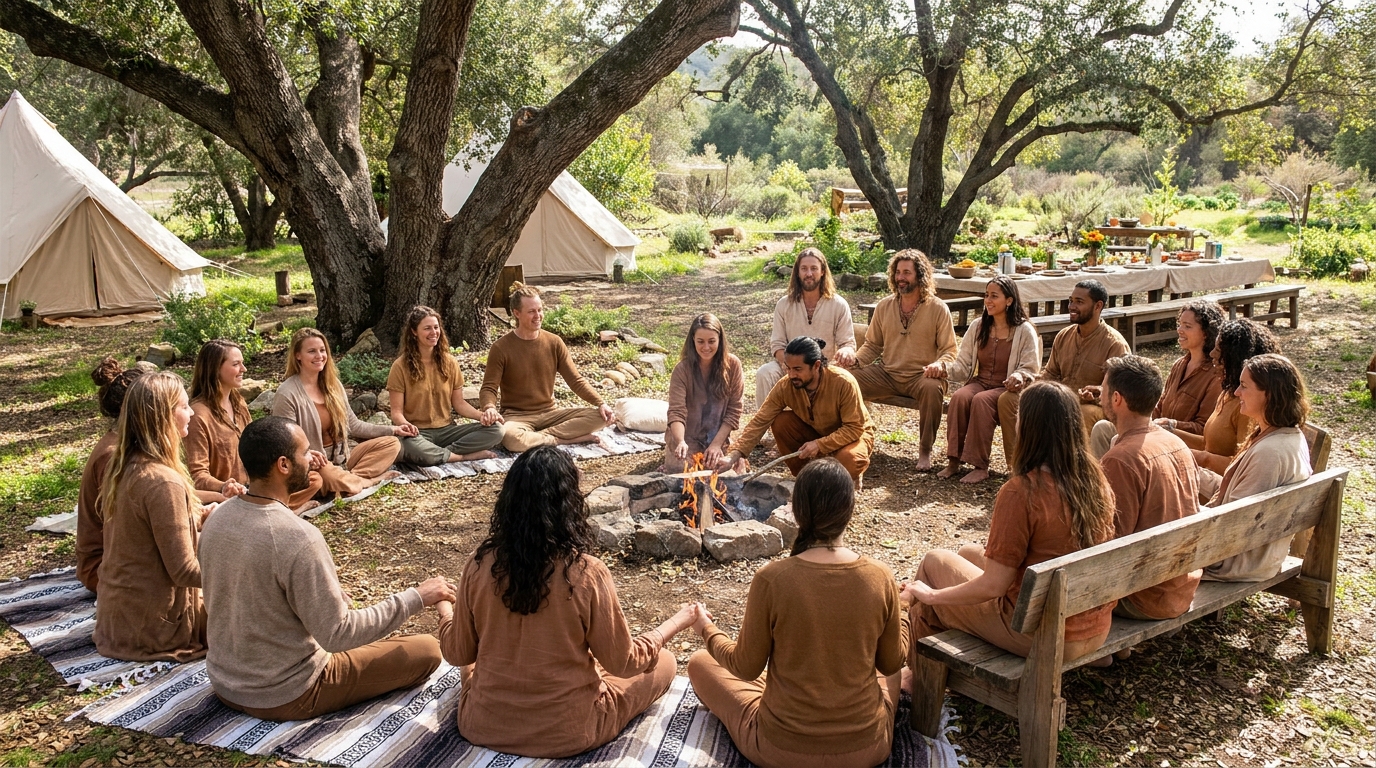
Not every spiritual space feels the same. Some communities are warm, transparent, and nourishing. Others may be disorganized, emotionally unhealthy, or overly controlling. Learning how to recognize a healthy spiritual community is an important part of your journey.
Bhakti Yoga encourages faith, but not blind faith. Humility does not mean ignoring your conscience. Surrender to God does not mean surrendering your intelligence to another human being without discernment.
A good spiritual community helps you become more honest, loving, responsible, and connected to God.
Look for Humility, Not Performance
A healthy community does not revolve around impressing others. The mood should be one of service, not spiritual competition.
You may notice humility in small things: leaders who listen, members who welcome newcomers, teachers who admit what they do not know, and devotees who serve without needing attention. The atmosphere may be joyful, but it should not feel like a stage where everyone is trying to appear advanced.
In Bhakti, real advancement is measured by the softening of the heart. Are people becoming kinder? More truthful? More patient? More prayerful? More willing to serve? These are good signs.
Notice How Newcomers Are Treated
How a community treats newcomers says a great deal about its spiritual health.
A welcoming Bhakti community understands that every person arrives with a unique history. Some come from Christian, Jewish, Muslim, Buddhist, Hindu, agnostic, or secular backgrounds. Some have wounds from religion. Some are simply curious. Some are searching after loss, heartbreak, addiction, loneliness, or deep inner questions.
A mature community does not demand that everyone immediately adopt every practice, dress a certain way, speak perfectly, or know all the customs. Instead, it offers patient hospitality.
People should feel free to ask basic questions:
“What does this mantra mean?”
“Do I have to be vegetarian?”
“Can I come if I am not sure what I believe?”
“Is it okay if I just listen today?”
The answer should be gentle. Yes, you may come. Yes, you may learn slowly. Yes, you are welcome.
Seek Transparency and Accountability
Love and trust grow best where there is honesty. A spiritual community should be transparent about leadership, finances, expectations, and boundaries. Teachers and leaders should be accountable to others, not isolated above correction.
Bhakti scriptures honor the role of the guru, or spiritual teacher. A genuine guru is not a celebrity figure or controller. The word guru means one who helps remove darkness by offering spiritual knowledge. A true teacher points people toward God, scripture, sincere practice, and humility—not toward personal worship of themselves.
If a community discourages all questions, pressures you to make major life decisions quickly, isolates you from family, uses shame to control you, or excuses harmful behavior because someone is “advanced,” it is wise to step back and seek guidance.
Spiritual life should deepen your conscience, not silence it.
Discover a wide range of insightful articles that delve into various spiritual topics. Our collection of articles offers guidance and inspiration for your personal growth journey. Stay informed and enlightened by exploring our latest articles today.
Entering Community With a Balanced Heart
Once you find a community that feels sincere, the next step is learning how to enter with balance. Many people experience a beautiful rush when they first discover spiritual life. The chanting feels alive, the philosophy feels profound, the people feel loving, and the heart feels awakened.
This is a blessing. At the same time, steady growth usually requires patience. Bhakti is not a temporary high; it is a lifelong relationship with God.
Come as You Are, But Stay Open to Growth
A loving spiritual community welcomes you as you are. You do not have to pretend to be more peaceful, pure, or knowledgeable than you are. God already sees the whole heart, and still lovingly invites us closer.
At the same time, “come as you are” does not mean “stay exactly as you are forever.” Bhakti Yoga gently transforms us. Through chanting, prayer, service, study, and association, we begin to notice habits that distance us from love. We may become more aware of selfishness, anger, envy, distraction, or pride.
This awareness is not meant to crush us. It is mercy. When we see what needs healing, we can bring it to God.
In the Bhagavad-gita, Krishna promises that even if a person struggles, if they are sincerely devoted, they are on the right path. This is deeply encouraging. Spiritual growth is not about never falling; it is about continuing to turn toward God.
Let Relationships Develop Naturally
It is natural to want close spiritual friendships. The heart longs to be known and supported. But genuine relationships take time.
Try not to rush into intense bonds before trust has been tested. Attend gatherings regularly. Serve alongside others. Observe how people handle stress, disagreement, and responsibility. Over time, you will begin to recognize who is safe, mature, and compatible for deeper friendship.
In Bhakti, friendship is sacred. The Sanskrit word sakhya refers to friendship with God, and by extension, spiritual friendships can remind us of that divine relationship. A good spiritual friend helps us remember who we are: eternal souls, beloved by God, meant for loving service.
Ask Questions Without Fear
Questions are welcome in Bhakti Yoga. The Bhagavad-gita itself is a sacred conversation. Arjuna, the warrior and seeker, asks Krishna honest questions about duty, suffering, confusion, the soul, and the path of liberation.
This shows us something important: sincere questioning is not a lack of faith. It can be an expression of faith.
If you do not understand a practice, ask. If a teaching feels difficult, ask. If a Sanskrit word confuses you, ask. If you are unsure how to apply something in your family or work life, ask.
A healthy community will not shame sincere inquiry. It will help you think deeply, pray honestly, and grow gradually.
Serving Without Losing Yourself
Service is at the heart of Bhakti Yoga. Yet it is important to understand service properly. Seva should nourish devotion, not create burnout, resentment, or hidden pride.
Because spiritual communities often run on volunteer energy, sincere people may quickly be asked to help. This can be beautiful. It can also become overwhelming if boundaries are unclear.
Offer What You Can With Love
Krishna says in the Bhagavad-gita that if someone offers Him a leaf, a flower, fruit, or water with love, He accepts it. The emphasis is not on the size of the offering but on the devotion behind it.
This teaching is very practical. You may not be able to volunteer every week. You may have work, children, health concerns, studies, or caregiving responsibilities. Your offering still matters.
Perhaps your seva is coming early once a month to help set up. Perhaps it is donating ingredients for a meal. Perhaps it is chanting at home and praying for the community. Perhaps it is smiling at a newcomer so they feel less alone.
Small offerings made with sincerity are spiritually powerful.
Learn the Difference Between Service and People-Pleasing
Service is offered to God with love. People-pleasing is driven by fear—fear of rejection, fear of disappointing others, fear of not being seen as spiritual enough.
In community, these can look similar from the outside. But internally they feel different. Service brings humility and connection, even when it requires effort. People-pleasing often brings anxiety, exhaustion, and quiet resentment.
It is okay to say, “I’m not able to do that this week.”
It is okay to ask, “Can someone show me how?”
It is okay to rest.
It is okay to serve in a way that fits your season of life.
Bhakti is not a performance. God is not asking you to become depleted so you can appear devoted. The Lord asks for the heart.
Receive Service Too
Many of us are more comfortable giving than receiving. But community is a place where we learn both.
Sometimes you may be the one cooking, cleaning, singing, teaching, or encouraging. At other times, you may be the one who needs prayer, a meal, a listening ear, or help carrying a burden.
Receiving with gratitude is also a spiritual practice. It allows others to serve, and it reminds us that we are not independent controllers. We are souls upheld by grace.
Navigating Differences, Conflict, and Imperfection
Every community includes human beings, and human beings bring personalities, histories, wounds, opinions, and limitations. Even sincere devotees may misunderstand one another. Conflict does not mean a community has failed. What matters is how conflict is handled.
Bhakti Yoga teaches us to see each person as an eternal soul, part of God, worthy of respect. But this vision must become practical in how we speak, listen, apologize, and forgive.
Expect Diversity Within Unity
A Bhakti community may include people from many cultures, races, ages, professions, political views, and religious backgrounds. Some may be lifelong practitioners. Others may be brand new. Some may love traditional rituals. Others may connect most through music, philosophy, meditation, or service.
Unity does not require sameness. The center is devotion to God.
The Sanskrit phrase acintya-bheda-abheda, taught in the Gaudiya Vaishnava tradition, means “inconceivable oneness and difference.” It describes the relationship between God and the soul: we are one with God in quality, yet different in quantity and identity. This principle can also help us in community. We share a spiritual essence, yet we remain unique individuals.
A mature community makes room for both belonging and individuality.
Practice Humble Communication
When conflict arises, try to speak in a way that protects dignity. Instead of accusing, begin with your own experience.
You might say:
“I felt hurt when that happened.”
“I may have misunderstood—can you help me understand?”
“I need some time before I respond.”
“I value our relationship and want to address this honestly.”
The Bhakti tradition places great importance on speech. Words can heal or harm. Chanting God’s names purifies the tongue, and that purification should gradually affect how we speak to others.
If a conflict is serious, seek help from a trusted, mature person in the community. Do not carry everything alone.
Forgiveness Does Not Mean Ignoring Harm
Bhakti encourages forgiveness, but forgiveness is not the same as denial. If someone has caused harm, especially emotional, financial, physical, or spiritual harm, accountability matters.
A compassionate community protects vulnerable people. It does not use spiritual language to pressure victims into silence. True forgiveness may take time, and healthy boundaries may still be necessary.
Lord Krishna’s teachings are full of compassion, but they are not sentimental. Dharma, or sacred duty, includes truth, justice, and protection.
Spiritual community should be a place where mercy and responsibility walk together.
Growing Through Daily Practice With Community Support
Community is not only about attending events. It also supports our daily spiritual practice, often called sadhana. Sadhana means regular practices that help awaken devotion.
Just as a garden needs daily watering, the heart needs steady nourishment. Community helps us remember to keep watering.
Build a Simple Home Practice
You do not need an elaborate altar or hours of free time to begin. Start simply.
You might chant one round of the maha-mantra on beads, or chant for five minutes while walking. You might read one verse of the Bhagavad-gita each morning. You might offer your food with a short prayer before eating. You might end the day by saying, “Dear Lord, thank You. Please guide me. Please help me serve.”
These small practices create a sacred rhythm.
If you have a home altar, it can be simple: a clean space with a picture of Krishna, Rama, Vishnu, Radha, Lord Chaitanya, or another form of God you feel drawn to. You may offer water, flowers, incense, or a heartfelt prayer.
The point is not display. The point is relationship.
Stay Connected Between Gatherings
Spiritual inspiration can fade when we return to daily pressures. Community helps us stay connected.
You might join a weekly kirtan, scripture study, online satsang, or service team. Satsang means gathering in truth or spiritual association. Even a short weekly connection can strengthen your practice.
Some people benefit from having a chanting partner or study group. Others appreciate receiving reminders, quotes, or prayers from the community. The key is to create gentle support, not pressure.
Devotion grows best in an atmosphere of encouragement.
Honor Prasadam as Sacred Nourishment
In Bhakti communities, you may hear the word prasadam. It means “mercy” and refers to food that has been lovingly offered to God and then shared.
Prasadam is one of the most welcoming parts of Bhakti culture. Sitting together and honoring sacred food reminds us that spiritual life is not separate from the body, the kitchen, or the table. Eating becomes an act of gratitude.
Many people first experience Bhakti not through philosophy but through a plate of prasadam served with love. This is beautiful. Love can enter through song, through wisdom, through service—and yes, through a warm meal.
Learning From Teachers While Keeping God at the Center
Teachers are important in spiritual life. We all need guidance from those who have walked the path before us. At the same time, Bhakti always keeps God at the center.
A teacher, mentor, or senior devotee should help you deepen your relationship with God, not replace it.
Understand the Role of Guru and Mentors
In Bhakti Yoga, the guru is honored because they carry divine wisdom and help awaken devotion. But authentic guidance is marked by humility, scripture, compassion, and service.
Not everyone who inspires you is your guru. Some may be mentors, friends, teachers, kirtan leaders, counselors, or examples of devotion in specific areas. It is wise to allow relationships to develop slowly.
Before making serious commitments, observe. Study. Pray. Ask trusted devotees. Notice whether the teacher’s words and actions align over time.
A real guide will never be offended by your carefulness. They will appreciate your sincerity.
Let Scripture Be a Steady Compass
Personal inspiration is valuable, but scripture gives us a steady foundation. The Bhagavad-gita teaches us about the soul, karma, devotion, meditation, and surrender. The Srimad-Bhagavatam gives countless stories of devotees who loved God through trials, family life, leadership, poverty, danger, and joy.
When teachings are rooted in authentic scripture and explained with compassion, they can guide us safely.
Scripture should not be used like a weapon. It should be offered like a lamp.
Remember That God Is Personally Present
Bhakti is ultimately relational. God is not distant. Krishna says in the Bhagavad-gita that He is seated in everyone’s heart. This means spiritual community is not merely social support; it is a sacred place where we practice seeing God’s presence in ourselves and others.
When you enter a community gathering, you can quietly pray:
“Please help me see with love.”
“Please guide my words.”
“Please let me serve in some small way.”
“Please help me remember You.”
This simple prayer can transform the way you participate.
Building a Community That Welcomes Others
Navigating spiritual community is not only about finding a place for yourself. Over time, you also become part of creating the atmosphere others will experience.
Someone else may walk in nervous, uncertain, or carrying pain. Your kindness may become their first glimpse of Bhakti.
Be the Person Who Makes Space
You do not need an official role to welcome others. You can smile, introduce yourself, explain a songbook, show someone where to sit, or invite them to join for prasadam.
If someone does not know when to stand, bow, sing, or respond, reassure them. Everyone was new once.
A welcoming community does not assume people know the culture. It gently explains. It makes room for questions. It does not embarrass people for not knowing.
Share Without Pushing
Bhakti is a treasure, and naturally we want to share it. But love does not pressure.
When speaking with someone new, listen as much as you speak. Ask about their journey. Respect their background. Offer what has helped you personally rather than overwhelming them with too much information.
You might say, “Chanting has really helped me feel closer to God,” or “This verse from the Gita gave me strength during a hard time.” Personal testimony is often more nourishing than debate.
The goal is not to win arguments. The goal is to serve souls.
Celebrate Small Steps
In spiritual life, small steps matter. A person attends one kirtan. A person chants one mantra. A person asks one sincere question. A person tastes prasadam. A person opens the Bhagavad-gita for the first time. A person whispers a prayer after years of silence.
These moments are sacred.
In the Bhakti tradition, God sees the heart. What may look small externally may be a huge movement inwardly. Community should celebrate sincerity wherever it appears.
Walking Forward With Patience, Faith, and Love
Spiritual community is a gift, but it is also a practice. It asks us to show up, listen, serve, forgive, learn, and grow. It invites us beyond isolation and into sacred relationship—with God and with one another.
There may be seasons when community feels joyful and easy. There may be seasons when it feels complicated. Stay prayerful. Stay honest. Stay humble. Let your roots grow deep, not rushed.
Bhakti Yoga offers a path that is both ancient and immediate. Through chanting, prayer, service, scripture, prasadam, and loving association, the heart gradually remembers its eternal connection with God.
You do not have to understand everything today. You do not have to become someone else to begin. You are a soul, beloved by the Divine, and your sincere step matters.
Come with your questions. Come with your hopes. Come with your wounds. Come with your gratitude. Come with your voice, even if it trembles in the chant.
Everyone is welcome to take one sincere step toward God. And sometimes, that one step begins by entering a spiritual community with an open heart.
FAQs
What is a spiritual community?
A spiritual community is a group of individuals who come together to support each other in their spiritual journeys, share beliefs, practices, and values, and create a sense of belonging and connection.
What are the benefits of being part of a spiritual community?
Being part of a spiritual community can provide emotional support, a sense of belonging, opportunities for personal growth and spiritual development, a space for practicing rituals and ceremonies, and a sense of connection to something greater than oneself.
How can one find a spiritual community to join?
One can find a spiritual community to join by researching local churches, temples, mosques, synagogues, meditation centers, or spiritual organizations, attending services or events, participating in classes or workshops, and connecting with like-minded individuals through social media or online forums.
What are some common practices in spiritual communities?
Common practices in spiritual communities may include prayer, meditation, chanting, singing, rituals, ceremonies, study groups, service projects, and community gatherings for worship, celebration, or fellowship.
How can one actively participate in a spiritual community?
One can actively participate in a spiritual community by attending regular services or events, volunteering for community projects or committees, joining study groups or classes, contributing financially or through donations, and building relationships with other members through social interactions and support.

