
What Is Satsanga?
Satsanga is one of the most beautiful and practical gifts on the path of Bhakti Yoga.
The Sanskrit word satsanga is made of two parts: sat and sanga. Sat means truth, goodness, eternal reality, or that which brings us closer to God. Sanga means association, company, or connection. So satsanga means “the company of truth” or “spiritual association.”
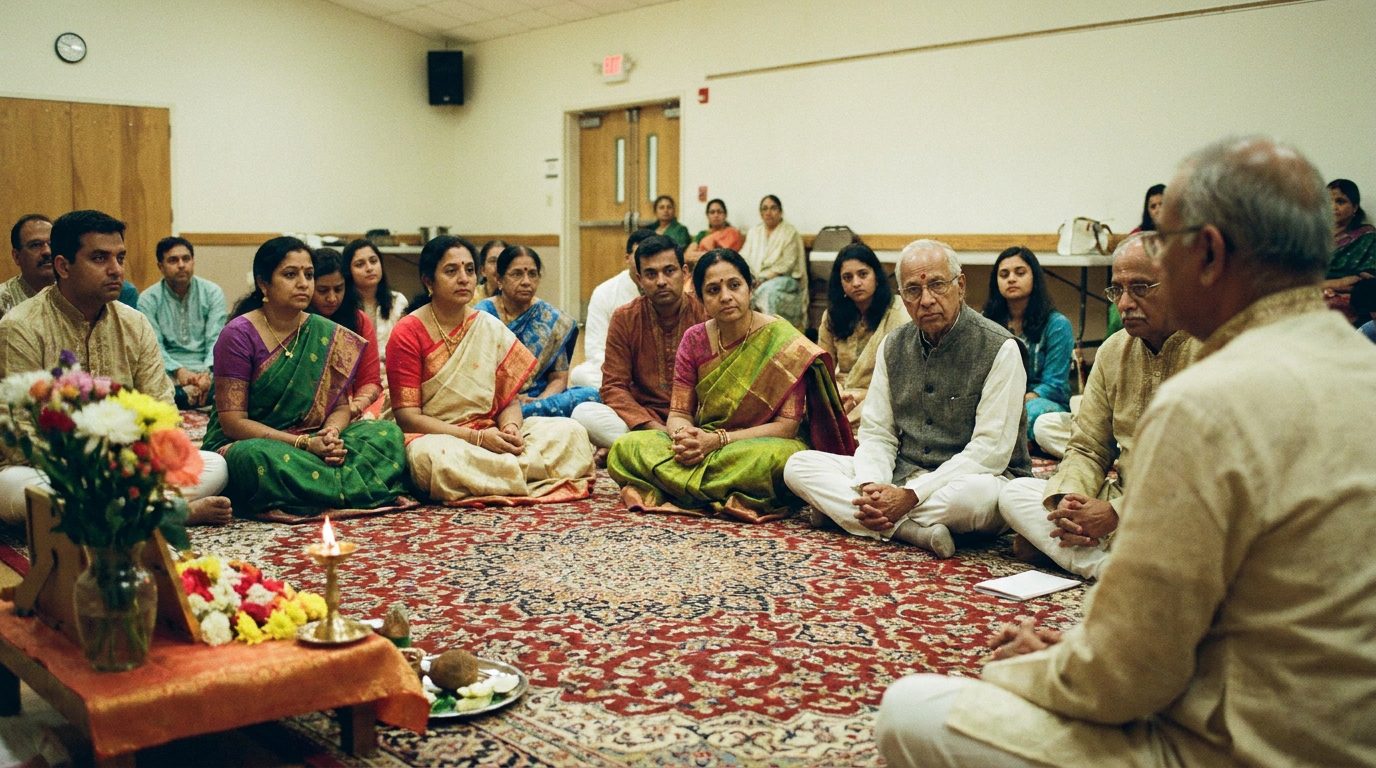
In simple words, satsanga is the practice of spending time with people, teachings, sounds, and environments that awaken love for God in the heart.
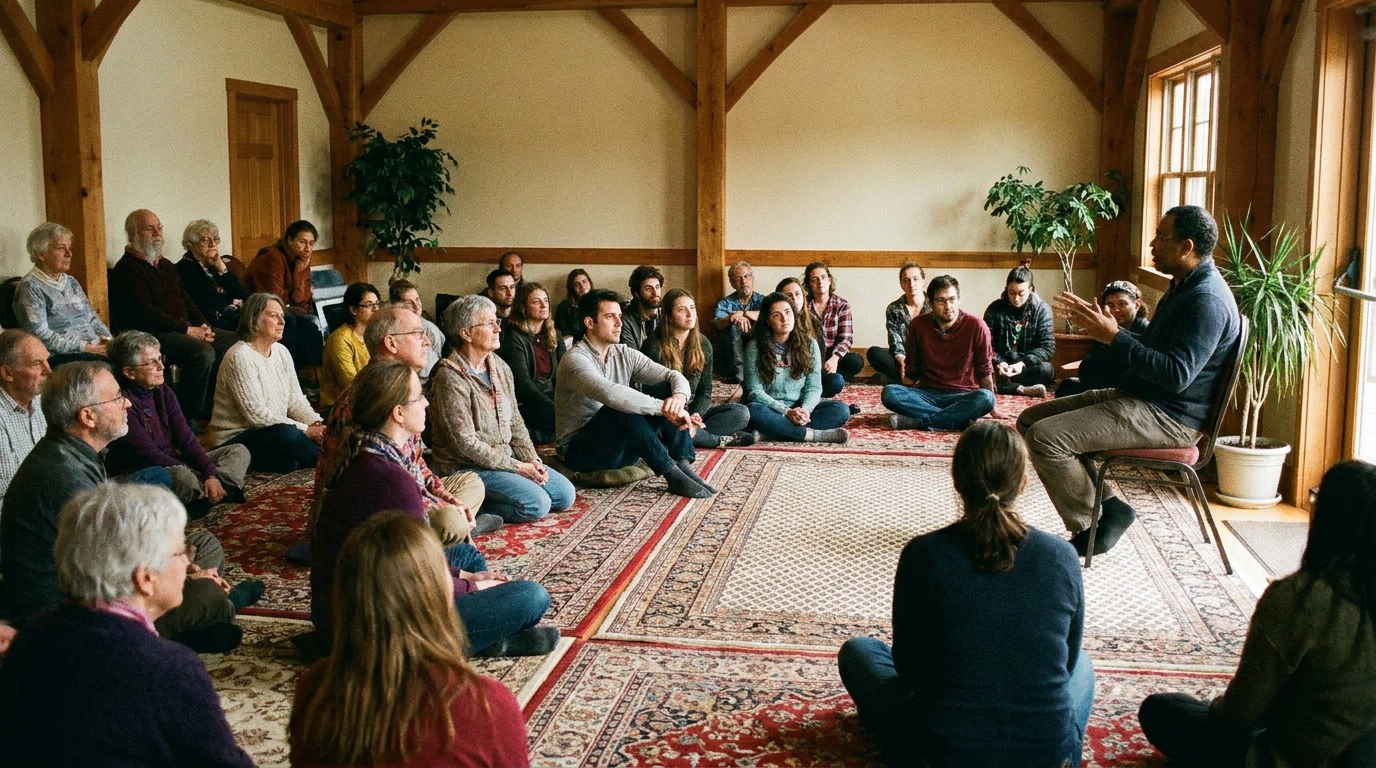
This may happen in a temple, a home gathering, a kirtan evening, an online class, a walk with a spiritually minded friend, or a quiet moment reading sacred wisdom. Wherever the heart is being gently turned toward God, there is the spirit of satsanga.
In Bhakti Yoga, satsanga is not just a social event. It is nourishment for the soul. Just as the body needs food, water, and rest, the heart needs uplifting association. We become influenced by what we hear, what we repeat, what we admire, and who we spend time with. Satsanga helps us remember our deeper identity: we are not merely the body, the mind, our work, or our worries. We are spiritual beings, beloved children of God.
The Bhagavad-gita teaches that spiritual life grows through remembrance, devotion, and sincere practice. Krishna says in the Gita that those who are devoted “derive great satisfaction and bliss from enlightening one another and conversing about Me” (Bhagavad-gita 10.9). This is the heart of satsanga: people coming together to remember the Divine with affection, humility, and joy.
Satsanga welcomes everyone. You do not need to be an expert. You do not need to know Sanskrit. You do not need to come from a particular culture, religion, or background. You simply need a sincere heart and a willingness to be touched by spiritual sound, wisdom, prayer, and loving community.
Why Satsanga Matters on the Bhakti Path
Bhakti Yoga is the path of loving devotion to God. The word bhakti means devotion, loving service, or heartfelt connection. In Bhakti, we grow not by force, pride, or dry philosophy, but by love.
And love grows in relationship.
This is why satsanga is so important. Spiritual life is personal. We learn from teachers, friends, elders, scriptures, saints, and fellow seekers. We are encouraged by the faith of others. We are reminded to pray when we forget. We are lifted when we feel weak. We are humbled when we see sincere devotion in another person’s heart.
Association Shapes the Heart
Every day, we are shaped by association. The music we hear, the conversations we enter, the media we consume, and the people we admire all leave impressions within us.
In Sanskrit, impressions in the heart and mind are sometimes called samskaras. These are subtle patterns formed by our experiences and choices. When we repeatedly associate with anger, gossip, greed, or spiritual forgetfulness, those impressions become stronger. When we associate with chanting, wisdom, kindness, service, and devotion, new impressions are formed.
Satsanga gives the soul a healing atmosphere.
It is not about judging others or thinking we are better than anyone. Rather, it is about honestly recognizing that we are influenced beings. If we want to grow in love, we need loving association. If we want to remember God, we need environments that help us remember.
Spiritual Strength Comes Through Community
Many people try to walk the spiritual path alone. Sometimes solitude is healthy and necessary. Quiet prayer, personal meditation, and private reflection are precious. But isolation can also make spiritual life difficult.
When the mind becomes restless, when old habits return, when doubt arises, when we feel unworthy or discouraged, satsanga gives us strength.
In the Srimad Bhagavatam, one of the great Bhakti scriptures, saintly association is described as deeply transformative. It explains that by hearing from spiritually awakened souls, the desire for devotion awakens in the heart. This means we do not have to create devotion artificially. We place ourselves in the company of devotion, and devotion begins to awaken naturally.
Just as a cold iron rod becomes hot when placed in fire, the heart becomes spiritually warmed when placed near sincere love for God.
Satsanga Makes Spiritual Life Practical
Bhakti Yoga is not only philosophy. It is lived devotion.
In satsanga, we learn how to bring God into daily life: how to chant when the mind is distracted, how to pray during grief, how to serve without ego, how to forgive, how to raise children with spiritual values, how to eat with gratitude, how to make our work an offering, and how to keep going even when our faith feels small.
Good satsanga helps us bridge the gap between sacred teachings and ordinary life. It shows us that devotion belongs in the kitchen, the car, the workplace, the school, the hospital room, and the quiet corners of the heart.
The Main Elements of Satsanga

Satsanga can take many forms, but certain elements are especially central in Bhakti Yoga. These practices are simple, accessible, and powerful. They help us move from spiritual ideas to spiritual experience.
Hearing Sacred Wisdom
One of the foundations of satsanga is sravanam, which means hearing. In Bhakti Yoga, hearing is sacred because spiritual sound enters the heart and begins to cleanse it.
We may hear from the Bhagavad-gita, the Srimad Bhagavatam, the lives of saints, devotional songs, or the reflections of sincere practitioners. The goal is not merely to gather information. The goal is transformation.
When we hear spiritual wisdom with humility, we begin to see life differently. We remember that the soul is eternal. We remember that God is near. We remember that our struggles can become part of our spiritual growth. We remember that love is the deepest purpose of life.
The Bhagavad-gita offers practical guidance for every sincere seeker. It speaks about the soul, the mind, duty, surrender, devotion, and divine love. When discussed in satsanga, these teachings become living wisdom, not distant philosophy.
Chanting the Holy Names
Chanting is at the heart of Bhakti Yoga.
A mantra is a sacred sound or prayer that helps focus and purify the mind. In many Bhakti traditions, the chanting of God’s names is considered especially powerful because the Divine name carries the presence of the Divine.
One widely practiced mantra is the Hare Krishna Maha-mantra:
Hare Krishna, Hare Krishna, Krishna Krishna, Hare Hare
Hare Rama, Hare Rama, Rama Rama, Hare Hare
Maha-mantra means “great mantra.” Hare calls upon the divine energy of God, and Krishna and Rama are names of God meaning the all-attractive one and the source of joy. A simple way to understand this prayer is: “O Lord, O divine energy of the Lord, please engage me in Your loving service.”
In satsanga, chanting may be done as kirtan, a call-and-response form of musical prayer. One person leads, and others respond. There may be drums, cymbals, harmonium, guitar, clapping, or simply voices. No musical training is required. The offering of the heart is what matters.
Chanting softens the heart. It gathers the mind. It turns anxiety into prayer. It allows people from many backgrounds to come together beyond language, status, and difference.
Prayer and Reflection
Prayer is honest conversation with God.
In satsanga, prayer may be spoken aloud, sung, offered silently, or held in the heart. We may pray for guidance, forgiveness, strength, healing, gratitude, or deeper devotion.
Bhakti prayer does not require perfect words. Sometimes the most powerful prayer is simply, “Please help me remember You.” Or, “Please let me serve.” Or, “I do not know what to do, but I am here.”
Reflection helps us digest what we hear. After a class or kirtan, we may ask: What touched my heart? What is one thing I can practice this week? Where did I feel resistance? What is God inviting me to notice?
This makes satsanga practical and personal.
Seva: Loving Service
Seva means service offered with devotion. It is one of the most important expressions of Bhakti Yoga.
In satsanga, seva may look very simple: setting up chairs, cooking a meal, welcoming guests, cleaning the floor, leading a chant, helping with children, sharing a ride, listening to someone who is struggling, or supporting the community in quiet ways.
Seva purifies the heart because it shifts us from “What can I get?” to “How can I serve?” It helps soften pride and awaken gratitude.
In the Bhagavad-gita, Krishna encourages action offered to Him with love. Even a leaf, flower, fruit, or water, when offered with devotion, is accepted by the Lord (Bhagavad-gita 9.26). This teaches us that God is not impressed by wealth, performance, or outer display. God is moved by love.
When satsanga includes seva, the gathering becomes more than a meeting. It becomes a shared offering.
Prasadam: Sacred Food and Grace
Many Bhakti gatherings include prasadam, food that has been lovingly prepared and offered to God before being shared.
The word prasadam means mercy or grace. It reminds us that food is not just fuel. It is a gift. When we cook with devotion, offer with gratitude, and receive with humility, eating becomes spiritualized.
Sharing prasadam also builds community. People relax, speak, laugh, ask questions, and form friendships. The table becomes an extension of the altar. Nourishment becomes both physical and spiritual.
Discover a wealth of knowledge by exploring our insightful articles. Our articles cover a wide range of topics to inspire and educate. Stay informed and engaged with our regularly updated articles.
Types of Satsanga in Daily Life
Satsanga is not limited to formal gatherings. It can be woven into daily life in many realistic and gentle ways.
Temple or Community Gatherings
A temple, ashram, yoga center, or spiritual community space can offer powerful satsanga. There may be kirtan, scriptural discussion, worship, festivals, service opportunities, and shared meals.
These gatherings help us step out of ordinary routines and enter a sacred atmosphere. The sights, sounds, scents, and presence of other practitioners support remembrance.
If you are new, it is natural to feel unsure at first. You may wonder when to stand, what to say, how to chant, or whether you belong. Please know this: sincere spiritual spaces are meant to welcome you as you are. You can simply observe, listen, chant softly, and allow your heart to settle.
Home Satsanga
Some of the sweetest satsanga happens in homes.
A few friends gather. A candle or altar is prepared. Someone reads from scripture. Everyone chants together. People share reflections. A simple vegetarian meal is offered and enjoyed. Children wander in and out. Questions are asked honestly. Tears may come. Laughter may come. God is remembered.
Home satsanga reminds us that devotion does not belong only in special buildings. The home itself can become a sacred place.
Even if you live alone, you can create a small home satsanga rhythm. Invite one friend once a month. Read a verse together over tea. Chant for ten minutes. Share what you are learning. Spiritual life grows through sincerity more than size.
Online Satsanga
In our modern world, online satsanga can be a real blessing. Many people live far from a spiritual community or have health, family, or work limitations that make in-person gatherings difficult.
Online classes, kirtans, study groups, and prayer circles can provide connection and guidance. While digital association may not replace the warmth of sitting together in the same room, it can still nourish the heart when approached sincerely.
To make online satsanga more sacred, try to be fully present. Sit respectfully. Avoid multitasking. Keep a notebook. Chant aloud if possible. Offer a simple prayer before beginning. These small choices help the heart receive more deeply.
Satsanga Through Reading
Books can also be satsanga.
When we read the words of saints, teachers, and sacred scriptures, we enter their association. We allow their consciousness to guide our own.
Reading the Bhagavad-gita daily, even one verse, can become a steady source of spiritual nourishment. The Srimad Bhagavatam, the poetry of Bhakti saints, and the writings of genuine spiritual teachers can also uplift the mind and heart.
A helpful practice is to read slowly and prayerfully. Instead of rushing, pause and ask: How does this apply to my life? What quality is being encouraged? What illusion is being challenged? How can I respond with devotion?
Satsanga in Friendship
A spiritual friend is a great treasure.
This does not mean a perfect person. It means someone who helps you remember your higher self and your relationship with God. A spiritual friend can listen without judgment, encourage your practice, tell the truth with kindness, and walk beside you through both faith and difficulty.
Sometimes one sincere conversation with such a friend can redirect the whole heart.
If you have even one person with whom you can speak honestly about God, prayer, chanting, service, and inner growth, cherish that relationship. If you do not yet have such a friend, pray for one, and become the kind of friend you hope to find.
How to Practice Satsanga as a Beginner
If you are new to satsanga, you may wonder where to begin. The good news is that satsanga does not demand perfection. It invites sincerity.
Come With an Open Heart
You do not have to understand everything. You do not have to agree with everything immediately. You do not have to perform spirituality.
Simply come with openness.
Listen. Observe. Chant if you feel comfortable. Ask respectful questions. Notice what brings peace, humility, and remembrance of God.
The mood of satsanga is not pressure. It is invitation.
Start Small and Stay Steady
Spiritual growth often happens through small, steady steps.
You might begin by attending one kirtan a month, joining a weekly online study group, reading one verse of the Bhagavad-gita each morning, or chanting a mantra for five minutes a day.
Consistency is more important than intensity. A little sincere practice, repeated regularly, can reshape the heart over time.
Krishna says in the Bhagavad-gita that even a little advancement on this path can protect one from great fear (Bhagavad-gita 2.40). This is deeply encouraging. No sincere effort is wasted.
Learn the Culture With Humility
Bhakti Yoga comes with rich traditions, practices, songs, food, clothing, language, and sacred stories. If some things feel unfamiliar, that is okay.
Ask questions gently. Learn the meanings behind the practices. Find out why people bow, why food is offered, why beads are used for chanting, why shoes may be removed in sacred spaces, or why certain songs are sung.
When we understand the heart behind the form, the practice becomes meaningful.
At the same time, authentic satsanga should not make people feel excluded because they are new. A healthy devotional community explains, welcomes, and makes space for sincere seekers at every stage.
Listen More Than You Compare
The mind loves to compare. “Do I belong here?” “Do I know enough?” “Am I spiritual enough?” “Why does that person seem more advanced?”
Satsanga is not a competition. It is not a place to measure worth. Everyone is on a journey. Some may know more philosophy. Others may have deeper humility. Some may chant beautifully. Others may serve quietly. Some may be struggling inwardly even if they look peaceful outside.
Try to listen for what God is teaching you personally. Let the devotion of others inspire you, not discourage you.
Offer Some Service
One of the best ways to feel connected in satsanga is to serve.
Ask if you can help wash dishes, arrange cushions, greet newcomers, bring fruit, clean up afterward, or assist in some simple way. Service opens the heart and transforms us from visitors into contributors.
No service is too small when offered with love.
The Inner Qualities of True Satsanga
Not every gathering that uses spiritual words is automatically nourishing. True satsanga has certain qualities that help the soul grow.
Humility
Humility means remembering that we are dependent on grace. It is not self-hatred or weakness. It is honest spiritual clarity.
In true satsanga, people are not trying to prove themselves superior. Teachers speak as servants. Students ask with sincerity. Friends support one another without arrogance.
Humility creates safety. It allows real learning.
Compassion
A genuine spiritual community cares for people. It recognizes that seekers come with wounds, questions, doubts, and complicated lives.
Compassion does not mean lowering spiritual principles, but it does mean applying them with kindness. In Bhakti, the heart matters. People need encouragement, not shame. Guidance, not harshness. Truth, not cruelty.
Devotional Focus
Satsanga should help us remember God.
There may be friendship, food, music, study, and discussion, but the center is devotion. Without that center, satsanga can become only socializing, debate, or entertainment.
A good question to ask is: After this association, do I feel more inclined toward prayer, chanting, service, humility, and love? If yes, the association is spiritually nourishing.
Respect for Scripture and Living Practice
Authentic Bhakti satsanga honors sacred texts while also helping people live them.
Scripture is not used to dominate or impress others. It is approached as guidance from a higher source. The wisdom of the Bhagavad-gita, Srimad Bhagavatam, and other Bhakti texts becomes practical when it helps us become more loving, truthful, steady, and surrendered.
Freedom From Exploitation
True satsanga should never exploit people emotionally, financially, spiritually, or socially. Healthy spiritual association encourages personal responsibility, sincere questioning, and service rooted in love, not fear.
A genuine teacher or community points the heart toward God, not toward dependence on human control. Bhakti is a path of love, and love must be protected by integrity.
Common Challenges in Satsanga
Even beautiful spiritual communities are made of human beings. Challenges may arise. Knowing this helps us remain steady and mature.
Feeling Like an Outsider
Many people feel shy or uncertain when entering a new spiritual space. This is natural.
If you feel like an outsider, take your time. Attend more than once if the atmosphere feels safe. Introduce yourself to one person. Ask simple questions. Sit near the back if that helps. Chant quietly. Let belonging grow gradually.
And if you are already part of a community, remember to look for newcomers. A smile, a welcome, or an explanation can make all the difference.
Becoming Distracted by Personalities
Sometimes we become overly focused on personalities: who is leading, who is noticed, who said what, who seems advanced, who disappointed us.
While relationships matter, the deeper purpose of satsanga is God-centered remembrance. People will inspire us, and people may also fail us. If we place our entire faith only in human behavior, we may become discouraged.
Bhakti invites us to appreciate devotees while keeping God at the center. This balance protects the heart.
Spiritual Comparison and Pride
It is possible to become proud even of spiritual practice. We may think, “I chant more,” “I know more scripture,” or “My service is more important.”
This is why satsanga must include humility. The more we grow in Bhakti, the more we understand that devotion is a gift. We are not owners of grace. We are recipients.
If pride appears, we can pray: “Dear Lord, please help me serve without wanting recognition. Please let me see the good in others.”
Disappointment in Community
Sometimes communities hurt us. Misunderstandings happen. Leaders may be imperfect. Friends may say careless things. Expectations may not be met.
When this happens, it is important to respond with wisdom. Some disappointments can be worked through with honest communication, forgiveness, and maturity. Other situations may require boundaries or finding healthier association.
Do not give up on God because of human imperfection. And do not ignore harm in the name of spirituality. Pray for guidance, seek counsel from trustworthy people, and keep your connection with sacred practice alive.
How Satsanga Transforms Daily Life
The fruit of satsanga is not only felt during a gathering. It gradually changes how we live.
The Mind Becomes More Peaceful
By hearing wisdom and chanting sacred names, the mind receives a higher taste. Restlessness may not disappear overnight, but we begin to find shelter.
Instead of being carried away by every fear or desire, we learn to return to prayer. We remember: “I am not alone. God is present. I can take the next right step.”
Relationships Become More Loving
Satsanga teaches us to see others as souls. This softens how we speak, listen, forgive, and serve.
We may become more patient with family, more honest with friends, more compassionate toward strangers, and more careful with our words. Bhakti is not proven by how loudly we chant in public, but by how lovingly we live in private.
Work Becomes an Offering
The Bhagavad-gita teaches that work can become spiritual when offered to God. Satsanga helps us remember this in practical ways.
A parent caring for a child, a nurse tending a patient, a teacher preparing lessons, a cook making food, an artist creating beauty, a business owner acting with integrity—all of these can become offerings when done with devotion.
We can begin the day with a simple prayer: “May my work today be pleasing to You. Please guide my thoughts, words, and actions.”
Habits Begin to Change
Spiritual association gives us strength to release habits that keep us distant from God. This may include harmful speech, unhealthy consumption, selfish patterns, resentment, or neglect of prayer.
Change is often gradual. Satsanga gives encouragement, accountability, and hope. We see others walking the path, and we remember that transformation is possible.
The Heart Awakens to Grace
Perhaps the deepest gift of satsanga is that we begin to notice grace everywhere.
A verse arrives at the right time. A chant brings tears. A friend calls when we feel low. A meal feels sacred. A difficulty becomes a lesson. A moment of silence becomes prayer.
Through satsanga, life becomes less random and more relational. We begin to feel guided, held, and invited into deeper love.
Building a Satsanga Practice at Home
You can begin cultivating satsanga right where you are. Even if there is no local community nearby, the path of Bhakti can enter your home and heart.
Create a Simple Sacred Space
Choose a small clean place for prayer or meditation. You may keep a picture of Krishna, Rama, Vishnu, Radha, a beloved form of God, your spiritual teacher, sacred texts, flowers, a candle, or anything that helps you remember the Divine.
This space does not need to be elaborate. Sincerity is more important than decoration.
Sit there daily, even briefly. Over time, the heart will recognize it as a place of shelter.
Chant Every Day
Begin with a manageable amount of chanting. You may chant the Hare Krishna Maha-mantra, another name of God, or a prayer from your tradition.
Chant aloud, softly, or internally. If you have beads, you can use them. If not, simply set a timer for five or ten minutes.
The point is not performance. The point is connection.
Read a Little Sacred Wisdom
Choose one text and read consistently. The Bhagavad-gita is a wonderful beginning. Read one verse, reflect on the meaning, and ask how you can live it today.
If a verse feels difficult, do not be discouraged. Sacred texts open gradually. Hearing from trusted teachers and discussing with others can help.
Share Devotion With Others
Invite a friend to chant, read, or pray with you. Start a small monthly gathering. Join an online satsanga. Send a meaningful verse to someone. Cook and offer a meal, then share it.
Satsanga grows when devotion is shared.
Keep the Mood Gentle and Sincere
Avoid turning your home practice into another pressure-filled project. Let it be a loving rhythm.
Some days will feel inspired. Other days may feel dry. Keep showing up. God sees the heart.
Satsanga as a Lifelong Shelter
Satsanga is not only for beginners, and it is not something we outgrow. As we mature spiritually, our need for sincere association becomes even deeper.
The path of Bhakti is endless because love is endless. There is always more humility to learn, more service to offer, more chanting to taste, more compassion to embody, more surrender to discover.
Saints in the Bhakti tradition continually sought the company of other devotees. Not because they were weak, but because love naturally seeks shared remembrance of the Beloved.
When we gather in satsanga, we participate in something ancient and alive. We sit in the stream of sacred sound that has flowed through countless hearts before us. We receive courage from those who walked before, and we offer encouragement to those walking beside us.
Satsanga reminds us that spiritual life is not lonely. We are part of a family of souls. We may come from different countries, cultures, religions, histories, and life experiences, but the soul’s longing is beautifully familiar: to love and be loved by God.
Taking One Sincere Step Toward God
Satsanga is the company of truth, the friendship of the soul, and the warm shelter of devotional life. It may begin with a song, a verse, a meal, a question, a tear, a smile, or a simple prayer whispered when no one else is listening.
You do not need to have everything figured out. You do not need to be perfect to begin. Bhakti Yoga is a practical path of love, chanting, prayer, service, and spiritual growth. Every sincere step matters.
If your heart feels called, take one small step. Attend a satsanga. Chant one mantra. Read one verse. Offer one prayer. Serve one person. Ask God to guide you.
Everyone is welcome. Wherever you are coming from, whatever your background, and whatever season of life you are in, the door of devotion is open. May you find uplifting association, may your heart be nourished, and may you feel the gentle invitation of God calling you closer in love.
FAQs
What is Satsanga?
Satsanga is a Sanskrit term that means “association with the truth” or “company of the wise.” It refers to the practice of coming together with like-minded individuals to engage in spiritual discussions, meditation, chanting, and other practices that promote spiritual growth.
What are the benefits of Satsanga?
Satsanga offers numerous benefits, including spiritual inspiration, guidance from experienced practitioners, a sense of community and support, opportunities for self-reflection and personal growth, and a deeper understanding of spiritual teachings.
How can one find a Satsanga group?
One can find a Satsanga group by checking with local spiritual centers, yoga studios, or meditation groups. Online platforms and social media can also be helpful in connecting with like-minded individuals who are interested in Satsanga.
What is the significance of Satsanga in spiritual practice?
Satsanga is considered an important aspect of spiritual practice in many traditions because it provides a supportive environment for individuals to deepen their spiritual understanding, cultivate virtues like compassion and humility, and strengthen their connection to the divine.
How often should one participate in Satsanga?
The frequency of participating in Satsanga can vary depending on individual preferences and schedules. Some people may choose to attend Satsanga gatherings weekly, while others may participate on a monthly or occasional basis. It is important to find a balance that works best for one’s spiritual growth and personal commitments.

