
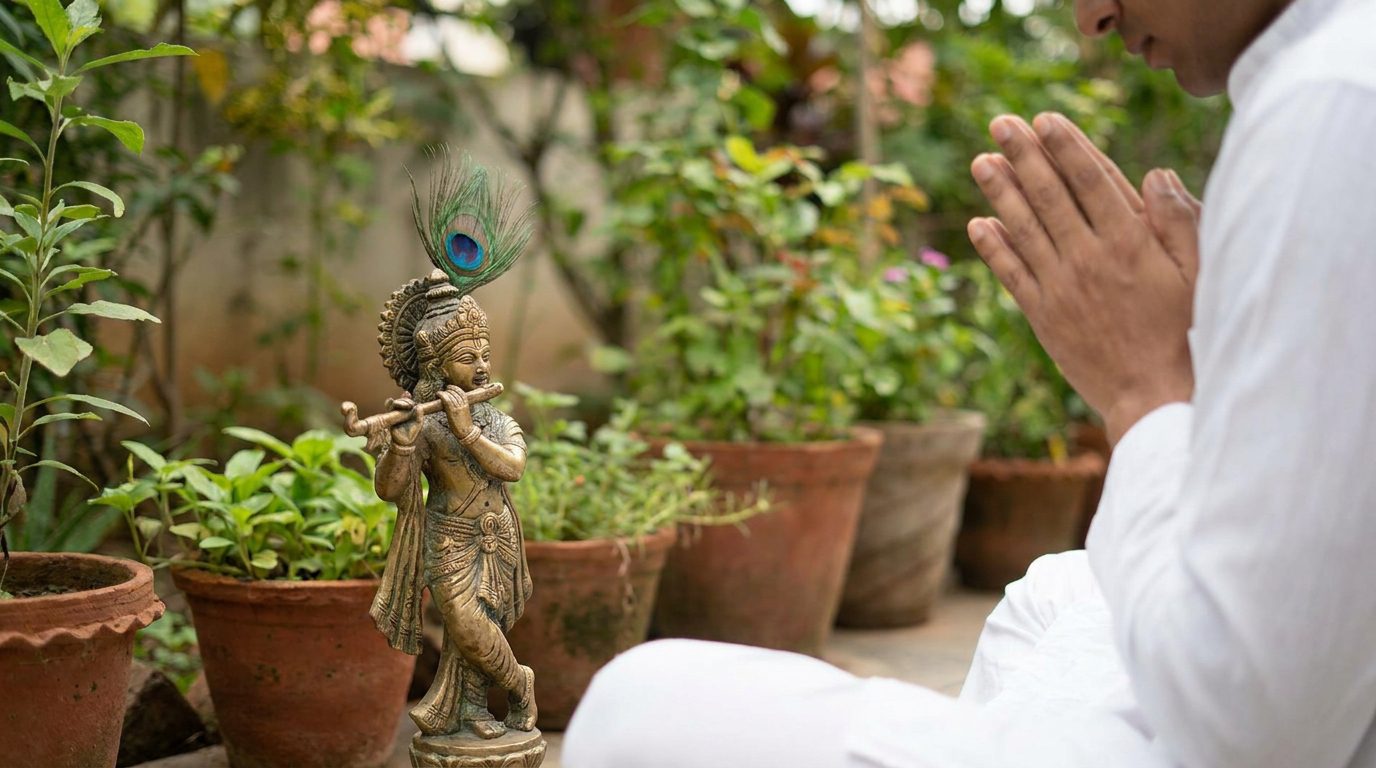
Many of us long for a relationship with God that feels real, personal, and alive.
Not only as an idea. Not only as a belief. But as a loving presence we can turn to in the morning, remember in the middle of a busy day, and rest in at night.
In the Bhakti tradition, this personal relationship with the Divine is beautifully centered on Krishna. Krishna is understood as the Supreme Person, the all-attractive source of love, beauty, wisdom, and joy. To deepen our connection with Krishna means to gradually open the heart to a loving exchange with Him.
This path is called Bhakti Yoga. The Sanskrit word bhakti means devotion, love, or loving service. Yoga means connection. So Bhakti Yoga is the path of reconnecting with God through love.
Whether you are new to Krishna, returning after time away, exploring spiritual life, or already walking the path of devotion, you are welcome. Krishna is not far from any of us. The journey begins with one sincere step.
Before we can deepen a relationship with Krishna, it helps to understand that Bhakti Yoga presents God not as distant, impersonal, or unreachable, but as deeply personal.
Krishna is described in the sacred text the Bhagavad Gita as the source of all worlds, the friend of every living being, and the one who lovingly responds to our devotion. He is not simply a judge or a force. He is the eternal beloved of the soul.
Krishna Means “All-Attractive”
The name Krishna means “the all-attractive one.” This means Krishna attracts the heart through unlimited qualities: compassion, sweetness, playfulness, wisdom, strength, beauty, and love.
In Bhakti, we do not approach Krishna only with fear or obligation. We approach Him with affection. We can speak to Him honestly. We can offer Him our gratitude, confusion, hopes, tears, and service.
This personal approach is one of the great gifts of Bhakti Yoga. It teaches us that our relationship with God can become natural, tender, and deeply meaningful.
The Soul’s Eternal Relationship
The Bhagavad Gita explains that each of us is not merely the body or the mind, but an eternal soul. In Sanskrit, the soul is called atma. The soul is conscious, spiritual, and meant for loving connection with Krishna.
Just as a spark belongs to a fire, the soul belongs to Krishna. Our spiritual life is not about becoming something artificial. It is about remembering who we truly are.
Deepening our connection with Krishna is a process of remembrance. We remember that we are loved. We remember that we are never alone. We remember that our heart’s deepest longing is for divine love.
Beginning with Sincere Hearing
In Bhakti Yoga, one of the most important practices is sravanam, which means hearing. Spiritual life begins when we hear about Krishna from sacred scriptures, sincere devotees, and the chanting of His holy names.
Hearing may seem simple, but it is powerful. What we hear shapes our consciousness. If we constantly hear messages of fear, comparison, and distraction, the heart becomes restless. But when we hear about Krishna’s compassion, wisdom, and beauty, the heart becomes purified and nourished.
Hearing from the Bhagavad Gita
The Bhagavad Gita is one of the foundational scriptures of Bhakti Yoga. It is a sacred conversation between Krishna and Arjuna, a warrior facing deep confusion and moral crisis.
Arjuna is not pretending to be perfect. He is overwhelmed, uncertain, and emotionally shaken. In that vulnerable place, he turns to Krishna for guidance.
This is deeply encouraging for us. We do not have to wait until we are pure, wise, or spiritually advanced to approach Krishna. Like Arjuna, we can begin exactly where we are.
Krishna’s teachings in the Gita are practical and timeless. He teaches about the soul, karma, devotion, meditation, right action, and surrender. Most importantly, He invites us into relationship.
In the Bhagavad Gita 9.22, Krishna says that for those who remember Him with devotion, He personally carries what they lack and preserves what they have. This does not mean life becomes free from challenges, but it means we are held by divine care as we walk through them.
Hearing Krishna’s Pastimes
Another beautiful way to deepen connection is to hear Krishna’s lila, or divine pastimes. These stories are found especially in the Srimad Bhagavatam, a treasured Bhakti scripture.
Krishna’s pastimes reveal His heart. We hear of Him as a child in Vrindavan, stealing butter, playing with His friends, protecting the cows, dancing with the gopis, and lovingly responding to His devotees.
These sacred stories are not ordinary mythology. They are windows into divine love. When heard with humility and respect, they awaken devotion in the heart.
Making Hearing a Daily Practice
You might begin with just ten minutes a day. Read a few verses of the Bhagavad Gita. Listen to a class from a trusted Bhakti teacher. Hear kirtan while cooking, walking, or driving.
The key is consistency. A few drops of spiritual sound each day gradually soften the heart.
Chanting Krishna’s Names with the Heart
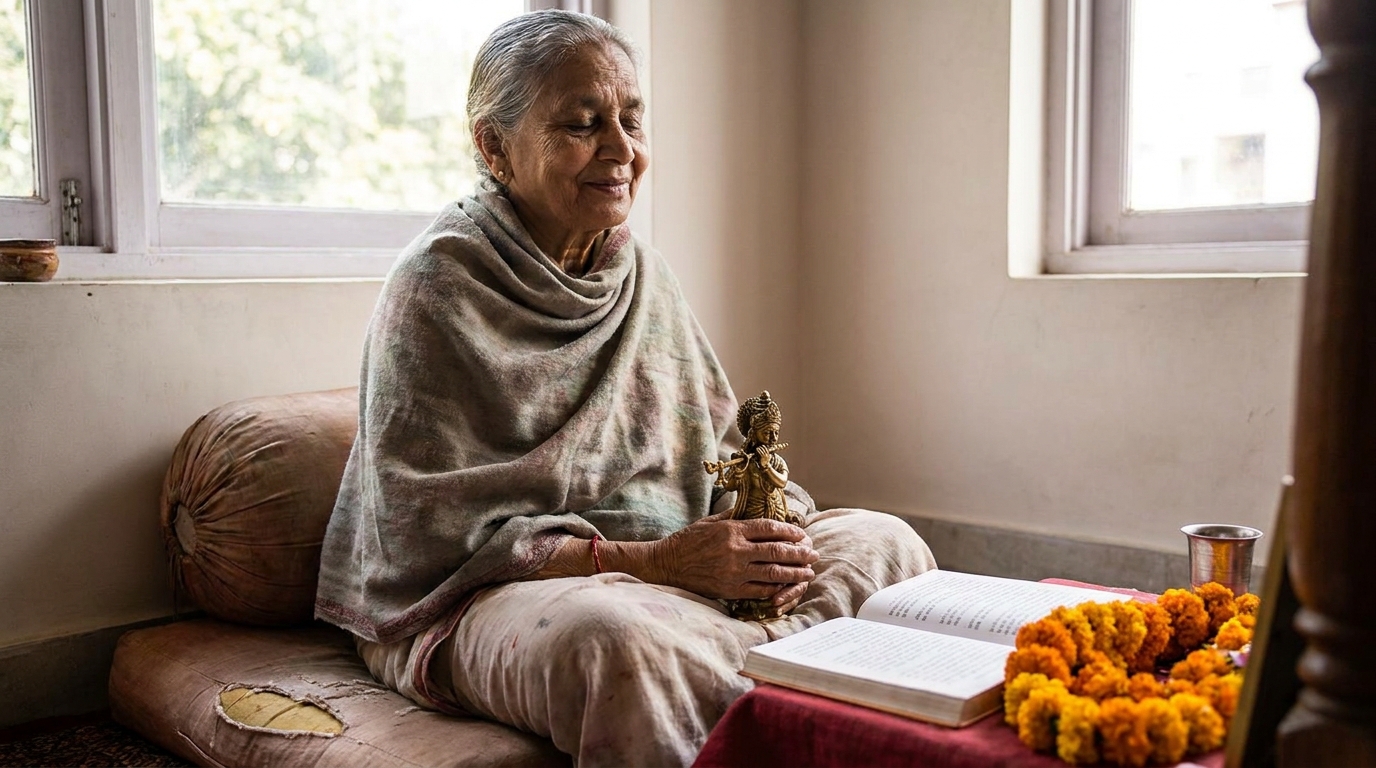
Chanting is at the center of Bhakti Yoga. In Sanskrit, chanting the names of God is called kirtan when sung together, and japa when softly repeated as a personal meditation.
The names of Krishna are considered non-different from Krishna Himself. This means that when we chant sincerely, we are not merely making sound. We are entering Krishna’s presence.
The Maha-Mantra
The most widely practiced mantra in the Krishna Bhakti tradition is the maha-mantra. Maha means great, and mantra means a sacred sound that frees the mind.
Hare Krishna Hare Krishna
Krishna Krishna Hare Hare
Hare Rama Hare Rama
Rama Rama Hare Hare
This mantra is a prayer. “Hare” addresses the divine energy of the Lord, often understood as Srimati Radharani, the highest expression of devotion. “Krishna” means the all-attractive Lord. “Rama” means the source of joy and spiritual pleasure.
A simple meaning of the mantra is: “O Lord, O divine energy of the Lord, please engage me in Your loving service.”
Chanting as Relationship, Not Performance
Sometimes we may worry, “Am I chanting correctly? Is my mind too distracted? Am I spiritual enough?”
Krishna is not looking for performance. He is looking for sincerity.
When a child calls out to a loving parent, the parent does not criticize the child’s pronunciation. In the same way, Krishna hears the intention of the heart.
Of course, over time we can learn to chant with more attention, respect, and feeling. But we begin by simply calling out.
Practical Tips for Japa Meditation
Japa is often practiced using prayer beads, called japa mala. Traditionally, a mala has 108 beads. Devotees chant the maha-mantra once on each bead as a daily meditation.
If you are beginning, you might start with one round, or even a few minutes. Sit in a quiet place if possible. Take a breath. Offer a simple prayer: “Krishna, please help me hear Your name.”
Then chant and listen.
The listening is important. The mind will wander. Gently bring it back. Not with frustration, but with kindness. Each return is an offering.
Kirtan and Community
Kirtan is the joyful singing of Krishna’s names, often with instruments like harmonium, mridanga drum, kartals, guitar, or simply clapping hands.
In kirtan, we chant together. No one needs to be a professional singer. The heart is the real instrument.
Kirtan helps us experience Bhakti in a shared way. It lifts heaviness, opens the heart, and reminds us that spiritual life is not meant to be walked alone.
Check out our latest articles at https://thebhaktihouse.org/blog.
Cultivating Prayer as Honest Conversation
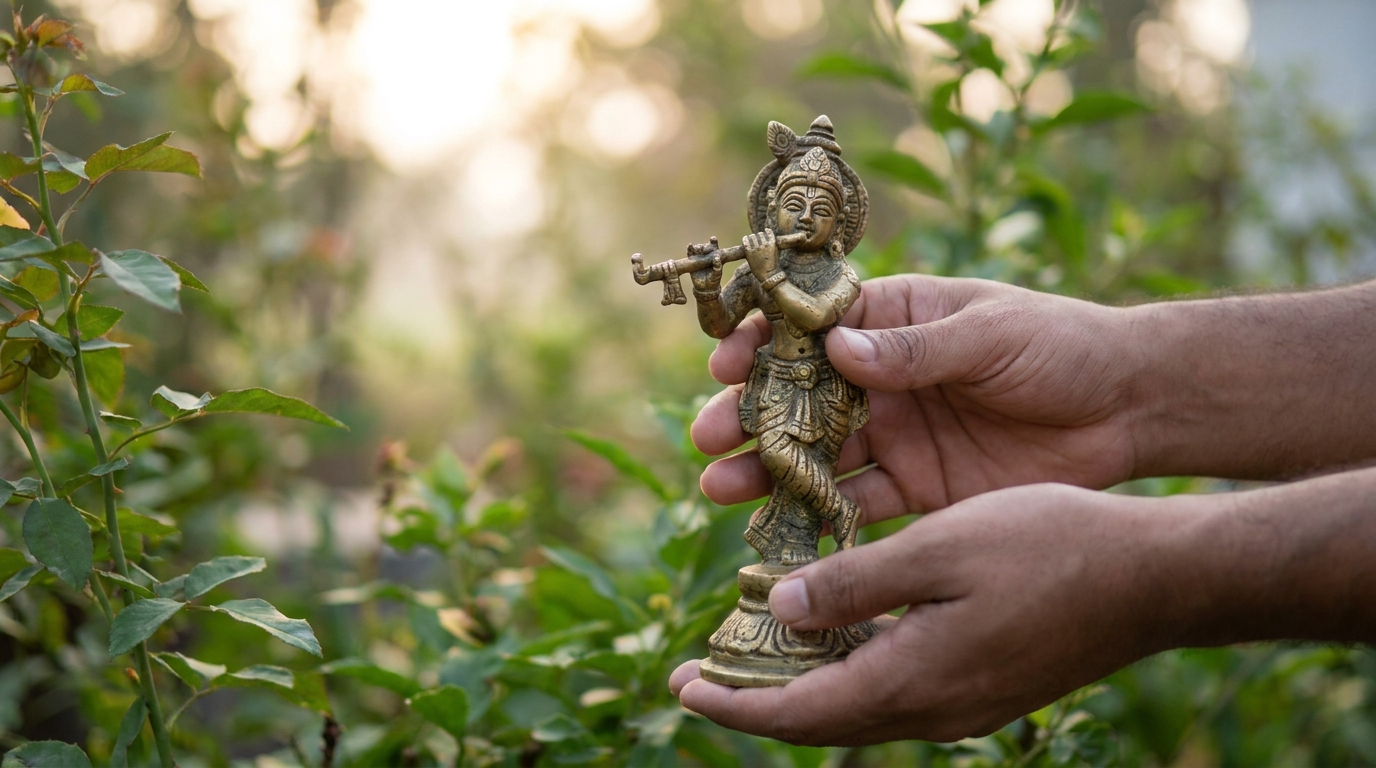
Prayer is one of the most intimate ways to deepen your connection with Krishna. It does not need to be complicated or poetic. Prayer is honest conversation with God.
You can pray while sitting before an altar, walking outside, washing dishes, or lying awake at night. Krishna is present everywhere, and He is present within the heart as Paramatma, the indwelling guide.
Speaking Honestly to Krishna
A meaningful relationship requires honesty. We can come to Krishna with our real heart.
We might pray:
“Krishna, I want to know You more.”
“Please help me remember You today.”
“I feel lost. Please guide me.”
“Thank You for this food, this breath, this chance to grow.”
“Please help me serve with humility.”
“Please remove what keeps me far from You.”
There is no need to hide. Krishna already knows us completely, and He loves us more deeply than we can understand.
Praying with Gratitude
Gratitude softens the heart. When we begin to notice Krishna’s kindness in daily life, our connection becomes more personal.
We may thank Krishna for sunlight, friendship, spiritual teachings, a meal, a lesson learned through difficulty, or the ability to chant even one holy name.
Gratitude turns ordinary moments into offerings.
Praying Through Difficulty
Deepening our connection with Krishna does not mean life will always feel easy. Sometimes devotion grows most deeply in times of struggle.
In the Bhagavatam, many great devotees show us how to turn toward Krishna in difficulty rather than away from Him. Queen Kunti, a revered devotee, prayed to remember Krishna even in hardship. Her example is not that we should seek suffering, but that we can seek Krishna in every circumstance.
When life is painful, a simple prayer may be enough: “Krishna, please stay with me. Please help me remember You.”
And He does.
Serving Krishna in Daily Life
In Bhakti Yoga, love becomes practical through service. The Sanskrit word seva means loving service. Service is not forced duty. It is the natural expression of affection.
When we love someone, we want to do something for them. In the same way, as our love for Krishna grows, we begin to offer our time, talents, words, work, and care.
Offering What You Already Do
Krishna teaches in the Bhagavad Gita 9.26: “If one offers Me with love and devotion a leaf, a flower, fruit, or water, I will accept it.”
This verse is very beautiful because Krishna does not ask for something expensive or impossible. He asks for love.
We can offer simple things: a flower, a candle, a glass of water, a vegetarian meal, a song, a moment of remembrance.
We can also offer our daily work. Before beginning the day, we might pray, “Krishna, may my work be pleasing to You. May I serve others with kindness.”
Cooking, parenting, studying, creating, cleaning, caring for someone, or earning honestly can all become spiritualized when offered to Krishna.
Creating a Simple Home Altar
A home altar can help make your relationship with Krishna more tangible. It does not need to be elaborate.
You might place a picture of Krishna, Radha and Krishna, Lord Chaitanya, or your spiritual teachers in a clean and peaceful space. You can offer flowers, incense, a lamp, or water.
The altar becomes a place to pause, chant, pray, and remember. It gently says to the heart, “Krishna is welcome in this home.”
Serving Krishna by Serving Others
Because Krishna lives in every heart, service to others can be an offering to Him. This includes kindness, compassion, listening, feeding others, encouraging someone, or helping without expecting recognition.
Bhakti service is not about ego. It is not, “Look how spiritual I am.” Rather, it is, “Krishna, please let me be useful.”
Even a small act, done with love, can become sacred.
Developing Spiritual Habits That Nourish Love
Relationships deepen through regular care. In the same way, our connection with Krishna grows through daily spiritual habits, even simple ones.
The goal is not to build a harsh or rigid routine. The goal is to create loving rhythms that help us remember Krishna.
Morning Remembrance
Morning is a powerful time for spiritual practice. Before the day becomes busy, we can turn our heart toward Krishna.
You might begin with:
- Chanting the maha-mantra
- Reading one verse from the Bhagavad Gita
- Offering a short prayer
- Lighting a candle or incense
- Sitting quietly and remembering Krishna
Even five sincere minutes can shape the whole day.
Spiritualizing Meals
In Bhakti Yoga, food can become an offering of love. Food offered to Krishna is called prasadam, which means mercy or grace.
Traditionally, devotees prepare vegetarian food with care and offer it to Krishna before eating. The offering can be simple. Place the food before Krishna’s picture or altar and pray: “Krishna, please accept this offering.”
When we honor prasadam, eating becomes more than physical nourishment. It becomes a way of receiving Krishna’s mercy.
Ending the Day with Reflection
At night, we can gently review the day with Krishna.
Ask:
“Where did I remember You?”
“Where did I forget?”
“What am I grateful for?”
“How can I serve better tomorrow?”
This reflection should not be filled with guilt. It is an honest and loving check-in. Krishna is patient. Spiritual growth takes time.
Overcoming Common Obstacles in Devotion
Every sincere seeker faces challenges. The path of Bhakti is joyful, but it is also honest. We may encounter distraction, doubt, inconsistency, pride, or discouragement.
These obstacles do not mean we are failing. They are part of the journey.
When the Mind Wanders
The mind is naturally restless. In the Bhagavad Gita, Arjuna tells Krishna that controlling the mind seems more difficult than controlling the wind.
Krishna does not dismiss Arjuna’s concern. He acknowledges that the mind is difficult to control, but says it can be trained through practice and detachment.
So when your mind wanders during chanting or prayer, do not give up. Gently return. Again and again. Each return is devotion.
When Devotion Feels Dry
There may be seasons when chanting feels mechanical, prayer feels quiet, and inspiration feels far away. This can be painful, but it can also purify our love.
Sometimes Krishna allows us to continue without strong emotional reward so our devotion becomes deeper than feelings alone.
During dry times, keep the practices simple. Chant a little. Hear something nourishing. Spend time with devotees. Offer one prayer: “Krishna, please help me keep going.”
When We Feel Unworthy
Many people hesitate to approach Krishna because they feel unworthy. “I have made mistakes. My life is messy. I am not pure.”
But Bhakti begins with mercy, not perfection.
Krishna’s love is not limited to the already saintly. He is especially kind to those who sincerely turn toward Him, even with trembling steps.
In the Bhagavad Gita 18.66, Krishna invites us to surrender to Him and promises protection. This surrender is not a demand to become flawless overnight. It is an invitation to trust His grace.
Avoiding Spiritual Comparison
It is easy to compare our spiritual life with others. Someone may chant more, know more scripture, sing beautifully, or seem more peaceful.
But Krishna sees your heart. Your relationship with Him is personal.
Be inspired by others, but do not become discouraged by comparison. A small offering made with sincerity is precious to Krishna.
Growing Through Sadhu-Sanga, Spiritual Community
The Sanskrit word sadhu-sanga means association with spiritually minded people. Sadhu refers to a sincere saintly person or devotee, and sanga means association or company.
Community is essential in Bhakti Yoga because love grows in relationship. When we spend time with people who are also trying to remember Krishna, we feel supported and encouraged.
Why Spiritual Friendship Matters
Spiritual friendship helps us stay steady. We need people who remind us of what matters, who chant with us, pray with us, and gently help us return when we drift.
In Bhakti community, we learn by observing. We see how others serve, forgive, study, worship, and keep going through difficulties.
No community is perfect, because people are growing. But a sincere devotional community can become a sacred shelter.
Learning from Teachers and Devotees
Bhakti Yoga is traditionally received through parampara, a lineage of teachers who pass down spiritual wisdom with care.
A genuine teacher does not ask us to worship their ego. They help us come closer to Krishna. They teach through scripture, example, humility, and compassion.
If you are seeking guidance, pray for Krishna to lead you to sincere devotees and trustworthy teachers.
Participating at Your Own Pace
If you are new, it is okay to participate gently. Attend a kirtan. Join a discussion. Share prasadam. Ask questions. Listen.
You do not need to know everything. You do not need to dress, speak, or act in a certain way to be welcomed. Come as you are, with sincerity.
Deepening Love Through Remembering Krishna Throughout the Day
A meaningful relationship with Krishna grows when we learn to remember Him not only during formal practice, but throughout ordinary life.
This is called smaranam, or remembrance. It is one of the key limbs of Bhakti.
Seeing Krishna’s Hand in Daily Life
We can practice noticing Krishna’s presence in small moments.
The taste of water. The warmth of the sun. The beauty of a flower. The kindness of a friend. The lesson in a challenge.
In the Bhagavad Gita, Krishna says He is the taste of water, the light of the sun and moon, and the ability in all people. This means the world can become a place of remembrance when we learn to see with spiritual vision.
Short Prayers During the Day
You can turn daily transitions into moments of connection.
Before a meeting: “Krishna, please guide my words.”
Before eating: “Thank You, Krishna.”
When stressed: “Please help me remember You.”
When happy: “This joy belongs to You.”
Before sleep: “Please keep me close.”
These small prayers gradually weave Krishna into the fabric of daily life.
Using Sacred Sound in the Home
Playing soft kirtan, chanting while cooking, or keeping a regular time for reading scripture can fill the home with spiritual sound.
Children, guests, and family members may feel the atmosphere change. Sacred sound purifies gently. It does not need to be forced. Let it be natural and welcoming.
Surrender as a Loving Offering
The word saranagati means surrender. Sometimes surrender sounds frightening, as if we are losing ourselves. But in Bhakti, surrender means offering ourselves into the care of the one who loves us perfectly.
It is not passive. It is not blind. It is loving trust.
Trusting Krishna’s Guidance
Surrender may begin very simply: “Krishna, I do not know everything. Please guide me.”
As we deepen our connection, we learn to trust that Krishna is working in our lives, even when we do not understand the whole picture.
This trust does not remove responsibility. We still make choices, seek wisdom, and act with care. But we do so with the awareness that we are not alone.
Offering the Results
Krishna teaches the practice of offering the fruits of our actions. This means we do our best, but we do not cling tightly to the outcome.
This is deeply practical. We can work sincerely, love sincerely, serve sincerely, and then place the result in Krishna’s hands.
Such surrender brings peace. It frees us from the burden of trying to control everything.
Letting Love Lead
As surrender deepens, devotion becomes less about “What can I get?” and more about “How can I love?”
This is the heart of Bhakti Yoga. We begin with our needs, and Krishna kindly accepts us. Over time, our heart matures. We begin to want Krishna Himself—not only His gifts.
Making Your Relationship with Krishna Personal and Real
Every soul has a unique relationship with Krishna. Your journey may not look exactly like someone else’s. That is okay.
The essence is sincerity.
Start Where You Are
If you can chant one round, chant one round. If you can chant for five minutes, chant for five minutes. If all you can do today is whisper “Krishna,” that is meaningful.
Spiritual life grows by steady, sincere practice. Do not underestimate small beginnings.
Bring Your Whole Life to Krishna
Krishna does not want only our polished spiritual moments. He invites our whole heart.
Bring your joy. Bring your questions. Bring your grief. Bring your creativity. Bring your family, work, dreams, and fears.
A meaningful relationship is built through real exchange. Let Krishna into your life as it is, and allow Him to gently transform it.
Celebrate Progress with Humility
As you practice Bhakti Yoga, you may notice changes. Perhaps you become more peaceful, more compassionate, less reactive, or more grateful. Perhaps chanting becomes sweeter. Perhaps scripture feels more alive.
Receive these gifts with humility. They are Krishna’s mercy.
And when you stumble, begin again. Krishna is patient beyond measure.
A Simple Daily Practice for Deepening Your Connection
If you are wondering how to begin or deepen your connection with Krishna in a practical way, here is a simple daily rhythm:
Morning
Chant the maha-mantra for a few minutes. Read one verse from the Bhagavad Gita. Offer a prayer for guidance.
Midday
Pause before eating and offer your food to Krishna. Remember Him with gratitude.
Evening
Reflect on the day. Thank Krishna for one blessing. Ask for help with one area of growth.
Weekly
Join kirtan, attend a Bhakti gathering, hear from scripture, or spend time with devotees.
Ongoing
Serve someone with kindness. Offer your talents. Keep Krishna’s name close.
This simple practice can become a doorway to deep transformation.
Bhakti Yoga is not about becoming someone else. It is about awakening the soul’s natural love for Krishna. Through chanting, prayer, hearing, service, community, and remembrance, the heart gradually becomes soft, steady, and joyful.
Krishna is already near. He is in the heart, patiently waiting for our attention, our trust, and our love.
Wherever you are coming from, whatever your background, and whatever your spiritual experience may be, you are welcome on this path. Take one sincere step toward Krishna today. Chant one holy name, offer one prayer, read one verse, serve one person with love. Krishna sees every effort, and He lovingly responds.
FAQs
What is Krishna?
Krishna is a major deity in Hinduism, considered to be the eighth avatar of the god Vishnu. He is often depicted as a young, playful cowherd who is known for his wisdom, compassion, and divine love.
How can one cultivate a relationship with Krishna?
Cultivating a relationship with Krishna involves engaging in devotional practices such as bhakti yoga, which includes chanting, singing, and meditating on Krishna’s divine qualities. Additionally, studying sacred texts like the Bhagavad Gita and participating in Krishna-centered rituals and festivals can help deepen one’s connection with Krishna.
What are the benefits of cultivating a relationship with Krishna?
Devotees believe that cultivating a relationship with Krishna can bring about spiritual growth, inner peace, and a sense of purpose and fulfillment. It is also believed to foster a deeper understanding of the nature of reality and the self.
Are there specific rituals or practices associated with cultivating a relationship with Krishna?
Yes, there are various rituals and practices associated with cultivating a relationship with Krishna, such as daily chanting of the Hare Krishna mantra, offering food and prayers to Krishna, attending kirtan (devotional singing) gatherings, and observing Krishna-related festivals such as Janmashtami and Radhastami.
Can people of any background cultivate a relationship with Krishna?
Yes, people from all backgrounds and walks of life can cultivate a relationship with Krishna. The practice of bhakti yoga and devotion to Krishna is open to anyone who is sincerely interested in developing a loving relationship with the divine.

