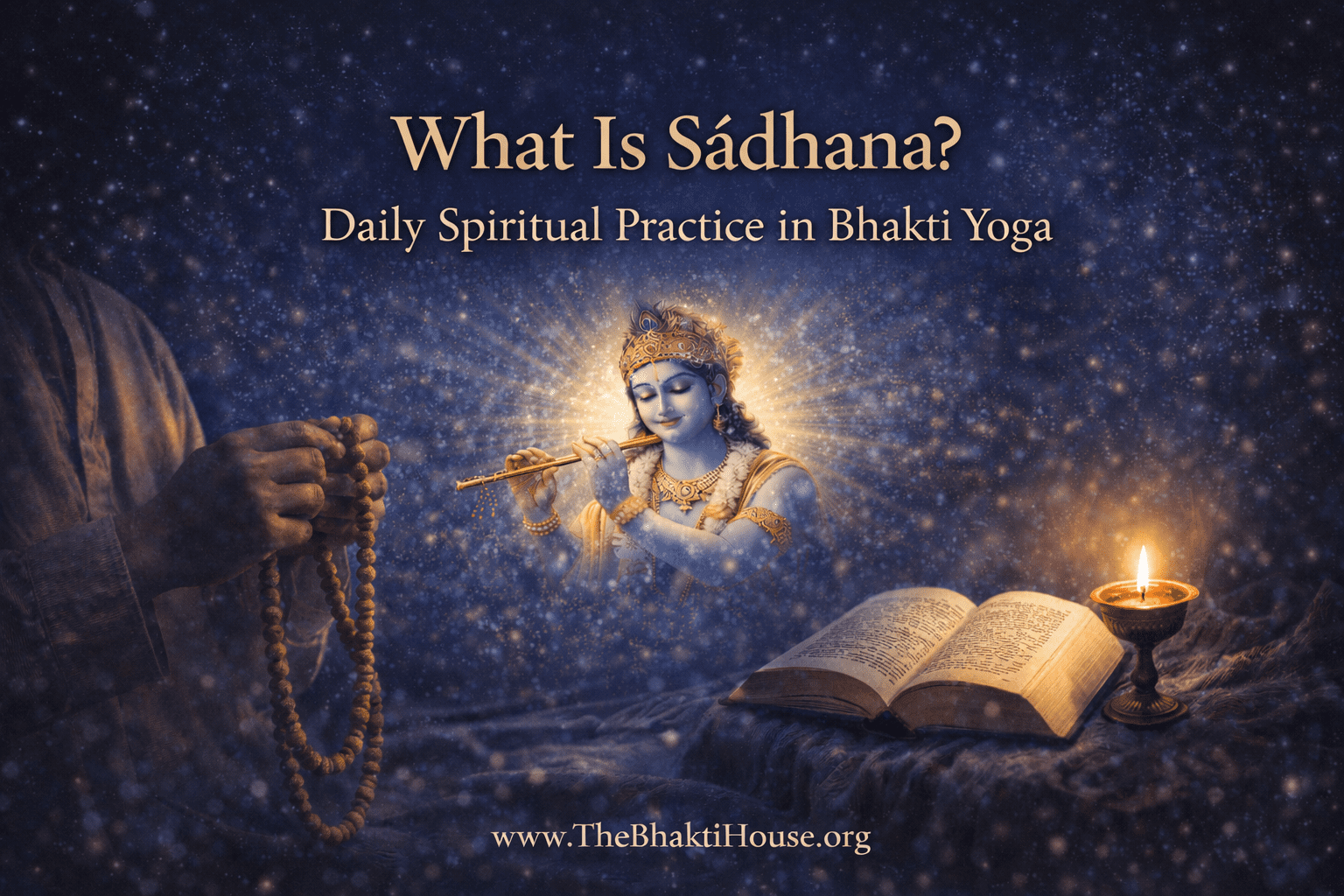
Silent japa is a devotional form of mantra meditation in which a sacred sound or name is repeated inwardly. Unlike spoken chanting, it unfolds quietly within, offering spiritual seekers a steady path toward intimacy, focus, and a more peaceful inner life. It can become a natural extension of home sadhana.
This practice does not require forcing the mind to become blank. Instead, you gently return attention to the mantra whenever thoughts arise. As a form of sadhana, silent japa invites sincerity rather than performance or spiritual perfectionism. With patience, each repetition can guide you towards greater steadiness, presence, and trust in the practice.
What Silent Japa Means—and How It Differs from Other Forms of Mantra Practice
Mantra practice traditionally develops through three modes. Audible japa involves chanting the mantra clearly, allowing its sound and rhythm to support attention. Soft repetition, sometimes called whispered or upāṃśu japa, is spoken quietly, with minimal outward sound.
Silent japa, or mānasika japa, takes place entirely within the mind. The practitioner inwardly hears or senses each repetition while keeping the lips and tongue still. When thoughts arise, the mantra provides a steady point of return, helping awareness become more focused without forcing the mind into silence.
A mantra can function as an anchor for concentration, but many bhakti traditions understand it as more than a mental technique. It is a meaningful invocation and a way of remembering the Divine. This perspective connects with the bhakti understanding of the soul, in which remembrance supports a relationship with the sacred.
Seekers should use a mantra received through a trusted spiritual tradition or teacher when appropriate. This guidance matters when pronunciation, devotional meaning, or initiation carries specific significance. With regular practice, silent japa may support steadier attention, emotional grounding, and deepened remembrance, rather than promising instant mystical experiences.
Preparing for a Silent Japa Session
Begin with a realistic commitment, such as five to 15 minutes at a consistent time each day. Morning, evening, or a quiet break at work can all support practice. Consistency matters more than length, so choose a schedule you can maintain without strain.
Select a place that feels reasonably settled, but do not wait for perfect silence. Ordinary household sounds can become part of the practice. Turn off avoidable notifications, gather any materials you need, and let others know if you prefer not to be interrupted.
Sit in a way that supports alertness and ease. Keep the spine naturally upright, relax the shoulders, and allow the breath to remain accessible and unforced. A cushion, bench, or chair is suitable; comfort helps attention turn inward without creating unnecessary tension.
Before beginning, set one simple intention. You might practise for remembrance, devotion, gratitude, or greater inner clarity. Let this intention orient the session rather than become another task to complete. A mala can help you keep count, while a timer can mark the ending; use either only if it supports, rather than distracts from, silent japa.
If helpful, explore resources on steady breath and steady name to strengthen your preparation. Then settle, close the eyes or soften the gaze, and allow the first repetition to begin naturally.
A Step-by-Step Method for Practising Silent Japa
Begin by settling into your seat. Let the spine rise comfortably, relax the shoulders, and place the hands at ease. Take a few unforced breaths, allowing attention to gather without controlling, deepening, or otherwise manipulating the breath.
When you feel settled, introduce the mantra at a natural pace. Repeat it silently and clearly, leaving enough space to receive each repetition. Sense the mantra’s sound, rhythm, and meaning, whether it is a sacred name, traditional phrase, or prayer given by your teacher.
Let the mantra remain the centre of attention without forcing concentration. You may experience its rhythm as a gentle inward movement, with each repetition following the last. If the mantra’s devotional meaning is familiar, allow reverence or love to accompany the words.
Thoughts, bodily sensations, and emotions will arise. Acknowledge them without self-criticism, then return to the next repetition. Do not wait to feel perfectly focused; the return itself is part of the meditation and strengthens steadiness over time.
If you lose the mantra completely, pause briefly and begin again at a comfortable pace. Avoid measuring the session by the number of repetitions or by unusual experiences. Silent japa is an offering of attention, not a performance.
As the session ends, slow the repetitions gradually. Sit quietly for a few moments and notice the effects of practice without analysing them. Offer gratitude, or say a brief prayer, before opening the eyes and re-entering ordinary activity with care.
Common Challenges and the Right Inner Attitude
Beginners often find silent japa less tangible than vocal chanting. When the mantra becomes unclear, return briefly to a whisper or audible repetition, then resume mental practice.
Distraction, restlessness, sleepiness, and mechanical repetition are normal. Sit more upright when drowsy and soften effort when tense. Each return to the mantra trains attention, even when the mind feels unsettled. Do not measure progress only by inner quiet.
Doubt may also arise: “Am I doing this correctly?” Follow your teacher’s guidance, but avoid constant self-monitoring. Surrender means participating fully, not waiting passively for a spiritual result. You offer attention again and again, trusting the bhakti paradox of surrender and freedom. Over time, patience transforms difficulty into steadiness, sincerity, and devotion.
Carrying the Mantra Beyond the Meditation Seat
A short, sincere silent japa practice can gradually shape daily attention and conduct. End each session with one practical resolution: remember the mantra during a walk, before sleep, or through a stressful transition.
Build slowly, without turning practice into another obligation. Notice whether remembrance supports patience, kindness, and steadier presence. You may also combine it with simple practices for restoring inner calm, such as conscious breathing or quiet reflection. Its deepest value lies not in productivity, but in relationship, remembrance, and belonging to a wider culture of inner calm.