
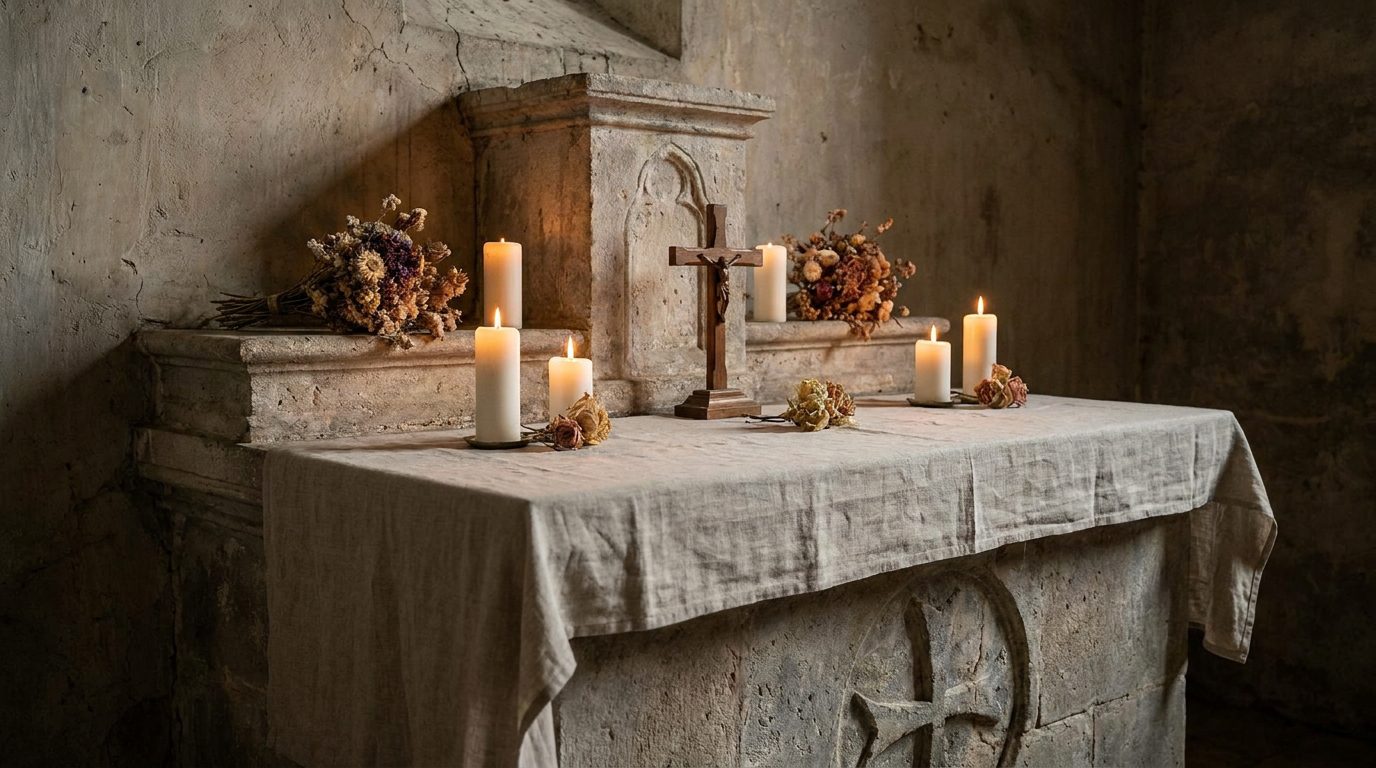
An altar is a sacred meeting place.
It may be a small shelf in an apartment, a quiet corner of a bedroom, a simple table with a candle, or a beautifully decorated space with sacred images, flowers, and scriptures. What makes an altar truly sacred is not its size or cost, but the sincerity of the heart that approaches it.
In Bhakti Yoga, the path of loving devotion, an altar helps us remember God in a personal and practical way. It becomes a place to chant, pray, offer gratitude, read wisdom, and return again and again to what is eternal. For some, an altar is a daily spiritual anchor. For others, it may be the first humble step toward a deeper relationship with the Divine.
Whether you are new to spiritual practice or have been walking a devotional path for many years, this guide is offered with warmth and respect. People of all backgrounds, faiths, cultures, and life experiences are welcome. The altar is not meant to be a symbol of perfection. It is a gentle invitation to love.
An altar is a dedicated sacred space used for prayer, meditation, worship, reflection, and spiritual offering. Across many traditions, people create altars to honor God, saints, ancestors, teachers, sacred texts, or divine qualities such as compassion, wisdom, courage, and love.
In Bhakti Yoga, an altar is often centered on the Divine Person, such as Krishna, Radha-Krishna, Rama, Vishnu, Narasimhadeva, or another form of the Lord. Some altars include pictures of spiritual teachers, saints, or sacred scriptures like the Bhagavad-gita and Srimad Bhagavatam.
The Sanskrit word “puja” means worship or loving offering. When we sit before an altar and offer a flower, light, incense, water, food, song, or prayer, we are practicing puja. The outward offering is simple, but the inner offering is the heart.
A Sacred Space for Remembering
Life can become very busy. We may wake up and immediately reach for our phone, hurry through responsibilities, and go to sleep with a tired mind. An altar gives us a place to pause.
In Sanskrit, “smaranam” means remembrance. One of the central practices of Bhakti Yoga is remembering God throughout the day. The altar helps us do that. It quietly says, “Come back. Breathe. You are loved. Offer this moment.”
Even a glance at the altar can shift our consciousness. It reminds us that our life is not only about tasks, worries, and survival. We are spiritual beings, and our deepest need is loving connection with God.
A Place of Relationship, Not Performance
A spiritual altar is not a stage. It is not meant to impress others or prove how advanced we are. It is a place of honest relationship.
Some days our prayers may feel deep and joyful. Other days we may feel distracted, tired, or unsure. Both are welcome. Bhakti is a path of sincerity, not show. God sees the intention.
In the Bhagavad-gita 9.26, Krishna says:
“If one offers Me with love and devotion a leaf, a flower, fruit, or water, I will accept it.”
This verse is deeply comforting. Krishna does not ask for wealth, status, or complicated rituals. He asks for love. A simple offering made with devotion is precious.
Why Create an Altar for Spiritual Practice?
Creating an altar is one of the most practical ways to make spirituality part of daily life. It gives form to our intention. It helps transform a house into a home of devotion.
An altar can support chanting, prayer, meditation, study, service, and emotional healing. It can become the heart of your spiritual routine.
It Helps Build Daily Rhythm
Most meaningful growth happens through small daily practices. An altar gives those practices a natural place to happen.
You may sit there in the morning to chant a mantra. You may light a candle in the evening and say a prayer. You may offer your meals before eating. You may read one verse from scripture before beginning your day.
These small acts create rhythm. Over time, rhythm becomes refuge.
It Invites Peace Into the Home
A home altar changes the atmosphere of a space. When we chant, pray, and offer sacred items there, the environment becomes spiritually nourishing.
In Bhakti traditions, sound is especially powerful. The chanting of holy names, such as the Hare Krishna maha-mantra, purifies the heart and the home.
The maha-mantra is:
Hare Krishna, Hare Krishna, Krishna Krishna, Hare Hare
Hare Rama, Hare Rama, Rama Rama, Hare Hare
“Maha” means great, and “mantra” means a sacred sound that frees the mind. This great mantra is a prayer asking to be engaged in loving service to God. “Hare” calls upon the divine energy of the Lord, “Krishna” means the all-attractive Lord, and “Rama” means the source of spiritual joy.
When chanted sincerely, even softly, the holy name brings light into the heart.
It Encourages Gratitude and Offering
An altar teaches us to live with gratitude. Instead of thinking, “This is mine,” we begin to feel, “Everything is a gift.”
In Bhakti Yoga, we practice offering what we have back to God. This may include food, flowers, time, talents, work, emotions, and even difficulties.
Offering does not mean rejecting the world. It means seeing life as sacred and using what we have in loving service.
How to Choose the Right Place for Your Altar
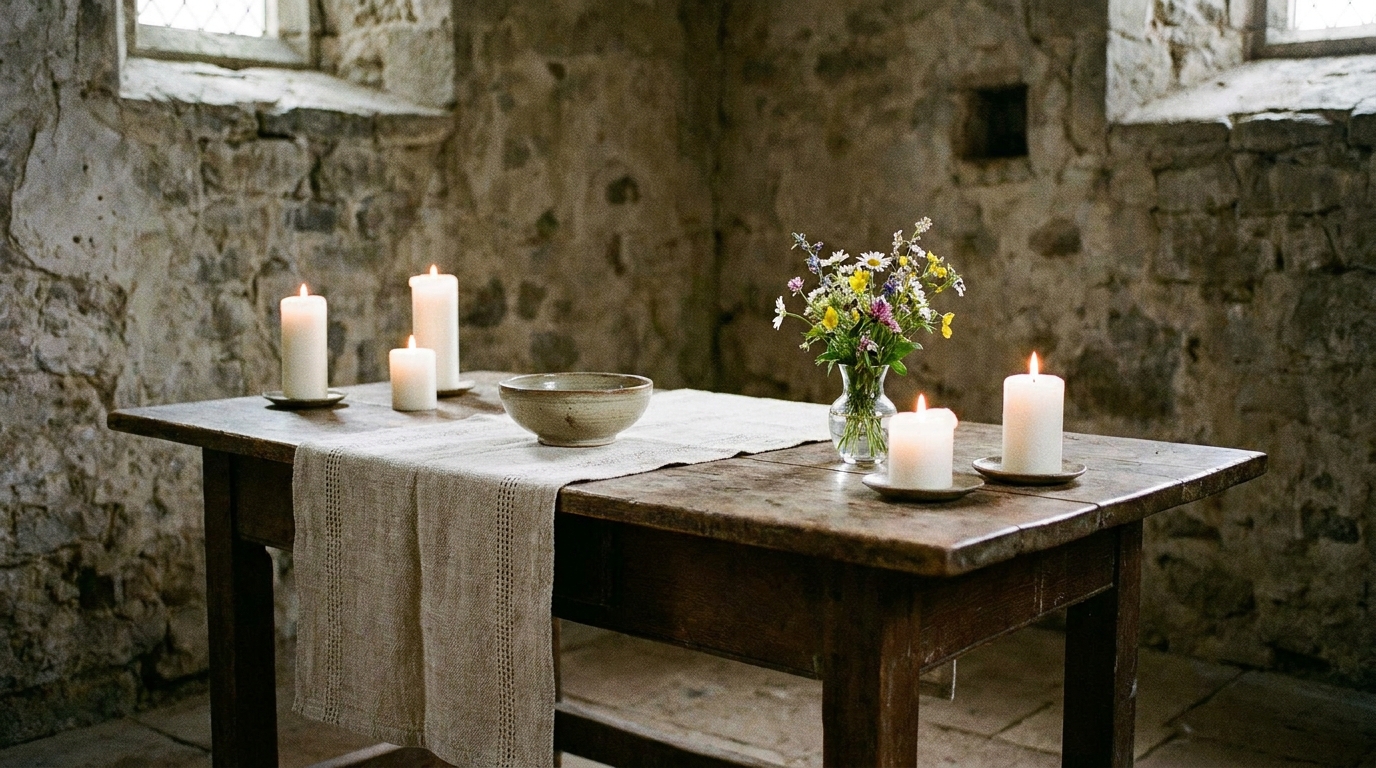
The best place for your altar is somewhere clean, peaceful, and accessible. It does not need to be large. It simply needs to be treated with care.
Choose a location where you can pause comfortably and return often.
A Quiet Corner
A quiet corner of a room can become a powerful sacred space. Many people place altars in bedrooms, living rooms, meditation rooms, or home offices.
If possible, avoid placing the altar in a cluttered or chaotic area. A simple, clean space helps the mind settle.
If you live with others, choose a place that respects both your practice and the shared home environment. Bhakti is never meant to create tension. It is a path of love, humility, and harmony.
A Shelf, Table, or Cabinet
Your altar may be a small shelf, a low table, a cabinet, or even a tray that can be moved when needed. What matters is that it is intentional.
A cloth can help define the space. Many people use clean cotton or silk cloth in colors such as white, yellow, red, blue, or saffron. But there is no need to overcomplicate. Clean and sincere is enough.
Keeping the Altar Clean
Cleanliness is an important part of altar care. In Sanskrit, “saucam” means purity or cleanliness. This includes both external cleanliness and internal purity of intention.
Try to keep the altar dust-free. Remove old flowers. Wipe the surface regularly. Keep sacred items respectfully arranged.
This cleaning itself can become a devotional practice. As you clean the altar, you can pray, “May my heart also become clean. May I make space for love.”
Please visit our website for more information on our articles: articles.
What to Put on a Spiritual Altar
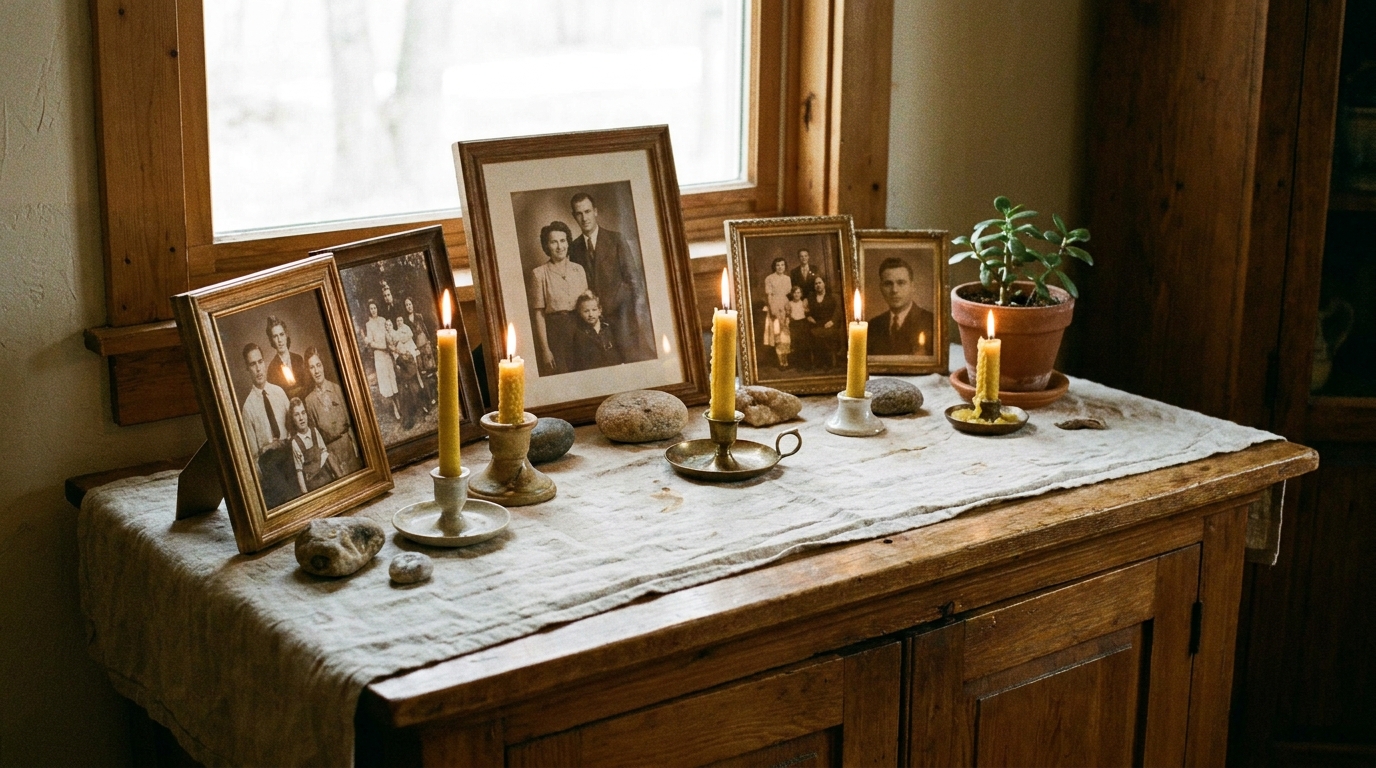
Every altar is personal, but in Bhakti Yoga, certain items are traditionally used to support devotion. You can begin very simply and add items over time.
The goal is not decoration alone. Each item should help you remember and serve God.
Sacred Images or Deities
Many Bhakti altars include sacred images of Krishna, Radha-Krishna, Lord Rama, Lord Vishnu, Lord Chaitanya, or other forms of the Divine. These images are not considered ordinary art. They are windows into divine remembrance.
Some devotees also worship Deities, known in Sanskrit as “murti” or “arca-vigraha.” A murti is a sacred form of the Lord through which devotees offer worship. In Bhakti understanding, God is not limited by matter. Out of kindness, the Lord accepts worship through a visible form so we can engage our senses in love.
If you are new, a simple picture is a wonderful beginning. You do not need to take on elaborate worship before you are ready.
Pictures of Saints and Teachers
Many altars include images of spiritual teachers, known as “gurus,” and saints from the devotional tradition.
A guru is a spiritual teacher who helps guide the soul toward God. In authentic Bhakti, the guru does not replace God. The guru points us toward God and teaches by wisdom, compassion, and example.
You may include a picture of a teacher who inspires you, especially if you are connected to a lineage or community. If you are exploring, you can simply begin with sacred scripture and a picture of the Lord.
Scriptures
Sacred texts are powerful altar items. The Bhagavad-gita, Srimad Bhagavatam, Ramayana, or other devotional scriptures may be placed respectfully on or near the altar.
The Bhagavad-gita is a conversation between Krishna and Arjuna about life, duty, the soul, devotion, and surrender. The Srimad Bhagavatam is a beautiful scripture filled with teachings and stories about loving devotion to God.
Keeping scripture on your altar reminds you that spiritual life is guided by wisdom, not only emotion.
A Candle or Ghee Lamp
Light represents knowledge, hope, and divine presence. Many people light a candle or ghee lamp during prayer or chanting.
Ghee is clarified butter, traditionally used in lamps for worship. If you do not have ghee, a simple candle is fine. Always use fire safely and never leave it unattended.
As you light the lamp, you may pray, “May the light of God awaken in my heart.”
Incense, Flowers, and Water
Incense represents fragrance offered in devotion. Flowers represent beauty and freshness. Water represents purity and life.
These simple offerings are traditional in Bhakti worship because they engage the senses lovingly. We can see the beauty of the altar, smell the incense, hear sacred sound, touch prayer beads, and taste offered food.
Bhakti Yoga does not ask us to reject the senses. It teaches us to spiritualize them by engaging them in service.
Prayer Beads
Prayer beads, called “japa mala” in Sanskrit, are used for mantra meditation. “Japa” means quiet repetition of a mantra, and “mala” means a garland or strand of beads.
Many Bhakti practitioners chant the Hare Krishna maha-mantra on beads daily. A traditional japa mala has 108 beads. You chant the full mantra once on each bead, moving bead by bead with attention and prayer.
Your beads can be kept in a clean bag or placed respectfully near the altar.
How to Use Your Altar Daily
An altar becomes meaningful through use. Even five sincere minutes each day can nourish your spiritual life.
Do not worry if you cannot do everything. Begin with what is realistic and heartfelt.
Morning Prayer
Morning is a beautiful time to visit the altar. Before the noise of the day begins, sit quietly and offer yourself to God.
You might say:
“Dear Lord, thank You for this day. Please guide my thoughts, words, and actions. Help me serve with humility. Help me remember You.”
This kind of prayer is simple, but powerful. It sets the direction of the heart.
In the Bhagavad-gita 18.66, Krishna invites us to surrender to Him and promises protection. Surrender does not mean giving up responsibility. It means trusting God while offering our life in loving service.
Chanting Mantra
Chanting is central to Bhakti Yoga. It is both meditation and prayer.
You can sit at your altar and chant the Hare Krishna maha-mantra aloud, softly, or on japa beads. If your mind wanders, gently bring it back to the sound. The practice is not about forcing the mind but lovingly returning it.
The Srimad Bhagavatam teaches that hearing and chanting about the Lord cleanses the heart. This cleansing may happen gradually. We may notice more patience, more compassion, more clarity, and more longing for truth.
Offering Food
In Bhakti Yoga, offering food to God before eating is a beautiful daily practice. Food offered with love becomes “prasadam,” which means mercy or grace.
To offer food, prepare vegetarian food with care and place a portion before the altar. You can say a simple prayer:
“Dear Krishna, please accept this offering made with love. Thank You for providing everything.”
After a few moments, the food can be honored as prasadam.
Traditionally, Krishna is offered vegetarian foods without meat, fish, eggs, onion, or garlic. If you are new, do not feel discouraged. Start where you are. Even offering fruit, water, or a simple meal is a meaningful step.
Reading Sacred Wisdom
Spend a few minutes reading from scripture at your altar. You may read one verse from the Bhagavad-gita and reflect on how to apply it that day.
For example, Bhagavad-gita 12.13-14 describes a devotee as kind, humble, forgiving, peaceful, and devoted. After reading, you might ask, “How can I practice one of these qualities today?”
Scripture becomes alive when we bring it into our relationships, choices, and service.
Evening Reflection
At the end of the day, return to the altar. Offer gratitude. Offer mistakes. Offer confusion. Offer success.
You might reflect:
“Where did I remember God today?”
“Where did I act from ego or fear?”
“Whom can I forgive?”
“How can I serve better tomorrow?”
This kind of reflection helps spiritual growth become practical and honest.
Understanding Altar Worship in Bhakti Yoga
For newcomers, altar worship may raise questions. Why offer flowers? Why bow? Why use images? These are sincere questions, and they deserve gentle answers.
Bhakti Yoga teaches that love becomes deeper when expressed through action. Just as we show love to family or friends through gifts, words, meals, and care, we express love for God through devotional offerings.
God Is Personal and Approachable
Bhakti scriptures describe God as both unlimited and personal. God is beyond our full understanding, yet also lovingly approachable.
Krishna says in the Bhagavad-gita 4.11, “As all surrender unto Me, I reward them accordingly.” This means God responds to our sincere approach. If we take one step toward Him, He helps us continue.
An altar is one way of approaching. It helps us relate to God not as an abstract idea only, but as the beloved Lord who can receive our love.
The Meaning of Darshan
“Darshan” is a Sanskrit word meaning sacred seeing. When we stand or sit before the altar and behold the Lord, we are not only looking. We are allowing ourselves to be seen.
This is a tender practice. We come with our real heart. We may bring joy, sadness, longing, gratitude, or questions. In darshan, we remember that God sees us fully and still invites us closer.
Offering the Senses
Bhakti Yoga engages the senses in devotion.
The eyes see the altar.
The ears hear mantra and scripture.
The nose smells flowers and incense.
The tongue tastes prasadam and chants holy names.
The hands clean, decorate, cook, and serve.
Instead of being pulled in many directions, the senses become connected to love. This is one reason altar practice is so powerful. It transforms ordinary life into worship.
Simple Altar Practices for Beginners
If you are just beginning, please be encouraged. You do not need a perfect altar or a long routine. Start small and steady.
A sincere beginning is deeply valuable.
The Five-Minute Altar Practice
Here is a simple daily practice:
- Sit before your altar.
- Take three deep breaths.
- Offer one prayer of gratitude.
- Chant the Hare Krishna maha-mantra for a few minutes.
- Ask for guidance for the day.
This can be done in five minutes. If you continue regularly, those five minutes may become a cherished part of your life.
A Simple Offering Practice
You can offer one flower, one cup of water, or one piece of fruit.
Place it before the altar and say:
“My Lord, this is Yours. Please accept this small offering. Please help me offer my heart.”
Remember Bhagavad-gita 9.26: Krishna accepts even a leaf, flower, fruit, or water when offered with devotion.
Chanting While Cleaning
If sitting meditation feels difficult, begin by cleaning the altar while chanting.
Dust the area. Change the water. Arrange flowers. Fold the altar cloth. While doing this, chant softly or play kirtan.
“Kirtan” means congregational or musical chanting of God’s names. It can be joyful, peaceful, and healing. Many people first experience Bhakti through kirtan because the heart naturally responds to sacred sound.
Creating an Altar in a Shared or Small Space
Not everyone has a private room or a large home. Some live with family, roommates, or in temporary housing. Please know that your spiritual life can still flourish.
God is not limited by external circumstances.
A Portable Altar
A portable altar can be kept in a small box, basket, or cloth bag. It may include a small picture, beads, a scripture, and a candle or flower.
You can set it up when you practice and put it away respectfully afterward. This is especially helpful for students, travelers, or those sharing space.
A Digital Altar
While a physical altar is ideal, a digital altar can help when needed. You may keep sacred images on your phone or computer and use them during prayer or chanting.
Try to treat this practice with respect. Close other apps, silence distractions, and create a focused moment.
Respecting Others at Home
If others in your home do not share your practice, be patient and kind. Bhakti is not about forcing faith. It is about becoming more loving.
Let your altar inspire humility, not conflict. Over time, people may notice your peace, kindness, and steadiness. That example can be more powerful than many words.
Caring for Your Altar Over Time
An altar is a living part of your spiritual journey. As your devotion grows, your altar may change.
You may add sacred texts, fresh flowers, devotional art, or items from pilgrimage. You may simplify. You may reorganize. Let your altar remain a place of sincerity.
Refreshing the Space
Regularly refresh the altar. Remove dried flowers. Clean candle holders. Wash offering cups. Replace old cloth when needed.
This care is not separate from worship. It is worship.
In Bhakti, service is called “seva.” Seva means loving service offered without selfish expectation. Cleaning the altar, preparing offerings, arranging flowers, and making time for prayer are all forms of seva.
Avoiding Spiritual Comparison
It is easy to compare your altar with others. Someone may have a large altar, many sacred items, or elaborate decorations. But comparison can steal the sweetness from your own practice.
Your altar is not a competition. It is a relationship.
A small altar with honest tears, simple chanting, and humble prayer may be more spiritually alive than a grand altar maintained for appearance.
Bringing Your Real Life to the Altar
Bring everything to the altar: your hopes, grief, questions, mistakes, gratitude, and dreams.
If you are struggling, sit there anyway. If you feel unworthy, sit there anyway. If you do not know what to say, sit there anyway.
Sometimes the most powerful prayer is simply, “Please help me.”
Bhakti Yoga teaches that God is compassionate. The Lord is not waiting for us to become perfect before we approach. He is inviting us to approach so that our hearts can be healed.
Altar Worship and Inner Transformation
The altar is external, but its purpose is internal transformation. Over time, daily practice helps soften the heart.
We may become more patient, less reactive, more grateful, and more aware of God’s presence. We may begin to see others with more compassion.
From Ritual to Relationship
Ritual without heart can become empty. But ritual with devotion becomes relationship.
Lighting a lamp is not just lighting a lamp. It is saying, “May my heart be illuminated.”
Offering water is not just offering water. It is saying, “Everything I have comes from You.”
Bowing is not just bending the body. It is saying, “I am not the center. Please guide me.”
This shift from action to intention is the heart of Bhakti Yoga.
Humility and Surrender
“Saranagati” is a Sanskrit word meaning surrender. In Bhakti, surrender is not passive or fearful. It is loving trust.
At the altar, we practice surrender in small ways. We admit we need grace. We ask for guidance. We offer our plans and accept that God may lead us differently than expected.
This humility brings freedom. We do not have to control everything. We can serve, pray, and trust.
Seeing the Whole World as God’s Altar
A home altar trains us to see all of life as sacred.
After offering flowers at the altar, we may begin to see nature with more reverence. After offering food, we may become more mindful of what we eat and how it is prepared. After praying for compassion, we may treat others with more care.
Eventually, the altar expands beyond one corner of the home. The heart becomes an altar. Work becomes service. Speech becomes prayer. Relationships become opportunities to love.
Common Questions About Spiritual Altars
Many people have practical questions when beginning altar practice. These questions are welcome. Spiritual life grows through honest inquiry.
Do I Need to Be Hindu to Have a Bhakti Altar?
No. Bhakti Yoga is rooted in the ancient devotional traditions of India, but love of God is universal. People from many backgrounds are drawn to chanting, prayer, sacred wisdom, and devotional service.
You do not need to adopt an external label before beginning. You can approach with respect, curiosity, and sincerity.
Can I Have an Altar If I Am Still Learning?
Yes. An altar can support your learning. You may not know all the prayers or traditions yet, and that is okay.
Start simply. Read. Ask questions. Associate with kind and knowledgeable practitioners. Let your understanding grow naturally.
What If I Miss a Day?
Do not become discouraged. Spiritual practice is a relationship, and relationships grow through returning.
If you miss a day, begin again the next day. No guilt is needed. Just come back.
Krishna’s invitation is always fresh.
Should My Altar Face a Certain Direction?
Some traditions recommend placing an altar facing east or north, but this may not always be possible. If you can arrange it that way, wonderful. If not, choose the cleanest and most peaceful place available.
Devotion is more important than direction.
Can Children Participate?
Yes, children can be lovingly included. They may offer flowers, ring a bell, sing kirtan, or say simple prayers.
Let it be joyful. Children often understand devotion naturally when it is presented with warmth rather than pressure.
Building a Family or Community Altar Practice
An altar can nourish not only individuals but also families and communities. When people gather around sacred sound and prayer, hearts connect.
Family Prayer Time
A family may gather for a short evening practice. Light a candle, chant one mantra together, and each person can share one thing they are grateful for.
This creates spiritual culture in the home. It teaches children and adults alike that God is part of daily life.
Kirtan at Home
Invite friends for simple kirtan. You do not need professional music. A drum, harmonium, guitar, kartals, or simple clapping is enough.
The purpose of kirtan is not performance. It is shared prayer through sound.
When voices come together in the holy names, barriers soften. People often feel peace, joy, and belonging.
Offering Service Together
Use your altar as inspiration for service. After prayer, ask, “How can we serve today?”
Service may mean feeding others, caring for the environment, visiting someone lonely, sharing prasadam, helping at a temple, or offering your skills for a good purpose.
Bhakti Yoga is not only what happens at the altar. It is how the altar changes the way we live.
A Simple Step-by-Step Guide to Creating Your Altar
If you are ready to begin, here is a gentle step-by-step approach.
Step 1: Choose a Clean Space
Find a peaceful place in your home. Clean it carefully. If possible, use a small table, shelf, or cloth to define the altar area.
Step 2: Add a Sacred Image or Scripture
Place a picture of Krishna, Radha-Krishna, Rama, Vishnu, or another form of God that inspires devotion. You may also place the Bhagavad-gita or another sacred text there.
Step 3: Add Simple Offering Items
You may include a candle, incense, small cup of water, flowers, fruit, or prayer beads. Keep it simple and manageable.
Step 4: Begin a Daily Practice
Commit to a small daily practice, such as one prayer, one mantra, or five minutes of quiet sitting. Consistency matters more than length.
Step 5: Offer Your Heart
The most important part of the altar is not any object. It is your heart.
Say in your own words, “Dear God, I want to know You. Please guide me. Please accept this small effort.”
That prayer is a beautiful beginning.
The Heart of the Altar
An altar is a place of love.
It is where we remember that God is near. It is where we practice gratitude when life is sweet and surrender when life is hard. It is where chanting becomes shelter, prayer becomes honest, service becomes joyful, and spiritual growth becomes practical.
In Bhakti Yoga, every sincere offering matters. A flower matters. A whispered mantra matters. A tear matters. A humble attempt to begin again matters.
You do not need to be perfect to approach the altar. You do not need to have all the answers. You do not need an elaborate setup. Bring what you have. Bring who you are. Bring your longing, even if it is small.
God can work with sincerity.
May your altar become a gentle refuge in your home and a doorway to deeper devotion. May it remind you each day that you are loved, guided, and invited into a life of sacred relationship.
Everyone is welcome on this path. Whatever your background, whatever your story, you can take one sincere step toward God today: chant one holy name, offer one prayer, serve one person, or sit quietly before your altar with an open heart. That one step is precious.
FAQs
What is an altar?
An altar is a raised structure used for religious or spiritual purposes, often used for offerings, prayers, and rituals. It can be found in various religious traditions, including Christianity, Hinduism, Buddhism, and Paganism.
What are altars used for?
Altars are used for a variety of purposes, including offering prayers and sacrifices, conducting rituals and ceremonies, and as a focal point for meditation and spiritual connection. They can also serve as a place to display sacred objects and symbols.
How are altars constructed?
Altars can be constructed from a variety of materials, including wood, stone, metal, and cloth. They are often adorned with candles, incense, flowers, and other symbolic items. The design and construction of an altar can vary widely depending on the religious or spiritual tradition it is associated with.
What are some common types of altars?
Common types of altars include household altars, which are found in private homes and are used for personal worship and devotion, and public altars, which are located in places of worship such as churches, temples, and shrines. Other types include seasonal altars, ancestor altars, and elemental altars.
Are altars only used in religious contexts?
While altars are often associated with religious and spiritual practices, they can also be used in secular contexts for purposes such as meditation, mindfulness, and personal reflection. Altars can serve as a focal point for creating a sacred space and connecting with one’s inner self, regardless of religious beliefs.

