
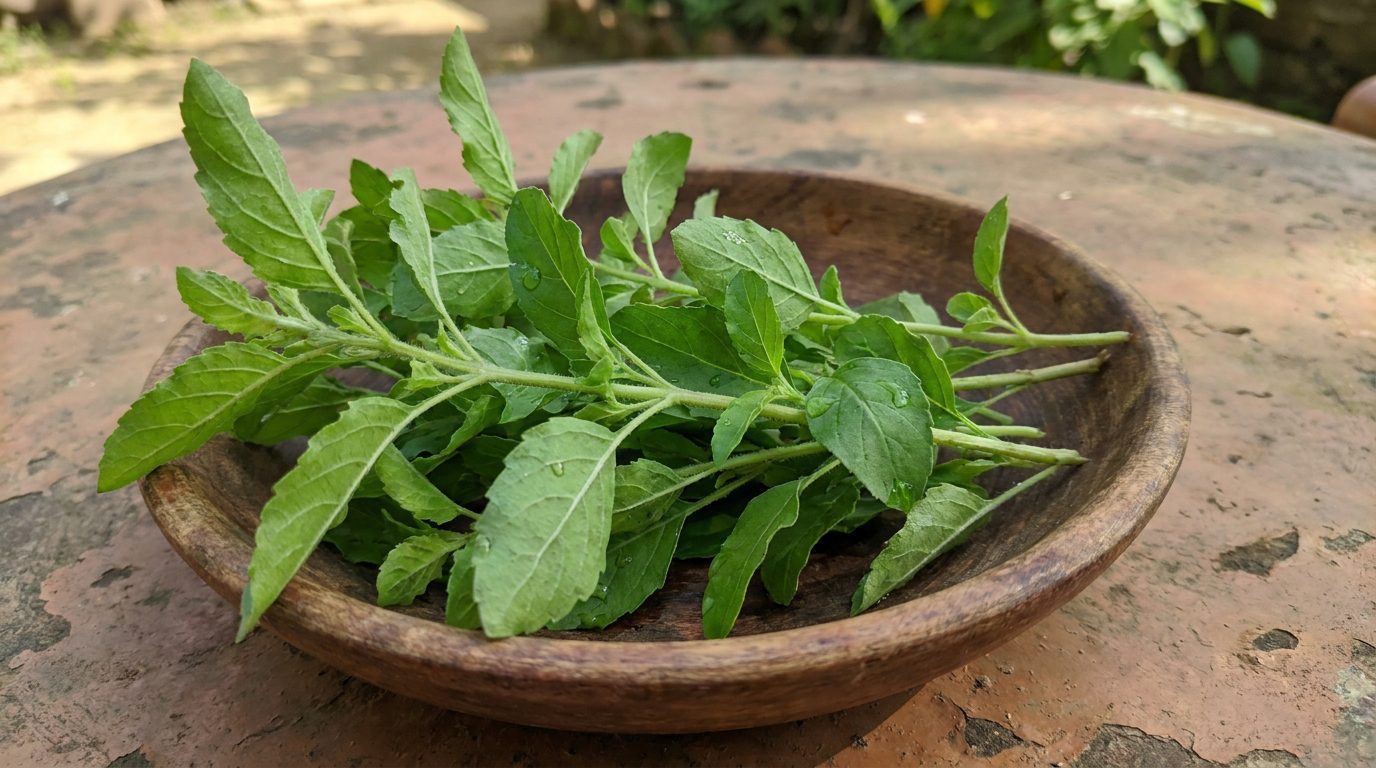
Tulasi leaves come from the sacred Tulasi plant, also known as Holy Basil. In Sanskrit, Tulasi means “the incomparable one” or “she who has no equal.” For many people around the world, Tulasi is cherished as an herb, a healing plant, and a beautiful presence in the home. In the Bhakti Yoga tradition, Tulasi is especially beloved as a sacred plant connected with devotion to God.
In Bhakti Yoga, we understand Tulasi not only as a plant, but as a great devotee. Devotees lovingly call her Tulasi Devi. The word Devi means “goddess” or “divine lady.” This does not mean that we worship a plant in a material way. Rather, we honor Tulasi as a dear servant of the Lord, especially Lord Krishna, and we learn from her mood of loving service.
Tulasi leaves are small, fragrant, and deeply respected in Vaishnava traditions, the devotional traditions centered on Vishnu or Krishna. They are used in worship, prayer, meditation, and offerings of food. A single Tulasi leaf offered with love is considered spiritually powerful because it carries the heart of devotion.
Whether you are new to Bhakti, simply curious about sacred plants, or already caring for a Tulasi plant at home, this guide will help you understand her meaning, uses, care, and spiritual importance in a simple and practical way.
The Spiritual Importance of Tulasi in Bhakti Yoga
Tulasi as a Symbol of Loving Devotion
Bhakti Yoga means “the path of devotion” or “the path of loving connection with God.” The Sanskrit word bhakti means love, devotion, and heartfelt service. Yoga means connection. So Bhakti Yoga is the practice of reconnecting our hearts with the Supreme through love.
Tulasi is deeply connected with this path because she represents pure devotion. Her whole existence is seen as an offering. She gives shade, fragrance, leaves, flowers, seeds, and beauty. In the same way, Bhakti invites us to offer our own lives with love—our words, work, relationships, food, time, and prayers.
When devotees care for Tulasi, water her, circumambulate her, or offer her leaves to Krishna, they are practicing remembrance. They are saying, “May my life also become an offering.”
Tulasi in Bhakti Scriptures
Authentic Bhakti scriptures speak about the greatness of Tulasi. In texts such as the Padma Purana and Skanda Purana, Tulasi Devi is praised as especially dear to Lord Vishnu and Lord Krishna. These scriptures describe that offerings made with Tulasi leaves are very pleasing to the Lord.
The Bhagavad-gita, one of the most beloved texts of Bhakti Yoga, offers a simple and universal principle. Krishna says:
“Whoever offers Me with devotion a leaf, a flower, fruit, or water, I accept that loving offering from the pure-hearted person.”
Bhagavad-gita 9.26
This verse is often remembered when offering Tulasi leaves. Krishna does not ask for wealth, status, or perfection. He asks for devotion. A leaf, a flower, fruit, or water—when offered with love—becomes spiritually meaningful.
For devotees, the “leaf” in this verse naturally brings Tulasi to mind. A Tulasi leaf offered with sincerity becomes a bridge between the soul and God.
Tulasi and the Mood of Surrender
In Bhakti, surrender does not mean weakness or loss of identity. It means offering our heart to divine love. It means trusting that we are held by God and learning to live in harmony with that relationship.
Tulasi teaches surrender gently. She stands quietly in a pot, garden, temple, or window, giving herself in service. She does not demand attention, yet she transforms the atmosphere. Her presence reminds us that spiritual life can be simple, steady, and beautiful.
Types of Tulasi Plants
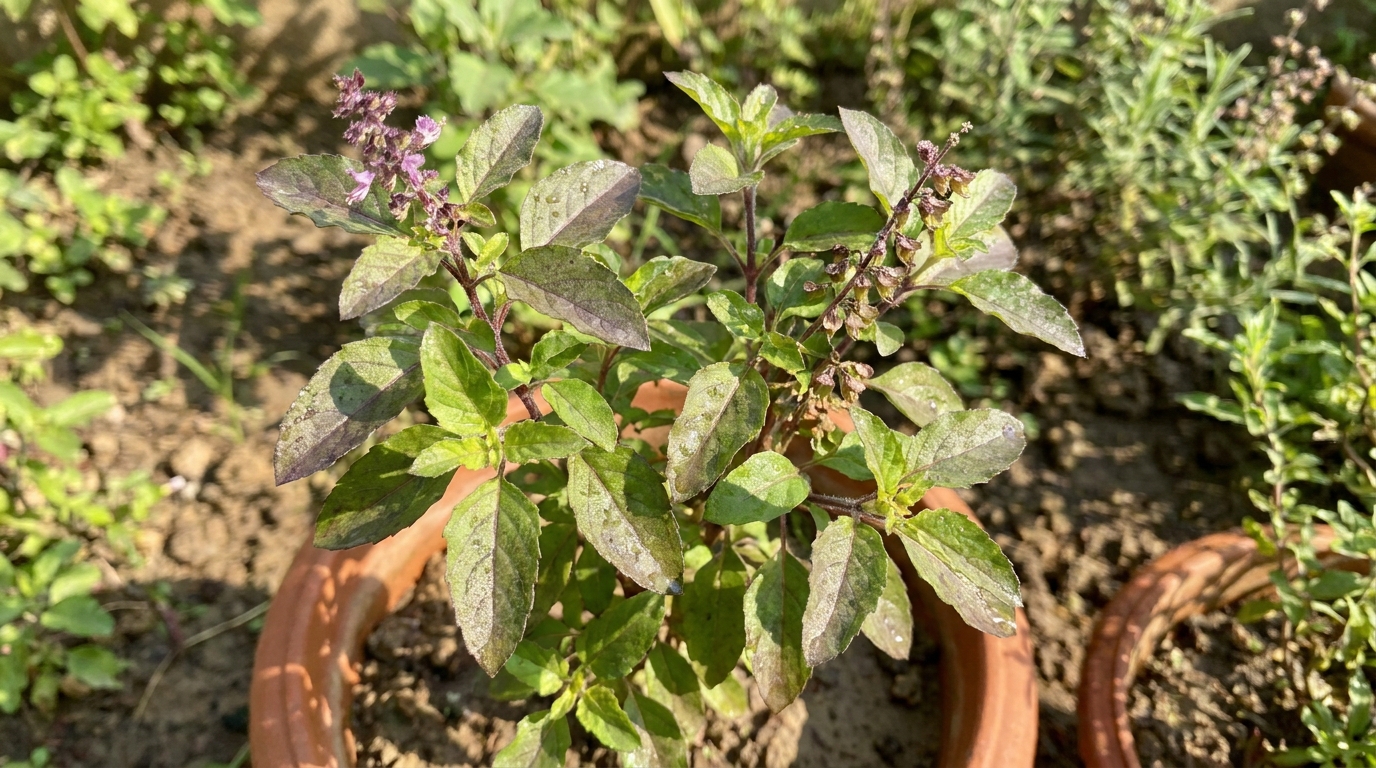
There are several varieties of Tulasi, and each has its own beauty. While all are respected, some are especially common in homes and temples.
Rama Tulasi
Rama Tulasi usually has green leaves and a gentle fragrance. It is one of the most widely grown varieties. Many people find Rama Tulasi easy to care for, especially in warm climates or sunny indoor spaces.
Her name is connected with Lord Rama, a beloved form of God known for righteousness, compassion, and devotion to truth. Rama Tulasi is often used in worship and herbal preparations.
Krishna Tulasi
Krishna Tulasi, sometimes called Shyama Tulasi, has darker purple or green-purple leaves and stems. The name Krishna means “all-attractive,” and Shyama means “dark” or “beautifully dark-colored.”
This variety is especially loved by devotees of Lord Krishna. Its fragrance can be strong and rich. In temples and homes, Krishna Tulasi is offered with great reverence.
Vana Tulasi
Vana Tulasi means “forest Tulasi.” Vana means forest in Sanskrit. This variety often grows taller and has a more wild, natural appearance. It is also valued for traditional wellness uses and spiritual significance.
Vana Tulasi reminds us that sacredness is not limited to polished places. The forest, the garden, the windowsill, and the humble home can all become places of prayer.
Check out our latest articles at https://thebhaktihouse.org/blog.
How Tulasi Leaves Are Used in Worship
Offering Tulasi Leaves to Krishna
In Bhakti Yoga, food offered to God with love is called prasadam. The Sanskrit word prasadam means “mercy” or “grace.” When we prepare vegetarian food with devotion and offer it to Krishna, it becomes spiritually blessed. Tulasi leaves are often placed on these offerings.
A simple home offering may include fruit, water, or a vegetarian meal placed before a picture or Deity form of Krishna. A Tulasi leaf may be placed on each preparation. Then, with folded hands, we can pray:
“My dear Lord, please accept this offering made with love.”
This practice turns eating into meditation. It reminds us that food is sacred, life is sacred, and gratitude is sacred.
Tulasi in Daily Prayer
Tulasi leaves may also be used in daily worship. Some devotees offer one or more leaves at the feet of Krishna, Vishnu, or other forms of the Lord. The act does not have to be elaborate. What matters most is sincerity.
If you are new, you might simply stand before Tulasi and say:
“Thank you for helping me remember God. Please bless me with devotion.”
This small prayer can soften the heart. Bhakti grows through simple, repeated acts of love.
Tulasi and Kirtan
Kirtan is devotional chanting, often done together with music. The word kirtan means glorification or singing sacred names. In Bhakti Yoga, chanting the names of God is considered one of the most accessible and powerful practices for this age.
Many devotees chant the Hare Krishna maha-mantra:
Hare Krishna, Hare Krishna, Krishna Krishna, Hare Hare
Hare Rama, Hare Rama, Rama Rama, Hare Hare
Maha-mantra means “great mantra.” A mantra is a sacred sound vibration that helps free the mind and awaken the heart. Tulasi is often present during kirtan, and many devotees chant on beads made from Tulasi wood.
Tulasi Beads and Japa Meditation
What Is Japa?
Japa means quiet, personal mantra meditation. A person chants a mantra softly or silently while counting on beads. In Bhakti Yoga, many people practice japa with the Hare Krishna maha-mantra.
A strand of prayer beads is called a mala. A traditional japa mala often has 108 beads. Many Vaishnava devotees use beads made from Tulasi wood because of Tulasi’s sacred connection to Krishna.
Japa is practical spiritual training. The mind may wander, but we gently bring it back to the sound of the mantra. Over time, this practice brings clarity, peace, and a deeper sense of relationship with God.
Why Tulasi Wood Is Used for Beads
Tulasi wood is sacred because it comes from Tulasi Devi. Beads made from her wood are treated respectfully. They are not ordinary accessories. They are tools for prayer.
When devotees chant on Tulasi beads, they remember that Tulasi helps carry their prayers to Krishna. The beads become a companion on the spiritual journey. Each bead is a chance to return to the heart.
Wearing Tulasi Neck Beads
Many devotees wear Tulasi neck beads, often called kanthi mala. Kanthi means neck, and mala means garland or beads. Wearing Tulasi beads is a sign of devotion and a reminder that the body, mind, and voice are meant for service to God.
For beginners, it is wise to understand the meaning before wearing them. Tulasi beads are not worn for fashion. They represent a sacred commitment to live with more purity, kindness, and remembrance.
How to Pick Tulasi Leaves Respectfully
Ask Permission Through Prayer
In Bhakti tradition, Tulasi leaves are never taken casually. Before picking, devotees offer a prayer asking Tulasi Devi’s permission. This helps us remember that spiritual life is relational. We are not owners; we are caretakers.
A simple prayer may be:
“O Tulasi Devi, dear servant of Krishna, please allow me to collect your leaves for the Lord’s service.”
Even if we do not know formal Sanskrit prayers, a sincere prayer in our own language is meaningful.
Pick Only What Is Needed
Tulasi teaches simplicity. When collecting leaves, take only what is needed for worship or offering. Avoid stripping the plant or taking too much at once.
Choose healthy leaves, and be gentle. Traditionally, devotees avoid using sharp tools on Tulasi and instead pinch leaves carefully with the fingers. It is also common to avoid picking leaves at night or on certain sacred days, depending on one’s tradition and guidance from teachers.
Avoid Picking Tulasi for Selfish Purposes
In devotional practice, Tulasi leaves are primarily used for Krishna’s service. If Tulasi is used medicinally, it should still be done with respect and gratitude.
This attitude can transform the way we relate to nature. Instead of thinking, “What can I take?” we begin to ask, “How can I serve? How can I receive with gratitude?”
Caring for a Tulasi Plant at Home
Creating a Sacred Space
Keeping Tulasi at home is a beautiful way to bring devotional energy into daily life. She can be placed in a clean, bright area with sunlight. Many devotees create a small altar or prayer space around her with flowers, a lamp, sacred pictures, or simple decorations.
The space does not need to be expensive. A clean corner, a windowsill, or a small plant stand can become sacred when filled with love and care.
Sunlight and Warmth
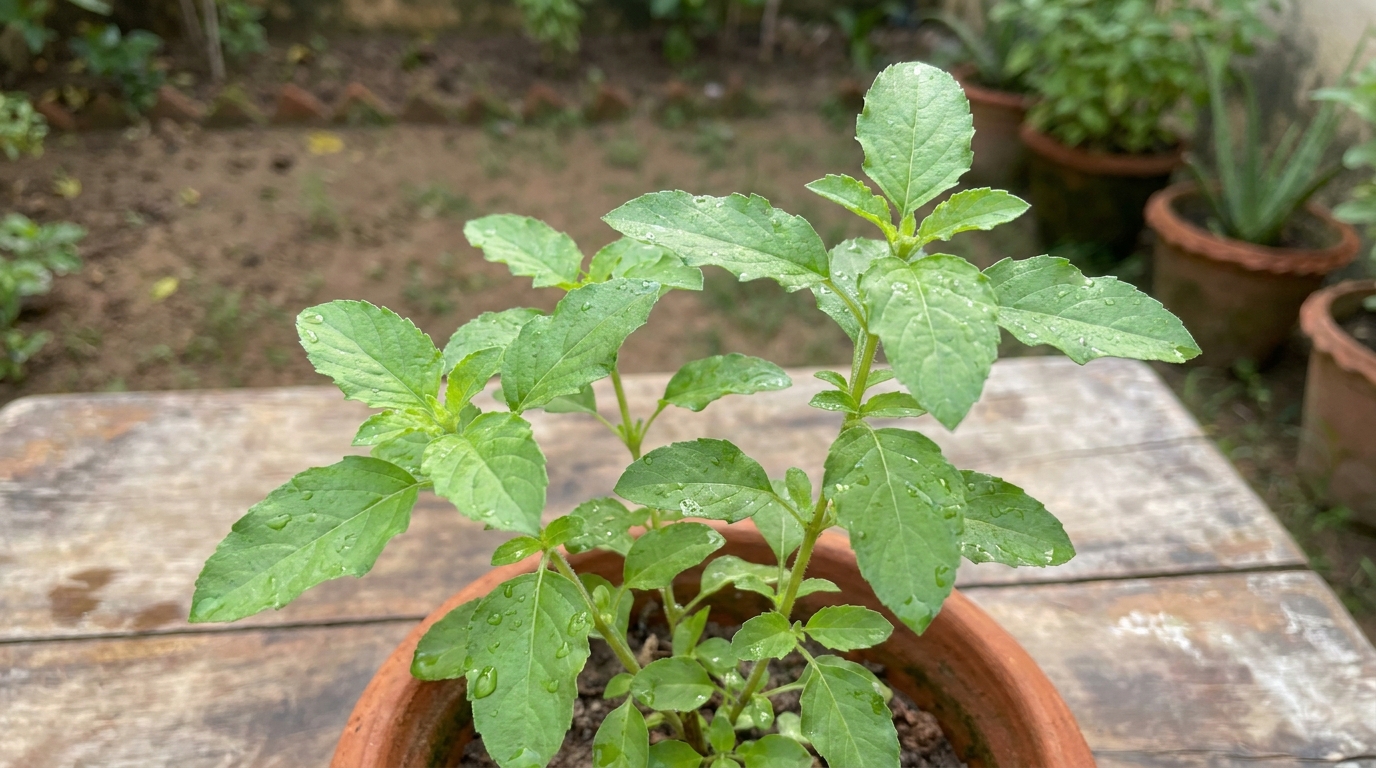
Tulasi generally loves sunlight and warmth. If grown indoors, she usually needs a sunny window or a grow light. If grown outdoors, she does best in warm weather and should be protected from frost, cold winds, and harsh conditions.
In colder climates, many people bring Tulasi indoors during autumn and winter. She may become delicate in low light or cold rooms, so extra care is needed.
Watering Tulasi
Tulasi likes regular watering, but she does not like to sit in soggy soil. The soil should be moist but well-drained. Overwatering can lead to root problems, while underwatering can cause drooping and stress.
A good practice is to check the top layer of soil. If it feels dry, water gently. Offer the water with gratitude, not as a mechanical task. Even watering can become worship.
Soil and Potting
Use soil that drains well. A pot with drainage holes is important. Tulasi’s roots need air as well as moisture. If water collects at the bottom of the pot, the plant may suffer.
Repotting may be needed as Tulasi grows. Do this gently and prayerfully. Try not to disturb the roots more than necessary.
Pruning and Encouraging Growth
Regularly removing flowers, called manjaris, can help the plant grow fuller. Manjaris are Tulasi’s flower clusters, and they are also considered sacred. In many traditions, manjaris are offered to Krishna.
Pruning should be gentle. Remove dry or unhealthy leaves. Encourage healthy branching by carefully trimming above leaf nodes. If you are unsure, ask an experienced Tulasi caretaker or devotee gardener.
Health and Wellness Uses of Tulasi Leaves
Tulasi as an Herbal Plant
Tulasi is widely known in Ayurveda, the traditional healing system of India. Ayurveda means “the science of life.” In Ayurvedic practice, Tulasi is valued for supporting balance, clarity, and overall wellness.
People commonly use Tulasi in teas, herbal preparations, and natural remedies. It is often associated with respiratory support, digestion, stress balance, and immunity. However, herbal use should be approached responsibly.
If you are pregnant, nursing, taking medications, or managing a health condition, please consult a qualified healthcare professional before using Tulasi medicinally.
Tulasi Tea
Tulasi tea is one of the most common ways people enjoy the plant. Fresh or dried leaves may be steeped in hot water. The tea has a calming, fragrant quality.
For a devotee, Tulasi tea can also be received with gratitude. If leaves are taken from a plant cared for in a devotional way, it is good to remember her sacredness and not treat her as an ordinary herb.
Respecting the Difference Between Devotional and Medicinal Use
Some people come to Tulasi first through wellness. Others meet her through worship. Both can be meaningful when approached with respect.
In Bhakti, we try to see everything in relation to God. Health is not separate from spiritual life. A healthy body can help us serve, chant, pray, and care for others. At the same time, we remember that the deepest healing is the awakening of love in the heart.
Common Questions About Tulasi Leaves
Can Anyone Grow Tulasi?
Yes, anyone can grow Tulasi with care and respect. You do not have to be born into a particular culture or background. Bhakti Yoga welcomes sincere seekers from every walk of life.
If you are new, begin humbly. Learn how to care for her. Offer water. Keep her space clean. Say a simple prayer. Tulasi responds to sincerity.
Can Tulasi Leaves Be Eaten?
Tulasi leaves are used in herbal traditions and may be consumed in certain ways. In devotional practice, however, devotees usually offer Tulasi first to Krishna before honoring her as sacred remnants, or prasadam.
Some traditions advise not chewing Tulasi leaves casually because of her sacred status. Instead, leaves may be swallowed respectfully or used in offerings. Customs may vary, so it is best to learn from a trusted teacher or community.
What If My Tulasi Plant Becomes Sick?
Do not feel discouraged. Caring for Tulasi is also a learning process. Check light, water, soil, temperature, pests, and airflow. Many problems come from too little sunlight, overwatering, or cold conditions.
Spiritually, continue serving with love. Sometimes a plant struggles despite our efforts. Offer your care without guilt. Bhakti is not about perfectionism; it is about sincerity.
What Should I Do If Tulasi Leaves Fall Naturally?
Naturally fallen leaves are also respected. They can be collected and used in offerings if clean and suitable. If dry, they may be kept respectfully for worship or placed at the base of another sacred plant.
Avoid throwing Tulasi leaves in the trash casually. If leaves are no longer usable, they may be returned to the earth in a clean place.
Can I Buy Dried Tulasi Leaves?
Yes, dried Tulasi leaves are available in many stores, especially as Holy Basil tea. For devotional offerings, fresh Tulasi leaves are traditionally preferred when available. But if fresh leaves are not available, sincere devotion is always central.
Remember Bhagavad-gita 9.26: Krishna accepts the love behind the offering. The heart matters most.
Tulasi in Daily Bhakti Practice
Morning Prayer With Tulasi
A simple morning practice can be very powerful. After waking, you may offer Tulasi water, bow your head, and chant a short prayer or mantra. Even five minutes can change the mood of the day.
You might say:
“Dear Tulasi Devi, please help me remember God today. Please help me speak kindly, serve sincerely, and keep my heart soft.”
This prayer brings spiritual intention into ordinary life.
Circumambulating Tulasi
Many devotees walk around Tulasi as an act of reverence. This is called circumambulation, or parikrama in Sanskrit. Pari means “around,” and krama means “steps.” Parikrama means walking around something sacred with respect.
While walking around Tulasi, devotees may chant prayers or the Hare Krishna mantra. This practice reminds us to place God and devotion at the center of our lives.
Offering Food With Tulasi
If you cook at home, you can begin a simple offering practice. Prepare vegetarian food with cleanliness and gratitude. Place it before Krishna with a Tulasi leaf and offer a prayer. After a few moments, receive the food as prasadam.
This transforms the kitchen into a sacred space. Cooking becomes service. Eating becomes gratitude. Family meals become opportunities for spiritual connection.
Chanting Near Tulasi
Chanting japa or singing kirtan near Tulasi can bring focus and sweetness. Her presence encourages steadiness. Even if the mind is restless, sitting near her can remind us to return gently to prayer.
The path of Bhakti is not about forcing the heart. It is about inviting the heart—again and again—into loving remembrance.
The Inner Lessons of Tulasi Leaves
Humility
Tulasi leaves are small, yet they carry immense spiritual significance. This teaches humility. In a world that often celebrates size, power, and display, Tulasi reminds us that the smallest offering can be great when filled with love.
A single leaf can please Krishna. A single sincere prayer can begin transformation. A single act of kindness can become service.
Consistency
Tulasi grows through daily care. She needs water, light, protection, and attention. Our spiritual lives are similar. We grow through steady practice, not occasional inspiration alone.
Chant a little daily. Pray honestly. Serve someone. Read a verse. Offer your food. These simple habits nourish devotion.
Sacred Relationship With Nature
Tulasi helps us see nature as sacred, not separate from spiritual life. Plants are living beings. Earth, water, sunlight, and air are gifts. Caring for Tulasi can awaken gratitude for all creation.
Bhakti Yoga invites us to live with reverence. We are not isolated consumers. We are souls in relationship—with God, with others, and with the world around us.
Love Over Ritual Alone
Rituals are helpful when they carry love. Without love, even sacred actions can become dry. Tulasi reminds us that the essence is devotion.
If you do not know all the rules, begin with respect. If you cannot do everything perfectly, offer what you can. If your heart feels distracted, bring that honestly to God. Bhakti grows through sincere offering.
Tulasi and the Heart of Bhakti Yoga
A Path for Everyone
Bhakti Yoga is not limited by nationality, age, gender, education, or religious background. It is the soul’s natural movement toward divine love. Some people come through philosophy. Some through music. Some through service. Some through sacred food. Some through a Tulasi plant sitting quietly in the sunlight.
Tulasi leaves invite us into this path in a tender way. They teach that devotion can enter daily life through simple acts: watering a plant, chanting a mantra, cooking with love, offering a leaf, or serving another person.
Practical Devotion in Modern Life
Many people today feel busy, distracted, or spiritually hungry. Tulasi offers a grounded practice. She asks us to slow down, care, notice, and remember.
You do not need to leave your responsibilities to begin Bhakti. You can bring devotion into them. Offer your work. Speak gently. Chant while walking. Keep a small altar. Read one verse from the Bhagavad-gita. Share prasadam. Water Tulasi with love.
Spiritual growth is not always dramatic. Often, it is quiet and steady, like a plant growing toward the sun.
Tulasi as a Companion on the Journey
For many devotees, Tulasi becomes like a spiritual companion. Her leaves decorate offerings. Her wood forms prayer beads. Her presence blesses the home. Her care teaches patience and tenderness.
When we stand before Tulasi, we may remember: “I am also meant to grow toward the light. I am also meant to offer my life in love.”
Bringing Tulasi Into Your Home and Heart
Start Simply
If you feel inspired to welcome Tulasi into your home, start simply. Learn her basic care needs. Find a sunny place. Offer water regularly. Keep her area clean. Speak prayers in your own words.
If growing a plant is not possible, you can still honor Tulasi through visiting a temple, using Tulasi beads respectfully, offering dried Tulasi when appropriate, or learning her prayers and stories.
Learn From Devotees
Bhakti is best learned in good company. In Sanskrit, spiritual association is called sadhu-sanga. Sadhu means a saintly or sincere spiritual person, and sanga means association. Being with people who are trying to love and serve God helps us grow.
If you have questions about Tulasi care or worship, ask experienced devotees. Most will be happy to guide you with kindness.
Let Tulasi Lead You to Prayer
The real gift of Tulasi is not only her leaves, fragrance, or beauty. Her deepest gift is that she leads us toward God. She invites us to pray, chant, serve, and remember.
And that invitation is gentle. It does not demand that we be perfect before we begin. It simply asks for sincerity.
A Gentle Invitation
Tulasi leaves are a complete guide in themselves: small, fragrant teachers of devotion. They remind us that love is the essence of spiritual life. They show us that a simple offering, made with a sincere heart, can connect us with Krishna.
Wherever you are on your journey, you are welcome. You may be deeply committed, newly curious, or quietly searching. Bhakti Yoga has room for you.
Take one sincere step today. Offer a prayer. Chant one mantra. water a sacred plant. Serve someone with kindness. Place one small leaf of your heart before God.
Everyone is welcome to begin, and every sincere step toward God is precious.
FAQs
What are Tulasi leaves?
Tulasi leaves, also known as holy basil, are a variety of basil native to the Indian subcontinent. They are considered sacred in Hinduism and are used in various religious rituals and ceremonies.
What are the health benefits of Tulasi leaves?
Tulasi leaves are known for their medicinal properties and are used in traditional Ayurvedic medicine. They are believed to have anti-inflammatory, antioxidant, and antimicrobial properties. Tulasi leaves are also used to treat respiratory disorders, digestive issues, and skin conditions.
How are Tulasi leaves used in cooking?
Tulasi leaves are commonly used in Indian cuisine to add flavor and aroma to dishes. They can be used fresh or dried, and are often added to curries, soups, and stir-fries. Tulasi leaves are also used to make herbal teas and infused oils.
What are the religious and cultural significance of Tulasi leaves?
In Hinduism, Tulasi leaves are considered sacred and are often used in religious rituals and ceremonies. They are believed to be the embodiment of the goddess Tulsi and are used to worship Lord Vishnu. Tulasi leaves are also used to make garlands and decorations for religious festivals and ceremonies.
How to grow and care for Tulasi plants?
Tulasi plants are easy to grow and can be cultivated in pots or in the ground. They require well-drained soil, plenty of sunlight, and regular watering. Tulasi plants are also sensitive to cold temperatures and should be protected from frost. Regular pruning and fertilization can help promote healthy growth.

