

A temple program is more than a schedule of spiritual activities. It is an invitation into sacred community, a gentle rhythm of devotion, and a practical way to reconnect the heart with God.
In the Bhakti Yoga tradition, the temple is a place where people come together to remember the Divine through chanting, prayer, wisdom, service, and loving association. Whether you are visiting for the first time, returning after many years, or simply curious about spiritual life, a temple program offers a beautiful doorway into inner peace and spiritual growth.
You do not need to be from a particular background, culture, or faith tradition to attend. You do not need to know Sanskrit, understand philosophy, or dress in a certain way. You only need a sincere heart and a willingness to explore.
At The Bhakti House and in Bhakti communities around the world, we believe that every soul is sacred. Every person is welcome. And every sincere step toward God is meaningful.
What Is a Temple Program?
A temple program is a structured gathering centered on spiritual practice. In Bhakti Yoga, which means “the yoga of love and devotion,” these programs help us remember our relationship with Krishna, or God, through shared devotional activities.
The Sanskrit word “bhakti” means loving devotion. It is not just a belief system. It is a way of living, serving, singing, praying, and gradually awakening love in the heart.
Temple programs may happen in the morning, evening, on weekends, or during festivals. Some are simple and quiet. Others are full of music, dancing, teaching, and community meals. The exact format may vary, but the heart is the same: to create a sacred space where people can come closer to God.
A Sacred Pause in Daily Life
Modern life can be busy, noisy, and overwhelming. A temple program gives us a sacred pause.
Instead of rushing from one responsibility to another, we step into a space where the focus is spiritual nourishment. We hear uplifting sounds, chant holy names, offer prayers, receive wisdom, and spend time with people who are also trying to grow.
This pause can soften the heart. It can help us remember what truly matters.
A Place for Community and Belonging
One of the most beautiful aspects of a temple program is the sense of community. In Sanskrit, “sanga” means association or spiritual company.
Good association is essential in Bhakti Yoga. The Bhagavad-gita teaches that our consciousness is deeply influenced by what we hear, whom we spend time with, and what we place our attention upon. When we gather with others for chanting and prayer, our own spiritual intention becomes stronger.
A temple program reminds us: we do not have to walk the spiritual path alone.
A Practical Path of Love
Bhakti Yoga is practical. It is not only something we discuss or read about. It is something we do.
In a temple program, devotion becomes active through chanting, listening, offering food, bowing in prayer, helping clean, welcoming guests, singing, serving, and sharing a meal. These simple acts become spiritual when they are offered with love.
The Main Elements of a Temple Program
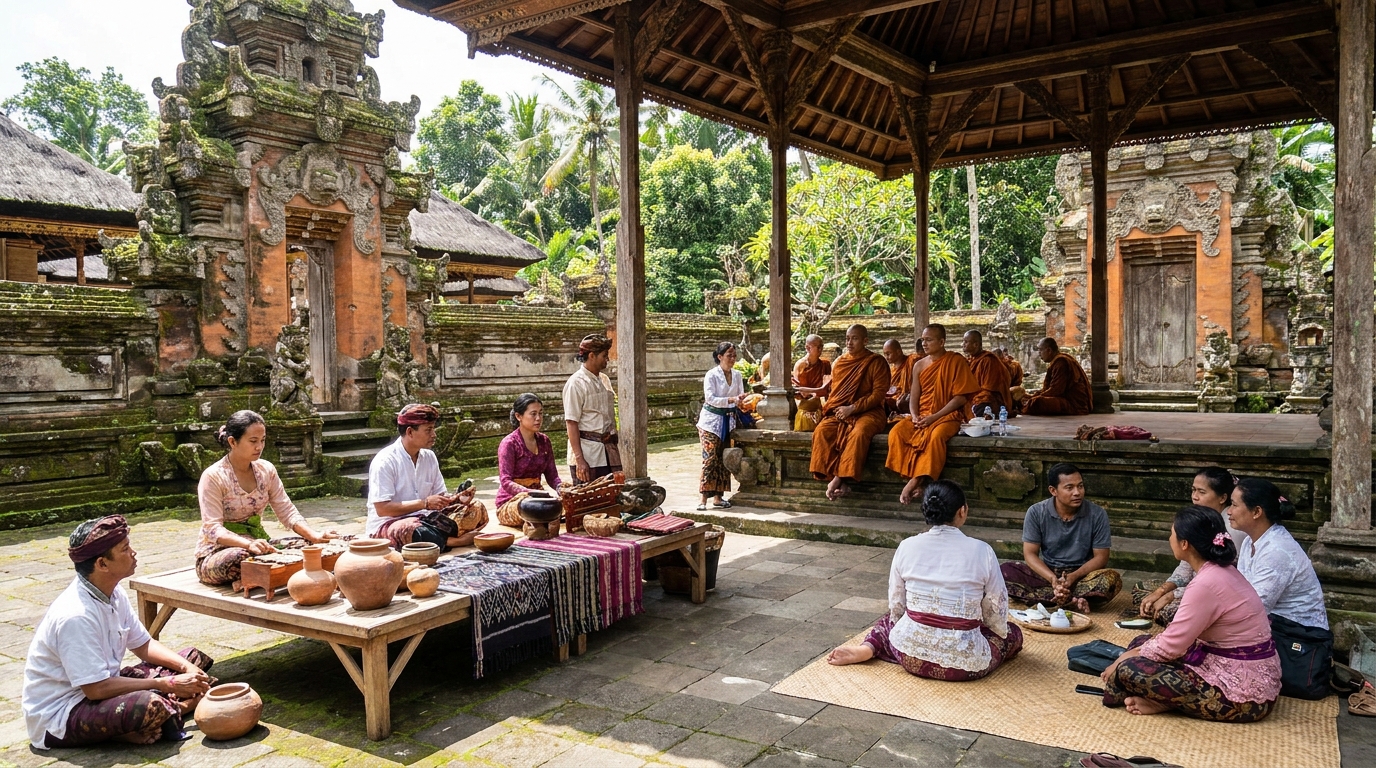
Although every temple has its own unique flavor, many Bhakti temple programs include similar elements. Understanding these parts can help you feel more comfortable and present when you attend.
Kirtan: Sacred Chanting Together
Kirtan is the singing or chanting of the holy names of God, often accompanied by instruments such as harmonium, mridanga drum, and kartals, or small hand cymbals.
In Bhakti Yoga, the holy name is considered non-different from God. This means that when we chant sincerely, we are directly associating with the Divine.
One of the most widely chanted mantras is the Hare Krishna Maha-mantra:
Hare Krishna Hare Krishna
Krishna Krishna Hare Hare
Hare Rama Hare Rama
Rama Rama Hare Hare
“Maha-mantra” means “great mantra.” A mantra is a sacred sound that helps free the mind from anxiety and brings the heart into spiritual focus.
“Hare” refers to the divine energy of the Lord. “Krishna” means the all-attractive Supreme Person. “Rama” means the source of spiritual joy. Together, this mantra is a prayer: “O Lord, O divine energy of the Lord, please engage me in Your loving service.”
Kirtan is open to everyone. You can sing loudly, softly, or simply listen. The important thing is sincerity.
Arati: Offering Worship with Love
Arati is a worship ceremony in which offerings such as incense, lamps, flowers, water, and music are presented to the Deity form of the Lord.
In Bhakti temples, the Deity is not seen as an idol or symbol, but as a merciful form through which God accepts our service and allows us to offer love in a personal way.
During arati, devotees may sing prayers, ring bells, bow, or dance. If you are new, you can simply observe respectfully. There is no pressure to participate in a particular way.
The heart of arati is this: God is a person, and love means offering something with care.
Japa: Personal Meditation on the Holy Name
Japa is the personal, quiet chanting of a mantra, often using prayer beads. Many practitioners of Bhakti Yoga chant the Hare Krishna mantra on beads as a daily meditation.
Unlike kirtan, which is sung together, japa is more inward and personal. It is a time to listen deeply and bring the wandering mind back to the sacred sound.
The practice is simple, but profound. We chant and hear. When the mind wanders, we gently return. Over time, the heart becomes cleansed and peaceful.
Class or Satsang: Hearing Spiritual Wisdom
Most temple programs include a talk or discussion based on Bhakti scriptures such as the Bhagavad-gita, Srimad-Bhagavatam, or Sri Chaitanya-charitamrita.
“Satsang” means gathering for truth. “Sat” means eternal truth, and “sanga” means association. In satsang, we hear spiritual wisdom and learn how to apply it in daily life.
The Bhagavad-gita explains that the soul is eternal, that God is our loving source, and that real happiness comes from serving with devotion. These teachings are not meant to remain theoretical. They help us make better choices, face challenges, and live with more compassion.
Prasadam: Sacred Food Offered to God
Prasadam means “mercy.” In the Bhakti tradition, food is prepared with love and offered to Krishna before being shared.
This sacred food is considered spiritually purifying because it has been offered to God. Sharing prasadam is one of the sweetest parts of a temple program. It brings people together beyond social, cultural, or religious divisions.
A simple meal can become an act of grace.
Please visit our website for more information on our articles: articles.
What to Expect When You Visit
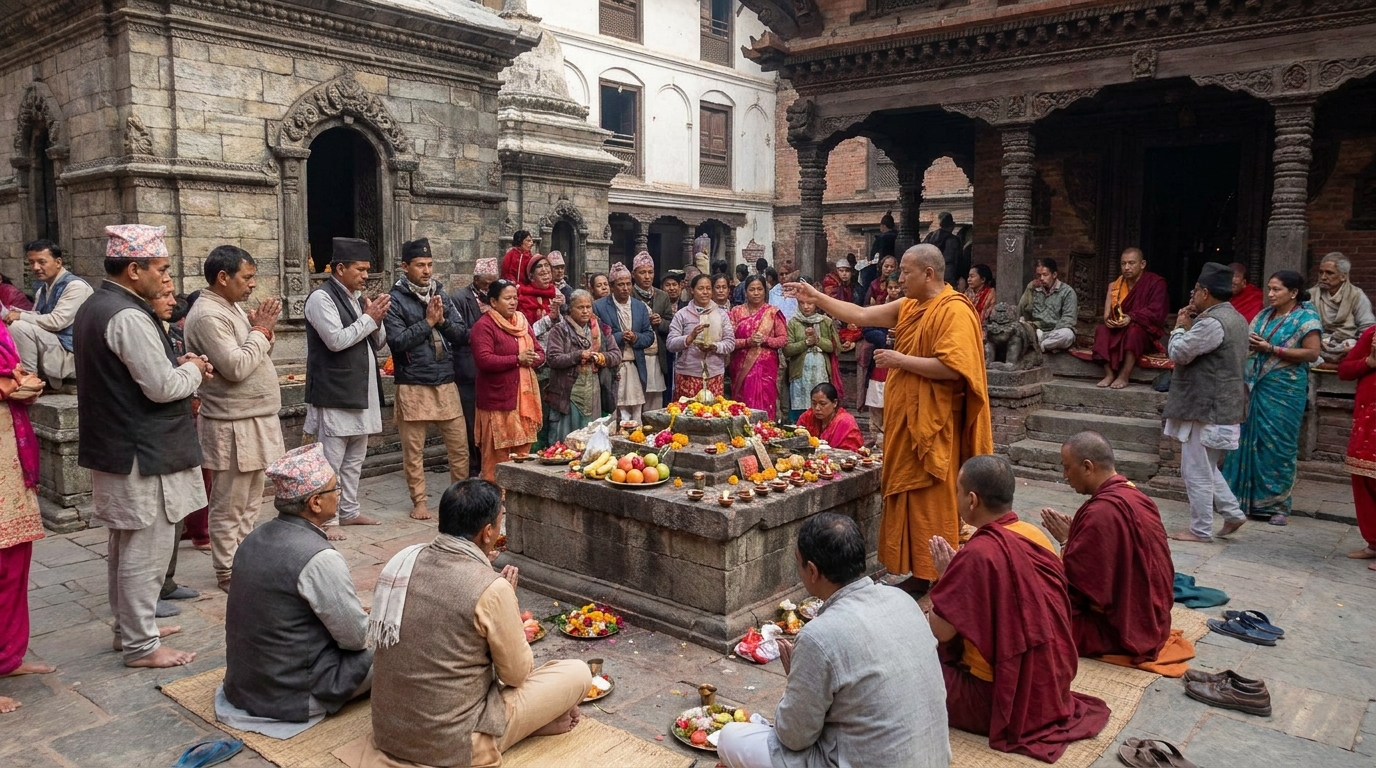
If you have never attended a temple program before, it is natural to wonder what will happen and how to behave. Please know that you are welcome as you are.
A good temple community understands that everyone begins somewhere. Spiritual life is not about performance. It is about sincerity.
Arrival and First Impressions
When you arrive, you may hear chanting or music. You may see people sitting on the floor, bowing, singing, or offering prayers. There may be Deities on the altar, flowers, incense, lamps, and devotional art.
If you feel unsure, simply enter quietly and observe. Someone may greet you and help you understand where to sit or what is happening.
You do not have to do everything others are doing. Respectful presence is enough.
What to Wear
Modest, comfortable clothing is usually appropriate. Some people wear traditional Indian devotional clothing, such as saris, kurtas, or dhotis, but this is not required.
The main idea is to dress in a way that helps you and others feel respectful in a sacred space. If the temple has specific customs, they will usually be explained kindly.
Sitting, Bowing, and Participating
In many temples, people sit on the floor, though chairs may be available. Some visitors bow when entering or during prayers. Bowing is a sign of humility and respect, but you are not expected to do anything you are uncomfortable with.
You may join the chanting, clap along, read the mantra, listen to the class, or simply absorb the atmosphere.
Bhakti is never forced. Love grows best in freedom.
Asking Questions
Questions are welcome. In fact, sincere inquiry is honored in Bhakti Yoga.
In the Bhagavad-gita, Krishna encourages Arjuna to approach spiritual teachers with humility, inquiry, and service. Honest questions help deepen understanding.
You may ask about the chanting, philosophy, Deities, food offerings, daily practices, or how to begin a spiritual routine at home.
The Spiritual Purpose Behind the Program
A temple program is not only a cultural event or religious ceremony. It is designed to help awaken our original consciousness: loving service to God.
According to the Bhakti scriptures, the soul is eternal and naturally full of knowledge and joy. But when we forget our relationship with the Divine, we search for happiness in temporary things and often feel restless.
Temple programs help redirect the heart toward what is eternal.
Remembering Our Relationship with God
In the Bhagavad-gita, Krishna says that He is the source of all spiritual and material worlds, and that the wise worship Him with love. This is a deeply personal teaching.
God is not distant or impersonal. He is the loving source of everyone. Bhakti Yoga invites us to revive our relationship with Him through devotion.
Chanting, hearing, serving, and praying gradually remind us: “I am not alone. I belong to God.”
Cleansing the Heart
The Srimad-Bhagavatam explains that hearing and chanting about the Lord cleanses the heart of impurities and awakens devotion.
This cleansing does not always happen dramatically. Often it is gradual. We may notice that we become a little more patient, a little less selfish, a little more peaceful, or a little more drawn to prayer.
These small changes matter. Spiritual growth is often quiet and steady.
Learning to Serve
Service is central to Bhakti Yoga. The Sanskrit word “seva” means devotional service.
In the temple, service can look very simple: washing dishes, preparing flowers, cooking, greeting guests, sweeping the floor, singing, setting up chairs, helping children, or distributing prasadam.
When service is offered with love, it becomes spiritually powerful. It trains the heart away from ego and toward care.
Common Types of Temple Programs
Temple programs can vary depending on the time of day, occasion, and community. Here are some common types you may encounter.
Morning Program
Many Bhakti temples begin the day early with a morning program. This may include mangala-arati, japa meditation, scripture class, and kirtan.
“Mangala” means auspicious, and “arati” means offering. Mangala-arati is a beautiful early morning worship ceremony that sets the tone for the day.
The morning hours are considered especially peaceful for spiritual practice. The mind is often clearer, and the atmosphere is quieter.
Even if waking early feels difficult at first, many devotees find that morning spiritual practice brings deep nourishment.
Sunday Feast Program
The Sunday Feast is one of the most welcoming and popular temple programs. It often includes kirtan, a spiritual talk, arati, and a free vegetarian or vegan feast of prasadam.
This program is especially friendly for newcomers, families, students, seekers, and anyone curious about Bhakti Yoga.
The Sunday Feast tradition was widely shared by Srila A.C. Bhaktivedanta Swami Prabhupada, the founder-acharya of the International Society for Krishna Consciousness. He wanted everyone to have access to chanting, wisdom, and sanctified food.
Festival Programs
Bhakti temples celebrate many joyful festivals throughout the year. These may include Janmashtami, the appearance day of Lord Krishna; Gaura Purnima, the appearance day of Sri Chaitanya Mahaprabhu; Radhastami, honoring Srimati Radharani; and Govardhan Puja, celebrating Krishna’s loving protection of His devotees.
Festivals often include extended kirtan, drama, dance, special decorations, storytelling, fasting, feasting, and deep community spirit.
If you are new to temple life, festivals can be a powerful and colorful introduction.
Home Programs and Small Gatherings
Not every temple program happens in a temple building. Many Bhakti communities hold home programs, small group kirtans, study circles, and neighborhood gatherings.
These intimate programs can be especially helpful for people who feel nervous entering a larger temple space. They offer a gentle way to ask questions, build friendships, and practice devotion.
The Role of Scripture in a Temple Program
Bhakti Yoga is rooted in sacred wisdom. Temple programs often include readings and discussions from traditional texts that have guided practitioners for centuries.
Scripture in Bhakti is not meant to create pride or argument. It is meant to transform the heart.
Bhagavad-gita: Guidance for Daily Life
The Bhagavad-gita is a conversation between Lord Krishna and Arjuna on a battlefield. Arjuna is confused, overwhelmed, and unsure of his duty. Krishna guides him with compassion and wisdom.
This setting is meaningful for all of us. Life often feels like a battlefield of choices, responsibilities, fears, and attachments. The Gita teaches us how to act with clarity, devotion, and surrender.
One of its central teachings is that we can offer our work, thoughts, and lives to God. Krishna says, “Whatever you do, whatever you eat, whatever you offer or give away—do that as an offering to Me.” This makes spiritual life practical for everyone.
Srimad-Bhagavatam: Hearing About God’s Qualities
The Srimad-Bhagavatam is a beautiful scripture filled with teachings, prayers, histories, and descriptions of the Lord and His devotees.
It emphasizes hearing about Krishna’s names, forms, qualities, and pastimes. In Bhakti, hearing is not passive. It nourishes the soul.
When we hear about God’s kindness, beauty, protection, and love, our own hearts become attracted to Him.
Sri Chaitanya’s Teachings: Chanting with Humility
Sri Chaitanya Mahaprabhu, a great saint and divine teacher of Bhakti Yoga, shared the chanting of the holy names widely. He taught that chanting is the most accessible spiritual practice for this age.
One of His most beloved teachings is that we should chant with humility, tolerance, and respect for others. This mood is essential in temple life.
The temple is not a place to feel superior. It is a place to become softer, kinder, and more dependent on grace.
How to Prepare for a Temple Program
You do not need much preparation to attend a temple program, but a few simple steps can help you receive more from the experience.
Come with an Open Heart
Try to arrive with curiosity rather than judgment. Some things may feel unfamiliar at first: the music, Sanskrit words, rituals, clothing, or customs. That is okay.
Spiritual culture can be new to us, but the essence is universal: love God, serve others, purify the heart, and live with compassion.
Bring Your Questions
If you are wondering about something, write it down or ask someone after the program. Good questions can open doors.
You might ask:
What does the mantra mean?
Why is food offered before eating?
How can I begin chanting at home?
What is the purpose of bowing?
How does Bhakti Yoga fit with my current faith or spiritual search?
A welcoming community will be happy to help.
Participate at Your Own Pace
There is no need to rush. You may start by attending once. Then perhaps join kirtan. Later you might try japa meditation, read the Bhagavad-gita, or volunteer for a small service.
Bhakti grows naturally through regular contact, like watering a seed.
Be Respectful of the Sacred Space
Most temples ask visitors to remove shoes before entering the main worship area. It is also helpful to silence your phone, avoid unnecessary talking during prayers or class, and treat sacred books, instruments, and offerings with care.
These simple gestures help create an atmosphere of devotion for everyone.
The Transformative Benefits of Attending
A temple program can affect many areas of life. The changes may be subtle at first, but with time they become meaningful.
Inner Peace and Clarity
Chanting and prayer calm the mind. Hearing wisdom brings perspective. Being in a sacred space helps us step back from worry and remember that we are held by something greater than our temporary circumstances.
Many people leave a temple program feeling lighter, clearer, and more hopeful.
Spiritual Friendship
In Bhakti Yoga, friendship is sacred. We need people who encourage our higher self, remind us of God, and walk beside us through life’s ups and downs.
Temple community offers the chance to form relationships based not only on entertainment or convenience, but on shared spiritual purpose.
A More Compassionate Lifestyle
Bhakti practice naturally encourages compassion. Many temple programs serve vegetarian or vegan prasadam, reflecting the principle of nonviolence and respect for all living beings.
As we grow spiritually, we begin to see others not as labels, competitors, or strangers, but as souls—beloved parts of God.
A Daily Connection with the Divine
A temple program can inspire daily spiritual habits at home. You may begin chanting a few minutes each morning, offering your food with a simple prayer, reading a verse from the Bhagavad-gita, or serving your family and community with a more devotional heart.
This is the beauty of Bhakti Yoga: the temple experience can flow into everyday life.
Bringing the Temple Mood Home
The temple program does not have to end when you leave the building. Its spirit can enter your home, your work, your relationships, and your daily choices.
Create a Small Sacred Space
You might set up a small altar or prayer corner with a picture of Krishna, sacred books, flowers, a candle, or anything that reminds you of God.
This space does not need to be elaborate. It simply gives your heart a place to turn.
Chant Every Day
Even five minutes of sincere chanting can make a difference. You may chant the Hare Krishna mantra, sing along with kirtan recordings, or repeat a prayer that helps you remember God.
Consistency is more important than quantity. Begin gently.
Offer Your Food
Before eating, you can pause and say a simple prayer:
“My dear Lord, thank You for this food. Please accept it with love, and please help me use this energy in Your service.”
This small act transforms eating into devotion.
Serve Someone with Love
Service is not limited to the temple. You can practice seva by caring for your family, helping a neighbor, listening to a friend, feeding someone, volunteering, or doing your work honestly and compassionately.
When service is offered to God, ordinary life becomes sacred.
Questions New Visitors Often Ask
It is natural to have questions when exploring a temple program. Here are a few common ones.
Do I Have to Be Hindu to Attend?
No. Bhakti Yoga is open to everyone.
While the tradition has deep roots in India and Vedic culture, the soul is beyond nationality, ethnicity, and social identity. The practice of loving God through chanting, prayer, and service is universal.
People from many faiths, cultures, and backgrounds attend temple programs and find spiritual nourishment.
What If I Do Not Understand Sanskrit?
That is completely okay.
Sanskrit is a sacred language used in many prayers and scriptures, but you do not need to understand everything immediately. Most temples explain the meanings, and many mantras are translated.
Over time, the words become familiar. More importantly, the heart begins to feel their meaning.
Can I Come If I Am Just Curious?
Yes. Curiosity is a beautiful beginning.
You do not need to make a commitment before visiting. Come, listen, chant if you like, honor prasadam, and see how your heart responds.
Is There a Cost?
Most temple programs are free and open to the public. Donations may be accepted to help support the temple, prasadam distribution, and community programs, but sincere participation is never dependent on money.
Bhakti is a gift of grace.
Taking Your Next Step in Bhakti Yoga
Exploring a temple program can be the beginning of a deeply meaningful spiritual journey. You may come for the music and stay for the wisdom. You may come for the food and discover prayer. You may come with questions and find a community. You may come feeling tired and leave with hope.
Bhakti Yoga is a path of love. It does not ask us to become someone artificial. It invites us to uncover who we truly are: eternal souls, beloved by God, capable of giving and receiving divine love.
The temple program helps us practice this truth together. Through kirtan, arati, japa, satsang, prasadam, and seva, we learn to live with more devotion, humility, gratitude, and compassion.
As the Bhagavad-gita lovingly teaches, even a small effort on the spiritual path can protect us from great fear. No sincere step is wasted.
So if you feel even a little inspiration, please come. Sit with us. Chant with us. Share prasadam with us. Ask your questions. Offer a prayer. Try one small act of service.
Everyone is welcome at The Bhakti House. Wherever you are coming from, whatever your story may be, you are invited to take one sincere step toward God today.
FAQs
What is the Temple program?
The Temple program is a comprehensive guide to the various services, activities, and resources available at a specific temple. It provides information on worship services, educational programs, community events, and volunteer opportunities.
What are the main components of the Temple program?
The main components of the Temple program typically include worship services, religious education classes, cultural events, community outreach programs, and social activities for members of the temple community.
How can I get involved in the Temple program?
To get involved in the Temple program, individuals can participate in worship services, attend educational classes, volunteer for community service projects, join social groups, and contribute to the temple’s fundraising and outreach efforts.
What are the benefits of participating in the Temple program?
Participating in the Temple program can provide individuals with a sense of community, spiritual growth, opportunities for learning and personal development, and a chance to make a positive impact in the local community through volunteer work and charitable initiatives.
How can I find a Temple program near me?
To find a Temple program near you, you can search online for temples in your area, reach out to local religious organizations, or ask for recommendations from friends, family, or colleagues who may be familiar with temples in your community.

