
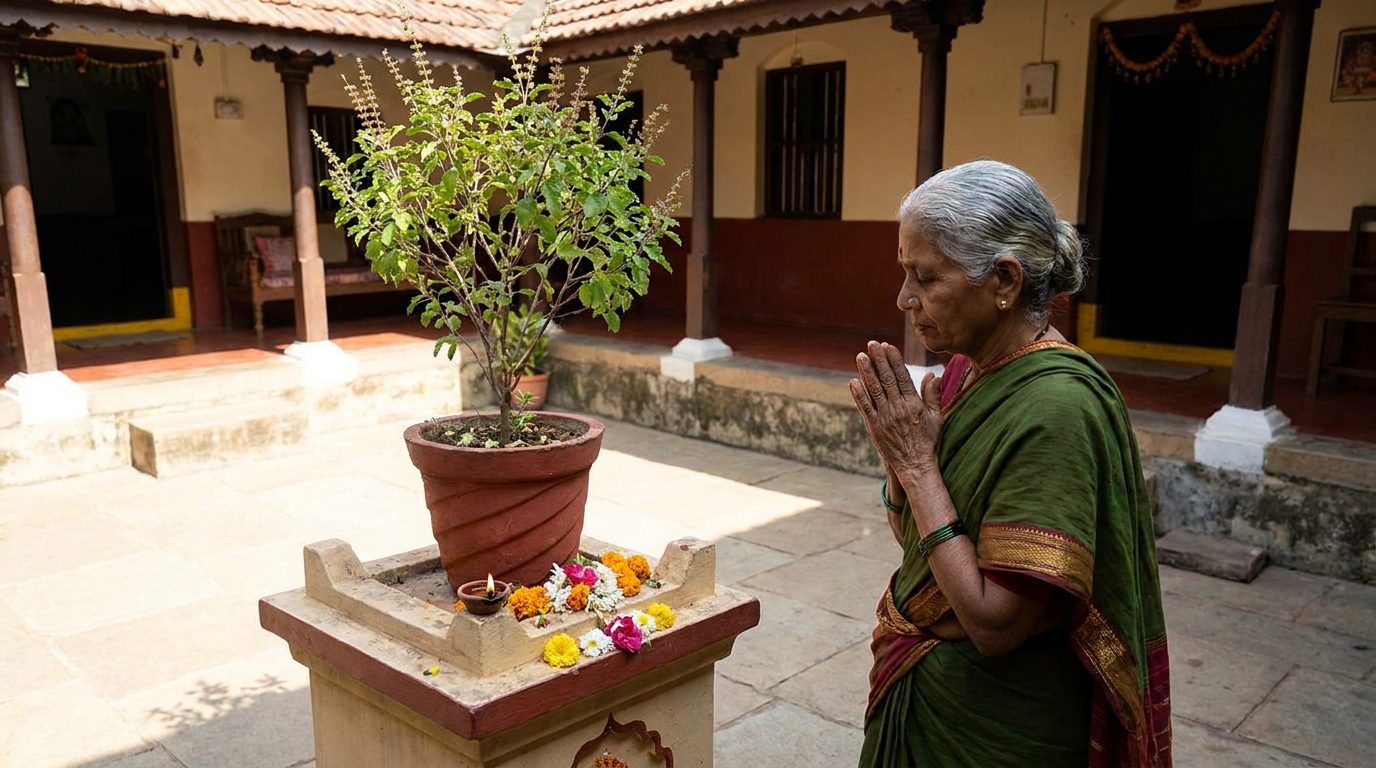
Tulasi worship is one of the most beloved practices in Bhakti Yoga, the path of loving devotion to God. For many devotees, the day feels incomplete without offering a little water to Tulasi Devi, singing her prayers, or simply bowing with gratitude before her sacred leaves.
Tulasi, also known as Holy Basil, is not only a plant. In the Bhakti tradition, she is honored as a great devotee of Krishna, a compassionate spiritual personality who helps the heart grow in love, humility, and surrender. Her presence brings a sacred atmosphere into the home, temple, and heart.
Whether you are new to Bhakti Yoga, from another spiritual background, or simply curious about Tulasi worship, you are warmly welcome here. This guide is meant to be practical, devotional, and gentle. You do not need to know everything to begin. Even one sincere offering, made with love, is spiritually meaningful.
Tulasi Devi is revered in the Vaishnava Bhakti tradition as a pure devotee of Lord Krishna. “Devi” means “goddess” or “divine lady,” and “Tulasi” refers to the sacred plant known in English as Holy Basil.
In many Bhakti scriptures, Tulasi is described as very dear to Krishna. Devotees offer her leaves to Krishna because they understand that He is pleased by her devotion. Just as we might offer a beloved friend something that carries deep affection, devotees offer Tulasi leaves as an expression of loving service.
Tulasi as a Sacred Person
In Bhakti Yoga, the world is not seen as merely material or lifeless. Everything can be connected to God through love and service. Tulasi is especially honored because she is understood to be a living embodiment of devotion.
This means devotees do not treat her casually. They water her with care, bow to her respectfully, sing prayers to her, and never use her leaves for ordinary purposes. Tulasi worship teaches us to see sacred life with softer eyes.
Tulasi and Krishna
Krishna is a Sanskrit name for God meaning “the all-attractive one.” In the Bhakti tradition, Krishna is loved as the Supreme Person, the source of all beauty, compassion, wisdom, and joy.
The scriptures explain that Krishna accepts offerings of love more than offerings of wealth. In the Bhagavad-gita, Krishna says:
“If one offers Me with love and devotion a leaf, a flower, fruit, or water, I will accept it.”
This verse is often quoted in connection with Tulasi worship. The “leaf” is especially understood by many devotees to include Tulasi. A simple Tulasi leaf offered with devotion can be more pleasing to Krishna than a grand offering made without love.
Why Tulasi Worship Matters in Bhakti Yoga
Bhakti Yoga means the yoga of love and devotion. The word “bhakti” means loving service, and “yoga” means connection. So Bhakti Yoga is the practice of reconnecting with God through love.
Tulasi worship is a beautiful part of this path because it trains the heart in devotion. It is simple, personal, and deeply transformative.
A Practice of Love, Not Performance
Tulasi worship is not about impressing others or performing a ritual perfectly. It is about approaching God and His devotee with sincerity.
If you forget a mantra, feel shy, or do not know the traditional melodies, you can still begin. You can offer water, bow your head, and say a heartfelt prayer:
“Dear Tulasi Devi, please help me grow in devotion. Please help me remember God and serve with love.”
This kind of sincere prayer is at the heart of Bhakti.
A Daily Reminder of Sacred Living
Caring for Tulasi brings devotion into daily life. Each morning, when you water her or offer respects, you remember that spiritual life is not separate from ordinary life.
Your home becomes a place of prayer. Your hands become instruments of service. Your voice becomes a vehicle for chanting. Your heart becomes softer through regular contact with sacred practice.
Tulasi Helps Us Serve Krishna
In Vaishnava worship, offerings to Krishna are traditionally made with Tulasi leaves. Food offerings, flowers, and prayers become especially dear when accompanied by Tulasi.
This is not because God “needs” anything from us. God is complete. But in Bhakti, the offering is an exchange of love. Tulasi helps us enter that exchange with humility and devotion.
The Scriptural Glories of Tulasi Devi
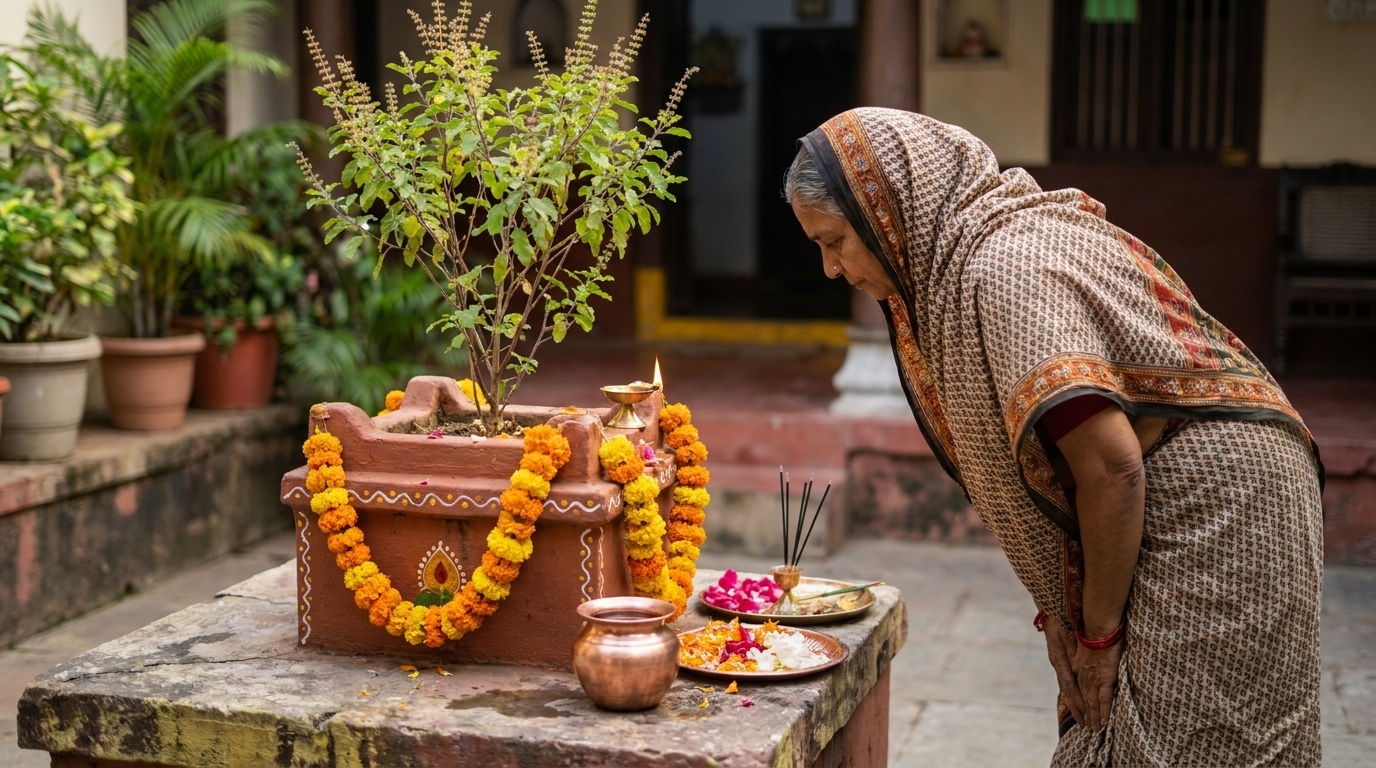
The glories of Tulasi are celebrated in many Bhakti scriptures, including the Padma Purana, Skanda Purana, and other Vaishnava texts. These scriptures praise Tulasi as sacred, purifying, and deeply pleasing to Lord Krishna.
It is important to approach these descriptions with both reverence and practical understanding. The purpose is not to become superstitious, but to awaken appreciation for devotion.
Tulasi in the Puranas
The Puranas are ancient Sanskrit texts that share histories, teachings, prayers, and stories about God, devotees, and the universe. They often speak in poetic and devotional language.
In the Padma Purana, Tulasi is glorified as extremely dear to Lord Vishnu. Vishnu is a name of God meaning “the all-pervading Lord,” and Krishna is understood in the Bhakti tradition as the original source of Vishnu.
The scriptures explain that worship offered with Tulasi brings spiritual benefit because Tulasi carries pure devotion. Her presence sanctifies the offering.
Tulasi and the Holy Name
Bhakti scriptures repeatedly teach that chanting the holy names of God is the most essential practice for this age. The Hare Krishna maha-mantra is especially central:
Hare Krishna, Hare Krishna, Krishna Krishna, Hare Hare
Hare Rama, Hare Rama, Rama Rama, Hare Hare
“Maha-mantra” means “great mantra.” “Mantra” means a sacred sound that frees the mind. “Hare” calls upon God’s divine energy, “Krishna” means the all-attractive Lord, and “Rama” means the source of spiritual joy.
Tulasi is closely connected with chanting. Devotees often chant on beads made from Tulasi wood. These beads, called japa mala, help the practitioner count and focus while repeating the holy names.
Tulasi and the Mood of Service
The deeper teaching of Tulasi worship is service. In Bhakti, service is not forced labor or religious obligation. It is love in action.
Tulasi Devi teaches us to ask: “How can I serve God today? How can I care for others? How can I become more humble, patient, and kind?”
This is the true fruit of worship. If our rituals help us become more loving, then they are nourishing our spiritual growth.
Check out our latest articles at https://thebhaktihouse.org/blog.
How to Begin Tulasi Worship at Home
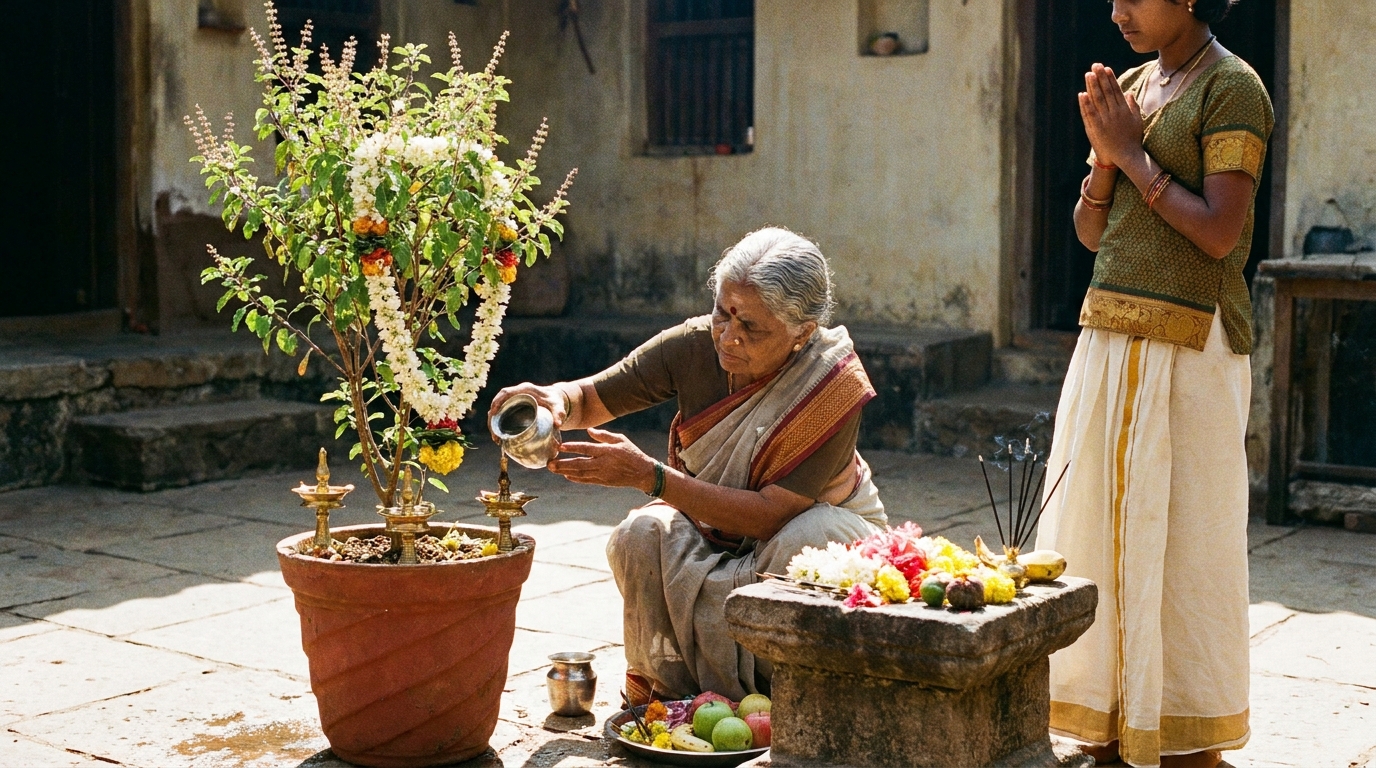
You do not need a temple room or advanced knowledge to begin Tulasi worship. A clean, respectful place and a sincere heart are enough.
If you are able to have a living Tulasi plant, that is wonderful. If not, you may still honor Tulasi through prayer, chanting, and offering Tulasi leaves obtained respectfully from a temple or trusted devotee community.
Preparing a Sacred Space
Choose a clean place in your home where Tulasi can receive sunlight and fresh air. Many devotees place Tulasi near a window or in a courtyard, depending on the climate.
Keep the area tidy. You may place a small cloth, a picture of Krishna, or a simple altar nearby. The purpose is not decoration for its own sake, but creating a loving environment.
Try to avoid placing Tulasi in areas that are dirty, crowded, or used for disrespectful activities. Treat her space as sacred.
Offering Water
A simple daily practice is to offer water to Tulasi Devi. Traditionally, devotees water her in the morning, while offering prayers or chanting.
You can gently pour water at her roots, being careful not to overwater. Tulasi likes care and attention, but she can be sensitive. The practical side of worship matters too. Devotion includes learning how to serve properly.
As you water her, you may pray:
“Dear Tulasi Devi, please accept this small service. Please help me grow in love for Krishna.”
Offering a Lamp or Incense
Some devotees offer a small ghee lamp or incense to Tulasi. This is called arati, a devotional ceremony of offering light and fragrant items to the Lord or His devotee.
If you are new, you can keep it very simple. Offer a candle or lamp in a circular motion before Tulasi, while singing or praying. Always be careful with fire, especially indoors.
The main ingredient is devotion. A simple lamp offered with attention is beautiful.
Bowing and Offering Respect
Bowing is a physical expression of humility. In Sanskrit, this is called pranam, which means offering respects.
You may bow fully, kneel, or simply fold your palms and lower your head. If you have physical limitations, a respectful gesture from the heart is enough.
Bhakti is not about bodily perfection. It is about sincerity.
Traditional Prayers for Tulasi Worship
Traditional prayers help us enter the mood of the saints and teachers who have worshiped Tulasi for generations. You may chant them in Sanskrit, read the English meaning, or simply pray in your own words.
If Sanskrit feels unfamiliar, do not worry. Sanskrit is a sacred language used in many Bhakti scriptures and prayers, but devotion is not limited by language. God hears the heart.
Tulasi Pranam Mantra
One well-known prayer is:
vrindayai tulasi-devyai
priyayai keshavasya cha
vishnu-bhakti-prade devi
satyavatyai namo namah
A simple meaning is:
“I offer my repeated respects to Vrinda, Tulasi Devi, who is very dear to Keshava, another name for Krishna. O goddess, you grant devotion to Vishnu.”
This prayer reminds us that Tulasi helps us receive bhakti, devotion to God.
Prayer for Service
Another traditional prayer asks Tulasi Devi for the blessing of service:
tulasi krishna-preyasi
namo namah
radha-krishna-seva pabo
ei abhilashi
A simple meaning is:
“O Tulasi, beloved of Krishna, I offer you my respects again and again. My desire is to attain service to Radha and Krishna.”
Radha is Krishna’s eternal beloved and the highest example of pure devotion. Radha-Krishna together represent the deepest mystery of divine love.
Singing Tulasi Kirtan
“Kirtan” means devotional singing, especially the singing of God’s names and glories. Many temples have a daily Tulasi kirtan, where devotees sing while offering a lamp and circumambulating Tulasi.
Circumambulating means walking respectfully around a sacred person or place. Devotees often walk around Tulasi while chanting, praying for devotion and purification.
If you are at home, you can sing softly, play a recording, or simply chant the Hare Krishna mantra.
Offering Tulasi Leaves to Krishna
Offering Tulasi leaves to Krishna is one of the most cherished practices in Bhakti Yoga. Devotees place Tulasi leaves on food offerings, at Krishna’s lotus feet, or on sacred items used in worship.
How to Pick Tulasi Leaves Respectfully
Picking Tulasi leaves is itself a sacred act. Before picking, devotees usually offer prayers and ask permission.
You may say:
“Dear Tulasi Devi, I am picking your leaves only for the service of Krishna. Please forgive any offense and bless me with devotion.”
Traditionally, leaves are picked in the morning after bathing or washing the hands. One should avoid picking leaves at night, on certain sacred days according to tradition, or for selfish use. Different communities may follow slightly different guidelines, so it is helpful to learn from experienced devotees.
Pick gently, without harming the plant. Do not break branches unnecessarily. Avoid using scissors if possible; instead, carefully pinch leaves with clean fingers.
What to Offer With Tulasi
Tulasi leaves are commonly offered with:
- Fruits
- Cooked vegetarian foods
- Water
- Flowers
- Sandalwood paste
- Incense and lamps
- Prayers and mantras
In Bhakti Yoga, food offered to Krishna becomes prasadam. “Prasadam” means mercy or grace. When we eat prasadam, we receive spiritually sanctified food that nourishes both body and soul.
A simple home offering might be fruit, water, or a vegetarian meal placed before a picture or deity of Krishna with a Tulasi leaf on top. You can pray:
“My Lord Krishna, please accept this offering made with love.”
Why Tulasi Is Not Offered to Everyone
In the Vaishnava tradition, Tulasi leaves are specifically offered to Vishnu or Krishna and His forms. They are not generally offered to demigods or used in ordinary rituals.
This is not disrespectful toward other beings. Rather, it honors Tulasi’s unique relationship with Krishna. Just as certain gifts are intimate and specific, Tulasi’s service is especially for the Lord she loves.
Caring for a Tulasi Plant
Tulasi worship includes practical plant care. This is a beautiful reminder that devotion is not only words and songs; it is also responsibility.
When we care for Tulasi, we learn patience, attentiveness, and gentleness.
Light and Temperature
Tulasi usually loves sunlight. In warm climates, she may thrive outdoors with several hours of sun each day. In colder climates, she often needs indoor protection, warmth, and a sunny window or grow light.
Tulasi can be sensitive to cold. If temperatures drop, bring her indoors and protect her from drafts.
Care will vary depending on your region. If you are unsure, ask local devotees or gardeners who have experience growing Tulasi in your climate.
Watering With Balance
Overwatering is one of the most common challenges. Tulasi likes water, but her roots should not sit in soggy soil.
Check the soil before watering. If the top layer is dry, she may need water. If it is still moist, wait. Good drainage is important.
This balance itself is a spiritual lesson. Love is attentive. Love does not neglect, and love does not overwhelm.
Soil and Pot Care
Use well-draining soil and a pot with drainage holes. If the soil becomes compacted or unhealthy, Tulasi may struggle.
Some devotees repot Tulasi when needed, while offering prayers and handling her carefully. Repotting can be stressful for the plant, so do it gently and at the right time.
Avoid chemical sprays when possible. If pests appear, seek natural and safe methods.
Pruning and Health
If Tulasi becomes tall and thin, careful pruning may help her grow fuller. However, pruning should be done respectfully and not casually.
Leaves and manjaris, the flower clusters, are often offered to Krishna. If Tulasi is flowering heavily, you may gently remove some manjaris for offering, which can help the plant continue growing.
Always remember: we are not “using” Tulasi. We are serving her and receiving the blessing of her service to Krishna.
Common Questions About Tulasi Worship
Many sincere people have questions when beginning Tulasi worship. Questions are healthy. Bhakti grows through both faith and understanding.
Can Anyone Worship Tulasi?
Yes. Anyone can offer respect to Tulasi Devi. You do not need to be born into a particular culture or community. Bhakti Yoga is a path of the soul, and the soul is beyond nationality, race, gender, or background.
If you approach with sincerity, humility, and willingness to learn, you are welcome.
What If I Make Mistakes?
Mistakes happen. Spiritual life is a journey.
If you accidentally overwater, forget a prayer, pick leaves improperly, or feel unsure, do not become discouraged. Offer a sincere apology and continue learning.
Bhakti is not a path of harsh perfectionism. It is a path of loving progress.
Can I Keep Tulasi If I Am Not Fully Practicing Bhakti?
If you feel called to care for Tulasi, that desire is meaningful. At the same time, because Tulasi is sacred, it is good to learn how to care for her respectfully.
If you are not ready for daily care, you can begin by visiting a temple, offering prayers, chanting, or keeping a picture of Tulasi and Krishna. Let devotion grow naturally.
What If My Tulasi Plant Leaves Her Body?
Sometimes, despite our best efforts, a Tulasi plant may dry or die. Devotees often say she has “left her body,” recognizing her as a sacred personality.
Do not feel that you have failed, especially if you tried sincerely. Offer prayers, thank her for her presence, and respectfully place her dried wood or leaves in a clean sacred place, a garden, or according to local devotional guidance.
Even this moment can deepen humility and gratitude.
Tulasi Worship and Inner Transformation
The ultimate purpose of Tulasi worship is not only maintaining a sacred plant. It is awakening love for God.
Tulasi invites us into a new way of living—one marked by devotion, simplicity, compassion, and remembrance.
Learning Humility
When we bow before Tulasi, we practice humility. Humility does not mean thinking we are worthless. It means recognizing that we are loved, dependent, and meant for service.
In a world that often teaches us to control everything, Tulasi worship teaches us to receive grace.
Growing in Consistency
Daily worship builds spiritual strength. Even five minutes each morning can shape the heart over time.
A simple practice might include:
- Offering water to Tulasi
- Bowing or folding your palms
- Chanting one round or a few minutes of the Hare Krishna mantra
- Offering a prayer for guidance
- Doing one act of service for someone else
Small daily steps become powerful when offered with love.
Awakening Compassion
True worship should make us kinder. If we honor Tulasi as sacred, we begin to see all life with more respect.
We become more mindful of how we speak, eat, work, and relate to others. Devotion expands the heart.
Tulasi worship is not meant to make us proud of being religious. It is meant to make us gentle, grateful, and eager to serve.
Tulasi in the Home and Community
Tulasi worship can be practiced privately at home, but it also has a beautiful community dimension. In temples and Bhakti gatherings, Tulasi Devi is honored with song, prayer, and shared devotion.
Visiting a Temple
If you live near a Bhakti Yoga temple or devotional community, visiting during morning worship can be very inspiring. You may see devotees singing Tulasi prayers, offering a lamp, and walking around her.
Do not worry if you do not know what to do. You can observe respectfully, fold your palms, and join as you feel comfortable.
Most sincere communities are happy to help newcomers learn.
Family Worship
Tulasi worship can also become a sweet family practice. Children may help offer water, sing simple mantras, or place flowers nearby.
This teaches them reverence, responsibility, and love for God in a natural way.
Keep it joyful. Children learn devotion best when they feel included, not pressured.
Creating a Rhythm of Devotion
You may choose a simple daily rhythm:
Morning: Offer water and prayer.
Daytime: Remember Krishna while working or serving.
Evening: Chant, read a verse, or offer a lamp.
Tulasi becomes a gentle anchor, reminding the whole household that life is meant for loving connection with God.
Practical Do’s and Don’ts of Tulasi Worship
Guidelines help protect the sacred mood of worship. They are not meant to create fear, but to support reverence.
Helpful Do’s
Do keep Tulasi in a clean and respectful place.
Do offer water with attention and care.
Do chant or pray while serving her.
Do offer her leaves only to Krishna or Vishnu forms.
Do ask experienced devotees for guidance.
Do treat dried leaves and wood respectfully.
Do remember that sincerity is the foundation of all worship.
Things to Avoid
Avoid neglecting Tulasi’s practical needs.
Avoid picking leaves carelessly or for decoration.
Avoid using Tulasi leaves in ordinary cooking or tea if you are worshiping her in the traditional devotional mood.
Avoid placing Tulasi in unclean areas.
Avoid becoming proud or judgmental about your worship.
Avoid giving up because of small mistakes.
The heart of the practice is loving respect.
A Simple Daily Tulasi Worship Practice
If you are wondering exactly how to begin, here is a simple practice you can follow. Adjust according to your home, health, and guidance from your devotional community.
Step 1: Cleanse and Prepare
Wash your hands. If possible, bathe or freshen up. Come before Tulasi with a calm mind.
You may light incense or a small lamp if safe and appropriate.
Step 2: Offer Respect
Fold your palms and bow your head. Say:
“Dear Tulasi Devi, I offer my respects to you. Please bless me with devotion to Krishna.”
Step 3: Offer Water
Gently water her roots as needed. Do not water automatically if the soil is already wet.
As you water, chant the Hare Krishna mantra or a Tulasi prayer.
Step 4: Sing or Chant
You can chant:
Hare Krishna, Hare Krishna, Krishna Krishna, Hare Hare
Hare Rama, Hare Rama, Rama Rama, Hare Hare
Even one sincere repetition has spiritual value.
Step 5: Pray for Service
End with a simple prayer:
“Please help me serve God and all living beings with humility, kindness, and love.”
Then carry that prayer into your day.
The Deeper Gift of Tulasi Worship
Tulasi worship is a doorway into the heart of Bhakti Yoga. Through her, we learn that spiritual life can be simple and intimate. We do not have to wait for perfect knowledge, perfect circumstances, or perfect purity.
We can begin now—with a leaf, a little water, a mantra, a prayer, a humble bow.
Tulasi Devi teaches us that love is practical. Love waters. Love sings. Love serves. Love remembers. Love offers the best it has, even if that offering seems small.
And Krishna, being the all-loving Lord, accepts the heart behind the offering.
If you are new to Tulasi worship, please feel encouraged. Start gently. Learn from devotees. Read the scriptures with an open heart. Chant the holy names. Offer what you can. Let your devotion grow naturally, like a sacred plant reaching toward the sun.
Everyone is welcome on the path of Bhakti. Whatever your background, whatever your story, you can take one sincere step toward God today. Offer a prayer, chant one mantra, serve one person, or bow your heart before Tulasi Devi and Krishna. One sincere step is never small when it is taken with love.
FAQs
What is Tulasi worship?
Tulasi worship, also known as Tulasi puja, is a traditional Hindu ritual of worshipping the Tulasi plant, which is considered sacred in Hinduism. It involves offering prayers, water, and other offerings to the Tulasi plant.
Why is Tulasi worship important in Hinduism?
Tulasi is considered to be an incarnation of the goddess Lakshmi and is highly revered in Hinduism. It is believed that worshipping Tulasi brings prosperity, health, and spiritual well-being to the devotees. Tulasi is also associated with Lord Vishnu and is considered to be a symbol of purity and devotion.
How is Tulasi worship performed?
Tulasi worship is usually performed daily by watering the plant, offering incense, lighting a lamp, and reciting prayers and mantras. Devotees also offer food, water, and other items to the Tulasi plant as a form of devotion.
What are the benefits of Tulasi worship?
Tulasi worship is believed to bring spiritual, mental, and physical benefits to the devotees. It is said to purify the surroundings, ward off negative energies, and bring prosperity and good health to the worshippers. It is also considered to be a form of devotion and a way to express gratitude to the divine.
Are there any specific rules or guidelines for Tulasi worship?
There are specific guidelines and rules for Tulasi worship, such as not plucking the leaves without proper reason, not touching the plant during menstrual periods, and maintaining cleanliness around the plant. It is also important to perform the worship with devotion and sincerity.

