
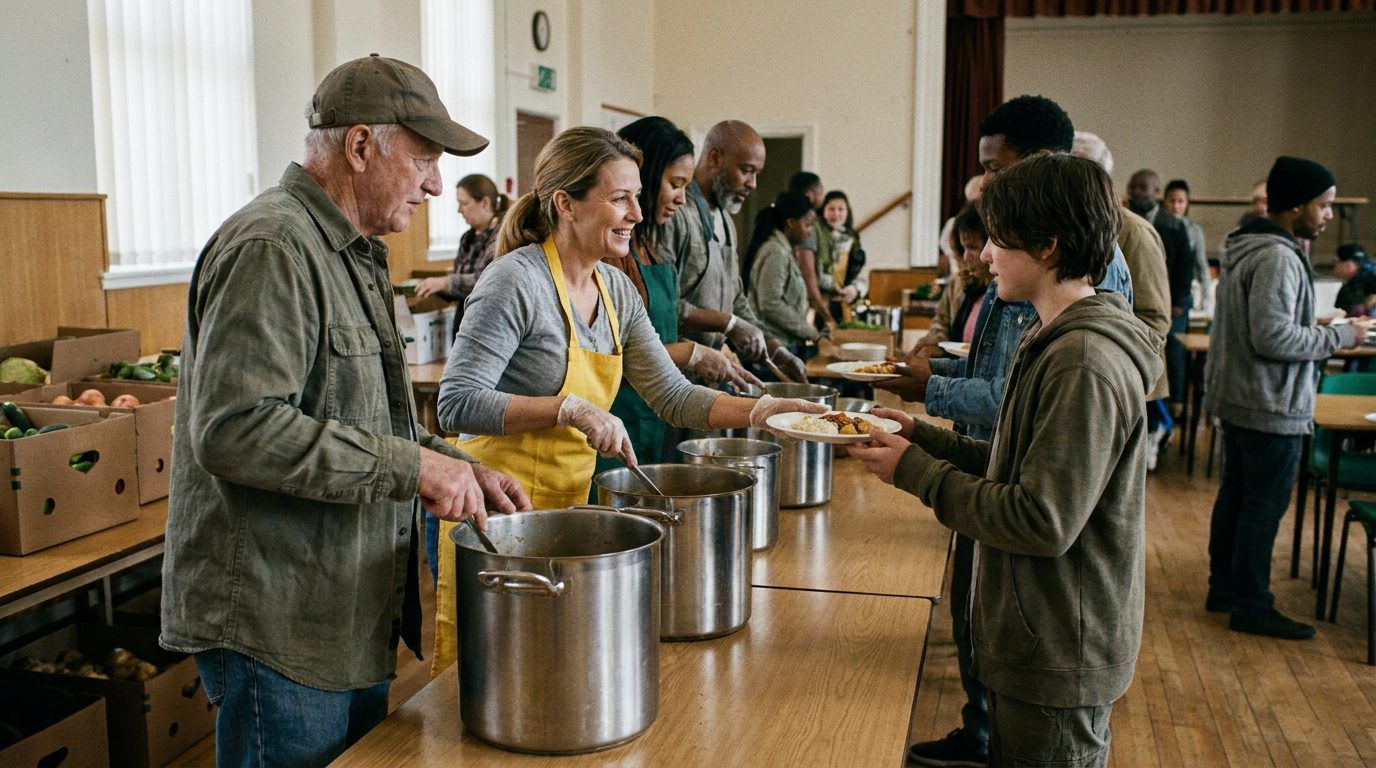
There is a beautiful Sanskrit word that has been quietly transforming hearts for thousands of years. That word is seva — and at its simplest, it means selfless service. But seva is so much more than just helping out or volunteering. In the Bhakti tradition, seva is an act of love offered to God and to all living beings as expressions of the Divine.
Whether you are brand new to spiritual life or have been walking this path for decades, understanding how to engage in seva in a healthy, balanced, and joyful way can make all the difference in your spiritual growth. Service done with love nourishes the soul. But service done from obligation, ego, or exhaustion can quietly drain us and even lead us away from the very connection we are seeking.
At The Bhakti House, we believe that everyone — regardless of background, experience, or tradition — can discover the profound sweetness of offering their time, energy, and heart in service. This article is a gentle guide to help you navigate that journey with wisdom, honesty, and deep care for yourself and others.
In the Bhakti yoga tradition, seva is one of the most cherished spiritual practices. The word comes from the Sanskrit root sev, which means “to serve” or “to honor.” When we perform seva, we are not simply completing a task — we are offering an act of devotion.
The Bhagavad Gita (Chapter 9, Verse 27) beautifully expresses this spirit:
> “Whatever you do, whatever you eat, whatever you offer or give away, and whatever austerities you perform — do that as an offering to Me.”
This verse reminds us that any action, no matter how small, can become sacred when it is offered with love and sincerity. Washing dishes at a temple gathering, cooking a meal for someone who is struggling, listening deeply to a friend in pain — all of these can be seva when the intention of the heart is to serve something greater than ourselves.
Seva as a Path to the Heart
In Bhakti, we understand that love for God naturally expresses itself through love for others. Seva is not something we force ourselves to do to earn spiritual points. It flows from the heart like water flows downhill — naturally, when the conditions are right.
The great Bhakti saint Chaitanya Mahaprabhu taught that the highest form of service is done in a spirit of humility, patience, and genuine care. When we serve others, we begin to see the Divine in every face. This vision softens us. It opens us. It makes us more capable of receiving and giving love.
The Difference Between Seva and Ordinary Service
You might wonder — what makes seva different from regular volunteering or community service? The answer lies in intention and consciousness. Ordinary service is wonderful, and the world needs much more of it. But seva carries an additional dimension: it is consciously offered as a spiritual practice, as an act of worship, as a way of connecting to God through action.
This does not mean seva has to look religious or formal. It simply means that somewhere in your heart, you are aware that this act of giving is also an act of devotion.
The Beauty and the Challenge of Serving Others
Seva can be one of the most fulfilling experiences in spiritual life. There is a joy that comes from giving freely, without expecting anything in return, that is unlike any other happiness. Many devotees describe moments of seva as the times when they feel closest to God.
But let us also be honest: seva can be challenging. Sometimes we give too much. Sometimes we serve from a place of guilt rather than love. Sometimes the communities we serve in have unhealthy dynamics that can affect our well-being.
Acknowledging these challenges is not a sign of weakness — it is a sign of maturity and self-awareness.
When Giving Becomes Draining
One of the most common struggles in spiritual communities is the tendency to give beyond our capacity. We want to be good devotees. We want to please God. We want to be seen as dedicated and selfless. And so we say yes to everything, even when our bodies are tired, our minds are overwhelmed, and our hearts are running on empty.
The Bhagavad Gita (Chapter 6, Verse 16-17) offers wise counsel here:
> “Yoga is not for one who eats too much or too little, sleeps too much or too little. For one who is moderate in eating, sleeping, working, and recreation, yoga destroys all suffering.”
Balance is not the opposite of devotion. Balance is devotion — devotion to the truth that we are souls housed in human bodies that need care, rest, and kindness.
When Ego Sneaks Into Service
Here is another tender truth: sometimes our seva becomes more about us than about God or the people we are serving. We might start keeping track of how much we have done compared to others. We might feel resentful when our efforts are not acknowledged. We might use service as a way to feel important or needed.
This is not something to be ashamed of. It is simply the nature of the ego — it looks for ways to claim ownership of everything, even our most sincere offerings. The remedy is not to stop serving. The remedy is awareness and prayer. When we notice the ego creeping in, we can gently offer that awareness to God and ask for help returning to a place of humility.
Five Principles for Healthy Spiritual Service
Navigating seva with wisdom requires some guiding principles. These are not rigid rules but gentle reminders that can help us stay grounded, connected, and joyful in our service.
1. Serve From Love, Not Obligation
The most important question you can ask yourself before engaging in seva is: “Am I doing this from love, or from a sense of duty and guilt?” Both might look the same on the outside, but they feel very different on the inside.
Service rooted in love feels nourishing, even when it is physically tiring. Service rooted in obligation feels heavy and resentful. If you notice that your seva has lost its sweetness, that is a signal to pause, rest, and reconnect with the deeper why behind your service.
2. Honor Your Own Limits
You are not meant to pour from an empty cup. God does not ask us to destroy our health, our relationships, or our peace of mind in the name of service. Setting boundaries is not selfish — it is an act of self-respect and spiritual maturity.
When you honor your limits, you actually become a more effective and joyful servant. You bring your best self to each interaction, and the people you serve can feel the difference.
3. Stay Connected to Your Practice
Seva without sadhana (personal spiritual practice) can become dry and mechanical over time. Sadhana is the inner nourishment that keeps our service alive and meaningful. This might include chanting the Holy Names (japa or kirtan), prayer, reading sacred texts, or simply sitting in quiet meditation.
The Bhakti tradition teaches that chanting God’s names — such as the Hare Krishna Maha Mantra — is the most powerful and accessible form of spiritual nourishment available in this age:
> Hare Krishna, Hare Krishna, Krishna Krishna, Hare Hare
> Hare Rama, Hare Rama, Rama Rama, Hare Hare
When we stay rooted in our personal relationship with God through chanting and prayer, our service becomes an overflow of that relationship rather than a substitute for it.
4. Be Honest About Unhealthy Dynamics
Not every service environment is healthy. Sometimes spiritual communities develop patterns of manipulation, overwork, or emotional pressure that are disguised as devotion. It is important to recognize that genuine seva never requires you to abandon your discernment, ignore your intuition, or tolerate mistreatment.
If something feels wrong, it is okay to speak up, step back, or seek guidance from a trusted and wise mentor. Protecting your well-being is not a betrayal of your spiritual path — it is an essential part of it.
5. Celebrate Small Offerings
In the Bhagavad Gita (Chapter 9, Verse 26), Lord Krishna says something incredibly tender:
> “If one offers Me with love and devotion a leaf, a flower, a fruit, or water, I will accept it.”
God does not measure our seva by its size or impressiveness. A kind word spoken with sincerity, a meal cooked with love, a prayer whispered for someone who is suffering — these small offerings are precious beyond measure. You do not have to do grand things to serve beautifully. You simply have to offer what you have with a sincere heart.
Sure, here is the sentence with the clickable link:
You can find more bhakti articles here.
Seva in Daily Life: Practical Ways to Begin
You do not need to live in a temple or ashram to practice seva. In fact, some of the most powerful service happens in the ordinary moments of everyday life.
At Home
Cooking for your family with awareness and gratitude. Caring for a child, a parent, or a pet with patience and love. Keeping your living space clean and peaceful as an offering.
In Your Community
Offering your time at a local food bank, shelter, or community garden. Listening to a neighbor who is going through a difficult time. Sharing a meal with someone who is lonely.
In Your Spiritual Community
Helping to organize gatherings, kirtans, or study groups. Welcoming newcomers with warmth and genuine interest. Supporting the behind-the-scenes work that keeps a community running — the cleaning, the cooking, the setting up and putting away.
Through Chanting and Prayer
Sometimes the most powerful seva is the one no one else can see. Chanting the Holy Names for the benefit of all beings, praying for those who are suffering, holding space in your heart for the healing of the world — this is seva of the highest order.
Recognizing the Fruits of Genuine Seva
How do you know your seva is on the right track? Here are some gentle signs:
You feel more grateful, not more entitled. You feel closer to God and to other people, not more isolated or special. You experience moments of unexpected joy and peace, even during difficult tasks. You find it easier to forgive, to let go, and to trust. You feel a growing tenderness toward all living beings.
These are the natural fruits of service offered with love. They cannot be manufactured or forced. They simply appear, like flowers blooming in a well-tended garden, when the conditions of the heart are right.
When You Need to Rest: Seva and Self-Compassion
There will be seasons in your life when you cannot serve as much as you would like. Illness, grief, transitions, and other life circumstances may require you to step back and focus on your own healing and well-being.
This is not failure. This is wisdom.
The Bhakti path teaches us that God is not a demanding employer keeping track of our productivity. God is the most loving friend, the most compassionate parent, the most tender beloved. When we need rest, God understands. When we need to receive rather than give, God provides.
Allowing yourself to rest is itself an act of trust — trust that God’s work will continue, that others will step forward, and that you will return to service when the time is right, renewed and refreshed.
An Invitation to Begin
Wherever you are on your journey — whether you have never heard the word seva before today or whether you have been serving for years — we want you to know something important:
You are welcome here. You are enough. And your sincere heart is the most beautiful offering you could ever make.
You do not need to be perfect. You do not need to have all the answers. You do not need to serve in grand or impressive ways. You simply need to take one sincere step toward God — one small act of love, one moment of genuine care, one whispered prayer — and trust that God will meet you there.
At The Bhakti House, we walk this path together, supporting one another with honesty, humility, and deep affection. We believe that the world is transformed one loving act at a time, and we would be honored to walk alongside you.
Take that one step today. Offer what you have. And know that it is received with infinite love.

