
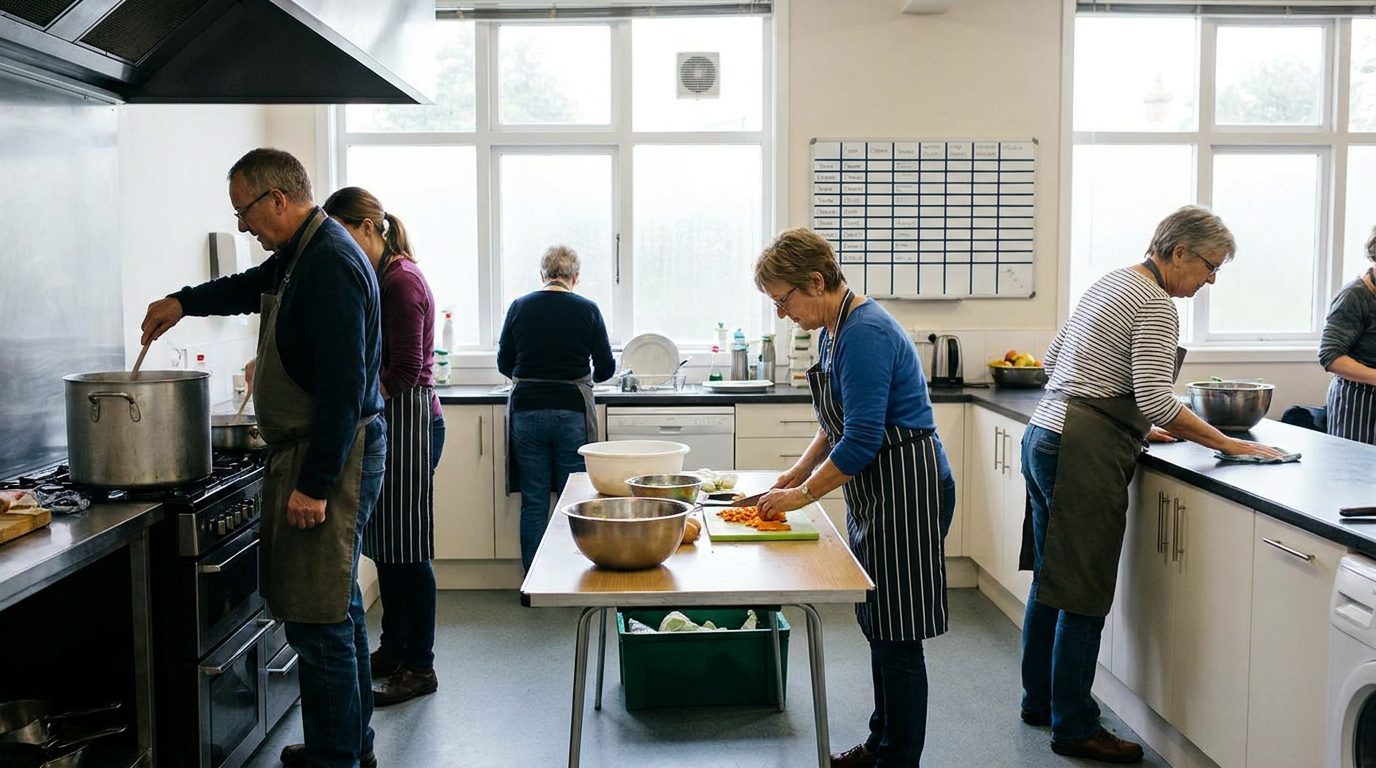
In any spiritual community — whether it’s a temple, an ashram, a home gathering, or a Bhakti house — seva (selfless service) is the heartbeat that keeps everything alive. Seva is how we express our love for God and for each other. It’s the flowers on the altar, the meals lovingly prepared, the floors swept clean, and the warm greeting at the door.
But let’s be honest with each other for a moment. Even in the most sincere devotional spaces, confusion and resentment can quietly creep in when seva duties aren’t shared well. Maybe one person always ends up washing the dishes. Maybe nobody is sure who’s supposed to set up for the evening kirtan (devotional chanting gathering). Maybe someone feels overlooked while another feels overwhelmed.
These are not signs of spiritual failure. They are simply signs that we need a thoughtful, loving system — one that honors everyone’s time, energy, and desire to serve.
In the Bhagavad Gita (18.46), Lord Krishna teaches that by worshiping the Lord through one’s own work, a person can attain perfection. Seva is that worship. And when we organize it with care and rotate it with grace, we create an environment where everyone can experience the joy of offering their efforts to God without burnout or bitterness.
This article is a gentle, practical guide to rotating seva duties seamlessly in your community. Whether your group is two people or two hundred, these principles can help minimize confusion, dissolve resentment, and keep the spirit of love at the center of everything you do.
Understanding the True Spirit of Seva
Seva Is Love in Action
The Sanskrit word seva means “service,” but in the Bhakti tradition, it carries a much deeper meaning. Seva is love expressed through action. It’s not just a task to complete — it’s an offering of the heart.
When we cook for a community gathering, we’re not just preparing food. We’re preparing prasadam — food offered with love to God and then shared with everyone as His mercy. When we clean the gathering space, we’re creating a sacred environment where hearts can open. Every act of seva, no matter how small, is a form of prayer.
Why Resentment Happens — and Why It’s Okay to Acknowledge It
Sometimes devotees feel guilty about feeling frustrated with seva. But the Bhakti path is refreshingly honest about human emotions. We are not expected to be perfect. We are expected to be sincere.
Resentment often grows when people feel unseen, unappreciated, or unfairly burdened. It can also arise when there’s a lack of clarity about expectations. The beautiful thing is that these feelings, once acknowledged with humility, become opportunities for growth — both individually and as a community.
Sri Chaitanya Mahaprabhu, the great saint of Bhakti, personally participated in cleaning the Gundicha Temple alongside His devotees. He didn’t stand aside and direct others. He swept the floors with His own hands, showing us that no service is beneath anyone, and that shared effort creates shared joy.
The Difference Between Sacrifice and Self-Neglect
Bhakti teaches us to offer ourselves to God, but it never asks us to destroy ourselves in the process. There’s a meaningful difference between joyful sacrifice and silent self-neglect. A healthy seva rotation ensures that no one person carries an unsustainable load. It protects the server so that the service can continue with a full, open heart.
Building a Clear and Compassionate Seva Schedule
Start with Honest Conversations
Before creating any schedule, take the time to sit together and talk. Ask each person in your community these simple questions:
- What types of seva do you enjoy?
- What types of seva challenge you, but you’re willing to try?
- How much time can you realistically offer each week or month?
- Are there physical limitations or life circumstances we should be aware of?
These conversations build trust. They also prevent the common problem of assuming what someone can or should do. In a loving community, we ask — we don’t assume.
Map Out All the Seva Roles
Write down every single seva duty that needs to happen in your community. Don’t leave anything out, even the tasks that seem invisible. Here are some common categories:
Before Gatherings:
- Setting up the altar and sacred space
- Arranging seating, sound equipment, and lighting
- Preparing printed song sheets or projecting lyrics
During Gatherings:
- Leading or supporting kirtan
- Greeting newcomers warmly
- Managing audio and visual elements
- Caring for children’s activities
After Gatherings:
- Cleaning the space
- Washing dishes and putting away kitchen items
- Storing instruments and supplies
- Locking up and securing the venue
Ongoing:
- Coordinating communication (emails, messages, social media)
- Managing finances and donations
- Maintaining the altar and sacred items
- Shopping for supplies
When everything is written down, people can see the full picture. This visibility alone helps reduce the feeling that “I’m the only one doing anything.”
Create Rotating Cycles That Feel Natural
Once you know who is available and what needs to be done, create a rotation that shifts responsibilities at regular intervals — weekly, biweekly, or monthly, depending on your community’s rhythm.
A few practical tips for making rotations work smoothly:
Keep it simple. A complicated schedule that nobody can follow defeats the purpose. Use a shared digital calendar, a simple spreadsheet, or even a whiteboard in your gathering space.
Pair experienced servers with newer ones. This creates a culture of mentorship rather than hierarchy. The experienced person isn’t “in charge” — they’re simply walking alongside someone who’s learning.
Build in flexibility. Life happens. Children get sick. Work schedules change. Travel comes up. Having a backup system — or a culture where people feel comfortable swapping — prevents guilt and last-minute chaos.
Rotate leadership roles too. If one person always coordinates the schedule, that person can also burn out. Even the role of “seva coordinator” should rotate or be shared.
Sure, here is the sentence with the clickable link:
You can find more bhakti articles here.
Addressing Common Challenges with Grace
When Someone Doesn’t Follow Through
It will happen. Someone will forget their assigned seva or won’t show up. Rather than reacting with frustration, approach the situation with gentleness. A kind message — “Hey, we missed you today. Everything okay?” — opens the door for honest communication without shame.
Sometimes people don’t follow through because they overcommitted. Sometimes they’re going through a difficult personal season. And sometimes they need to hear that their specific contribution truly matters. Many people underestimate how much they’re needed.
In the Bhagavad Gita (12.13-14), Lord Krishna describes His dear devotee as one who is compassionate, free from possessiveness, and patient. We can carry this spirit into our practical community life, including how we handle unmet expectations.
When Someone Wants to Do Everything
On the other end of the spectrum, some devotees want to serve in every capacity. While this enthusiasm is beautiful, it can lead to burnout and can also unintentionally prevent others from experiencing the joy of seva.
If this describes someone in your community — or if it describes you — remember that stepping back is also an act of service. When we create space for others to serve, we are serving them. We’re giving them the gift of connection, purpose, and spiritual growth through their own offerings.
When Certain Tasks Feel “Less Important”
In many communities, a subtle hierarchy of seva develops. Leading kirtan might be seen as glamorous, while scrubbing pots feels invisible. This is a natural human tendency, but the Bhakti path gently challenges it.
Every act of seva is sacred when it’s done with love. The person who quietly sweeps the floor after everyone has gone home is offering worship just as real and just as beautiful as the person who led the chanting. A healthy community cultivates this awareness intentionally — through spoken appreciation, through shared participation in all kinds of tasks, and through the example of its leaders.
When leaders serve humbly in the most basic roles, it sends a powerful message: no seva is small.
Cultivating a Culture of Gratitude and Appreciation
Say Thank You — Often and Specifically
One of the simplest ways to prevent resentment is consistent, heartfelt gratitude. Don’t just say a general “thanks to everyone who helped.” Be specific: “Thank you, Priya, for those beautiful garlands on the altar today. They made the space feel so special.”
Specific appreciation tells people they are truly seen. And being seen is one of the deepest human needs.
Celebrate the Invisible Work
Make it a regular practice to highlight the behind-the-scenes seva. During your community gathering, take a moment to acknowledge the person who organized supplies, the one who sent reminder messages, or the family who donated groceries for prasadam.
You could even create a simple tradition — a “Seva Spotlight” moment at each gathering where one or two people are lovingly recognized. This doesn’t need to be elaborate. A few sincere words go a long way.
Create Space for Rest
In Bhakti, we recognize that we are not the doers — God is the ultimate source of all energy and action. This understanding naturally leads to humility and also to rest. Build rest into your seva culture. Let people know it’s okay to take a week off. Encourage a healthy rhythm of serving and replenishing.
A community that honors rest will sustain itself for years. A community that runs its members ragged, even with the best intentions, will eventually fracture.
Using Technology and Simple Tools Wisely
Digital Tools That Help Without Overcomplicating Things
You don’t need expensive software to manage seva rotations. Here are some simple, accessible options:
- Shared Google Sheets or Docs where everyone can see the current schedule and sign up for swaps
- Group messaging apps like WhatsApp or Signal for quick communication about upcoming seva needs
- Shared calendar apps where each person’s seva commitment shows up as a gentle reminder
- Sign-up platforms like SignUpGenius for special events like festivals or large community meals
The key is choosing one tool and using it consistently. Too many platforms create more confusion, not less.
Keep a Physical Backup
Not everyone in your community may be comfortable with digital tools, and that’s perfectly fine. A printed schedule posted in your gathering space, a simple notebook passed along, or even a phone call from the coordinator can keep everyone connected.
Honor the diversity of your community, including how people best receive and process information.
An Invitation to Take One Sincere Step
At the heart of all of this — the schedules, the conversations, the tools — is love. Love for God. Love for each other. Love expressed through the humble, beautiful act of showing up and serving.
If you’re part of a community that’s struggling with seva confusion or unspoken resentment, please know that this is a completely normal growing pain. It doesn’t mean your community is broken. It means your community is alive and growing and ready for its next step.
And if you’re reading this as someone who has never experienced a Bhakti community before, please know this: you are welcome. Exactly as you are. You don’t need to know any Sanskrit. You don’t need to have any experience. You just need a willing heart.
As Lord Krishna assures us in the Bhagavad Gita (9.26), even a leaf, a flower, a fruit, or a little water, offered with love and devotion, is accepted by Him. Your offering — whatever it is — is enough.
Take one sincere step today. Offer one small act of service with love. Show up for your community, and let your community show up for you. That is the Bhakti path. That is the way of the heart.
Everyone is welcome at the table. Everyone has something beautiful to give.

